Showing posts with label fun. Show all posts

Monday, May 30, 2016

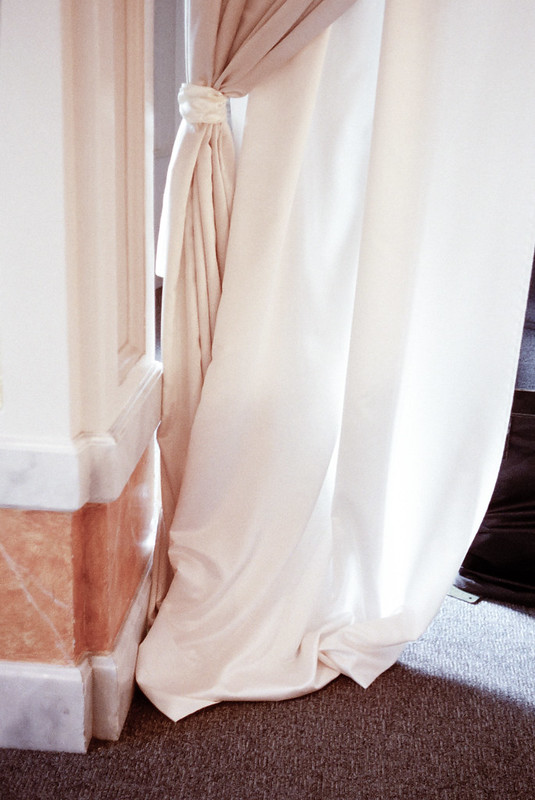
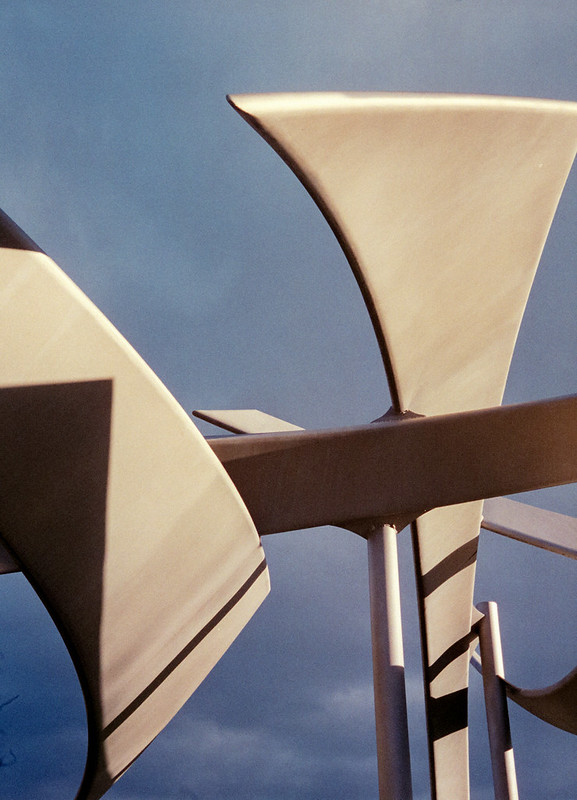
Triptych - Youth and Humor

Youth and Humor
Nikon Df, Nikkor 85mm f1.8 AF-S Lens
 
 
I accompanied my friend, Charles Arnhold, to one of his regular haunts this weekend. Charlie is doing a project on the place, Cafe Amouri, in Vienna, Virginia. (Click Here) to check out the cafe's website. Great coffee.
 
These are Charlie's friends, Anna and Jayna, having a little fun on the sidelines.
 
DMC-365.blogspot.com

Sunday, January 24, 2016

Some Half-Frame Shots - Canon Demi EE17

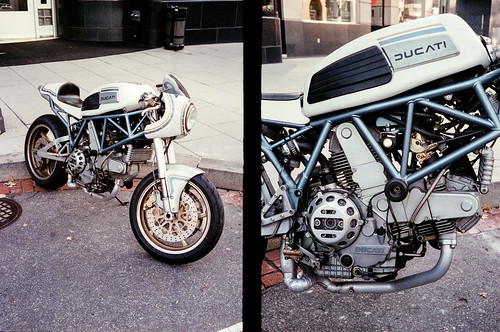
Well, apparently I have still not gotten over my obsession with shooting lots of different cameras and formats. My last two posts have been from the large film end, 6x9 medium format in the Fuji GW690. Before that, I posted some shots from the smallest film format camera that I currently own , a half-frame Canon that I picked up by chance. (Click Here) to see my previous post on that camera. Here are some color shots from the Demi.
 
It's fun making diptychs (picture pairs) with half-frame cameras. Here's an example.
 
And now, I've bought a second half-frame camera, which I'll write about later. And that's not all, but enough for now.
 
DMC-365.blogspot.com

Tuesday, November 24, 2015

Just for Fun

I think it's pretty cool that my writing table at Peet's Coffee is an old bowling alley lane.
 
Shot with my Apple iPad Air.
 
DMC-365.blogspot.com


Wednesday, May 27, 2015

Fun Snaps With Polaroid 250, Bounced Flash, FP3000 Pack Film

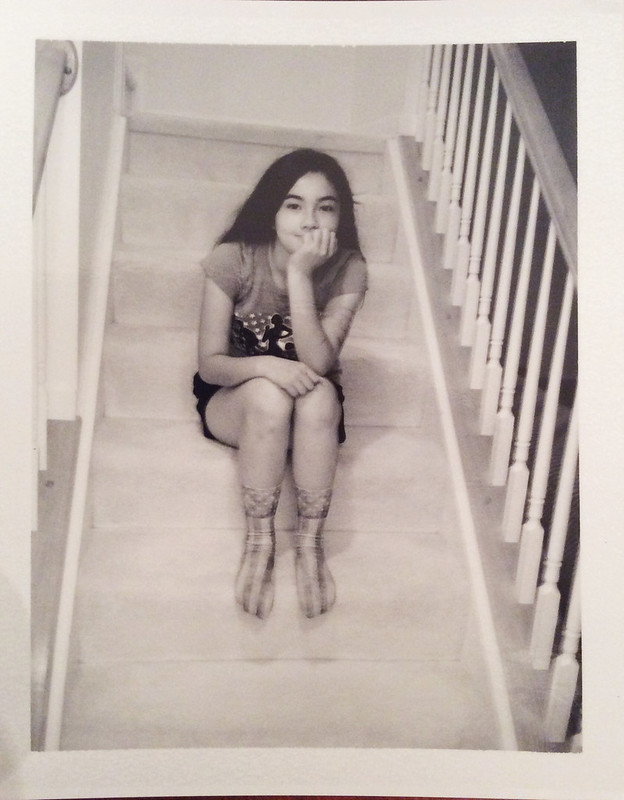
I have a newly-serviced Polaroid 250, which is one of the high end models, with Zeiss finder and a metal body. I've been playing with bounced flash (my Nikon SB600, for which I made a sync cable out of an accessory hot shoe cable and the terminal from the original Polaroid flash). I have found that setting the flash to manual, 1/2 power, pointed at the ceiling gives a good exposure for a close up subject when the camera is loaded with Fujifilm FP3000B black and white film and the camera is set for asa75 film with flash.
 
Coming home tonight, I saw my daughter sitting on the couch in her American flag socks, and just had to get a couple of pictures. I made her get up and pose on the stairs for me. Here's the best exposure of four:
 
And here's a slightly strange one, which is the result of two failed exposures where the flash didn't fire, plus a third good one, where it did:
 
 
Something about these old Polaroids. Somehow, the weirder the result, the better.
 
DMC-365.blogspot.com
 

Thursday, May 7, 2015

Worldwide Pinhole Day 2015 - Closeup with the Nikon Df and Finney Pinhole Cap

Sunday, April 26, 2015 was Worldwide Pinhole Day. (Click Here) to learn more about this fun event.
My friend, Bill, and I went out to the National Arboretum for some pinhole shooting on that day. Because I like to shoot black and white film in my Reality So Subtle 6x17 panoramic pinhole camera, I decided to also bring along my Nikon Df DSLR, fitted with an f/180, 50mm focal length pinhole bodycap.
 
My pinhole cap was made by a company called Finney; I'm not sure if they still exist. I bought it some years back, and have used it very little. On a sensor as small as even the full-frame Nikon Df, pinhole makes very soft images. Now, pinhole photography isn't about sharpness, but the large format film pinhole cameras I normally use make much sharper images. Anyway, I brought it along so that I could capture some spring color.
 
Here are some images I captured closeup with the Df and pinhole body cap:
 
Dandelions, by Reed A. George
Nikon Df, Finney f/180 Pinhole Body Cap
iso 3200, 1/60 sec.
 
As you can see, I was able to shoot handheld with the Df, since I cranked the iso up to 3200. With my film pinhole cameras, I usually shoot iso 100, which requires serious stability. Exposures are in whole seconds to sometimes even hours.
 
Pinholes have extremely small apertures, which means lots of depth of field. In this case, that means that everything, no matter how far from the camera, is the same degree of blurry. But, I do kind of like the effect.
 
Here's another shot, showing another member of the dandelion micro environment, a wasp.
 
Dandelion and Wasp, by Reed A. George
Nikon Df, Finney f/180 Pinhole Body Cap
iso 3200, 1/60 sec.
 
Worldwide Pinhole Day only allows each entrant to post a single picture. I haven't selected my single best image yet, but will continue to share several others that I made with the Df on that day.
 
I find it very interesting that low tech can actually add interest to my images. I'm seeing it more and more, and find myself taking the technical edge off of much of my work. I know it's not for everyone, but hey, I'm doing this for my own creative development. And I'm enjoying it. If you're stuck in a photographic rut, I highly suggest that you step back, relax, and take some blurry pinhole images. It can be rewarding.
 
DMC-365.blogspot.com
 

Monday, February 16, 2015

Brownie Reflex 127 - Some Results

Remember when I posted the question pondering why cheap old cameras are so much fun? (Click Here) if you don't remember, or want to see what the Brownie Reflex looks like.
 
Here are a couple of results from my first roll of Efke 127 (I bought it a couple of years back), developed by Dwayne's. The first is just an odd perspective of the new Metro station in Reston, Virginia. I actually like the way the film exposure numbers show up at the top (who knows why?).
 
Metro, by Reed A. George, Kodak Brownie Reflex Camera
And here's a scene you may have seen before, as I shot it with both the Brownie and my new Nikon Df. (Click Here) to see the Df version.
End of the Season, by Reed A. George, Kodak Brownie Reflex Camera
 
I like the randomness of shooting with very basic old cameras. They're cheap, and I think at least as much fun as shooting with a Holga. Once you've loaded film, the only variable in your control is composition. Exposure and focus are fixed.

This Brownie Reflex was $10, and cleaned up very nicely. However, getting 127 film is not easy, and it's expensive ($11-$12 per roll, twelve exposures). The only place I know to get it reliably is The Frugal Photographer (frugalphotographer.com). I bought a few rolls last time, including some black and white and some color.
 
You can still get 127 developed with no problem. This time, I used Dwayne's. But, I'm not as happy with their work as I am with The Darkroom (thedarkroom.com). Just my opinion. It's good to have them both as options.
I've got a few more images to share from this first roll, so stay tuned!
 
DMC-365.blogspot.com

Saturday, September 6, 2014

Low Tech Wonders - A Little Fun with the FPP Debonair

Sometimes I just want to have a little photographic fun. I want to drop all pretense and concern about the technical aspects of photography, and shoot. I suppose I still (kind of) think about composition, but that's about all I control when I shoot my "Debonair" 6x4.5 medium format toy camera from the Film Photography Project (FPP).
 
(Click Here) to check out the awesome Debonair, a <$20 real film real toy camera on the FPP website.
 
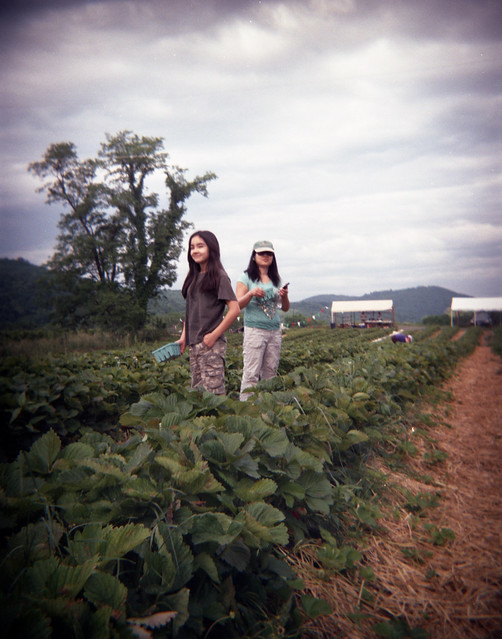
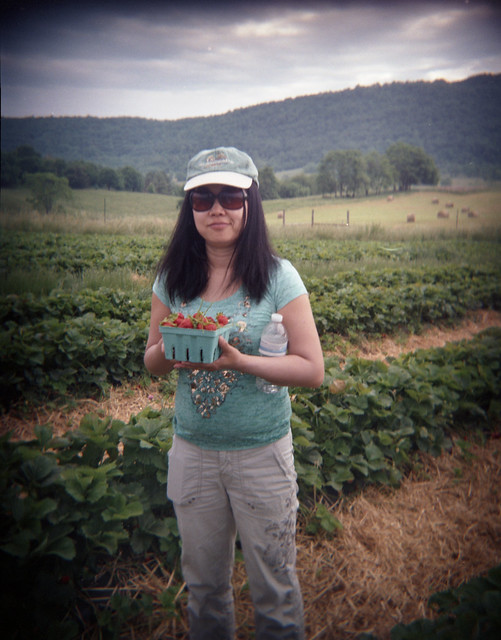
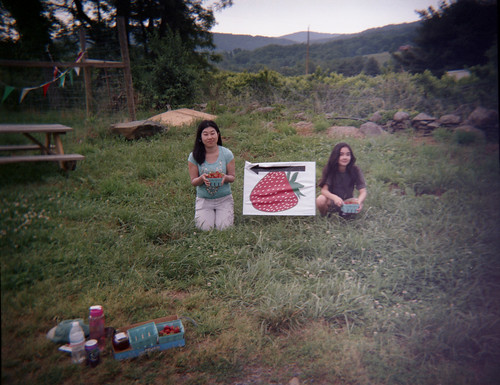
Here are some shots I took on an outing to a local farm to pick strawberries with my family last year (it took a while to finish the roll and send it off to The Darkroom).
 
All of these were shot on expired Konica Centurian film, which judging by the name should be good for 100 years, right? I love the vignetting you get with the cheap plastic lens. It's actually kind of sharp in the center, but that falls away very quickly. Theses are pretty much out-of-camera scans, with only cropping in Lightroom.
 
DMC-365.blogspot.com
 

Monday, June 30, 2014

Making Street Photography Automatic? Oh, Boy, I Don't Like This

Library, NYC, by Reed A. George
Leica M9, 50mm Lens
iso 400, f8, 1/125 sec.
 
I just read a post by member katrak on Rangefinder Forum, about how you can use the new Panasonic Lumix DMC-GH4 camera to record video at 24 frames per second with each frame having 8 megapixels of resolution. The title of the post is "Taking away luck in street photography?"
 
(Click Here) to read the post on Rangefinder Forum.
 
Technology may have finally come too far for an old traditionalist like me. One of the things I really love about photography, and street photography in particular, is the game. The game includes finding the scene, getting close enough to the subjects (who you don't know), and most importantly, capturing just the right moment. I would hate for this to be lost. It's like hunting with a machine gun or a bomb.
 
As you probably know, I'm a fan of Panasonic. The GH4 looks like a wonderful camera. So, it's not the camera that is the problem; they're simply pushing video technology to its limits.
 
However, I think this post could be renamed in multiple ways: "Taking away skill in street photography?" or perhaps "Taking away fun in street photography?"
 
I suppose since photography is a hobby for me, and because very few people make money on street photography, I can continue to shoot my old one-at-a-time cameras as long as I live. I'm only competing with myself to capture the moment. There are plenty of those moments to go around, including to people just recording every 1/24 of a second and selecting their favorite from tens of thousands of images later on.
 
DMC-365.blogspot.com

Tuesday, May 20, 2014

Analyzing a "This Type of Camera Versus That" Discussion

 
I frequently see posts on various forums, discussing and sometimes arguing the relative merits of different types of cameras. Some people become very defensive about their favorites. It's interesting. It's even more interesting when the discussion stays civil, and some good points are brought out.
 
Even then, these discussions tend to become very long-winded, so I don't read a lot of them. For example, I'm reading a nice one, started by member tom.w.bn on Rangefinder Forum.
 
(Click Here) to read the discussion.
 
Now, my analysis of this particular discussion is that it has remained largely civil, at least in the first two of five pages I've read; I probably won't read the rest. I think the main points that interest me have been made in the first two pages. Here are the most important parts from my perspective:
 
  1. When thinking about what type(s) of camera are best for you, it's important to ask where you get the majority of enjoyment from photography. Is it in the act of taking pictures, the satisfaction of seeing a wonderful shot achieved and in print? A combination? Perhaps the more rare satisfaction of seeing a perfectly-achieved image made in more challenging circumstances? This should be a controlling factor in deciding what camera style may be best for you.
  2. One response by YYV_146 makes a very interesting point in comparing using a rangefinder camera versus a mirrorless camera with electronic viewfinder (EVF). The point is that looking through an optical rangefinder gives you a very accurate view of the world you're photographing, while looking through an EVF, which is an electronic representation directly from the camera sensor, gives you an accurate view of what the final image will look like. Two very different things.
For me, the act of taking photographs brings much more enjoyment than reviewing them, and especially more than post-processing them. I do love to see a perfect image, and I do value a great image from myself more if I know that it was particularly challenging to achieve. That said, I don't want it to be so challenging that I never get a good shot.
In different situations, different things matter to me. If I'm trying to document something, or have a high chance of getting a shot someone else will care about, I hedge my bets. For example, in shooting a musical act that I don't see often (e.g. rare opportunity) in low light, I'll reach for my Nikon D700. If it's a band I do see often, and I want to have more fun shooting, I'll perhaps grab my Leica M4-2 film rangefinder and load up some high speed film. This is part of the reason that I have not consolidated or focused on only one camera system.
 
So, which part of the photographic process brings you the most enjoyment? How does that affect which camera(s) you choose? I'm interested to hear.
 
DMC-365.blogspot.com
 

Monday, April 7, 2014

Twin Lens Coffee Shop in Korea

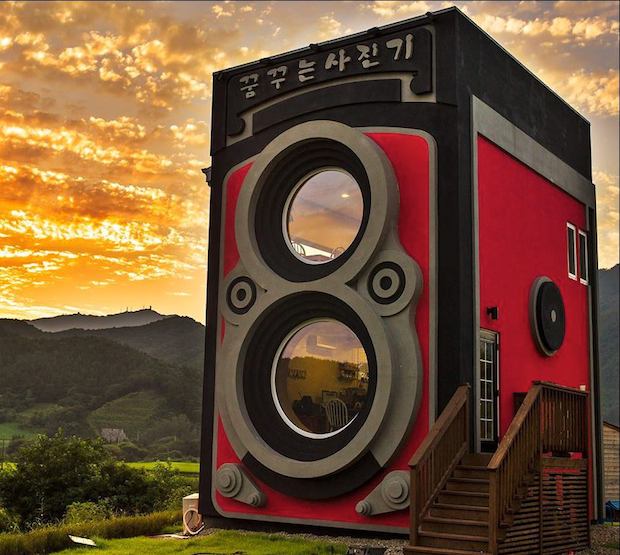
Quick post today. My friends Charlie and Bill sent me this funny little piece of photographic fun.
Image Source: http://petapixel.com/2014/03/29/coffee-shop-south-korea-shaped-like-rolleiflex-camera/
 
Now there's a place I'd like to sit and have a cup of coffee. Apparently, they don't open until 11AM, so I'll have to remember that if I'm ever in South Korea and want to have breakfast in a twin lens reflex (TLR) camera-shaped coffee shop.
 
(Click Here) to read a little more about this on Petapixel.
 
I think it's interesting how certain forms stick with us and find application in unpredicted ways. I've seen restaurants made from boats and train cars, both iconic shapes that people have interest in. I suppose if you're going to make one from a camera, the TLR is the way to go. Basically a rectangular box, the TLR offers a very traditional interior layout. If it weren't for the two big porthole windows, you may forget that you're inside a camera.
 
DMC-365.blogspot.com


Tuesday, June 18, 2013

Low Tech Wonders - Converted Polaroid 103 Images

 
I wrote a little about my Polaroid 103 camera, rescued from a dusty shelf in an antique shop, some time back. (Click Here) to read about how I got it going again.
 
Since then, I've also tweaked the "electronic eye," adding a handmade paper diaphragm (a hole punched in a piece of paper) to reduce the light coming in. I found that it was underexposing, even with the exposure adjustment all the way toward the bright side. The paper aperture fixed it, and it shoots just about right with no exposure offset.
 
So, I bribed the kid - sure, you can have a piece of cake after dinner, if you come outside and let me shoot pictures of you as you eat. Here are the results, scanned on my Epson V750:
Oops, a little motion blur. Here's my favorite from this series:
 
She said "It looks like I'm summoning lightning." I agree.
 
And here's the most artistic shot I've made with the 103 so far:
 
It's actually a very capable camera.
 
One thing that's interesting - there are two types of Fuji pack film that are available and work in the camera (see links below). One is iso 100 color, which you see used in all the images above. The other is iso 3000 (!) black and white. Here's the funny thing. Since the camera is fully automatic, you can't change the exposure. Apparently, it uses a much smaller aperture for the black and white, making it shoot at approximiately the same shutter speed as the iso 100 film. I thought I should be able to make great low light images with iso 3000 black and white film. Not so. Indoors, because the aperture is small, the shutter speed is quite long, even with iso 3000.
 
Anyway, I'm glad my Mom sent me the Polaroid. It is a nice diversion.
 
DMC-365.blogspot.com


Friday, June 14, 2013

Low Tech Wonders - A Triptych From The Brownie Bullet

I was looking over some of the first images I made on the Brownie Bullet last night. You may remember that I figured out a way to rig it to shoot panoramic images on 35mm film.
 
(Click Here) to read about how I did that.
 
Anyway, three of the images seemed to go together. Following up on some recent advice I got in my Leica Akademie workshop, which was to "live with your images," I printed out a big 13x19 triptych of them. Here's what it looks like:
 
Brownie Bullet Triptych, by Reed A. George
Brownie Bullet Camera, Converted To Shoot 35mm Panos
 
Personally, I like it. Imperfections and all.
 
DMC-365.blogspot.com


Sunday, April 21, 2013

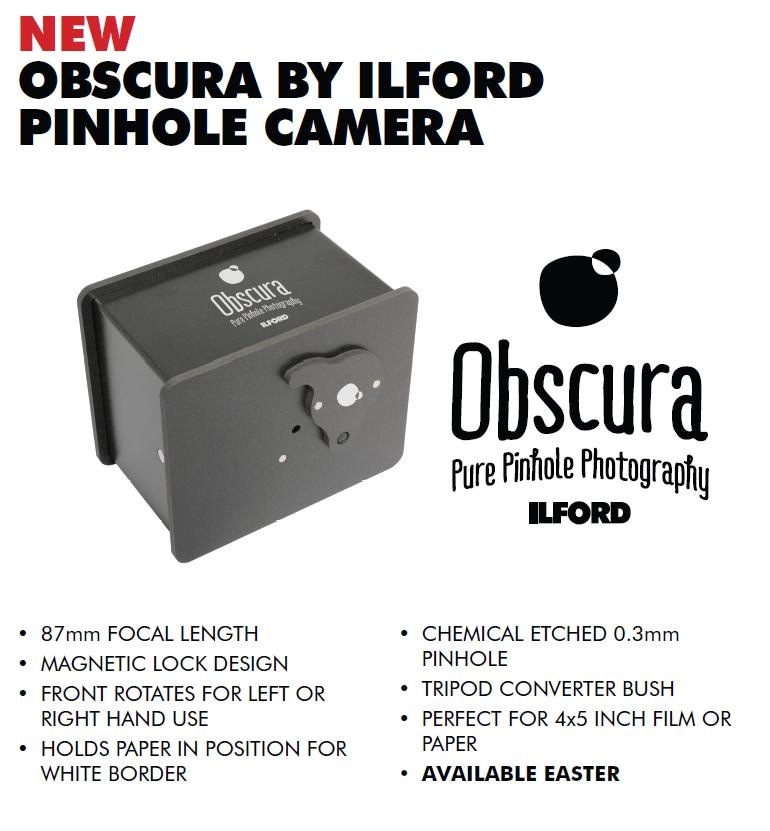
Time For Some Pinhole Shooting - ePHOTOzine's Peter Black Reviews the Ilford Obscura 4x5 Pinhole Camera

Image Source: http://www.filmsnotdead.com/wp-content/uploads/2013/03/20130311-094504-pm.jpg
 
 
I just read a review of a new product from Ilford - a 4x5 film pinhole camera called the Obscura.
 
(Click Here) to read the review on ePHOTOzine.
 
Here's what I learned from the review: 1) Ilford appears to be in the film game for the long haul, which I love, and 2) the Obscura requires film loading in a changing bag, as it doesn't use a normal 4x5 film holder. Wow. That doesn't seem very smart.
 
I have one that I bought used, but I'm pretty sure it's from, you guessed it, pinholecameras.com.
 
(Click Here) to see their website.
 
I'm quite happy with mine, but don't use it often enough. Do I hear inspiration coming on? Maybe.
 
I have also made a cardboard pinhole camera that uses 35mm film. This one is a kit. See the Amazon link below if you're interested in one of those. It's not exactly the same as mine, so I can't say how easy or hard it is to build. Mine was tougher than expected to get right, but it does work and was a fun project.
 
From My Cardboard 35mm Film Pinhole Camera
 
The result above is what you can expect from a 35mm format or smaller pinhole - funky, blurry, potentially fun.
 
I find that my 4x5 pinhole yields reasonably sharp images. Actually, it would be hard to tell a 4x5 pinhole image from one made with an old inexpensive lens. You can decide whether that's a plus or minus. Sometimes funky, blurry, is good.
 
I think I'll load mine up this weekend.
 
DMC-365.blogspot.com


Thursday, February 7, 2013

Low Tech Wonders - A New Series on DMC-365 - The Lomography Sprocket Rocket

Optically Flawed, Visually Interesting, by Reed A. George
Lomography Sprocket Rocket Camera, iso400 Film
 
I've been enjoying a few plastic "toy" cameras recently. This post will be the first of a series on the results. If you're not familiar, just do a google search for the word "Holga." There's an entire counter-culture of photographers using these things. They take all of the technical work out of photography, allowing you to focus on composition. The lenses are typically low quality, sometimes even plastic. There are light leaks. These are not high end or expensive cameras.
 
My parents sent me a new toy for Christmas - the Lomography Sprocket Rocket. Here's what it looks like (buy yours at my link to Amazon at the bottom of this post):
 
Lomography Sprocket Rocket Superpop! Blue Camera
Image Source: www.amazon.com
 
Mine is black.
 
What's cool about this camera? Well, first off, the sprockets. It's designed to expose all the way to the edges of the 35mm film, including the sprockets. It also shoots in a wide panorama format, as you can see above.
 
Keep in mind that this is a toy camera from the same folks that sell Holgas. It has a fixed focus wide angle lens (actually, it also has a "macro" setting for subjects less than 1 meter away), and the depth of field is so large, focus is not really an issue. There is one shutter speed (~1/100 of a second). There are two aperture sizes: if you set the camera for daylight exposure, it's about f16, for cloudy, it's about f10.8. Film advance is manual, and you have to look down into a squinty little window to see when to stop turning the film crank. It does have a working hotshoe for flash (more on that in a future post).
 
In order to scan the film, I use another Lomography product, called the Digitaliza, on my Epson scanner. The Digitaliza holds the film by the very edges, exposing the sprocket holes to be scanned.
 
I think this thing is very cool. It really does bring down all pretense of photography being serious business, and lets you play. I recently carried mine, along with a little Nikon flash, to an indoor event. I had a blast with it. I'll be posting pictures from that soon.
 
By the way, there are cheaper plastic cameras to play with that accomplish many of the same things. I'll be posting about at least one of those in the near future as well.
 
In the meantime, if you want to have some fun, pick up a Sprocket Rocket from the link below.
 
DMC-365.blogspot.com


Friday, December 28, 2012

Another Lens Option for Focusing on Composition With Micro 4/3

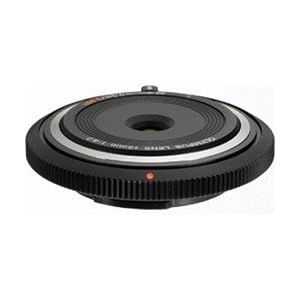
Olympus 15mm f8 "Body Cap" Lens
Image Source: www.amazon.com
 
I've posted some images that I've taken with the Holga 25mm f8 lens for Micro 4/3 recently. Today, I read a nice post by Ray_S on mu-43.com, where he shared several pictures he took in Philadelphia, using the new Olympus 15mm f8 "Body Cap" lens. Ray_S has listed copyright protection on his images, so I didn't repost any here (too bad, I'd say it's limiting his exposure, but that's not my call).
 
So, (Click Here) to see his images.
 
I really like the composition and look of some of these pictures. There's clearly some processing going on here that makes them look like HDR to me. A bit artificial looking, again in my opinion, but the lens clearly works pretty well.
 
The Olympus lens is a 15mm (30mm field of view equivalent on full-frame 35mm sensors), fixed aperture f8 lens. Just like the Holga, it is a slow lens (f8 requires quite a lot of light), and has a little bit of focus adjustment capability, but it's only rough. At 15mm focal length, focus is not much of an issue anyway - the depth of field is enormous. The Olympus lens is wider angle than the Holga, and I'd venture to say the optics are higher quality than the Holga (not a high bar). The other cool thing about the Olympus lens is that it's tiny. In fact, as the name indicates, you can use it as a body cap for your extra Micro 4/3 camera body; it's only 9mm (~1/3 of an inch) thick. It can also focus close-up, to a minimum distance of 30cm (12 inches).
 
The Olympus lens is more "expensive" than the $25 Holga, but at ~$55, it's hardly going to break the bank for anyone who can afford a Micro 4/3 camera body. My conclusion is that the Olympus Body Cap lens adds nicely to the goal of Micro 4/3 gear overall - compact, easy to use, good (not extraordinary) image quality. Maybe I'll try one.
 
DMC-365.blogspot.com


Friday, December 14, 2012

Just a Little Humor This Morning


I'm on a business trip, and have a meeting in 20 minutes. I wanted to get a post in for the day, and this is was what came to my attention :).
 
(Click Here) to see the post on rangefinderforum.
 
Some of the comments are worth reading as well.
 
DMC-365.blogspot.com


Friday, September 28, 2012

Bill Fortney Asks "Why Bother?"

I just found Bill Fortney's website. His theme is "Photography and Faith." While I'm not a religious person
myself, no one could deny the beautiful work and great photographic insights on Bill's site.
 
Image Source: http://billfortney.com/?p=6176
 
In one piece, Bill asks "Why Bother?" when there are so many unbelievably great photographers out there? I'm sure we've all felt it at some point. The feeling of being so inferior to some of the masters can really get you down.
 
(Click Here) to read Bill's thoughts on the subject.
 
Bill makes several good points:
  1. Enjoy the fact that there are so many great examples to learn from. Enjoy holding the camera as much as you enjoy your images.
  2. Celebrate when others succeed.
  3. Always photograph your passion. If you can find that, success will follow.
  4. Experiment. It has never been easier to experiment photographically.
  5. Have fun. After all, that's why it's your hobby.
I like this approach very much. One thing that strikes me is the idea of photographing what you are passionate about. This is easy to say, hard to identify and turn into a project, in my experience. I feel that I've achieved it with my Live Music project. And, it really makes working hard to get better at it fun.
 
DMC-365.blogspot.com