Showing posts with label column. Show all posts

Saturday, May 9, 2015

World Pinhole Day - Reality So Subtle 6x17 Panoramas and My Entry

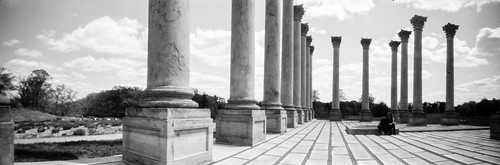
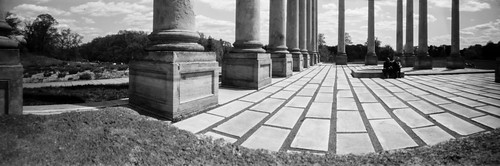
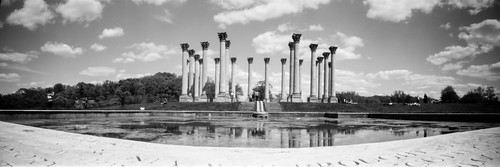
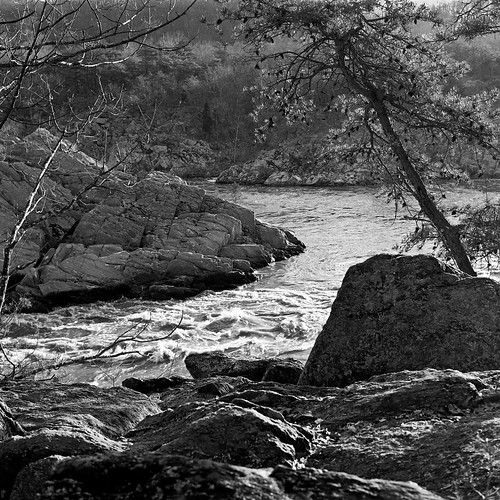
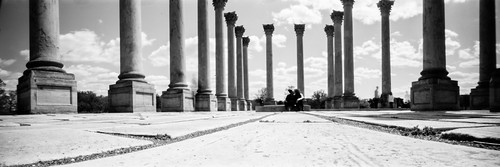
I've posted several times about Worldwide Pinhole Day. Here are four images I made with my Reality So Subtle 6x17 pinhole camera, on TMax 100 film. (Click Here) to find out more about this awesome camera. It has my high recommendation.
 
All were taken at the National Arboretum in Washington, DC.
 
The fourth and final image is the one I chose to submit to the Worldwide Pinhole Day gallery for 2015.
 
To see all of the entries for Worldwide Pinhole Day 2015, (Click Here).
 
DMC-365.blogspot.com


Friday, November 28, 2014

50 Years of Nikon - Slideshow - Historic Corncrib

Here is a brief slideshow of images I took of an old farm building near where I work. I was able to convince my coworker and friend Wendye to let me photograph her there.
 
 
If you have trouble getting it to load, just (Click Here).
 
I shot all of these images with Nikon - the first of my "50 Years of Nikon SLRs" posts. This includes images from my early Nikon F film SLR, and my new Nikon Df DSLR. It's a lot of fun shooting these two cameras, separated by 50 years of Nikon history, going into the 50th year of my own life.
 
The music is from my friends The Woodshedders. Enjoy!
 
DMC-365.blogspot.com
 

Sunday, November 2, 2014

Fifty Years of Nikon

Camera images from nikonusa.com
 
I am turning 50 years old in December, just two months away. I'm not too hung up on age, but 50 is a big one. Half a century.
 
I just pulled the trigger on the purchase of a Nikon DF (sold refurbished direct from Nikon). I thought long and hard about that investment, since I already have attention deficit problems with my existing cameras, and like to focus on particular cameras, at least for some period of time. But, the DF is just too attractive for a photographer like me. Familiar controls, real knobs instead of (or in addition to) menus, married with amazing digital sensor technology, and the ability to use any of my Nikkor lenses to boot.
 
So, I'm thinking that I may pair up my new DF with a camera that was around and in use when I was born, my Nikon F film SLR with plain prism. I don't know exactly what the project will be yet, but it will take advantage of fifty years of Nikon SLR technology, in my 50th year of life.
 
Stay tuned!
 
DMC-365.blogspot.com
 

Friday, August 15, 2014

Planning My Next Theme - Maybe

Great Falls, VA, at About 17 Degrees Fahrenheit, by Reed A. George
Rolleiflex
 
Well, if you've followed the twists and turns of this blog for a few years, you've seen it change quite a lot. If not, I can tell you that my focus shifted from mainly Panasonic/Lumix/Micro 4/3 gear in the first year to a prolonged emphasis on Leica, and on old film cameras. Recently, I've been thinking more about the creative process and how it relates to gear and format.
 
I think all of this has been useful for me, and I don't plan to drop any of it. I still shoot Lumix when the mood strikes me, and have zero problem relying on a full Micro 4/3 kit for much of my travel. I'll never lose the love for my Leicas. However, lately, some friends and I have been leaning more toward medium format film cameras for our weekend outings.
 
In my Skeletons From The Closet series, I used several of my old medium format cameras. My friends Charlie and Alain are Rolleiflex users. I love my Rolleiflexes as well. I recently picked up (through the favor of another friend) a wondrous Mamiya Universal Press camera kit. I also really enjoy medium format folding cameras, and my Bronica ETR (6x4.5 format) kit has been sitting idle for far too long.
 
So, I may just have to start a new emphasis on medium format film shooting. In fact, my first couple of rolls through the Mamiya are on their way to The Darkroom as I write this.
 
Don't know about The Darkroom? (Click Here) for the best film processing I've ever found.
 
As I've learned that focusing on just one type of equipment is only satisfying for a finite period of time, I'll figure out how to make the best creative use of this type of gear. I won't limit myself to one camera or maker. I will commit to the "slow photography" movement, at least for this part of my shooting. With a Mamiya Universal, you don't have much choice but to commit to slow photography. :)
 
Anyway, that's my thought at this point in time. Again, this will not be an exclusive focus. I surely won't be traveling with just a Mamiya Universal very often. But, it could be a new dimension to add to my subjects.
 
Input always appreciated! Drop me a comment with your thoughts.
 
DMC-365.blogspot.com
 

Sunday, April 13, 2014

Dreaming in Monochrom(e) - Buddha in Snowstorm

Here are a couple of shots I made with Ilford Delta 3200 film in my Leica M4-2, at a Buddhist temple during a snowstorm. Both were made with the Zeiss C Sonnar 50mm f1.5 lens, one of my favorite lenses.
 
Wat Yarn in Snow, by Reed A. George
 
I selected 1/125-1/250 sec. for my shutter speed, in an effort to catch the falling snowflakes.
 
Parasol, by Reed A. George
 
I like how the statue's eye shows up in this image.
 
I wouldn't normally use high speed film for images like this, but it was what I had with me. I think it worked out pretty well.
 
DMC-365.blogspot.com


Saturday, February 8, 2014

So, Now That It's Over, What Did I Learn From SFTC?

For the entire year of 2013, I selected a different old camera from my collection and shot it for a month, sharing the results and my thoughts here on DMC-365. So, what did I learn? Well, I learned that I still have a lot to learn, for one thing.
 
A natural outcome of revisiting so many cameras that have been in my camera closet for a long time would be to identify a favorite, or maybe more than one. That happened in some cases. In other cases, more exploration is needed.
 
For example, while I did shoot a few different SLRs (Pentax K1000, Nikomat Ftn, Nikon F2), I have yet to identifiy a favorite. The F2 is certainly up there. But, the K1000 was the camera I learned with, and I still love the Pentax line, including an ME and Spotmatic, which I didn't even include in the SFTC series. And then there's the Nikon FM2. So, no conclusion is possible there, not yet.
 
For twin lens reflexes (TLRs), the same is true. The Minolta Autocord was a wonderful, pleasant surprise.
The Autocord Rocks
 
The Autocord is pure pleasure to look through. But, is it better than my Rolleiflex T? Probably not. I'm still on a quest for the perfect TLR. At this point, I own a few (2 Rolleiflexes, a Rolleicord, the Minolta Autocord, and two Ricohs). They're all f3.5 cameras. I'm thinking that a Rolleiflex with Zeiss Planar f2.8 lens may be the ultimate for me. In the meantime, I'm enjoying my Rolleicord with Rolleikin 35mm insert, and can have lots of fun with my existing TLRs.
 
So, did I learn anything conclusive at all? Yes. In the class of fixed lens 35mm rangefinder cameras, I now have a clear favorite. The Konica S1.6. Absolutely amazing lens. I will never hesitate to grab this camera.
 
The Konica S1.6 is sublime.
 
And, in the medium format (120) folding camera class, the Agfa Record III is the clear winner. Now this is interesting, as the Agfa wins more on features than by standing out from the others in image quality. My Zeiss folders are real optical performers, especially the one with a Tessar lens. The Record III has the gorgeous Solinar lens, which I think matches the Zeiss offerings. But, more importantly, it has a built-in (if uncoupled) rangefinder, and an accessory shoe that I can use to mount an exposure meter. This makes it really easy to use compared to most of my other folders.
 
The Agfa Record III - Most Useable Medium Format Folder
 
So, in addition to having a hell of a lot of fun shooting old cameras, I did learn a few things.
 
I hope my readers picked up an interesting point or two, as well.
 
DMC-365.blogspot.com


Sunday, January 26, 2014

Leica M4-2 (My Monochrom(e)) at the Lincoln Memorial

On the same rainy day that I shot the images of the Vietnam and Korean War memorials, I took a couple of images at the Lincoln Memorial. I like the rainy, somewhat dreary mood that I captured on that day. Both of these were shot with my Leica M4-2, Kodak TMax 400 film, and Leica Summicron 35mm f2 (version 3) lens.


DMC-365.blogspot.com


Saturday, January 25, 2014

More "Dreaming in Monochrom(e)" - Warrenton, Virginia

Today's post includes more images taken with my Leica M4-2 film camera, in my exploration of how much I would use and enjoy a camera dedicated to black and white imaging like the extraordinary Leica Monochrom. I shot these images around Warrenton, Virginia, on a recent weekend walk.
 
For the shot above, I used a yellow filter, which helped to bring out some contrast in the sky and clouds.
 
 
I spent some time in the Warrenton Cemetery, which has a substantial number of Civil War graves, including that of the famous rebel vigilante, John Mosby.


So far, I'm enjoying this little project. I have not felt too constrained with black and white film only in this camera. So far, I've only shot Kodak TMax 400, which is incredibly versatile. I may expand to other films in the near future, but I've been able to do a lot with just this one film.
 
DMC-365.blogspot.com


Thursday, January 16, 2014

SFTC Results - More From December's Nikon F2

I recently posted black and white results from the Nikon F2, a camera that really reminds me what I loved about camera equipment from the very start. Here are some color images (Kodak iso400 print film) from around my home here in Northern Virginia. The weather's been interesting lately, and I hope I captured some of the feel of it.
 
You may recognize this first composition, as I shot it in both color and black and white (see previous post). I strongly prefer the result in color, which surprises me a little.
 
 
Made with the Nikkor 135mm f3.5 pre-AI Lens (one of my favorites)
 
The next two were shot with the Nikkor 200mm f4 pre-AI lens:
 
 
The Old Mill
 
Now for a few shots from Manassas National Battlefield:


The next two are from a quick walk around our "nature walk," a small plot of wetland that one of the local developers set aside and built a boardwalk around:
 
And finally, two shots of my favorite human subject:


And so, this wraps up the results from the SFTC series from 2013. It's been a blast pulling out a different old film camera each month and spending enough time to evaluate its capabilities. I certainly reminded myself of a few old favorites and rediscovered one or two hidden gems that I just hadn't paid attention to lately. You'll be seeing more from some of these cameras in the future, and I have one or two more that didn't make it in the top twelve in 2013. So, stay tuned!
 
By the way, help keep this kind of photography possible - buy film! Support your local (or distant) processors who still provide their critical service!
 
DMC-365.blogspot.com


Friday, January 3, 2014

"Dreaming in Monochrom(e)," What Might I Learn?

Image Source: http://johnbuckley100.files.wordpress.com/2013/08/new-jim-crow.jpg

As I mentioned in yesterday's post, I'm interested in the Leica Monochrom. However, I want to really know more about how it would affect my photography before contemplating the purchase of one. So, I'll be working with my M4-2 film camera and black and white film in the coming months, to help answer that question.

The cost of this camera is enormous. It would probably require me to sell my belove M9, which I'm not in a hurry to do. So, I'll refer to this exercise as "Dreaming in Monochrom(e)." Look for it in coming posts.

I read a post on John Buckley's blog "Tulip frenzy," reflecting on a full year with the Leica Monochrom.

(Click Here) to read the full post on Tulip Frenzy.

In the beginning, he writes of discovering monochrome images that he never would have desaturated from color on his own. One note here - for reasons I don't know, John writes from a perspective of "we." I'll substitute "he" here. I hope no one minds.

After the discovery process, it seems that John transformed his photographic thinking when carrying the Monochrom, thinking in luminance (light level) instead of chroma (color). This led him to photograph different people than he would have with color. It also impacted his landscape images. It even drew him to classic photography books, where most of the work (or all) was black and white.

Later in the year, his confidence in choosing which images would be best in monochrome clearly increased.

My take is that if I dedicate my M4-2 (Leica film rangefinder camera) to black and white, and spend some time working with it, I should be able to experience all of the things John describes in his piece. One thing that John mentions about the Monochrom gives me even more confidence in my belief, where he refers to the sensor as:

"...precisely as limited as black and white film..."

Now, I don't think that statement is completely accurate. Apparently, you can shoot very useable images at iso 8000 with the Monochrom; I won't be achieving that with my M4-2. And, I have no illusions about my scanned black and white film rendering anything like the dynamic range of the Monochrom. No, I'm looking for qualitative aspects of dedicated black and white photography here. For example, how often will I carry only black and white film? I'm certainly not looking to add another camera to the bag I put over my shoulder.

In any case, I'm sure it will be an educational experience.

DMC-365.blogspot.com


Friday, December 20, 2013

Thinking About My 2014 Plan for DMC-365

Autumn Abstract, by Reed A. George
Panasonic Lumix DMC-GX7, 14-42mm Series II Kit Zoom at 42mm
iso 200, f20, 1/2 second
 
I've mentioned a few times lately that I'm considering my strategy for this blog in the upcoming year (2014). I know that I want to stay with the core focus of the interface between photographic equipment, technique, and creativity. Beyond that, I'm largely undecided.
 
One thing is for sure - it's a tough assignment to write each and every day. For a one-person operation like DMC-365, that means I'm up every morning, drinking my coffee and thinking what to write about today. On one hand, I love the discipline and the motivation to see everything new out their in the exciting world of photography. I also know from my initial research into how to run a blog that frequent posting is a must for survival (many "pros" post multiple times daily). I have seen that there are tons of potentially interesting blogs out there that completely fail because they haven't been updated for a month.
 
This morning, I read an interesting post by David Hobby of the blog Strobist. He and fellow photography internet personality Zack Arias are both working toward what they refer to as "Low Frequency High Amplitude" posting. By this, they mean fewer posts, but more impact, more depth with the posts they do make.
 
(Click Here) to read David's post on Strobist.
 
In his post, David says he is considering going to lower frequency than two posts per week. Strobist is very well-established, so maybe it can take that. I believe one post per week would be the death of my blog, both because my readers expect news more often than that, and because I would almost surely lose interest myself.
 
I would enjoy going deeper into some subjects, and will. For example, I've really enjoyed doing my two monthly columns this year - Whole Lotta Leica and Skeletons From The Closet. I think that I'll likely select a smaller number of cameras and lenses next year and use them more often. A month seems like a long time to spend with one camera, but it's not. Especially when photography is not your occupation (my real job is reasonably demanding, so I shoot mostly on weekends). In fact, the Skeletons project for 2013 has helped me to identify a few cameras that I really want to spend more time with.
 
So, my current thinking is that I'll continue to post at fairly high frequency (perhaps not every single day) in 2014, but will try to add in more depth at some lower frequency. In the end, it's variety that's the spice of life. To take the frequency/amplitude analogy further, most of us like to hear all of the frequencies (tones) in the music we listen to. We do want the beautiful high frequency vocals and lead guitar, but we also want solid, warm bass tones to anchor it all.
 
Of course, I'm open to my readers' opinions. Drop me a line or comment!
 
DMC-365.blogspot.com


Tuesday, October 1, 2013

Whole Lotta Leica Results - Minolta 45mm f2.8 Rokkor LTM

I have been very busy this month, but did get out a couple of times so far with this month's WLL lens, the Rokkor 45mm f2.8 in LTM.
 
(Click Here) to read about the lens.
 
First off, I took the lens to a meetup with some fellow Leica fans. I'm learning a lot from these guys, who have an amazing knowledge of not only the equipment but of how to use it to great advantage. Anyway, while meeting in the coffee shop, I saw this lovely lady sitting in wonderful backlight and asked if I could take her picture, to which she agreed.
Backlit 1, by Reed A. George
Leica M9, Minolta Rokkor 45mm f2.8 LTM lens
iso320 f5.6, 1/250 sec.
Backlit 2, by Reed A. George
Leica M9, Minolta Rokkor 45mm f2.8 LTM lens
iso320 f5.6, 1/250 sec.
 
I may have benefitted from opening the lens wider in the shots above, as some of the lines in the background (especially those at the top of the lady's head) are distracting.
 
The Rokkor is quite sharp, especially closed down a little as above. One thing I mentioned in the description post is that the aperture setting on my copy is a little fidgety. First, the reference point moves with the focus ring, which will be true of all copies of this particular design. Secondly, and more important, there are no click stops. So, it's very easy to bump it, especially while focusing, and change the aperture setting. I don't know if this is specific to my copy, or if this lens was designed without click stops.
 
On the same day as the meetup, I took the Rokkor to National Harbor in DC, where I was meeting some friends for dinner. It's a lively place, with plenty of people to photograph on a weekend evening.
 
The Awakening Sculpture, by Reed A. George
Leica M9, Minolta Rokkor 45mm f2.8 LTM lens
iso320 f9.5, 1/1000 sec.
"The Awakening" is a focal point of National Harbor. I didn't feel that I found a great composition of the sculpture, but did enjoy the interplay of the people and the piece.
 
Mosaic, by Reed A. George
Leica M9, Minolta Rokkor 45mm f2.8 LTM lens
iso320 f8, 1/1000 sec.
Basking in the Weekend Sun, by Reed A. George
Leica M9, Minolta Rokkor 45mm f2.8 LTM lens
iso320 f9.5, 1/1000 sec.
Another observation about the Rokkor has to do with which framelines you want to bring up on the M9. Since the focal length is closest to the 50mm Leica standard, I chose an LTM-M adapter ring that brings up the 50mm framelines. I find that the angle is much wider, and therefore produces images that go well outside the 50mm framelines. In fact, I think it's close to matching the 35mm framelines. However, I'd rather include some extra elements that may be cropped out later than miss something that was inside the framelines. For this reason, I live with the extra space in the image outside of the 50mm lines, rather than guessing how far inside the 35mm lines it will actually capture.
 
I've found a similar situation with the 40mm Rokkor f2, which came with the Leica/Minolta CL. One of my favorite lenses, the 40mm used to live on my Leica M8 when I had it. I used the 35mm framelines for that lens, which matched the Rokkor 40's actually field of view quite well.
 
Overall I'd say the Rokkor 45mm f2.8 LTM is a decent lens. Mechanically, it's not up to Leica standards, at least at its current age. Optically, it does quite well. I'll probably not use it a lot on the M9 after this month, but it's a fun little piece to have on a screwmount film camera, for example. It's quirkiness only adds to the fun in that case.
 
DMC-365.blogspot.com


Wednesday, September 18, 2013

Recovering Polaroid (Fuji Pack Film) Negatives - I Must Try This

Image Source: http://delvauxkoen.blogspot.be/2013/08/creating-negatives-from-fuji-fp-100c.html?utm_source=buffer&utm_campaign=Buffer&utm_content=buffer882a7&utm_medium=twitter
 
You may have seen my Low Tech Wonders post about the Polaroid 103 camera that my parents sent me. I really enjoy shooting it, and the results are pretty impressive. Using modern Fuji pack film that is still easily available (see Amazon link below), the 103 just needed a simple modification to run on AAA batteries to be once again functional.
 
(Click Here) to read my post about the camera.
 
I had heard somewhere that in addition to the instant print you get from the Fuji film, you could recover the negative image for scanning. I found a post by Koen Delvaux about how to do this.
 
(Click Here) to read Koen's instructions on recovering instant negatives.
 
Koen demonstrates that the negatives are actually much sharper than the instant prints. While the process for recovering them involves straight bleach (fairly dangerous stuff), I think it's worth a try. I don't know what to expect in terms of being able to store these negatives long-term, but if I can get a good scan of them, that's probably good enough. My Epson scanner does a much better job on negatives than on prints as well.
 
Thanks, Koen, for the clear explanation of how to do this!
 
DMC-365.blogspot.com


Saturday, September 14, 2013

Skeletons From The Closet - August's Agfa Record III - Buddhist Temple

My SFTC camera for August made a huge impression on me. The Agfa Record III with Solinar is a super capable camera.
 
(Click Here) to read about the camera.
 
Producing big ol' 6x9 negatives, the image quality is spectacular, in my opinion. Here are some shots from a recent trip to my local Buddhist temple, all on Kodak Portra 400 color negative film.
 
Altar Flowers, by Reed A. George
Agfa Record III with 105mm f4.5 Solinar Lens
 
Tree Deck and Altar, by Reed A. George
Agfa Record III with 105mm f4.5 Solinar Lens
 
I wish I had lined up Buddha's face in the reflection on the rail. That would have been difficult but interesting.
 
Bell, by Reed A. George
Agfa Record III with 105mm f4.5 Solinar Lens
 
Smile!, by Reed A. George
Agfa Record III with 105mm f4.5 Solinar Lens
 
This old camera is amazing. I recently found myself looking long and hard at the modern Fujifilm GF670, a folding 6x7 medium format camera. While I was looking, the Record III showed up in my life, thanks to a package from my Mom. With its uncoupled rangefinder built-in, and accessory shoe to hold my Voigtlander CV Meter II, the Record III is very convenient to use; I don't have to carry around a separate meter and/or rangefinder in my pocket. And, unlike the GF670, the Record III doesn't need a battery to operate.
 
So, the Record III is a perfect high quality medium format camera for carrying on travel. In fact, it went with me to Maui recently. The film is off for processing at The Darkroom now, so you'll see those pics soon as well.
 
DMC-365.blogspot.com


Friday, September 13, 2013

Whole Lotta Leica Lens for September - the Minolta Super Rokkor 45mm f2.8 LTM

 
Super Rokkor 45mm f2.8 in LTM
 
I don't know a lot about this lens. I am always attracted to oddball lenses that will adapt to or fit my Leicas. The Super Rokkor (named after the Rokko Mountains, near Osaka, Japan) is a very compact lens, and overall feels right (if different) on the Leica M9. Apparently, it was made from 1947-1955, and was standard fare on the "Minolta 35" series of rangefinder cameras. I've looked for a Minolta 35 body, but have yet to find one that's operational. Most Japanese-made cameras of that time work for a very long time, so it's a little uncommon to not be able to find one. However, I don't think there were too many of these cameras to begin with.
 
45mm is an odd focal length. I am using the 50mm frame in the M9 finder, and find the resulting image is quite a lot wider than what's in the finder. In fact, it seems closer to the 35mm framelines to me, but I want to make sure that what I'm composing actually ends up in the image, so I'll stick with the 50mm framelines. Of course, I could change to the 35mm lines by simply using a 35mm LTM-M adapter, instead of the 50mm adapter.
 
The Super Rokkor has a scalloped metal focusing ring. Different, but kind of nice. The aperture ring on mine has no click stops whatsoever, and moves very freely (too freely, in fact). It's very easy to accidentally bump the f-stop, especially during focusing. I don't know if all of them are like this, or if mine is simply missing something. The f-stop is referenced to the rotating part of the lens that moves when you focus. So, it can be a little fiddly. Mine came with a simple tube-style hood, that is marked with the Minolta 35 name.
 
(Click Here) for a little more information on Minolta's rangefinders and lenses. Here's an image of a vintage ~1950 ad from that website:
 
minolta35_l_ad_s.jpg
Image Source: http://www.huffman.tk/id35.html
 
So, we'll see how this little vintage piece performs on the modern M9. If it's anything like it's younger cousin, the Rokkor 40mm f2 that came with the Leica CL, we're in for some nice images. Unlikely, but we'll give it a try.
 
DMC-365.blogspot.com


Thursday, September 12, 2013

Skeletons From The Closet Camera For September - The Nikomat (Nikkormat) FTn

 
September's Camera, the Nikomat FTn
 
I'm excited about this month's SFTC camera. A Nikomat (Japanese market version of the Nikkormat) FTn, made between 1967-1975, this camera was given to me by a dear friend, Dennis Gallus, before he moved off to Arizona. The lens you see above is the classic Nikkor-S 50mm f1.4 that came with it, a sparkling beauty of a lens. The camera and lens are in near mint condition, which I must admit has kept me from taking it out a lot. It's coming out this month; I'll just have to be careful.
 
The Nikomat was offered by Nippon Kogaku (known as Nikon since 1988) as an advanced enthusiast camera to supplement the more expensive F line, which was targeted at professionals.
 
(Click Here) to read more about the Nikomat on wikipedia.
 
The Nikomat will mount any Nikon lens that has the coupling shoe which mounts to a corresponding pin on the camera body to give the body f-stop information. I have a few lenses that will mount to this camera: the 45mm f2.8 pancake lens, 28mm f2.8 AIS, 50mm f1.4 (above), 28mm f3.5, 105mm f2.5 AIS, and 200mm f4 AIS. I plan to use the pancake lens a lot this month, as it's relatively new to me, and I'd like to learn its qualities.
 
I already got it out for a day of shooting, so I'll have results rolling in soon.
 
Thank you, Dennis, for giving me such a lovely piece of Nikon history!
 
DMC-365.blogspot.com


Wednesday, September 11, 2013

Whole Lotta Leica Results - Summicron 35mm f2 in Lahaina, Maui

I found that I didn't actually carry the M9 around a lot on vacation in Maui. I think this was mainly because I was out in the sun, sand, and water a lot - not exactly the best environment for a rangefinder camera. But, I did make it a point to go into Lahaina town with it. Here are a couple of shots I made:
 
Chinese Wing Ho Museum, by Reed A. George
Leica M9, Summicron 35mm f2
iso 160, f11, 1/250 sec.
 
The Wing Ho Chinese Society built this house in 1912 on Front Street in Lahaina. The house fell into disrepair for many years before being rescued and renovated in 1983. I was happy to catch these Asian (Chinese?) tourists leaving the museum.
 
Biker, Front Street, by Reed A. George
Leica M9, Summicron 35mm f2
iso 160, f11, 1/250 sec.
This was a quick reaction shot. It paid to have my camera exposure set, and hyperfocal distance set on the focus scale. With the 35mm wide angle lens, the depth of field at f11 is considerable, and allowed me to quickly pull up the camera and shoot. Again, the 35mm field of view allowed me to be close to the biker (on the sidewalk as he rode by), and get some context of the street as well. With a 50mm, it would have been harder to get focus, and I probably would have had to confine the composition to the biker himself. As it is, this shot gives some clue as to where it was taken. Asian biker, Hawaiian store name, you get it.
 
I could get used to shooting with a 35mm lens. Maybe I should.
 
DMC-365.blogspot.com
 
By the way, if you travel to Hawaii, you may want to read the book below, This Is Paradise. It is a series of short stories that gives you a feel for the real modern Hawaii, away from the tourist resorts. It is for mature audiences (just a warning). I enjoyed it very much. Please buy yours through the link below: