Showing posts with label FPP. Show all posts

Thursday, April 16, 2015

Polaroid/Fujifilm FP100C Instant Negatives from the Mamiya Universal Press Camera

I'm still having fun with my Mamiya Universal Press (MUP) camera. Today, I used it to shoot some portraits of my daughter on her birthday using Fujifilm FP100C instant film. Note that pack film is larger than the 6x9 image that the MUP lenses are designed for, hence the vignetting in the corners.
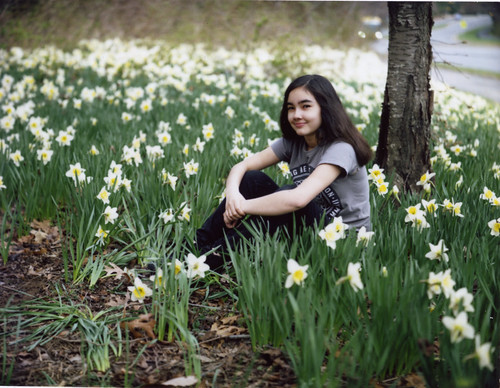
Scanned Instant Print, 14th Birthday, by Reed A. George
MUP, Fujifilm FP100C Film, f5.6, 1/125 sec.
 
 
I was so pleased with some of the images that I decided to figure out how to recover the negatives from the film backing, which you usually throw away.
 
(Click Here) to see a video from the Film Photography Podcast describing how to recover a negative from Fujifilm FP100C instant pack film. Beware that the process uses bleach. Wear gloves and keep a fan on while you work.
 
It was actually pretty easy to do, and the results are quite impressive. Here's a scan of the same negative that was used to make the print above:

 
Scanned Instant Negative, 14th Birthday, by Reed A. George
MUP, Fujifilm FP100C Film, f5.6, 1/125 sec.
 
I think I could have done a better job scanning this negative. The highlights are too high, and the colors are washed out compared to the print.
 
Here is a more impressive comparison, showing the scanned print (left) and negative (right) at 100% magnification.

 
100% Crops (Print on Left, Negative on Right)
 
As you can see, the negative has a lot more detail and sharpness, and grain. Pretty interesting. I could make a 5x7 print from the negative just fine.
 
DMC-365.blogspot.com


Tuesday, February 3, 2015

Instant Photography Today

Winter 2014 (kind of looks like Winter 2015), by Reed A. George
Polaroid 103, Fuji FP3000B Pack Film
 
I'm still having some fun with instant photography. This was one area I'd stayed out of for several years, but am now in, and really enjoying it. My entry was the Polaroid 103 that my parents sent to me. I converted it to use AAA batteries, found Fuji pack film, and started shooting. Lots of fun.
 
Then, I went to the Film Photography Project's Walking Workshop last spring, where I was introduced to the new Fujifilm Instax Neo Mini. I now have one, along with the wireless Instax printer. These are fun, but they're really just party toys. The images are nice, but quite small.
 
Next, my friend Dennis Gallus sold (nearly gave) me his Mamiya Universal Press (MUP) outfit. I added a pack film back, and now I have a very capable, high quality instant imaging system, complete with full manual control and interchangeable lenses. Awesome.
 
And now, I've picked up a higher grade Polaroid (the Model 250), complete with several hard-to-find accessories, including the portrait kit, closeup kit, remote release, and timer. That camera is on its way to Seattle for a shutter replacement. What makes the 250 higher quality than my 103? All metal body, Zeiss finder, tripod mount, some exposure control. All pretty nice.
 
I was reading about the current state of instant photography. It's not all good. The worst news is that the venerable Fujifilm FP3000B is discontinued. Still available at this point at twice its normal price or more, but no longer being manufactured. That leaves only FP100C, which is great color film, but no B&W option. The Impossible Project is a great development, making new instant films with a reconditioned Polaroid factory, but the prices are high, and the offering incomplete. $3 per shot is an awful lot. I find myself hoping that they'll make pack film in the future, but I'm not looking forward to the cost.
 
(Click Here) to read a review of the state of instant photography on polaroidland.net.
 
DMC-365.blogspot.com
Saturday, September 6, 2014

Low Tech Wonders - A Little Fun with the FPP Debonair

Sometimes I just want to have a little photographic fun. I want to drop all pretense and concern about the technical aspects of photography, and shoot. I suppose I still (kind of) think about composition, but that's about all I control when I shoot my "Debonair" 6x4.5 medium format toy camera from the Film Photography Project (FPP).
 
(Click Here) to check out the awesome Debonair, a <$20 real film real toy camera on the FPP website.
 
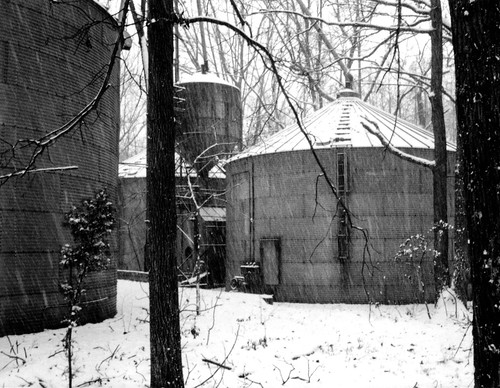
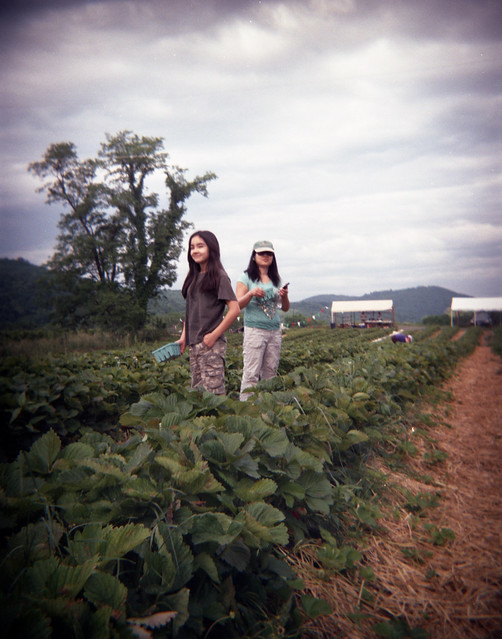
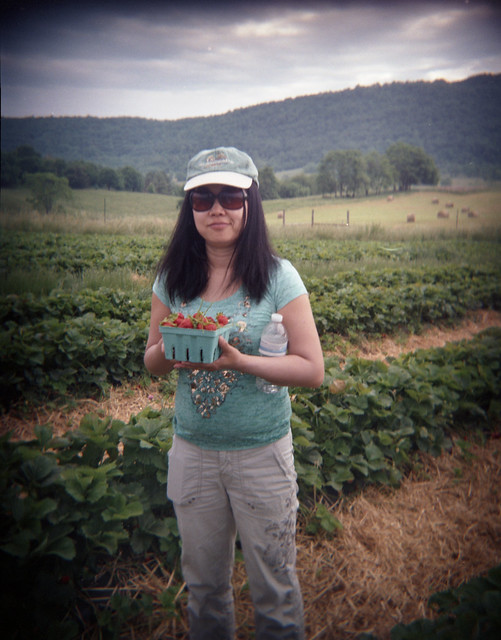
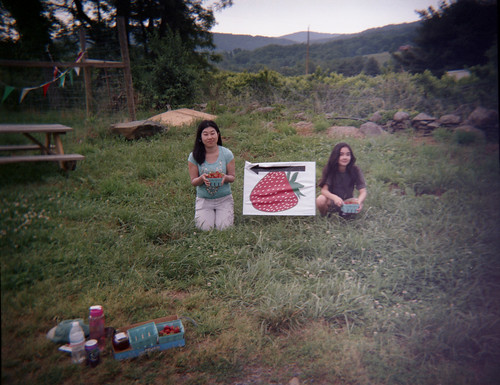
Here are some shots I took on an outing to a local farm to pick strawberries with my family last year (it took a while to finish the roll and send it off to The Darkroom).
 
All of these were shot on expired Konica Centurian film, which judging by the name should be good for 100 years, right? I love the vignetting you get with the cheap plastic lens. It's actually kind of sharp in the center, but that falls away very quickly. Theses are pretty much out-of-camera scans, with only cropping in Lightroom.
 
DMC-365.blogspot.com
 

Tuesday, July 15, 2014

Film Photography Project (FPP) Giveaway - My Sigma 400mm f5.6


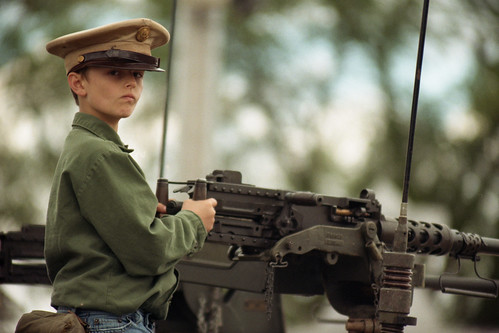
I attended the FPP Walking Workshop back in May, and won two great pieces of gear in the giveaway - a Nikkormat FT3 and a Sigma pre-AI 400mm f5.6 telephoto lens. Of course I had to try this big old lens, so I mounted it on my plain prism Nikon F body and took it on the FPP walk to a local military commemorative event. Here are two examples of what I got.
 
At first, this young guy wasn't sure about having a 400 mm lens pointed in his direction. Than he settled down and had some fun "shooting" the 50 caliber machine gun on this vehicle.
 
Rat-a-tat-tat!, by Reed A. George
Nikon F Film SLR, Sigma 400mm f5.6 Pre-AI Lens
 
I was pleasantly surprised by the sharpness of this old lens. Shooting iso 400 film, I was able to keep the shutter speed up at 1/1000 of a second, which allowed me to handhold the lens. The lens is a little low in contrast, but I find the result quite nice. Thanks, FPP!
 
(Click Here) to learn more about the FPP.
 
DMC-365.blogspot.com
 

Tuesday, June 17, 2014

Huey Copter Pilot Portrait - Agfa Record III Medium Format Folder, FPP Walking Workshop


Mr. Don Nelson, by Reed A. George
Agfa Record III, Kodak Tri-X Film


This is Don Nelson, who flew this exact Huey copter in Vietnam in 1968, including having to put it down in a rice paddy in an emergency. Mr. Nelson was part of the military event going on in Findlay on the day of the Film Photography Project (FPP) Walking Workshop, and had just that day given his 40-something daughter her first ride in the copter. I shot this with my Agfa Record III medium format (6x9 on 120 film) folding camera, on the Tri-X that came in my FPP goodie bag for the event!

Great memories all the way around! Thanks FPP, for a great event!
 
DMC-365.blogspot.com
 

Sunday, May 25, 2014

Need a Manual for that Old Camera? butkus.org is the Answer!

Image Source: http://imaging.nikon.com/lineup/filmcamera/slr/nikomat_ft3/
 
 
This morning, I loaded up my first roll of film in the Nikkormat FT3 I won in the Film Photography Project (FPP) Walking Workshop last weekend. When I went to set the film speed, I realized that the indicator didn't want to move. I couldn't remember how to unlock it, but was at least smart enough to not force it.
 
What to do? Needless to say, it didn't come with a manual. Simple. There's an incredible resource of scanned manuals for cameras and accessories online at butkus.org
 
(Click Here) to go to butkus.org if you need a manual for (nearly) any old camera.
 
I found the complete Nikkormat FT3 manual there, just as I expected.
 
Whenever I find a manual and download it, I donate (~$3-5) to the site. It's easy, with a Paypal button right there. There's also a mailing address, if you want to send a check.
 
By the way, while the FT3 is simply described as "AI version of the Nikkormat FT2 (1975)" on the Nikon website, I've come to realize that it's truly the best Nikkormat (Nikomat) model for me, as it happily accepts AI lenses, and like the new digital Nikon Df, has the option of flipping the AI lever out of the way so that you can mount and use non-AI lenses. When you do this, you have to use stop-down metering, but hey, that's a small compromise. So, the FT3 is a wonderful camera to always have in your bag as a backup when shooting Nikon film SLRs, no matter which model is your primary or which manual focus lenses you're carrying.
 
Now to see if I can make any interesting images with it!
 
DMC-365.blogspot.com
 

Thursday, March 27, 2014

I'm Going to the Film Photography Project Walking Workshop in May!

If you like shooting film, you must know the Film Photograph Project (FPP). I love listening to their podcast, which is about to record its 100th session. These guys really have fun with film photography.
Image Source: http://filmphotographyproject.com/
 
 
To check out the FPP, their podcast, film camera and film stock store, flickr community, and more, (Click Here).
 
I'll be attending the Saturday session of their Walking Workshop in Findlay, Ohio in mid-May.
 
(Click Here) to read about the workshop.
 
I've been buying film from the FPP once in a while, as their prices basically match the big NY stores, and I like to support the little guys. The Ilford Delta 3200 I've been using lately comes from them.
 
So, check out the FPP, support them, and join the Walking Workshop if you can!
 
DMC-365.blogspot.com


Friday, June 7, 2013

Low Tech Wonder - the Debonair from the Film Photography Project

 
The Plastic Filmtastic Debonair from the Film Photography Project
Image Source: http://filmphotographyproject.com/store/fpp-plastic-filmtastic-120-debonair-camera
 
I've gotten hooked on a podcast from the Film Photography Project (FPP). It's a regular audio podcast put together by a group of friends in Findlay, Ohio. Part comedy, part film photography infocast, these guys keep it light and interesting.
 
(Click Here) for information on the podcast.
 
They also have an online store, with great pricing and availability on film. In fact, their Kodak film prices match the big New York warehouses. I like to support FPP.
 
(Click Here) to go to the FPP store.
 
While you're looking through the store, you may notice the "Plastic Filmtastic Debonair." An all-plastic medium format (120 film) camera, the Debonair is reminiscent of a Holga. With its fixed "Super lens," which is a 60mm f8 (no f-stop adjustment available), the Debonair shoots vertical (portrait) orientation 6x4.5 cm images. You get 16 images per roll of 120. Shot spacing is accomplished through a red window in the camera back, so you'll need to put some black tape over that if you use high speed film. The shutter speed is fixed somewhere around 1/100 sec on the sunny setting. There's also a cloudy setting that seems to be close to the same, maybe 1/60 sec. The lens has three focus settings - close, medium, far.
 
This camera allows you (forces you) to put your mind on seeing images, rather than technical settings. Composition becomes king. Sharpness is out the window, of course.
 
Most importantly, the Debonair costs $19.99. It's worth at least $19.99, maybe even $20.00.
 
Here are some images from my first roll of film through the Debonair, shot on Konica Centuria 100 print film, which expired in 2006.


Plastic Filmtastic Debonair Images, by Reed A. George
 
Obviously, I didn't spend any time post-processing these. I did increase the exposure a little after scanning them, but that's it. I think iso 200 film would be better for daylight pictures.
 
As usual, I used my favorite processing house for these, The Darkroom.
 
(Click Here) to check out The Darkroom. They process 35mm and 120 film for $10 per roll, including putting scans online for you. I'm a dedicated customer. You can print out a prepaid mailing label, or they'll send you a prepaid envelope if you contact them. I have sent them a lot of film, and always been happy with the results.
 
So, spend $20 with the good people at FPP and get yourself a Debonair. See what forgetting about f-stops, shutter speeds, and focusing points can do for your creative side!
 
DMC-365.blogspot.com


Wednesday, April 10, 2013

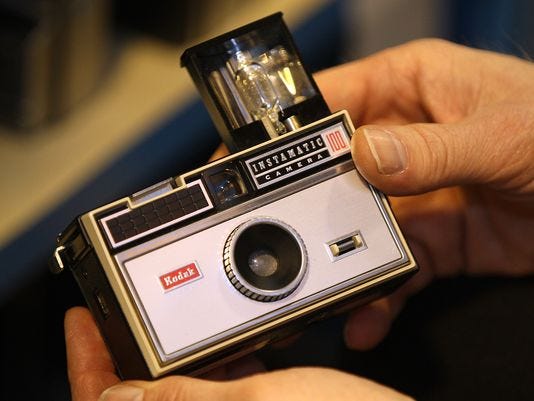
The Kodak Instamatic Turned 50 in March

Image Source: http://www.usatoday.com/story/tech/2013/03/29/instamatic-camera-50-years/2034585/
 
I read this morning that the Kodak Instamatic camera was first introduced in March, 1963. That's about seventeen months before I was introduced to the market (being born in December, 1964). My first camera ever was a Kodak Instamatic, which hardly distinguishes me - Kodak sold 50 million of them!
 
There's an interesting post about the Instamatic, a camera designed to be easy to use at the cost of image size, lens quality, and just about everything else, on The Online Photographer blog. But, easy to use it was! The 126 cartridge film and flash cube were truly foolproof. You had to intentionally bust open a cartridge (or remove it mid-roll) to accidentally expose your film.
 
(Click Here) to read about the Instamatic and chief designer, Hubert Nerwin (a post-war transplant from Carl Zeiss in Germany) on The Online Photographer. In this article, the author Mike makes the case that the Instamatic gave Kodak the misplaced confidence to bring out other compromised products, including the Disc Camera and APS systems.
 
As I remember it, the APS was really kind of cool. Most APS cameras could rewind your film mid-roll, and remember where they were, automatically getting you back to the correct frame when reinserted in the camera. That was pretty advanced for the time. I would like that feature on my 35mm cameras.
 
I also think Mike left out the most compromising development in cheap cameras, the 110 film cartridge. Truly a miniscule negative, you were beat before you ever started if you wanted to take a quality image with 110. Yes, I know the Pentax Auto 110 was a cool little camera outfit. It was like if Panasonic produced a system camera based on a 640x640 pixel tiny sensor, rather than Micro 4/3.
 
And, amazingly, 110 film is back! At least it's in the right hands now, those of people who understand and even enjoy its limitations. Yes, I mean the Holga / Diana crowd, where medium format cameras with light leaks are welcomed, for example. I really like this crowd - as I often say, constraints (or limitations) can sometimes drive creativity, and I think the toy camera user groups are often creative.
 
Want to know more about 110 film, where to get it, and how to get it processed?
 
(Click Here) to read about it at the Film Photography Project (FPP). This article should get you started. They sell 110 film in the FPP store. Or, see my link below to buy it at Amazon.
 
DMC-365.blogspot.com