Tuesday, October 7, 2014

Magnum Workshop Day 3/7 - Still Searching

Tuesday. Now I was really feeling that I needed to find a groove and produce some pictures. I knew just how quickly it was going to be Friday.
 
I didn't sleep well on Monday night, thinking of just how I might get a photo story out of this week. Ptown was winding down for the season and I didn't want to shoot the more obvious topics. The Center for Coastal Studies was an intriguing possibility, but the chances of getting together with them while they were so busy were just too low.
 
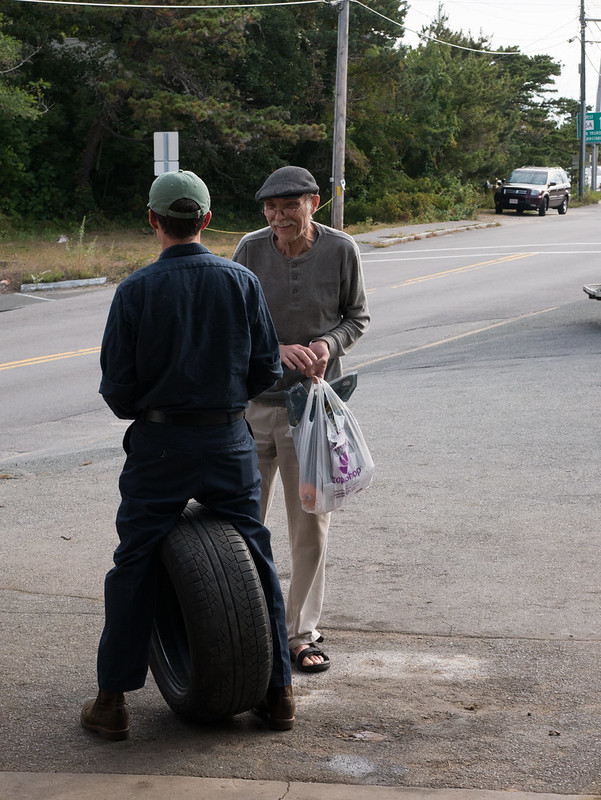
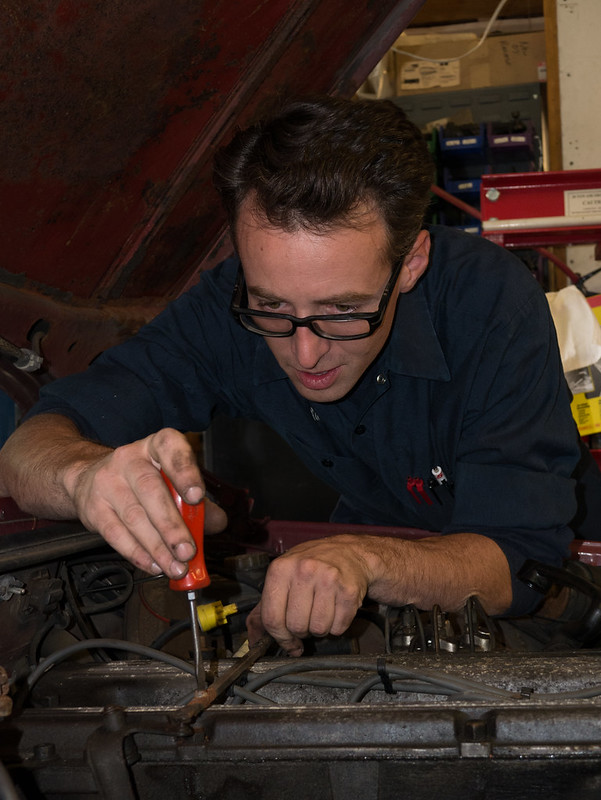
I knew that I was thinking too hard about it, and needed to pursue something. Stop thinking and start doing. I convinced myself that the best opportunity to go a little deeper was at Rego Automotive. No, it wasn't a flashy story, but Pat was an interesting and talented guy, working hard to make a small business successful in Ptown. Since I didn't really get any photographs to share on Monday, I let Bruno know that I would miss the morning session and go pursue some images at Rego Automotive.
 
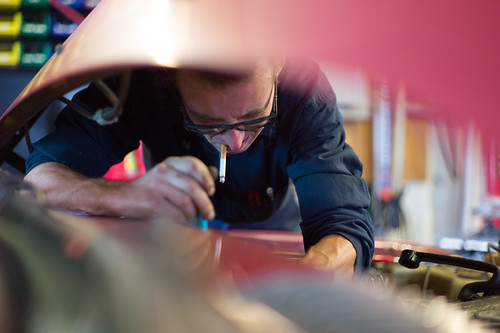
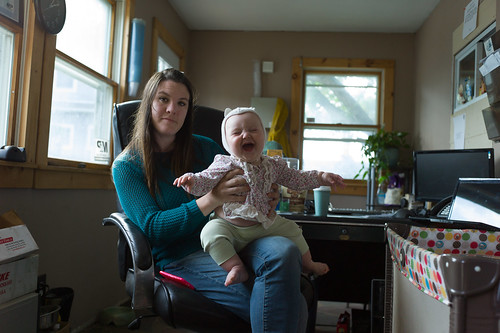
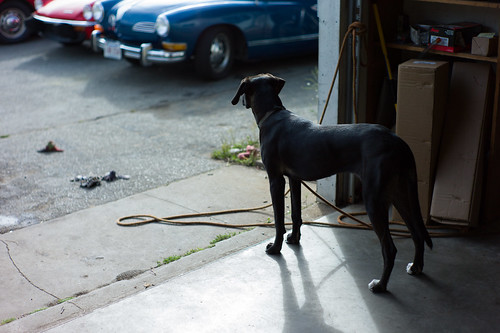
I was very pleased to find Pat already hard at work when I showed up, and that he was willing to let me hang around and shoot more pictures. I supplied several images to Pat and his wife, Lacey, to use on their facebook page. I am happy to see them on the Rego Automotive page, and hope they help!
 
Anyway, I spent a few hours hanging out, talking with Pat while he worked, and photographing the course of his business.
 
I left around lunch time, feeling that I had at least pushed a little further into a story. I wasn't sure that I had enough to make a project from, but the experience had been good and in the right direction.
 
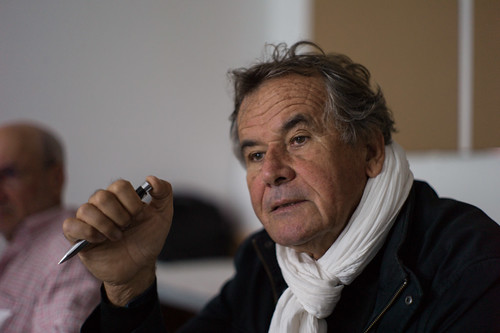
In the afternoon, I rode my bike out to the National Seashore to visit Richard Ryder at the Lifesaving museum. Mr. Ryder had answered my email inquiry from before the workshop. There were no special events during my week in Ptown, but he invited me to come and see the regular displays at the museum. I very much enjoyed meeting Richard, and shot some portraits of him in the old station, where his family members had served in generations past.
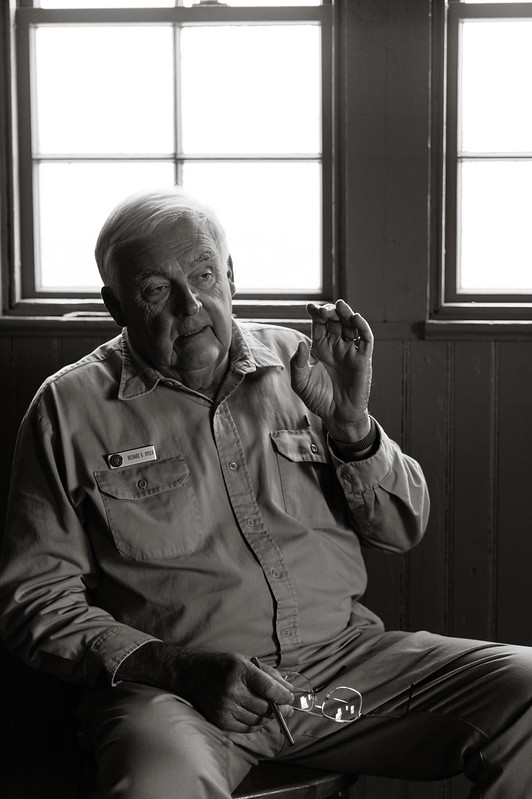
 
Richard Ryder, Lifesaving Museum Historian
 
There was certainly a good story in Richard's own family history with the station, but the kind of story that's best told by a writer, not a photographer. Pleased to have met Richard, I had to scratch that story off my list as well, and move on.
 
Looking down the beach from the museum, I noticed a caravan of trucks on the beach, and a group of people surf fishing. It was a long walk, but I had to see if I could find something interesting there. The fishermen were all New York City employees - policemen, firemen, sanitation workers. They have been coming to Ptown to fish together for over 30 years.
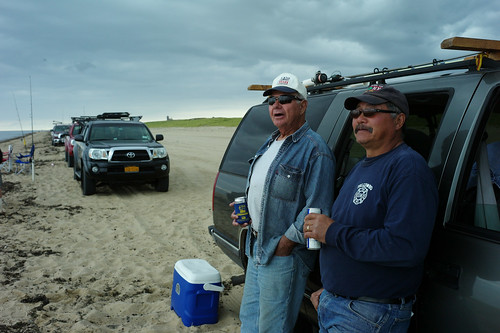
 
Surf Fishing
 
These guys were super-friendly, and full of stories. I hung around for an hour or so, and shot what I found interesting, which was mainly their personalities. The fishing wasn't productive, at least while I was there. Looking back on it now, this was potentially the "one that got away." If I'd been prepared to spend more time with them, I could have really gotten something good. As it was, I had only my bike and camera, and felt the need to get back to look through my images from earlier in the day and prepare for the next morning's review. If I had it to do over again, I would have done something to ensure that I could reconnect with this group later on. I am sure that their evenings together were as interesting as their days at the beach fishing.
 
When I did get back to review my images, I liked some from Rego Automotive. But, none of them really showed much human emotion or connection between people. I still was not there. At least I had something to show and get feedback on from Bruno the next morning.
 
I did realize how potentially productive the fishing group was, and planned to try to locate them again the next day. I could have helped myself out by getting contact information so that I could ensure success. Lesson learned.
 
On this evening, Bruno Barbey presented his work spanning 50 years in Magnum. So many of his images stuck in my mind, but one of a huge crowd in Poland, umbrellas getting covered in snow, was my favorite.
 
(Click Here) to see this awesome image on Magnum's website.
 
Another thing that really impressed me was Bruno's recent coverage of China. Caroline, Bruno's wife, shared an amazing video of Bruno shooting in the Chinese streets and interacting with the people. It really gave the presentation a different feeling, showing how people enjoyed his presence.
 
DMC-365.blogspot.com


Monday, October 6, 2014

Magnum Workshop Day 2/7 - Monday, First Day in Bruno Barbey's Group

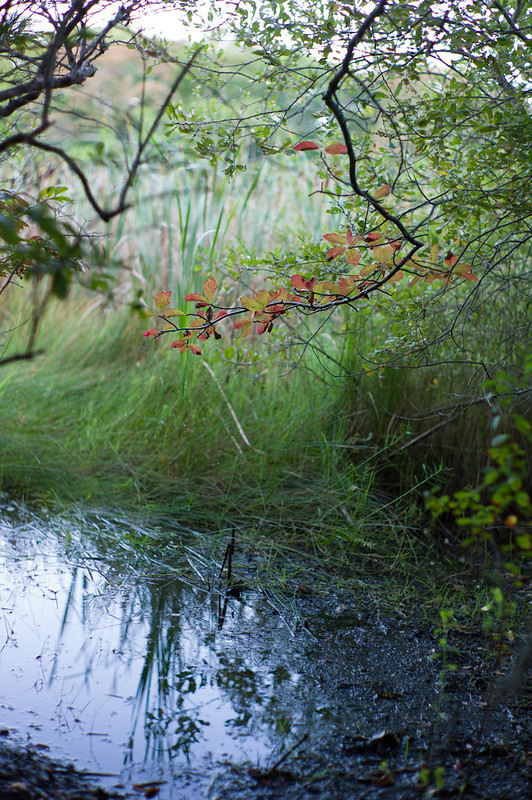
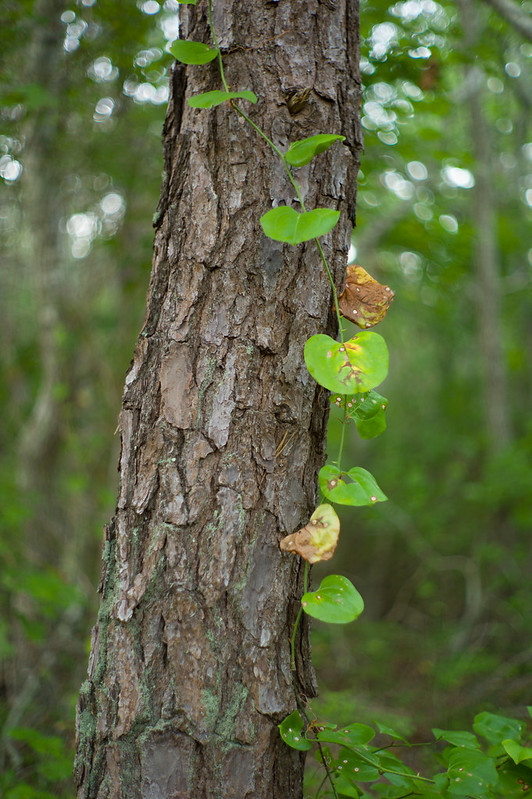
I started Monday morning with a drive to a place I'd read about in Land's End (see Day 1 for a full reference on this book about Ptown), the Beech Forest. I was up before daylight, and drove into the National Seashore to find the place. I ended up hiking in the forest for an hour or so, knowing that I wasn't going to find my photo project for the workshop there, but still quite interested in the place.
 
Morning in the Beech Forest
 
Returning from the forest, I went for coffee at a place in Ptown called Wired Puppy. This ended up being my morning stop every day I was there.
 
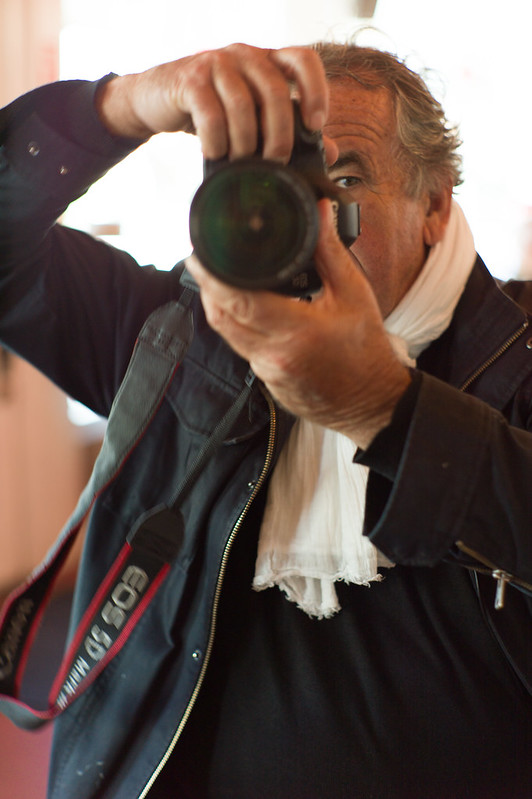
I happened to run into Bruno Barbey there, and had a nice chat before starting our workshop at 9:00 AM. I was a little surprised to find that Bruno shoots a Canon DSLR and zoom lens. Bruno and his wife, Caroline, are very nice, extremely creative people, and are interested in the people they meet. It turns out that Caroline is a very gifted videographer.
 
Morning Coffee with Bruno Barbey
 
We began our first workshop day with each student presenting their portfolios. Bruno withheld comment, saying that he'd meet with each of us individually later to discuss them. I never really got the chance to get this feedback since I transferred into David Alan Harvey's group on Wednesday.
 
One statement that Bruno made that I liked very much, and that has stuck with me:
"Photography is a fantastic excuse to meet people."
Bruno Barbey
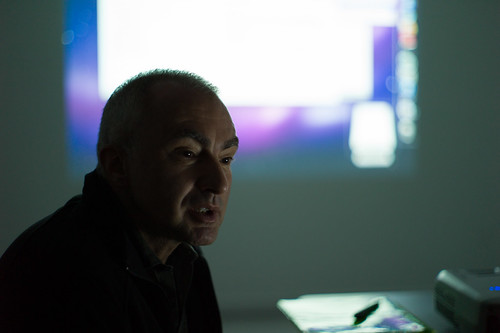
Viewing Portfolios (fellow student, Peter at top, Bruno Barbey below)
 
Bruno told us that we did not have to work on a project, but I was intent on finding some sort of theme to my week's work. At this point in time, I had no idea what that was. I also knew that a key to my learning would be to go at least one level deeper than just shooting pictures of strangers. Again, I had no idea how I would achieve that. This gave me more than a little anxiety about what was to come.
 
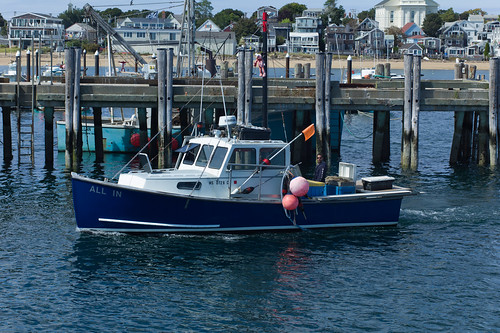
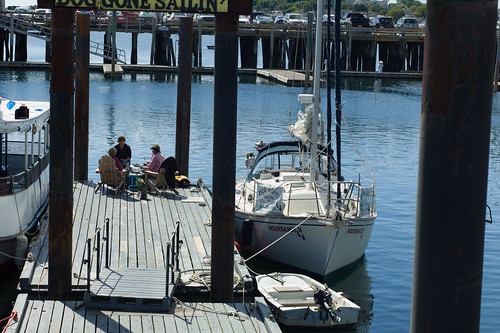
As soon as we broke at about lunch time to allow us to get out and shoot, I went to rent a bicycle for the week. My goal was to leave the car parked for the remainder of the week, which I achieved with only a couple of minor exceptions. Riding back from the bike shop, I stopped at the Ptown wharf, which I knew was a center for activity in the town. Shooting a few pictures, I left not feeling any closer to a real objective for the week.
 
I did stop in at the Center for Coastal Studies (coastalstudies.org), and learned of several interesting potential stories, including restoration of a historic sailing vessel, a fishing net entanglement project (where they go out and untangle turtles, whales, and other non-target sea life from nets), and even biological studies of whale age and bacterial environment using genomic and other technologies. Given more time in Ptown, this is where I would have focused my efforts. As it was, the group was at sea during most of the week, and I just couldn't rely on making contact later in the week. As it turned out, as much as I would have enjoyed it, I'm glad that I didn't rely too much on this one; we never did get to make contact when the boat came back in.
 
Ptown Wharf
 
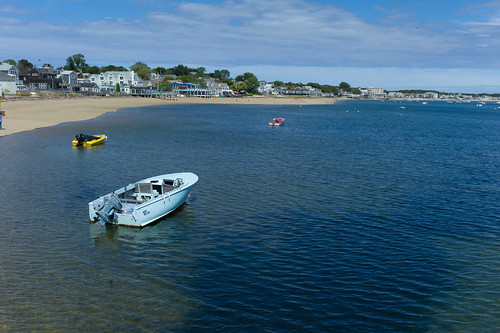
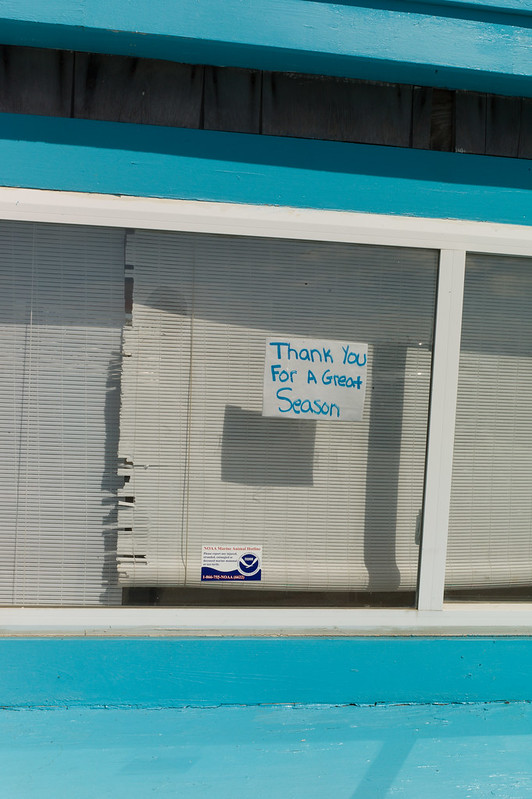
One idea I'd picked up from Land's End was the transition that Ptown goes through between summer and winter. I saw a few indications of that transition at the wharf, but was unsure about how to proceed with it as a concept.
End of Summer, Ptown
 
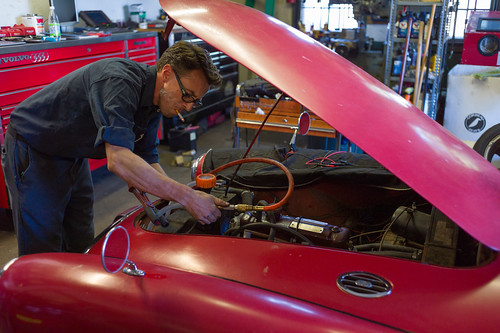
I continued to bike around town, including passing by a local auto repair garage (Rego Automotive), where my attention was caught by a 1974 Karmann Ghia, similar to the one I'd first learned to drive in, far ahead of my legal driving age. I went inside and introduced myself to Pat who runs the place. I asked him if I could shoot a few images, which he agreed to. He was working on a lovely 1959 MGA at the time.
 
Pat of Rego Automotive
 
Not sure how to go further, and feeling like I'd probably distracted Pat from his work for long enough, I moved on.
 
It was at this point that I stopped in to visit one of our workshop staff, Angela Russo, who runs a fine art photography studio in Ptown. (Click Here) to visit Angela's website and see some of her amazing color and large format photography. Feeling a little lost for a subject, having a conversation with Angela really helped me to get my head back in the game and keep looking. Angela is one of those few people I've met that I immediately knew I'd make friends with. She's a very special person, and continued to help me throughout the week, even though she wasn't assigned to work with either Bruno or David's groups.
 
Each weekday evening, one of the Magnum mentors gave a public talk and presentation of their work. On Monday, Olivia Arthur presented her work, largely centered around the Middle East and the treatment of women there. While Olivia found trends in the roles of women across the Middle East, she also found very interesting diversity from place to place. For example, she found Saudi Arabia to be culturally entirely apart from the other countries she worked in. In Dubai, she explored the cultural aspects of this rapidly developing country where only 10% of the people are citizens, and 70% are male. Olivia is a master story teller, and currently has two books in progress.
 
I left the workshop late that evening feeling very disconnected and concerned about being able to achieve the goal set out by Bruno Barbey as producing 8-10 presentable images in five days, one of which was now over. We were scheduled to meet at 9:00 each morning to review progress; I felt that I had nothing to show for my first full day of exploring.
 
DMC-365.blogspot.com
 

Sunday, October 5, 2014

Magnum Workshop, Day 1/7, Travel to Provincetown.

I've decided to document the experience of attending the Magnum Days workshop in Provincetown Massachussetts, one day at a time.
 
(Click Here) to read about Magnum Days.
 
I'm doing this after the fact, because our days were too full to do it in real time. I want to document for my own purposes, and share the process that I went through in the course of the five day workshop. I'll actually cover seven days, starting with Sunday, September 14, and ending with Saturday, September 20.
 
Sunday started early, with an hour drive from my home into DC to catch a flight from Reagan National to Boston's Logan Airport. There, I rented a car and drove the 2 1/2 hours to Provincetown, arriving in the mid afternoon. This allowed me the opportunity to meet up with my friends James and Maria, Boston natives who happened to be in Provincetown for a mini-vacation. We spent a little time together, and then I headed off to check in to my room and attend the first Magnum Days activity, a welcome party and barbecue.
 
Based on the fact that this was a Magnum event, I assumed that we would each work on a project throughout the week. In fact, I think it said that in the informational materials somewhere. In any case, I knew that we would have an exhibition of the workshop students' work on the following Friday. In order to prepare, I did a couple of things. First, weeks before the event, I started getting information about Provincetown (which I'll abbreviate as "Ptown," since that's fully accepted by the locals). I sent off an email to a historic lifesaving museum at the National Seashore, to see if there were any events during the time I'd be there. I received a nice response telling me there weren't, but that I was welcome to come and meet a historian on either Tuesday or Thursday afternoon, and see their museum. Didn't sound like much of a lead, but better than nothing.
 
I also decided to purchase a book on Ptown, entitled Land's End: A Walk in Provincetown, by Michael Cunningham. That turned out to be a very good primer about the town. It quickly became clear that Ptown is known for a few things: art, homosexuality, and partying. I also learned quite a lot about the land, lighthouses, and the National Seashore. Knowing that a Magnum workshop would be no place for landscape images, I wasn't sure if I could work any of that knowledge into my project. And, I wasn't particularly interested in covering the gay or party community, at least not on the surface of it.
 
I had also thought about the type of stories that our mentors have covered in their careers. Clearly, I wouldn't be covering a war in Ptown (thankfully). In fact, I tried to imagine anything there that may even reflect the fact that our country is currently involved in several military actions. The closest I could come was finding that Ptown had a Veterans of Foreign Wars (VFW) post. I thought that may lead somewhere.
 
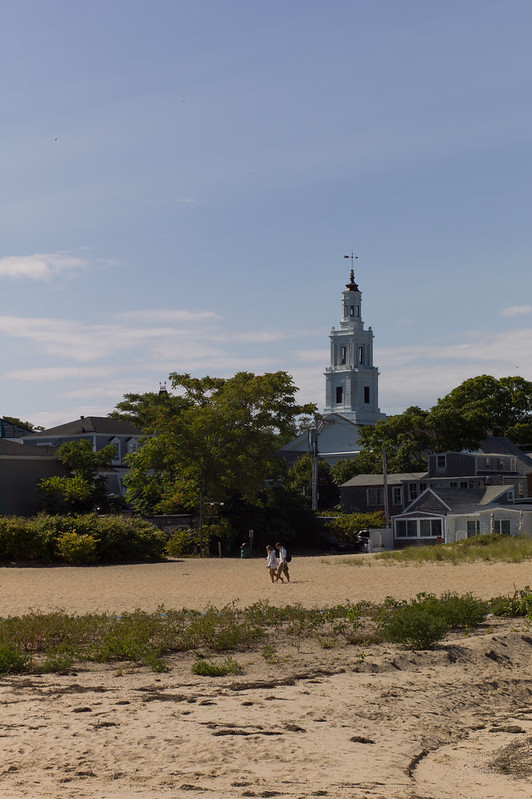
Of course, as I checked in and got my bearings, I shot a few images. You may have already seen this one, which has no interesting subject, but does show the beautiful nature of the Ptown light.
 
 
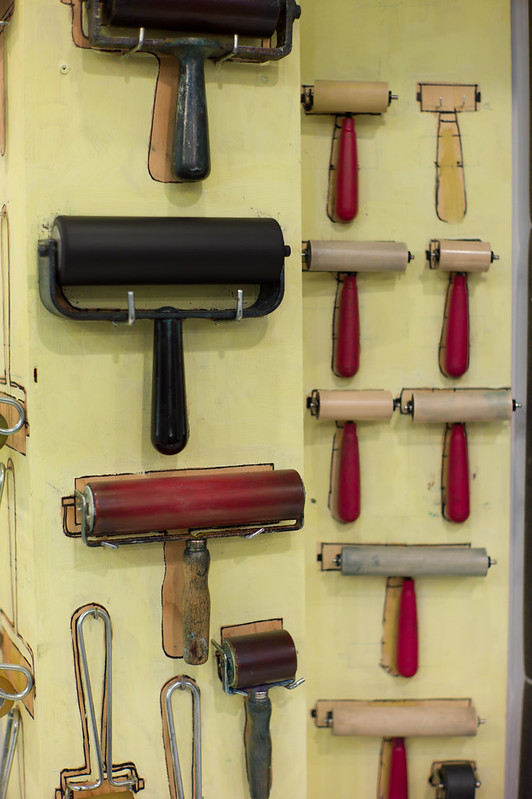
Attending the welcome party, we got a quick orientation to the Fine Arts Work Center (FAWC) in Ptown, which includes a fully-functional printing operation. I always love to look at tools, a practice that I'm sure came from my Dad. Check out these brayers. That's what I call organization.
 
 
After the party, I decided to walk down the main drag, Commercial Street, to see what it was like. I didn't want to just shoot random street photography during this workshop, and ended up spending much less time here than most of the other students.
 
 
When you're looking for a project idea, I think it's generally a bad idea to define what you don't want to do. But, on this evening, I did decide not to focus on drinking and homosexuality in Ptown. It was just too obvious. Not that this thought brought me any closer to what I did want to cover. I think you can see that I didn't have a coherent project idea at this point; it would take a while to form.
 
The other important development on Sunday was that those of us signed up to work with David Alan Harvey learned that he was stuck in Europe due to an airline strike, and would not arrive until Tuesday night. I decided to take this as a positive opportunity, as I was also very interested in learning from the other Magnum mentors, specifically Bruno Barbey. I got to spend the first two days with Bruno, which really added to the experience.
 
DMC-365.blogspot.com


Keller Williams and More Than A Little

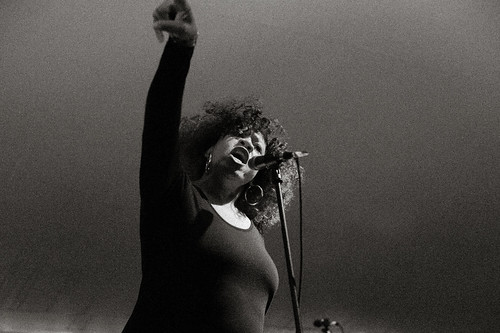
I'm just starting to work through all of the pictures I took at my favorite local music festival at Watermelon Park this year. Here's one that I know I like.
 
More Than A Little, by Reed A. George
Nikon D700, 50mm f1.4 AF-D Lens
iso 6400, f2.8, 1/125 sec.
 
This is one of the singers from Keller Williams' "More Than A Little" project, just about the funkiest music around.
 
I treated the digital image to my homemade preset to emulate the look of Ilford Delta 3200 film. For details on the preset, (Click Here).
 
DMC-365.blogspot.com
Saturday, October 4, 2014

How to Pursue a Quest - by Chase Jarvis, on Author Chris Guillebeau

We all know that life is a journey, not a destination. How you get there is as important as where you end up.
 
Chase Jarvis recently interviewed author Chris Guillebeau, who's just written a new book called The Happiness of Pursuit. Chris also runs a blog called "Art of Nonconformity." I'm going to check both of these out.
 
(Click Here) to read the interview post on Chase's blog. I love the story that Chris shares of the family living in Oklahoma who decides to have an international perspective, which they obtain through preparing ethnic food from around the world. Pretty cool.
 
I've copied the following directly from Chase's blog, rather than restate them myself:
 
"According to Chris, here are the 5 key qualities of a quest:
    1. A clear goal and a specific end point
    2. A clear challenge
    3. A sacrifice of some kind
    4. A calling or sense of mission
    5. A series of small steps and incremental progress toward the goal"
This whole idea of a quest having a beginning and end, milestones, etc. sounds very familiar to me. This is the same set of features that are used to describe a project, any project, from a project management perspective. Pretty boring, actually. The inspiring part comes from the challenge, sense of mission, expecting the unexpected, and sacrifice. That's not typically part of the project management discussion.
 
There are many questions to answer in forming your own quest. How big, how long should it be? Lifelong quest or weekend quest? How do you get a quest with a sense of mission that will still be enjoyable, or at least endurable? How many quests can you be on at any given time?
 
I am going to buy this book and see what I can pick up from it. If you're interested, please use the link below to purchase yours from Amazon.
 
DMC-365.blogspot.com


Friday, October 3, 2014

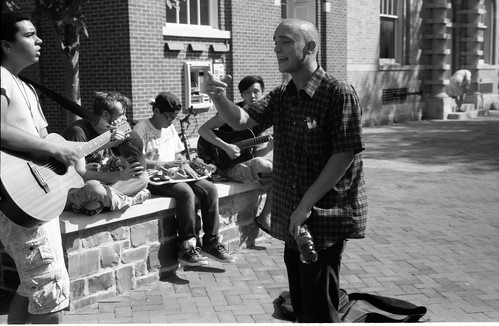
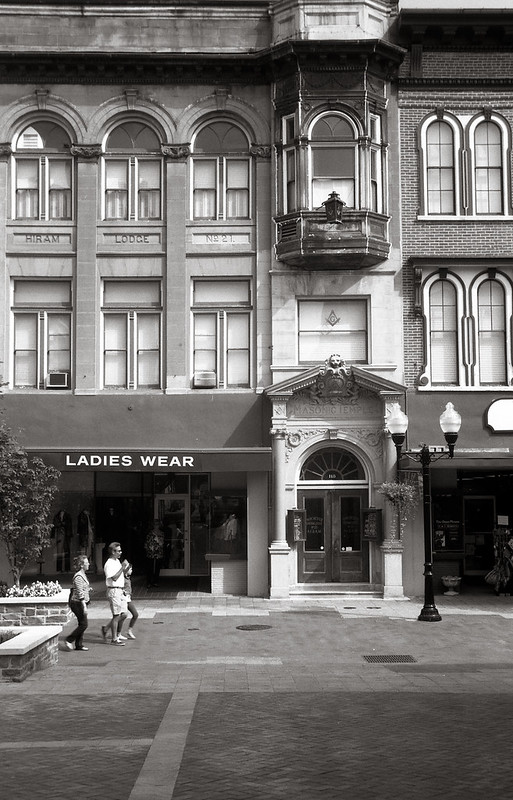
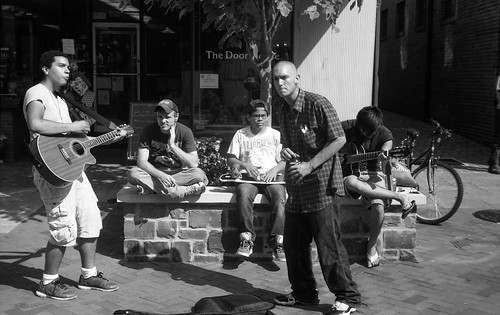
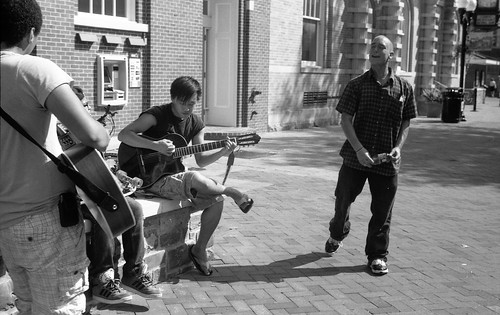
Street Musicians, Early Street Camera - Leica I Model C

A few more images from my Leica I Model C and Summar 5cm f2 lens:
 
These were all shot in Winchester, Virginia. It's a very nice little town, with a great pedestrian street (Loudoun Street).


I've been suffering the loss of my wireless keyboard on my iPad, so my posts have not been vey verbose this week. That situation will be remedied very soon!
 
DMC-365.blogspot.com
 

Thursday, October 2, 2014

More From the Leica I Model C and Summar - Architectural Illusions

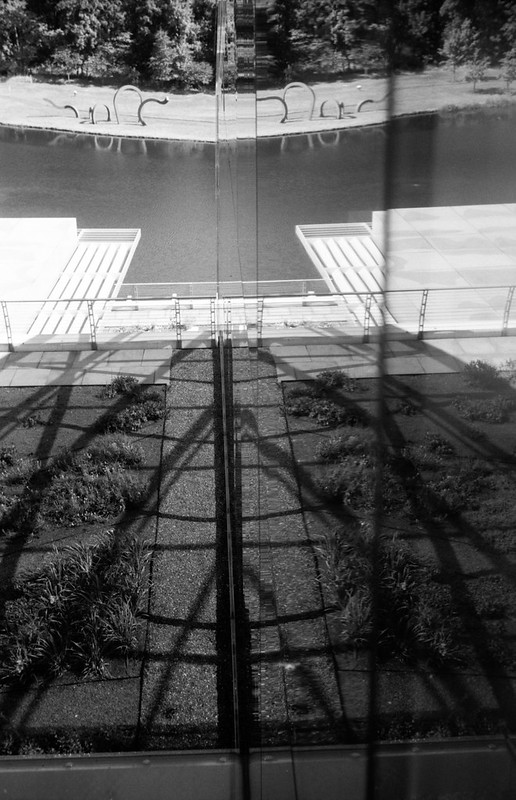
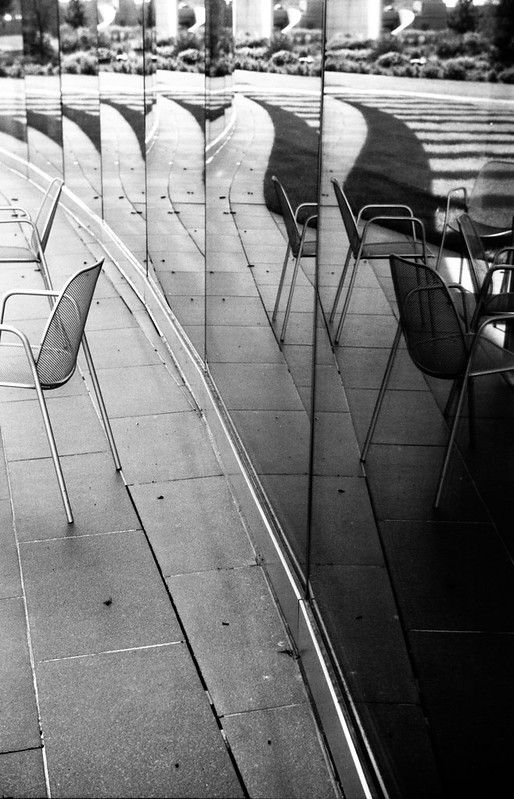
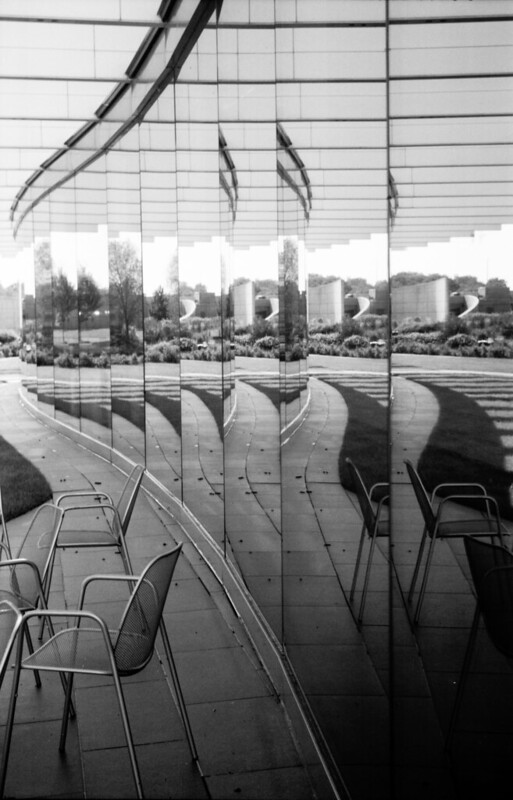
The building I work in is an amazing feat of architectural design. I don't photograph there very often, but on the day I was testing my new 1931 Leica I, I happened to notice a couple of interesting illusions formed by the architectural glass and surroundings. All were shot with my Summar 5cm f2 and Kodak Tmax 100 film.


The Leica I doesn't have an integrated rangefinder, so it is "guess focus.". The little viewfinder you use to compose feels inaccurate, and obviously doesn't provide for parallax compensation. But, it's a gas to use this little piece of history.
 
DMC-365.blogspot.com