Showing posts with label history. Show all posts

Tuesday, July 5, 2016

A Hike on the Unfinished Railroad

A few weeks back, I took a hike at the Manassas National Battlefied, site of two ferocious battles in the US Civil War. The Unfinished Railroad is a trench dug for rails, but never finished. It was a center of the second battle of Manassas.
 
I shot these images with my Rolleiflex SL2000F. Man, I love this weird old camera.
 
You could smell the summer honeysuckle all along the trail.
 
 
This monument is at the end of the trail. It reads: "In Memory of the Patriots Who Fell at Groveton, August 28th, 29th, & 30th, 1862.
 
 
DMC-365.blogspot.com
Wednesday, September 16, 2015

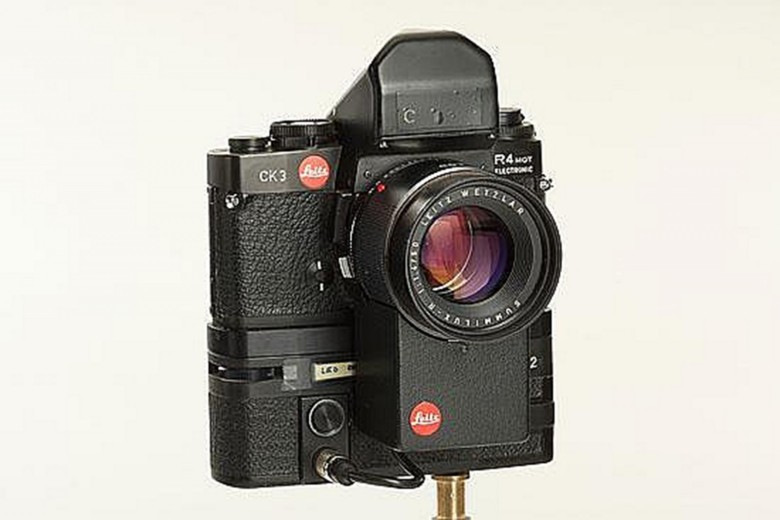
Who Would've Thought Autofocus Would Be Important? Apparently Not Leica

Image Source: http://www.cultofmac.com/383779/leica-invented-autofocus-then-abandoned-it/
 
The blog Cult of Mac has run a piece on how Leica invented autofocus, only to abandon it. Apparently, they were not able to perfect it to the level that they thought their exacting customers would be satisfied with it. I never knew this before reading this article.
 
(Click Here) to read more about how Leica invented then abandoned autofocus, and how it was made a commercial reality by other companies, chiefly Minolta.
 
Thanks to my friend Bill for hooking me up with this interesting article.
 
DMC-365.blogspot.com
 

Wednesday, June 17, 2015

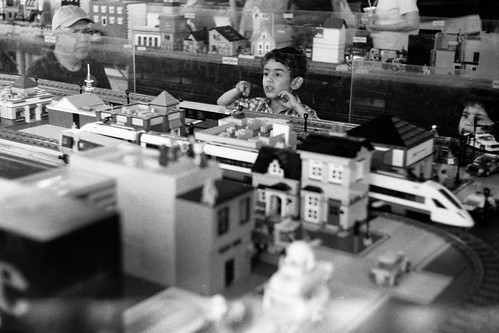
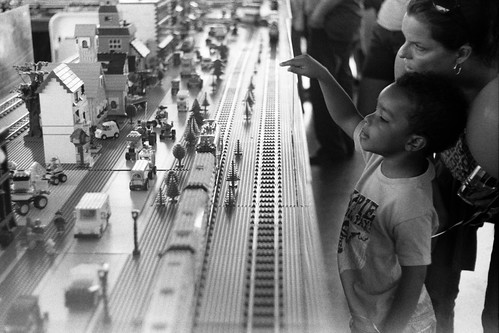
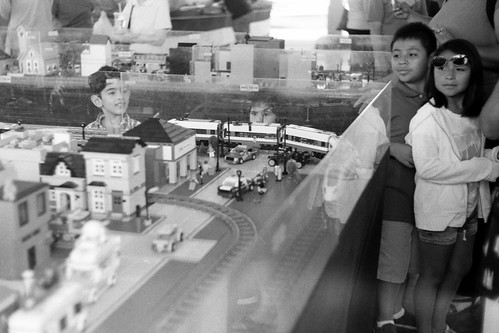
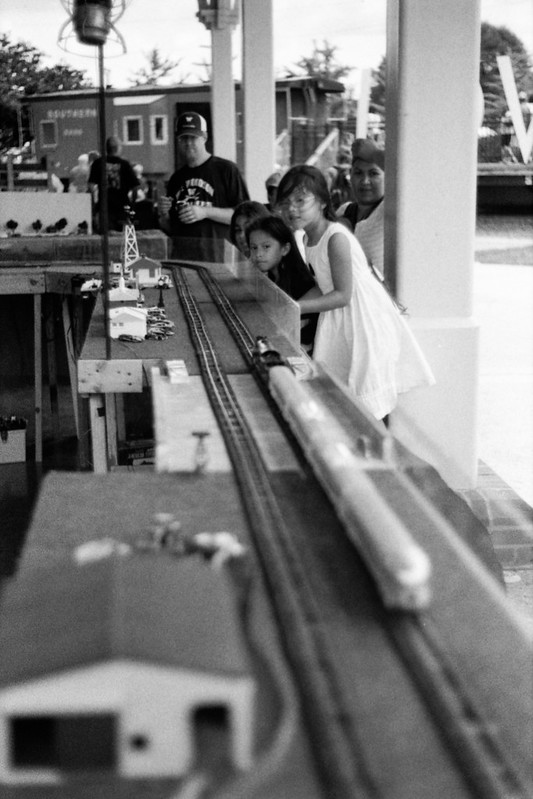
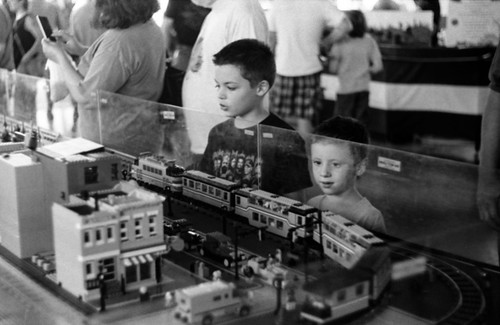
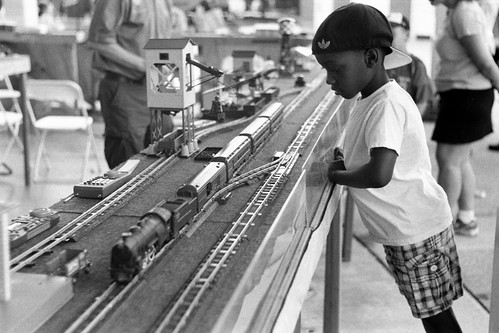
Kids at the Manassas Train Festival - Leica IIIG, Summitar 5cm f2 Uncoated Lens

Last weekend, some friends and I attended a train event in Old Town Manassas, Virginia. I focused on photographing kids at the miniature train displays with my Leica IIIG and wartime Summitar 5cm f2 collapsible lens. All of these were shot on Agfa APX400 film, exposed at iso 200 level.
 
 
It's great to see these modern kids so deeply interested in trains and mechanical things.
 
Speaking of mechanical things, shooting with the IIIG was a pleasant challenge. Focusing quickly is not the forte' of Barnack cameras, especially in shade, but I did pretty well overall. My Agfa APX400 did pretty well here, as well, if a bit on the low contrast side. All in all, a very enjoyable photographic experience.
 
DMC-365.blogspot.com
Thursday, January 8, 2015

The Rolleiflex and Attracting Photographic Subjects

 
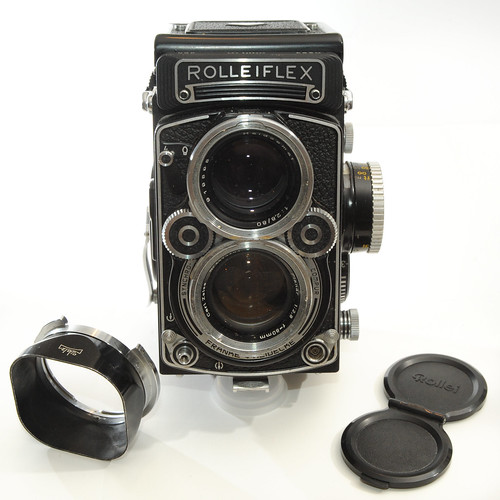
My Rolleiflex 2.8F
 
Over the holiday break, I've spent a little time with my new Rolleiflex 2.8F, which I purchased a couple of months back from my close friend Charlie. Mine is a Model K7F2 with Zeiss Planar lens, manufactured in 1966.
 
Charlie, and another good friend, Alain, have recently taken up their twin lens reflex (TLR) Rolleis and done quite a lot of shooting. One of the things that excites them both about Rolleiflex is how warmly people welcome them shooting with them. So many people ask about the cameras, or remember someone who had a camera like that, etc.
 
I have certainly experienced the same phenomenon. In fact, Charlie and I were in DC over the weekend, when a lady at the table next to ours in a cafe said "Excuse me, I see you have a Rolleiflex." She then went on to tell us that she owns one herself, which she inherited from her brother. By the way, her brother fought in World War II, including Normandy, entering the military at age 14 with a made up birth date. This nice lady asked about our little photography group, which meets once monthly. She's invited to our next meeting, and I'm hoping she'll bring her camera along and let us help her start shooting it again.
 
In my opinion, this kind of camera recognizing is both blessing and curse. While I certainly enjoy welcoming photographic subjects, sometimes I want to go unnoticed. I find that a small 35mm camera, like a Leica rangefinder, is better for that. The truth is that subject reaction to the two types of cameras is just different. Neither is good or bad; they're just different.
 
I've written about this in the past, with regard to my Mamiya Universal Press camera. Very few people recognize the MUP, but it's so big, it's not going to go unnoticed. (Click Here) to see some of the "candids" I've taken with the MUP.
 
I recently found a post on the blog "TLRgraphy" about this automatic receptivity in photographic subjects when you're using a Rolleiflex. (Click Here) to read the post on TLRgraphy.
 
Anyway, I've now got two rolls of 120 film exposed with my 2.8F, ready to go off for processing at thedarkroom.com
 
Hopefully, I'll have a few good images to share with you in a week or so.
 
DMC-365.blogspot.com
Tuesday, December 16, 2014

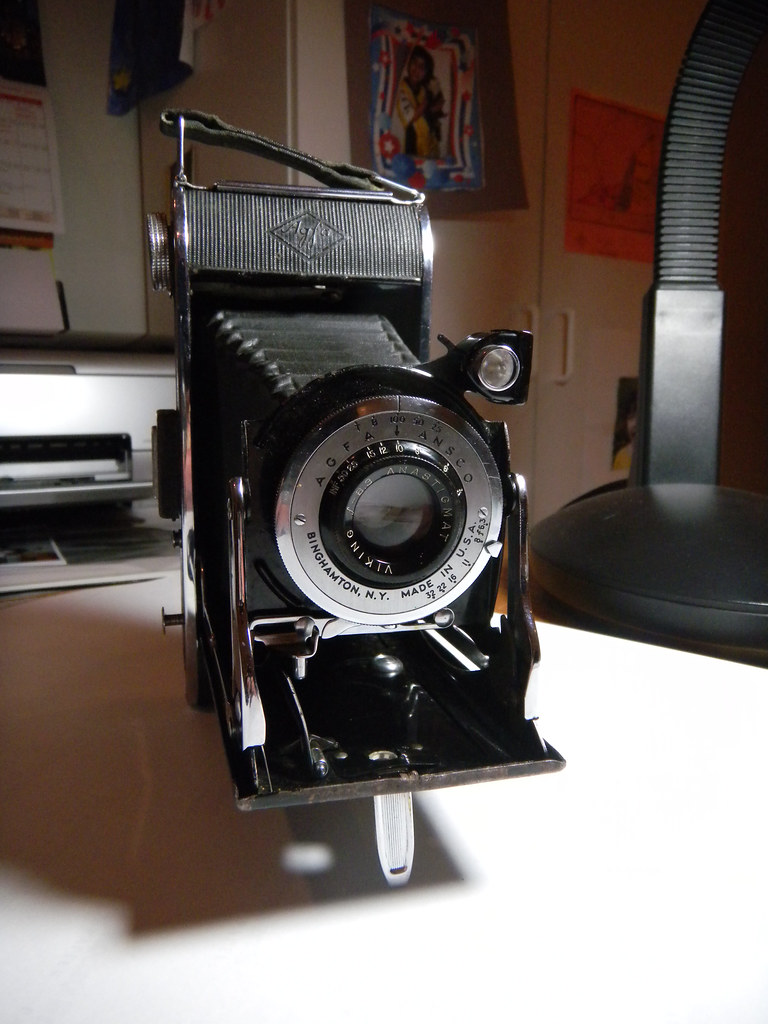
Grandpa's World War II Agfa Viking

I thought I had written about this a few years back, but it seems I forgot to post it.
Back in December of 2010, my Grandfather gave me his Agfa Viking camera. He picked it up during World War II, during which he was stationed in Japan and the Phillipines. He seems to remember trading a 35mm Japanese camera for it. Who knows what that may have been?
Anyway, once I got it, I saw that the shutter seemed to be working fine, and the lens turned to allow focusing (it's very common for the cell to get locked in place over so many years). Then I found the aspect that threatened to prevent me from using this old jewel - it is designed for 616 film, which is no longer available.
Grandpa's Agfa Viking
 
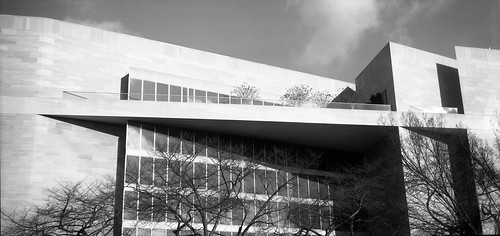
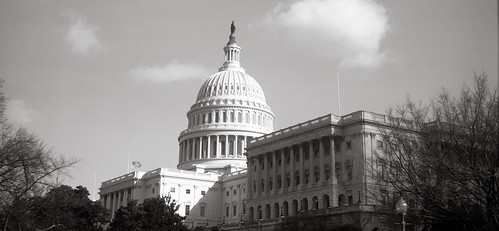
Undaunted, I hand-fabricated a thin plastic mask that allows 120 film (not as wide as 616) to ride in the correct film plane in the camera. I then modified some 120 spools to fit into the Viking. It's not perfect, and sometimes the spools slip during film transport. I measured out which exposure numbers on the 120 film backing would indicate sufficient travel. I can now use the red window on the back to make sure I've wound the film on far enough to avoid overlapping images.
 
This configuration results in a panoramic aspect ratio. Here are two shots I made in Washington, DC with the Viking:
Success!
 
As I said, it's a little fiddly to use, and frankly I have enough medium format folders that were designed for 120 film that I haven't gone back and used the Viking since that maiden voyage. But, it was great fun challenging myself to be able to shoot it at all. Pretty impressive images, if you ask me.
 
That said, I hope that someday the Film Photography Project (FPP), or someone else, will reintroduce 616 film for us niche camera owners. Probably hoping against hope. I'm not sure how many cameras were sold that used this particular format film. But then again, who would have guessed that FPP would be marketing 620 film? They are!
 
(Click Here) to check out FPP.
 
DMC-365.blogspot.com
 

Monday, December 8, 2014

Opening at the NYC Public Library: "Public Eye: 175 Years of Sharing Photography"

From December 12, 2014 - September 4, 2015, the New York Public Library is hosting an exhibit of a selection from the library's enormous collection of photographs, collected since the 1800s. I saw the banner announcing the show on my visit to NYC last weekend, but the show had not yet opened at that time.
NYC Public Library, by Reed A. George
Leica M9, 50mm Summicron f2 v.3 Lens
iso 400, f8, 1/125 sec.
 
The exhibit will be arranged around contemporary themes from social media: crowdsourcing, image sharing, and street view. It will be interesting to see how these themes are interpreted and which images from such an expansive collection will be included.
 
The exhibit will be held at the Stephen A. Schwarzman Building, Fifth Ave at 42nd Street, NYC.
 
(Click Here) to read more about it on the NY Times' blog "Lens."
 
I really hope that I can get back up to NYC before the show ends next September.
 
DMC-365.blogspot.com
 

Friday, November 28, 2014

50 Years of Nikon - Slideshow - Historic Corncrib

Here is a brief slideshow of images I took of an old farm building near where I work. I was able to convince my coworker and friend Wendye to let me photograph her there.
 
 
If you have trouble getting it to load, just (Click Here).
 
I shot all of these images with Nikon - the first of my "50 Years of Nikon SLRs" posts. This includes images from my early Nikon F film SLR, and my new Nikon Df DSLR. It's a lot of fun shooting these two cameras, separated by 50 years of Nikon history, going into the 50th year of my own life.
 
The music is from my friends The Woodshedders. Enjoy!
 
DMC-365.blogspot.com
 

Thursday, November 27, 2014

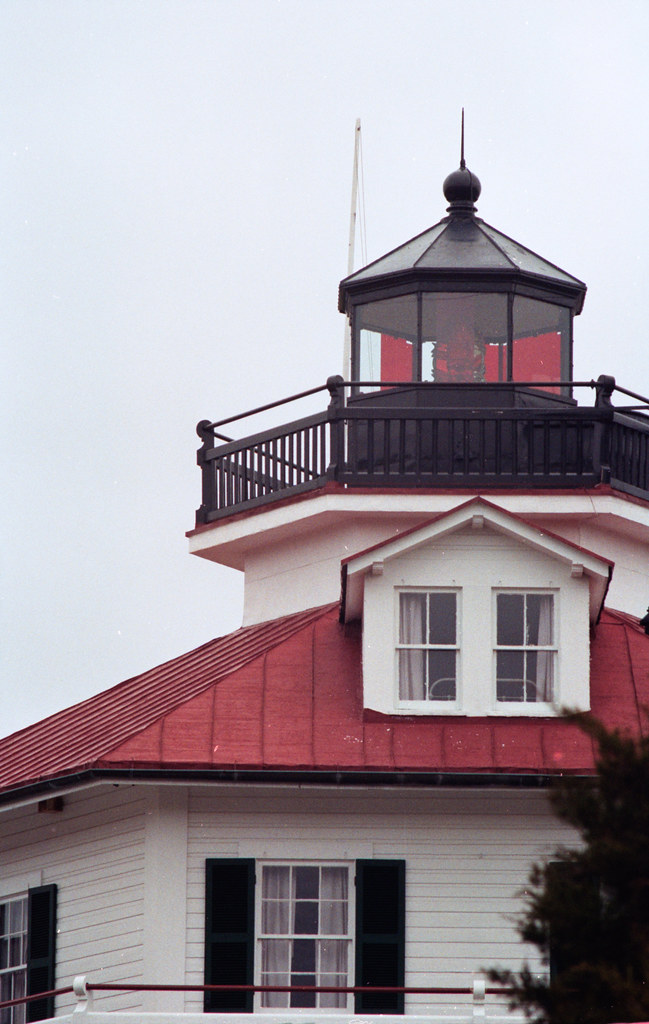
Another 50 Year Camera - The Pentax Spotmatic

Happy Thanksgiving!
Lighthouse, by Reed A. George
Pentax Spotmatic, 200mm f4 Takumar Lens
 
As my 50th birthday blazes toward me at the speed of time, I've been thinking about cameras that were current at my birth, and still useful now. As I've written before, the Nikon SLR comes to mind, and the thought has me carrying my 50 year old Nikon F with me at the same time as my brand new Nikon Df.
 
I've also just realized that one of my other favorite cameras, the Pentax Spotmatic, was born the same year as me - 1964.
 
As so many others I know, I grew up with a Pentax K1000 in hand. But, one of my best friend's dads had a gorgeous Honeywell Pentax Spotmatic. We were allowed to use it once in a while, but he demanded respect for his camera, something you can't just leave to teenagers on their own. Anyway, I now own a couple of Spotmatics (you can pick them up for next to nothing), and even have the same model of 200mm f4 Takumar he had. It feels really good to use them.
 
(Click Here) for a great article on Petapixel about the Spotmatic's 50th birthday. It includes scans of a brief review of the new camera, written in 1965 by Fred Springer-Miller, who used one at the 1964 Tokyo Olympics. Great stuff.
 
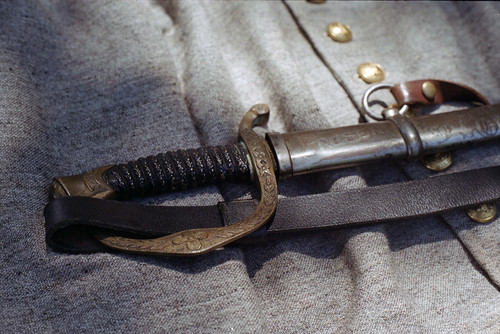
Civil War Sabre, by Reed A. George
 
DMC-365.blogspot.com


Sunday, November 9, 2014

Way Back Shot - Fredericksburg, VA, Winter 2010

Just thought I'd share an old shot this morning. I took this one with my Leica IIIC and Nikon 3.5cm f2.5 LTM lens. I had recently bought the camera and lens from a friend-of-a-friend, thanks to Dennis Gallus connecting us. Dennis, James McKearney, Rob Svirskas, and I drove down to Fredericksburg for a day of shooting.
 
This shot was made at historic Chatham Manor, overlooking the Rappahannock River.
 
You can see more shots made with this classic Nikon lens if you (Click Here).
 
I have not used this lens much, mainly because it's competition in my kit is the amazing Leica Summaron 3.5cm f3.5 LTM lens. The Leica lens is a full stop slower, but is so sharp and renders color so nicely that when I have to pick one to put in my back, it's nearly always the Summaron.
 
(Click Here) to read about the Summaron, which I also used as part of my Whole Lotta Leica series.
 
To see every lens I used in the Whole Lotta Leica series, where I matched up a wide range of older lenses with my Leica M9, (Click Here).
 
DMC-365.blogspot.com


Saturday, November 1, 2014

Quotes, Thoughts on Photography

"Your first 10,000 photographs are your worst."
Henri Cartier Bresson
 
I've been feeling a little low on inspiration lately. Maybe it's the winter coming on.
 
 
Anyway, when I feel this way, one thing I like to do is refer back to photographs by the masters. Today, I looked for quotes instead of pictures.
 
(Click Here) for 70 inspirational quotes on PetaPixel.
 
I chose the HCB quote above, since I have recently realized how many near-misses and just plain useless images I'm storing on my hard drives. I try to be careful in my shooting, rather than essentially taking videos and picking frames later on. That said, I need to be ever more careful. It's all worth it when I get a shot I love. But, being careful and taking fewer pictures actually leads to more keepers, at least for me.
 
DMC-365.blogspot.com



Tuesday, October 7, 2014

Magnum Workshop Day 3/7 - Still Searching

Tuesday. Now I was really feeling that I needed to find a groove and produce some pictures. I knew just how quickly it was going to be Friday.
 
I didn't sleep well on Monday night, thinking of just how I might get a photo story out of this week. Ptown was winding down for the season and I didn't want to shoot the more obvious topics. The Center for Coastal Studies was an intriguing possibility, but the chances of getting together with them while they were so busy were just too low.
 
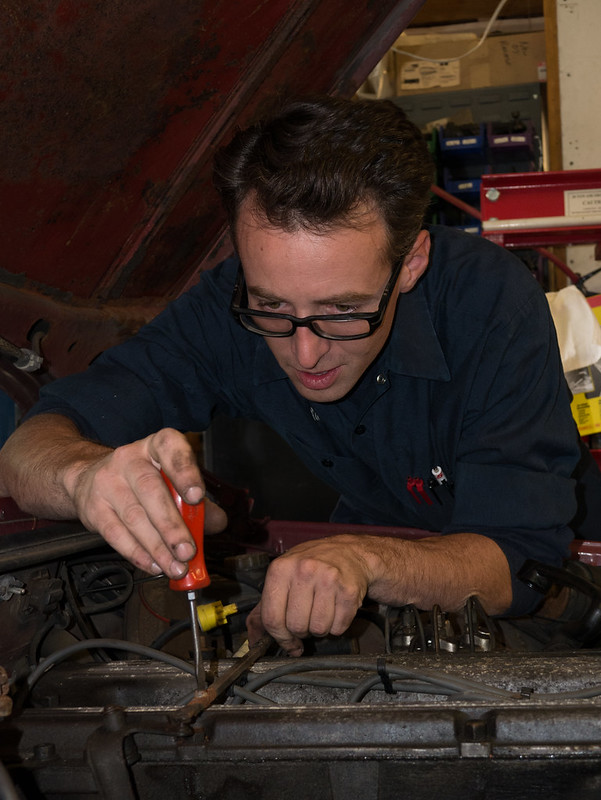
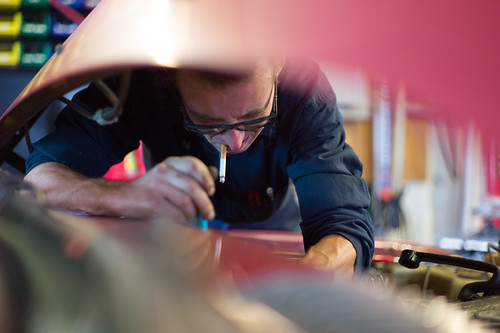
I knew that I was thinking too hard about it, and needed to pursue something. Stop thinking and start doing. I convinced myself that the best opportunity to go a little deeper was at Rego Automotive. No, it wasn't a flashy story, but Pat was an interesting and talented guy, working hard to make a small business successful in Ptown. Since I didn't really get any photographs to share on Monday, I let Bruno know that I would miss the morning session and go pursue some images at Rego Automotive.
 
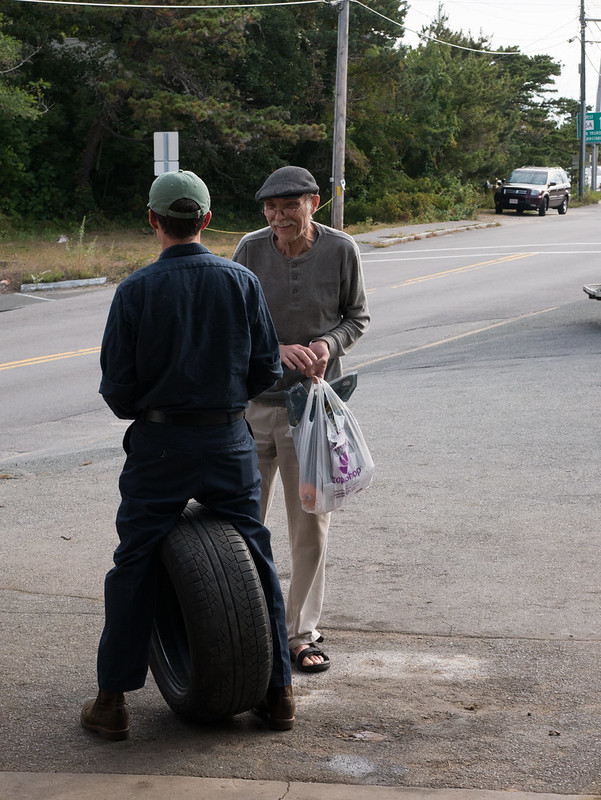
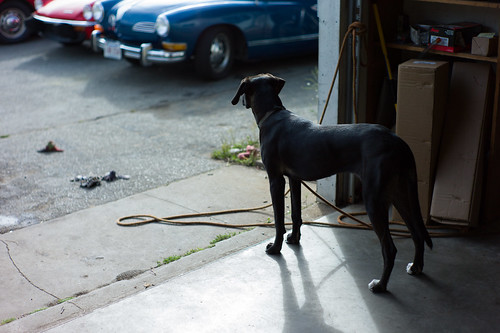
I was very pleased to find Pat already hard at work when I showed up, and that he was willing to let me hang around and shoot more pictures. I supplied several images to Pat and his wife, Lacey, to use on their facebook page. I am happy to see them on the Rego Automotive page, and hope they help!
 
Anyway, I spent a few hours hanging out, talking with Pat while he worked, and photographing the course of his business.
 
I left around lunch time, feeling that I had at least pushed a little further into a story. I wasn't sure that I had enough to make a project from, but the experience had been good and in the right direction.
 
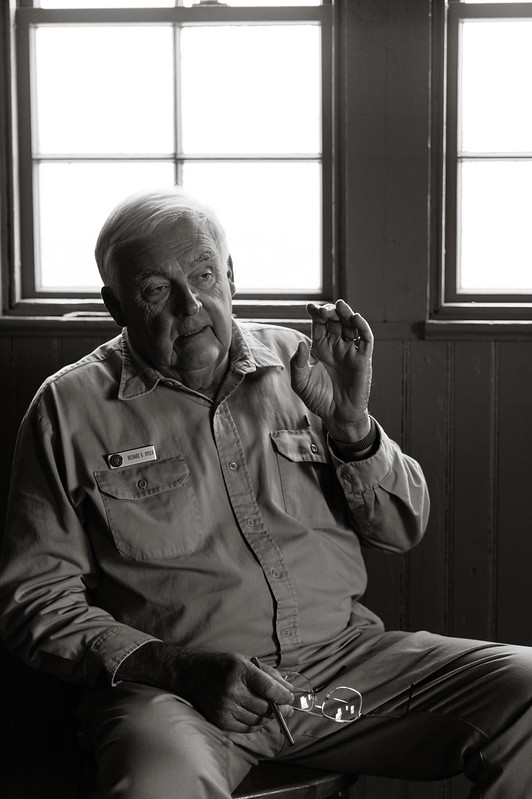
In the afternoon, I rode my bike out to the National Seashore to visit Richard Ryder at the Lifesaving museum. Mr. Ryder had answered my email inquiry from before the workshop. There were no special events during my week in Ptown, but he invited me to come and see the regular displays at the museum. I very much enjoyed meeting Richard, and shot some portraits of him in the old station, where his family members had served in generations past.
 
Richard Ryder, Lifesaving Museum Historian
 
There was certainly a good story in Richard's own family history with the station, but the kind of story that's best told by a writer, not a photographer. Pleased to have met Richard, I had to scratch that story off my list as well, and move on.
 
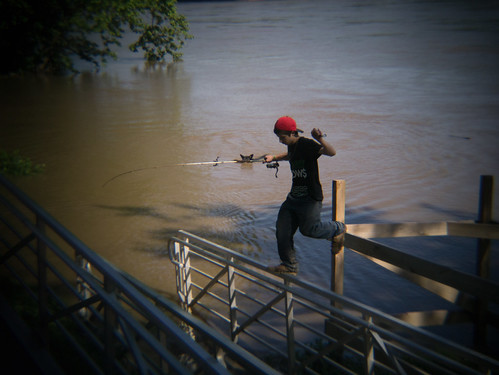
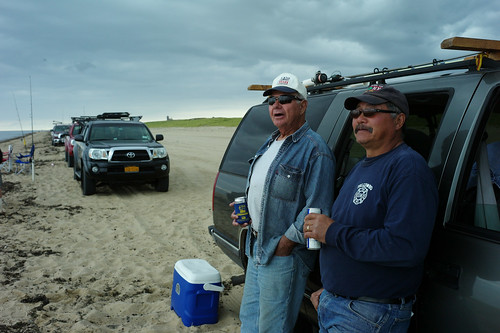
Looking down the beach from the museum, I noticed a caravan of trucks on the beach, and a group of people surf fishing. It was a long walk, but I had to see if I could find something interesting there. The fishermen were all New York City employees - policemen, firemen, sanitation workers. They have been coming to Ptown to fish together for over 30 years.
 
Surf Fishing
 
These guys were super-friendly, and full of stories. I hung around for an hour or so, and shot what I found interesting, which was mainly their personalities. The fishing wasn't productive, at least while I was there. Looking back on it now, this was potentially the "one that got away." If I'd been prepared to spend more time with them, I could have really gotten something good. As it was, I had only my bike and camera, and felt the need to get back to look through my images from earlier in the day and prepare for the next morning's review. If I had it to do over again, I would have done something to ensure that I could reconnect with this group later on. I am sure that their evenings together were as interesting as their days at the beach fishing.
 
When I did get back to review my images, I liked some from Rego Automotive. But, none of them really showed much human emotion or connection between people. I still was not there. At least I had something to show and get feedback on from Bruno the next morning.
 
I did realize how potentially productive the fishing group was, and planned to try to locate them again the next day. I could have helped myself out by getting contact information so that I could ensure success. Lesson learned.
 
On this evening, Bruno Barbey presented his work spanning 50 years in Magnum. So many of his images stuck in my mind, but one of a huge crowd in Poland, umbrellas getting covered in snow, was my favorite.
 
(Click Here) to see this awesome image on Magnum's website.
 
Another thing that really impressed me was Bruno's recent coverage of China. Caroline, Bruno's wife, shared an amazing video of Bruno shooting in the Chinese streets and interacting with the people. It really gave the presentation a different feeling, showing how people enjoyed his presence.
 
DMC-365.blogspot.com


Friday, September 19, 2014

Medium Format Cameras for Street Photography?

 
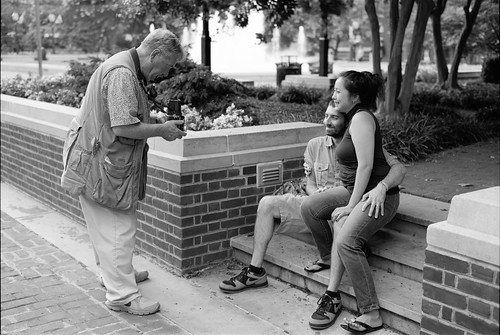
Jesse and Ayreene, Photographed by Charlie Arnhold
Mamiya Universal Press (MUP), Mamiya Sekor 100mm f3.5 Lens
Kodak TMax 400 Film
 
Of course, street photography started with the camera technology of the times. It's difficult, and not so important, to pinpoint exactly when that happened, but certainly a lot of street photography was done in the days when the Graflex 4x5 camera was the main game in town. Later, street photography was largely associated with 35mm cameras, and small 35mm rangefinders like the Leica and Contax in particular. Today, smaller and smaller high quality digital cameras are playing their role, as are smart phones.
 
So, can you really shoot street photographs with medium format cameras? Of course you can. In fact, one generation that I skipped over in the paragraph above is that of the twin lens reflex (TLR), led by the Rolleiflex. As you can see above, my friend and mentor Charlie Arnhold is quite comfortable shooting the Rolleiflex for this purpose. In this case, Charlie has engaged his subjects (Jesse and Ayreen, visiting DC from NYC). But, yes, the TLR has a firm place in the street photography game. Reasonably compact, especially for the negative size they produce (6x6 cm), TLRs are also pretty well-accepted by subjects on the street.
 
Okay, so what about other medium format cameras? Well, there are also reasonably compact medium format rangefinders, the main ones having been made by Mamiya and Fujifilm. They also work fine for street photography.
 
To push the upper size limits, I've been shooting some street scenes with my Mamiya Universal Press (MUP) camera. Yes, it's a press camera, which means it was designed to be taken out in public. But, it's a big beast, not one that will go unnoticed in the process. While it does a fine job of capturing the scene in a high quality image, I find that most of my subjects are looking at the camera. This is different from shooting anonymously with a smaller camera. Different, but not necessarily better or worse. I'll have more examples to share shortly.
 
My guess is that using the MUP for street photography is similar to what one would experience in going back even further, and shooting on the street with a Graflex 4x5 camera. I haven't done much of that at all. Maybe I'll give it a try again soon.
 
DMC-365.blogspot.com


Wednesday, August 13, 2014

Leica Cameras Underwater - Not My Leica Camera, Thank You!

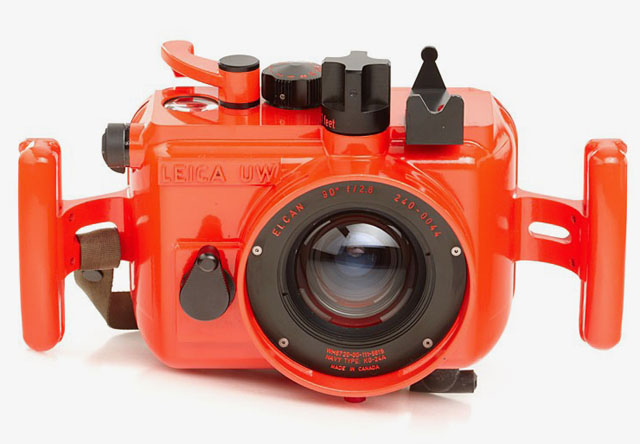
Image Source: http://gmpphoto.blogspot.com/2014/03/leica-under-water.html

I've never explored whether or not Leica ever made equipment specifically for underwater photography. Well, of course they did! And, they did it to an incredible level of precision, as you'd expect.
 
I found a nice post on the Leica Barnack Berek Blog about this very subject.
 
(Click Here) to read the full post.
 
Leica (actually Leica Canada, ELCAN) developed the housing you see above, which in the images shown in the post went around a Leica M4 rangefinder to protect it from the deep. The lens is specially developed for the index of refraction of sea water. In fact, they made different front elements to make the salinity and resulting diffraction of different seas around the world. Amazing.
 
I have a hard time imagining placing my Leica rangefinder in one of these and jumping into the ocean. I suppose I should have the same confidence in this housing as I would other wonderfully-engineered Leica products. With proper maintenance, I'm sure they're nearly fail-proof.
 
Apparently, the lens designs, which actually consider the water as part of the optical path, were capable of producing underwater pictures that are indistinguishable from images taken in air.
 
This post didn't have any example images. I did however find this old cover from the Leica Photography magazine:

Image Source: http://www.35mmbookshop.com/product/leica-photography-2-1954-macros-underwater-arthur-c-clarke

 
I have no way of knowing what equipment was used to make the image above. Being from a 1954 issue, and based on the fact that Leica Canada started up in 1952, it's unlikely to be from the camera above. If not, I'd love to see what they used to take this one!
 
DMC-365.blogspot.com
Tuesday, August 12, 2014

The Leica Thambar - Exclusive, Unique, Beautiful Imperfection

I've heard of the Leica Thambar lens before. That's about all I could say about it before taking a little interest in it this morning.
 
Here's what sparked my interest - a post by awslee on Rangefinder Forum.
 
Image Source: http://www.rangefinderforum.com/forums/showthread.php?t=143874

(Click Here) to see the post and more images.
 
The Thambar is a screw mount (LTM), 90mm f2.2 lens. Made in the 1930s to respond to the need for a portrait lens that wasn't too sharp, the Thambar certainly delivered. The lens relies on uncorrected optics to render interesting, soft backgrounds. It also uses a reflective spot filter to change the effect near the center of the image.
 
(Click Here) to read the best description I've found of the Thambar, on the Leica Barnack Berek blog.
 
The Thambar is one of those very special lenses, one that you probably wouldn't put in your bag very often. Couple that with the scarcity (only a few thousand were made, and now about 80 years ago), and the likelihood of my ever owning a Thambar is reduced to near zero. But boy, would it be fun to try one out.
 
Hmm. I bet someone in the LHSA (International Leica Society) has one. Any of my friends there want to lend me their Thambar for a few hours?
 
DMC-365.blogspot.com
 

Wednesday, July 16, 2014

The Iconic Leica Images - Assembled on the Leica Website for the 100th Anniversary of the Leica Camera

"Flood in Wetzlar - Oskar Barnack, 1920"
Image Source: http://us.leica-camera.com/World-of-Leica/100-years-of-Leica-photography/Leica-100-years/Iconic-photos
 
100 years ago, Oskar Barnack started a revolution in photography by making a 35mm still camera that was worthy of commercialization. Originally built to test exposures for movie films, Barnack quickly recognized that the smaller negative (as compared to the standard 4x5 or larger of the day) was a reasonable compromise in image quality that gained you amazing portability. This eventually turned photojournalism on its head.
 
As part of their 100th anniversary celebration, Leica has added a very nice section to their website, including a collection of iconic Leica images taken over those 100 years.
 
(Click Here) to see the images, many of which you'll probably recognize.
 
The small camera revolution, started back in 1914, continues today. In my way of thinking, the new compact digital cameras, including those in cell phones, are pushing the compromise between ultimate image quality and the ability to have your camera ready and get the picture at all. I think APS-C and Micro 4/3 sensor technologies are both cases in point. It's pretty well-accepted these days that APS-C can provide professional image quality, even at high iso settings. Micro 4/3 is right on the cusp, in my opinion. We'll see where this all leads in the coming years.
 
In the meantime, I'm still having lots of fun with Leica cameras, including those designed early on by Barnack himself!
 
DMC-365.blogspot.com
Thursday, June 12, 2014

Burnside Bridge, Antietam National Battlefield, Two Perspectives.

Here's a shot I made of Burnside Bridge, site of a bloody battle at Antietam in the US Civil War. I made this image in 2010.
Burnside Bridge, by Reed A. George
Leica M8, Minolta Rokkor 40mm f2
iso 160, f11, 1/15 sec.
 
What drew me to this scene was the lighting - a mixture of diffuse shade, hard direct sun, and reflections of such up under the bridge arches.
 
What got me thinking about Burnside Bridge right now? The image below, by Evan Leavitt:
 
Image Source: http://evanleavittphotography.wordpress.com/2014/06/05/antietam-view-3/#comment-679
 
Evan made this shot with a Graflex Speed Graphic and 4x5 paper negative. Lovely.
 
DMC-365.blogspot.com
 

Monday, March 17, 2014

How Leica Killed "Leica Photography" on Leicaphilia

Now this is an interesting post, especially for me to be reading one day after I posted about taking a modern digital image from my Leica M9, removing many of the gray levels through boosting contrast, adding grain, and in my opinion, improving it.
 
The blog Leicaphilia provides a perspective on how Leica has killed its own style of photography by abandoning their expertise in making compact, functional, straightforward rangefinders and instead shifting their focus to exacting optical designs and products.
 
(Click Here) to read the post on Leicaphilia.
 
What do I think of all of this?
 
Sketching, by Reed A. George
Leica IIIC, Canon 50mm f1.4 Lens, TMax 400 Film
 
Well, I certainly agree that the attraction to Leica, especially old Leica cameras like the IIIC I used for the shot above, has something to do with the camera body design. Simple, effective, obviously hand-built. And, I must agree about the quality of some of Leica's competitors' lenses back in the day. The Canon 50mm f1.4 I used for the shot above is really quite nice.
 
I'm not sure that I agree that other brand lenses were actually better than Leica's back in the day. No, I don't judge them by micro-contrast or even necessarily sharpness, but my Leica Summar and Summaron lenses make beautiful images. They take quite a beating in the above-referenced post. There also seems to be a marked lean toward Nikkor lenses in that post. Not that I disagree; I have a nice Nikkor 3.5cm f2.5 in Leica thread mount (LTM) that does quite a nice job. Honestly, though, I prefer my Leica Summaron 3.5cm f3.5 in terms of the images it produces.
 
Finally, I don't agree that Leica has turned away from its design basics. The Leica M9 is about as straightforward to use as you could make a modern digital camera, while still giving the user complete control. I can easily switch back and forth between the M9 and a 1955 M3, without having to worry about differences in controls.
 
Now, the same cannot be said for some of Leica's other cameras. Some of them do have the same issues with complicated controls and multilayer menus that their Japanese counterparts have. Anyone notice the differences between shooting a Nikon F film camera and the wonderful, but complicated D700, for example?
 
So, I agree with some of the points in the article, not with others. I would say it's a call for Leica to be vigilant about future designs.
 
The author is correct that optical perfection does not necessarily lead to a great image. I'm learning to remove some perfection to get to the image that I really want.
 
DMC-365.blogspot.com
 

Saturday, March 1, 2014

Awesome Zeiss Ikon Images and Historic Information Now in Public Domain!


"Before you purchase a miniature...."
Image Source: http://issuu.com/zeisshistoricasociety/docs/1939-09_uk_catalogue__1_#

My friend Bill Barton send me a great link to an enormous amount of Zeiss historical information that has been put into the public domain!
 
(Click Here) to see old Zeiss catalogs, and issues of Zeiss Historica, with articles on many really interesting topics related to Carl Zeiss.
 
I love this kind of stuff. Thanks, Bill!
 
DMC-365.blogspot.com


Saturday, February 22, 2014

Surviving Buildings at Manassas National Battlefield - A Mini-Project in Micro 4/3

It's mid-winter doldrums here in Northern Virginia, and I decided not to give in to the bad weather today.
 
The heavy snow has passed, but flurries continued today, adding a nice light coat to the base laid down over the past few days. So, I set out to photograph the few remaining buildings that I thought were survivors from Civil War times at nearby Manassas National Battlefield. I had five buildings on my list.
 
It turns out that only three of the five are original buildings. However, the other two retain some interest, so I'll share them as well.
 
Let's start with Henry House. By the way, the picture I took of the Henry House on the 150th anniversary of the First Battle of Manassas won Second Place in a Civil War Trust / History Channel / Google competition, in the division dedicated to celebrating the 150th anniversary of battles in 1861. The image was displayed on the civilwar.org webpage of winning images, and was published in the journal "Hallowed Ground," and featured in the trust's 2012 calendar.
 
Henry House, by Reed A. George
Panasonic Lumix DMC-G1, 3 Shot HDR
 
The rest of the images in this post were shot today in the snow with my DMC-GX7 and the new Lumix Series II 14-42mm f3.5-5.6 zoom lens.


Henry House, by Reed A. George
 
 
The Henry House figured prominently in the First Battle of Manassas (or "First Bull Run"). Poor old Mrs. Henry was too sick to leave her home when the battle moved from Mathews Hill to Henry Hill, where she lived. She was killed by stray fire from the battle, becoming the first civilian to die in the Civil War. She's buried in the front yard of Henry House.
 
Next up is the Brawner Farm, which was the site of the first real action of Second Manassas (1862), barely a year after First Manassas (1861). The Brawner Farm was restored in 2007. I think it's poorly-done, looking like a tract house out in the middle of the historic battlefield with its air conditioning unit being the first thing you see from the trail, and get this, what appears to be vinyl siding! What a shame.
 
In the second shot, you can see the winter fields reflected in the window glass.
Brawner Farm, by Reed A. George
 
 
Third on my list was the Dogan House. Lucinda Dogan, a widow and mother of eight children, lived in this house during both battles. Mrs. Dogan lived to be 93 years old, and is buried in nearby Groveton Confederate Cemetery.
 
The Dogan House is quite difficult to photograph, surrounded as it is by modern roads, telephone wires (bane of the outdoor photographer's existence), and houses.
 
I can just imagine old Mrs. Dogan's hands reaching to put the key in that keyhole.
 
 
Dogan House, by Reed A. George
 
 
Next up, the Stone House. This building is probably the most well-known on the battlefield, and was in the hot zone of both battles, but especially First Manassas. Serving as a field hospital to both union and confederate troops, the building took a lot of fire during the battle.
 
 
Stone House, by Reed A. George
 
 
And finally, a pretty well-kept secret of the National Battlefield, Thornberry House. Located at Sudley Springs Ford, the site where Union General Irvin McDowell took more than a third of his 35,000 troops across Bull Run Creek in the first battle to attack the Confederate left flank, after failiing at their right. They marched right by the Thornberry house. Late that afternoon, after suffering a crushing defeat on Henry Hill and further, some of those troops retreated by this same route, while others made a crazed, confused dash straight back toward Washington, DC. As with many houses near the battlefield, the Thornberry house also served as a field hospital.
 
Sudley Springs was also active in Second Manassas, as Stonewall Jackson's stronghold in the unfinished railroad grade had its eastern end within easy sight of the Thornberry House.
 
Thornberry House, by Reed A. George
 
So, which three of these five buildings are true survivors from the actual days of the battle? The Dogan House, Stone House, and Thornberry House. I was surprised to learn that the Henry House had been entirely rebuilt in about 1870. I was not so surprised to find that the Brawner House was not the original, although it was of correct era construction before the renovation. Apparently an old house was moved onto the site sometime after the Civil War, and after the original farmhouse was gone.
 
So, I did spend the whole day with my Lumix DMC-GX7. I only changed lenses a couple of times, to shoot with my new Bower fisheye lens (more on that later). The majority of the time I used the Series II 14-42mm kit zoom, which I find to be quite impressive. Since it was a pretty bright day, I was able to shoot at iso 200 the whole day.
 
I'm still not completely comfortable with all of the controls of the GX7, and did inadvertently hit buttons on the camera's back more than once. This is probably something I can train myself out of, just by spending more time with the camera. I enjoyed using it today, and am very pleased with the results.
 
DMC-365.blogspot.com