Showing posts with label story. Show all posts

Saturday, July 18, 2015

Impossible Project Magazine - Rooster Brennan Documents African Safari with Instant Film

I am still thinking about how equipment and creativity interact to tell a story. Just yesterday, I met with my photographic friends and mentors, and got some feedback on the Smithsonian Folklife Festival images that I've been posting here recently. I got comments ranging from something like "See, if you control the background, you can't tell that these shots weren't made in Lima, Peru, as opposed to DC," which I loved, to "Not really sharp. That's the problem with flatbed scanning of 35mm film." All of the comments were useful to me, and were correct.
 
So, how does one share an African safari on instant film?
 
 
Well, you can check out the Impossible Project's magazine to see how Rooster Brennan did it, using the Impossible Lab to print his images on instant film. The article focuses on storytelling, more than equipment. I think he's done a fine job. (Click Here) to read the story and see the pictures.
 
I think that I still need to work on my storytelling with pictures. If the storytelling were strong enough, the technical details would become much less important. That's my goal.
 
DMC-365.blogspot.com

Thursday, June 25, 2015

More of a Story in Wildlife - Nikon D700 and 200-400mm f4 AF-S VR Lens

I wrote recently about a personal challenge to myself, to move my wildlife photography from mere "find the animal and shoot it" to telling at least part of a story. In photography, the story doesn't have to be complete. In fact, sometimes, if the story presents more questions than answers, that can be a good thing. That's kind of the case here.
 
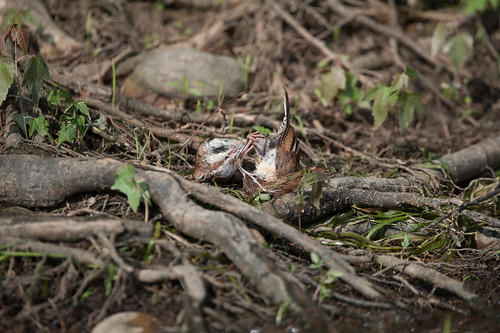
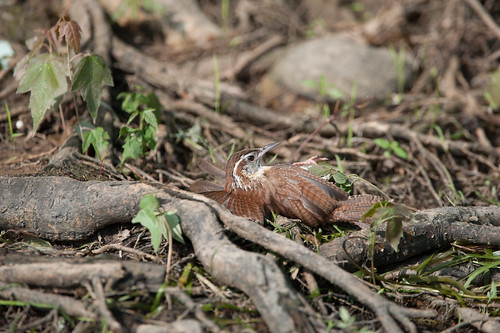
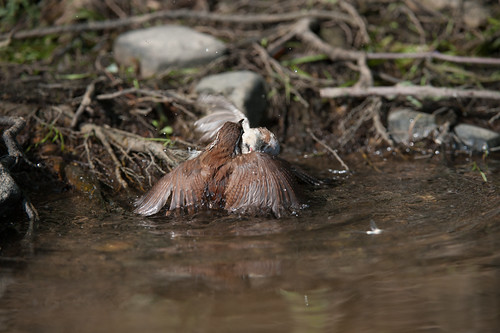
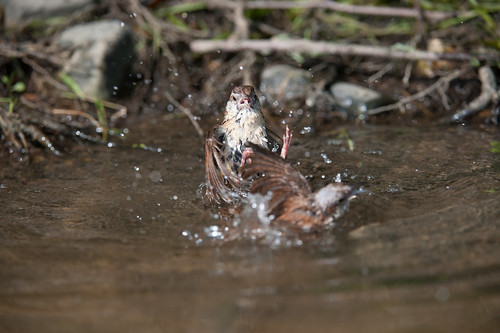
At the end of a kayaking trip, as I shoved my boat up to the shore, I saw a clump of feathers bouncing around on the bank. Not sure what I was looking at, maybe an injured bird?, I decided to look closer, and shoot. Here's what I saw.
 
 
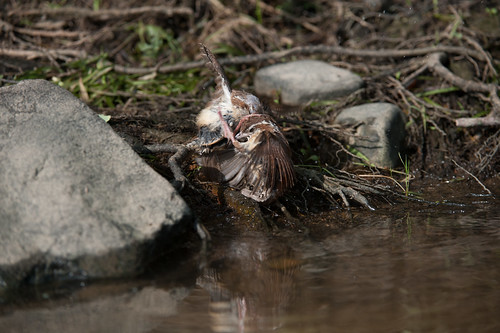
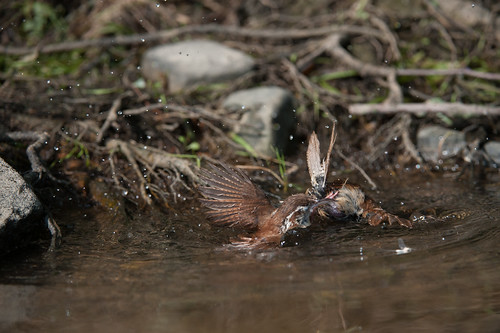
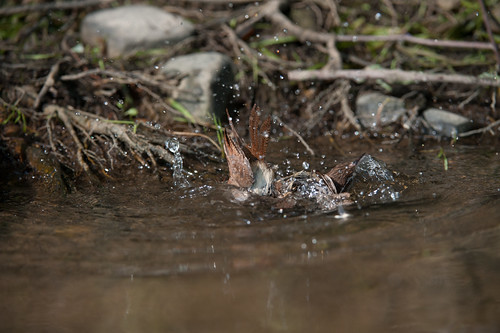
Now, the camera saw it much more clearly than I did at the time. What you're looking at is two birds (Carolina wrens?), fighting it out. And I don't mean play fighting. These two were not only using their sharp beaks against each other, they were actually clawing at each other's eyes! As they continued, and even ended up in the water, here's how it looked.
 
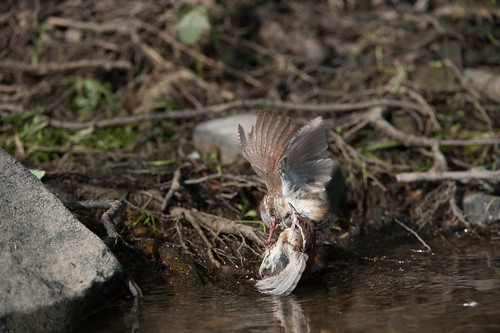
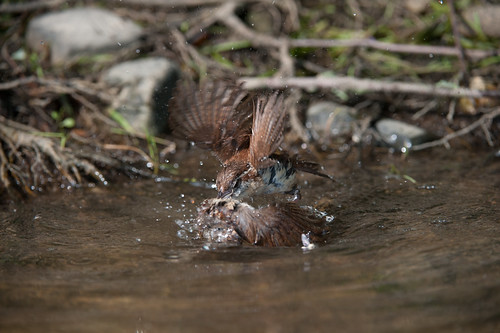
Crazy, right? And here's the final, and crowning shot. Bird rage!
 
Bird Rage, by Reed A. George
Nikon D700, Nikkor 200-400mm f4 AF-S VR Lens
 
As they finally split up and ended the fight, with one bird chasing the other off into the bushes, I just couldn't keep up with the big lens. I missed a couple of other interesting shots, but do feel that these show the event pretty well.
 
Does anyone know if I have the species correct, or what these vicious little birds were doing to each other?
 
I'm happy to have caught some very interesting behavior in this sequence.
 
DMC-365.blogspot.com

Saturday, June 20, 2015

Nature Photography - It's More Than Just Finding the Animals

 
I've been working on my nature photography this spring, and have been enjoying my new Nikkor 200-400mm f4 VR lens in the process. While I'm now quite comfortable with the lens, and very impressed with the image quality it produces, I haven't really nailed any nature shots that make me super proud yet.

Here's an example of what the lens can do:
Bald Eagle (Haliaeetus leucocephalus), by Reed A. George
Nikon D700, Nikkor 200-400mm f4 AFS VR Lens

This is a perfectly acceptable photo of a bald eagle, in a technical sense, but it sure doesn't tell much of a story. Really, I just found the animal, and got a decent shot of him. Then it was over.
 
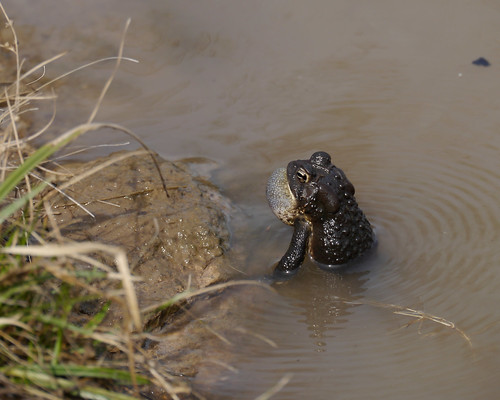
Here's a shot below that I made some time back, of a much less exotic animal, with less exotic optics, but with more of a story. I love how the toad's singing, exhibited by the extended throat, and more importantly, by the standing waves in the water surrounding it, tell you more than "This is a toad." I aspire to finding more stories like this.
 
Eastern American Toad (Anaxyrus americanus), by Reed A. George
Panasonic Lumix DMC-G3, 14-140mm Zoom Lens

The reason I'm thinking about this is that I read an interesting story about Frans Lanting, famed National Geographic nature photographer, on the Smithsonian website. (Click Here) to read that post. Lanting is a very interesting person, and the TED talk video embedded in the story tells a lot about how he feels about his work.
 
I've seen a lot of his night photography, where he sets up remote camera traps for elusive species. I see these as mainly challenges to find the animal and document it. However, he has other images, some of which he describes in the blog piece, that really tell much bigger stories. Read about the hunters reflected in the zebra's eye, and the African bullfrog, with approaching clouds above. Interesting stuff.

DMC-365.blogspot.com
 

Monday, January 5, 2015

In Photography as in Hunting, Sometimes it's Best to Stay Put

I know that there are a lot of similarities between photography and hunting. Take, for example, that both result in "shooting" your subject. I don't mean to carry that analogy further, but believe it's appropriate in this case. In working to photograph a particular subject, as in hunting, the photographer can choose to cover as much ground as possible, photographing what he/she sees along the way, or they can find a likely spot (not just any spot), and wait for the story or subject to come to them.
 
I've written about this picture before. (Click Here) to see my original post in the context of the project I was working on.
 
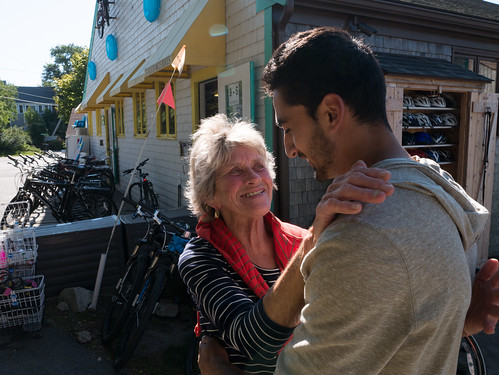
Goodbye My Friend, by Reed A. George
 
I shot this picture while attending the Magnum Days workshop in Provincetown, Massachussetts. (Click Here) to see the whole series of posts from the workshop.
 
I was hoping to photograph the end of summer in Ptown in a broad sense. I was struggling for how to do that more specifically. I found this summer bicycle rental shop, which was clearly wrapping up its season, and decided to stop and hang out. I met this very nice young man from Bulgaria, and just stayed around talking to him. I found out that he would leave for home the next day. Finally, after nearly moving on from there a couple of times, and getting hints from him that leaving would probably make him more comfortable as well, this nice lady from the neighborhood came over to say goodbye to him. There was my shot.
 
I just read an article on the NY Times' blog, Lens, about the same technique. (Click Here) to read how Fred Conrad used this technique, sitting on the roof of a building in Kosovo, to get his story.
 
This idea of finding a good location and waiting for a story is not new. In fact, I've read and heard it many times. But, like all good lessons for me, until I'm using it regularly and successfully, it's okay to be reminded of it. It's so easy to grab my camera and just start walking around, shooting what I see. Sometimes that's not the most productive approach.
 
DMC-365.blogspot.com

Wednesday, November 12, 2014

Old Polaroids - and a Surprise

I love to look at old photographs. A couple of weeks back, I visited my buddy's unique antique shop, The Gilded Flea, in Harpers Ferry, West Virginia.
(Click Here) to check out The Gilded Flea.
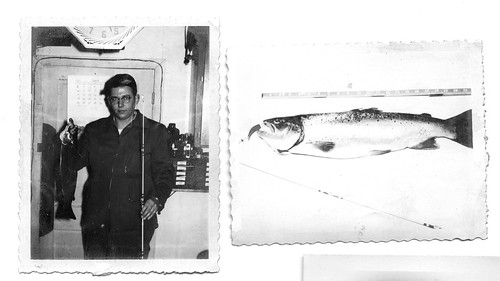
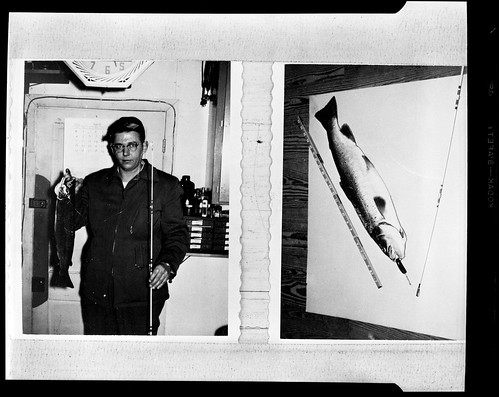
Anyway, as you can guess, I found some interesting old pictures there. Here are two that were close together in the box. I was pretty sure they belonged together, but not sure.
 
 
Two Polaroids
 
That looks like one mighty proud fisherman, and a nice trout, too!
 
Further down in the box, I found a single 4x5 negative - the same two images, together!. This is what it looks like, scanned on my Epson V750:
Scanned 4x5 Image of the Polaroids
 
I suppose it may not have been unusual to use a 4x5 camera to make an internegative of Polaroids, so that you could reprint them and send them to your friends. I thought it was pretty cool to find this along with the originals.
 
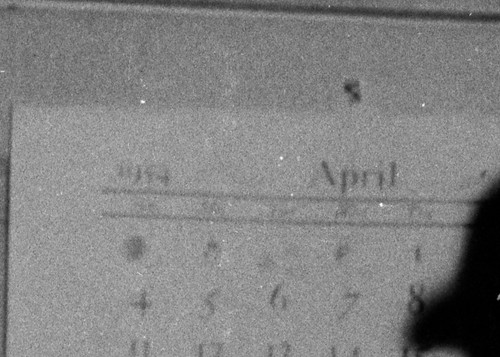
Finally, I got to looking at the picture on the left and noticed the calendar. Scanning the Polaroid at high resolution, I was able to see this:
 
I'm pretty sure it indicates that the picture was taken in 1954 (possibly '64?). Certainly in April.
 
It's really fun and thought-provoking to look at old images like this. I can imagine so many alternative stories that led the people to these images.
 
DMC-365.blogspot.com
 

Tuesday, October 7, 2014

Magnum Workshop Day 3/7 - Still Searching

Tuesday. Now I was really feeling that I needed to find a groove and produce some pictures. I knew just how quickly it was going to be Friday.
 
I didn't sleep well on Monday night, thinking of just how I might get a photo story out of this week. Ptown was winding down for the season and I didn't want to shoot the more obvious topics. The Center for Coastal Studies was an intriguing possibility, but the chances of getting together with them while they were so busy were just too low.
 
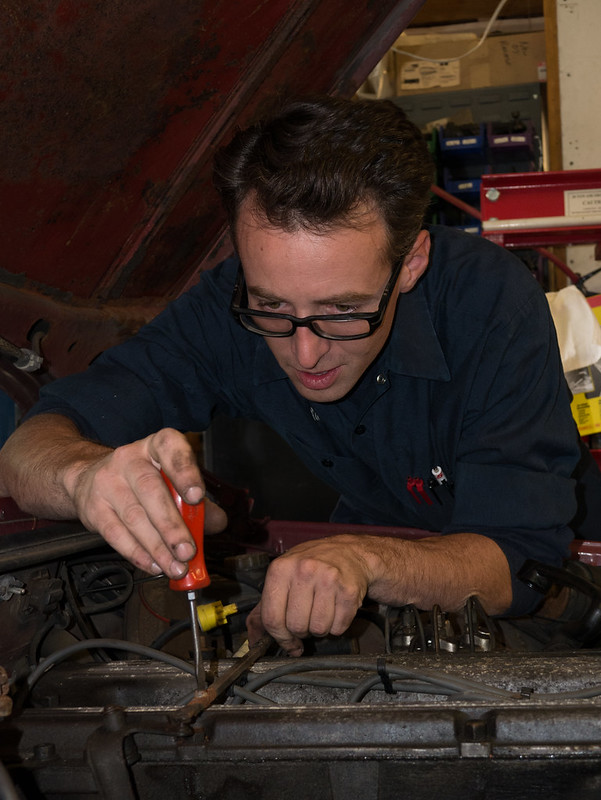
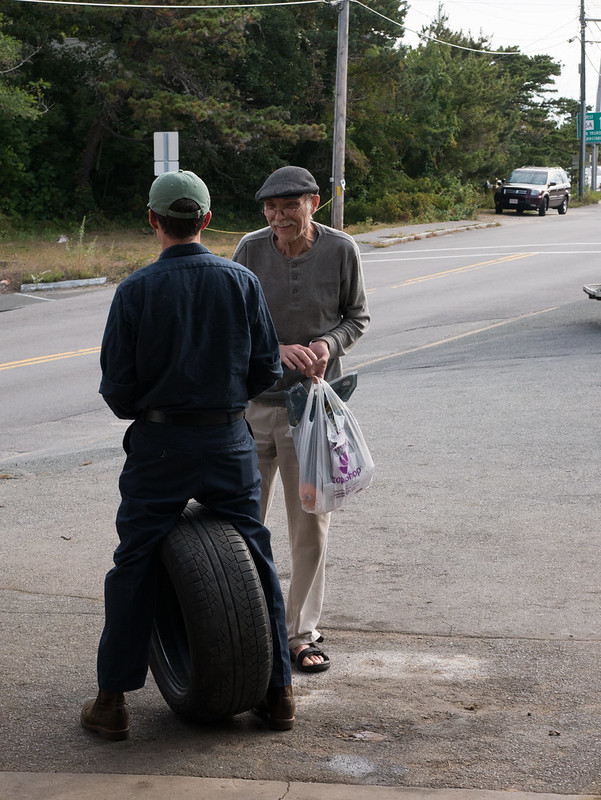
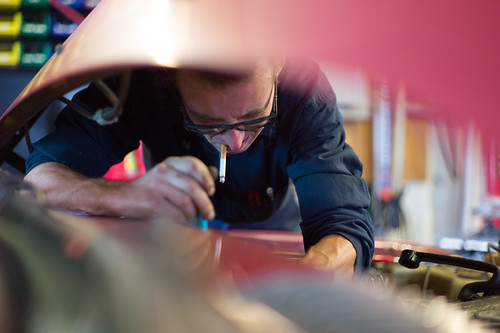
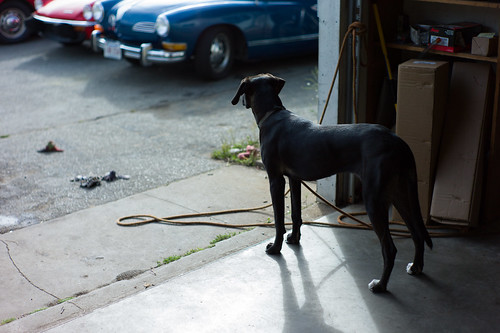
I knew that I was thinking too hard about it, and needed to pursue something. Stop thinking and start doing. I convinced myself that the best opportunity to go a little deeper was at Rego Automotive. No, it wasn't a flashy story, but Pat was an interesting and talented guy, working hard to make a small business successful in Ptown. Since I didn't really get any photographs to share on Monday, I let Bruno know that I would miss the morning session and go pursue some images at Rego Automotive.
 
I was very pleased to find Pat already hard at work when I showed up, and that he was willing to let me hang around and shoot more pictures. I supplied several images to Pat and his wife, Lacey, to use on their facebook page. I am happy to see them on the Rego Automotive page, and hope they help!
 
Anyway, I spent a few hours hanging out, talking with Pat while he worked, and photographing the course of his business.
 
I left around lunch time, feeling that I had at least pushed a little further into a story. I wasn't sure that I had enough to make a project from, but the experience had been good and in the right direction.
 
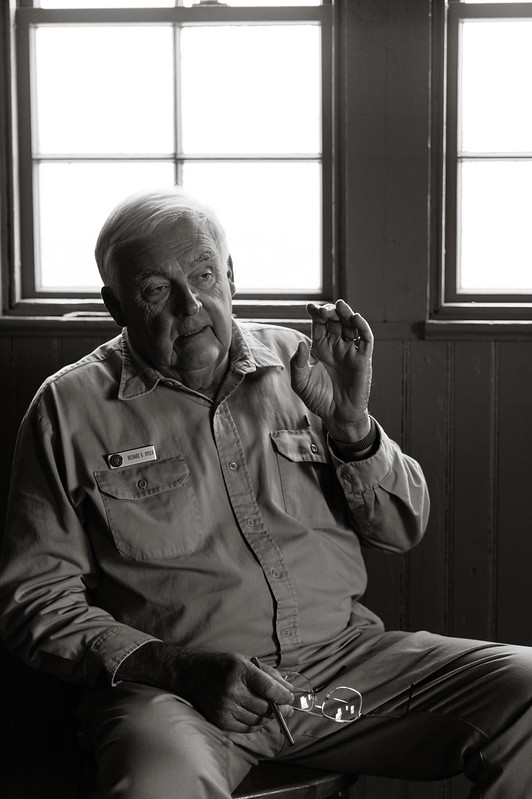
In the afternoon, I rode my bike out to the National Seashore to visit Richard Ryder at the Lifesaving museum. Mr. Ryder had answered my email inquiry from before the workshop. There were no special events during my week in Ptown, but he invited me to come and see the regular displays at the museum. I very much enjoyed meeting Richard, and shot some portraits of him in the old station, where his family members had served in generations past.
 
Richard Ryder, Lifesaving Museum Historian
 
There was certainly a good story in Richard's own family history with the station, but the kind of story that's best told by a writer, not a photographer. Pleased to have met Richard, I had to scratch that story off my list as well, and move on.
 
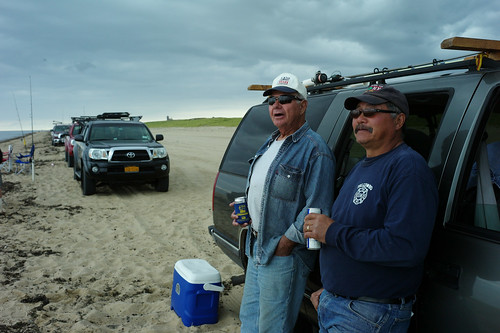
Looking down the beach from the museum, I noticed a caravan of trucks on the beach, and a group of people surf fishing. It was a long walk, but I had to see if I could find something interesting there. The fishermen were all New York City employees - policemen, firemen, sanitation workers. They have been coming to Ptown to fish together for over 30 years.
 
Surf Fishing
 
These guys were super-friendly, and full of stories. I hung around for an hour or so, and shot what I found interesting, which was mainly their personalities. The fishing wasn't productive, at least while I was there. Looking back on it now, this was potentially the "one that got away." If I'd been prepared to spend more time with them, I could have really gotten something good. As it was, I had only my bike and camera, and felt the need to get back to look through my images from earlier in the day and prepare for the next morning's review. If I had it to do over again, I would have done something to ensure that I could reconnect with this group later on. I am sure that their evenings together were as interesting as their days at the beach fishing.
 
When I did get back to review my images, I liked some from Rego Automotive. But, none of them really showed much human emotion or connection between people. I still was not there. At least I had something to show and get feedback on from Bruno the next morning.
 
I did realize how potentially productive the fishing group was, and planned to try to locate them again the next day. I could have helped myself out by getting contact information so that I could ensure success. Lesson learned.
 
On this evening, Bruno Barbey presented his work spanning 50 years in Magnum. So many of his images stuck in my mind, but one of a huge crowd in Poland, umbrellas getting covered in snow, was my favorite.
 
(Click Here) to see this awesome image on Magnum's website.
 
Another thing that really impressed me was Bruno's recent coverage of China. Caroline, Bruno's wife, shared an amazing video of Bruno shooting in the Chinese streets and interacting with the people. It really gave the presentation a different feeling, showing how people enjoyed his presence.
 
DMC-365.blogspot.com


Monday, December 30, 2013

The Change in Photography - Kirk Tuck Gives His Thoughts

 
It Should Be Simple to Tell a Story, by Reed A. George
 
I've been thinking a lot about where my photography is going. I've got a new project bubbling up, but it's not yet ready for prime time. I'm still absolutely all over the place with equipment, recently enjoying the use of my Nikon F2 as much or more than my digital wonders.
 
I recently read one of Kirk Tuck's posts on the Visual Science Lab, about his impressions of camera gear and photography, and what all of the changes mean. Change is certainly underway, but where is it all headed?
 
(Click Here) to read Kirk's post on Visual Science Lab. I'll summarize some of his points and give my own thoughts below.
 
First, Kirk says there are two photography communities: the old guys (I just celebrated my 49th birthday), who carry around big heavy gear and focus on "getting it right" technically, and the younger generation, who focus more on telling a story, regardless of equipment, video vs. still, or any other issues that may hold them back.
 
Another point Kirk makes is that we no longer need to worry about getting it right technically; that's easy. Unless of course you use old equipment like I do. The fact that I still sometimes wait to see if my pictures "come out" does show that I'm an anachronism. I can accept that fact.
 
Kirk also says that the difference between the very good and the very best cameras no longer matters. His example is the comparison between an Olympus OM-D (a very good camera), and a Nikon D800 (even better). His point is that you really cannot tell the difference with an online image from either camera, and that's all that matters these days. No one's going to look at prints in a gallery. At least no one but us old men.
 
Another point that I really identify with is that only those who resist the change in photography will feel any pain. I buy that. I like to use it all - old, new, difficult, simple. Hell, I had as much fun with an old Brownie 127 camera that I converted to shoot panoramic images on 35mm film as I had with my Lumix GX1 so far. Talk about different beasts. Meanwhile, I'm working through exactly how to use my new Lumix GX7.
 
Here is Kirk's prescription for what must happen with camera gear to support the change:
 
  1. Smaller, lighter, more accessible cameras
  2. Less user intervention required
  3. Cheaper camera/lens systems
  4. Connection with other technology (phones, tablets, etc.)
Personally, I believe that the camera companies are addressing some of these needs well. For example, Micro 4/3 is definitely hitting the mark with 1,3, and 4. Panasonic and Olympus are failing to meet requirement number 2 with their current Micro 4/3 cameras.
 
From my point of view, if I want simple (#2) in the digital world, it's Leica all the way. Of course, they fail at requirement #3, at least if we're talking about their system cameras.
 
And maybe I'm fooling myself about the M9 being a simple camera. After all, there's no autofocus. No video.
 
A Leica DLux 6 (Panasonic LX7) that had the manual controls and lack of menus that the M9 exhibits would be a killer camera. I don't want to accidentally hit a button that sends me into some labyrinth of menus when I'm grabbing my camera out of my jacket pocket.
 
I think the camera companies are taking different approaches, and someone will hit it just right. Nikon is appealing to us old farts with the Df (which I really like, and want). Leica is trying a little of everything, from the M240 to the C. However, I personally don't think they've developed the perfect product yet. Something along the lines of the X cameras, but with interchangeable lenses could be great. In short - small, few menus, superior interchangeable lenses, autofocus, autoexposure, video. That's what the new age is calling for.
 
As long as it also has manual controls that us old men can fiddle with, I'll be happy to give the new world order a try.
 
DMC-365.blogspot.com
 

Monday, October 29, 2012

Kirk Tuck Shows How Much Can Be Said Without Words

 
Image Source: http://visualsciencelab.blogspot.com/2012/09/sometimes-when-you-are-photographing.html
 
Kirk Tuck posted the image above, and the idea of making up and using a story when photographing people.
 
(Click Here) to read the post and see the rest of the pictures on Kirk's site, visualsciencelab.blogspot.com
 
I love this idea. I could tell from the first glance at the shot above what the story was. Could you?
 
DMC-365.blogspot.com