Showing posts with label famous. Show all posts

Saturday, March 14, 2015

Spring Really Coming? And Some Thoughts on Cheap Cameras.

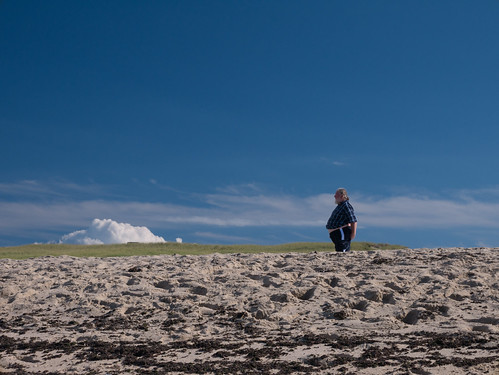
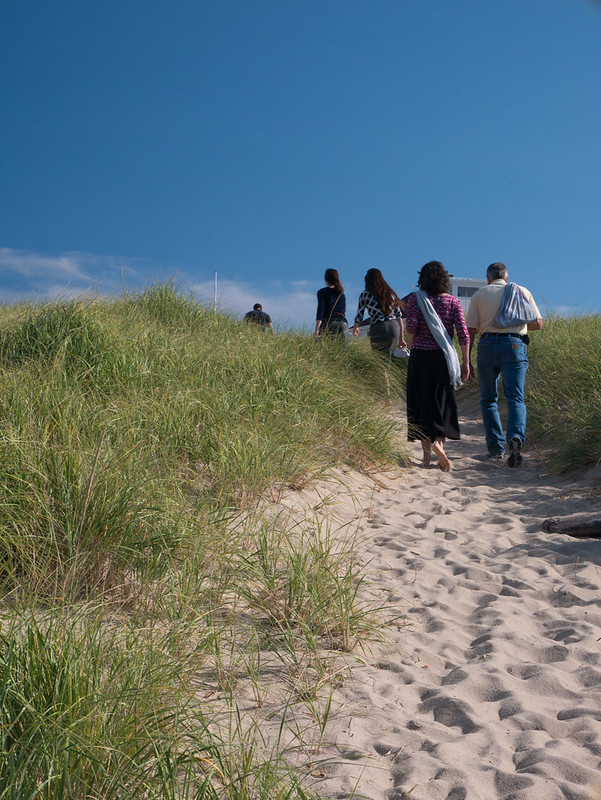
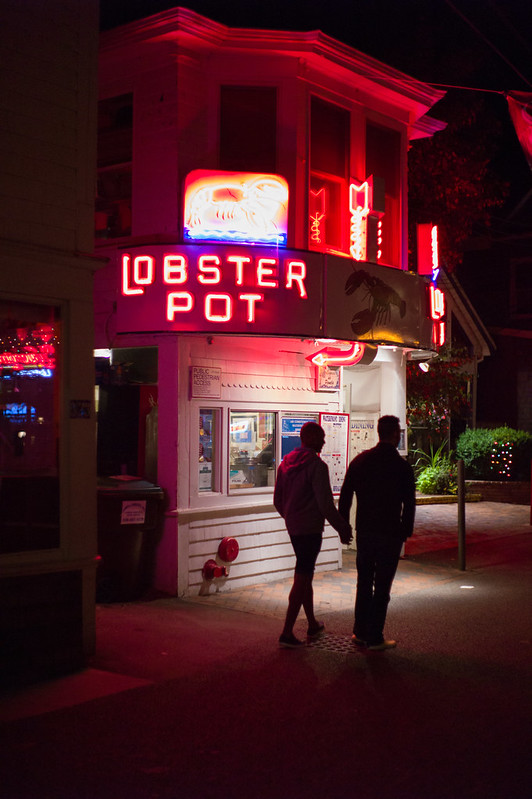
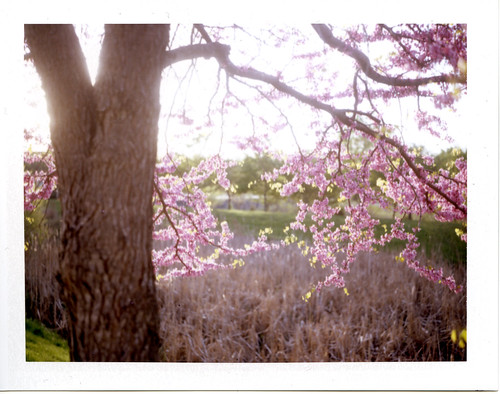
Previous Spring, by Reed A. George
Polaroid 103, Fuji FP100C Instant Film
 
I was talking with a couple of friends today about favorite and not-favorite photographers, what I like about cameras and photography and why, and the like, today.
 
It was an interesting discussion, starting off with the fact that neither of them is fond of Gary Winogrand's work; I find it fascinating. Then, we moved on to cameras. Now, you probably know that I love fine cameras. But, I also love cheap ones. This brought me to the realization that some of the images that stick in my mind were made with the cheaper, less precision-made cameras. This image is a good example of that. I can still remember the smell of spring in the air, and the fact that my allergies had started up. It almost makes my eyes itch to look at this picture. But, it also reminds me that spring is right around the corner.
 
Would this image win any popularity contests? Almost certainly not. But, it works for me.
 
DMC-365.blogspot.com

Tuesday, October 21, 2014

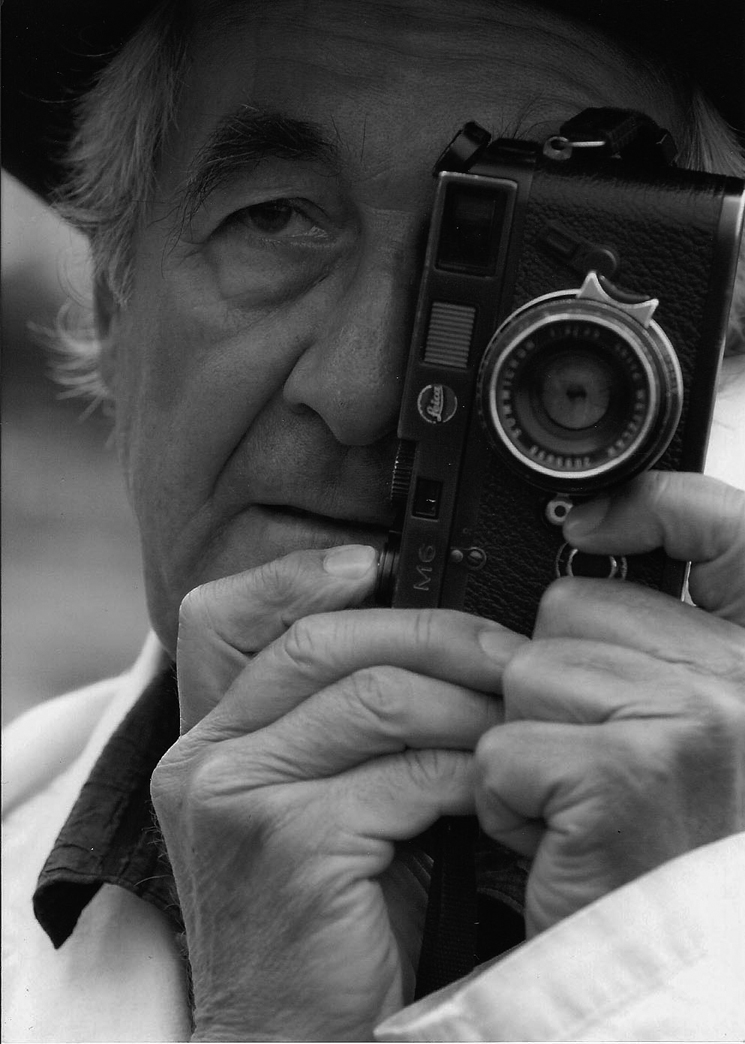
Sad Day - Rene Burri Passes On

Image Source: http://leicaphilia.com/magnum-photographer-rene-burri-dead-at-81/
 
Rene Burri, Magnum photographer who took the most famous images of Che Guevara, died on Monday, October 20, 2014, at the age of 81.
 
(Click Here) to read more on Leicaphilia.
 
Referring to my new book Magnum Contact Sheets, the section about Burri's shoot with Guevara in Havana, Cuba in 1963 recounts the experience. Burri says that Che would not allow him to open the blinds to get more light. Shooting with his Leica M3, Burri said it was remarkable that Guevara never looked at him, which is apparent in the three rolls of film displayed in the contact sheets. He was embroiled in an interview with Laura Berquist from Look magazine. Shot over two hours, the total of 84 shots (two rolls of 24 exposures, one of 36) show Guevara's animation and passion about his beliefs.
 
Burri also comments about the odd experience of purchasing t-shirts with his own image of Guevara on them.
 
Sorry to see him go, but Burri left an amazing record for us to study and learn from.
 
DMC-365.blogspot.com
 

Wednesday, October 8, 2014

Magnum Workshop Day 4/7 - Starting to Find My Way

Day 4. Wednesday. David Alan Harvey (DAH) had arrived on Tuesday night, and I knew that I'd be working with him for the rest of the week.
 
My final meeting with Bruno Barbey in the morning allowed me to share my images from Rego Automotive, two or three of which Bruno actually liked. I also showed him my shots from meeting the NYC surf fishermen. Bruno suggested that I try to find them again.
I joined DAH at around 10:30AM, and each of us students shared what we had so far. David was clear in telling us that we didn't have much for being on the third day of the workshop, and I agreed. He shared some of his own work, including a series from a strip bar in NYC, and showed us every exposure. This helped us to understand how he built up to the final few amazing images by working the scene. DAH doesn't believe in walking around looking for images. He finds a spot and sticks with it until a photograph emerges. This was an important lesson for me, and one that would pay off in the end.
 
After lunch, I grabbed my bike and headed back toward the beach, hopeful of finding the surf fisherman again.
 
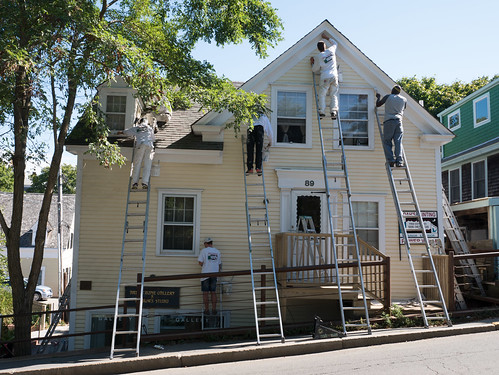
On the way, I noticed this scene, which has some relation to the changing of seasons in Ptown. Trying to follow directions and work the scene, I shot this one, which I thought was just an ice breaker. Then I proceeded to get close, and shoot images of individuals working. Technically fine, they just showed one or two guys painting. DAH picked this shot below because the real visual draw was having all of these ladders in place on one house. It gives the impression of working to get the painting done quickly. So, this was the only one that made the cut.
 
 
Winter Preparations
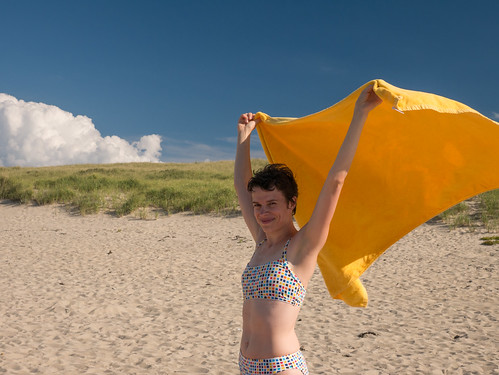
I never did find the surf fishing group again. However, on this day, I did finally start to find my groove. It was Wednesday, DAH was in town, and the pressure was on. Walking the beach, I caught a flash of brilliant color out of the corner of my eye. It was this young lady, letting her beach towel blow in the breeze. Walking over to her, I explained that I simply had to have that image for my workshop series. She happily obliged. I knew at this point that things were starting to go somewhere, at least a little.
Golden Towel
 
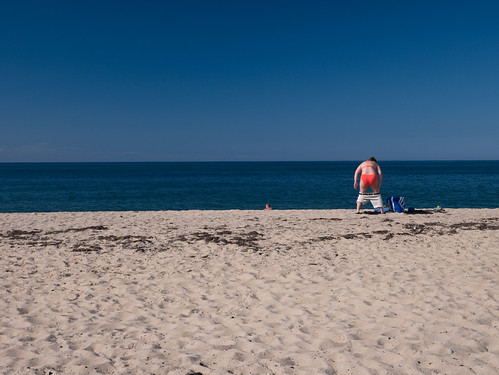
Then, I happened to catch this amusing little moment. Having my Lumix DMC-GX7 and kit zoom allowed me to quickly capture this image without anyone noticing. One second later and it was gone.
 
Caught in the Moment
 
Not five minutes later, I found this somewhat similar scene:
 
 
A Theme, Perhaps?
 
Deciding that a final day or two at the beach did fit my story line of Ptown shutting down for the season, I was happy to bring these into my image collection. I knew that I would need some pictures of people departing, and grabbed the shot below to try to capture that feeling.
 
Leaving the Beach
 
That shot didn't make the cut. DAH liked the concept, but not the execution. Getting a couple of closing shots would prove to be no simple feat. At least I had a start, however. I went into Wednesday evening feeling much more confident. Maybe too much so.
 
The public talk was by DAH on this evening. Knowing that he'd just arrived after days of trying to fly in from Europe, and had worked the full day that day, I was impressed with his energy and clear thought in presenting his work. There are many great examples of DAH's work to look at. Having been a National Geographic photographer for many years, of course he had stories. One of his latest projects, "Based on a True Story," demonstrates an edgy, energy-filled depiction of Rio de Janeiro. I was very pleased to get a copy of the book, complete with signature, as part of being in David's workshop.
 
So, I had a start. Far from really having a full story, I knew I had to find more good images in the coming two days, but at least I had a start.
 
DMC-365.blogspot.com


Sunday, October 5, 2014

Magnum Workshop, Day 1/7, Travel to Provincetown.

I've decided to document the experience of attending the Magnum Days workshop in Provincetown Massachussetts, one day at a time.
 
(Click Here) to read about Magnum Days.
 
I'm doing this after the fact, because our days were too full to do it in real time. I want to document for my own purposes, and share the process that I went through in the course of the five day workshop. I'll actually cover seven days, starting with Sunday, September 14, and ending with Saturday, September 20.
 
Sunday started early, with an hour drive from my home into DC to catch a flight from Reagan National to Boston's Logan Airport. There, I rented a car and drove the 2 1/2 hours to Provincetown, arriving in the mid afternoon. This allowed me the opportunity to meet up with my friends James and Maria, Boston natives who happened to be in Provincetown for a mini-vacation. We spent a little time together, and then I headed off to check in to my room and attend the first Magnum Days activity, a welcome party and barbecue.
 
Based on the fact that this was a Magnum event, I assumed that we would each work on a project throughout the week. In fact, I think it said that in the informational materials somewhere. In any case, I knew that we would have an exhibition of the workshop students' work on the following Friday. In order to prepare, I did a couple of things. First, weeks before the event, I started getting information about Provincetown (which I'll abbreviate as "Ptown," since that's fully accepted by the locals). I sent off an email to a historic lifesaving museum at the National Seashore, to see if there were any events during the time I'd be there. I received a nice response telling me there weren't, but that I was welcome to come and meet a historian on either Tuesday or Thursday afternoon, and see their museum. Didn't sound like much of a lead, but better than nothing.
 
I also decided to purchase a book on Ptown, entitled Land's End: A Walk in Provincetown, by Michael Cunningham. That turned out to be a very good primer about the town. It quickly became clear that Ptown is known for a few things: art, homosexuality, and partying. I also learned quite a lot about the land, lighthouses, and the National Seashore. Knowing that a Magnum workshop would be no place for landscape images, I wasn't sure if I could work any of that knowledge into my project. And, I wasn't particularly interested in covering the gay or party community, at least not on the surface of it.
 
I had also thought about the type of stories that our mentors have covered in their careers. Clearly, I wouldn't be covering a war in Ptown (thankfully). In fact, I tried to imagine anything there that may even reflect the fact that our country is currently involved in several military actions. The closest I could come was finding that Ptown had a Veterans of Foreign Wars (VFW) post. I thought that may lead somewhere.
 
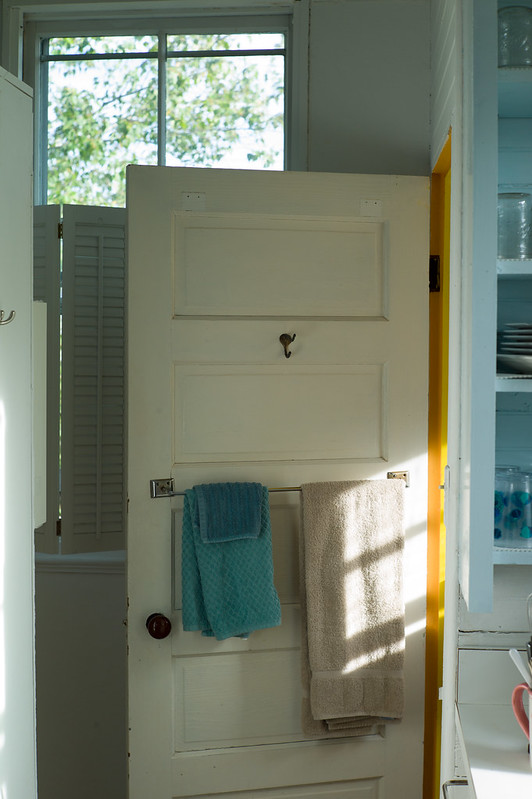
Of course, as I checked in and got my bearings, I shot a few images. You may have already seen this one, which has no interesting subject, but does show the beautiful nature of the Ptown light.
 
 
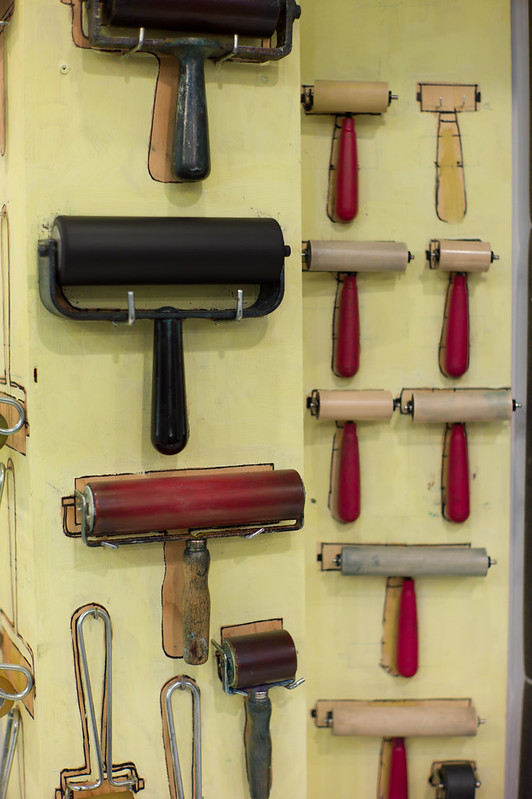
Attending the welcome party, we got a quick orientation to the Fine Arts Work Center (FAWC) in Ptown, which includes a fully-functional printing operation. I always love to look at tools, a practice that I'm sure came from my Dad. Check out these brayers. That's what I call organization.
 
 
After the party, I decided to walk down the main drag, Commercial Street, to see what it was like. I didn't want to just shoot random street photography during this workshop, and ended up spending much less time here than most of the other students.
 
 
When you're looking for a project idea, I think it's generally a bad idea to define what you don't want to do. But, on this evening, I did decide not to focus on drinking and homosexuality in Ptown. It was just too obvious. Not that this thought brought me any closer to what I did want to cover. I think you can see that I didn't have a coherent project idea at this point; it would take a while to form.
 
The other important development on Sunday was that those of us signed up to work with David Alan Harvey learned that he was stuck in Europe due to an airline strike, and would not arrive until Tuesday night. I decided to take this as a positive opportunity, as I was also very interested in learning from the other Magnum mentors, specifically Bruno Barbey. I got to spend the first two days with Bruno, which really added to the experience.
 
DMC-365.blogspot.com


Sunday, August 31, 2014

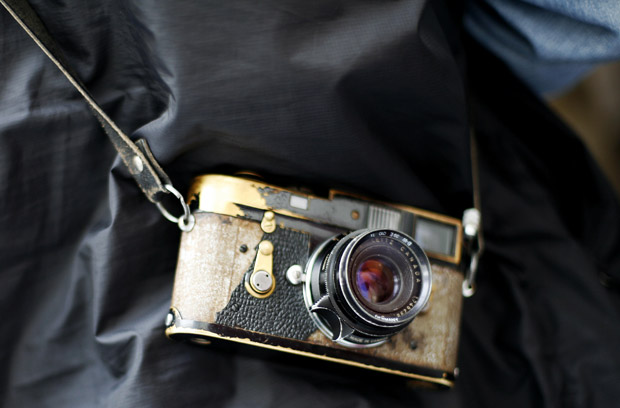
Studying Up for Magnum Days Workshop

 
I'm very pleased to have been accepted into a Magnum workshop in Provincetown, Massachussetts, which is coming up in a few weeks.
 
I will be studying with Magnum photographer David Alan Harvey. Mr. Harvey has a wonderful online magazine, entitled Burn.
 
(Click Here) to read Burn magazine for yourself.
 
What interested me the most there today is a video interview with Constantine Manos, another Magnum photographer who happens to be located in Provincetown. Click the link below to see and hear Manos' thoughts on becoming a successful photographer.
 
 
Mr. Manos states that in order to be successful, a photographer needs to have a portfolio of at least forty images that show the message they want to communicate. That message should be focused, and the images should hold to a theme. This focus on a single theme, at least for the scope of each portfolio, seems to be critical. Manos also believes that printing an image is necessary for it to really exist.
 
I have a few projects that have led to this number of presentable images. Street photography from various cities, but in a single style, make up one of those. Live music, specifically local performers from the mid-Atlantic region where I live are another. Another of my current projects, focused on meditation, is not quite there yet.
 
Always more to do!
 
DMC-365.blogspot.com

Sunday, August 17, 2014

A Little Inspiration a la Richard Avedon

I absolutely love shooting film, especially black and white. I also love medium and large format, including the Rolleiflex, chosen instrument of my friends Charlie Arnhold and Alain Durand.
 
Richard Avedon is one of the most famous portrait photographers of any time. Avedon used a Rolleiflex f2.8 twin lens reflex (TLR) camera for many of his portraits.
Ingrid Bergman, by Avedon
Image Source: http://classiq.me/portraits-by-richard-avedon/ingrid-bergman-by-richard-avedon-new-york-1961
 
Always using plain backgrounds, Avedon's portraits seem to show a very direct connection between model and photographer. I love that about his work.
 
For more Avedon inspiration, check out this post on the blog Classiq.me.
 
Still plenty to learn!
 
DMC-365.blogspot.com


Thursday, July 24, 2014

Magnum Workshop in Provincetown, MA - I'm Going to Apply

September 15-21, 2014 is Magnum Days at the Fine Arts Work Center in Provincetown, MA. Along with an impressive array of lectures, reasonably priced at $15 each, they're running a week-long workshop where students get to improve their work by studying directly with a Magnum photographer.
 
New Orleans Musicians, by Reed A. George
Panasonic Lumix DMC-LX7
iso 400, f2.8, 1/200 sec.
 
(Click Here) to go to the Magnum Days web page.
 
The workshop requires submission of a small portfolio, photographer's statement, and a non-refundable deposit. This is just the application phase, and I may not get in.
 
While I'm a big fan of Bruce Gilden and Constantine Manos, I will select David Alan Harvey or Bruno Barbey as my first choice for a mentor. Both of them have published work that fits with my interests, and shows how much I have to learn.
 
For example, (Click Here) to see Barbey's work at Magnum.
 
They only allow a maximum of 12 students per mentor, so I'd better get busy and put in my application. What a boost it will be if I get in and spend a week with this group!
 
DMC-365.blogspot.com


Friday, July 4, 2014

Music Festival Photography

I really like shooting at music festivals. I love live music, creative people, and nature. The festivals give me all of that.


I especially like the smaller local festivals here in Northern Virginia. In fact, I'm headed out to one this weekend at Watermelon Park, in Berryville. This one's called "River and Roots," and I'll get to see many of my friends there.
 
By shooting at festivals, I've met a few of the best live music photographers there are. One of those is Milo Farineau. Another, his mentor, is Chester Simpson. Both are fabulous photographers and people.
 
Chester recently posted a link to his friend's thoughts on modern festivals, including Glastonbury in the UK.
 
(Click Here) to read Barry Wolman's thoughts, which include comparing Glastonbury to a "prison yard."
 
While the festivals I attend do focus as much on camping and spending time with friends, they also clearly celebrate the music, something that seems to be lost at some of the larger festivals. The music is what really brings us all together around here. If I felt as Wolman does, it would be time for me to stop attending festivals. As it is, I can't wait for this weekend!
 
Oh, and Happy Fourth of July!
 
DMC-365.blogspot.com


Monday, June 23, 2014

Saul Leiter - "In No Great Hurry"

Photographer Saul Leiter (Left) and Director Tomas Leach
Image Source: http://erickimphotography.com/blog/wp-content/uploads/2013/06/INGH7-Saul-Leiter-and-Director-Tomas-Leach.jpg

Here's a movie I'm actually looking forward to seeing. Director Tomas Leach was given a book of Saul Leiter's photographs, called Early Color. He decided to approach Leiter with a proposal to make a biographical film about him, and it was accepted.
 
Based on the trailer, which you can see by
 
(Clicking Here) on http://watch.innogreathurry.com

I'm convinced this will be an interesting film for me. Leiter seems like a very down-to-earth guy. The trailer is somewhat reminiscent of the film about Bill Cunningham, which I wrote about earlier. (Click Here) to see that post.
 
While Cunningham continued to use a Nikon FM2 camera for his whole career, we see in the picture above that Leiter at least toyed with more modern digital cameras, including a Panasonic Lumix G1, and an LX series (LX5), both excellent cameras in my opinion.
 
Use google image search to look for Leiter's pictures. There's a lot for me to learn from this man.
 
I learned about Leiter on Google+ in a post by Kent Forrest. The image above came from Eric Kim's photography blog. (Click Here) to see Eric's post about the film, which opens in the US in July.
 
DMC-365.blogspot.com


Tuesday, June 10, 2014

Bruce Davidson's Leica - How a Leica Should Look

Image Source: http://leicaphilia.com/wp-content/uploads/2014/04/davidson1.jpeg
 
There's a nice post on the blog Leicaphilia, about an image Bruce Davidson made of a British girl holding a kitten. The photograph is beautiful, and worth the click.
 
(Click Here) to see the girl with kitten on Leicaphilia.
 
But, the image above, of Davidson's Leica, is what impressed me. Now that's what I call brassing. Tough to call this on "minty" if it ever hits ebay.
 
As I've shared before, I bought my first Leica, the M4-2 that I've used for the "Dreaming in Monochrom(e)" series, used and cheap.
 
(Click Here) to see my Dreaming in Monochrom(e) series of posts.
 
My friend recommended that I forget about having the vulcanite replaced, stating that it would be better to look like I'd carried my camera through a war than like a dentist out with his new jewelry. I've followed that advice. My M4-2 is just a ugly/beautiful as when I received it.
 
DMC-365.blogspot.com


Monday, June 2, 2014

10 X 10 = 100 Years of Leica

This is an important time for Leica. Celebrating their 100th anniversary and moving into a new headquarters in their original home of Wetzlar, Leica is having fun on several fronts.
 
In addition to introducing highly exclusive camera editions that most of us will never see, they've commissioned an exciting series of photographs from contemporary photographers, pairing each of them in style and spirit with an important photographer from the past.
 
Image Source: http://blog.leica-camera.com/leica-news/leica-gallery-wetzlar-inaugural-10-x-10-exhibition/
 
The ten photographers, and their conceptual partners from the past are listed below:
 
Jing Huang and Henri Cartier-Bresson
Craig Semetko and Elliott Erwitt
Julia Baier and René Burri
Dominic Nahr and Robert Capa
Evgenia Arbugaeva and André Kertész
Kirill Golovchenko and Lee Friedlander
Alec Soth and William Eggleston
Amedeo Turello and William Klein
Thomas Ruff and Alexander Rodchenko
Saga Sig and Jeanloup Sieff
 
Each of the ten chosen photographers created ten images, which are now on exhibition in the Leica Gallery.
 
(Click Here) to read more about the show on the Leica Camera Blog.
 
The blog shows one representative image from each of the featured photographers. I'd like to see the rest, as what they show is intriguing. Reading this also reminds me of how many great photographers have come before us, and how I should become familiar with their work. While many of the names of the greats listed above are familiar to me (some are not), I would have trouble pointing out the style of any of them with the exception of Bresson and Capa. There is a lot for me to learn from them.
 
I appreciate the Leica is celebrating the past and looking to the future with this event.
 
DMC-365.blogspot.com
 

Saturday, August 10, 2013

Gaining Trust, Even For a Short Time, Leads to Better People Pictures

Photographers are sometimes perceived negatively by those they're photographing, especially when they are anonymous, unfamiliar to the subject. I thoroughly enjoy street photography, and frequently do shoot images of people in public, without any discussion or introduction. At other times, I do choose to introduce myself, talk a little, and gain a level of trust that eases the subect just a little.
 
Each approach yields a different type of image. The anonymous approach shows people living their lives, without the influence of the photographer's presence. Genuine expressions and interactions are possible. Talking makes a connection, however slight, between the photographer and subject. Sometimes this connection can show through in the image.
 
I shot the two images below in Harlem, New York City.
 
Sunday Morning Game of Catch, by Reed A. George
Nikon D700, Nikkor 24-85mm f2.8-4 Zoom Lens
 
 
On this particular morning, I was on a photo walk with Marla Mossman. Marla is a master of approaching people in the street, establishing rapport, and getting their picture. I learned so much more from her than how to think about depth of field, which happens to be the most consistently-discussed topic in photo workshops, in my experience.
 
(Click Here) to see Marla's work. If you get the chance to meet her, take it.
 
There's a nice entry on the NY Times photo blog, Lens, about this subject.
 
(Click Here) to read about how Demetrius Freeman, a contemporary photographer, learned from looking at Gordon Parks' photos about establishing connection with his subjects. Mr. Parks' photo of Ingrid Bergman (included in the post) is stunning.
 
DMC-365.blogspot.com


Monday, July 29, 2013

This Post is a Little Off the Reservation, but Still Photography-Related

Hemingway's Passport
Image Source: http://cdn.visualnews.com/wp-content/uploads/2013/07/11-Passport-Photos-of-Iconic-Figures.jpg
 
My mind is wandering as the summer wears on. As you may have noticed, I've been focusing a lot on my own cameras and photographs for this blog, as opposed to my earlier focus on equipment. I'm still primarily interested in the interface between photographic equipment and the resulting images, but sometimes I go a little further to one side or the other. I was looking for some visual inspiration, and came across a really cool post on cdn.visualnews.com, showing passports of famous people.
 
(Click Here) to see the full post and several passports on cdn.visualnews.com
 
The post makes the point that even famous people probably aren't fully satisfied with their passport pictures. It does seem like one of those things that's really difficult to be pleased about. However, I must say these celebs' passport pics sure look better than mine. Here's another of my favorites from the post:
 
Bowie's Passport
Image Source: http://cdn.visualnews.com/wp-content/uploads/2013/07/11-Passport-Photos-of-Iconic-Figures.jpg
 
The passport is somewhat of an equalizer. It doesn't matter if you're rich or famous, you're probably not getting back in, even your home country, without one. People are just people at the level of the law. Well, then there are exceptions - people who clearly aren't just people:
 
Johnny Cash's Passport
Image Source: http://cdn.visualnews.com/wp-content/uploads/2013/07/11-Passport-Photos-of-Iconic-Figures.jpg
 
Photography is important. Don't forget it.
 
DMC-365.blogspot.com


Monday, June 17, 2013

Sad News - Wayne Miller, Magnum Photographer, Dies at 94

Image Source: https://www.google.com/search?q=wayne+miller+photographer&client=safari&hl=en&source=lnms&tbm=isch&sa=X&ei=_aC0UcnpCdal4AP0xIGwBQ&ved=0CAoQ_AUoAA&biw=1024&bih=644#biv=i%7C25%3Bd%7Cb2oVpf6LZkPjBM%3A
 
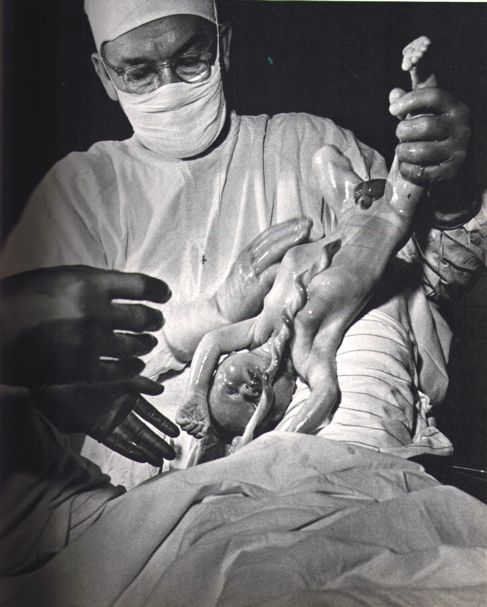
Wayne Miller, celebrated Magnum photographer, who covered subjects ranging from World War II in the Pacific to child care (for Dr. Spock's books) recently passed away at 94 years of age.
 
My personal friend, who I met in a way completely unrelated to photography, is Mr. Miller's son. In fact, that's my friend being delivered in the image above. As I understand it, his grandfather is the doctor delivering him, and of course, his father, Wayne Miller, took the shot.
 
We have lost a treasure. Do a search of Mr. Miller's work to be inspired to shoot more, shoot better.
 
(Click Here) to read the story at the NY Times.
 
DMC-365.blogspot.com


Wednesday, May 8, 2013

Alfred Eisenstaedt's Camera On Sale!

Eisenstaedt's Leica IIIA
Image Source: http://www.auction2000.se/auk/w.MegaPic?inC=WLPA&inA=20130118_1303&inO=74&inSO=2
 
According to the Austrian Westlicht Auction catalog, Alfred Eisenstaedt's Leica IIIa, yes the one used to shoot the iconic image of a sailor returning from World War II kissing a woman in the street in Times Square, will go up for sale this month.
 
Equipped with a 50mm Summitar f2 collapsible lens, this beauty is expected to bring in the neighborhood of US$30,000. I can admit, I'd love to have that camera purely for its historical value.
 
(Click Here) to read about the sale on theverge.com
 
Don't know Eisenstaedt's work? If you have any interest in street photography or photographic history at all, you must get to know his work.
 
My introduction was through the book The Eye of Eisenstaedt, which is still available used on Amazon. Please use my link below to get yourself a copy and support this blog at the same time!
 
It's amazing what Eisenstaedt was able to do with a relatively simple camera outfit. I'm sure he didn't spend much time camera shopping. That makes we want to get out and shoot an old Barnack Leica!
 
DMC-365.blogspot.com


Sunday, November 11, 2012

Candid Portraits - "Commonality of Humanity"

 
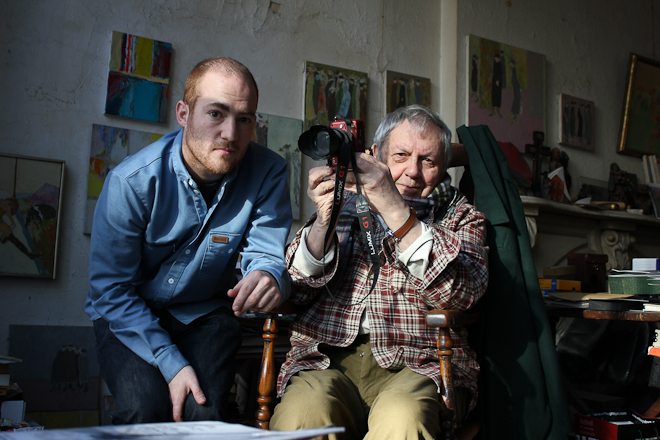
Harlem Barber Shop Owner, by Reed A. George
Nikon D700, Nikkor 50mm f1.8D AF Lens
iso 640, f2, 1/500 sec
 
If you don't know who Steve McCurry is, you probably know his most famous image - one of an Afghani girl on the cover of National Geographic magazine.
 
(Click Here) to see the picture(s) and read the story.
 
In this 7 minute video on Petapixel, McCurry and photographers Bruce Davidson and Miru Kim discuss how people photography reflects basics of human nature.
 
(Click Here) for the video on Petapixel.
 
One image critic comments how more than one photographer has commented that they're simply "taking self-portraits," no matter who they're photographing. For Miru Kim, it's literal. She shoots images of herself. For most others, they're saying that people pictures reflect as much of the personality of the photographer as of the subject.
 
In the video, Steve McCurry shares some of his favorite slides (on an old-fashioned light table, surrounded by filing cabinets with paper folders, no less!). He comments on the "commonality of humanity" being reflected in the subject's face, when they're not pulling a pose or wearing a mask for the camera. Interestingly, in his outing during the video, he shoots a Nikon DSLR, with a single, small, prime lens (a Nikkor 35mm f2, I believe).
 
McCurry also describes walking the city, exploring, being completely "in the moment." This is a very common expression in Buddhism and other forms of meditation. It really is great to be able to focus on the moment, and not worry about the past or future. This is what photography does for me.
 
Here's to now, this moment.
 
DMC-365.blogspot.com


Saturday, October 13, 2012

I Wish I Could See This Gallery Showing In Person - Gordon Parks, 100 Years Since His Birth

Gordon Parks (1912-2006) is perhaps the most famous African American photographer in history.
 
I can remember marvelling at some of his work in one of my first photography books, The Joy of Photography I think it was, when I was about twelve years old. Mr. Parks photographed a wide variety of subjects, including segregation of races in the United States. He also did some spectacular coverage of bullfighting, including gorgeous treatment of motion through blur in his photographs. That early exposure has stuck with me throughout my photographic life.
 
(Click Here) to read a brief biography of Gordon Parks on the American Photography Archives Group (APAG) website.
 
There is a gallery showing at Howard Greenberg Studios in New York to celebrate Mr. Parks' centennial. I am going to New York soon, but will be there on Sunday and Monday, the two days that the studio is not open. Bummer.
 
(Click Here) to read more about the gallery event.
 
In order to respect copyrights, I am not including any of Gordon's work in this post. If you love photography, you owe it to yourself to see it. A simple google image search will yield plenty to look at.
 
While I hesitate to do this, because my work isn't worthy, I'm going to include a shot of my own, inspired by Mr. Parks' treatment of the bullfights.
 
Calf Roping, by Reed A. George
Nikon D200, Nikkor 80-200mm f2.8 at 200mm
iso100, f20, 1/20 sec
 
I didn't think consciously about Gordon Park while making this photograph at a local rodeo a few years back, but I can see the inspiration for it now.
 
DMC-365.blogspot.com


Friday, September 28, 2012

Bill Fortney Asks "Why Bother?"

I just found Bill Fortney's website. His theme is "Photography and Faith." While I'm not a religious person
myself, no one could deny the beautiful work and great photographic insights on Bill's site.
 
Image Source: http://billfortney.com/?p=6176
 
In one piece, Bill asks "Why Bother?" when there are so many unbelievably great photographers out there? I'm sure we've all felt it at some point. The feeling of being so inferior to some of the masters can really get you down.
 
(Click Here) to read Bill's thoughts on the subject.
 
Bill makes several good points:
  1. Enjoy the fact that there are so many great examples to learn from. Enjoy holding the camera as much as you enjoy your images.
  2. Celebrate when others succeed.
  3. Always photograph your passion. If you can find that, success will follow.
  4. Experiment. It has never been easier to experiment photographically.
  5. Have fun. After all, that's why it's your hobby.
I like this approach very much. One thing that strikes me is the idea of photographing what you are passionate about. This is easy to say, hard to identify and turn into a project, in my experience. I feel that I've achieved it with my Live Music project. And, it really makes working hard to get better at it fun.
 
DMC-365.blogspot.com


Friday, August 10, 2012

A Fun Little Sidenote - Stars With Great Cameras

Scarlett Johansson using her Leica M6
 
Scarlet and Leica
Image Source: http://www.overgaard.dk/leica_history.html
 
Just scanning the blogs this morning, and found an interesting post about celebrities and their cameras. Scarlet is always interesting - camera optional.
 
(Click Here) to see an extensive collection posted on a site called retronaut.
 
 
I guess it's cool seeing Seal with his Leica, but I like some of these a lot more.
 
I don't need moviestars to give credibility to my cameras, but there's something cool about seeing them using this stuff. I especially like the James Dean pic, where he's wedged between walls, using his Rolleiflex.
 
Now I need a shot of Einstein laying on his back shooting a pre-war Lumix...
 
DMC-365.blogspot.com


Thursday, June 21, 2012

Landscape Photographer Hans Strand Shares His Story On Zeiss Lens Blog

 
Hans Strand on Zeiss Lenses
Hans Strand - Master Landscape Photographer and Zeiss Enthusiast
Image Source: http://blogs.zeiss.com/photo/en/?p=1785

Hans Strand, Swedish landscape photographer, and I have at least a couple of things in common. First off, Hans is a trained Mechanical Engineer with a passion for photography. Second, he appreciates fine photographic equipment, from the point of view of an engineer.

(Click Here) to read Hans' complete story on the Zeiss lens blog, outlining how he transitioned from Engineering to Photography as his vocation, how he composes his images, and why he enjoys Carl Zeiss lenses.

We also have some differences. Hans is a master of the wide angle, which is somewhat elusive to me (I'm working on it). He maximizes depth of field and ultra-sharp focus in his landscape work. Another difference - he loves cold places. If I were to pick an ideal location to photograph, it would likely be a tropical island (Kauai comes to mind), or the Sierra Nevada Mountains, at the cold end. Hans prefers Iceland. To each his own.

Finally, one more point we share - even though he does a completely different style of photography, Hans appreciates the precision and timing of Henri Cartier Bresson's (HCB's) compositions. In my opinion, no other famous photographer has gotten it as right as HCB. Every time I pick up a rangefinder and head out to shoot a street scene, I wish for some insight from that guy.

I also enjoy Zeiss lenses - especially old ones, like the old Zeiss Tessar f2.8 on my 521/16 medium format folding camera that I used for these two shots:
Snow Dance, by Reed A. George
Zeiss 521/16 Medium Format Folding Camera, Zeiss Tessar f2.8

Waterford News, by Reed A. George
Zeiss 521/16 Medium Format Folding Camera, Zeiss Tessar f2.8

To tie it in a little, of course I enjoy my modern Zeiss Biogon 25mm f2.8, which makes a wonderful normal lens on the Lumix G3, great for street photography.

(Click Here) to see my recent post of a triptych shot with that combination.

DMC-365.blogspot.com