Showing posts with label sensor. Show all posts

Tuesday, July 28, 2015

So, Which of My Lenses Are Best on the Nikon D810?

 
Nikon
 
The advent of the D810, and its predecessors the D800 and D800E, caused many photographers to find the limits of their lenses. It used to be rare that the sensor was good enough to have the lens be the limiting factor in image quality, or acuity. Now, it's not rare at all.
 
So, which lenses from my (rather extensive) kit of Nikkors will work well on the D810 that's on its way to me in the mail?
 
I found a nice list on the DxO page, which lists the top choices for prime and zoom lenses for the D810. Testing over 100 lenses on the D810, they've compiled a list of the ones they found most suited to the new super-sensor. (Click Here) to read the full list.
 
As expected, my new 28mm f1.8 AF-S G lens, my most modern lens, makes the list. Importantly, so does the AF-S 200-400mm VR, though they tested the version 2 of this lens; mine is version 1. As the 200-400 is likely to be my most-used lens on this new camera, that's important to me. Another modern lens in my kit, the 70-300mm f4.5-5.6 VR zoom made it on the list. That's good.
 
Then there were a couple of surprise entries from my older lens selection: the 85mm f1.8 AF-D and the 50mm f1.4 AF-D (which I use all the time). Great to see those there, as well.
 
So, I feel that in addition to the 200-400, which will be my nature workhorse, I've got a full set of wide (28mm), normal (50mm), short telephoto (85mm), and long compact zoom (70-300) to choose from with this camera. I'll certainly use other Nikkors on the D810, but with these, I know that I can expect the very best results.
 
DMC-365.blogspot.com
 

Friday, May 29, 2015

It's Not All About the Camera, but the Camera Matters

Basement Cafe, by Reed A. George
Leica M9, Zeiss Sonnar C 50mm f1.5 Lens
iso 640, f2, 1/45 sec.
 
As you most likely know, this blog is mostly about the interface between cameras (more broadly, photographic equipment) and creativity.
 
The Leica M9 is certainly one of the most wonderful cameras I've ever owned. It's by far the most expensive. But, it's also quite unique in the world of digital cameras. It makes images that just aren't quite like other digital cameras.
 
I recently went through the experience of being convinced that my M9 had the famous sensor corrosion issue, and as a result planned my exit from the M9 experience. Scenarios included an upgrade to the Leica M240 (which I was not thrilled about), or a complete exit from Leica digital (which I was less thrilled about). But, I could have made it work. My shooting style when using the Leica, any Leica, would not suffer much from shooting only film. I'm still deeply into shooting film, so there's no barrier to me in that respect. The only exception would be for travel, where film has become a large pain in the a$$.
 
Luckily, Leica informed me that my sensor was fine, cleaned it, and sent it back to me. No troubles since then. But, I do still think about the upgrade once in a while. The truth is, none of the features of the M240 really seem like an advantage over the M9 to me, with the exception of high iso capability. Let's face it. I don't need to adapt Nikon lenses to my Leica rangefinder. Nor do I need an electronic viewfinder on it.
 
Anyway, I'll stop rambling and just say that I'm glad my M9 is still chugging along. I'll continue to use it alongside some great Leica film bodies.
 
What got me started on this subject? An interesting post on a blog called "Into the Foto," where the author sent his Leica M-E (same sensor as the M9) in to have the sensor replaced, and reverted back to his Ricoh rangefinder and Olympus SLRs. Very interesting. (Click Here) to read that post.
 
Yes, the camera matters. What matters more is creativity and the motivation to get out and shoot. That's what I'm working to maintain and continuously improve.
 
DMC-365.blogspot.com


Tuesday, February 10, 2015

My M9 is Back

I've written a couple of posts about the sensor corrosion issue and how I've responded to the news.
(Click Here) to read my latest previous post, regarding the fact that my M9 was checked out by Leica USA, and found to NOT have the sensor corrosion issue.
 
I am pleased to know that my sensor is unaffected, and appreciate the free checkup from Leica. I just got the nerve up to shoot a test shot of the sky, and confirm that the spots I saw before are gone. They are gone. Whew!
 
So, now that I know that Leica will make good on their promise to check and repair my M9 if the problem does arise, and have confirmed that I'm pleased with the results it's giving, I'm going back to just using it and enjoying it. I wasn't planning an upgrade to the M240 or anything else soon, so why should I now?
 
I did consider selling my M9 immediately upon its return from service. I don't think I'll do that. It's a wonderful camera, and I will just relax and start shooting it again.
 
DMC-365.blogspot.com
 

Wednesday, January 21, 2015

The Next Step for my Leica M9 - Returning from Leica Service USA

Back on December 13, 2014, I wrote about the newly-acknowledged sensor coating corrosion problems with the Leica M9. (Click Here) to read about Leica's announcement and "goodwill arrangement" to replace affected sensors.
 
I sent my M9 off soon after, and began inquiring about options. As of today, here's the situation:
  1. Leica USA Service has checked my camera, cleaned the sensor, and shipped it back, free of charge.
  2. Leica USA Service has indicated that my camera does not have the sensor issue. I'm surprised, but must assume that they're better equipped to diagnose it than I am.
  3. In Leica's announcement, they promise "an attractive offer" to upgrade. Despite trying as nicely yet persistently as I can, no information about my options for upgrading to a new model with different sensor has been forthcoming.
I was not, and still may not be in the market for the new Leica M240. I really like a lot of things about my M9, and for the way I use a digital rangefinder, see no need for a costly upgrade. However, this widespread sensor problem does worry me. If I could assume that Leica will continue this "goodwill arrangement" for several years, I would stop worrying about it, and simply keep shooting my M9. Perhaps that's what I'll do.
 
Or, maybe I'll step out of Leica's digital rangefinder world for a while, and sell the M9, straight back from service. At least I could sell it with full certification from Leica regarding its condition.
 
The truth is I've used this camera and enjoyed it very much. If it were not the most expensive camera I'd ever purchased, I would consider it money well-spent, and use it as long as I can. I've made a lot of pictures with it, and definitely enjoyed the process. I'll just have to wait until it returns, see if the rest of the goodwill arrangement (the upgrade offer) ever materializes, and decide.
 
I have mixed feelings about Leica's handling of this so far. I respect that they acknowledge the issue, and checked and cleaned my camera for free. I paid for the same service one year ago, just because it needed cleaned. However, it's pretty clear that Leica was not ready to actually make the attractive upgrade offer they promised in their announcement, and no one at Leica USA or the Leica Store have any information with which to make an offer. The company needs to get this part coordinated, quickly.
 
So, do I feel I've been treated fairly? Kind of. Do I feel that I've been treated as I would if I were a Mercedes-Benz owner with a known, acknowledged potential defect in my car? Absolutely not. Leica, at least to me, is a premium camera seller. I paid more for the features on this camera than I would with any other camera manufacturer, just as a Mercedes owner does with their car. Leica, you need to take a page out of the premium car manufacturer's book in terms of customer communication and retention.
 
My M9 story's not over yet, but even I don't know exactly where it's going.
 
DMC-365.blogspot.com


Saturday, December 13, 2014

Leica Makes Good on M9 Sensor Problems - Mine Is Going Back


My Leica M9 was just serviced about a year ago at Leica USA.
 
Recently, a problem with the Leica M9, M9-P, M Monochrom and M-E camera sensors surfaced, related to corrosion of a coating on the IR filter. Leica is offering a "goodwill arrangement," under which they'll replace any affected sensors free of charge. They're also offering attractive upgrade options if owners are interested in upgrading to the M240 or MP (240).

I think I'll send my camera in and see what the options are.

(Click Here) to read the official announcement of the goodwill arrangement.
 
Having a problem like this is never good for camera owners. It can only hurt the resale value of used cameras. But, given that it happened, this seems like a generous response by Leica. I'll be sure to report what happens with mine.
 
DMC-365.blogspot.com
 

Thursday, July 3, 2014

Hey, Maybe Micro 4/3 is a Sweet Spot After All?

Image Source: http://www.the.me/nikon-lost-in-hall-of-mirrors/

While I'm not happy to hear that Nikon's camera business is struggling, I found the graph above most interesting. And, while I understand that not all mirrorless cameras are Micro 4/3, the text in this post on THEME makes special mention of that format and how well it's doing.

(Click Here) to read more about how DSLRs are losing ground to mirrorless, and how Nikon and Canon, while offering what some consider to be weak options in mirrorless, are looking to new business areas for revenues.

While the post on THEME says that Nikon has no experience in Medical Imaging (the major market they've announced they'll pursue), I know firsthand that they do have expertise in imaging for medical research. Their research microscopes are excellent, and they are clearly working hard to bring new products to market that compete with the other best-in-class companies.

The theory in this article about why Nikon and Canon have offered "compromise" mirrorless cameras is that they are afraid of cannibalizing their DSLR market. That may be true. However, I've always marvelled at how Nikon will come out with a $5,000 super DSLR, then follow it up 9-12 months later with a $2,000 camera that has 95% of the features of the former. It's great for us users. But, I don't see fear of cannibalization going on there (within their own DSLR lineup), at least.

I agree that mirrorless cameras are certainly now encroaching on the specific market for DSLRs. I loved carrying two Micro 4/3 bodies and more lenses than necessary in a single bag on my most recent vacation. However, I'll be grabbing my Nikon DSLR this weekend for a music event. So, my hope, as a selfish user, is that both formats have a long future, with lots of improvements still to come. And no, I don't mean video capability that allows you to pick the perfect frame out of 10,000 captured!

DMC-365.blogspot.com

Saturday, January 18, 2014

I Think Micro 4/3 is at a Tipping Point... Could Go Either Way

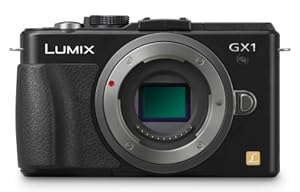
This is the beginning of my third year of hosting this blog. My first year was largely focused on Micro 4/3 equipment, and I shot an awful lot with a pair of Panasonic DMC-G3s. The second year saw a lot more use of film cameras with special emphasis on Leica, largely in response to my significant (for me) investment in a Leica M9 body. During that time, I replaced my G3s with a Lumix GX1 (which I picked up for an unbelievable low price during one of Amazon's discount periods), and in late 2013 I purchased the new DMC-GX7.
 
I haven't really given it a chance, but I have yet to fall in love with the GX7. I sincerely love the form factor of the Micro 4/3 equipment, but still realize a compromise in image quality as compared to my full frame cameras such as the Nikon D700 and Leica M9. It's not all as black and white as that in comparison to the M9. In fact, I think my GX7 does better at iso 1600 than the M9 in terms of noise. But, at no iso does the GX7 make an overall nicer image. The M9 is just somehow special in my opinion.
 
I think I entered the Micro 4/3 world hoping that I was betting on the sweet spot of sensor size versus overall package size, that the sensors would improve to the point that I could get everything I wanted out of the incredibly compact cameras. And improve it has. But, I think the latest generation is truly an incremental improvement (I don't feel that the GX7 is that much better than the GX1). The G3 was miles better than the G1. I hope this isn't an indication of a slowdown in the technology improvement for these sensors.
 
I'm not ready to get out of Micro 4/3, but it's not going to displace many other cameras, either.
 
Anyway, as I was browsing the web this morning, I saw these two adjacent posts, which I think sum up the current situation very well:
 
I'm interested in what others think about this. I feel that Micro 4/3 is still very promising. But, it's a tough competitive world out there.
 
DMC-365.blogspot.com


Saturday, November 2, 2013

Oh No! Banding on the GX7 Sensor? Not to Worry.

I saw a post by pisanoal on mu-43.com that initially had me worried. You see, I've only had a little time to play with my new Panasonic Lumix DMC-GX7, and most of that has been with the surprisingly decent new 14-42mm Series II kit lens.
 
In this post, pisanoal showed an example of the GX7 sensor producing "bands" in the image when shooting with the Lumix 20mm f1.7 (1st series) lens, which is one of my favorite Micro 4/3 lenses. Here's the example:
Image Source: http://www.mu-43.com/showthread.php?t=54486
 
Worrisome. Now here's the good news - it was shot using the electronic shutter.
 
When I was looking at the features of the new GX7, the electronic (silent) shutter came out as a major plus. I have always thought the Micro 4/3 camera mechanical shutters a bit loud. I found myself thinking, why would I ever use the mechanical shutter if I have an electronic one? The image above is one answer. The frequency of the data collection on the sensor when using the electronic sensor can interact with the frequency of some specific types of light, such as the fluorescent lights in the image above. Also, the electronic shutter cannot be used with flash.
 
(Click Here) to read the post and comments by pisanoal on mu-43.com.
 
Remembering those limitations, I have already found the silent electronic shutter to be a real advantage, as in the example below, which I shot inside a Buddhist temple. Photography was permitted in the temple, but I still found it nice to be able to shoot without drawing the attention of others.
 
 
Bathing the Buddha, by Reed A. George
Panasonic Lumix DMC-GX7, 14-42mm f3.5-5.6 Series II Kit Zoom at 42mm
iso 1600, f5.6, 1/30 sec.
 
Not bad for iso 1600, at the long end of the kit zoom, wide open aperture, huh? This is a pretty impressive little camera.
 
DMC-365.blogspot.com


Wednesday, May 29, 2013

Scientists Make Insect-Like Compound Eye Sensor

 
This post comes close to bridging my hobby (photography, obviously) and my real occupation (science).
 
A project at the University of Illinois Urbana-Champaign has produced the first electronic sensor that uses the concept of compound eyes, as demonstrated in nature by many insect eyes. Compound eyes are made up of independent imaging sensors, known as ommatidia. Each ommatidium has its own lens, independent of all the others, and its own sensor.
 
(Click Here) to read a review of the project on the BBC news blog.
 
This design from nature has the benefit of being able to cover a very wide angle without extreme distortion as seen with a single wide angle lens, and it can simultaneously focus at multiple distances.
 
While the immediate applications being considered for the compound sensor include miniature flying robots and such, it does make me wonder how it could be applied to art. Very interesting.
 
DMC-365.blogspot.com


Friday, May 10, 2013

The Lumix G6 Is Announced - Same Sensor as G5...

 
Image Source: http://www.cameralabs.com/reviews/Panasonic_Lumix_DMC_G6/
 
I read an introductory hands-on review of the new Lumix G6 today.
 
(Click Here) to read it for yourselft on cameralabs.com
 
According to this article, the G6 is about the same size as the G5, and questionably, at least by me, it shares the same sensor with the G5. I am still shooting the previous series of Lumix Micro 4/3 cameras, the G3 and GX1. From what I can tell, the G5 is not enough of an improvement to justify upgrading. Again, according to this article, the G5/G6 sensor is based on the GH2 sensor. Well, the GH3 is already out and getting much better reviews than the G5. Why would they not use the GH3 sensor in the G6? This will keep me from purchasing the G6 as well.
 
Again, I'm waiting for the announcement of a GX2 (or something else). I sure hope the next camera designed primarily for stills (the GH3 is ostensibly a high end video camera) will have the very latest sensor technology. We all know that noise is the enemy of the small Micro 4/3 sensor, and still photographers need the latest technologies as much as videographers.
 
DMC-365.blogspot.com


Wednesday, April 3, 2013

Changing My Micro 4/3 Kit - A New Type of Bottom-Feeding


Old Technology (?) - the Panasonic Lumix DMC-GX1
Image Source: http://www.amazon.com/gp/product/B00604YTFM/ref=oh_details_o00_s00_i00?ie=UTF8&psc=1
 
If you've followed my blog for very long, you'll know that I am a frequent user of Micro 4/3 equipment, specifically Panasonic Lumix cameras. My standard kit for the past year or so has been two DMC-G3 bodies, a great collection of mostly Lumix prime lenses (plus one Olympus lens, the spectacular 75mm f1.8), and a couple of zooms (Lumix 14-140mm and 100-300mm). I have enjoyed the convenience of having two identical camera bodies, small enough to carry together without any back pains, and allowing me to minimize lens swaps.
 
Well, I am in the process of making a change. While I have been watching new cameras come out, I haven't sprung for the latest and greatest. That's where the bottom-feeding comes in.
 
Bottom-feeding in camera gear usually means buying very inexpensive equipment, typically used. I'm doing my own type of bottom-feeding, taking advantage of the amazing price drops that come along for cameras that are, or are near to being, one generation back.
 
As you probably have read, I recently bought a Lumix DMC-LX7 compact camera brand new for less than $300. Amazing. This camera is so powerful it is the bargain of the year, in my opinion. In fact, it is so good I wrote an eBook about how I set it up for my uses.
 
(Click Here) or use the Amazon link below to get my LX-7 eBook.
 
Well, when I got the LX-7, I also bought the accessory live viewfinder, the Panasonic DMW-LVF2. This is where Micro 4/3 comes in. The LVF2 also fits the Lumix DMC-GX1, cousin to my G3s, with the same sensor, but in a more compact body, without an integral finder. The GX1 has a few features that the G3 does not, but it's the form factor that interests me most. It is very reminiscent of a rangefinder (though it's not), and extremely similar to the older DMC-GF1, a camera that I really enjoyed in its time. So, of course, I began looking at the GX1.
 
I know, if I'm going to upgrade, why not to the latest sensor technology, either the Lumix DMC-GH3, or maybe even an Olympus OM-D? Two reasons:
 
  1. The GX1, a camera that sold for $699 a year ago, is now available brand new on Amazon for $275! Can't touch an OM-D or GH3 for that price!
  2. Amazon will give me over $250 buy-back value for my G3!
Additionally, I don't like the large size of the GH3. Small size is why I got into Micro 4/3 in the first place.
 
Sure, I had to include my completely unused 14-42 mm kit lens to get the full buy-back value of the G3, and the new GX1 is body only. No problem.
 
So, for essentially no cost (even shipping for both cameras is free), I get to trade in a one year old (still in mint condition) G3 and kit lens for a brand new GX1 body. Since I already have the LVF2 finder, this is a no-brainer for me.
So, I'll let you know how this works out for me. Not having identical bodies may have some drawbacks. I think I will probably use the GX1 with my smaller lenses, like the 20mm f1.7 and 14mm f 2.5. I expect the small size of the GX1 to appeal to me, even though the LVF2 does take away from that characteristic.
 
I am not yet ready to invest in the latest sensor technology, even though I know the benefits are large. Maybe the GX2, if it ever gets announced (and especially if it also uses the same lvf2 finder) will change that.
 
DMC-365.blogspot.com


Sunday, February 17, 2013

Panasonic Announcement - Is This the Next Big Technology Improvement for Camera Sensors?

 
In choosing to enter the Micro 4/3 camera format a few years back, I knew that I was making a bet - a bet on how far sensor technology would improve in the near future. I'm sure that most of you know that image quality is generally correlated with sensor size - the bigger, the better. This is why people still compare sensors to "full-frame," which means the 24x36mm size of the image produced in a standard 35mm film camera. Most sensors in cameras less than $10,000 are smaller than that.
 
So, buy the biggest sensor you can afford, right? Wrong. Some other things are correlated with sensor size - camera (and lens) size, weight, and cost.
 
So, when Micro 4/3 came along, the question for me was whether or not small sensor technology would likely improve to the point where the Micro 4/3 sensor would perform as well as the benchmark at that time - which for me was the Nikon full-frame sensor. So far, it isn't there. My Nikon D700 is still miles above any Micro 4/3 sensor in terms of image quality. That said, Micro 4/3 has made significant improvement. The latest sensors in the Panasonic Lumix DMC-GH3 and Olympus OM-D are really very good. Even the previous round of technology, like the sensor in my DMC-G3, is pretty darned good. I would say that APS-C sensors (larger than Micro 4/3) are close to the benchmark of older full-frame sensors, and Micro 4/3 is where APS-C used to be. I'm still holding out hope for the next generation of Micro 4/3 sensors to achieve my initial wish, or get much closer.
 
What does this mean for me, practically? It means that when I must have the very best image quality, especially when shooting in low light, I still grab my Nikon D700. When I'm going to be traveling a lot, and generally shooting in good light, Micro 4/3 is the right choice for me.
 
One area where companies have been challenging the standard sensor technology is in the color filters on top of the sensors, necessary for making color images. The way color images are formed on most sensors is by using a set of four pixels to capture all of the color information, which is then combined into a single pixel in the resulting image. The standard filter array is called the Bayer filter. The Sigma Foveon sensor and the XTrans sensor from Fujifilm are attempting to improve upon the Bayer filter design with at least some success. Panasonic has announced the development of another technology that could really improve the performance of their sensors by improving how color separation is done. It uses miniature light splitters to deliver specific colors to the sensor, rather than filters.
 
(Click Here) to read a post about this, and Panasonic's press release, on dpreview.com
 
The idea here is that the filters used to enable the Bayer concept are lossy - they lose approximately half of the light that hits them, transmitting only half to the sensor. Panasonic's concept uses optical splitters, which can be manufactured using semiconductor processes, to separate the light into its component colors, without so much loss of intensity. If the loss could be cut from 50% to 0% (impossible), that would mean the equivalent of one full-stop of image quality improvement. In other words, if this works extremely well, a picture taken at iso3200 with the Bayer filter could be taken at iso1600, which would give the associated improvement in noise performance.
 
What is not clear is whether this approach would allow a reduction of the number of sensors in each color pixel to be reduced from four (as used in the Bayer pattern) to three. That could potentially improve the resolution available in a given sensor size.
 
One could even imagine a futuristic version that scans the splitters during exposure, potentially limiting it to one sensor per image pixel. Now, that's simply imagination on my part - Panasonic has not hinted at any type of scanning splitter. And, it would have to happen extremely fast. But, if you could have it, it would allow image resolution like that available in the Leica Monochrom (which only shoots black and white, providing the ability to use every sensor on the chip for gathering gray level information, and yielding incredible image quality), but with the option to shoot color that the Monochrom does not have.
 
Or maybe the splitters could be switched off when shooting black and white? That would provide excellent color response when you want it, and improved resolution when you want to shoot black and white. Again, pure conjecture on my part. But wouldn't it be cool?
 
Oh, by the way. I've been neglecting my Lumix Micro 4/3 gear. So, I'm taking it to the California desert in a few weeks for a one-day workout. More to come on that subject.
 
DMC-365.blogspot.com


Friday, January 25, 2013

So, Where Am I on Micro 4/3 These Days?

Travel Shot From Barcelona, Not Shot On Micro 4/3
Leica CL, Minolta Rokkor-M 40mm f2, Kodak Tmax 400 Film
 
Having started DMC-365 last year with a focus on Panasonic Lumix cameras, with specific emphasis on Micro 4/3 format, you may wonder where it fits in with my new, broader focus of the blog on the overall interface between equipment and creativity.
 
Let me be honest with you - I'm wondering the same thing. I had an enormous amount of fun with my twin Lumix DMC-G3s last year. I remember being amazed at how much progress had been made in image quality, specifically in low light, between the G1 and G3. I shot a lot of nice images with the G3 last year, if I may say so.
 
However, I also had a lot of fun with other cameras last year, and now tend to pick up either my Nikon DSLR for low light situations or nature, or my Leica M9 for street and people photography. And, in a couple of instances, shooting with film gave me pleasure and results not available to me with Micro 4/3. In fact, I've got an article soon to be published in a journal (don't want to break any confidences until it's ready), specifically about shooting film on my trip to Barcelona last fall. I shot probably 1/8 as many images on film as on digital, but actually had more "winners" by my own definition. In fact, at the moment, the G3s are not what I'd grab on the way off to another great international vacation.
 
So, I must admit, my G3s and incredible set of Micro 4/3 lenses have been idle for the last few weeks. Part of the reason is that I just don't have enough time to shoot. With more free time, I'm sure I'd still be using them. However, there's more to the story. I'm waiting on the next level of image quality in Micro 4/3 sensors.
 
What is not clear to me is whether the newest sensors in Micro 4/3 are the answer. The Lumix DMC-G5 clearly was not. It was an incremental, small step, as far as I can tell, above the G3. The Olympus OM-D looks like it really could be the next justifiable step for me, to keep using all of those wonderful compact, fast prime lenses. I honestly can't tell if the GH3 is as good an option for me. I don't like the idea of such a large form factor for a Micro 4/3 camera. And, from what I've read (you have to be careful what you read), the GH3 is perhaps as good, not better, than the OM-D. I hesitate to switch from the familiar menus of Lumix to a new set in Olympus. As I've said before, what may be convincing is a new compact GX2, with the GH3 sensor and a smaller form factor, which is a major attraction to Micro 4/3 for me.
 
So, for now, I'm thoroughly enjoying shooting other systems. I'm not ready to abandon Micro 4/3, but mainly because I have such an attraction to the size and great lenses. While I'm waiting for the next phase of sensors, I'll enjoy my other gear, and share the results with you. I hope you're enjoying the new format. I am having a great time shooting for my new regular features - Skeletons from the Closet (using old film cameras from my collection) and Whole Lotta Leica (pairing a wide range of Leica mount lenses with my M9). First results posts for both features coming soon!
 
DMC-365.blogspot.com


Monday, November 5, 2012

Now Here's A Rumor That I Hope Is True - Lumix DMC-GX2 Will Have GH3 Sensor!

 
Panasonic Lumix DMC-GX1
Image Source: shop.panasonic.com
 
I have pretty much decided to ship a model in the Panasonic Lumix G series - the new DMC-G5. While I really like the ergonomic design better than my G3, there doesn't seem to be enough image quality improvement to justify the upgrade. Apparently, the G5 has about one stop better dynamic range than the G3, which would certainly be welcome, but it doesn't gain much in high iso performance.
 
The newly-announced DMC-GH3, the flagship Lumix that is also a high end video machine, promises much more. The new GH3 sensor is preliminarily reported to be much better at high iso settings. While I do like the idea of being able to shoot the highest quality video, especially in my live music project, the truth is that I'm currently just not a video guy. So, I'd love to have a still photography-targeted camera with the new GH3 sensor.
 
According to a post on m43blog.com, the rumors are saying that a new DMC-GX2, with the GH3 sensor, will be announced before the end of this year.
 
(Click Here) to read the post on m43blog.
 
I would really welcome this development. The GX series is a little different from the main G line, mainly in that it does not include an integral electronic viewfinder (EVF). The GF1 (predecessor to the GX1) and the GX1 both have optional add-on finders. They're expensive, and really take away from the small size and simple shape of the camera, but EVF is essential to me. I just can't shoot by framing on an LCD. This is why I chose the G3 over the GX1. I know that I will always have the EVF mounted, so I'd rather just have it built into the body.
 
In any case, I would seriously consider getting the GX2 and accessory EVF, if it indeed uses the GH3 sensor.
 
DMC-365.blogspot.com
 
 
If you can't wait, PLEASE order your GH3 here :).


Thursday, July 19, 2012

Lest You Think I'm Asleep at the Wheel... Panasonic Lumix DMC-G5

 
Panasonic Lumix DMC-G5
Image Source: http://www.dpreview.com/products/panasonic/slrs/panasonic_dmcg5
 
Yes, I have seen the announcement(s) of the new G5. Yes, it looks interesting. Just don't want anyone to think I'm not paying attention.
 
At this point, I will remain quiet on this camera, until I have a chance to learn more. For now, I will rely on the excellent information source, dpreview.com.
 
(Click Here) to see what dpreview knows about the new DMC-G5
 
I find it interesting how it's being market as the mid-level Micro 4/3 solution. I can certainly see how it's higher than the GF series. I suppose they mean it's lower than the GH series (which is due for a GH3 announcement). At any rate, this camera has a good chance of replacing at least one of my DMC-G3s in coming months, especially if the new sensor really is better, as is being preliminarily reported.
 
Looks like writing a new eBook may be in my near future... Or at least an update to the G3 eBook posted here on DMC-365.
 
Stay tuned!
 
DMC-365.blogspot.com


Tuesday, May 22, 2012

So That's Why Some of My Pictures Are Rotated The Wrong Way!

Lumix DMC-GF5
Panasonic Lumix DMC-GF5, With In-Body Orientation Sensor
Image Source:
http://www.cameragearguide.com/7612/panasonic-announces-12-1mp-lumix-dmc-gf5-with-improved-ergonomics-touchscreen-and-iso-performance/
 
 
I have noticed that some of my "portrait orientation" pictures on the DMC-G3 are not rotated, while others are. I thought I noticed this occurring as a difference between by two G3 bodies. In fact, it turns out to be caused by the fact that in order to sense the camera orientation during imaging, the Lumix cameras (at least those prior to the DMC-GF5) rely on the sensors for Optical Image Stabilization (OIS) that are in the lens. So, if you're using a lens without OIS, your images won't be correctly oriented.
 
Here's the quote I found regarding this in a dpreview review of the Lumix 7-14mm f4 lens:
 
"One design quirk of the Panasonic G series is that the lens's image stabilization sensors are used to detect the camera's orientation, and mark images for rotation accordingly (as opposed to a conventional sensor mounted in the body). Obviously this can't work with lenses which don't have an OIS unit, such as the 7-14mm. This means that Panasonic owners will find all of their portrait-format pictures shot with this lens resolutely displaying the wrong way round."
 
(Click Here) if you are suffering from GAS (Gear Acquisition Syndrome) as I am, and want to be convinced to buy the 7-14mm lens.


As far as orientation sensing goes, the newly-announced DMC-GF5 reportedly incorporates an orientation sensor into the body, giving you orientation sensing, no matt what lens you are using. This is according to a review on www.cameraguide.com.
 
(Click Here) to read the DMC-GF5 review in its entirety.
 
I was relieved to find that #1, I am not going crazy, and #2, there is not some hidden function setting somewhere on one of my G3s that was different from the other. It comes down to the fact that one camera had an OIS lens mounted, while the other did not.
 

DMC-365.blogspot.com