Showing posts with label manual. Show all posts

Sunday, July 19, 2015

Mint Instant (Instax) TLR - Looks Fun


pre-order

Image Source: https://mint-camera.com/TL70/preorder

I think this looks like fun - a twin lens reflex camera that shoots Fujifilm Instax film. Manual focus, real viewing and focusing through the flip-up hood, even a B setting for long exposures. And, using the Instax format, you've got a decent chance that film will be available for quite some time.
I love photo entrepreneurs. I love to support them. But, at $320, I just can't quite bring myself to do it in this case. If you can, just (Click Here) to go buy yours!
DMC-365.blogspot.com


Saturday, August 16, 2014

Paal Audestad - 36 Images With His Old Leica M4

Image Source: http://blog.leica-camera.com/photographers/guest-blog-posts/36-pictures-on-the-roll-with-paal-audestad/
 
Norwegian music and performance photographer Paal Audestad recently got his Leica M4 repaired after many years on the shelf. He took 36 images with it, thoughtfully, without even a light meter to help. And got 36 great images.
 
You must (Click Here) and see them all on the Leica Camera Blog. I'm quite impressed.
 
The post gives some insight into "slow photography" with film, versus blasting away with digital. It doesn't discount either approach. Funny, though, I don't think of an M4 as slow by any means. My Mamiya Universal, or 4x5 Speed Graphic? Now that's slow.
 
The funniest part of the story is how Audestad once lost his M4 during a night of partying. Where did he finally find it? In the refrigerator. Hilarious.
 
Audestad says he'll keep this little project with his M4 going as long as he can, he says perhaps until the M4 breaks again. That could/should be a very long time, Paal.
 
DMC-365.blogspot.com

Sunday, May 25, 2014

Need a Manual for that Old Camera? butkus.org is the Answer!

Image Source: http://imaging.nikon.com/lineup/filmcamera/slr/nikomat_ft3/
 
 
This morning, I loaded up my first roll of film in the Nikkormat FT3 I won in the Film Photography Project (FPP) Walking Workshop last weekend. When I went to set the film speed, I realized that the indicator didn't want to move. I couldn't remember how to unlock it, but was at least smart enough to not force it.
 
What to do? Needless to say, it didn't come with a manual. Simple. There's an incredible resource of scanned manuals for cameras and accessories online at butkus.org
 
(Click Here) to go to butkus.org if you need a manual for (nearly) any old camera.
 
I found the complete Nikkormat FT3 manual there, just as I expected.
 
Whenever I find a manual and download it, I donate (~$3-5) to the site. It's easy, with a Paypal button right there. There's also a mailing address, if you want to send a check.
 
By the way, while the FT3 is simply described as "AI version of the Nikkormat FT2 (1975)" on the Nikon website, I've come to realize that it's truly the best Nikkormat (Nikomat) model for me, as it happily accepts AI lenses, and like the new digital Nikon Df, has the option of flipping the AI lever out of the way so that you can mount and use non-AI lenses. When you do this, you have to use stop-down metering, but hey, that's a small compromise. So, the FT3 is a wonderful camera to always have in your bag as a backup when shooting Nikon film SLRs, no matter which model is your primary or which manual focus lenses you're carrying.
 
Now to see if I can make any interesting images with it!
 
DMC-365.blogspot.com
 

Wednesday, March 5, 2014

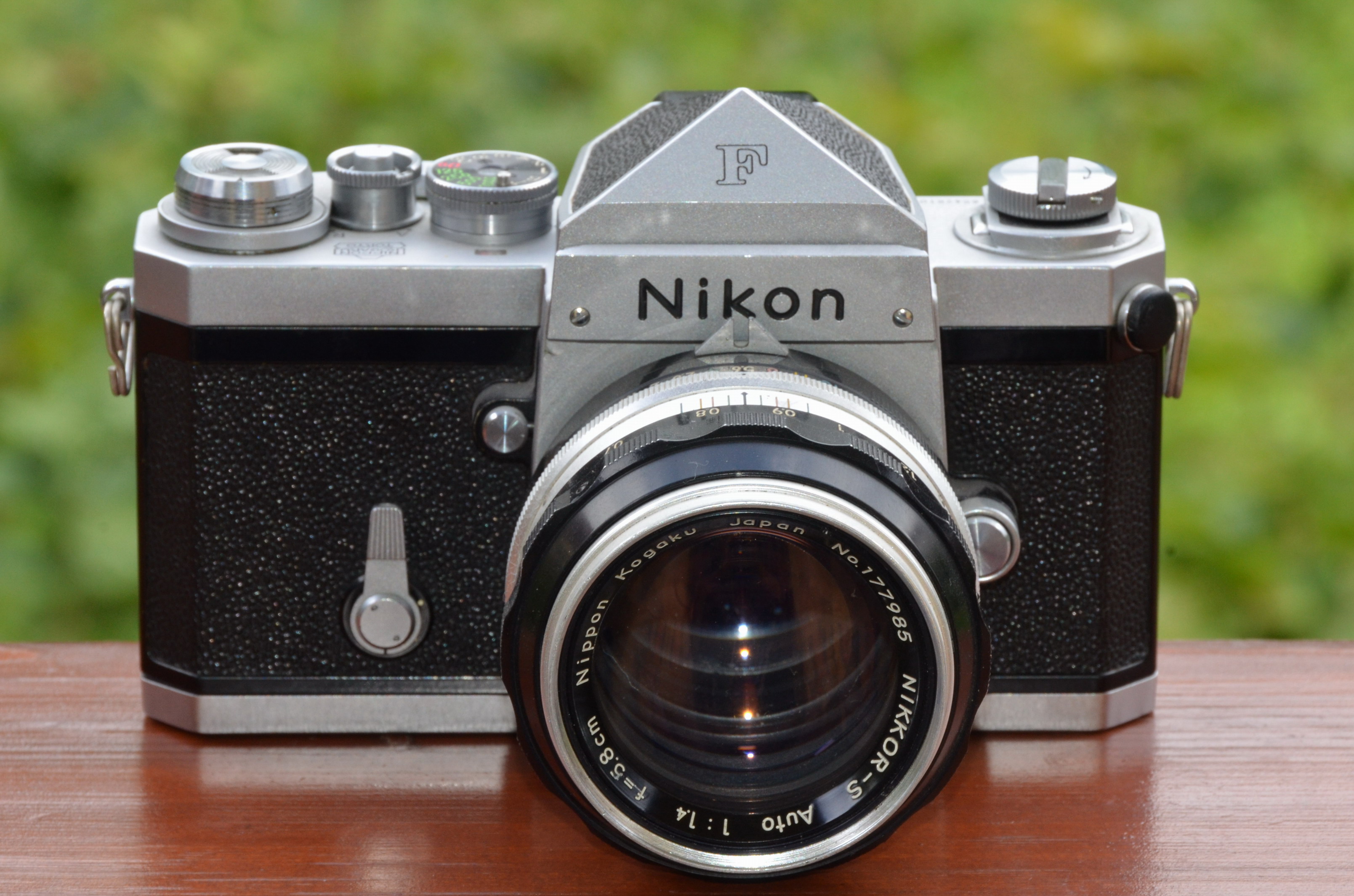
Most Beautiful SLR Ever? Nikon F, Plain Prism

Image Source: http://en.wikipedia.org/wiki/File:Nikon_F_SLR_camera_with_NIKKOR-S_Auto_1,4_f%3D5,8cm.JPG
Author: Dnalor 01

I started getting serious about photography in sixth grade, back in about 1977. My camera at that time was a Pentax K1000. I still have that camera, and it's close to my heart.

Lately, I've continued to explore Nikon SLRs, which were simply outside my financial reach back in the day. I've had several Nikon film SLRs, including an N2000, which is a manual focus SLR with built-in motor drive, an FM2N, and a few others. My most recent additions have been a pair of F2s, which a just plain lovely cameras. Both of mine have the DP-1 Photomic finder.

I've always wanted to try a regular Nikon F with plain prism. I recently bought one, an early example, from KEH. The price of the BGN condition F with prism was about $15 more than a BGN prism ONLY! Well, that $15 bought me a lot. The camera body is in excellent condition. The only thing that makes the overall condition BGN (by KEH's rating) is a dent at the apex of the prism, which has absolutely no effect on the function. I fell in love immediately with this beast from 1962. I've read it being described as the SLR equivalent of a Leica M3. I think that's appropriate. The layout of the original F was borrowed from the Nikon S series rangefinders. No electronics whatsoever. 100% viewfinder coverage. It's really very nice to carry and use.

My first roll of film from the new F is on its way to The Darkroom as I write. Hopefully I'll have some results to share with you in a few days.
 
Is the F "better" than the F2? Almost certainly not. But, it sure is a beauty, and quite fun to use. At $144 from KEH, I decided I couldn't really go wrong. This is one of those cameras I always told myself I'd own someday.
 
DMC-365.blogspot.com


Thursday, February 27, 2014

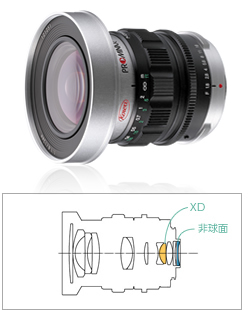
New Micro 4/3 Lenses from Kowa

Image Source: http://www.kowa-prominar.ne.jp/special/wide_lens/index.htm

It looks like Kowa, a Japanese camera maker we haven't heard from in many years in the USA, is going to produce three new lenses for Micro 4/3. The will include an 8.5mm f2.8 ultrawide angle, 12mm f1.8 wide, and 25mm f1.8 normal lens. I don't know anything about them, but they appear to be manual focus, and also appear to have aperture rings, something you can't necessarily expect these days.

You can see them on the company's Japanese site if you (Click Here).

Welcome to Micro 4/3, Kowa!

DMC-365.blogspot.com
 

Sunday, January 5, 2014

Rolleikin Installed - My Rolleicord is Now The Portrait Making Machine!

My Rolleicord
 
I recently picked up a Rolleikin 3.5 kit from KEH, for around $40, shipped. What's a Rolleikin, you may ask? It's a set of components (which comes in the nice zipper container on right), which allow you to load and shoot 35mm film in your medium format Rolleiflex or Rolleicord Twin Lens Reflex (TLR) camera. The neat thing is, the frame of the 35mm image will be oriented in portrait position, which should be a lot of fun.
 
(Click Here) to go to KEH, the best used camera store I know.
 
It took me a little while to figure out which Rolleikin kit I needed for my Rolleicord. The Rolleikin 3.5 fits Rolleicords with serial numbers higher than 1137000, and Rolleiflexes (with f3.5 lenses) with serial numbers above 1100000. My Rolleicord is number 1542806, so I'm in good shape.
 
Installation requires replacing one knob on the right side of the camera (while you're looking at the front of the camera), where you see the red check mark above. That's the only step that requires tools at all, a small screwdriver, to remove and replace three screws.
 
For complete installation instructions, (Click Here) to download the accessories manual from butkus.org. Be sure to donate a little something to Mr. Butkus (there's a simple Paypal "Donate" button on the site). I think $5 is appropriate for this manual, but that's up to you.
 
In any case, it took me about 20 minutes to get the kit full installed and working. It's really quite cool. Here's what the 35mm film guide looks like installed:
 
Rolleikin Installed
 
So, you can see that this should be an ideal setup for shooting portraits. I think for head shots, it'll require using the Rolleinar closeup lenses (simple screw-in filter type closeup lenses), which I have. The Rolleinar also makes the depth of field more shallow, which should be great for portraiture. Wider portraits won't need the Rolleinar.
 
So, I can't wait to get some film in this old beast and give it a try! I'll report back once I have some results to share.
 
DMC-365.blogspot.com


Sunday, November 3, 2013

New Kodak Lenses for Micro 4/3? This Could Be Cool.

Image Source: http://throughavintagelens.com/2009/11/selecting-a-vintage-camera-ii-kodak-cameras/
Attributed There to Duke University Collectin
 
No longer the case, in the past Kodak was known for lenses, and some really good ones. We may again see the name associated with good optics.
 
The great blog "The Phoblographer" is reporting an interesting find from the Photo Expo 2013 show. Apparently, Sakar, who has purchased at least some rights to the Kodak name, brought some pre-production lenses for Micro 4/3 to the show. It sounds like there was not much emphasis on them at the booth, which could mean it's just a fishing expedition by the company, and may not go anywhere. I hope that's not the case.
 
(Click Here) to read about it on The Phoblographer. They show pictures of three Kodak-branded lenses: a 25mm f0.95, 50mm f1.1, and 8mm f3 fisheye.
 
All manual focus lenses, these could be a lot of fun. It's difficult to tell if this will ever really materialize, but in any case, it's nice to see that the Micro 4/3 format is attracting lens designers to try new things.
 
Cosina Voigtlander and SLR Magic are already making nice manual focus lenses for Micro 4/3. I welcome competition in the market, as it can only help us as photographers to have more options.
 
DMC-365.blogspot.com


Tuesday, July 16, 2013

Time For a Shot I Love

 
The Kid, by Reed A. George
Leica IIIC (ca. 1946), Leica Summitar 5.0cm f2 Lens (ca. 1951)
 
Sometimes I get a shot that helps me remember why I do all of this photography stuff. Not perfectly sharp, a grab shot. But, this is why. I didn't even bother to crop the scan.
 
And, I simply love shooting an old Barnack-style Leica. I couldn't care less that it has no meter, separate windows for focus and framing, and dim ones at that. It simply works.
 
Thanks for putting up with a little self-indulgence on my part.
 
DMC-365.blogspot.com


Monday, March 18, 2013

My Panasonic Lumix DMC-LX7 Real World Guide is Available on the Amazon Kindle Store! $2.99 or Free for Prime Members!


Want to learn how to quickly set up and use your DMC-LX7 without wading through >200 pages of Panasonic user manual? I have finished writing my guide for how I set up and use my Lumix DMC-LX7. It's now available on Amazon.

I share exactly how I set up the camera for street photography, travel, and macro, and explain many of the less-obvious functions of the camera.
 
(Click Here) (or use the Amazon link below) to buy it for $2.99, or borrow it for free if you're an Amazon Prime member. It's currently available in Amazon's Kindle format. After 90 days I may make it available in other formats.
 
By the way, $2.99 is the lowest price that Amazon allows. I want it to be affordable, and I also want to
have the convenience of using Amazon's automatic distribution. Twenty pages of information for $2.99 seems reasonable.
 
I hope you enjoy it!
 
DMC-365.blogspot.com


Friday, February 1, 2013

Whole Lotta Leica - January Results - Elmar 5c f3.5 on the Leica M9

Winter Shopping With Mom, NYC, by Reed A. George
Leica M9, Leica Elmar 5cm f3.5 Lens (ca. 1938)
iso 640, f6.7, 1/250 sec
 
Back on January 9, I wrote about a new project I'm taking on this year, to help me explore the interface between equipment and creativity in photography. It's called "Whole Lotta Leica," and in this project I'll match up a different "normal" lens (35-50mm) with my new Leica M9 each month.
 
(Click Here) to read my post introducing the project.
 
January's lens selection was a 1938 Leica Elmar 5cm (50mm) f3.5 LTM lens.
 
I got out for three separate shooting sessions with this lens during the month. The first was right near home, at the Udvar Hazy National Air and Space Museum. On a cold winter day, it's a pretty good place to end up.
Udvar-Hazy Air and Space Museum Building, by Reed A. George
Leica M9, Leica Elmar 5cm f3.5 Lens (ca. 1938)
iso 160, f16, 1/160 sec
 
 
Space Shuttle Discovery, by Reed A. George
Leica M9, Leica Elmar 5cm f3.5 Lens (ca. 1938)
iso 320, f4.8, 1/90 sec

 
You can see from these two shots that the old Elmar has some haze and scratches. Any light source directly in the field of view flares. I did not use a hood, which may have helped considerably. However, it is quite sharp, and focuses accurately on the M9.
 
My next outing was a little street shooting in Washington DC. I went to Chinatown, which is always good for a shot or two.
 
Making the Noodles, by Reed A. George
Leica M9, Leica Elmar 5cm f3.5 Lens (ca. 1938)
iso 320, f5.7, 1/180 sec

 
Here again, you can see the haze at work on those lightbulbs, but otherwise it's a perfectly acceptable image.
 
Now here's where the Elmar shines, in my opinion - gorgeous, warm reds.
 
Chinatown Shop Window, by Reed A. George
Leica M9, Leica Elmar 5cm f3.5 Lens (ca. 1938)
iso 320, f5.7, 1/180 sec

 
The detail in this shot is quite impressive. I think the color rendition is hard to beat, even with modern lenses.
 
While in DC, I went to the National Portrait Gallery. The building is extremely nice, and has a huge open courtyard which separates the portrait gallery from the attached Museum of American Art. The courtyard is a great place to hang out in winter - nice, bright natural light, but with the convenience heating.
View to the Courtyard, by Reed A. George
Leica M9, Leica Elmar 5cm f3.5 Lens (ca. 1938)
iso 1250, f4.8, 1/90 sec

There is a nice water feature, where the water runs over segments of the flooring in the courtyard. Even though it was sub-freezing outside, the kids loved running and playing in the water.

Playing in the Water, by Reed A. George
Leica M9, Leica Elmar 5cm f3.5 Lens (ca. 1938)
iso 1250, f5.7, 1/125 sec

I even gave the Elmar a little workout shooting from the hip, using zone focusing.

Winter Cheer by Reed A. George
Leica M9, Leica Elmar 5cm f3.5 Lens (ca. 1938)
iso 640, f6.7, 1/180 sec


My third and final outing for this month with the Elmar was in New York City.
 
The first shot in this post (above) was again taken with zone focus, walking up behind a mother and daughter out for a winter walk.
 
Hockey Practice Transit, NYC, by Reed A. George
Leica M9, Leica Elmar 5cm f3.5 Lens (ca. 1938)
iso 1250, f3.5, 1/45 sec

 
The image of the hockey player waiting on his train was selected for an upcoming gallery show in Alexandria, Virginia. Focused on exactly my interest, how equipment informs and shapes photography, the show at Gallery Athenaeum will be a lot of fun.
 
(Click Here) to read about Gallery Athenaeum. The show will be from Thursday February 28 to Sunday April 7.
 
I'm very excited to be part of the show.
 
Photo Instructor, Zim, from NYC Photo Safaris, by Reed A. George
Leica M9, Leica Elmar 5cm f3.5 Lens (ca. 1938)
iso 640, f5.7, 1/640 sec

 
While in New York City, I took a field seminar with NYC Photo Safaris, led by our instructor pictured above, Zim.
 
(Click Here) to go to NYC Photo Safari's website.
 
We met in Central Park for a four hour discussion and shooting session. I must say that Zim and I come at photography from completely different angles. A pro for over 20 years, Zim is a real authority, and I am certain that she knows how to get "the shot" better than I. Her advice for our group was to trust P mode on your DSLR, as the camera companies have spent years and millions on making exposure work for us. She also prescribes only zooms. She really did not understand why I'd be carrying two manual cameras, the M9 and my (film, really?) Pentax K1000, with prime lenses. At one point she said "Why do you people do this to yourselves?"
 
I ended up using my pocket camera, the Panasonic Lumix DMC-TS3, for most of the class. It has a wide angle zoom, autofocus, etc. It fit much better with the style that Zim wanted us to explore. I learned a lot from Zim in a short time. It is differing opinions that challenge us, make us better. It was a friendly, constructive tension at all times. I recommend Zim and NYC Photo Safaris - just be sure to take along an automatic camera.
 
The shot of Zim above feels nice to me. I think it exemplifies what the old Elmar can do. You'll notice the light source is well outside the image, avoiding any flare or haze effects.
 
To see more of my pictures taken this month with the Leica M9 and Elmar 5cm f3.5, please visit my set on flickr.
 
(Click Here) to go to the Whole Lotta Leica set on flickr.
 
In terms of usage, I would say that the Elmar is challenging. Here are a few thoughts from my experience:
  • First, you have to keep the flare in mind at all times when composing. Sometimes, it adds to the shot. Other times, it can ruin the shot.
  • The f-stop adjustment is very fiddly. On my copy, it's also tight, so you'll literally break fingernails trying to change aperture. You'll notice that many of my shots were made at a single f-stop as a result.
  • You have to be mindful not to collapse the lens on the M9, as it can hit the sensor. I cut up a 35mm film canister and made a little ring to put around my lens, to make it impossible to collapse. That would be a disaster.
  • If you're out for numbers - high quantities of technically competent shots - this is probably not the best lens. If you like it's unique qualities, it's irreplaceable.
  • This was a standard lens for Leica cameras for many years. Many great (understatement) images were made with the Elmar 5cm f3.5 lens.
 
I hope you find this useful and interesting. It's going to be a blast re-exploring all of these nice lenses!
 
DMC-365.blogspot.com


Tuesday, January 22, 2013

Legacy Normal Lens Makes Nice Portrait Lens on Micro 4/3

 
I love to see shots made with older lenses adapted to Micro 4/3 cameras. This one, by muzza on mu-43.com was made with a Panasonic Lumix GF3 and a Russian Helios 44, which is a 58mm f2 lens. On the smaller sensor of the Micro 4/3 Lumix, it makes a very nice, if slightly long focal length portrait lens, with a fast f2 aperture.
 
I very much like muzza's composition in this shot. The triangle of her left arm is an important element, and is just out of focus enough to be creamy in texture. The pen tip in her right hand is a nice focal point, in addition to her eye. The way her hair falls over her face also reinforces the feeling that she's intensely focused on her work.
 
With the great native Micro 4/3 portrait lenses out there now (for example the Olympus 75mm f1.8), it's easy to neglect those old classic lenses in your closet. Grab one and make a memory, like muzza has here!
 
DMC-365.blogspot.com


Saturday, November 10, 2012

APhotoContributor Author Shares His Fuji XPro-1 Experience. He's Left Leica Digital Behind.


Chris, author at the blog APhotoContributor, has posted a detailed summary of his shift from Leica digital to the Fuji XPro-1.
 
(Click Here) to read Chris' complete post.
 
Chris is a retired engineer, turned photographer and blogger. He was an initial beta-tester for the Leica M9, and took an amazing number of images (>100,000) with the M9. He always used the M9 in conjunction with either Canon or Nikon DSLRs, which he considered as more reliable. In particular, Chris had problems with the M9 hanging up while writing images to memory cards. I've never seen this with my M9, but I have maybe 1% of the M9 images under my belt that he does.
 
Chris says he's not a Leica hater, and continues to use a Leica MP (film camera) regularly. I would stretch to say that he's a "Leica-guy" hater, though. He includes a lot of disparaging comments about Leica photographers worrying more about whether their straps match their jackets than about their images, Leica photographers being those who "want to shoot in Cuba" (I admit, I'd love to shoot in Cuba), and being people who "wear a camera" instead of using it. He is also very rough on Thorsten Overgaard, a strong Leica digital proponent. To check out Thorsten's blog, (Click Here). I think Thorsten seems like a pretty good guy; Chris uses the phrase "king of dilettantes." Oh well, to each his own. Diversity makes the world more interesting.
 
On to the meaningful part of the post. Chris has been using the Fuji XPro-1, and is obviously pleased. He has had no problems with the camera writing files to cards, ever. He is a strong proponent of autofocus in digital cameras, and finds Leica's continued production of manual focus-only bodies an anachronism. Along those lines, he's not interested in adapting his Leica lenses (including the awesome 35mm Summilux) to the Fuji body. He is fond of the Fuji 18mm lens. According to Chris, the latest firmware update for the XPro was transformational, and made the autofocus on the camera "really good."
 
Chris also finds the XPro quieter than the M9.
 
Many times, critical reviews of the Leica M9 come from people who secretly wish they could have an M9, so go very far to find reasons why they'd never want one ("I'm sure those grapes were sour, anyway."). Not in this case. In fact, Chris still pairs his Fuji XPro-1 with the venerable Leica MP for street shooting.
 
Personally, I am very intrigued with where Fujifilm is going. I think the XPro-1 looks like a beginning of a great system. I'm not sure if I could get used to the hybrid finder system. Playing with it just a little made it seem a little clunky to me, but I certainly haven't given it a chance. In concept, it's a great idea. I also believe that Fuji is capable of making lenses that are every bit as good as Leica. They've made gorgeous optics for many, many years. I once had a Fuji G690 medium format rangefinder, with 100mm f/3.5 lens that was just plain incredible. Known as the "Texas Leica," the camera gave absolutely beautiful results, but was just a little too cartoonish for me to carry. It truly looked like a prop for a geeky photographer halloween outfit.
 
As you probably know, I do love my new (used) Leica M9. That said, I'm keeping my eye on Fuji. I think we're going to continue to see interesting new products from them.
 
DMC-365.blogspot.com
 
 
DMC-365.blogspot.com
 

Friday, July 20, 2012

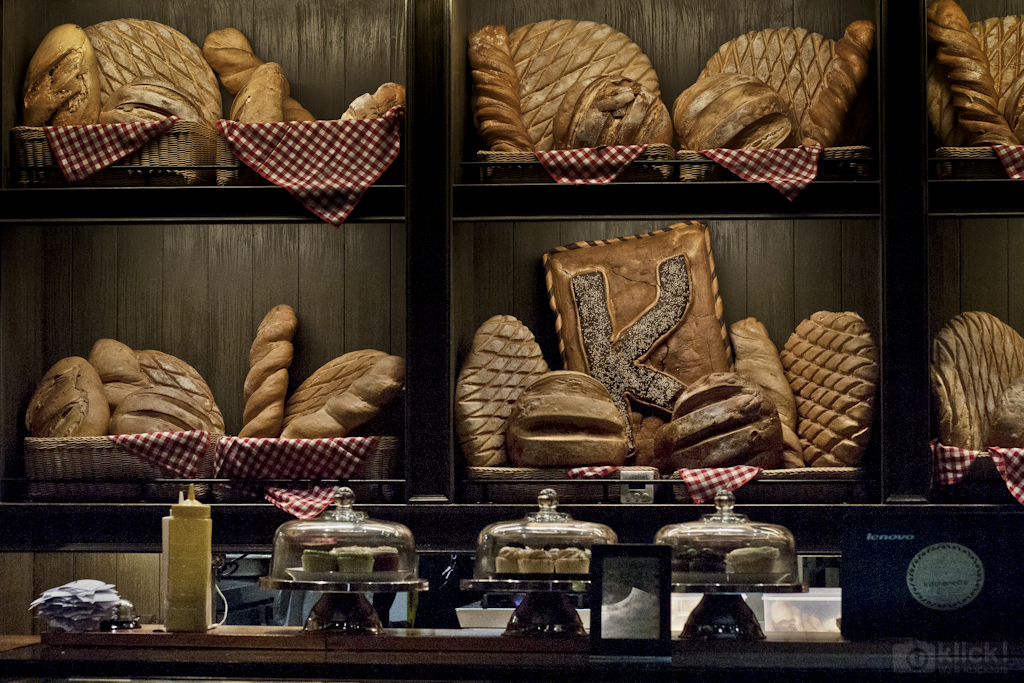
User Report on Steve Huff Photo - William Jusuf Uses a Lumix DMC-GF2 and Leica R 50mm Summicron For a Couple of Months!

 
Breads and Cakes by William Jusuf on stevehuffphoto.com
Image Source: http://www.stevehuffphoto.com/2012/07/10/user-report-my-journey-with-the-panasonic-gf2-and-leica-50-summicron-r/
Panasonic Lumix DMC-GF2, Leica 50mm Summicron R
 
William Jusuf presents a user report based on his concentration on using a Leica R-mount Summicron 50mm f2 on the Panasonic Lumix DMC-GF2.
 
(Click Here) to read the whole post on stevehuffphoto.com and see the other awesome pictures.
 
Here William shares a wonderfully non-technical, image-inspired review of the fun he's having with this adapted legacy lens on a Panasonic Micro 4/3 body. Of course, the Leica Summicron is world-renowned for its image quality, but the R-mount version is significantly less expensive than those made for the rangefinder M-mount. William puts it to great use.
 
I love seeing this kind of variety in results from such a limited equipment choice. Many would say that the 100mm equivalent field of view on the smaller Micro 4/3 sensor ruins the performance of the Summicron. Not only does it now act as a medium telephoto due to the crop factor, but the out of focus areas ("bokeh") will not be as pronounced, as the smaller sensor produces deeper depth of field than the original 35mm film would have.
 
I would say that William has done a beautiful job of showing just how capable this combination is. Do go look at the original post - there are many more great pictures there.
 
DMC-365.blogspot.com


Sunday, June 24, 2012

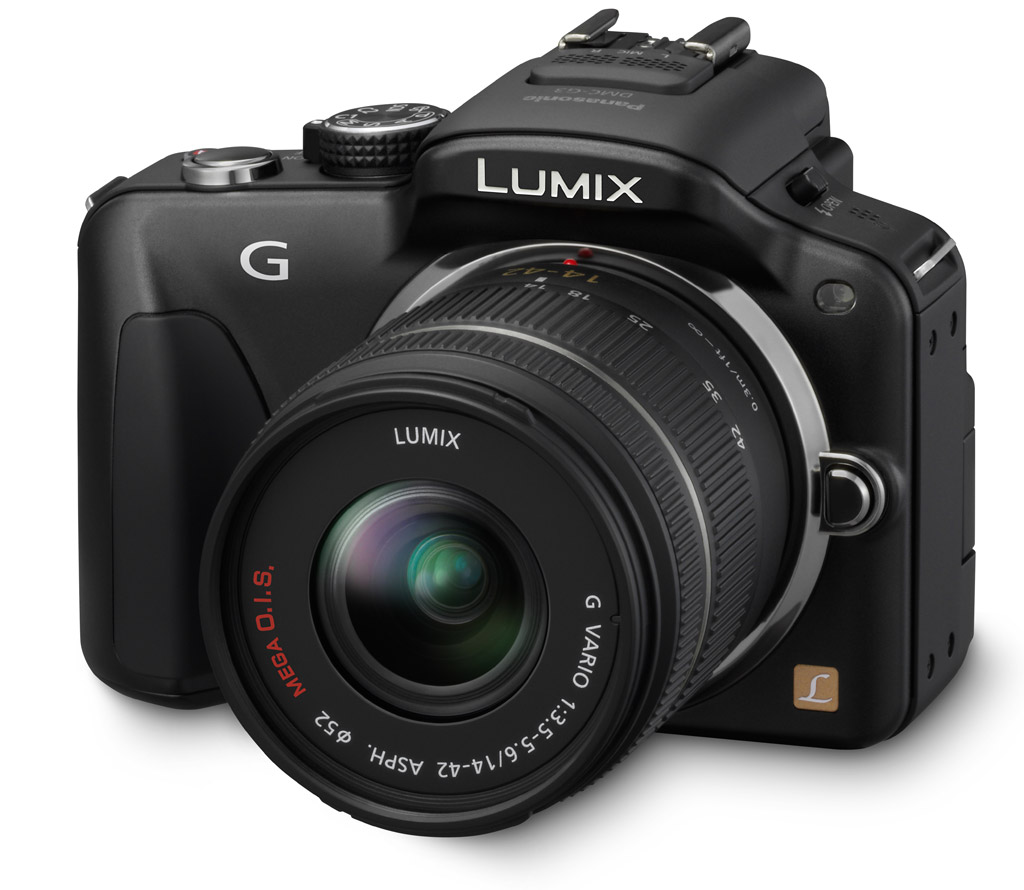
Quick Notes to Add to my eBook on the DMC-G3 - Manual Focus Tip, and Still Capture During Video

Panasonic Lumix DMC-G3
Image Source: http://shop.panasonic.com/dotAsset/1b37230b-19c7-46ef-8f25-c26c03bdf59d.jpg

Two features of the DMC-G3 have recently come to my attention, and need to be added to my eBook.

The first is related to focusing with manual lenses. In my eBook, I indicate that you have to press the left cursor button followed by the menu button to bring up the magnified focus aid. In fact, a much better alternative is to just push in the rear dial in toward the body of the camera. This really is a better way to do it. Thanks to reader martyvis for reminding me that it was not included in the eBook.

Second, someone asked me if the G3 is capable of capturing full resolution still images while capturing video. As I am only a casual user of the video functions, I did not know the answer. After looking into it, I see that it does have that function. Simply press the shutter release during video capture, and you have yourself a full resolution still!

DMC-365.blogspot.com


Sunday, June 10, 2012

Final Two Chapters of My Free G3 Settings eBook Available For Download! Get the Whole eBook Here, Free!

Lumix DMC-G3 by Reed A. George
Panasonic Lumix DMC-G3 and Nikon Nikkor AIS 28mm f2.8 Lens
by Reed A. George
 
Well, since I'm expecting the announcement of a new Panasonic Lumix Micro 4/3 body (the rumored DMC-G5? DMC-GH3?) any time now, I figured I had better wrap up my ebook on how I use the DMC-G3. In fact, I use two of them.
 
The final installment includes a chapter on setting up custom configurations, and a short chapter on my conclusions on the camera.
 
I learned a lot by working through every detail of how to set up this camera. And the best thing is, now that I've done it, and saved some custom configurations, I can forget about the details of what many of those menu settings actually mean. This camera has so many options, it's amazing. But, I want to set most of them once, and forget them. Custom Modes help a lot, as does the Quick Menu.
 
(Click Here) to download the final two chapters of my ebook, in Adobe pdf format.
 
For ease of navigation, I'm including links to the previous chapters below:
 
(Click Here) for Chapter 1 - Introduction and External Controls
 
(Click Here) for Chapter 2 - Menu Settings
 
(Click Here) for Chapter 3 - Focusing
 
I hope that you'll find them useful.
 
I recommend that you download and save all of them; I will consolidate them into a single file, but cannot guarantee that it will remain available for free forever...

 
DMC-365.blogspot.com
 

Thursday, May 31, 2012

Memorial Day Tribute - Manassas National Battlefield

On Monday, May 28, 2012, I attended a Memorial Day tribute at the Manassas National Battlefield. The event began at the Groveton Cemetery, established in 1866 to permanently contain the remains of numerous soldiers killed in both battles at Manassas, and buried in shallow graves on the battlefield in the haste of war.
 
Groveton Cemetery, Manassas, by Reed A. George
Panasonic Lumix DMC-G3, Lumix 14-140mm f4-5.8 at 95mm
iso 160, f5.8, 1/640 sec
 
Of the 266 confederate soldiers buried at Groveton, only two are identified.
 
Groveton Cemetery, Manassas, by Reed A. George
Panasonic Lumix DMC-G3, Lumix 14-140mm f4-5.8 at 41mm
iso 160, f5.3, 1/600 sec
 
 
Groveton Cemetery, Manassas, by Reed A. George
James Jerman Palmer, South Carolina
Groveton Cemetery, Manassas, by Reed A. George
Panasonic Lumix DMC-G3, Lumix 14-140mm f4-5.8 at 54mm
iso 160, f5.3, 1/1250 sec
 
The 42nd Virginia reenactors were present to fire salute to their confederate comrades, and a wreath was presented at the memorial.
 
42nd VA, by Reed A. George
42nd Virginia, by Reed A. George
Panasonic Lumix DMC-G3, Lumix 14-140mm f4-5.8 at 140mm
iso 160, f5.8, 1/320 sec


42nd VA, by Reed A. George
42nd Virginia, by Reed A. George
Panasonic Lumix DMC-G3, Lumix 14-140mm f4-5.8 at 140mm
iso 160, f8, 1/250 sec
 

Groveton Cemetery, Manassas, by Reed A. George
Wreath Laying, by Reed A George
Panasonic Lumix DMC-G3, Lumix 14-140mm f4-5.8 at 75mm
iso 400, f5.8, 1/1600 sec


Groveton Cemetery, Manassas, by Reed A. George
Wreath at Groveton, by Reed A George
Panasonic Lumix DMC-G3, Lumix 14-140mm f4-5.8 at 32mm
iso 400, f5.6, 1/2000 sec


42nd VA, by Reed A. George
42nd Virginia, by Reed A. George
Panasonic Lumix DMC-G3, Lumix 14-140mm f4-5.8 at 70mm
iso 400, f8, 1/800 sec
 
After the ceremony at the cemetery, Manassas' own resident reenactor group performed a cannon demonstration:
 
Cannon Fire, by Reed A. George
Panasonic Lumix DMC-G3, Lumix 14-140mm f4-5.8 at 32mm
iso 400, f6.3, 1/500 sec


I love the way the camera captured the fuse line still hanging mid-air, and the cannon fire at full extension from the barrel. Lucky shot.


The rest of the event commemorated Union soldiers, who were represented by the reenactors of the 14th Brooklyn, the only outfit named after a city, rather than a state. They were also referred to as those "red-legged devils" by Stonewall Jackson and his troops.


14th Brooklyn, by Reed A. George
14th Brooklyn (Composite of Two Images), by Reed A. George
Panasonic Lumix DMC-G3, Pana-Leica Summilux 25mm f1.4
iso 160, f4.5, 1/160 sec
 
At this point, the activities moved across the road to the 14th's monument on the battlefield.
 
14th Memorial, Manassas, by Reed A. George
14th Monument, by Reed A. George
Panasonic Lumix DMC-G3, Lumix 14-140mm f4-5.8 at 140mm
iso 200, f6.3, 1/1000 sec


14th Brooklyn, by Reed A. George
14th Brooklyn Soldier, by Reed A. George
Panasonic Lumix DMC-G3, Pana-Leica Summilux 25mm f1.4
iso 160, f5.6, 1/160 sec
 
 
14th Brooklyn, by Reed A. George
14th Brooklyn Soldier, by Reed A. George
Panasonic Lumix DMC-G3, Pana-Leica Summilux 25mm f1.4
iso 160, f5.6, 1/160 sec

14th Brooklyn, by Reed A. George
14th Brooklyn Soldier, by Reed A. George
Panasonic Lumix DMC-G3, Lumix 14-140mm f4-5.8 at 140mm
iso 200, f6.3, 1/200 sec

A final volley was fired by the 14th to commemorate all of the fallen veterans.

14th Brooklyn, by Reed A. George
14th Brooklyn Salute, by Reed A. George
Panasonic Lumix DMC-G3, Lumix 14-140mm f4-5.8 at 140mm
iso 200, f6.3, 1/200 sec


14th Brooklyn, by Reed A. George
Marching to Destiny, the 14th Brooklyn, by Reed A. George
Panasonic Lumix DMC-G3, Lumix 14-140mm f4-5.8 at 78mm
iso 200, f6.3, 1/800 sec
 

As this event was held in 90 degree weather at noon, it is hard to imagine worse lighting conditions. Okay, I can imagine worse, but the contrast was pretty high, and the shadows were not very complementary to my subjects.
 
You will see that I attempted to use fill flash on the shots taken with the Summilux 25mm f1.4. I did this with my Nissin Di466 flash set on manual, which allowed me to control the flash level better than TTL would have. I have found that even at minimum power, the Di466 can overpower the ambient light. In order to help out in this situation, I used a 3-stop Lumix neutral density filter on the Summilux. This allowed me to find an f-stop where the flash at minimum power was not overpowering, then select a shutter speed to balance the ambient light as well as possible. These are all manual settings, and since the flash power varies as a square to the distance from the subject, it is very hard to find one setting that works for multiple shots. In both of the Summilux portraits shown here, I think I underexposed the ambient, and allowed too much flash power to come through. This is a learning process for me, but at least I'm making some progress.
 
DMC-365.blogspot.com


Monday, May 28, 2012

Chapter 3 of My eBook on the G3 Is Now Available For Free Download!

Panasonic Lumix DMC-G3
with Nikon Nikkor 28mm f2.8 Manual Focus Lens

If you've been following the development of my eBook, you may be interested to know that Chapter 3 is now available for free download. Chapter 3 takes on the subject of focusing - both the extensive autofocus (AF) technologies and the superb manual focusing tools resident in the DMC-G3.

(Click Here) to download Chapter 3 - Focusing


As a reminder, here are the links to the posts for the first two chapters:
 
(Click Here) for Chapter 1 - Introduction and External Controls
 
(Click Here) for Chapter 2 - Menu Settings
 
Writing this chapter helped me to work through some questions I had with AF settings. Probably the most important thing I learned is how cool Pinpoint Focus can be when used in conjunction with the Touch Screen. As a regular user of the Electronic View Finder (EVF), I don't use the Touch Screen often. However, after trying out Pinpoint Focus, I now have it in mind should the opportunity present itself.
 
I hope you're enjoying the eBook! Please comment, drop me a line, or even purchase something on Amazon by clicking through the link below. It doesn't cost you anything extra.
 
Enjoy!
 
DMC-365.blogspot.com


Sunday, May 13, 2012

Free Again! Chapter Two of My eBook for How To Set Up Your DMC-G3 Is Now Available For Download

DMC-G#
Image Source: http://www.imaging-resource.com/PRODS/DMCG3/ZURBE.JPG

My second ebook chapter on how I set up and use my Panasonic Lumix DMC-G3 is now available.

This one took a long while to write. In Chapter Two, I go through all of my settings in the Recording, Custom, Setup and Playback menus. These are the settings that most affect my daily shooting.

(Click Here) to download Chapter Two in Adobe pdf format.

Again, if you appreciate this document, drop me a comment, tell your friends, purchase your Amazon items by clicking through from this blog, etc. Any support is always appreciated.

Most importantly, if you see any mistakes, let me know!

My plan is to follow up these initial two chapters with some information about custom settings, and some real applications with the camera. Chapter Two is purely focused on menu settings, which I am glad to be through, to be honest.

I hope you find this useful. Let me know!

DMC-365.blogspot.com


Sunday, May 6, 2012

Free! My First Installment of an ebook on How to Set Up Your DMC-G3!

Image Source: http://shop.panasonic.com/shop/model/DMC-G3KK
 
Ok, folks, for those of you who are Panasonic Lumix DMC-G3 users, I've embarked on a project to document how I set mine up, and share it with all of you.
 
There is a dizzying array of menus and settings on the G3. I worked through all of them, at least to some extent, and documented not only HOW I set them, but WHY. Now I don't expect you to agree with all of my settings, but at least you'll know what you're disagreeing with, if you decide on a different setting.
 
I have completed the first chapter, which I share here with you now.
 
(Click Here) to download the first installment of my G3 Settings Manual in Adobe pdf format.
 
The second chapter, much more extensive, outlining my settings for the Priority, Shutter, and Aperture Priority and Manual modes, is nearly finished. It will be distributed in the same way.
 
All I ask in return is that you buy your Amazon items by clicking through from my site. That really hasn't paid off yet; I think I'm up to about $15 revenue, total, ever. Of course, if you'd like to contribute directly to this blog, rather than buying things from Amazon (on which I make a very small percentage commission), you can always send me Paypal at rgeorge911@hotmail.com.
 
But, I'm really not in this for the money. It would be great to bring in enough to pay my annual flickr and smugmug bills...
 
I sure hope you find this manual useful. I actually learned some things in the process of writing it.
 
UPDATE 5/13/2012: Chapter Two is now available as well! (Click Here) to get it.
 
DMC-365.blogspot.com