Showing posts with label NY Times. Show all posts

Tuesday, May 5, 2015

Is Photojournalism Really Dead? NY Times' Blog "Lens" Discusses Storytelling and Honesty

 
End of Summer Goodbyes, by Reed A. George
Panasonic Lumix DMC-GX7, 14-42mm Series II Kit Lens
iso 400, f11, 1/500 sec.
 
I just read an interesting article entitled "Modern Photography," about the state of photojournalism (PJ) today on the NY Times' blog, "Lens."
 
The piece compiles the thoughts of several photographers, curators, and editors, including Maggie Steber, who I recently had the great fortune to meet at the LHSA (International Leica Society)'s Spring Shoot in New Orleans. Maggie was our keynote speaker.
 
I used the photograph above for this post, as it is a piece of honest PJ that I shot, of a lady in Provincetown, Massachussetts, saying goodbye to a young man from Bulgaria who was returning home after his summer employment there. The change in P-town's population during the tourist season was a subject of interest to me.
 
More importantly, perhaps, I asked this young man to carry his suitcase out of his place of work for me, so that I could get a shot of him leaving. Actually, he was leaving the next day. He wasn't able to do that for me, but if he had, would that have been too much staging to qualify as PJ? Upon reflection, I think it would have been. These are tough lines to see and stay within.
 
Some of the interesting points in the Lens Blog post:
 
  • In earlier times, PJ could be used simply to show or prove that something was occurring outside the direct view of some readers. But, those events - war, famine, crime, etc. are now known to everyone. We don't need proof. Now, the photographer needs to somehow go further, to tell a story, to make it more "real" for the viewer/reader.
  • In fact, because the events represented are now known to everyone, a picture of the event can have the effect of trivializing the situation. Sort of "Oh, another famine," rather than engage the viewer in what it really means.
  • Because of this point, at least one authority states that "photojournalism is dead."
  • Many photographers engage in long term projects, where they certainly do affect the poses of their photographic subjects, move to better light, etc. This is where the lines get blurry.
  • The most important thing is for the photographer to be honest about how they produced their pictures. Admit what they are and are not showing.
  • When it comes to honesty, it used to be that a professional photojournalist would lose all credibility, and probably their job, if they were dishonest in representing a subject. Now, there's very little risk to most photographers, especially those who just happen to have a camera with them and capture events as they happen.
  • Honesty in photography has been a problem ever since photography was invented. We now know that some famous civil war photographers staged scenes, and even used the same body twice - once as a Union soldier, another time as a confederate.
These were the things that I found most interesting about the Lens Blog piece. (Click Here) to read it for yourself.
 
DMC-365.blogspot.com


Monday, January 5, 2015

In Photography as in Hunting, Sometimes it's Best to Stay Put

I know that there are a lot of similarities between photography and hunting. Take, for example, that both result in "shooting" your subject. I don't mean to carry that analogy further, but believe it's appropriate in this case. In working to photograph a particular subject, as in hunting, the photographer can choose to cover as much ground as possible, photographing what he/she sees along the way, or they can find a likely spot (not just any spot), and wait for the story or subject to come to them.
 
I've written about this picture before. (Click Here) to see my original post in the context of the project I was working on.
 
Goodbye My Friend, by Reed A. George
 
I shot this picture while attending the Magnum Days workshop in Provincetown, Massachussetts. (Click Here) to see the whole series of posts from the workshop.
 
I was hoping to photograph the end of summer in Ptown in a broad sense. I was struggling for how to do that more specifically. I found this summer bicycle rental shop, which was clearly wrapping up its season, and decided to stop and hang out. I met this very nice young man from Bulgaria, and just stayed around talking to him. I found out that he would leave for home the next day. Finally, after nearly moving on from there a couple of times, and getting hints from him that leaving would probably make him more comfortable as well, this nice lady from the neighborhood came over to say goodbye to him. There was my shot.
 
I just read an article on the NY Times' blog, Lens, about the same technique. (Click Here) to read how Fred Conrad used this technique, sitting on the roof of a building in Kosovo, to get his story.
 
This idea of finding a good location and waiting for a story is not new. In fact, I've read and heard it many times. But, like all good lessons for me, until I'm using it regularly and successfully, it's okay to be reminded of it. It's so easy to grab my camera and just start walking around, shooting what I see. Sometimes that's not the most productive approach.
 
DMC-365.blogspot.com

Monday, December 8, 2014

Opening at the NYC Public Library: "Public Eye: 175 Years of Sharing Photography"

From December 12, 2014 - September 4, 2015, the New York Public Library is hosting an exhibit of a selection from the library's enormous collection of photographs, collected since the 1800s. I saw the banner announcing the show on my visit to NYC last weekend, but the show had not yet opened at that time.
NYC Public Library, by Reed A. George
Leica M9, 50mm Summicron f2 v.3 Lens
iso 400, f8, 1/125 sec.
 
The exhibit will be arranged around contemporary themes from social media: crowdsourcing, image sharing, and street view. It will be interesting to see how these themes are interpreted and which images from such an expansive collection will be included.
 
The exhibit will be held at the Stephen A. Schwarzman Building, Fifth Ave at 42nd Street, NYC.
 
(Click Here) to read more about it on the NY Times' blog "Lens."
 
I really hope that I can get back up to NYC before the show ends next September.
 
DMC-365.blogspot.com
 

Saturday, October 18, 2014

Sometimes it Takes a Tragedy to Make Us Appreciate Things - Yukari Chikura Documents Japanese Tradition

Image Source: http://lens.blogs.nytimes.com/2014/10/08/preserving-tradition-in-japan/?_php=true&_type=blogs&_r=0#/1/
 
Yukari Chikura is a female Japanese photographer. Trained as a musician, after the 2011 earthquake and tsunami in Japan, she turned her focus to documenting the traditions passed down through generations in Japan.
 
(Click Here) to read about Yukari on the NY Times blog, Lens.
 
Now for all of my photographer friends out there, something sobering. Yukari has only been photographing for two years.
 
How do we maintain the clarity and urgency that a disaster can give us in life? Surely we don't have to keep experiencing them for that to happen?
 
DMC-365.blogspot.com


Tuesday, May 6, 2014

The I.C.P. is Moving, Physically and Conceptually

The International Center for Photography (I.C.P.) in NYC, started by Robert Cornell Capa, is moving.
Museum Queue (not I.C.P.), by Reed A. George
Panasonic Lumix DMC-LX2
iso 400, f2.8, 1/8 sec.
 
The I.C.P. is one of those places I love to visit when I'm in NYC. Admittedly, I have not been there in a couple of years, but it strongly holds my interest. Started by Cornell Capa, brother of photographer Robert Capa*, the I.C.P. is a home for photographers, and hosts multiple simultaneous exhibits, typically focused on some aspect of photojournalism and reportage. I saw the fabled "Mexican Suitcase" exhibit there.
 
(Click Here) to read about the Mexican Suitcase and the work by Chim, Capa, and Taro that comprises it. A real look into the lives of these three masters, see it if you get the chance.
 
The I.C.P. also has a great store filled with all kinds of fun photographic paraphernalia and books.
 
Well, the I.C.P. is moving. A post in the New York Times' blog Lens describes what this means to Mark Lubell, Executive Director, and where he sees the I.C.P. going in the future.
 
(Click Here) to read the full article on Lens.
 
There are a couple of obvious conclusions that I can draw from the article. First, the I.C.P. plans to continue operations. Second, in the longer term, it plans to consolidate all activities, including the exhibition center and education program into a single location. Third, they plan to stay in Manhattan.
 
Beyond that, it's a little hard for me to really get where they're going conceptually. The interview focuses a lot on recent technological aspects of photojournalism, the use of smart phone cameras and immediate upload to communicate what's going on the world. I can almost detect the hint of virtual displays, with less focus on the physical output and display of prints. On the other hand, Mr. Lubell says that photography should be somewhat independent of technology, and that the Center should be a place for discourse on photography itself. I suppose these ideas can go together.
 
I was interested to find that Mr. Lubell thinks that Robert Capa would have been an enthusiastic user of Instagram. I'm sure the speed to market of photographic information would have impressed him.
 
DMC-365.blogspot.com
 
*Thanks to James McKearney for correcting my mistaken assertion that Robert Capa started ICP.
 

Friday, January 10, 2014

Japanese Photographer Kikujiro Fukushima - 70 Years of Exposing Nuclear Tragedy in Japan

 
Image Source: http://japandailypress.com/japan-lies-documentary-about-photojournalist-kikujiro-fukushima-reaps-awards-1323241/
 
Kikujiro Fukushima (odd coincidence of name with the Fukushima nuclear disaster currently ongoing in Japan) was in the Japanese military during World War II, honorably serving his country and emperor, Hirohito. In fact, he was stationed at Hiroshima until one week before the bomb was dropped, when he was transferred to train for a suicide mission. As the war ended, Fukushima was apalled not only by the damage, sickness, and orphaning of families that resulted from the bomb, but also by how poorly his own government responded to the situation. He even wrote a book that was critical of emperor Hirohito.
 
There is a great post about Fukushima on the NY Times blog, Lens.
 
(Click Here) to read the post.
 
Fukushima photographed many people suffering after the bomb in Hiroshima, including a personal friend. He later moved on to covert photography of Japan's self defense forces, while simultaneously supplying them with photographs for use in publicity. In the end, he exposed weapons manufacturing that was not supposed to be happening. Fukushima's been the victim of physical violence multiple times in retribution for his work.
 
Fukushima recently traveled to the site of the recent nuclear disaster, caused by earthquake and tsunami, to photograph the aftermath. He's 92 years old.
 
When the interviewer asked what's next for him, Fukushima answered that he's 92, his body is failing, how can there be anything? Then, and I like this very much, he asked the interviewer if he knew of any really good, tiny, point and shoot cameras. I hope I have that spirit at 92.
 
DMC-365.blogspot.com


Tuesday, November 26, 2013

Bill Cunningham of the NY Times

 
Image Source: http://lens.blogs.nytimes.com/2010/03/23/behind-38/?_r=0
 
I just watched an incredible documentary film about Bill Cunningham, a New York City (NYC) photographer for the New York Times. At the time the film was made, 2010, Cunningham was 81 years old, and still riding his bike around NYC, shooting street shots (with a fashion emphasis) with a Nikon film camera and 35mm lens.
 
I did a quick search of the NY Times page, and it looks to me like he's still shooting! He's an incredibly soft-spoken man in the film, but pushes the "children" he works with to the limit to get his pages just right.
 
In addition to street fashion, Cunningham is in the NYC fashion scene, and attends many of the fashionable parties and events. He never eats or drinks at them, not even water; he's there to work.
 
Anyway, if you like photography, you owe it to yourself to watch "Bill Cunningham New York." It's on Netflix' online library, if you happen to be a member. Or, you can get the DVD from Amazon at the link below.
 
DMC-365.blogspot.com


Thursday, August 8, 2013

What if we put Robert Capa in Afghanistan with an iPhone?

 
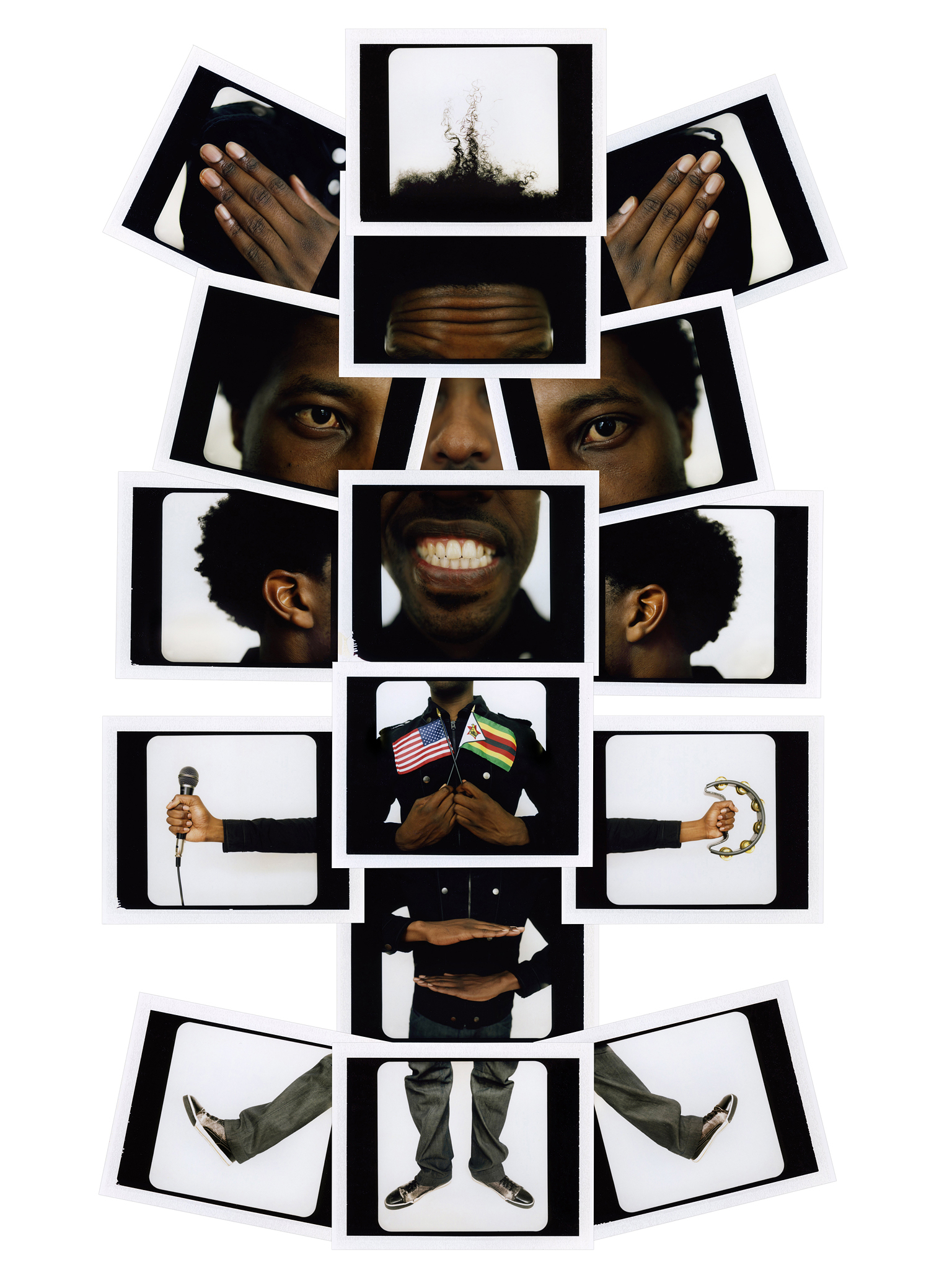
Instant Print Composite, by Joshua Yospyn
Image Source: http://yospyn.com/#/portraits/instant-film/vaki17
 
Two ideas came together for me this morning. The first is that I read an article about Ray Metzker on the New York Times' blog "Lens." This piece makes the point that Metzker has stuck with the development and evolution of his style over the course of decades. He was firmly in the class of modernist photographers during his relative youth, and eventually developed a completely new style in making single-image composites, sometimes from whole rolls of film. He refuses to go backwards, shoot in his previous styles, just to sell prints.
 
For an example of his composite photography, (Click Here) and scroll down to the third image.
 
Now, the Lens piece contrasts Metzker's focused concentration with today's whipping boy, the iPhone and instant gratification. I do understand the point that in many ways "serious" photography is giving way to amateurs pointing their phones at something and instantly uploading the results. For example, (Click Here) to read about the Chicago Sun-Times firing all of their photographer staff. Not cool.
 
The second idea came from attending a photo critique at the Washington, DC Leica Store yesterday. Our main speaker was Joshua Yospyn, who among other things, is making very interesting unique pieces of art like the one above from instant photographs (Polaroids in this case).
 
Joshua is a Washington, DC-based photographer. (Click Here) to go to his website.
 
I've been playing with an old pack film Polaroid myself. (Click Here) to see a few of my own Polaroid images.
 
So, maybe we're kind of missing the point. It's not the technology that's causing the problems. Instant gratification has been around a long time. It's the fact that we need photographers to step up and use the technologies to make even better photographs. This is not all about reporting on riots or demonstrations. As Joshua shows, in addition to being instant, Polaroids provide a tangible artifact, a real print. He assembles them and displays them under a sheet of acrylic. They are real works of art. You could do similar things with quick prints from iPhone images as well. I'm sure the Polaroid camera optics are much better, though.
 
But the real point is not prints versus electronic images. It's that if iPhones and Smartphones put instant photography at the hands of amateurs, just think what a truly skilled photographer can do with them. We can keep our Leicas, Nikons, or Canons, too. But I think we should challenge ourselves to put the benefits of our concentrated effort into new situations, including different, even instant, technologies.
 
DMC-365.blogspot.com


Friday, July 12, 2013

Former Chicago Sun-Times Photographer John White Keeps it Light

 
M. Spencer Green / Associated Press
 
Recently, the Chicago Sun-Times fired all of their staff photographers. In today's world of digital music downloads and ongoing extinction of book stores, this doesn't seem like such a surprise. So much of the visual media is recorded on cell phones these days. But, you have to look a little deeper.
 
For example, one of those photographers was at the pinnacle of the craft. Pulitzer prize winner John White is now a former Sun-Times photographer.
 
(Click Here) to read an article on the NY Times blog, Lens, about Mr. White and how he mentored NY Times photographer Michelle Agins to a successful career in photography.
 
But, Mr. White is keeping his chin up. He says he's not fighting the darkness, he's lighting candles.
 
Here's to the true master photographers out there, adjusting to the modern world. Some of us still value what you can do - with a cell phone or a Nikon. And, you did it every day for a whole career.
 
DMC-365.blogspot.com


Thursday, November 1, 2012

The Whisperers - Kuba Kaminiski's Documentary Project on NY Times' Lens Blog

 
Image Source: http://lens.blogs.nytimes.com/2012/10/31/at-a-crossroads-of-faith-and-folklore/#/1/
 
As I write this, today is Halloween. I think I found a suitably creepy yet interesting story to relate. Strangely enough, it's true.
 
In a remote village in Northeast Poland, there lives a group of people known as "Whisperers." They associate themselves with the Catholic Church - the Church does not reciprocate. The Whisperers cast spells and take spiritual "patients" who need their prayers and incantations.
 
Kuba Kaminski, a young photographer from Warsaw, decided to document the Whisperers in pictures.
 
(Click Here) to read the whole story on the New York Times' photography blog, Lens.
 
Having no language in common with the Whisperers, Kaminski was able to get close enough to capture some wonderful images of them.
 
The Whisperers receive people from far away, and typically pray to help them. However, there is a dark side; they can also pray to hurt or even kill others. There is a story of a woman asking for a prayer for her neighbor to die. The Whisperer made the necessary prayer, telling the woman that if her neighbor turned out to be a good person, the woman herself would die. Well, you guessed it. The requestor slid under a tractor sooon after and perished.
 
Isolation does interesting things to populations. Just like a group of fish, separated from the main population by large lakes drying up and turning into a series of small ponds, evolves in unpredictably different ways from its neighbors in other ponds, so do people who live insular lives, disconnected from the rest of the world.
 
Cool story. I long for a photo project like that.
 
DMC-365.blogspot.com