Showing posts with label documentary. Show all posts

Sunday, August 4, 2013

Nick DeMarco Interprets the Preparation for the Fight With His Leica Cameras

One of the blogs I regularly follow is Nick DeMarco's Rangefinder Chronicles. Today I'll share one of his recent posts, which I think really shows how a photographer can interpret an event, any event, into something new, sharing how he or she sees it.
Image Source: http://rangefinderchronicles.blogspot.com/2013/07/fight-night-with-leica-m-1-before-fight.html
 
Nick shot his Leica M (240) and M7 with fast Cosina Voigtlander lenses at a Thai kickboxing event. This post is specifically about the preparation of the fighters, before battle.
 
(Click Here) to see Nick's entire post with several pictures.
 
I am always interested in how good photographers go beyond simple documentation to put their own thoughts and feelings into their pictures. I particularly like what Nick says about this next image:
 
"...even though it was dark, low contrast and the back of a few heads. The coaches were taking one of the boxers down the fire exit steps for his fight, but somehow it makes me think of taking a prisoner to be hung, or Jesus to his crucifixion."
Image Source: http://rangefinderchronicles.blogspot.com/2013/07/fight-night-with-leica-m-1-before-fight.html
 
I look forward to seeing more images from Nick as he covers the later action.
 
DMC-365.blogspot.com


Friday, November 23, 2012

Frankie Torres Shows Us NYC After Sandy

 
Photograph by Frankie Torres
 
Hurricane / superstorm Sandy seems like a distant memory here in Virginia. We were extremely lucky, and suffered very little damage, at least as far inland as I am. I'm a little embarrassed to say that we didn't even lose power here. So, it's very easy to forget that others were not so fortunate.
 
In a post on Elizabeth Avedon's blog, Frankie Torres, Marine Corps soldier turned photographer, shows us what Sandy did to Manhattan.
 
(Click Here) to see more pictures from Frankie.
 
I was on public transportation in Washington, DC yesterday when I heard a lady talking about what it's like in NYC right now. She said there are National Guardsmen at the gas stations, and the whole city feels like it's some place else.
 
In addition to how easy it is to forget when you are not directly affected, I find it interesting that each of us turns any catastrophe into something we can understand on an individual basis. A death makes us think about what we could have done to be closer to a person, or to help extend their life. In more distant situations, our brains struggle to connect in some way or another. For example, on the photography blogs, the tsunami in Japan turned into the damage to the camera companies' factories and operations (after much heartfelt expression for the people). One of the things I'll remember about Sandy is how Adorama announced their recovery, step-by-step, on the web. Insignificant in the grand scale, these things must somehow help us to accommodate the bigger impact in our minds.
 
Best wishes to New York and New Jersey, and other places affected by this storm.
 
DMC-365.blogspot.com


Thursday, November 1, 2012

The Whisperers - Kuba Kaminiski's Documentary Project on NY Times' Lens Blog

 
Image Source: http://lens.blogs.nytimes.com/2012/10/31/at-a-crossroads-of-faith-and-folklore/#/1/
 
As I write this, today is Halloween. I think I found a suitably creepy yet interesting story to relate. Strangely enough, it's true.
 
In a remote village in Northeast Poland, there lives a group of people known as "Whisperers." They associate themselves with the Catholic Church - the Church does not reciprocate. The Whisperers cast spells and take spiritual "patients" who need their prayers and incantations.
 
Kuba Kaminski, a young photographer from Warsaw, decided to document the Whisperers in pictures.
 
(Click Here) to read the whole story on the New York Times' photography blog, Lens.
 
Having no language in common with the Whisperers, Kaminski was able to get close enough to capture some wonderful images of them.
 
The Whisperers receive people from far away, and typically pray to help them. However, there is a dark side; they can also pray to hurt or even kill others. There is a story of a woman asking for a prayer for her neighbor to die. The Whisperer made the necessary prayer, telling the woman that if her neighbor turned out to be a good person, the woman herself would die. Well, you guessed it. The requestor slid under a tractor sooon after and perished.
 
Isolation does interesting things to populations. Just like a group of fish, separated from the main population by large lakes drying up and turning into a series of small ponds, evolves in unpredictably different ways from its neighbors in other ponds, so do people who live insular lives, disconnected from the rest of the world.
 
Cool story. I long for a photo project like that.
 
DMC-365.blogspot.com


Saturday, June 23, 2012

Just Go Shoot, by Aaron Hardin on Steve Huff Photo

Photo By Aaaron Hardin
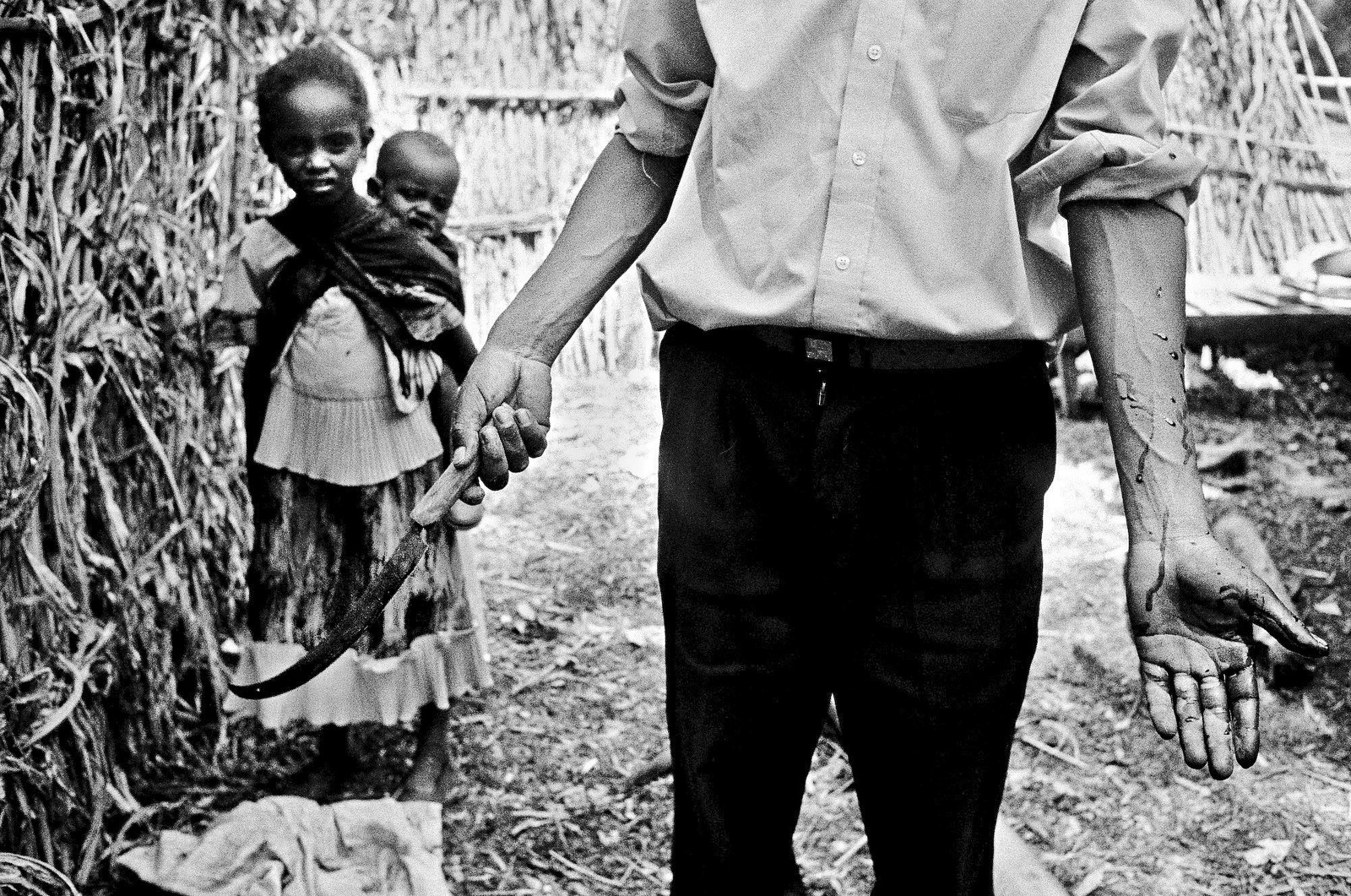
Image Source: http://www.stevehuffphoto.com/wp-content/uploads/2012/06/HARDIN-Ethiopia-2.jpg

I personally need to hear this message, repeatedly, often - "JUST GO SHOOT!" It really helps when it's accompanied by great photos, as it is here on Steve Huff's blog, in a brief, inspiring piece by photographer Aaron Hardin (aaronhardinphoto.com)

(Click Here) to read the post on stevehuffphoto.com

Aaron admits that he also gets his mind diverted by new equipment (the Leica M9, in his case), but is able to pull away and use what he already has to make beautiful pictures. In this case, he photographed in Ethiopia with a single film body (Leica M4-P), 35mm lens, and a bag of film. No back-up equipment.

Personally, I'm hesitant to attend a local event without a back-up camera body on hand. How often do I need a back-up? Very rarely. Especially if I'm restricting myself to a single lens.

I currently find myself strategizing which new lenses to buy for my Lumix Micro 4/3 kit - at the moment I'm fixated on the Lumix 12-35mm f2.8 and the Olympus 75mm f1.8. At the same time, I'm considering whether to broaden the scope of my blog sometime in the future, to regularly include equipment other than Panasonic. I already include other equipment, but try to keep a Panasonic-related theme. If I decide to broaden that focus, Micro 4/3 may not be where I want to add equipment. So, as you can see, I'm preoccupied with equipment. This is nothing new; I'm a self-described gear head.

But, I need to become equally obsessed with shooting great projects. Luckily, I'm persistently pursuing a couple of projects. For example, this weekend will add another piece to my local music project, with a festival on the shores of the Shenandoah River.

Obsession is not a bad thing. In fact, it's a common theme amongst highly successful people. I just need to keep mine focused on the photography, as well as the equipment.

Here's something for me to keep in mind: I have the same Leica M4-P and 35mm lens in my collection. When was the last time I took just that combination out and used it consistently? Well, let's just say it's not my normal mode. I will think about that.

Thanks for reading through my self-counseling!

DMC-365.blogspot.com

And, if you want to spend the same on a single lens that you'd spend on a whole kit:


Friday, June 15, 2012

Mike Johnston of The Online Photographer Shares Some Lumix DMC-GF1 Shots of the Abandoned Pabst Brewery

 
Abandoned Pabst Brewery in Milwaukee, by Mike Johnston of the Online Photographer
Image Source: http://theonlinephotographer.typepad.com/the_online_photographer/2012/05/the-abandoned-pabst-brewery.html?utm_source=feedburner&utm_medium=feed&utm_campaign=Feed%3A+typepad%2FZSjz+%28The+Online+Photographer%29

Mike Johnston of the Online Photographer has posted some great images from an abandoned Pabst beer brewery in Milwaukee, WI, USA.

(Click Here) to see Mike's post on the Online Photographer blog.

Mike's images were shot with the Panasonic Lumix DMC-GF1 at iso1600 - a real stretch in terms of image quality for that camera. Of course, at the resolution of small online images, they sure look great. Mike reports that the noise would make printing of them pretty tough.

Mike toured the building with photographer Jack MacDonough, and includes a shot of Jack working with his Leica S2 on a tripod in his post. That's Mike's favorite of the bunch; it's my favorite, too.

We have all made the mistake of going to a great location without a tripod. Mike made that mistake (admittedly), but pulled through pretty well with his GF1, if you ask me.

I've written in the past about the photographic allure of abandoned places and things.
(Click Here) to see my last post on the subject.

The subject still intrigues me.

DMC-365.blogspot.com
 

Tuesday, June 5, 2012

Japanese Photographer Follows Historic Scroll to Motivate Citizens to Care for Their Town

Sasaoka Keiko Photograph
Image Source:
http://www.japantimes.co.jp/text/fa20120510t1.html?utm_source=feedburner&utm_medium=feed&utm_campaign=Feed%3A+japantimes+%28The+Japan+Times%3A+All+Stories%29
 
 
Japanese photographer Sasaoka Keiko has produced a photographic project with the purpose of re-engaging a declining and aging population in a rural town in Southern Japan in caring for their environment and living conditions.
 
Apparently, she has used a 150 year old scroll painting as a guide to lead her to modern views of the classic Japanese countryside in the area.
 
(Click Here) to read a brief description of the project (in English) at the Japan Times website.
 
After a little digging, I found a few more of Sasaoka's images in this set.
 
(Click Here) to see more.
 
If you're interested in what the original scrolls look like, (Click Here) and go down to the bottom of the page (I was so tempted to say "scroll down").
 
I love these kinds of projects. I find it thought-provoking to compare modern versus historic photographs, or in this case modern photographs versus historical paintings.
 
You may remember my post along these lines, comparing 150 years of difference at the Stone Bridge at the Manassas National Battlefield.
 
(Click Here) to see the Stone Bridge post here on DMC-365.
 
This is an example of where the time has done the scene some good. It would be hard to attain a condition worse than the American Civil War inflicted on the Southern landscape. In Sasaoka's case, I'm afraid it's the opposite. The graceful landscapes are now reduced to littered modern roadways. Hopefully, Sasaoka's work will help to re-ignite a passion for the beauty of the place.
 
DMC-365.blogspot.com


Thursday, May 31, 2012

Memorial Day Tribute - Manassas National Battlefield

On Monday, May 28, 2012, I attended a Memorial Day tribute at the Manassas National Battlefield. The event began at the Groveton Cemetery, established in 1866 to permanently contain the remains of numerous soldiers killed in both battles at Manassas, and buried in shallow graves on the battlefield in the haste of war.
 
Groveton Cemetery, Manassas, by Reed A. George
Panasonic Lumix DMC-G3, Lumix 14-140mm f4-5.8 at 95mm
iso 160, f5.8, 1/640 sec
 
Of the 266 confederate soldiers buried at Groveton, only two are identified.
 
Groveton Cemetery, Manassas, by Reed A. George
Panasonic Lumix DMC-G3, Lumix 14-140mm f4-5.8 at 41mm
iso 160, f5.3, 1/600 sec
 
 
Groveton Cemetery, Manassas, by Reed A. George
James Jerman Palmer, South Carolina
Groveton Cemetery, Manassas, by Reed A. George
Panasonic Lumix DMC-G3, Lumix 14-140mm f4-5.8 at 54mm
iso 160, f5.3, 1/1250 sec
 
The 42nd Virginia reenactors were present to fire salute to their confederate comrades, and a wreath was presented at the memorial.
 
42nd VA, by Reed A. George
42nd Virginia, by Reed A. George
Panasonic Lumix DMC-G3, Lumix 14-140mm f4-5.8 at 140mm
iso 160, f5.8, 1/320 sec


42nd VA, by Reed A. George
42nd Virginia, by Reed A. George
Panasonic Lumix DMC-G3, Lumix 14-140mm f4-5.8 at 140mm
iso 160, f8, 1/250 sec
 

Groveton Cemetery, Manassas, by Reed A. George
Wreath Laying, by Reed A George
Panasonic Lumix DMC-G3, Lumix 14-140mm f4-5.8 at 75mm
iso 400, f5.8, 1/1600 sec


Groveton Cemetery, Manassas, by Reed A. George
Wreath at Groveton, by Reed A George
Panasonic Lumix DMC-G3, Lumix 14-140mm f4-5.8 at 32mm
iso 400, f5.6, 1/2000 sec


42nd VA, by Reed A. George
42nd Virginia, by Reed A. George
Panasonic Lumix DMC-G3, Lumix 14-140mm f4-5.8 at 70mm
iso 400, f8, 1/800 sec
 
After the ceremony at the cemetery, Manassas' own resident reenactor group performed a cannon demonstration:
 
Cannon Fire, by Reed A. George
Panasonic Lumix DMC-G3, Lumix 14-140mm f4-5.8 at 32mm
iso 400, f6.3, 1/500 sec


I love the way the camera captured the fuse line still hanging mid-air, and the cannon fire at full extension from the barrel. Lucky shot.


The rest of the event commemorated Union soldiers, who were represented by the reenactors of the 14th Brooklyn, the only outfit named after a city, rather than a state. They were also referred to as those "red-legged devils" by Stonewall Jackson and his troops.


14th Brooklyn, by Reed A. George
14th Brooklyn (Composite of Two Images), by Reed A. George
Panasonic Lumix DMC-G3, Pana-Leica Summilux 25mm f1.4
iso 160, f4.5, 1/160 sec
 
At this point, the activities moved across the road to the 14th's monument on the battlefield.
 
14th Memorial, Manassas, by Reed A. George
14th Monument, by Reed A. George
Panasonic Lumix DMC-G3, Lumix 14-140mm f4-5.8 at 140mm
iso 200, f6.3, 1/1000 sec


14th Brooklyn, by Reed A. George
14th Brooklyn Soldier, by Reed A. George
Panasonic Lumix DMC-G3, Pana-Leica Summilux 25mm f1.4
iso 160, f5.6, 1/160 sec
 
 
14th Brooklyn, by Reed A. George
14th Brooklyn Soldier, by Reed A. George
Panasonic Lumix DMC-G3, Pana-Leica Summilux 25mm f1.4
iso 160, f5.6, 1/160 sec

14th Brooklyn, by Reed A. George
14th Brooklyn Soldier, by Reed A. George
Panasonic Lumix DMC-G3, Lumix 14-140mm f4-5.8 at 140mm
iso 200, f6.3, 1/200 sec

A final volley was fired by the 14th to commemorate all of the fallen veterans.

14th Brooklyn, by Reed A. George
14th Brooklyn Salute, by Reed A. George
Panasonic Lumix DMC-G3, Lumix 14-140mm f4-5.8 at 140mm
iso 200, f6.3, 1/200 sec


14th Brooklyn, by Reed A. George
Marching to Destiny, the 14th Brooklyn, by Reed A. George
Panasonic Lumix DMC-G3, Lumix 14-140mm f4-5.8 at 78mm
iso 200, f6.3, 1/800 sec
 

As this event was held in 90 degree weather at noon, it is hard to imagine worse lighting conditions. Okay, I can imagine worse, but the contrast was pretty high, and the shadows were not very complementary to my subjects.
 
You will see that I attempted to use fill flash on the shots taken with the Summilux 25mm f1.4. I did this with my Nissin Di466 flash set on manual, which allowed me to control the flash level better than TTL would have. I have found that even at minimum power, the Di466 can overpower the ambient light. In order to help out in this situation, I used a 3-stop Lumix neutral density filter on the Summilux. This allowed me to find an f-stop where the flash at minimum power was not overpowering, then select a shutter speed to balance the ambient light as well as possible. These are all manual settings, and since the flash power varies as a square to the distance from the subject, it is very hard to find one setting that works for multiple shots. In both of the Summilux portraits shown here, I think I underexposed the ambient, and allowed too much flash power to come through. This is a learning process for me, but at least I'm making some progress.
 
DMC-365.blogspot.com


Wednesday, May 16, 2012

Civil War Event - John Mosby's Rangers at Mount Bleak, Virginia

 
Paris, Virginia, by Reed A. George
Panasonic Lumix DMC-G3, Pana-Leica Summilux 25mm f1.4
iso160, f8, 1/250 sec

On Sunday, May 13, 2012, I attend a Civil War historical event at Sky Meadows State Park in Delaplane, Virginia. This is amazingly serene countryside, as the panorama of nearby Paris above demonstrates.

This area was deeply involved in the Civil War, and was home to John S. Mosby, a confederate officer turned vigilante, who constantly tested and perturbed federal forces in the heart of Virginia. Mosby was known as the "Gray Ghost," based on his rangers' ability to appear and disappear seemingly instantly, using local "safe houses" to harbor himself and his men. In fact, the historic home at Mount Bleak in the park was one of those safe houses.


Rich Gillespie, by Reed A. George
Richard Gillespie, Director of Education for the Mosby Heritage Area Association
by Reed A. George
Panasonic Lumix DMC-G3, Pana-Leica Summilux 25mm f1.4
iso160, f2.8, 1/125 sec

The evening's event presented several vignettes of individuals from the period, played by local reenactors associated with the Gray Ghost Interpretive Group. Starting near sundown, we listened to their stories as the sky grew dark, the program transformed to lantern light - wonderful for setting the mood and allowing our minds to go far back in time.


George Slater (Reenacted), by Reed A. George
In the Role of Estate Owner and Former Mosby Ranger, George M. Slater
by Reed A. George
Panasonic Lumix DMC-G3, Pana-Leica Summilux 25mm f1.4
iso160, f2.8, 1/200 sec


Local Virginia Girl and Mosby Aid, by Reed A. George

Local Girl and Aid to Mosby's Rangers, by Reed A. George
by Reed A. George
Panasonic Lumix DMC-G3, Pana-Leica Summilux 25mm f1.4
iso3200, f1.5, 1/800 sec


Former Mosby Ranger, by Reed A. George
Memoirs of a Ranger, by Reed A. George
by Reed A. George
Panasonic Lumix DMC-G3, Pana-Leica Summilux 25mm f1.4
iso400, f1.8, 1/1250 sec


Lone Federal, by Reed A. George
Lone Federal Soldier Watches From the Shadows, by Reed A. George
by Reed A. George
Panasonic Lumix DMC-G3, Pana-Leica Summilux 25mm f1.4
iso6400, f1.4, 1/15 sec


Rich Gillespie, by Reed A. George
The Tour Wraps Up After Dark, by Reed A. George
by Reed A. George
Panasonic Lumix DMC-G3, Pana-Leica Summilux 25mm f1.4
iso640, f1.4, 1/25 sec


(Click Here) for more information on the beautiful Sky Meadows Park, which is about an hour east of Washington, DC, and is a beautiful natural and historical reserve.

(Click Here) for more about the Mosby Heritage Area Association, who put on this event. They are excellent at bringing civil war history to life.

Here are a few more images of the beautiful scenery in the area:


Cultivation, by Reed A. George
Panasonic Lumix DMC-G3, Lumix 14mm f2.5
iso400, f8, 1/250 sec


Whitewashed Fence, by Reed A. George
Panasonic Lumix DMC-G3, Pana-Leica Macro-Elmarit 45mm f2.8
iso400, f2.8, 1/400 sec

Ivy, by Reed A. George
Panasonic Lumix DMC-G3, Pana-Leica Summilux 25mm f1.4
iso400, f8, 1/80 sec


As you can see from the exposure information, as the evening wore on, I relied on the Summilux for its fast f1.4 aperture, and increased iso to 6400 near the end. It was a nice challenge to capture the event in near darkness. I hope I've done well enough that you can get a feel for this early summer evening in the countryside.
 
DMC-365.blogspot.com


Tuesday, May 15, 2012

Photographer Jimmy Williams Helps Preserve the Blues

 
Jimmy Williams' Photographs of Blues Musicians
Image Source: http://lens.blogs.nytimes.com/2012/05/01/a-right-to-sing-the-blues/#/1/
 
The New York Times' Lens blog posted this story about a photographer working to help support blues musicians and keep the blues alive.
 
(Click Here) to read the Lens post. Be sure to click through the photo set.
 
Photographer Jimmy Williams supports an organization known as the Music Maker Relief Foundation with his images. Jimmy meets with aged blues musicians, usually in their homes, and spends a few hours getting to know them, and photographing them. He gives full access to his images to the foundation, which financially supports the musicians and their music.
 
Mr. Williams asks the musicians to dress as they would for a performance. In my opinion, this helps to show their musical inspiration. In many of the shots, I can see the musicians living out their past memories. These photographs are very personal, and are inspiring to me.
 
DMC-365.blogspot.com
 

Thursday, May 10, 2012

National Geographic Photographer Ed Kashi Shares His Experience of 30 Years in Global Photography

Photo: Ed Kashi
 
Photographer Ed Kashi
Image Source:
http://events.nationalgeographic.com/events/speakers/2012/04/17/changing-face-marseille/
 
On Tuesday, April 17, I once again took advantage of living reasonably close to the National Geographic headquarters in Washington, DC, and attended a talk by photographer Ed Kashi. The topic of the talk was his recent Nat Geo project, on the life of Muslims in Marseille, France. Ed also shared a lot of insight from his years of experience on long-term assignments overseas and away from his family.
 
 
(Click Here) to go to the National Geographic Live description of the event.
 
 
Marseille is the oldest city in France. Approximately 20% of the one million inhabitants are Muslim. The government there is very secular, which may be part of the reason that the city integrates so many cultures so effectively. Other cultures with major populations in Marseille include Jewish, Tunisian, and Roma.
 
 
Ed shared the difficulties he encountered on this assignment, even though he's used to working in less-developed places, like North Africa. In Marseille, his first "handler," which is a local contact to help you work in a foreign place, was a nightmare. Ed said that your handler basically has to be a magician - someone who's comfortable escorting you to the Prime Minister's residence, or getting you into the poorest person's home. After an altercation with his first handler, Ed found a perfect substitute, and the project took root.
 
 
Ed now regularly makes a multimedia piece to accompany his still photography projects. At this talk, he showed two - Eye Contact and Photojournalisms.
 
 
Eye Contact is a collection of images that were edited out, throughout his career, because someone in the frame was looking at the camera. While his normal style is to achieve scenes where he is basically "invisible," those with eye contact made for a very interesting set of images.
 
 
Photojournalisms is a more personal piece, and is based on journal entries that Ed writes to his wife and family while he is away for his work. It is a very heartfelt documentary, and shows the tradeoffs that a traveling photographer makes in pursuit of his or her work.
 
 
(Click Here) to go to Ed's website.
 
 
I thoroughly enjoyed Ed's work and commentary. He spent a lot of time answering questions from the crowd, and didn't shy away from any subject.
 
 
I must say, after attending two of these events, that National Geographic photographers really do concede a lot of their personal lives for their work. Ed was clearly sad about the amount of his children's childhood he missed on assignment. Ed now only takes on shorter trips, and is very focused on his family.
 
 
In the first event I attended, by Jodi Cobb, she related some level of regret for the sacrifices she made in her personal life, as well.
 
 
(Click Here) to see my review of the Jodi Cobb event.
 
 
It is great to have the opportunity to listen to the world's best photographers on a regular weekday evening. It takes me about an hour to get into the city, but the trip is always worth it.
 
 
DMC-365.blogspot.com


Monday, April 30, 2012

This Would Have Been the Day I Forgot My Camera

Moose by Nome_Alaska on dpreview
Image Source: http://forums.dpreview.com/forums/read.asp?forum=1041&message=41214002
Panasonic Lumix DMC-GF2, Lumix 20mm f1.7 Lens

Poster Nome_Alaska on dpreview posted this shot of the morning traffic in his homeland. I can't remember the last time a moose held me up on my way to work here in Virginia.

(Click Here) to read the original post.

Sometimes, you just want to be sure to have a camera, any camera, on hand to document your day. These couple of images could have been made with a point and shoot, or an iPhone. The important thing is to have a camera with you.

On those days when you see something creatively intriguing, something you would like to develop artistically, rather than just documentation, it's nice to have a better camera. The Micro 4/3 kit presents a nice compromise in size and capability in that case. Nome_Alaska's GF2 is a very small camera, and the 20mm f1.7 an excellent, bright, sharp, fast lens. Easy to carry, highly capable kit.

It's fun to see how our days differ from those we're connected to by the internet.

DMC-365.blogspot.com


Saturday, April 28, 2012

Panasonic Lumix and National Geographic Collaboration Report - Counting Species in India

As I've reported in the past, Panasonic and National Geographic have formed a collaboration, which is super exciting to me. They have just issued a brief report about working with a researcher who studies biodiversity in India's Pakke Tiger Reserve.
 

Image Source: http://panasonic.net/avc/lumix/nationalgeographic/earthswitnesses/india/report.html
Hornbills Are One of the Most Important Seed Dispersers in the Indian Rainforest
 
(Click Here) to see the first episode, which includes a link to a four page pdf document.


The Lumix team worked with Dr. Aparajita Datta, who has spent over a decade studying and working to conserve the tropical forests in Northeastern India. Her research focuses on the "phenology" of the forest, which is the flowering and fruit bearing behavior of trees, to understand the baseline patterns of the forest, and detect any changes. The phenology includes study of trees whose seeds are spread by mammals, birds, and wind. Following is a quote from the report:"“Understanding connections and interaction between animals and plants is the part of my work I find most exciting,” Dr. Datta says. The area is home to five different species of hornbills, and Dr. Datta studies their role as seed dispersers. In tropical forests, 80 percent to 90 percent of tree species bear fruits that animals disperse so these birds are critical to the ecosystem. In addition to her scientific work, Dr. Datta has a passion for educating the next generation of engaged citizens. She has co-written two books for children on hornbills and rain forests and produced other educational material to foster a greater awareness and appreciation of Indian wildlife among urban and rural children." In addition to a short video with Dr. Datta, and eleven still photos, the site includes a second gallery of images from India.


I very much look forward to the coming episodes two and three, which promise to include many more exciting images from the collaboration.
 
Working in Science and being an avid photographer (and Lumix fan), I can't imagine a better match-up of my interests.
 
DMC-365.blogspot.com


DMC-365.blogspot.com
 

Friday, April 27, 2012

Carl Weese - Documenting America's Drive-In Theaters

 
Carl Weese's Drive-In Project
Image Source:
http://theonlinephotographer.typepad.com/.a/6a00df351e888f88340167644a0890970b-popup
 
I enjoy documentary photography. That includes everything from the straightforward imaging of scientific specimens for future reference (see my post on the Calvert Marine Museum), to war photography, a very dangerous proposition for the photographer (you won't see any war pictures taken by me).
 
Today's post is about Carl Weese, who lives in Connecticut, and travels the country documenting America's vanishing drive-in theaters. Drive-ins have been on the decline for a very long time, but are being dealt the death blow by digital technology. Sounds familiar (camera stores, bookstores, ...).
 
(Click Here) to read a piece about Carl's project on The Online Photographer.
 
(Click Here) to see a post on the NY Times blog.
 
Carl's big sweep across the western part of the country was funded within three weeks on kickstarter
(www.kickstarter.com). This is a great site where you can support projects that you believe in.
 
(Click Here) to see more of Carl's pictures on kickstarter.
 
Apparently, Carl has plans to sell exhibition-quality prints and maybe a calendar of his work.
 
Nice job, Carl! I hope the kickstarter funds will cover some coffee for those late night drives between theaters.
 
DMC-365.blogspot.com
 
By the way, if you like the kickstarter idea, consider funding one of my favorite Virginia Bluegrass band (and photography subject)'s effort to fund their new album:
 
(Click Here) to fund Furnace Mountain's album.
 
To see the band, (Click Here) to see my previous post on their recording session.


Thursday, April 19, 2012

Jared Soares - Virginia Photographer Documents Local Music Scene

Poe Mack lays down
Rapper Poe Mack in His Hotel Room, by Jared Soares
Image Source: http://lens.blogs.nytimes.com/2012/04/02/beats-rhymes-and-hard-work/#/1/
 
As you probably know by now, I have a few ongoing photography projects that I am putting a lot of effort into. One of the most exciting for me is photographing the local DC/Virginia/West Virginia Bluegrass, Roots, and Gypsy Jazz scene. There are several really great bands, covering experience levels from young people barely out of high school (and maybe some still in school) to seasoned professionals, many with significant studio experience.

Because of my own music project, I was happy to find a story on the New York Time's Lens blog about Jared Soares (www.jaredsoares.com), a young photographer who decided to document his own local music, in this case Rap performers around Roanoke, Virginia.

(Click Here) to read Jared's story on the New York Time's Lens blog.

Jared's story sounds similar to mine. He describes how the musicians were skeptical at first, wondering about his true motives. As they found that he was a true music lover, and wanted to make his own form of art related to the local music scene, he was increasingly welcomed to photograph them. To use Jared's words, he says:

"We're both trying to say something."

Mr. Soares' photographs will be shown at an upcoming exhibit in Charlottesville, VA.

(Click Here) to get information on the exhibit.

I am still working on improving my own chops at photographing in small, poorly-lit clubs and coffee shops, as well as the professionally-lit bigger venues. I am also enjoying the process of getting to know some of the musicians, who are without exception good people.

Jared has succeeded in documenting not just the performances, but behind the scenes life for the musicians. I aspire to add more of a personal connection with the musicians to my own work. This will come with time and trust between the musicians and I.

DMC-365.blogspot.com


Wednesday, April 4, 2012

Masao Horino Photography Exhibit in Tokyo

Gas Mask Parade by Masao Horino
 
 
Gas Mask Parade, Tokyo, by Masao Horino
Image Source: http://www.55museum.com/?p=16105
 
Back on March 23, I wrote about a couple of exhibits at the Tokyo Metropolitan Museum of Photography, which I hoped to visit on my trip to Tokyo.

Well, it just so happened that I found the perfect day to go - typhoon rain and winds were headed for Tokyo, and people were warned to leave work early to avoid the weather. So, I took the Hibiya subway line to Ebisu Station, and viewed the Masao Horino exhibit.

Horino lived from 1907-1998, but stopped photographing and exhibiting after WWII. The exhibit gave a great feel for his whole career, which began in the mid 1920s, photographing actors and actresses in a small theater in Tsukiji, Tokyo. These are classic posed images, both head shots, and full body shots of performers. One characteristic that came to me right away is that the subjects were always looking outside the frame. It made for a somewhat impersonal style, but may have been due to cultural norms.

In the 1930s, Horino began experimenting with photography of mechanical structures, reportedly in order to find new applications for his cameras. I can identify with that. This is when his bridge images, including the one posted in my March 23 post, were done.

Also in the 1930s, Horino began experimenting with montages (multiple images on a single page, sometimes with a modest amount writing) and overlaying exposures from multiple negatives onto a single print. In this style, he did a series called "Flowing Through the Capital: Sumida River Album." In this series, he photographed people and their association to the river.

In 1932, Horino declared that his experimentation was concluded, and that he was taking his "first step as an artist," focusing largely on photojournalism. I get the distinct feeling that the war affected Horino deeply; some of his most striking pictures of that era included the gas mask parade in Tokyo, shown above, and a celebration parade in honor of kamikaze (suicide bomber) pilots. As mentioned before, after the war, Horino stopped exhibiting his work, claiming that it was lost in the war.

A few of his best works, in my opinion, are:
  • "The Beggar," 1932 - in this case, the straggly-looking man is looking directly into the lens.
  • "Coffee Break," 1933 - two boys and a dog at a table. The interplay between the three characters is really something to see.
  • and the very best, in my opinion, is "Beach" ("Nagisa" in Japanese), taken somewhere between 1934-38. This image shows a girl sitting on a high bluff above the beach, waving to several people on horseback far down below.

I have got to see if I can find some of Horino's images online. Horino is not well-known, partially because he disappeared from the scene after the war. His work is certainly worth seeing.

(Click Here) for a few more of Horino's images.

The typhoon came in, as promised. It rained cats and dogs, and the wind was fierce all night long. In some parts of the country, buses and trucks were blown over, and buildings were destroyed. If my conversions from meters per second are correct, the maximum winds were about 80 mph. By morning, skies were clear and sunny.


Running For It, By Reed A. George
Running For It, by Reed A. George
Panasonic Lumix DMC-G3, Pana-Leica 45mm f2.8 Macro-Elmarit

DMC-365.blogspot.com