Showing posts with label professional. Show all posts

Monday, October 13, 2014

Pro Photographer Shoots Fuji Instax for Fun!

fotolucid_it_web_instax_scan_006
 
Image Source: http://snapitseeit.com/cindys-island-time/
 
I've recently gotten back into instant film photography, because I like it. No other reason. I have a Fuji Instax Neo, which really is pretty darned good. But, for amazing quality instant pictures, my Mamiya Universal Press (MUP) with pack film back is unbeatable.
 
This picture is by professional photographer Cindy Leon.
 
(Click Here) to read about her thoughts on the Fuji Instax Wide (larger format than my Neo), and see several more nice instant images she made.
 
I'm down to only a few more packs of Fuji FP3000B to shoot in my MUP, and am dreading the end of it, as the film has been discontinued. The much slower (iso 100 vs. 3000) color film is still available from Fuji, but who knows for how long.
 
So, the Fuji Instax film, which is relatively new, may one day become our only instant film option. But, rather than focus on narrowing options, I should be focusing on enjoying making every shot with instant film!
 
DMC-365.blogspot.com


Friday, July 12, 2013

Former Chicago Sun-Times Photographer John White Keeps it Light

 
M. Spencer Green / Associated Press
 
Recently, the Chicago Sun-Times fired all of their staff photographers. In today's world of digital music downloads and ongoing extinction of book stores, this doesn't seem like such a surprise. So much of the visual media is recorded on cell phones these days. But, you have to look a little deeper.
 
For example, one of those photographers was at the pinnacle of the craft. Pulitzer prize winner John White is now a former Sun-Times photographer.
 
(Click Here) to read an article on the NY Times blog, Lens, about Mr. White and how he mentored NY Times photographer Michelle Agins to a successful career in photography.
 
But, Mr. White is keeping his chin up. He says he's not fighting the darkness, he's lighting candles.
 
Here's to the true master photographers out there, adjusting to the modern world. Some of us still value what you can do - with a cell phone or a Nikon. And, you did it every day for a whole career.
 
DMC-365.blogspot.com


Monday, January 7, 2013

Leica M Digital - No Longer Just a "Dentist's Camera?"

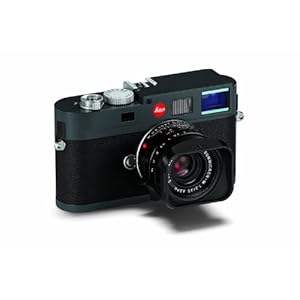
Photographer Sarah Lee from the UK's Guardian has started using a Leica M-E, the camera that's nearly identical to the M9 (missing only the frameline preview lever and USB connection), yet significantly less expensive.
The Leica M-E Digital Rangefinder
Image Source: www.amazon.com
 
(Click Here) to read Sarah's thoughts on the Leica M-E on the Guardian's blog
 
Sarah discusses how the Leica M9 was not well-adopted by professional photojournalists because of price. In fact, she says that the pros refer to it as the "dentist's camera." I suspect a little of this is also involved in her decision to tape over the red dot on her M-E.
 
Like the M9, the useful iso is limited at about 1250, and it shares the slow write speed and small image buffer of the M9. Otherwise, her comments are quite positive, and par for the course as other photographers have reported. For Sarah, it has taken her back to shooting for fun, and to the reasons she became a photographer in the first place. It even has her printing images again.
 
Sarah Lee with her gaffer-taped Leica

Sarah Lee with her gaffer-taped Leica. Photograph: Sarah Lee for the Guardian

Image Source: http://www.guardian.co.uk/artanddesign/photography-blog/2012/dec/28/leica-m-e-rangefinder-photography
 
Another comment by Sarah is interesting to me - it has to do with her Pentax K1000 (my featured "Skeletons from the Closet" camera for January), and how she still appreciates it. That's cool.
 
You should read the whole article if you're interested in Leica digital rangefinders. But, to sum up, she says that once you can afford this type of camera, "it changes everything."
 
I would venture to add that going back and shooting the K1000 for a while may change everything as well. Don't get me wrong - I'm no dentist, but I do own an M9, so am certainly not a detractor of Leica. I just think that shooting with the basics, whether it be an M9 or a manual film SLR, changes the way you look at photography.
 
Buy your "inexpensive" Leica through my link below :).
 
DMC-365.blogspot.com


Sunday, October 28, 2012

Panasonic Hands the DMC-GH3 to Pros To Generate Sample Images and Videos

 
Panasonic DMC-GH3
Image Source: http://shop.panasonic.com/shop/model/DMC-GH3KBODY
 
The newly-announced Lumix DMC-GH3 takes its place as the flagship camera in the Panasonic line. The new body design is weatherproof, and larger than previous Lumix Micro 4/3 bodies. While larger than say the G3, it is still more compact than DSLRs, and approximately half the weight. In addition, the smaller lenses will still make a GH3 kit significantly smaller and lighter than an equivalent DSLR kit.
 
The most important room for improvement in Micro 4/3 is low noise, high iso performance. Since I shoot a lot of low light situations, especially in my live music project, this is where I'd love to see more progress. However, I want to start by saying that last year's state-of-the-art isn't bad. Here's an example of a shot I took recently with the DMC-G3 at iso 3200, in a very dimly lit venue.
 
Greg Ruby, by Reed A. George
Panasonic Lumix DMC-G3, Olympus 75mm f1.8 Lens
iso 3200, f1.8, 1/100 sec
 
In the shot above, I was forced to shoot at iso 3200, even with the fast f1.8 Olympus lens. At 1/100 second exposure, I'm pushing the fastest shutter speed that can be shot with the camera handheld (carefully) with this lens. Since the 75mm has an equivalent field of view as a 150mm lens on 35mm format, ~1/150 second is the slowest speed that can reliably be handheld.
 
The new DMC-GH3 reportedly significantly improves high iso performance, with regular iso settings up to 12,800 and extended 25,600 capability. The question is - what do the images look like at these settings?
 
Panasonic handed the GH3 to six imaging professionals to generate samples. Bruce Logan, Philip Bloom, and Elliot Rosenblatt worked on video, while Ira Block, Daniel Berehulak, and Kazuo Unno focused on still images.
 
(Click Here) to see the results on Panasonic's special GH3 site.
 
Ira Block shares a variety of images from the American West, including a very nice night landscape, shot at iso 2500 and a shutter opening of 30 seconds! Quite nice.
 
Daniel Berehulak documented Muslim life in India. He includes a couple of shots at iso 1250 that are very low in apparent noise.
 
Kazuo Unno focused his (macro) lens on the insect world.
 
I still look forward to seeing some images shot at iso 3200 and higher. I sure would love to have a Lumix camera that could come close to matching the high iso performance of my full-frame Nikon D700!
 
DMC-365.blogspot.com


Wednesday, July 4, 2012

Digital Photo Academy (DPA) Instructor Rick Gerrity Gives Tips on Photographing Strangers

 
Photo by Rick Gerrity
Image Source: http://www.facebook.com/photo.php?fbid=10150854451756479&set=a.470294361478.257978.102171381478&type=1
 
DPA instructor Rick Gerrity recently shared a brief narrative on how to photograph strangers.
 
(Click Here) to read it.
 
If you don't know DPA, you owe it to yourself to check it out. I have attended DPA workshops in Washington, DC, Philadelphia, PA, and New York City. In fact, when I'm traveling to a new city in the US, or don't already have a photographic plan, I always look to see what DPA workshops are available.
 
In fact, I met Mr. Gerrity when I attended one of his workshops in Hoboken, NJ. He led us on a tour around Hoboken, centered on the old train station, and the awesome view across the river to the New York City skyline. Rick is a Panasonic Lumix enthusiast, just like me.
 
That's Rick, Second from Left
Photo by Reed A. George
Waiting by Reed A. George
Nikon D700, Nikkor 24-85mm f2.8-4 at 85mm
iso400, f5.6, 1/500 sec
 
Waiting, 2, by Reed A. George
Nikon D700, Nikkor 24-85mm f2.8-4 at 70mm
iso 1600, f5, 1/60 sec
 
By the way, DPA is run by Mr. Richard Rabinowitz, another really great guy. We've met via telephone only, but I hope to rectify that one day. He's in the NYC area, as well.
 
So, if you ever want to get out with a professional photographer in an unfamiliar city (or even a familiar one), look up DPA and see what they've got going.
 
(Click Here) to go to DPA's website.
 
DMC-365.blogspot.com


Thursday, May 24, 2012

Pro Photographer Giulio Sciorio Writes About Professional Use of Micro 4/3 Equipment

 
Giulio Sciorio Writes About Pro Use of Micro 4/3
Image Source: http://blog.giuliosciorio.com/wp-content/uploads/2012/04/fear.jpg
 
 
Professional photographer Giulio Sciorio has posted a piece on his blog about the barriers (both real and psychological) to other professionals adopting Micro 4/3 camera gear for their pro work. I will review his main points below.
 
 
(Click Here) to read Giulio's full post.
 
 
Giulio outlines the following five barriers to professional adoption of Micro 4/3 equipment:
 
 
  1. It's not "professional" gear.
  2. There aren't enough megapixels.
  3. The noise levels are too high.
  4. It's not full-frame!
  5. Worries about what your professional colleagues will think.
First, Giulio identifies the concern over your clients not being impressed by the appearance of your gear, because it's not big, heavy, and expensive looking, as a real concern. He explains how he did two things to overcome this. First, he shot a series of street portraits with his Olympus Pen, and showed them to others before explaining what equipment they were made with. Second, he carried his Pen with his "professional" Canon gear, and impressed clients with shots made with the Micro 4/3 gear. For me, this is not a concern. That's because I don't really have clients. If anyone is interested in my photographs, it's because of the photographs, not the equipment. I'm not hired to cover any specific events, in general. If I were, I may try Giulio's "bring it along with the Pro gear" approach. Second, "there aren't enough megapixels." Giulio explains that even large format magazines need only around 9 Mp for a full page image. As for me, I would argue that there are too many megapixels in some cases. More megapixels = more noise (see "Third..." below). And, since megapixels are the universal language of camera marketers, having too few will never be an issue. Third, noise. Giulio handles this one through the simple statement that while his Micro 4/3 images do have more noise than full 24x36mm sensor cameras, he has never had a complaint from a client. He considers it part of the rendering style of the gear. For me, the noise concern has some truth to it. Back to megapixels, if my Lumix DMC-G3 could achieve the same noise performance as my Nikon D700 24x36mm sensor camera, I'd happily give up any extra megapixels. From my point of view, the noise issue improves with every iteration of Micro 4/3 sensor design, and is now well under control for most print sizes, and certainly for images on the computer screen. Now that the technology has gotten to this point, I see this concern as the same one that photographers used to have to make regarding 35mm versus medium or large format film. The Micro 4/3 kit has become my 35mm film equivalent, and is every bit as capable, in my opinion, with lots of advantages. The Nikon D700 is my medium format equivalent. If I'm worried about making super large prints or approaching perfection, I can decide to carry the big, heavy Nikon.
The fourth concern is "it's not full-frame!" Giulio makes a great case on this one. Of course it's full-frame. Full-frame is all relative. If you really want to argue, 24x36mm (35mm "full-frame") is not full-frame to a medium format film photographer. It's the image quality that counts. I totally agree with Giulio on this point.
 
 
The fifth, final concern is "what will my colleagues think?" Giulio's point here is that it's not your colleagues' opinion that counts. It's your clients.
 
 
I have experienced this one, even though I'm not a pro. One of my good friends is an ardent Nikon DSLR user. He asked me
 
 
"What does Lumix give you that Nikon doesn't? What got you started with it?"
 
 
Well, I have to admit, this got me thinking. What really got me into Micro 4/3 was the ability to adapt legacy lenses. That's a minor advantage for me, now that there are great native Micro 4/3 primes. What really sold me was size, weight, reduction in back pain. What keeps me in Micro 4/3 is the awesome progress it has made recently. One final note on this. It is my belief that being a photographer who takes a different approach, one that is not initially accepted in the professional community, has a history of ultimate success. Just look at the Leica. Pros turned their noses up, with very similar concerns about the "small format" of 35mm film that we hear today about Micro 4/3. Then they saw the images that could be made with a small, flexible, fast camera. The rest is history.
 
 
Giulio's article was thought provoking and useful for me.
 
 
Sumo Crossing, by Reed A. George
Panasonic Lumix DMC-GF1, Lumix 20mm f1.7 lens
iso100, f5.6, 1/100 sec
 
One of the things I love about this image is that the sign on the store across the street, which sells sumo souvenirs and the like, has a sign that reads "Kingu Saizu" in Japanese ("King Size" in English).
 
Small, fast cameras are fun and productive.
 
DMC-365.blogspot.com


DMC-365.blogspot.com