Showing posts with label X100. Show all posts

Thursday, October 3, 2013

Wijnand Schouten Shares Fuji X100S Results on Steve Huff Photo

By Wijnand Shouten
Image Source: http://www.stevehuffphoto.com/2013/09/20/daily-inspiration-446-by-wijnand-schouten/
 
Steve Huff Photo has posted a few photos by Wijnand Shouten, who's just started working with a new Fujifilm X100S.
 
(Click Here) to read more about the camera.
 
(Click Here) to read the post on Steve Huff Photo.
 
It seems that Wijnand has experience with the Fujifilm X100, but is enjoying the upgrade to the S model. The S features an X-Trans CMOS sensor. Wijnand gets gorgeous deep blacks in his images.
 
I'm still tempted by the X100S at times, but have my hands full with my current camera selection. And, as I've said before, it doesn't have the perfect focal length for me, which is important with a fixed lens camera like the X100S. The same holds true for the lovely Leica X2. I'd rather have a 50mm equivalent lens.
 
Wijnand certainly shares with us that in the right hands, the X100S can sing.
 
DMC-365.blogspot.com
 

Friday, April 26, 2013

Am I the Only One Who Wants My Fixed Lens to be 50mm?

 
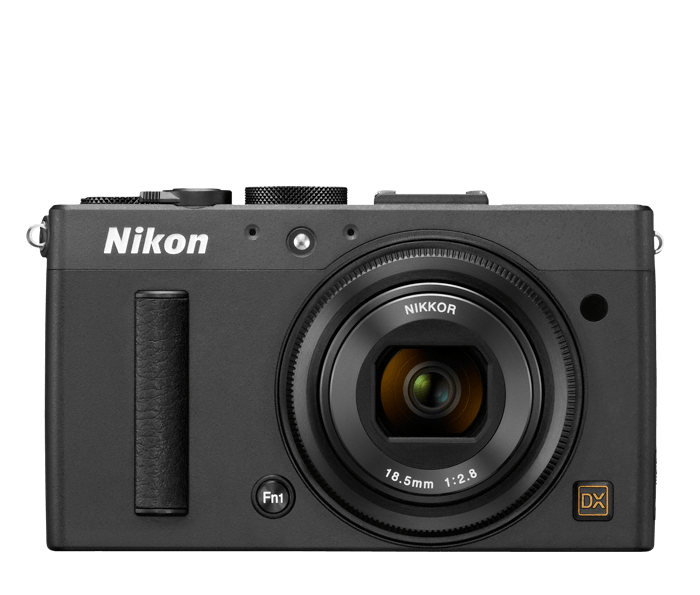
Nikon Coolpix A

Image Source:http://www.nikonusa.com/en/Nikon-Products/Product/Compact-Digital-Cameras/26423/COOLPIX-A.html

 
I like where the digital camera leaders are going - almost. I love the idea of a dedicated, fixed lens compact camera with a large sensor and great image quality. The good news is that many camera manufacturers are making them now. My favorites so far are the Leica X2 and Fujifilm X100S. Others include offerings from Sigma, Sony, and now Nikon and Ricoh.
 
When I think of these types of cameras, my thoughts go to the excellent Olympus, Canon, and Konica fixed lens rangefinders of the past. I would really love to see something equivalent to an Olympus SP, for example.
 
(Click Here) to see what the Olympus SP film rangefinder camera was like on Andrew Yue's site.
 
Now here's the rub, for me. All of the new fixed lens cameras have wide angle lenses, 35mm equivalent field of view, or wider. For me, the 42mm lens on the old Olympus SP was a bit wide, but actually a very good compromise between what I think of as a "standard" focal length of 50mm, and the admittedely popular 35mm lens. In fact, my 40mm Minolta Rokkor lens for Leica M mount cameras is one of my favorites.
 
If I'm going to buy a fixed lens camera, the lens really needs to serve most of my purposes. For me, and yes, it's personal preference, a 50mm lens would be best. I'm willing to be open-minded and take something as wide as 40mm, and actually would embrace that focal length.
 
When I saw the first announcement of the Nikon Coolpix A, I was excited. In my experience, Nikon does a great job of handling sensor noise (my Nikon D700 DSLR is the best low light camera I have), and I'm familiar with the menus. When I read that the A has an APS-C sensor and 28mm f2.8 lens, I got excited. I thought, hmm - 28mm X ~1.5 crop factor = 42mm equivalent. Great! Then I saw that it's actually an 18.5mm lens, and 28mm equivalent field of view. Really? I remember when 28mm was a rather extreme wide angle lens, one that was probably in your bag but sure didn't get the usage that a 35mm or especially 50mm lens did. This is way too wide to be a general purpose, fixed lens camera, at least for me.
 
Ricoh has also just come out with a new GR digital model - again 28mm equivalent field of view.
 
I think part of what's driving this trend is lens size. While the camera companies are trying to provide large sensors for their compacts (which is great news), they want to keep the lens size as small as is practical. I understand that. I also think this may be why some are stopping at a maximum aperture of f2.8, which I think is a little slow for a fixed lens camera. But, I still really want a litle longer lens, and fast, please.
 
I mean, let's face it, I never could really fit that Konica S1.6 with 45mm f1.6 lens (a 1970s fixed lens film rangefinder that produces incredible images) in my pocket.
 
DMC-365.blogspot.com



Sunday, April 7, 2013

I Was Tempted By The Fuji X100S, Sony RX1, and Leica X2 - I Think I'll Pass For Now


Image Source: www.amazon.com

I have been traveling for the past week or so with my Leica M9, Panasonic Lumix DMC-LX7 compact camera, and my Skeletons From The Closet camera for March, the Zeiss Ikonta folder.
 
I have been sorely tempted by the three fixed lens cameras mentioned in the title of my post. All three, the Fujifilm X100S, Sony RX1, and Leica X2 offer a lot of excellent features. However, I'm pretty convinced that if I were to buy a fixed lens camera, I would want a 50mm equivalent field of view, as opposed to the 35mm field of view of each of these cameras.
 
On this trip, I brought my Summilux 35mm f1.4 lens for the M9. That lens is my Whole Lotta Leica pick for March. While it's an amazing lens, I have felt throughout the trip that I'd have been happier overall with a 50mm lens. Of course, the M9 lets me change lenses, which I am not shy about doing. But, if I bought one of these new fixed lens cameras, I would not have that option. So, I am staying out of that market for now.
 
If I were going to go for it, it would be between the Fuji and Leica. I've now handled both, and they are extremely nice cameras. I've also handled the Sony, and like it. Just not to the tune of the price difference.
 
I wrote a couple of days ago about how I essentially traded in my year-old Lumix DMC-G3 kit for a new DMC-GX1 through Amazon (the GX1 is $275 brand new right now!). The new GX1 is waiting for me in its box until I get home. I'm thinking that the GX1 with the Lumix 20mm f1.7 pancake lens should give any of these cameras a run for their money, and for much less of it (money, that is). If I considered the combination of a flexible compact camera and a fixed lens higher image quality camera combination for travel, I would have thought about the Lumix DMC-LX7 (which I continue to explore and enjoy immensely) and either a Fuji X100S or Leica X2. Now, I'm thinking the GX1 with 20mm f1.7 will be the higher end choice. The GX1 is very compact, and yields great image quality. I know this from my experience with the DMC-G3, which shares the same sensor as the GX1. With the 20mm f1.7 lens, it's a very nice little package. And, I have the awesome 25mm Pana-Leica Summilux 25mm f1.4 if I really want the 50mm equivalent field of view.
 
Kirk Tuck recently wrote a post about comparing the high iso performance of the Fujifilm X100S with his Sony NEX, using the excellent comparison tool at dpreview.com. His conclusion is that the hysteria over the X100S may be warranted by the features of the camera, but not by high iso performance alone.
 
(Click Here) to read Kirk's post, entitled "New "Holy Grail" of Cameras Spanked by the Real Deal." How controversial that title sounds!
 
I decided to do the same comparison between the X100S and the GX1. Here's a screenshot of the raw images at iso 800:
 
DPreview iso 800 Raw Comparison of Fuji X100S, Fuji X100, Panasonic Lumix DMC-GX1,and Panasonic Lumix DMC-LX7
Image Source: http://www.dpreview.com/previews/fujifilm-x100s/6
 
You can easily switch iso level for all of the cameras in the comparison using the dpreview tool. I decided that iso 800 is important for me, as I need that level fairly often on travel, especially in cloudy weather. However, the f1.7 lens on the GX1 will need it less often than the f2 on the Fuji or f2.8 on the Leica.
 
My conclusion from this comparison is that, as expected, the LX7 really lags the other, larger sensor cameras in performance at iso 800. But, surprisingly, I like the GX1 result more than the Fuji cameras. While the Fujis certainly have a smoother image rendition, it is at the cost of detail. When considering raw files (before noise reduction is applied), I prefer to retain as much detail as possible. So, I think my GX1 will perform very well in comparison to the X100S at iso 800. The same trend applies at iso 1600 and up. Plus, I can change lenses when I want.
 
How about those LX7 results? Well, it's a compromise. The LX7 has so many features, including a nice zoom range, in such a tiny package, I'm willing to keep the iso level low to preserve image quality.
 
So, if you've followed my musings thus far, I won't be buying one of the new fixed lens wonders from Fuji, Sony, or Leica any time soon. I'd be more inclined if any of them came with a 50mm equivalent lens.
 
Now, I will admit that I'm still very attracted to the Fujifilm X20 for the flexible end, as competition for my LX7. I handled an X20 in Tokyo, and it's very impressive. The optical viewfinder is very nice, and it feels like a real camera. But, for now, I'm sticking with Panasonic for both cameras.
 
DMC-365.blogspot.com


Tuesday, March 19, 2013

Colin Steel Writes About the "Year Old" Fujifilm Model X10 on Steve Huff Photo

 
Colin Steel has written an informative post on Steve Huff's blog, about the virtues of taking advantage of extremely low prices on last year's camera models, in his case the Fujifilm X10.
 
(Click Here) to read Colin's post on stevehuffphoto.com
 
Colin picked his X10 up for the equivalent of $350 US. This reminds me of my own recent purchase of the Lumix DMC-LX7 for less than $300. There are some amazing deals out there. Amazon is a great place to find them (hint hint - use my link below).
 
Colin finds the power-on switch in the X10, which is linked to twisting the lens zoom ring, very fast and elegant. He has perfected his technique to end the power-on motion at 35mm focal equivalent for fast shooting.
 
All of these small sensor cameras suffer from the inability to get extremely shallow depth of field. Colin is not concerned with this, as he likes lots of depth of field. In fact, Colin mentions a discussion with Magnum photographer Nikos Economopoulos, who uses f11 or at most f8 for much of his shooting with the Leica M9, so that he can be free to arrange the compositional features within the frame, rather than relying on (or dealing with) out of focus features.
 
Colin finds the dynamic range on the X10 to be pretty good.
 
While the X10 has an optical viewfinder (rare on small cameras, and very important in my estimation), Colin finds that he composes most of his images on the LCD. This would not work for me. Colin says that he adapts to each camera, and composes more through the viewfinder on the Fuji X100 for example. The X100 has a much better finder than the X10.
 
I find it very interesting to read Colin's impressions of the X10. I certainly agree with him that there are some amazingly good cameras that happen to be last year's models for prices that are difficult to pass up.
 
Here's a shot I made with the Lumix DMC-LX7 last week.
Agitated Airline Customers, by Reed A. George
Panasonic Lumix DMC-LX7, out of camera jpeg
 
DMC-365.blogspot.com
 
Please use this link to find your own deal on last year's camera model!


Wednesday, February 13, 2013

Rudy van Os Covers a Japanese Performing Arts Festival With the Fuji X100, Exclusively

 
Can anyone tell that I'm getting GAS (Gear Acquisition Syndrome) symptoms for a Fujifilm X100 or X100S? The more I read about this camera, the more I like it. I like the idea of the Leica X2, but the images I've seen from the X100 (which should only improve with the new sensor in the X100S) are very convincing.
 
Today I read about how Rudy van Os (tokyoshots.com) used the X100 exclusively for a night time event shoot last summer. He left his Canon DSLR behind, because he needed to bicycle between five locations in the Japanese city of Kyoto, and didn't want to carry much. His photos did not suffer.
 
(Click Here) to read Rudy's report about the evening.
 
I like the look of these shots, even those taken in near darkness.
 
The only thing that's slowing me down with the X100 (other than the fact that the X100S isn't available yet) is that I'd actually prefer a zoom lens on my compact camera. The Fujifilm X10 (and new X20) have zooms, but their sensors are much smaller.
 
Oh yeah, then there's the cost - at ~$1,000 for the X100, $1,300 for the X100S, that's no small consideration.
 
Oh well, I'm in no hurry. The Panasonic Lumix DMC-LX5 is still a very solid choice for a compact backup to the Leica M9. It just doesn't do so well in the low light / digital noise department - it's really no slouch, even there. See the image below. Note, however, that this was shot at iso 80 for 30 seconds on a tripod. Boosting iso to shoot handheld would have ruined the shot.
 
I'd sure like to have a larger senosr and an optical finder like that on the Fuji X100. Maybe a fast zoom on a larger sensor like the X100 just becomes too big? I would certainly want it to be fast, like the f2-3.3 on the LX5.
 
Calvert Marine Museum at Night, by Reed A. George
Panasonic DMC-LX5, iso 80, f4, 30 sec.
 
Well, good things come to those who wait, correct?
 
DMC-365.blogspot.com


Saturday, January 26, 2013

Miroslav Mosko Gives In-Depth Analysis of His Experience With Fujifilm X100 on Steve Huff Photo

As I've mentioned, I'm intrigued by the line of Fujifilm cameras, mostly the X100 (and the newly-announced X100S). As DMC-365 is all about the interface between equipment and creativity, I thoroughly enjoyed a post by Miroslav Mosko, posted on stevehuffphoto.com.
 
Fujifilm X100, by Miroslav Mosko
 
Miroslav also shoots a Nikon D700. We both agree on the spectacular features of that camera. He wanted something smaller, simpler. Miroslav purchased a classic Nikon FM2 and 50mm lens, another of my favorites. While he does not mind waiting for film processing, he found that it was not a practical everyday camera, and really didn't like handing over control of processing to someone else.
 
Interested in the X100, Miroslav downloaded raw files from the web and processed them himself. Overall, he was not impressed. This fact, coupled with all of the nitpicking on online blogs about shortcomings of the X100 nearly convinced him to give up on the X100.
 
Miroslav was very impressed by the work of a Canadian photographer, on the blog LaROQUE.
 
(Click Here) to see LaROQUE - beautiful!
 
Based on LaROQUE alone, Miroslav decided to go for it. He bought an X100. Miroslav gives a well-balanced evaluation, including critical analysis of many features. His X100 had to go back to the factory as the sensor wasn't clean right out of the box. Completely unacceptable, especially on a fixed lens camera!
 
In the end, however, Miroslav just plain loved using the X100. He reports that digital noise, while present, is very film-like, as is the color.
 
I really enjoyed Miroslav's piece, because it does demonstrate how equipment affects the creative process. It also illustrates how there are some intangible things, things that can't be written into a specification table or analyzed by taking pictures of focus targets and brick walls at iso 3200, that have a huge impact on how we enjoy our craft.
 
(Click Here) to read Miroslav's entry on stevehuffphoto.com
 
DMC-365.blogspot.com


Monday, January 14, 2013

It May Be a Good Time to Buy a Used Fuji X100

 
Fujifilm X100S
 
I have been very interested in some of the innovative and high quality products that Fujifilm has brought to market recently. Truly an innovative company, they have brought the world's first (and only?) hybrid viewfinder, which allows you to switch between an optical and electronic viewfinder, and also an innovative color filter design for their Xtrans sensors, which reportedly obviate the need for a low-pass filter. This has the effect of increasing image sharpness.
 
Fuji has a long history of building first-class lenses, as well. Their medium format lenses are spectacular. I once has a Fuji GS645 medium format rangefinder camera, with 60mm f4 lens. It was an amazingly light, high quality camera, perfect for landscape photography, especially good for hiking. I carried mine on a three day trek through the Grand Canyon, and was duly impressed with the results.
 
The Fujifilm X100 camera has been out for a while now (about two years), and has created quite a stir. The hybrid optical/electronic viewfinder seems to be well-received, and the sensor in the X100 reportedly does quite well at high iso. The X100 also has beautiful styling, reminiscent of Leica, for sure.
 
There were some initial problems with the X100 - namely slow autofocus (reportedly completely fixed by a firmware update) and an issue with sticky aperture blades. This also seems to have been fixed by Fuji.
 
By the way, Fujifilm has an excellent site online featuring lots of information about the design philosophy and implementation in the X100.
 
(Click Here) to see Fuji's informative site focused on the X100.
 
Well, now the X100S has been announced.
 
(Click Here) to see the full announcement.
 
Apparently, the S version offers a new sensor, using the Xtrans filter arrangement, and some new fast autofocus technology. It also has a higher resolution electronic finder in the hybrid arrangement.
 
It may be a good time to pick up a used X100 for a good price. However, the Xtrans sensor makes the X100S sound very attractive, too. That should make the X100 used prices drop significantly.
 
I've never used the X100, but a nice fixed lens (23mm f2) rangefinder-style with all manual controls seems great. It is not truly a rangefinder camera, but I'm sure the handling is very similar.
 
For me, the competition in this market consists of the Leica X2, and the Sony RX1. The X2 is very attractive, but as with the Panasonic X series cameras, if you add the accessory viewfinder, the nice clean and compact lines of the camera are lost. Same goes for the RX1. Not to mention that the accessory finders are quite expensive. I'd prefer the X100 design, with the finder built into the camera's body lines.
 
Keep the innovations coming, Fujifilm! I may have to try either the X100 or X100S (when it's available).
 
DMC-365.blogspot.com