Showing posts with label 50mm. Show all posts

Thursday, October 22, 2015

Halloween's Coming

Pumpkin Time, by Reed A. George
Leica M3, 50mm f2 Summicron Collapsible Lens
Kodak Ultramax 400 Film
Processing and Scanning by The Darkroom (thedarkroom.com)
Manipulated in Snapseed
 
DMC-365.blogspot.com
 

Tuesday, October 20, 2015

What Do You See?

Here's my favorite shot from last weekend's LHSA meeting in Washington, DC.
 
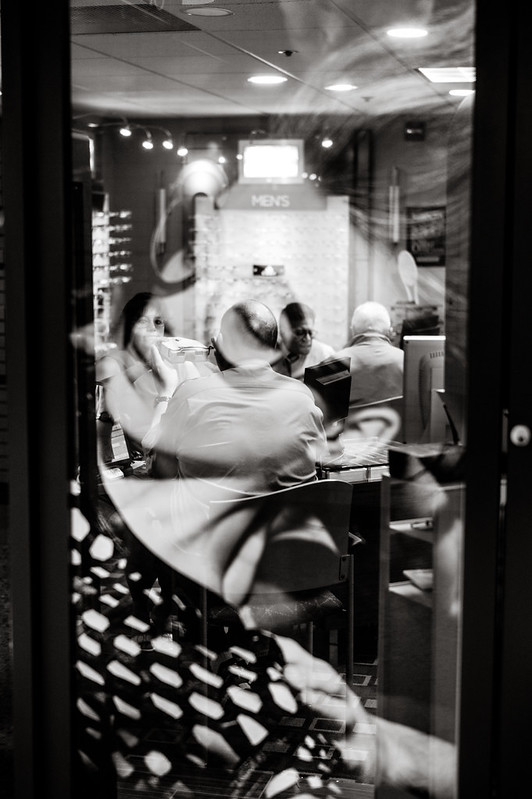
I call it E(ye)nigma.
 
E(ye)nigma, by Reed A. George
Leica Monochrom, 50mm f1.4 Summilux ASPH. lens
iso 1250, f2.4, 1/125 sec.
 
What do you see in this image? I hope you'll see two very different images if you look at it from a distance (or with you eyes squinted a little), and then look close up at some of the details.
 
It's a complicated, busy composition. I know that. That is part of why it works for me.
 
DMC-365.blogspot.com

Tuesday, August 11, 2015

Summer

 
Summer, by Reed A. George
Pentax MX, SMC Pentax 50mm f1.7 Lens
Kodak 400 Color Film
Processed by The Darkroom (thedarkroom.com)
 
Not sharply focused, not the best "bokeh," this shot just says "summer" to me. That is good enough for me.
 
DMC-365.blogspot.com


Wednesday, July 15, 2015

Another Person Who Appreciates the Zeiss ZM Sonnar 50mm f1.5 Lens

 
by Reed A. George
 
The Zeiss Sonnar 50mm f1.5 lens engenders a lot of debate in the photo community. Acknowledged by Carl Zeiss as an updated build of a classic Sonnar design, it does not have all the technical performance of say a modern Leica Summilux. It does have character. I own both lenses, and love them both. But, the Sonnar has more character than the Summilux. If I want near perfection, I use the Summilux. If I'm willing to take a chance and maybe make something more unique, I use the Sonnar.
 
(Click Here) to read an account of using the Sonnar on the blog DearSusan. I think it's nicely done.
 
Thanks to my friend Bill for alerting me to the DearSusan blog!
 
DMC-365.blogspot.com


Monday, September 29, 2014

Watermelon Park Fest 2014 - Mandolin Players Extraordinaire!

It's Sunday, and I just returned home at 2:30 AM from my favorite music festival of this and every year, Watermelon Park. I've been attending for several years now, and it's a big party with so many of my friends, I look forward to it all year long.
 
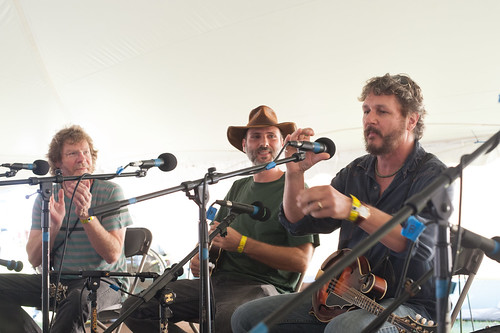
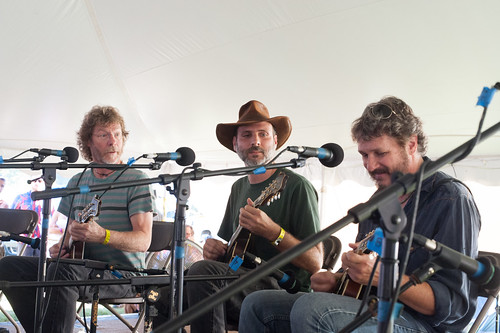
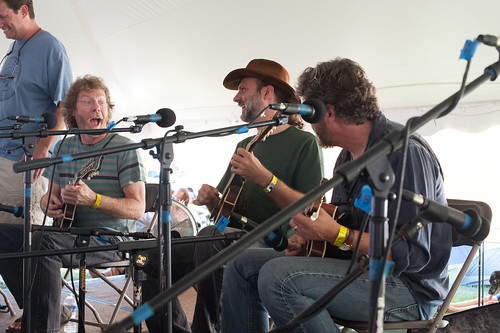
I'm pretty wiped out today, but thought I'd share a few images of a workshop of three of the world's best mandolin players - (left to right) Sam Bush (Sam Bush Band), Danny Knicely (Furnace Mountain Band), and Drew Emmitt (Leftover Salmon). Check them out.
 
 
These guys were great, sharing several tunes and lots of funny stories, like how Sam was accosted by several "locals" back in the early seventies while attending the festival. The nicest thing they had to say to him was that they were going to cut off his hair. Luckily, Sam escaped unharmed and came back some 40 years later.
 
I was right at the edge of the stage, shooting with my Nikon D700 and 50mm f1.4 AF-D lens. Being held in a big white tent, the background light was much brighter than that on Sam, Danny, and Drew's faces. I simply used the spot meter setting in the D700 to get the exposure right, and then it was a matter of catching a few moments and interactions. What a blast!
 
DMC-365.blogspot.com
 

Tuesday, July 29, 2014

The Instant It Happened - Eastern Market Flea Market, DC

 
The Instant It Happened, by Reed A. George
Leica M9, Leica Summilux 50mm f1.4 Aspheric Lens
iso 400, f8, 1/750 sec.
 
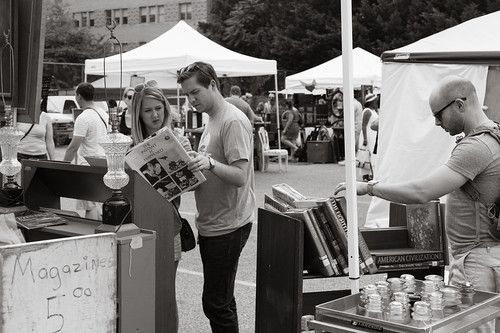
My friend Charlie and I visited Eastern Market in Washington, DC this weekend. The flea market there is an old standby location for getting some community in the city.
 
This shot shows a young couple at the book/magazine stall, looking at an Associated Press photojournalism compilation called The Instant It Happened. It warms my heart to see people interested in real books with real photographs, black and white even, in them. See my link below if you're interested in the book.
 
Charlie lent me his 50mm Summilux Aspheric for the day, which is what I used for this shot. That lens is a beast. Heavy, sharp as a tack, very nice.
 
DMC-365.blogspot.com


Saturday, April 5, 2014

Nikkor 5cm f1.4 Rangefinder Lens on Leica M9

I mentioned that I'd purchased a very nice old Nikon S rangefinder camera, Nikkor 5cm f1.4 lens, and Amedeo adapter to mount the lens on my Leica M9. Here are some quick test shots to show what that Nikkor lens can do on the M9 body. All of these are jpegs right out of the camera, no editing.
 
First, I shot these three shots at the same exposure, but at three different f-stop settings (f1.4, f2, f2.8) to show sharpness and depth field.
 
Nikkor 5cm f1.4 at f1.4, 2, and 2.8
 
At this size, the most obvious effect of closing down the aperture is eliminating vignetting (darkening around the edges of the image). This lens vignettes quite significantly at f1.4. It clears up pretty well by f2.8.
 
How about sharpness? Here are crops of the same three shots, showing focus at the three f-stop settings:
 
 
Crops at f1.4, 2, 2.8
 
I think it's pretty sharp, even wide open. By f2.8, it's very sharp.
 
But, of course, none of that matters too much. If I was going to ultimate sharpness, a modern lens would be the best bet, not a lens from the 1950s. What really matters is whether or not I like the look the lens produces. Well, I'm not sure yet. But, here's an early hint:
 
 
Just a Quick Shot
 
This shot was also made wide open at f1.4. I'm definitely looking forward to shooting some more with this lens. I also need to explore how it renders color. I'm also interested in seeing how it does on the Nikon film body it was designed for.
 
DMC-365.blogspot.com


Friday, April 4, 2014

Nikon Rangefinder - I Finally Bought In

I have sworn off owning any Nikon rangefinder cameras, since it means yet another lens mount system. However, I've always wanted to try one. Not too long ago, I talked myself out of buying a Nikon S3 2000 set, which was in mint condition. A reintroduction of the classic S3 by Nikon in the year 2000, this would have been one gorgeous camera. But, I didn't want a collector's item; I wanted a Nikon rangefinder that I could take out and shoot.
 
Well, I recently found a very nice Nikon S with the legendary Nikkor 5cm f1.4 rangefinder lens for a reasonable price.
 
Nikon S
Image Source: http://en.wikipedia.org/wiki/Nikon_I,_M_and_S
 
 
Mine happens to be one of the rare "8 digit serial number" cameras. Interesting story. Nikon started the Nikon rangefinders with a serial number of the form 609XXXX, which allowed them to go up to camera number 6099999 before they had to change. Well, they liked the 609 prefix, so for about 1230 cameras (mine's number 60911216), they just added an eighth digit. So, mine's one of about 1230 cameras of this particular series.
 
(Click here) to read about the S and the 8 digit cameras.
 
I'm part of the way through my first roll of film in the S. At first, I felt that the focusing patch was a little squinty as compared to my Leicas, especially my Leica Ms. Now that I've used it a little, I don't notice much of a difference. I think I was simply trained on the Leica and the Nikon is different, not worse, especially compared to Barnack (screwmount) Leicas.
 
Of course, I found it necessary to buy an adapter so that I can use the Nikkor 5cm f1.4 (Sonnar design) on my Leica M bodies. I bought one directly from Amedeo in Venezuela.
 
(Click Here) to find Amedeo on the web.
 
Amedeo responded to my email quickly. He told me that the economy in his country is very bad right now, and finding shops to chrome plate his adapters has been an issue. He sold me one with minor cosmetic issues for a discounted price. It arrived in just a few days, free Fedex shipping. Amedeo is working on setting up his own chroming process, so maybe this problem will go away soon.
 
I've now tested the Amedeo adapter on my Leica M9, and found the focus to be spot-on with the Nikkor 5cm lens, even wide open at f1.4. Note that these adapters are for Nikkor rangefinder lenses of 5cm (50mm) or longer focal length. I'll share some test shots from the Nikkor on the M9 in my next post.
 
So, I broke my own rule and decided to give the Nikon rangefinder a try. Even if I decide I don't like the camera, I'm pretty impressed with what the lens produces on my Leica M9.
 
DMC-365.blogspot.com


Saturday, November 16, 2013

November's Whole Lotta Leica (WLL) Lens - Canon LTM 50mm f1.4

Canon 50mm f1.4 Lens in Leica Thread Mount (LTM)
ca. ~1972
 
This month's lens is the Canon 50mm f1.4. Some refer to this lens as the "Japanese Summilux." I won't deliberate on whether that's deserved or not. I will say this is one sharp lens. I guess I wouldn't be surprised if it competes well with a Leica Summilux 50mm f1.4 from the same era. I don't have a 50mm Summilux, so I can't say for certain.
 
I have to use a LTM-M mount adapter to use this on my M9; that's no problem at all. They work beautifully, and I've never had a problem with focus shift or anything else when using the adapters.
 
This lens has an odd filter size of 48mm. When I used it on my Leica M8, which required a UV/IR filter, I bought a step-up ring, which allowed me to use a 49mm (much more common size) filter. I still have the adapter on there today, so that I can use a 49mm lens cap. The one I have on there now is a Pentax cap. So, I have a Canon lens mounted to my Leica M9 body, with a Pentax cap. Quite the mix.
 
My copy is a version II, and was made sometime around 1972. I bought it for around $300, and they normally go for $300-$400 on the used market.
 
The original Canon hoods for these lenses are difficult to find. I have seen them listed for $100 or more, which is simply ridiculous. Last year when I went to Japan, I went to a weekend flea market. There was not a lot of camera gear there, and what I did find was expensive. However, I did find a little leather case marked "Canon" at one of the stalls. Opening it up, I could not believe my eyes - there was the exact hood that I needed. One thousand yen (~$13 at the time) later, and it was mine. Very lucky.
 
Anyway, I'll use this lens as my standard lens in November and share the results with you. Results coming soon!
 
DMC-365.blogspot.com


Friday, July 5, 2013

Whole Lotta Leica Lens for July - Coated Summitar 5cm f2 Collapsible

 
My Coated Summitar
 
This month, I will shoot the Summitar 5cm f2 on my Leica M9. The Summitar replaced the earlier Leica Summar 5cm f2 in 1939, and was manufactured until 1953. I have two Summitars. This one is a late model (1951) with coated lens elements. The other is an early uncoated model. I love them both, but for different reasons.
 
The Summitar was the penultimate 50mm f2 design, coming directly before the benchmark Summicron. (Click Here) to read about the first version Summicron, which was my Whole Lotta Leica (WLL) lens for April. You can see lens and results posts for all of my WLL selections so far if you (Click Here).
 
Back to the Summitar. This is a collapsible normal length lens, and was used by countless Leica photographers as their fast lens, and many times only lens on their camera. It is a solid performer, and I think rivals the Summicron in many ways. My coated version is great for color or black and white.
 
This particular lens came with a Leica IIIF I both several years ago.
 
On the M9, I will have to be careful not to collapse the lens, as it can interfere with the sensor. Obviously, I'll also have to use an M mount adapter, as this is an LTM lens. Neither of these is a real issue, and I'm sure I can make some nice images with the Summitar.
 
In future months, I'll shoot the earlier Summar (which is one of my all-time favorite Leica lenses), and a more modern Summicron. So, we have plenty more to look forward to.
 
Wish me luck in getting some time to get out and shoot in July!
 
DMC-365.blogspot.com


Friday, April 26, 2013

Am I the Only One Who Wants My Fixed Lens to be 50mm?

 
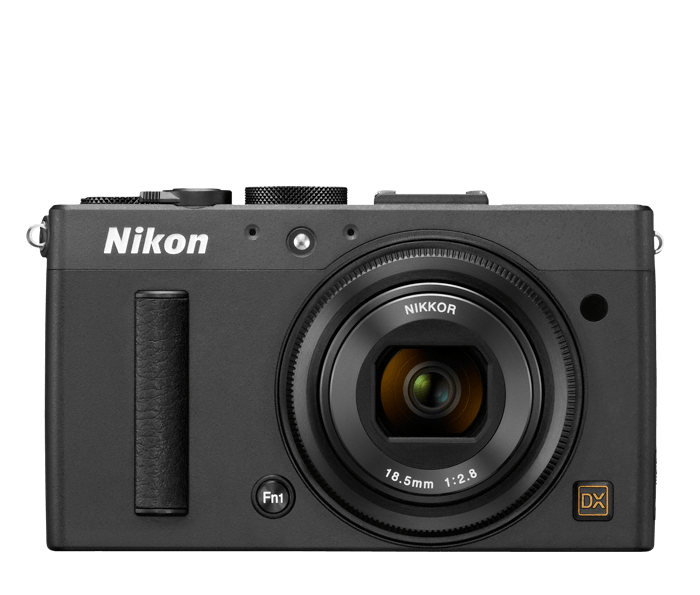
Nikon Coolpix A

Image Source:http://www.nikonusa.com/en/Nikon-Products/Product/Compact-Digital-Cameras/26423/COOLPIX-A.html

 
I like where the digital camera leaders are going - almost. I love the idea of a dedicated, fixed lens compact camera with a large sensor and great image quality. The good news is that many camera manufacturers are making them now. My favorites so far are the Leica X2 and Fujifilm X100S. Others include offerings from Sigma, Sony, and now Nikon and Ricoh.
 
When I think of these types of cameras, my thoughts go to the excellent Olympus, Canon, and Konica fixed lens rangefinders of the past. I would really love to see something equivalent to an Olympus SP, for example.
 
(Click Here) to see what the Olympus SP film rangefinder camera was like on Andrew Yue's site.
 
Now here's the rub, for me. All of the new fixed lens cameras have wide angle lenses, 35mm equivalent field of view, or wider. For me, the 42mm lens on the old Olympus SP was a bit wide, but actually a very good compromise between what I think of as a "standard" focal length of 50mm, and the admittedely popular 35mm lens. In fact, my 40mm Minolta Rokkor lens for Leica M mount cameras is one of my favorites.
 
If I'm going to buy a fixed lens camera, the lens really needs to serve most of my purposes. For me, and yes, it's personal preference, a 50mm lens would be best. I'm willing to be open-minded and take something as wide as 40mm, and actually would embrace that focal length.
 
When I saw the first announcement of the Nikon Coolpix A, I was excited. In my experience, Nikon does a great job of handling sensor noise (my Nikon D700 DSLR is the best low light camera I have), and I'm familiar with the menus. When I read that the A has an APS-C sensor and 28mm f2.8 lens, I got excited. I thought, hmm - 28mm X ~1.5 crop factor = 42mm equivalent. Great! Then I saw that it's actually an 18.5mm lens, and 28mm equivalent field of view. Really? I remember when 28mm was a rather extreme wide angle lens, one that was probably in your bag but sure didn't get the usage that a 35mm or especially 50mm lens did. This is way too wide to be a general purpose, fixed lens camera, at least for me.
 
Ricoh has also just come out with a new GR digital model - again 28mm equivalent field of view.
 
I think part of what's driving this trend is lens size. While the camera companies are trying to provide large sensors for their compacts (which is great news), they want to keep the lens size as small as is practical. I understand that. I also think this may be why some are stopping at a maximum aperture of f2.8, which I think is a little slow for a fixed lens camera. But, I still really want a litle longer lens, and fast, please.
 
I mean, let's face it, I never could really fit that Konica S1.6 with 45mm f1.6 lens (a 1970s fixed lens film rangefinder that produces incredible images) in my pocket.
 
DMC-365.blogspot.com


Sunday, February 3, 2013

Skeletons From The Closet - January Results Post #1 - Pentax K1000

I managed to get out a few different times with the my SFTC camera for January - the Pentax K1000. This is the first of a few posts to share the results with you.
 
My first outing was to the Udvar-Hazy Air and Space Museum. I'll start with a couple of shots made there.
Studying the Rockets, by Reed A. George
Asahi Pentax K1000, SMC Pentax 50mm f1.7 Lens
Kodak Tmax 400 Film
 
The fast f1.7 lens did a nice job here in the Udvar-Hazy museum, where I find photography to be quite challenging. First, there is an incredible number of historic aircraft and spacecraft jammed into a single giant hangar. I mean everything from the Enola Gay (yes, the actual B-29 that dropped an atomic bomb on Hiroshima, Japan) to a space shuttle. That makes it very difficult to shoot any particular aircraft without showing parts of neighboring ones, likely from different eras or locations. Second, the lighting is rough there. So, I decided to focus on people interacting with the museum. People are always a safe bet.
 
Gazing Up at the Space Shuttle's Thrusters, by Reed A. George
Asahi Pentax K1000, SMC Pentax 50mm f1.7 Lens
Kodak Tmax 400 Film
 
For my next outing, I took the K1000 to the National Portrait Gallery in Washington, DC. I've posted a picture or two from there recently, as part of my Whole Lotta Leica series.
 
This is a stairway in the gallery:
 
National Portrait Gallery, by Reed A. George
Asahi Pentax K1000, SMC Pentax 50mm f1.7 Lens
Kodak Tmax 400 Film
 
A main attraction for me at the gallery is the indoor courtyard. Naturally lit, it is also warm in winter. Warm enough that kids can play in the water, as long as their parents are willing to stay long enough for them to dry off before again braving the winter weather.
Playing in the Courtyard, by Reed A. George
Asahi Pentax K1000, SMC Pentax 50mm f1.7 Lens
Kodak Tmax 400 Film
 
Playing in the Courtyard, by Reed A. George
Asahi Pentax K1000, Pentax 135mm f2.5 Lens
Kodak Tmax 400 Film
 
I switched lenses, using the Pentax 135mm f2.5 lens for a little more reach. I'm pretty impressed with this lens, which I picked up for a song. I got the 135, a Ricoh 50mm f2 (untested so far, but reportedly a great lens), and a Pentax 50mm f2 for $30. The 135 does not get any love on the forums. But, I'm quite pleased with the results I've gotten so far.
Playing in the Courtyard, by Reed A. George
Asahi Pentax K1000, Pentax 135mm f2.5 Lens
Kodak Tmax 400 Film
 
Of course, manually focusing it fast enough to keep up with playing children is a challenge, as it is will all manual focus lenses.
 
Here is my favorite image from this series:
 
Be Careful, Sister! by Reed A. George
Asahi Pentax K1000, Pentax 135mm f2.5 Lens
Kodak Tmax 400 Film
 
I love how the little girl looks so worried about her sister, judging from her hand gesture. Not sharply focused, but I don't think that takes away from this image.
 
So, how was the experience of shooting the K1000 for a month? Well, you must remember that I grew up with this camera in my hands. So, it felt like going home. I was so comfortable using it, I think that affected how I used it. In the case of the kids at the Gallery, my K1000 got a conversation going with the parents. I sent them some of the pictures, which they assure me are going into their family album. That is rewarding to me.
 
The 50mm f1.7 was always my normal lens. Again, I felt very comfortable using it. The 135mm f2.5 is relatively new to me. It is a challenge to focus well, but when you do, you get nice sharp images.
 
Just carrying around a film SLR draws a lot of looks, and some comments. All positive, like "Hey, a K1000! I had one of those! Maybe I still have it, even."
 
The battery (required for metering but not for shooting in this manual camera) lasted the whole month with no issues. It will still be fine the next time I pick the camera up, too.
 
So, I had a great time with the K1000. In fact, I hesitate to put it down and move on to another camera. But, that's the plan - a different camera from my collection each month of this year. Tomorrow, you'll see the camera I've selected for February - quite a departure from the K1000...
 
I have a couple more posts of results from January to write up, so more to come!
 
DMC-365.blogspot.com


Wednesday, January 30, 2013

Fabien Penso's Tour Through India, With Leica

 
By Fabien Penso
Image Source: http://blog.leica-camera.com/photographers/interviews/fabien-penso-an-indian-carnet-de-passage/
 
On the Leica blog, there's a great story of Fabien Penso, who traveled India with a Leica M9.
 
Fabien shoots up close to people, and focuses pretty much exclusively on photographing people. The shot above exemplifies what I think of when I think candids shot with a Leica.
 
Fabien typically shoots a 35mm lens, sometimes a 50. To him, a 50mm lens feels a little telephoto. Interesting.
 
Fabien also feels that you should not have to make equipment choices when traveling, so usually carries a single lens, maybe two.
 
I like this approach. I need to learn from it.
 
(Click Here) to read Fabien's full story on the Leica blog.
 
DMC-365.blogspot.com
 

Sunday, December 23, 2012

Beautiful Series of Street Photos from Morocco - Daniel Belenguer

Copyright Daniel Belenguer (Used by Permission From the Artist)
Leica M6
Leica M6
Image Source: www.amazon.com


I love a post that I can learn from. Photographer Daniel Belenguer gives a very nice written description of a holiday he recently took to Morocco. He went extremely light on equipment - a single Leica M6, 35mm lens, light meter (his in-camera meter is busted), and 25 rolls of film. He got some amazing images, in my opinion.
 
(Click Here) to read Daniel's post and see all of his pictures from the trip.
 
I envy those who can go so light on equipment and come back with so many successful images. For myself, if I went somewhere like Morocco, I would not be able to live without having at least one backup camera with me. Nowadays, that could be a very small camera, like the Lumix DMC-LX7. But, I'd need at least that.
 
Then I think about lenses. If I had to pick one lens for a trip like this, it may well be a 35mm, as Daniel did. However, I am really better oriented to the 50mm focal length. I've limited myself to one lens many times. If I picked the 35, I usually longed for a 50. If I chose a 50, there were moments when I wished it was a 35. Perhaps this is why the 40mm Rokkor is such a beloved lens on my Leica CL. I guess I'm saying that if I have to pick one lens, the 40mm Rokkor f2 (manufactured in a partnership between Leica and Minolta in the 70s) might be it.
 
In fact, on my recent trip to Barcelona, the only non-Lumix gear I took was the Leica CL and 40mm Rokkor. I've got my processed film back from The Darkroom (great mail-in film processing service, www.thedarkroom.com), and need to get to work on a post from those rolls. I'm quite happy with what I see in the scans. You'll see a post of those very soon.
 
When I look at Daniel's images, I see that 35mm was the appropriate focal length for him. There are a few cases where I would want to be a little tighter in composition, which the 50mm would have done perfectly. Overall, though, I would say more of his images fit the 35mm field of view. So, he made the right choice in my humble opinion.
 
Nice job, Daniel. Thanks for sharing your results with the world. And thanks for giving permission to use a photo or two.
 
 
DMC-365.blogspot.com
 
DMC-365.blogspot.com