Showing posts with label low noise. Show all posts

Saturday, September 19, 2015

So, How Is the Nikon D810?

I'm still getting my feet wet with this camera, but check this out:
 
Great Blue Heron, Ardea herodius, by Reed A. George
Nikon D810, Nikkor 200-400mm f4 AF-S VR G Lens
iso 1600, f5, 1/2000 sec.
 
The detail in the print I made of this shot is just stupendous. iso 1600? Not a problem at all.
 
At 6400, I do see image quality start to drop off, but still quite impressive. At 1600, it's lovely.
 
DMC-365.blogspot.com
Tuesday, August 4, 2015

Nikon D810 and Df - The Best Combination Available Today?

Well, I've been thoroughly enjoying my Nikon Df for some time now. The low light capabilities of this camera are spectacular.
 
I've recently purchased a Nikon D810, specifically to take advantage of the increased resolution (36 megapixels) for nature photography. Mounted on my Nikkor 200-400mm f4 AF-S VR G lens, the D810 should allow me more freedom in cropping, which is always useful in wildlife photography, especially with active species like birds.
 
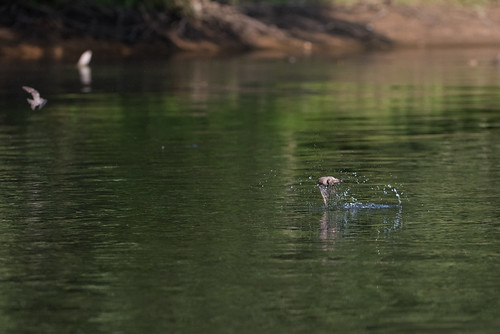
I've only had my D810 out a couple of times so far. One was this morning, shooting birds on a kayak outing. Here's a tightly-cropped shot of a swallow hitting the water surface.
And here's a 100% blow-up (cropped even more).
What I've found so far is that while the D810 does allow significant cropping, it doesn't handle high iso noise nearly as well as the Df. Of course, that's well-known in the Nikon crowd, and makes perfect sense, given the much higher number of pixels crammed into the same sensor real estate as the Df. The shots above were made at iso 1600, and noise is quite visible on my screen, looking at the images in Lightroom.
 
Here's a snapshot of DxO Lab's comparison of the two cameras:
 
Image Source: http://www.dxomark.com/Cameras/Compare/Side-by-side/Nikon-Df-versus-Nikon-D810___925_963
 
As you can see, the D810 wins in overall score, color depth, and dynamic range. But, it performs significantly worse in low light (high iso). Again, no new information here, but it's helping me to form my opinion of this pair of cameras and how best to use them.
 
Basically, the D810 will fill my need for high resolution and cropping ability when shooting wildlife in good light. Or anything else in good light, for that matter. The Df will remain my go-to camera for more challenging lighting situations, and when cropping is not as necessary.
 
So, I think that for me, yes, this is the best combination of Nikon bodies available today.
 
I have to get the D810 out in the field again, and shoot at lower iso settings. I'm sure that's going to really impress me.
 
DMC-365.blogspot.com


Friday, July 31, 2015

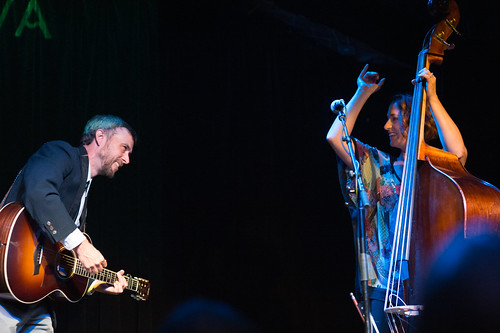
Live Music Concert- Scott Miller at Jammin' Java - Shot With the Nikon Df

Last Sunday (July 19, 2015), I went to a live music show at one of my favorite venues, Jammin' Java, in Vienna. (Click Here) to check out Jammin' Java. They have a very full schedule of interesting shows. Most importantly for this evening, Jammin' Java is indoors. It was still in the 90s and very humid outside, even after sunset.
 
 
Scott is a very interesting guy - professional musician and Virginia cattle farmer. (Click Here) to check out his website.
 
Once again, my Nikon Df is the master of darkness. Shooting with my favorite prime lenses (28mm f1.8 AF-S, 50mm f1.4 AF-D, and 85mm f1.8 AF-D), I was able to shoot at either 1/125 or 1/250 of a second and still have enough depth of field to be useful. This meant iso values of 3200 or even 6400 - no problem at all for the Df. I love this camera.
 
DMC-365.blogspot.com
 

Friday, June 19, 2015

Fire! At the Leesburg Car Show

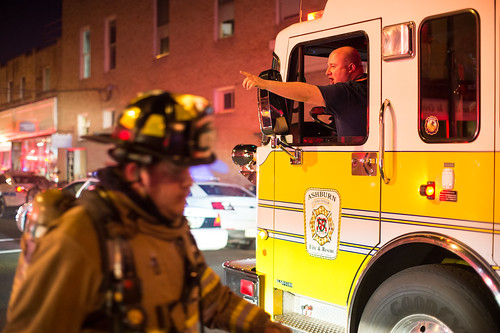
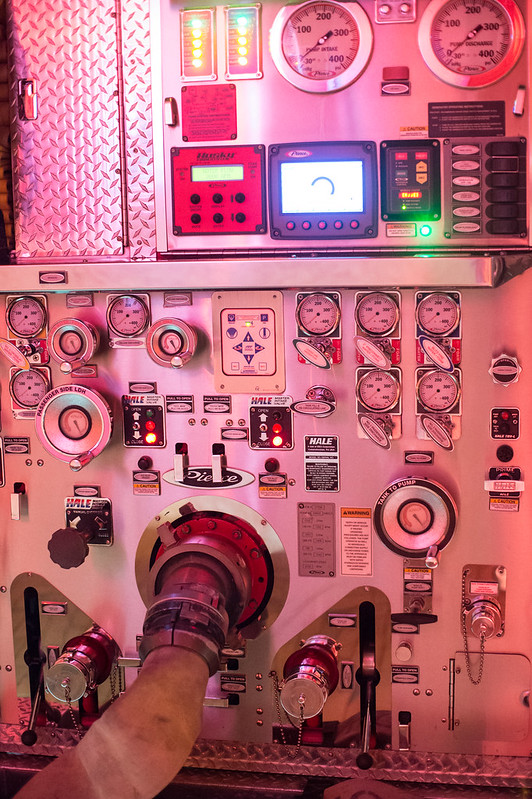
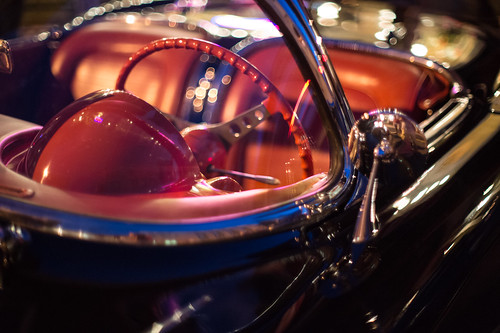
Yesterday, I posted some images I took after dark at the car show in Leesburg, Virginia. Just as we were leaving, one of the business buildings in town caught fire. More emergency vehicles than I knew existed in the area converged for the fun. Here are some images I made of the event, using my Nikon Df and Nikkor 50mm f1.2 AIS lens.
 
This is my favorite shot of the event. I love how sharp the firefighter's face is, the police car and fire truck in the foreground, and the burning building and ladder crew in the background. This one deserves a nice print.
 
Here are some other images I made in the few minutes we hung around.
 
 
My understanding is that luckily no one was injured in this fire. I feel fortunate to have had the Df and f1.2 lens with me; there wasn't much light to work with. I hope these images tell the story well!
 
DMC-365.blogspot.com


Thursday, June 18, 2015

How to Take a Unique Car Show Image? Go at Night!

My friends Dennis Gallus, James McKearney, and I have been frequenting a couple of annual car shows for a few years now. This year, with Dennis moved off to Arizona and James spending more time in Boston, I didn't even know when the Leesburg car show was scheduled. It just so happened that I took my daughter into town to enjoy the evening air and came upon it, just after dark.
 
These are some of the most memorable shots I've ever made there, and it's in large part due to the darkness.
 
Night at the Carshow, by Reed A. George
Nikon Df, Nikkor 50mm f1.2 AIS Lens
 
Later on in the evening, we got a surprise, which I'll cover in a future post.
 
DMC-365.blogspot.com

 

Sunday, April 12, 2015

Today's Photos From Japan - Grill Master

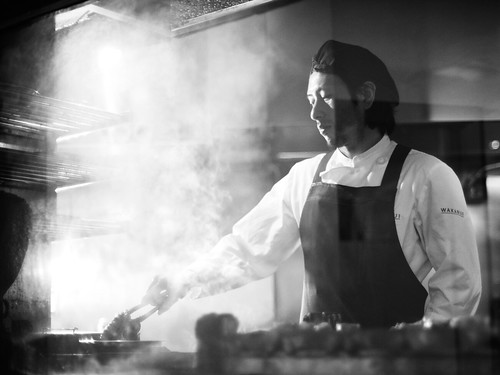
Food is always one of the highlights of visiting Japan. We ate lunch at an amazing restaurant in Tokyo called Wakanui, which features grilled meats. Here's the grill master at work:
 
Grill Master, by Reed A. George
Nikon Df, Nikkor 50mm f1.2 AIS Lens
iso 3200, f1.4, 1/250 sec.
 
The grill master was very impressive to watch. He used a metal probe to check the internal temperature of the meats. An electronic thermometer? Certainly not. He would insert the probe deep into the meat, then press it against his lower lip to sense the temperature with his own neurons. I like that.
 
Grill Master No. 2, by Reed A. George
Nikon Df, Nikkor 50mm f1.2 AIS Lens
iso 3200, f1.4, 1/250 sec.
 

I have found myself wondering why I carry any camera other than my Lumix LX-100 when traveling. These photos are part of the answer. Shooting at f1.4 at 50mm focal length, and getting these kind of results at iso 3200 are the sole domain of the Nikon Df in my camera set. These are jpegs straight from the camera, just converted to black and white and cropped in Snapseed, on my iPad.

 
DMC-365.blogspot.com
 

Tuesday, April 7, 2015

Tokyo Nightlife, With the 50mm f1.2 AIS Lens

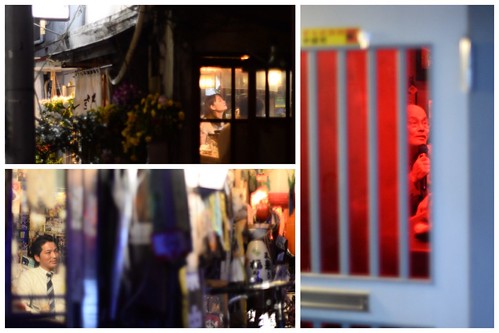
Tokyo Nightlife, by Reed A. George
Nikon Df, 50mm f1.2 AIS Lens
 
Here's a little montage of images I made while walking one of the backstreets near Monzennakacho Station in Tokyo. The 50mm f 1.2 lens not only allowed me to capture the images in near complete darkness at reasonable shutter speeds, it also allowed me to use selective focus to narrow the viewer's attention to an individual's face. I shot each of these from outside the bar's window. All of the surrounding distractions blur into the foreground or background.
 
That said, manual focusing was quite difficult. Even with the very wide aperture and a Nikon 1.2x magnifier on the Df, I missed quite a few shots. Great fun, though!
 
DMC-365.blogspot.com
 

Friday, March 27, 2015

Master of Darkness - My New Lens

 
I've just sprung for a new lens for my Nikon kit. It's the Nikkor 50mm f1.2 AIS manual focus from Nikon. They've been making it since 1981, and they still make it today.
 
I bought my very late production unit from my friend, Alain, for a great price. It's truly like new. It's also the fastest lens I own.
 
I'm hoping that it will be the perfect extreme low light lens for my Nikon Df. Given the Df's high iso capabilities, I should be able to do some incredible things with this combination.
 
I can already tell that it's tough to focus, though. The depth of field at f1.2 is just plain razor thin. But, that's the whole idea of a lens with an incredibly wide maximum aperture.
 
This lens will be going with me to Japan this spring. I can't wait to try it out in the Tokyo night time!
 
DMC-365.blogspot.com
 

Saturday, March 7, 2015

Some Old Friends Play Purcellville

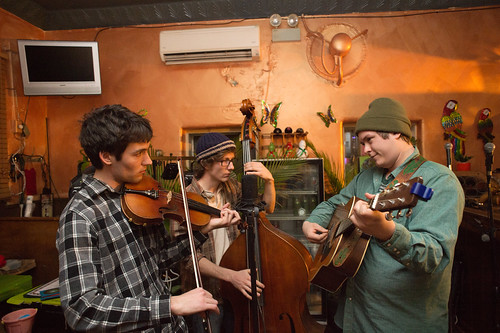
Some of my friends in bands got together for somewhat of a reunion last night in Purcellville, Virginia. I knew most of the people in the audience, as well as in the bands.
 
First, Jake and the Burtones opened the show.
Jake and the Burtones, by Reed A. George
Nikon Df, Nikkor 24mm f2.8 AF-D Lens
iso 3200, f3.5, 1/125 sec.
with SB-600 flash and Gary Fong diffuser
 
Then, Timmy (Tmoney) Griffin and his band SpaceCanoe took over. Tmoney has moved to North Carolina for college, so we don't get to see him so often. A true creative, Timmy has been busy writing new songs.
 
TMoney, by Reed A. George
Nikon Df, Nikon Series E 100mm f2.8 Lens
iso 3200, f2.8, 1/60 sec.
with SB-600 flash and Gary Fong diffuser
In addition to his original tunes, Timmy and SpaceCanoe played some carefully-selected covers, including one of my favorite Grateful Dead tunes, "Brokedown Palace." I actually requested that song years ago, and Timmy worked it out for me! Awesome.
 
SpaceCanoe, by Reed A. George
Nikon Df, Nikkor 50mm f1.4 AF-D Lens
iso 3200, f4, 1/60 sec.
with SB-600 flash and Gary Fong diffuser
This was a very tough show to shoot, even with my shoot-in-the-dark Nikon Df and 50mm f1.4 lens. Using the Nikon SB-600 and Gary Fong light diffuser saved the day (night). I was quite pleased with the results, given that the stage lighting was so poor (non-existent).
 
I'm especially pleased with the second image, which I made with my recently purchased, inexpensive, Nikon Series E 100mm f2.8 lens. Manual focus, in the dark. That's right. I'm proud of it. This lens will be in my travel bag in Japan; it's very sharp and oh so light compared to the also amazing 105mm f2.5 AIS Nikkor.
 
DMC-365.blogspot.com
 

Thursday, January 29, 2015

Kitchen Door

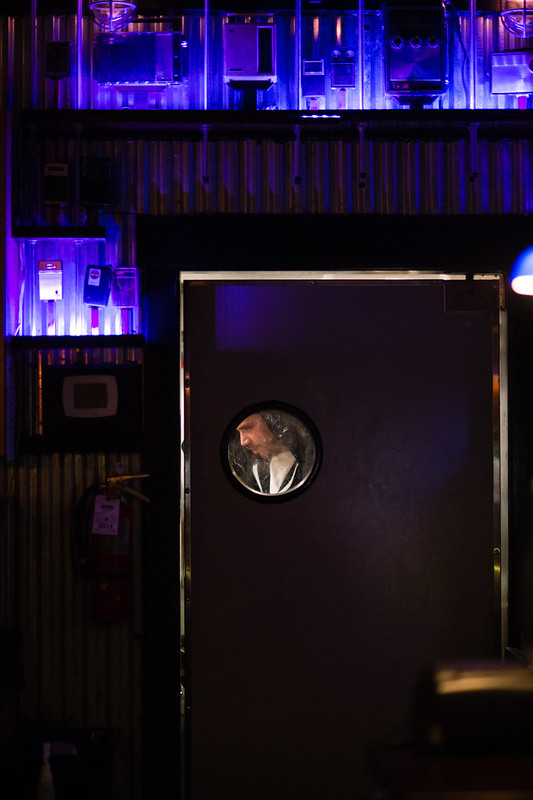
Last night, I went to a live music performance at Jammin' Java in Vienna, Virginia. I caught this scene out of the corner of my eye, quickly mounted the Nikkor 85mm f1.8 AF-D, and captured it.
 
Kitchen Door, by Reed A. George
Nikon Df, Nikkor 85mm f1.8 AF-D Lens
iso 7200, f2, 1/125 sec.
 
It's absolutely amazing how well the Nikon Df does at high iso settings. In fact, I find that much of the time I actually use Auto-ISO settings, since I really don't have to worry about digital noise. In this case, that's what I did. I set the camera to spot meter, set the shutter speed to 1/125 with the camera in Manual exposure mode, the f-stop to f2, and just trusted the camera to pick the correct iso. The sensor in the Df gives me nearly complete freedom in these types of shooting situations.
 
DMC-365.blogspot.com

 

Saturday, November 22, 2014

Lumix DMC-GX7 for Live Music

I've been focused on other cameras lately. So many great cameras out there, so little time to shoot them.
 
I read an interesting piece on Steve Huff's blog about using the Lumix GX7 for live music.
(Click Here) to read it, and see some nice GX7 images from bars in Amsterdam.
 
Here are a couple of shots of my friends Jake and the Burtones, shot with my GX7.
 
Jake and the Burtones, Plus Melissa, by Reed A. George
Panasonic Lumix DMC-GX7, Bower 7.5mm Fisheye Lens
iso 3200, f4 (or so), 1/50 sec.
 
 
Burtones, by Reed A. George
Panasonic Lumix DMC-GX7, Lumix 14-42mm f3.5-5.6 Aspheric Series II Zoom
iso 6400, f3.5, 1/100 sec.
 
The GX7 does pretty well in low light, even at iso6400. Not like a full frame Nikon, of course, but respectable. And so much easier to lug around.
 
DMC-365.blogspot.com


Wednesday, October 15, 2014

Nikkor 20mm f1.8 ED Lens - My New Wide Angle for Concerts?

Well, the engineers at Nikon are once again testing my resolve. My go-to camera for low light concert photography is the Nikon D700. The advent of the amazing Nikon DF has had me debating with myself for months now - with the retro design, relatively small size, and D4 sensor that trades resolution in favor of low light noise performance much as the D700 did two sensor generations back, the DF seems like a very natural fit for my style of shooting, especially in dark clubs and concerts.
 
Recently, I've been shooting really wide angle on my D700 at shows. My 20mm f2.8 AF-D lens does a nice job for me, but f2.8 just isn't really that fast.
 
Will and Larry, by Reed A. George
Nikon D700, Nikkor 20mm f2.8 AF-D Lens
iso 1600, f2.8, 1/250 sec.
 
Now, Nikon has announced a new product, the AF-S Nikkor 20mm f1.8G ED lens. An FX lens, meaning that it covers the full-frame sensor of the D700 or DF, this lens also has ultra-fast AF-S focusing and low dispersion ED glass. I don't really like "G" lens design, as it lacks an aperture ring, which means I can't use G lenses on my old film cameras. But, G design is the rule rather than the exception in Nikon's new lenses, so I'd just have to live with it.
 
Nikon
Image Source: http://www.nikonusa.com/en/Nikon-Products/Product/Camera-Lenses/AF-S-NIKKOR-20mm-f%252F1.8G-ED.html

I have "enabler" friends who would say that the choice is clear. I simply need to buy a new DF with 20mm f1.8 lens and be done with it. It's not that simple a decision for me, especially when I have less time than I need to shoot the camera gear I already have. I suppose it's good to always have something in mind that could improve my photographic experience. Thanks for that, Nikon.
 
DMC-365.blogspot.com


Friday, February 7, 2014

Nikon Df Real User Experience - Wayne Goodman on GetDPI

Image Source: http://www.getdpi.com/forum/nikon/49999-four-days-nikon-df-andalucia-spain.html
 
The new, retro-styled, D4 sensor-equipped Nikon Df is extremely attractive to me. Wayne Goodman has posted his pictures and experience in shooting his new Df in Andalusia, Spain.
 
(Click Here) to read his post on GetDPI forums.
 
Wayne comments on the fact that while others find the array of knobs on the Df a little challenging, the iso knob is the only one he finds inconvenient. One of the great techniques on a camera that has really, really good high iso performance is to set it on Auto-ISO and stop worrying about it. Then, you can go into Manual exposure mode, for example, and simply pick the f-stop and shutter speed you want, letting the camera adjust iso to get the exposure right. Wayne did this, and was very happy with the results. Even on the couple of occasions where the camera had to go to iso 12,800 (!), he was mostly satisfied with the result.
 
He also finds that he really prefers the optical finder to the now-common electronic viewfinders (EVFs) of today. He comments that the "quiet" shutter mode is pretty effective. While the focus system on the Df is not Nikon's highest technology, he found no fault in it.
 
The shots he shares in the post and in his flickr page were made with the Nikon 24-85 zoom. Wayne and I share the same opinion about this lens. Extraordinarily convenient when you don't want to change lenses, the image quality simply doesn't match great Nikkor primes. Oh well, you can't have everything in just one lens.
 
I continue to be interested in the Df from afar. If my D700 were to die (unlikely), that would be my replacement. For now, I'm holding and watching (and drooling just a little).
 
DMC-365.blogspot.com


Saturday, December 28, 2013

Too Much Emphasis on Low Light? Look for Good Light

 
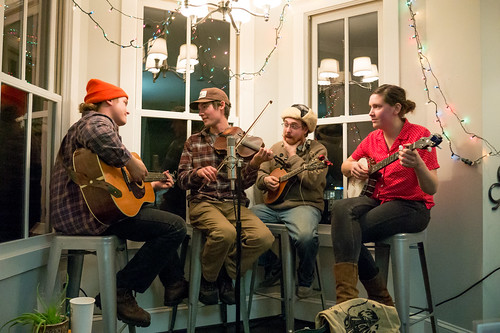
Key West Cemetery, by Reed A. George
Lumix DMC-GX1
 
It really is easy to get caught up in technical capabilities of our cameras, focusing on what they can do in near darkness, rather than looking for good light, wherever it may be found. Frequently, the low light that necessitates super high iso and low noise performance isn't really that good.
 
Why am I thinking about this? I read a post along these lines on prosophos.com.
 
(Click Here) to read that post.
 
It reminds me how much we did (and some of us still do) with film cameras, where the realistic limit of iso is about 400, okay maybe 800 or 1600 by pushing the film. Delta 3200 was always so grainy at that iso setting, I always used it at 1600 max. Today, a digital camera that shows noise at 1600 is looked down upon by most.
 
Anyway, this inspires me to worry less about low light, f1.4, and iso 6400. I'll get out and look for some good light.
 
DMC-365.blogspot.com


Thursday, October 24, 2013

Sacrilege! The M9 is Better Than the New M (240)?

 
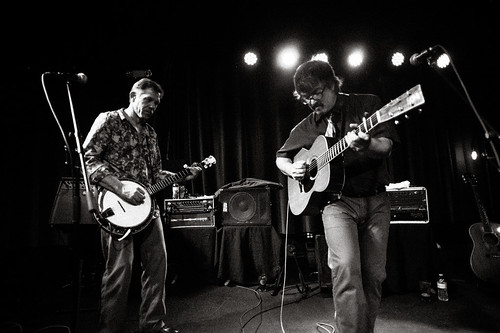
Forest Art, by Reed A. George
Leica M9, Carl Zeiss Sonnar 50mm f1.5 Lens
 
Always on the lookout for new blogs, and especially those focused on Leica, I recently came across Prosophos.
 
Peter, the blog's host, is of the opinion that the image quality from Leica's CCD cameras, specifically the M9, is better than the new CMOS sensor in the M240. I am not necessarily of the same mind, but I do love my M9, and for very different reasons than I love my CMOS-based Nikon D700, for example.
 
(Click Here) to get started reading Peter's thoughts on the Leica CCD vs. CMOS topic.
 
Better and worse are very absolute terms. In art, absolute terms can be dangerous. To be fair, Peter is careful not to use them too much in his discussions.
 
I don't necessarily think either the M9 or M240 are better than each other. If you're shooting in the dark, or need to shoot video, the M240 is better. If you like the look of CCD images without AA filters, the M9 is better. If you're like me and still feel the weight of the investment you've made in the M9, guess which one is better?
 
One more thing, which I feel more strongly about, is the touting of all of the new features on the M240. Let's face it, folks, CMOS low light performance and video capability have been around for years now, and in a wide range of cameras, including other full-frame ones. Just not in Leica rangefinders. So, I'm not wowed by those features. And for me, the thought of an add-on electronic viewfinder (EVF) for a Leica rangefinder is just mixing two very different worlds. I'm completely at home with the add on EVF on my Micro 4/3 camera. Not so with the most pure of cameras in my opinion, the Leica rangefinder.
 
What would change my mind about the value of live view and add-on finders for the new M? Well, if I had a collection of R lenses, which can now be adapted and brought back to life, that would be a start. I'm not in that situation.
 
So, as always, different horses for different courses. And to end it positively, I still feel that my M9 is a camera that has no peer - not in my collection or anyone else's.
 
DMC-365.blogspot.com
 

Friday, August 2, 2013

Finally! The Panasonic Lumix DMC-GX7 is Announced and Looks Great!

 
Image Source:
http://www.dpreview.com/news/2013/08/01/panasonic-reveals-lumix-dmc-gx7-enthusiast-mirrorless-camera
 
I have not been using my Micro 4/3 camera system much at all this year. Focusing more on Leica and film cameras, I just have not had the time to use it all. I did invest in a DMC-GX1 for a pittance earlier in the year, and took it along on a trip to Key West, Florida.
 
(Click Here) to see some shots I made with the GX1 on that trip.
 
The GX1 works very, very well in my hands. But, we Panasonic fans have been waiting for a next generation of GX cameras, bringing the sensors up to date with the state of the art, especially as it concerns high iso performance. Well, it's finally here, or at least announced.
 
(Click Here) to read about it on dpreview.com
 
What are the great features? Well, first, the GX7 reportedly has an all-new sensor with improved signal-to-noise performance. This means that it will indeed perform better at high iso settings (low light), with less noise. The maximum iso setting is now 25,600, though I would bet that the maximum useable setting is somewhat lower than that, if you don't want to deal with a lot of sensor noise. We'll see.
 
It also has in-body stabilization, which has been in Olympus cameras for some time, but never in a Lumix Micro 4/3 body. I hope this will work well with my older Micro 4/3 lenses that have stabilization built into the lens.
 
The next GX7 also has a built-in electronic viewfinder (EVF), rather than the accessory finders required for previous GX cameras.
 
Finally, the GX7 provides "focus peaking," which allows you to know when you're in focus when you're using manual focus.
 
These cameras will be in high demand for some time. They'll sell lots of them. I can't wait to see just how good the new sensor is.
 
There's more news from Panasonic as well. They have announced a new Pana-Leica "Nocticron" 42.5mm f1.2 super fast lens. This will be a wonderful portrait lens, taking advantage of the compact Micro 4/3 design, yet with a sufficiently fast maximum aperture to produce shallow depth of field, a common desire in portraiture. More on that later.
 
DMC-365.blogspot.com
 

Saturday, June 1, 2013

My Shot of The Acoustic Burgoo Wins the Piedmont Virginian Photo Contest!

The Acoustic Burgoo, by Reed A. George
Panasonic Lumix DMC-G3, 100-300mm f4-5.6 at 100mm
iso 6400, f4, 1/100 sec.
 
My photo of the local band, The Acoustic Burgoo has won first place in the Arts/Music category in Piedmont Virginian's 2012 photo contest!
 
(Click Here) to go to the Piedmont Virginian's website.
 
The hard copy magazine will be on shelves in early July.
 
Once again the Lumix G3 comes through for me, even at high iso settings!
 
DMC-365.blogspot.com


Sunday, April 7, 2013

I Was Tempted By The Fuji X100S, Sony RX1, and Leica X2 - I Think I'll Pass For Now


Image Source: www.amazon.com

I have been traveling for the past week or so with my Leica M9, Panasonic Lumix DMC-LX7 compact camera, and my Skeletons From The Closet camera for March, the Zeiss Ikonta folder.
 
I have been sorely tempted by the three fixed lens cameras mentioned in the title of my post. All three, the Fujifilm X100S, Sony RX1, and Leica X2 offer a lot of excellent features. However, I'm pretty convinced that if I were to buy a fixed lens camera, I would want a 50mm equivalent field of view, as opposed to the 35mm field of view of each of these cameras.
 
On this trip, I brought my Summilux 35mm f1.4 lens for the M9. That lens is my Whole Lotta Leica pick for March. While it's an amazing lens, I have felt throughout the trip that I'd have been happier overall with a 50mm lens. Of course, the M9 lets me change lenses, which I am not shy about doing. But, if I bought one of these new fixed lens cameras, I would not have that option. So, I am staying out of that market for now.
 
If I were going to go for it, it would be between the Fuji and Leica. I've now handled both, and they are extremely nice cameras. I've also handled the Sony, and like it. Just not to the tune of the price difference.
 
I wrote a couple of days ago about how I essentially traded in my year-old Lumix DMC-G3 kit for a new DMC-GX1 through Amazon (the GX1 is $275 brand new right now!). The new GX1 is waiting for me in its box until I get home. I'm thinking that the GX1 with the Lumix 20mm f1.7 pancake lens should give any of these cameras a run for their money, and for much less of it (money, that is). If I considered the combination of a flexible compact camera and a fixed lens higher image quality camera combination for travel, I would have thought about the Lumix DMC-LX7 (which I continue to explore and enjoy immensely) and either a Fuji X100S or Leica X2. Now, I'm thinking the GX1 with 20mm f1.7 will be the higher end choice. The GX1 is very compact, and yields great image quality. I know this from my experience with the DMC-G3, which shares the same sensor as the GX1. With the 20mm f1.7 lens, it's a very nice little package. And, I have the awesome 25mm Pana-Leica Summilux 25mm f1.4 if I really want the 50mm equivalent field of view.
 
Kirk Tuck recently wrote a post about comparing the high iso performance of the Fujifilm X100S with his Sony NEX, using the excellent comparison tool at dpreview.com. His conclusion is that the hysteria over the X100S may be warranted by the features of the camera, but not by high iso performance alone.
 
(Click Here) to read Kirk's post, entitled "New "Holy Grail" of Cameras Spanked by the Real Deal." How controversial that title sounds!
 
I decided to do the same comparison between the X100S and the GX1. Here's a screenshot of the raw images at iso 800:
 
DPreview iso 800 Raw Comparison of Fuji X100S, Fuji X100, Panasonic Lumix DMC-GX1,and Panasonic Lumix DMC-LX7
Image Source: http://www.dpreview.com/previews/fujifilm-x100s/6
 
You can easily switch iso level for all of the cameras in the comparison using the dpreview tool. I decided that iso 800 is important for me, as I need that level fairly often on travel, especially in cloudy weather. However, the f1.7 lens on the GX1 will need it less often than the f2 on the Fuji or f2.8 on the Leica.
 
My conclusion from this comparison is that, as expected, the LX7 really lags the other, larger sensor cameras in performance at iso 800. But, surprisingly, I like the GX1 result more than the Fuji cameras. While the Fujis certainly have a smoother image rendition, it is at the cost of detail. When considering raw files (before noise reduction is applied), I prefer to retain as much detail as possible. So, I think my GX1 will perform very well in comparison to the X100S at iso 800. The same trend applies at iso 1600 and up. Plus, I can change lenses when I want.
 
How about those LX7 results? Well, it's a compromise. The LX7 has so many features, including a nice zoom range, in such a tiny package, I'm willing to keep the iso level low to preserve image quality.
 
So, if you've followed my musings thus far, I won't be buying one of the new fixed lens wonders from Fuji, Sony, or Leica any time soon. I'd be more inclined if any of them came with a 50mm equivalent lens.
 
Now, I will admit that I'm still very attracted to the Fujifilm X20 for the flexible end, as competition for my LX7. I handled an X20 in Tokyo, and it's very impressive. The optical viewfinder is very nice, and it feels like a real camera. But, for now, I'm sticking with Panasonic for both cameras.
 
DMC-365.blogspot.com


Wednesday, February 13, 2013

Rudy van Os Covers a Japanese Performing Arts Festival With the Fuji X100, Exclusively

 
Can anyone tell that I'm getting GAS (Gear Acquisition Syndrome) symptoms for a Fujifilm X100 or X100S? The more I read about this camera, the more I like it. I like the idea of the Leica X2, but the images I've seen from the X100 (which should only improve with the new sensor in the X100S) are very convincing.
 
Today I read about how Rudy van Os (tokyoshots.com) used the X100 exclusively for a night time event shoot last summer. He left his Canon DSLR behind, because he needed to bicycle between five locations in the Japanese city of Kyoto, and didn't want to carry much. His photos did not suffer.
 
(Click Here) to read Rudy's report about the evening.
 
I like the look of these shots, even those taken in near darkness.
 
The only thing that's slowing me down with the X100 (other than the fact that the X100S isn't available yet) is that I'd actually prefer a zoom lens on my compact camera. The Fujifilm X10 (and new X20) have zooms, but their sensors are much smaller.
 
Oh yeah, then there's the cost - at ~$1,000 for the X100, $1,300 for the X100S, that's no small consideration.
 
Oh well, I'm in no hurry. The Panasonic Lumix DMC-LX5 is still a very solid choice for a compact backup to the Leica M9. It just doesn't do so well in the low light / digital noise department - it's really no slouch, even there. See the image below. Note, however, that this was shot at iso 80 for 30 seconds on a tripod. Boosting iso to shoot handheld would have ruined the shot.
 
I'd sure like to have a larger senosr and an optical finder like that on the Fuji X100. Maybe a fast zoom on a larger sensor like the X100 just becomes too big? I would certainly want it to be fast, like the f2-3.3 on the LX5.
 
Calvert Marine Museum at Night, by Reed A. George
Panasonic DMC-LX5, iso 80, f4, 30 sec.
 
Well, good things come to those who wait, correct?
 
DMC-365.blogspot.com


Tuesday, February 5, 2013

Backstage at Danny Knicely's Big Winter Concert! Nikon DSLRs Are Unbeatable in Challenging Light

 
On Friday, January 25, 2013, I had the great fortune to be on the guest list with backstage access for Danny Knicely's Big Winter Concert, held at Franklin Park Arts Center in Purcellville, Virginia. This year's concert featured Danny Knicely, Aimee Curl, Nate Leath, and Darren and Matthew Olwell.
(Click Here) to read more about Danny Knicely's musical pursuits. He does a Big Winter Concert every year. Each one is different, and this year's was a blast.
I shot this show with two Nikon DSLRs - my trusty D700, and a D300, which I picked up a while back from KEH for a spare. Other than the difference in sensor sizes, the two cameras are nearly identical. All of the controls are in the same places, with the exception of how you open the little cover to the CF card slot. I can live with that. The D300 is not quite as good as the D700 at high iso levels, so I wasn't sure how happy I'd be shooting it at this show.
Making the Set List
 
It Goes Something Like This...
 
Aimee Curl on Bass
 
Darren Olwell Amongst Cables and Instruments
 
Nate Leath Working the Bow (my favorite shot of the evening)
 
Aimee and Danny
 
Audience and Family Members Joining the Fun Onstage
 
It Really Is Winter Here
 
Franklin Park is a spectacular place for attending performances.
 
(Click Here) to go to Franklin Park's website.
 
So, how did it turn out, photographically? Since I carried both the D700 and D300, I was able to use primes, and carried only the Nikkor 24mm f2.8 AF-D, Nikkor 50mm f1.4 AF-D, and Nikkor 85mm f1.8 AF-D lenses. The 85mm stayed on the D300 all evening, taking advantage of the crop factor of the smaller sensor. In shooting performances here before with the D700 alone, I have always carried along the awesome Nikkor 180mm f2.8 AF lens as well. I didn't need it at all this time.
 
On the D700, I shot the 24mm much more than the 50mm, but did use both. The wide angle of the 24mm lens on the D700s full frame sensor really made shooting in the tight spaces backstage very easy.
 
Most of my shots throughout the evening were taken at iso 3200. Yes, I can see a difference in the noise with the D300, but at iso 3200 it cleaned up very nicely and easily in Lightroom. The final shot above was taken at iso 6400 with the D700.
 
I thoroughly enjoyed using the two Nikon bodies in tandem. It was nice to reduce how often I had to change lenses, which is a weakness of using prime lenses, rather than zooms. However, the primes are faster, sharper, and lighter than zooms. I am very pleased with the results.
 
I also enjoyed every minute of the performance, and hanging out with these extremely friendly musicians. I feel very fortunate to know them.
 
DMC-365.blogspot.com