Showing posts with label Tokyo. Show all posts

Thursday, May 14, 2015

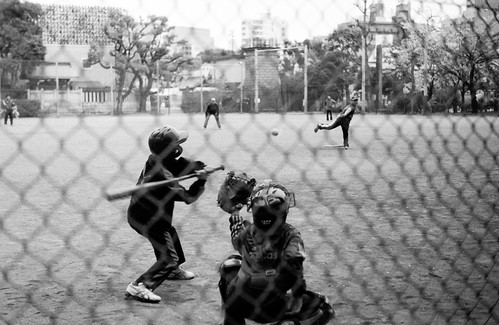
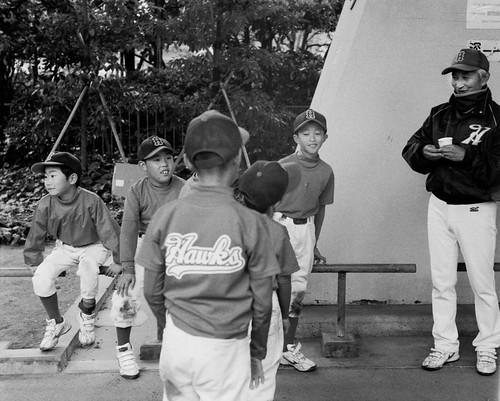
Baseball - Japanese Little League, Shot with Leica IIIG

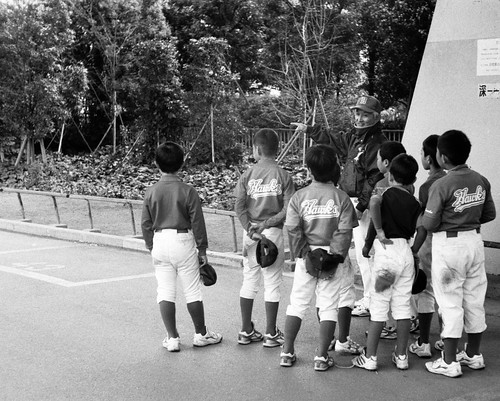
Baseball is big sport in Japan, including Little League.
 
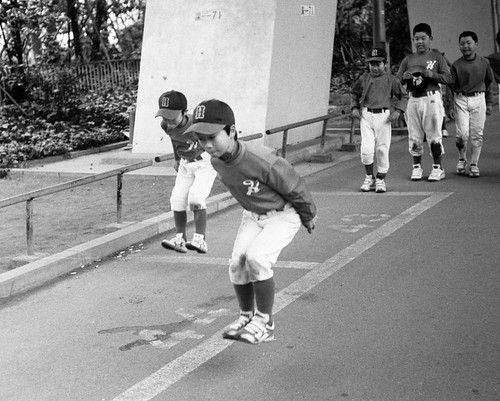
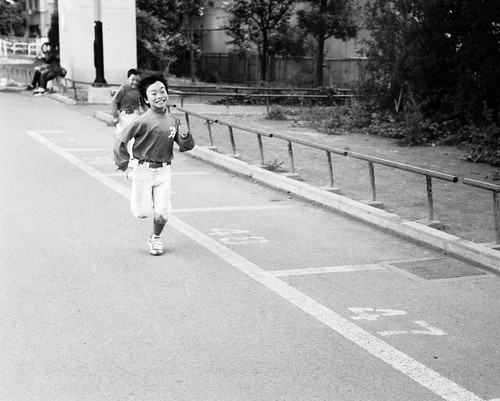
Little League Baseball, Japan, by Reed A. George
Leica IIIG, Elmarit 5cm f3.5 Collapsible Lens
Kodak TMax 400 Film
 
On one of my morning walks around Tokyo, I came across this team, running drills either before or after their games. I was impressed by the enthusiasm of the young players, and the attention their coach paid to them. All of the following shots were made with the Leica IIIG, this time with a Nikkor 50mm f2 LTM lens that I purchased at Map Camera in Tokyo. It's a beautiful little lens.
 
I very much appreciated capturing a little slice of the Hawks' fun together. Great fun with an old Leica rangefinder.
 
DMC-365.blogspot.com
 

Sunday, May 3, 2015

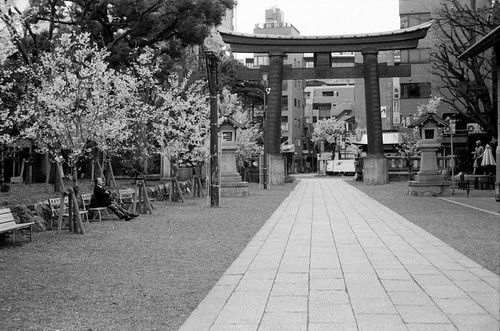
Finding Space in the Big City of Tokyo - with Leica IIIG

 
Urban Space, by Reed A. George
Leica IIIG, Ilford HP5 Film
 
This gentleman on left was out early in the morning at the Tomioka Hachiman shrine in Tokyo. The lesser shrines are always a good place to go for some space and relaxation. The big ones, like Meiji Shrine, are frequently very crowded. The secret in either case is to be out early.
 
I find this to be true in almost any big city. New York City, Barcelona, Tokyo, they're all pretty quiet in the early mornings.
 
Here's another shot from the shrine. I focused on the cherry blossoms, rendering the fountain slightly out of focus with shallow depth of field. There was no one else in sight when I shot this.
Quiet Morning, by Reed A. George
Leica IIIG, Ilford HP5 Film
 
So, if the crowds in the big city get to you, simply get up early! Jet lag sure helped with that while I was in Tokyo.
 
DMC-365.blogspot.com
 

Thursday, April 30, 2015

More From Kiyosumi Garden with the Leica IIIG

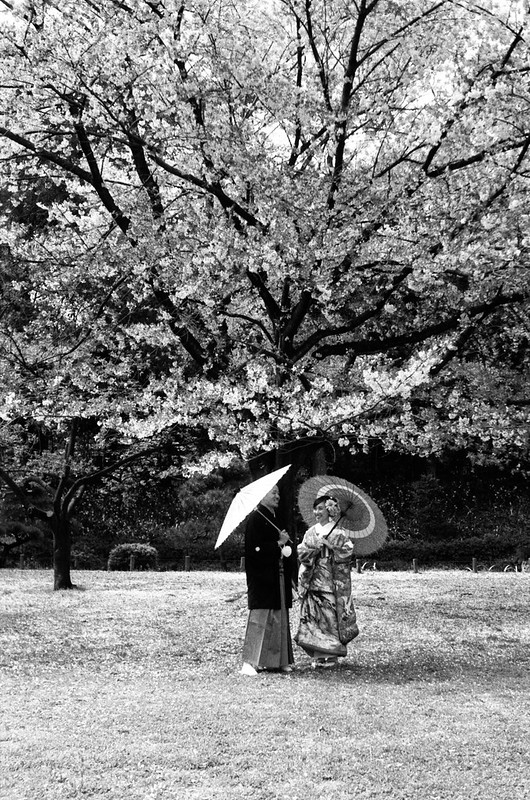
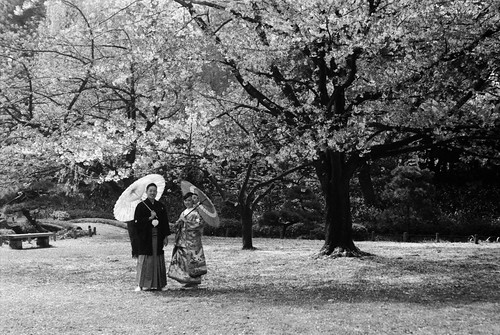
While visiting Kiyosumi Garden, this young couple, probably just engaged, came to the park with a professional photographer to get their pictures taken under the lovely cherry tree. Keeping a respectable distance, I shot a couple of exposures of my own.
 
Young Couple in the Park, by Reed A. George
Leica IIIG, Elmar 5cm f3.5 Collapsible Lens with Yellow Filter
Ilford HP5+ Film
 
They didn't seem to mind. I love the traditional dress, which makes the images somewhat timeless.
 
DMC-365.blogspot.com

Tuesday, April 28, 2015

Photos of Kiyosumi Gardens, Tokyo, with Leica IIIG

My mother-in-law lives in Tokyo. She is a wonderful host to us when we visit. Her home is a short walk from the beautiful Kiyosumi Garden. With an interesting history, including the incorporation of natural stones collected from all around Japan, and being owned at one time by the founder of the Mitsubishi empire, today it's a public park that is perfect for a morning stroll.
 
(Click Here) to read more about the history of Kiyosumi Garden.
 
The garden is centered around a large pond, and features a floating teahouse.
 
Kiyosumi Garden, by Reed A. George
Leica IIIG, 5cm f3.5 Elmar Lens with Yellow Filter
Ilford HP5+ Film (iso 400)
 
In addition to the natural stones and traditional Japanese garden trees (including pines, willows, and cherry trees), the garden has a lot of wildlife, like the ducks you see above, as well as turtles.
 
 
Kiyosumi Garden Wildlife, by Reed A. George
Leica IIIG, 5cm f3.5 Elmar Lens with Yellow Filter
Ilford HP5+ Film (iso 400)
 
The Leica IIIG, collapsible Elmar, and 400 speed film are not your classic landscape gear. However, I quite like the images I was able to produce with them here. The yellow filter helped increase the contrast just a little, but it was imperative that I keep the bright sky out of the images. In the first image, I had to crop out a plain white sky.
 
DMC-365.blogspot.com
 

Friday, April 17, 2015

More Men at Work - Nikon Df in Japan

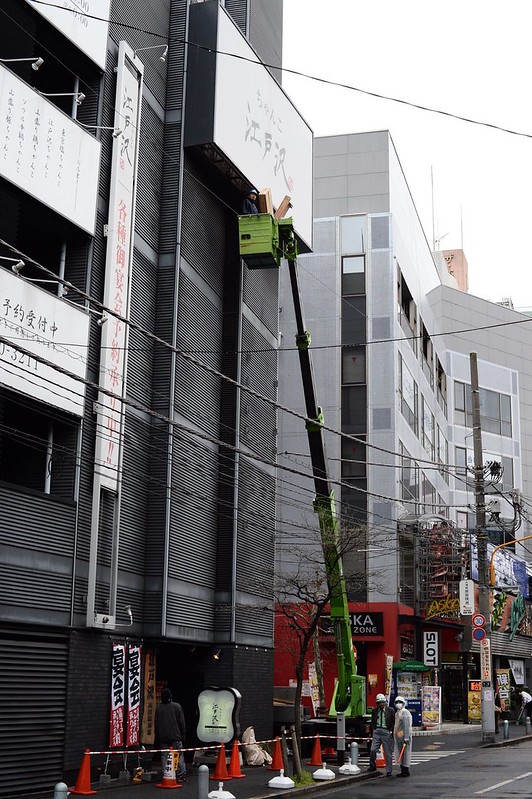
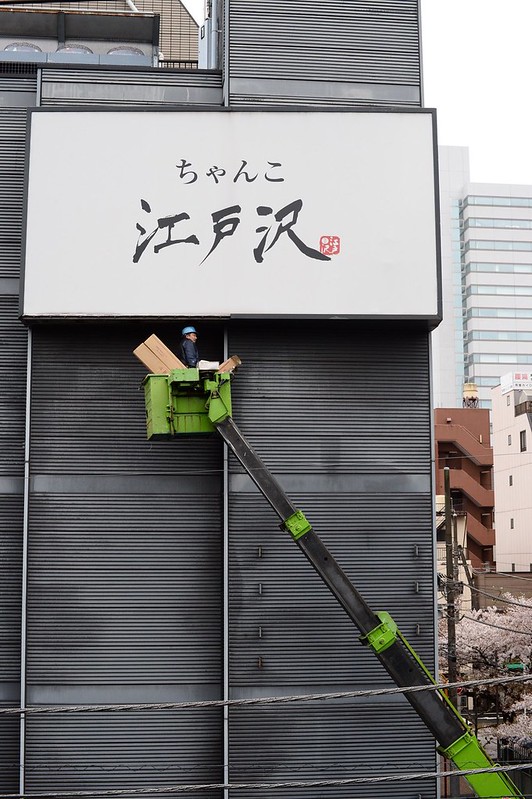
Here's a guy working on the outside of a building in Ryogoku, Tokyo. Ryogoku is the home of Tokyo's sumo wrestling, and this business sells "chanko nabe," the hearty pork soup that is a mainstay of the sumo diet.
High Work #1, by Reed A. George
Nikon Df, Nikkor 50mm f1.2 AIS Lens
iso 1100, f8, 1/500 sec.
 
After taking this shot from steet level, I went up to the platform at the Ryogoku train station to capture this view from a higher perspective.
 
High Work #2, by Reed A. George
Nikon Df, Nikkor 50mm f1.2 AIS Lens
iso 1100, f8, 1/500 sec.
 
The Nikkor 50mm f1.2 lens functions very well as a normal lens when stopped down, though that's not normally how I'd use it. It's really purpose-built for extreme low light applications.
 
DMC-365.blogspot.com
 

Sunday, April 12, 2015

Today's Photos From Japan - Grill Master

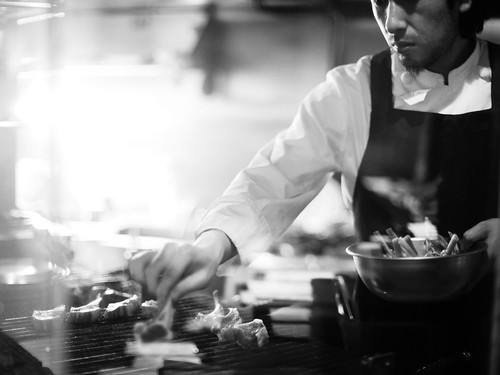
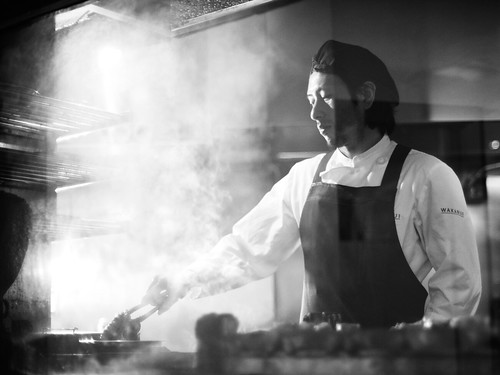
Food is always one of the highlights of visiting Japan. We ate lunch at an amazing restaurant in Tokyo called Wakanui, which features grilled meats. Here's the grill master at work:
 
Grill Master, by Reed A. George
Nikon Df, Nikkor 50mm f1.2 AIS Lens
iso 3200, f1.4, 1/250 sec.
 
The grill master was very impressive to watch. He used a metal probe to check the internal temperature of the meats. An electronic thermometer? Certainly not. He would insert the probe deep into the meat, then press it against his lower lip to sense the temperature with his own neurons. I like that.
 
Grill Master No. 2, by Reed A. George
Nikon Df, Nikkor 50mm f1.2 AIS Lens
iso 3200, f1.4, 1/250 sec.
 

I have found myself wondering why I carry any camera other than my Lumix LX-100 when traveling. These photos are part of the answer. Shooting at f1.4 at 50mm focal length, and getting these kind of results at iso 3200 are the sole domain of the Nikon Df in my camera set. These are jpegs straight from the camera, just converted to black and white and cropped in Snapseed, on my iPad.

 
DMC-365.blogspot.com
 

Tuesday, April 7, 2015

Tokyo Nightlife, With the 50mm f1.2 AIS Lens

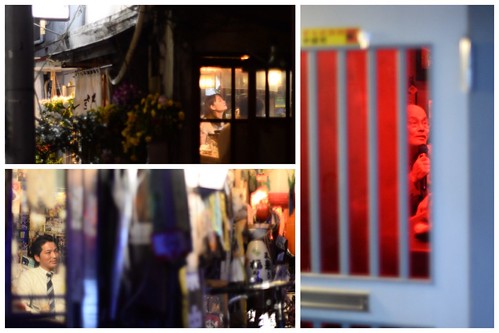
Tokyo Nightlife, by Reed A. George
Nikon Df, 50mm f1.2 AIS Lens
 
Here's a little montage of images I made while walking one of the backstreets near Monzennakacho Station in Tokyo. The 50mm f 1.2 lens not only allowed me to capture the images in near complete darkness at reasonable shutter speeds, it also allowed me to use selective focus to narrow the viewer's attention to an individual's face. I shot each of these from outside the bar's window. All of the surrounding distractions blur into the foreground or background.
 
That said, manual focusing was quite difficult. Even with the very wide aperture and a Nikon 1.2x magnifier on the Df, I missed quite a few shots. Great fun, though!
 
DMC-365.blogspot.com
 

Monday, April 6, 2015

Today's Shot From Tokyo, Japan

Here's a shot I made at Meiji Shrine in Tokyo:
 
Meiji Shrine, by Reed A. George
Nikon Df, Nikon Series E 100mm f2.8 Lens
iso 110, f4, 1/250 sec.
 
You may notice the rather uncommon iso setting; no, it is not a typo. I find that one very handy way to shoot with the Df is to keep it in auto-iso mode. With the meter set to spot metering, I can simply find a middle exposure value anywhere in my scene, spot meter it (using the exposure lock button on the camera back to hold the settings), recompose, and shoot. The camera picks the iso. I get to select both aperture and shutter speed in manual mode. The Df has such great high iso performance, I don't need to pay too much attention to what iso setting it selects.
 
Here's a version of the same picture, manipulated in Snapseed on my iPad.
 
 
DMC-365.blogspot.com
 

Thursday, January 15, 2015

Haruki Murakami and Photography

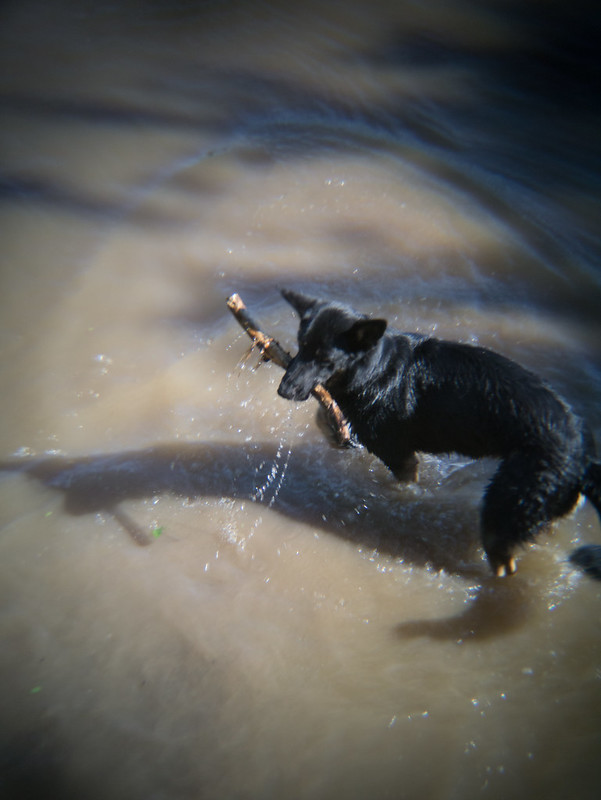
Black Dog, by Reed A. George
I love to read Japanese fiction. Haruki Murakami is probably my all-time favorite author. As with many Japanese authors, Murakami's works leave us with stories that don't just end on the last page. They're rarely wrapped up with a bow and finished when the book ends.
 
This weekend, I read Murakami's latest novella, The Strange Library. True to form, it's got all of the oddness of Murakami's mind, nicely packaged in under 100 pages. I highly suggest giving it a try. There's an Amazon link to the book at the end of this post.
 
Looking into what others make of the meaning of this story, I happened across some interesting photography on Murakami's web page.
 
First, (Click Here) to see a gallery of images by Eizo Matsumura, sharing scenes of Murakami's Tokyo. These seem like they could have been made with a Holga, Diana, or other toy camera. Lots of interesting feel to them.
 
Next, (Click Here) to see a gallery of images that were contributed by readers of Murakami's Facebook page, specifically answering the question "What's the strangest thing in your library?" Obviously targeted to the new book mentioned above. It seems that Murakami's readers may be as interesting as the author himself.
 
DMC-365.blogspot.com


Monday, November 24, 2014

Japan's Smartphone "Zombies"

 
I just loved the title of this article in the Japan Times:

"Japan's smartphone 'zombies' turn urban areas into human pinball."

 
The interesting thing is, I've always thought that Japanese in urban areas are tuned out from their environment. Never would I call them "zombies," but I have been run into, run over, bumped, slid along walls, redirected (including go from "up" to "down" on stairways), etc. in Japan, particularly in train stations. It is closely related to how they tend to create their own mental space in crowds, even though they may be in contact with several other people, physically.
 
(Click Here) to read the whole story on the Japan Times website.
 
Apparently, this walking and biking while using smartphones is a serious problem.
 
DMC-365.blogspot.com

Wednesday, April 23, 2014

A Street Portrait From Behind?

I'm in Tokyo still as I write this. Yesterday, on my morning walk, I captured this image.
 
Street Portrait From Behind, by Reed A. George
Leica M9, Leica 35mm Summicron F2 Lens
iso 400, f8, 1/125 sec.
 
 
The only place you can see the subject's face is in the big round mirror on the left. These are place all over around Tokyo for safety (so drivers can see pedestrians and vice-versa). It's pretty cliche to photograph them. But, I've never seen them used in exactly this way.
 
It would be fun to see this projected or printed very large, to see if capturing the face as a tiny part of the overall composition works or not. I think the lines in this composition work very well.
 
This is a straight jpeg, out of the camera, but with some cropping in Snapseed.
 
DMC-365.blogspot.com


Tuesday, April 22, 2014

From My Morning Walk in Tokyo

 
Tsukishima Boat, by Reed A. George
Leica M9, Carl Zeiss C-Sonnar 50mm f1.5 Lens
iso 400, f2.8, 1/750 sec.
 
I am in Tokyo today as I write this. One good thing about the jet lag I'm suffering with - it gets me out for sunrise walks and photography.
 
This morning, I took the morning train one stop from where I'm staying, to Tsukishima. It's a nice little island section of Tokyo, with some nice boats and morning reflections. I hope you enjoy the view. This is a jpeg directly from the camera.
 
DMC-365.blogspot.com
 

Monday, April 14, 2014

Luis Gomez Finds Spring in Washington, DC

Image Source: http://www.onephotographaday.com/2014/04/spring.html
 
So, first I need to tell you that I wrote this post on April 6. There's usually a delay between when I write and when the post goes up on DMC-365.
 
I put some effort into finding cherry blossoms, the official sign of spring coming to Washington DC, this weekend. First, I went to Meadowlark Gardens in Vienna, Virginia. Nothing. Nadda. I was surprised. Today, my lovely wife and I fought the traffic to get into DC proper. While I must admit there are some trees blooming, it's very far from peak (or at least what peak has looked like in past years). In fact, we decided not to park after all that, and instead drove to Georgetown for some nice tea and conversation. I shot a few film images there, so more on that in a week or two.
 
I'm heading to Tokyo in about a week. We try to go every year to visit family. My usual routine is to see the blossoms here in DC, hop on a plane, then see them in Tokyo. That may not happen this year. It seems like the peak has already passed in Tokyo. Oh well, you can't win them all.
 
By the way, Luis Gomez (who took the picture above) runs a very consistent 365 day photo posting blog from Washington, DC. I've been enjoying his work for a couple of years now.
 
(Click Here) to go to Luis' blog.
 
Oh, and (Click Here) to see some gorgeous cherry blossom shots from Yahoo Japan.
 
DMC-365.blogspot.com
 

Thursday, December 12, 2013

From the Broad Creativity Files - Japanese Artists Paint Hotel Rooms

Artist Naoki Takenouchi at the Park Hotel, Shiodome, Tokyo, Japan
Image Source: http://www.japantimes.co.jp/news/2013/12/02/national/hotel-room-walls-serve-as-canvas-for-takenouchis-contemporary-art/#.UpxvkDS9KSN
 
The Park Hotel in Tokyo is having artists come and spend some time in residence, under its "Artist in Hotel" program. Artist Naoki Takenouchi is painting his interpretations of "Fujin" and "Raijin," gods of wind and thunder, respectively, in a room now entitled "Japanese Paper Garden" for the sumi ink and washi paper used in his portrayals.
 
The hotel already has two other themed art rooms, one entitled "Sumo," the other "Zen."
 
What a cool idea. I'd love to stay in one of these one-of-a-kind rooms.
 
DMC-365.blogspot.com
 

Thursday, December 5, 2013

Ricoh GR, Tokyo, "Daido Mode" by Colin Steel on Steve Huff's Site

This is the beauty of modern internet technology and photography blogs. This morning I got to read about a camera I've never handled, used in a place I know well but only see once a year, view photographs that a guy I've never met took and shared on another guy I don't know (but feel like I do)'s blog.
What I mean is that I got to see the awesome images that Colin Steel made in Tokyo with the Ricoh GR, and shared on Steve Huff's site.
Image Source: http://www.stevehuffphoto.com/wp-content/uploads/2013/11/colin4.jpg

In his guest post on Steve Huff's site, Colin Steel shares a series of images he made on a quick three day trip to Tokyo. Apparently at least one day was made up of 24 hours straight wandering the streets of Tokyo, shooting with the Ricoh's high contrast monochrome setting, referred to as "Daido mode," after Daido Moriyama, famous Tokyo photographer who also happened to shoot with Ricoh cameras.

(Click Here) to read Colin's post on Steve Huff's site.

Colin writes about how he and most serious photographers usually ignore the in-camera creative presets. I used to feel the same way until one very important thing happened in the cameras I have that include presets: they started enabling most of the presets to be used in raw+jpeg shooting mode! This means that I can get a jpeg with all of the preset effects, view it on the camera display in the preset way, but have a completely unembellished raw file stored on my card to post-process in any way I see fit later on. I can see a high contrast black and white rendition while I'm shooting, then come home and use the raw file to make a low contrast color print, if I decide to. Flexibility is a great thing.

I won't go into the details of the Ricoh camera, as I honestly have not looked at them. So many cameras, so little time, you know. My two points today are: 1) it's great to be able to see wonderful photography from around the world and people I don't know through the internet, and 2) don't ignore anything on your camera. It may come to creative use if you learn how to use it, and learn about things like having the unaltered raw files available, should you change your mind later.

DMC-365.blogspot.com


Saturday, October 26, 2013

One Camera (Leica M Monochrom), One Lens (28mm Summicron) in Tokyo, by Dave Powell

 
Image Source: http://shoottokyo.com/controlled-arrows/

Dave Powell of the photo blog "Shoot Tokyo" has posted some images and notes on the experience of using a single lens and camera, narrowing the options so that he can focus on composition and light.

In this case, Dave chose the Leica M Monochrom and Leica Summicron 28mm f2, a lens I've written about before.

(Click Here) to read my experience of borrowing a 28mm Summicron at an LHSA event. In my case, I shot with color film and my M4-2 body. I found this lens to be quite impressive.

(Click Here) to read the original post and see more pics on Shoot Tokyo.

I don't see any amazing or once-in-a-lifetime shots in this post, but I do get the feeling of walking around in Tokyo, probably my favorite city in the whole world. That's a tough call, actually, because San Francisco and New York City have their positive points. But, overall, Tokyo really does it for me.

Dave emphasizes concepts that resonate with me - single lens excursions, shooting every day. I tried to arrange to meet up with him the last time I was in Tokyo, but he was in Boston at the time. Talk about reversals. I'll try again next time, as I'm sure we'd have plenty to talk about.

DMC-365.blogspot.com
 

Wednesday, May 1, 2013

Whole Lotta Leica - March's Lens the Summilux 35mm f1.4 - Night Street Photography From Tokyo, Japan

I'm a little late finishing up March's Whole Lotta Leica results. Here are some images I shot with the Summilux 35mm f1.4 on the Leica M9 while I was in Tokyo at the end of March.
 
(Click Here) to read my post about the Summilux 35.
 
The f1.4 allowed me to shoot easily in the darkness. The weather was cold and rainy on our trip this year, but I didn't let that slow me down.
 
The first two are shots from my walk around the Monzennakacho area.
 
Fruit Market, by Reed A. George
Leica M9, Summilux 35mm f1.4 Lens
iso 1250, f2, 1/125 sec.
 
Outside the Ramen Shop, by Reed A. George
Leica M9, Summilux 35mm f1.4 Lens
iso 1250, f1.7, 1/125 sec.
 
I also walked to Nihonbashi (literally "Japan Bridge"). The first bridge was constructed here in 1603. Nihonbashi has been an important merchant area since that time. The predecessor of Tokyo's famous Tsukiji fish market was first located at Nihonbashi. It's hard to believe, but people used to be able to see Mount Fuji from Nihonbashi; it is now completely covered by an overhead expressway.
 
Cherry Blossoms at Nihonbashi, by Reed A. George
Leica M9, Summilux 35mm f1.4 Lens
iso 640, f1.4, 1/30 sec.

 
I always like to shoot pictures of people with umbrellas. I really like the transparent umbrellas that are popular in Tokyo. They allow me to capture people's faces, even when they're under an umbrella. Pretty cool.
 
Transparent Umbrella at Nihonbashi #1, by Reed A. George
Leica M9, Summilux 35mm f1.4 Lens
iso 640, f1.7, 1/45 sec.

Transparent Umbrella at Nihonbashi #2, by Reed A. George
Leica M9, Summilux 35mm f1.4 Lens
iso 1250, f2, 1/60 sec.
 
I already wrote about how I prefer 50mm lenses over 35mm in most cases. I know that a lot of people prefer 35mm for street photography, and I can appreciate why. I really enjoyed shooting with this lens for the month. The color rendition is really, really nice in my opinion, and the added depth of field over a 50mm lens helped immensely in night time shooting.
 
You may find it interesting that two different instructors for Leica Akademie workshops I've taken both recommend 35mm over 50mm for street shooting. At the recent LHSA Spring Shoot in Fort Lauderdale, I attended a street photography seminar with Leica's Justin Stailey. Based on his recommendation, I shot the 35mm Summilux the whole time. I'll post some of those images soon as well. I definitely have come to value this classic lens more through learning how to better use it.
 
DMC-365.blogspot.com