Showing posts with label 35mm. Show all posts

Tuesday, July 5, 2016

A Hike on the Unfinished Railroad

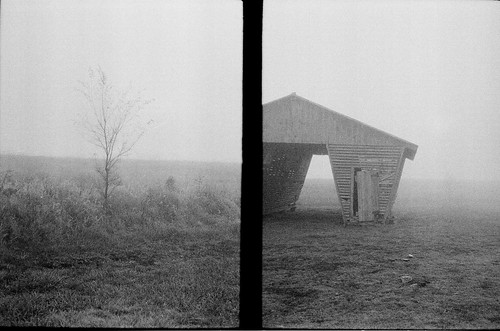
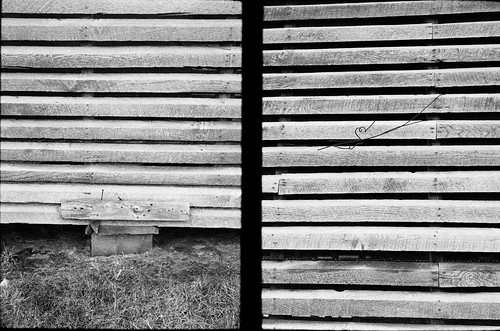
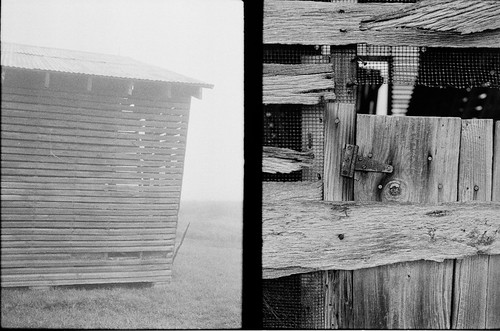
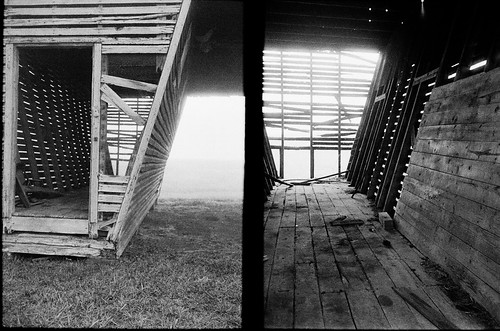
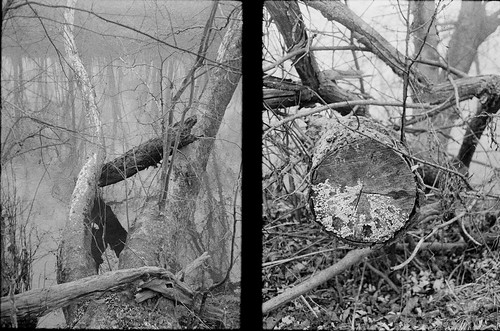
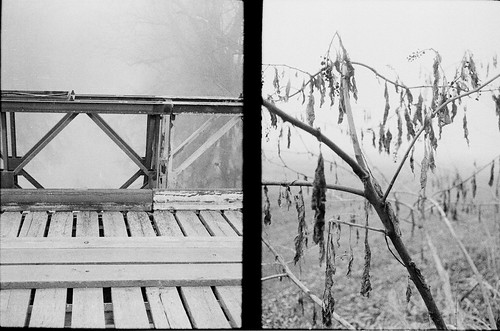
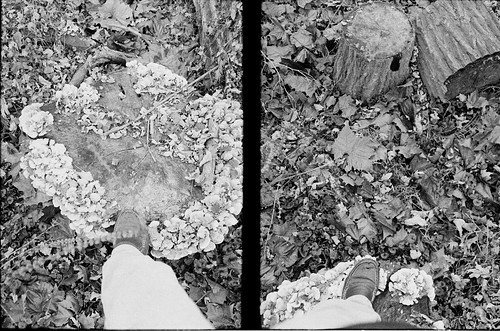
A few weeks back, I took a hike at the Manassas National Battlefied, site of two ferocious battles in the US Civil War. The Unfinished Railroad is a trench dug for rails, but never finished. It was a center of the second battle of Manassas.
 
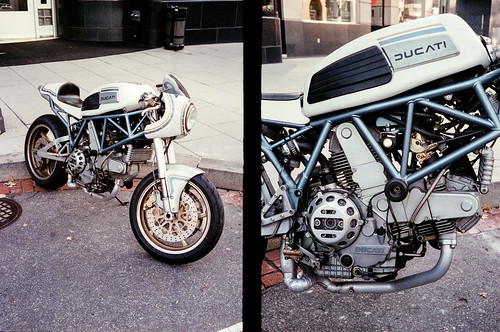
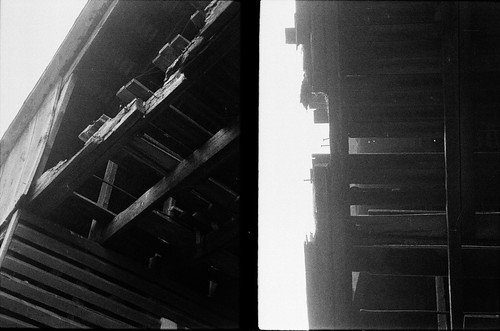
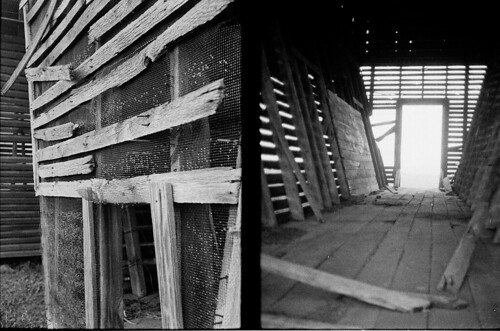
I shot these images with my Rolleiflex SL2000F. Man, I love this weird old camera.
 
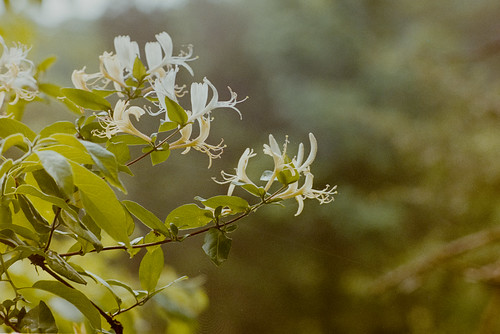
You could smell the summer honeysuckle all along the trail.
 
 
This monument is at the end of the trail. It reads: "In Memory of the Patriots Who Fell at Groveton, August 28th, 29th, & 30th, 1862.
 
 
DMC-365.blogspot.com

Thursday, June 16, 2016

Eyes

 
DMC-365.blogspot.com


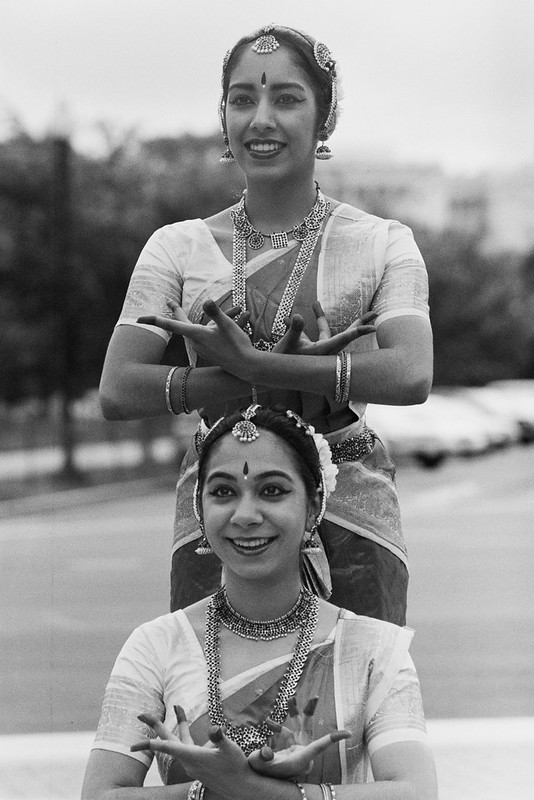
Asia Festival, DC - Rolleiflex SL2000F

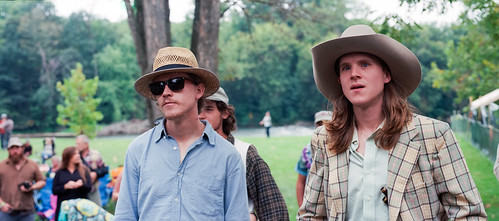
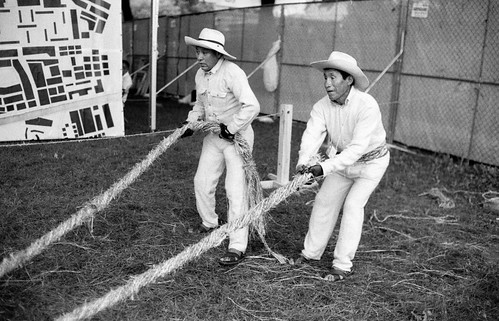
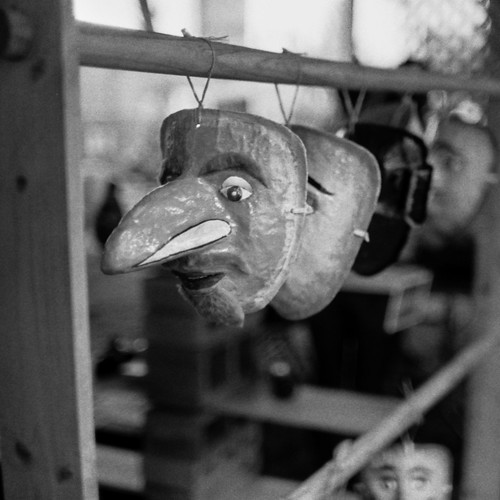
Here are a couple of images I made at a festival over the memorial day weekend. I was shooting my Rolleiflex SL2000F, with the wonderful Sonnar 135mm f2.8 lens. I think it's the best lens I have for this outfit.
 
 
Don't know what a Rolleiflex SL2000F is? (Click Here).
 
DMC-365.blogspot.com
 

Friday, May 6, 2016

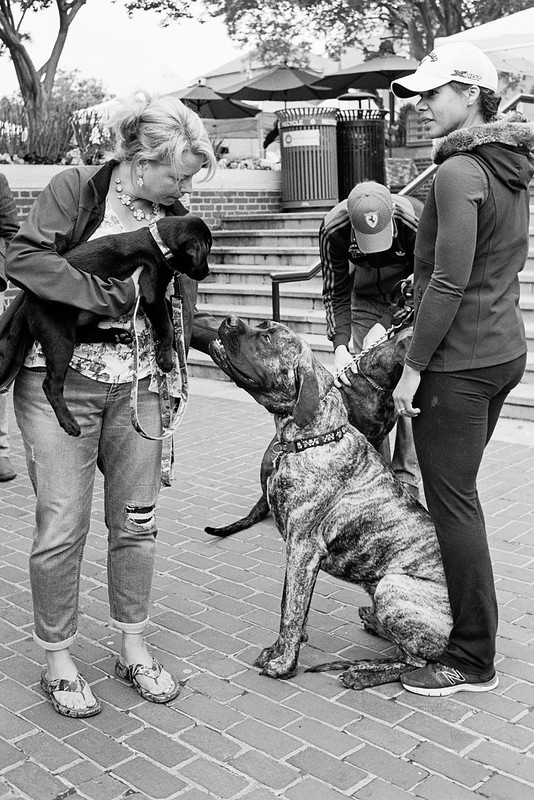
Can I Eat Him, Mom? Can I?


Rollei 35, 40mm f3.5 Tessar Lens
Kodak TMax 400 Film
 
I have a thing for Rollei cameras. My latest is the tiny little Rollei 35, a guess-focus camera with a jewel of a Tessar lens (collapsible). It has a meter, but no provisions for focusing. Seems I guessed the distance pretty well in this shot.
 
DMC-365.blogspot.com
 

Monday, February 8, 2016

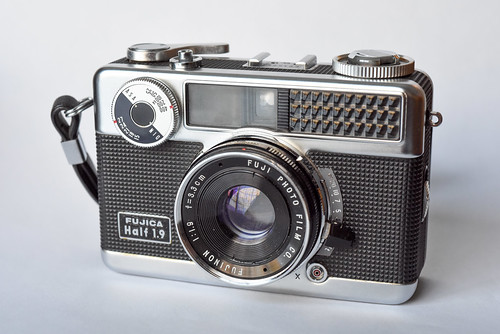
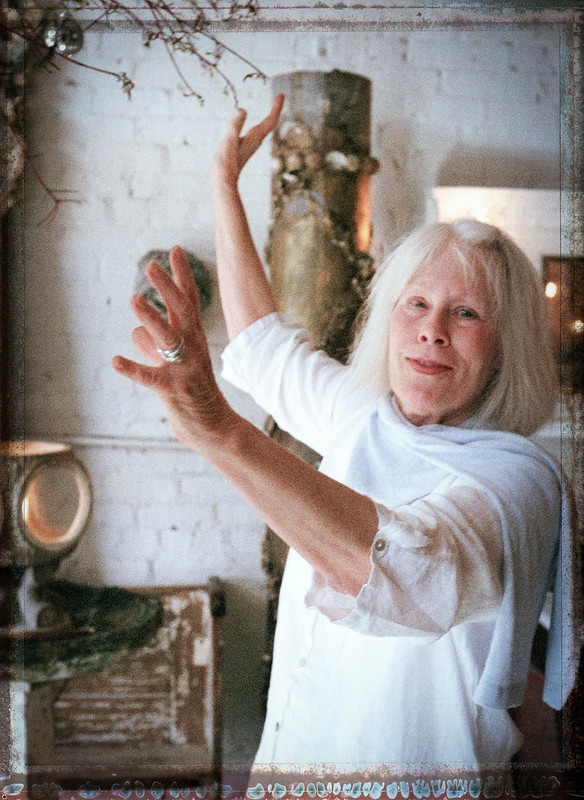
Someone I Met - and a New Camera. The Fujica Half 1.9 Half-Frame

I've been playing around with the 35mm half-frame format recently. (Click Here) and (Click Here) to see posts on my first half-frame camera, the Canon Demi EE17.
 
I recently bought a second half-frame camera, a Fujica Half 1.9. I picked it up on ebay for $22, including shipping, and it looks and works like new. It even came with the original soft leather case, strap and lens cap. Very cool.
 
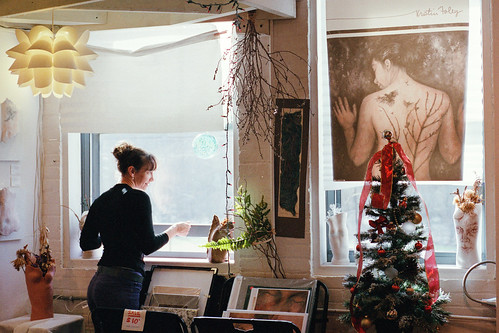
Here's the important part - a picture I made with it on a recent trip down to Greenville, South Carolina. My friend, Craig, and I took a run over to Asheville, North Carolina for the day. We met this fine lady in an art studio there.
 
 
I scanned the film, then edited it in Analog Efex 2 (Nik Software/Google) and Lightroom. Analog Efex has a wealth of film and camera emulations, and frames.
 
DMC-365.blogspot.com


Monday, January 25, 2016

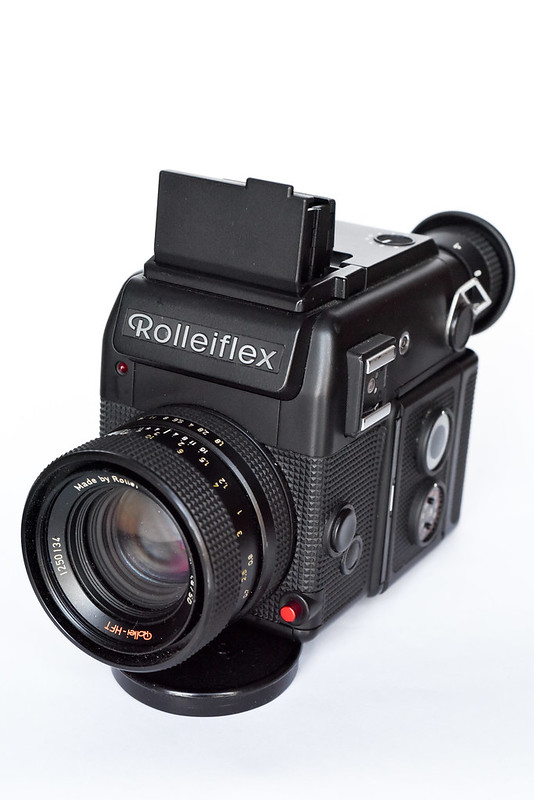
A Very Different Rolleiflex - SL2000F - My Latest Passion

So several weeks back, I went to meet my good friends Charlie and Alain for a photo outing. Charlie and I were discussing settings for his new Panasonic Lumix DMC-GX8 when Alain walked up with this beauty.
 
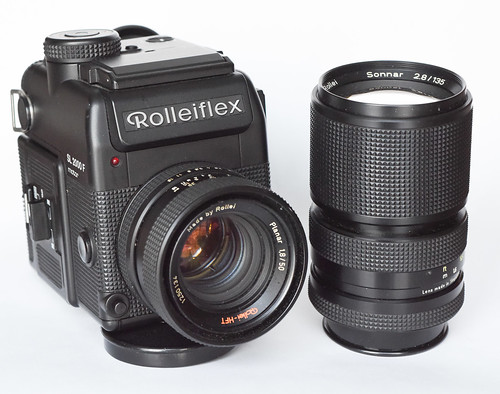
Rolleiflex SL2000F and Planar 50mm f1.8 Lens
 
Now, I admit that I'm pretty passionate about cameras. Passionate, but generally careful. When I realized that this was a 35mm Rolleiflex, with both eye-level and waist-level finders built in, interchangeable lenses (Rollei QBM mount), and interchangeable film backs, well, that was it. I had to have it. I'd never seen anything like it. No looking it up online, no research at all, had to have it. I bought it right then, in the parking lot. Alain was nice enough to part with it for the price he paid. Here it is with the matching Sonnar 135mm f2.8 lens.
 
 
Driving away after our day out shooting, I thought "What have I done?" A dead lens mount (the QBM is no longer made anywhere), electronic (not quiet) advance only (no manual override), maybe I should have been a little more cautious. But, just look at it. So, I smiled and drove on home.
 
Then, just as soon as I got home, I started looking for information on this beauty online. Oh, no! Everywhere I looked were warning signs - electronic failure, no spare parts, DO NOT BUY THIS CAMERA! Well, it gave me pause, but again, just look at it. I decided to take my chances and just plain use it.
 
This camera is a total blast to use. Something between a Rolleiflex TLR and a 35mm SLR system camera, it's just plain wonderful.
 
And then, I found out even more that I liked - a Rollei-made auto-aperture adapter to mount M42 lenses! This immediately expanded my lenses from the Planar 50 and Sonnar 135 to my wider set of Pentax M42 lenses, including a 28mm f2.8 no-namer, 35mm f3.5 Super Takumar, 50mm f1.4 Super Takumar(!), 200mm f4 Takumar, and even a Yashica 300mm f5.6 telephoto. Lots to play with.
 
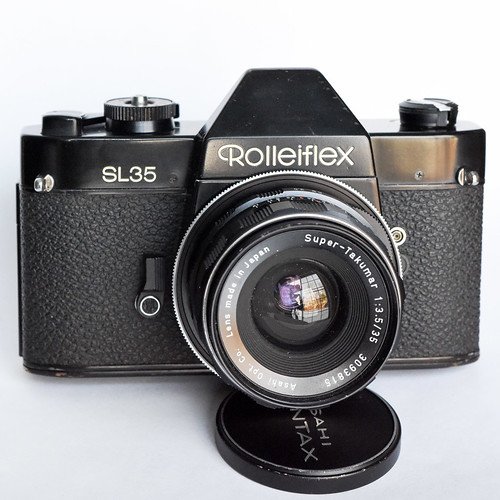
So what about all of this concern for reliability? Well, I could either try to find someone to service the SL2000F if needed, or think about spares. I determined that a spare body was the best approach. So, I picked up a Rollei SL35 (earliest model SLR) for $35 on ebay. Yes, it needed a little exercise, but now it works fine. Here it is with the Pentax 35mm mounted via adapter.
 
Rollei SL35 and Pentax Super Takumar 35mm f3.5
 
Of course, I also started a followed search on ebay for a second SL2000F body. Pretty slim pickings, as these cameras are pretty rare. But, within a couple of weeks, I found a fully-functional SL2000F listed in Germany, with another M42 adapter, Zeiss Jena Tessar 50mm f2.8 M42 lens, two film backs, the very difficult to find electronic wired remote shutter release, and, even rarer, the dedicated Metz flash and Rollei flash adapter, built specifically for the SL2000F. And at a great price. I emailed the German seller with a few questions, and went for it. The second camera is now here and appears to be fully functional.
 
So, now I'm really deep into these cameras, but loving every minute of it. And, to calibrate it a little, still have less invested than the cost of a single high quality DSLR body.
 
So, how does it work? Like a dream. Here are a few images from the first SL2000F body, shot on a recent road trip down to Asheville, NC.
 
 
The lenses are plenty sharp. Everything seems to work very well. No electronic problems, even though I had a few scares at first. Based on reports online of AA batteries being too high voltage for the camera (they fit), I took others' advice and ordered some rechargables and they work perfectly. I chose Panasonic Eneloop batteries, and highly recommend them.
 
More importantly, this camera just fits me perfectly. It truly feels at home in my hands. I love being able to use the waist-level finder when I want, more often the eye-level finder, without changing any parts. I love that it's 35mm. I love the lenses, both Rollei and M42. I love a lot about this camera.
 
So, I'm glad that I didn't make time to be more rational about this purchase. If I had, I would not have bought it, based on all the warning signs online. I'm glad I bought it, and feel quite fine now with a spare body, just in case.
 
DMC-365.blogspot.com
 

Sunday, January 24, 2016

Some Half-Frame Shots - Canon Demi EE17

Well, apparently I have still not gotten over my obsession with shooting lots of different cameras and formats. My last two posts have been from the large film end, 6x9 medium format in the Fuji GW690. Before that, I posted some shots from the smallest film format camera that I currently own , a half-frame Canon that I picked up by chance. (Click Here) to see my previous post on that camera. Here are some color shots from the Demi.
 
It's fun making diptychs (picture pairs) with half-frame cameras. Here's an example.
 
And now, I've bought a second half-frame camera, which I'll write about later. And that's not all, but enough for now.
 
DMC-365.blogspot.com

Tuesday, December 15, 2015

I've Got Half a Mind to....

I was at the weekend Georgetown flea market a week or so ago with my friend Charlie. We were visiting with an acquaintance there, who always brings a nice selection of old cameras, when I spotted one of interest - a Canon Demi EE17 half-frame camera. Here's what the camera looks like.
Image Source: http://www.canon.com/c-museum/en/product/film64.html
 
What's a half-frame camera, you ask? Well, it shoots normal 35mm film, but in 24x18mm frames, allowing you to get 72 exposures from a normally 36 exposure roll. This fact also makes the frame orientation to shift from the normal landscape arrangement to portrait, when the camera is held normally.
 
Needless to say, the Demi went home with me. I have not even tried to put a battery in it, happy to use an external light meter and set shutter speed and f-stop manually. The lens is a Canon 30mm f1.7 (fast!) model. Focus is accomplished through a manual distance scale on the outside of the camera, or selecting one of three distances (portrait, group of people, or mountain). At 30mm depth of field is pretty big, so that works.
 
Here are some shots from my first test roll through the camera, an expired roll of Agfa APX400 from my friend Dennis, exposed at 200 speed, and developed in straight D76 for 7.5 minutes. I scanned all of them in pairs, as they appear here. I'm definitely planning to shoot a lot of diptychs (picture pairs) with this little jewel.
 
 
Many people think that 35mm (full frame) is small, and pushes the limits of negative size to give decent image quality. I agree, to an extent, but as long as I'm not trying to make big prints, the half-frame works fine. The Canon optics seem to be quite sharp, and the little camera is a blast to shoot.
 
And, getting 72 exposures on one roll is pretty cool, too.
 
DMC-365.blogspot.com
 

Wednesday, October 7, 2015

Another Panorama - Bronica ETRS This Time

I really like shooting panoramic images.
 
Rudy, Ben, and Will, by Reed A. George
Bronica ETRS, 135W Panoramic Back, Kodak Color 400 Film
 
I'm dragging the Bronica gear out after a few years of neglect. I'm having a problem with the film not advancing predictably with this 35mm wide back, but sure like how this image came out. More to come from this camera.
 
DMC-365.blogspot.com

Wednesday, September 16, 2015

Who Would've Thought Autofocus Would Be Important? Apparently Not Leica

Image Source: http://www.cultofmac.com/383779/leica-invented-autofocus-then-abandoned-it/
 
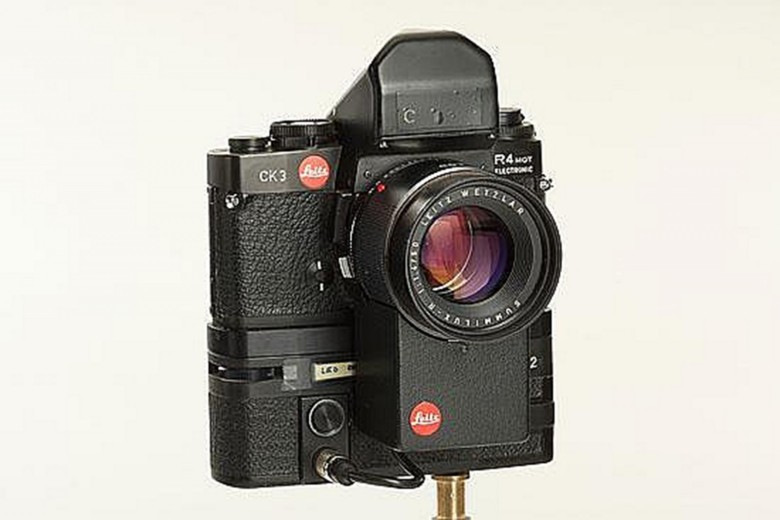
The blog Cult of Mac has run a piece on how Leica invented autofocus, only to abandon it. Apparently, they were not able to perfect it to the level that they thought their exacting customers would be satisfied with it. I never knew this before reading this article.
 
(Click Here) to read more about how Leica invented then abandoned autofocus, and how it was made a commercial reality by other companies, chiefly Minolta.
 
Thanks to my friend Bill for hooking me up with this interesting article.
 
DMC-365.blogspot.com
 

Friday, September 11, 2015

Day Sleepers - Cool Project

My Day Sleepers (NYC), by Reed A. George
Panasonic Lumix DMC-LX7
iso 800, f1.8, 1/125 sec.
 
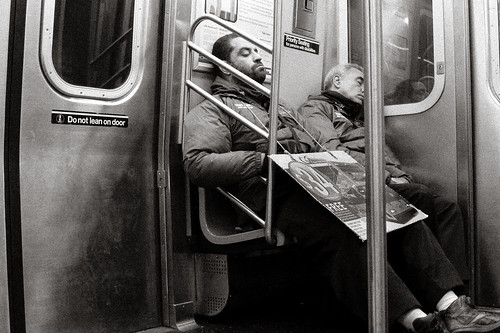
I captured these guys sleeping on the subway in NYC. It's interesting to see people sleeping in public places, especially when they're not unfortunate homeless people.
 
I read an interesting piece on the Leica Camera Blog about Eric Leleu, a Frenchman who did an extensive project, photographing "day sleepers" in China. Interestingly, Eric used a Leica M6 for many years, and more recently a digital Leica M240, but in both cases with just one lens - a 35mm f1.4 Summilux.
 
(Click Here) to read the story on the Leica Camera Blog. Knowing he shot all of these with a 35mm wide angle impresses me. He had to get pretty close in many cases.
 
DMC-365.blogspot.com

Monday, July 6, 2015

Smithsonian Folklife Festival - Featuring Peru - Shot with Nikon FM2 and Nikkor 35mm f1.4 AIS Lens

I just replaced the seals on my Nikon FM2. My latest roll of film showed evidence of a minor light leak. That's all fixed up now. It took about an hour to get all the old seal residue off and install the new ones, but it was well worth the effort.
 
To test it, I mounted my new Nikkor 35mm f1.4 AIS lens, loaded a roll of Agfa APX400 film (thanks again, Dennis!), met my friend Charlie, and headed into DC. We attended the Smithsonian Folklife Festival, which featured Peru this year. Here are a few of the first pics I've scanned.
 
 
I just got the lens from another friend, Alain, a short time back. I haven't used it a lot. I think I like it.
 
I will be posting more from this event as I get them scanned.
 
DMC-365.blogspot.com
Sunday, June 21, 2015

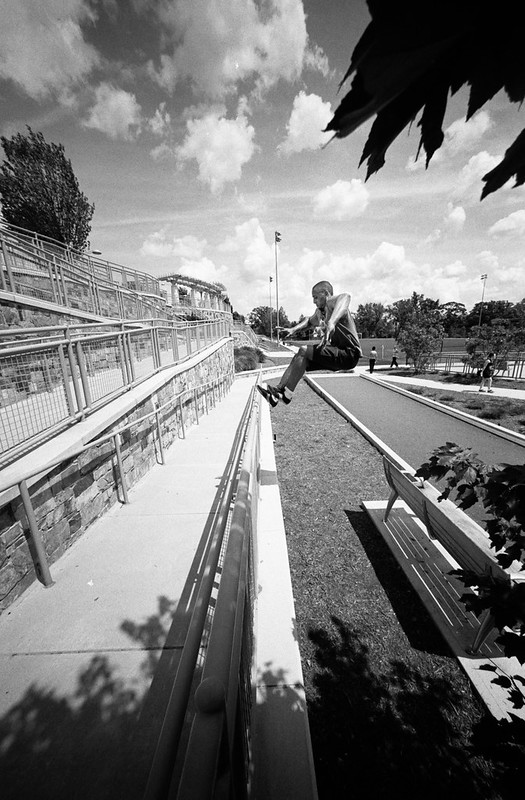
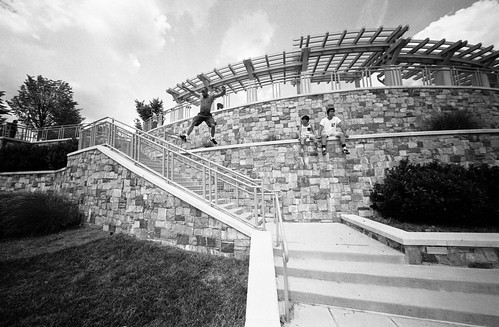
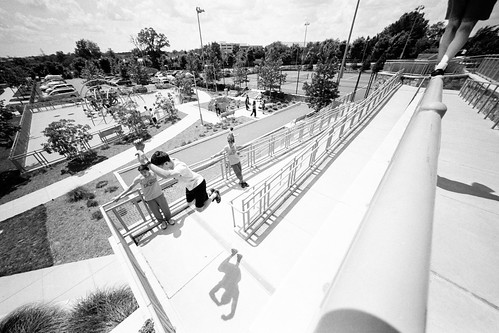
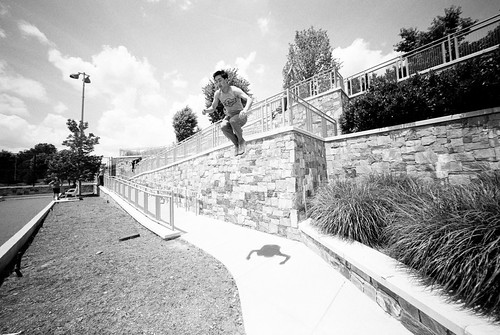
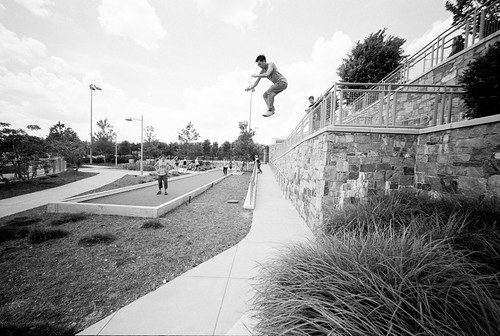
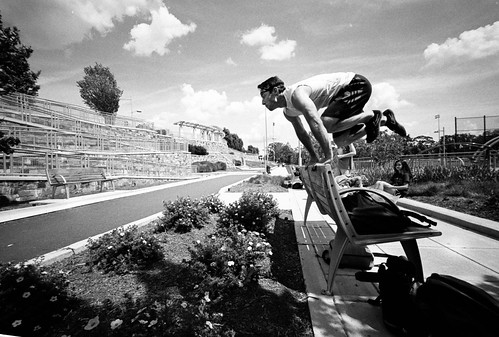
Some Ultrawide (12mm) Film Shots of Parkour

I recently shared a slideshow of parkour images, made with the Nikon Df. (Click Here) to see that post.
 
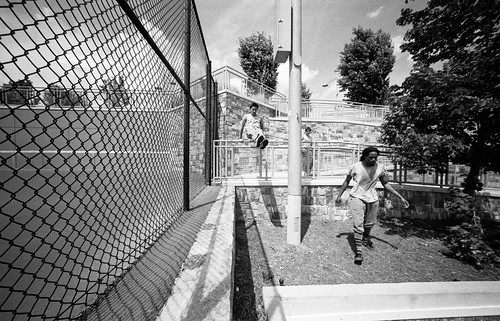
Today, I'll post some images I made at the same event, but these were all shot on the Zeiss SW film camera, with the Voigtlander 12mm f5.6 (LTM) ultra wide angle lens. These were all shot on Ilford HP5+ black and white film. I processed them myself.
 
I loved shooting parkour with this oddball lens. I have also done some fisheye shooting with parkour. (Click Here) to see that. In both cases, the wide angle of view is great for including a lot of the context for the sport. But, it also means that I have to get very close. So close, in fact, that there's a risk of interfering with the practitioner's concentration. That did happen once; thankfully, he thought it was funny. The last thing I want to do is interfere.
 
I think what I'm learning about shooting parkour is that variety is key. These wide angle shots tell a lot about the setting, but have relatively little detail of what the person is putting into the effort.
 
Approaching this with the standard photojournalistic search for a combination of wide, normal, and close up detail shots seems to be in order. I'm about to get a great opportunity to pull together a group of parkour practitioners, specifically to photograph them. My plan will be to get that variety, and to experiment with some ideas with flash, showing motion, etc. I've got some thinking to do.
 
DMC-365.blogspot.com
Sunday, June 14, 2015

Summer Evening Games - Zeiss SW, Biogon 25mm f2.8

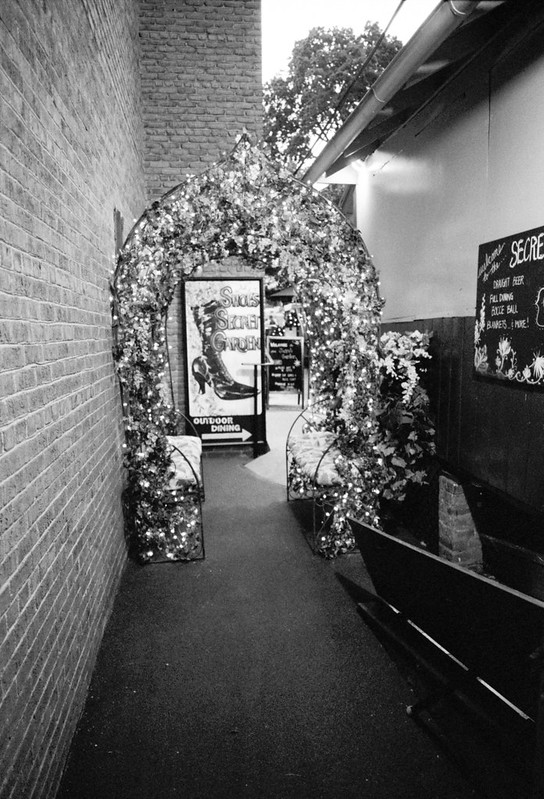
In order to test out a new film, Agfa APX400, that my friend Dennis Gallus gave me, I wandered into this place in Leesburg, Virginia one night last week. The place is called Shoes.
 
 
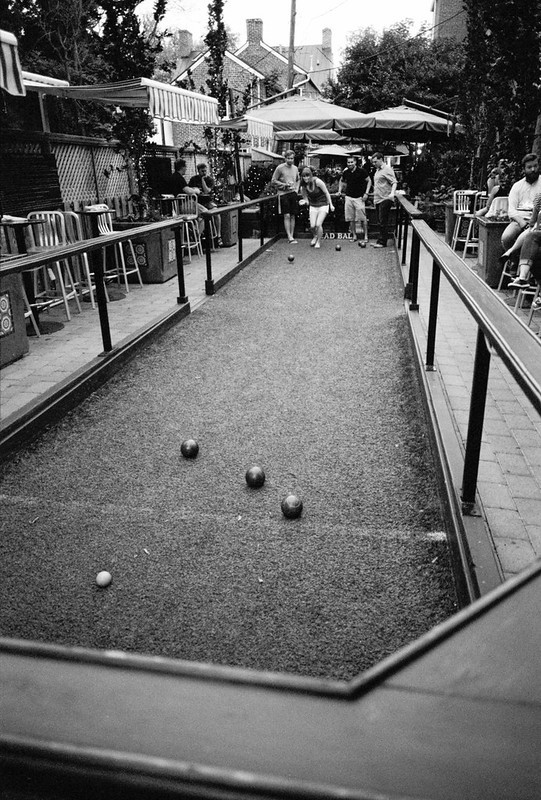
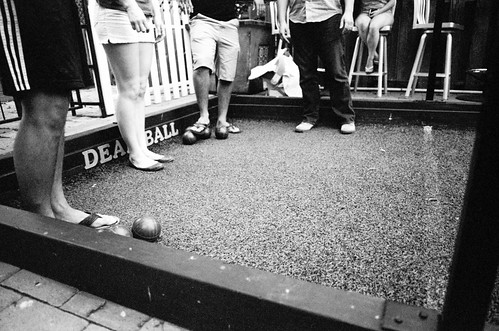
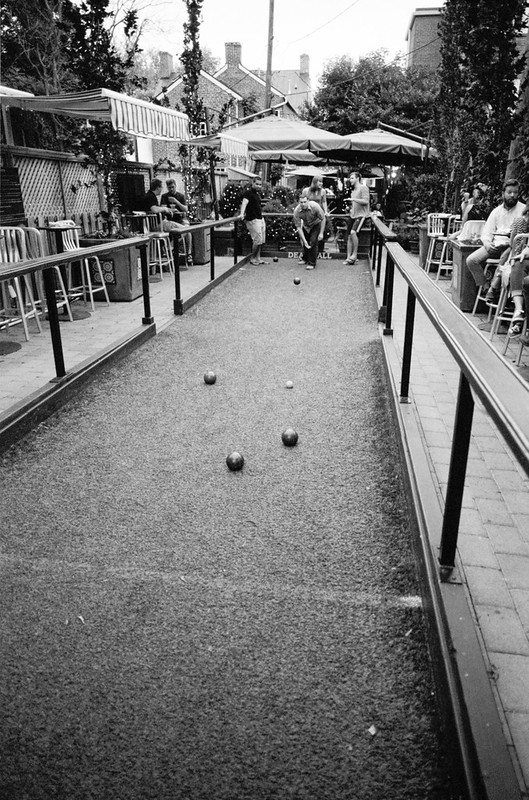
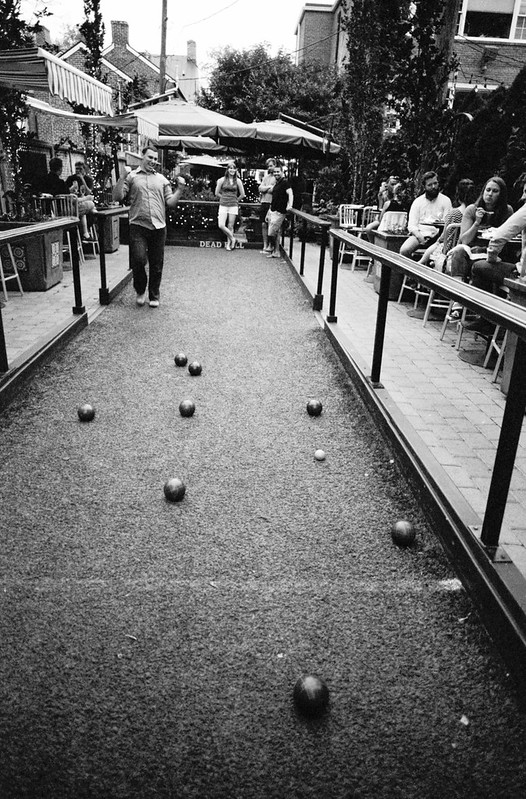
Literally located in an old shoe repair store, Shoes is now a coffee shop and restaurant. In the summer months, they open their outdoor dining area, complete with a bocce ball court. These nice people put up with me photographing their game as the sun went down.


This last one shows the emotion of that winning moment. That's about as exciting as bocce ball gets!
 
Shooting this roll at the box-indicated speed of iso 400, I found this roll to be mostly underexposed. I had to bring all of these shots up quite a bit, which emphasizes the grain. Now I'm not against grain, mind you. In fact, I kind of like the look.
 
I've now shot a test roll, exposing the film at 100, 200, and 400. We'll see if I can find the right exposure and developing times for this particular film. After all, I have 100' of it to shoot!
 
The beautiful Zeiss Biogon 25mm lens is a perfect mate for the slightly oddball Zeiss SW camera, a 35mm body with built-in meter, but no rangefinder. The SW is designed for use with wide lenses, where focusing is not critical because of huge depth of field. (Click Here) for an article about the SW on Shutterbug's website.
 
You can either just guess the distance to your subject and set your lens focus based on the markings on the lens body, or you can use an auxiliary rangefinder. I guessed. I think the 25mm is about the longest lens I could reliably use in this way, but could do okay with a 35mm in a pinch. It gets much easier when I mount up the Voigtlander 12mm f5.6. That lens has pretty much unlimited depth of field. You can set the focus once and shoot all day.
 
DMC-365.blogspot.com


Tuesday, April 28, 2015

Photos of Kiyosumi Gardens, Tokyo, with Leica IIIG

My mother-in-law lives in Tokyo. She is a wonderful host to us when we visit. Her home is a short walk from the beautiful Kiyosumi Garden. With an interesting history, including the incorporation of natural stones collected from all around Japan, and being owned at one time by the founder of the Mitsubishi empire, today it's a public park that is perfect for a morning stroll.
 
(Click Here) to read more about the history of Kiyosumi Garden.
 
The garden is centered around a large pond, and features a floating teahouse.
 
Kiyosumi Garden, by Reed A. George
Leica IIIG, 5cm f3.5 Elmar Lens with Yellow Filter
Ilford HP5+ Film (iso 400)
 
In addition to the natural stones and traditional Japanese garden trees (including pines, willows, and cherry trees), the garden has a lot of wildlife, like the ducks you see above, as well as turtles.
 
 
Kiyosumi Garden Wildlife, by Reed A. George
Leica IIIG, 5cm f3.5 Elmar Lens with Yellow Filter
Ilford HP5+ Film (iso 400)
 
The Leica IIIG, collapsible Elmar, and 400 speed film are not your classic landscape gear. However, I quite like the images I was able to produce with them here. The yellow filter helped increase the contrast just a little, but it was imperative that I keep the bright sky out of the images. In the first image, I had to crop out a plain white sky.
 
DMC-365.blogspot.com