Showing posts with label fuji. Show all posts

Monday, February 8, 2016

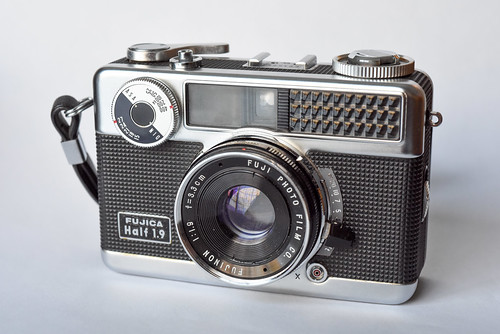
Someone I Met - and a New Camera. The Fujica Half 1.9 Half-Frame

I've been playing around with the 35mm half-frame format recently. (Click Here) and (Click Here) to see posts on my first half-frame camera, the Canon Demi EE17.
 
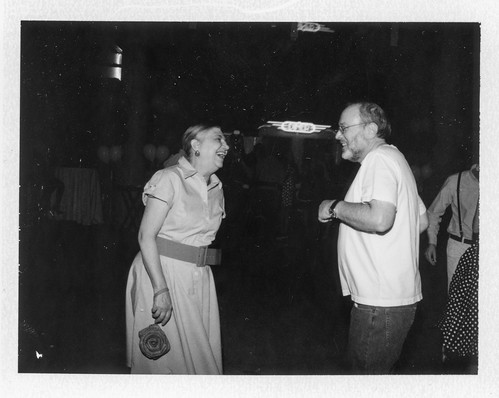
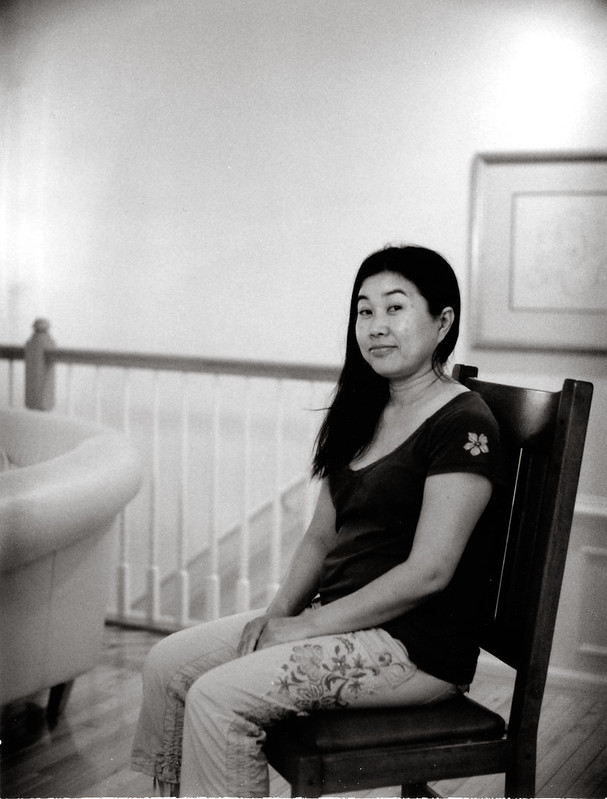
I recently bought a second half-frame camera, a Fujica Half 1.9. I picked it up on ebay for $22, including shipping, and it looks and works like new. It even came with the original soft leather case, strap and lens cap. Very cool.
 
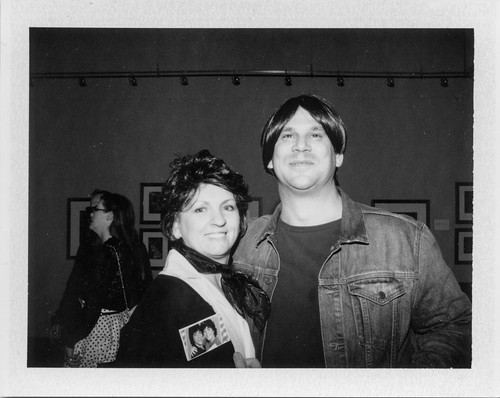
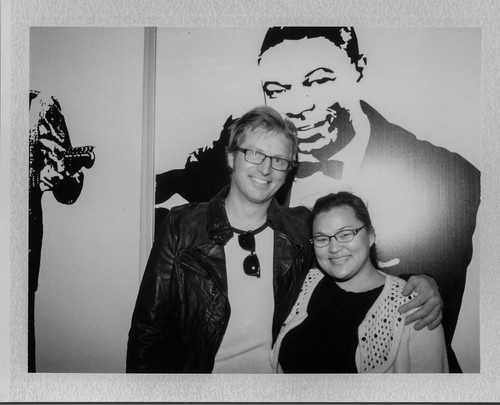
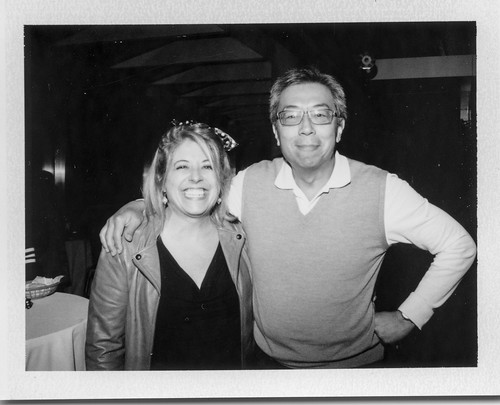
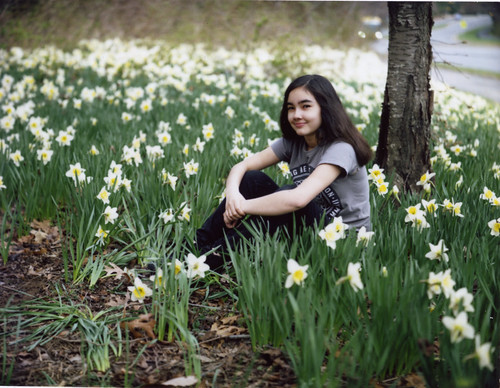
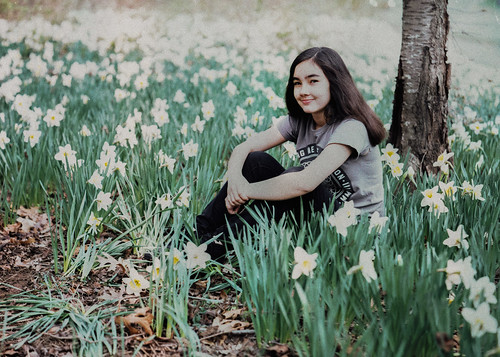
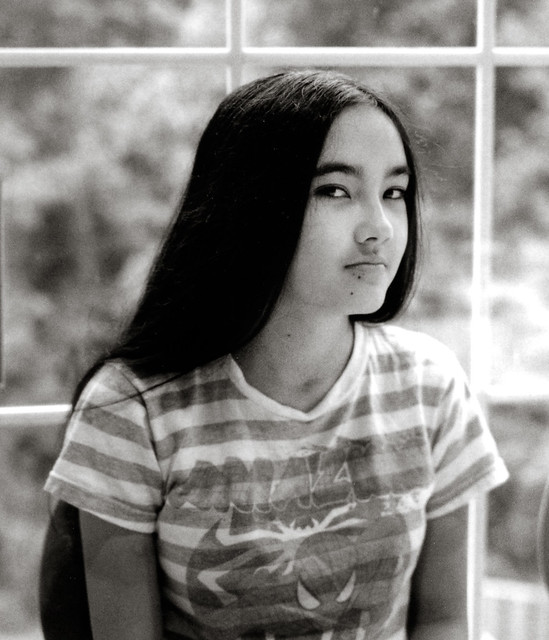
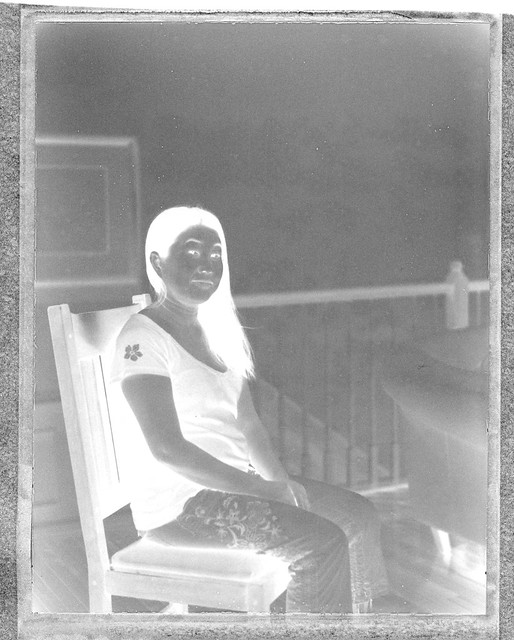
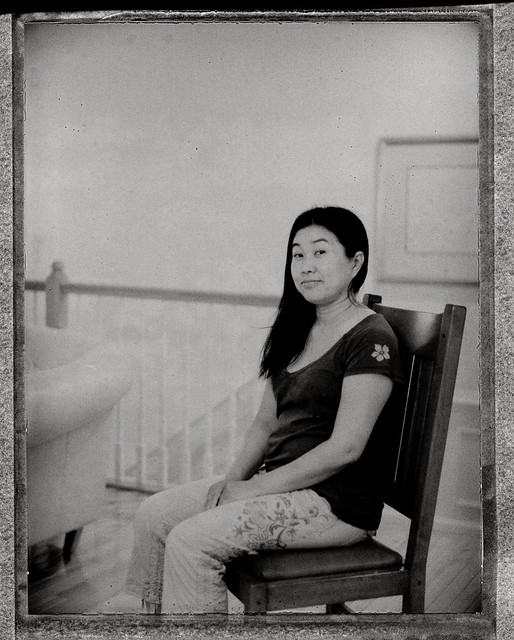
Here's the important part - a picture I made with it on a recent trip down to Greenville, South Carolina. My friend, Craig, and I took a run over to Asheville, North Carolina for the day. We met this fine lady in an art studio there.
 
 
I scanned the film, then edited it in Analog Efex 2 (Nik Software/Google) and Lightroom. Analog Efex has a wealth of film and camera emulations, and frames.
 
DMC-365.blogspot.com


Saturday, January 23, 2016

Two More From the Fuji GW690II

Adding to my last post, with two more 6x9 medium format images from Jones Gap State Park in South Carolina.
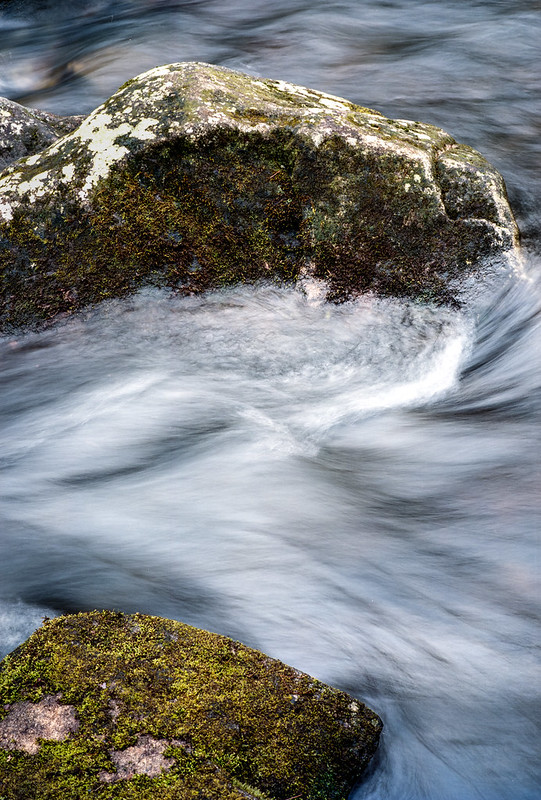
This is a detail shot of the water at my feet . To give an idea of the scale, I'd say the rock at top was about six feet away. I love the deep darkness and blue cast in the water
 
 
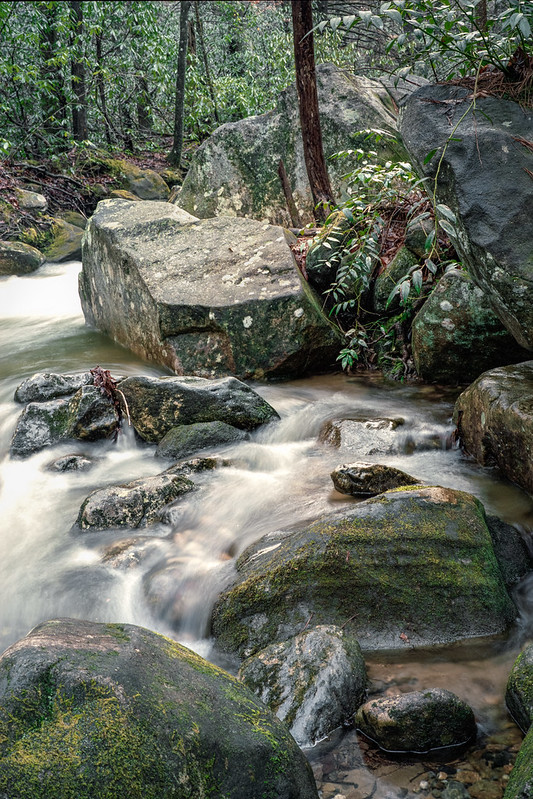
This image didn't appeal to me at first, but I've grown to appreciate it.
 
Both were shot on Kodak Portra 400. No filters were used.
 
DMC-365.blogspot.com

Monday, January 11, 2016

Fuji GW690II - Monster Rangefinder Medium Format Camera

Over the holidays, this camera popped up at KEH (keh.com) at an unbelievably low price.
Fuji GW690 II
 
A Fuji GW690II, this big beast shoots 6x9 negatives on 120 medium format film. The camera is in KEH's "BGN" (bargain) condition, which as usual means that it's fully functional. This particular camera has a few bumps and scratches, but the shutter counter has a low number, and the lens glass is just plain perfect.
 
I've long been a fan of Fuji's optics, and enjoy their medium format rangefinder cameras. I used to have the earlier version BL690, which had interchangeable lenses. The GW690II has a fixed 90mm f3.5 lens, and it's a beauty.
 
This is a big, heavy camera. In my opinion, it's best on a tripod.
 
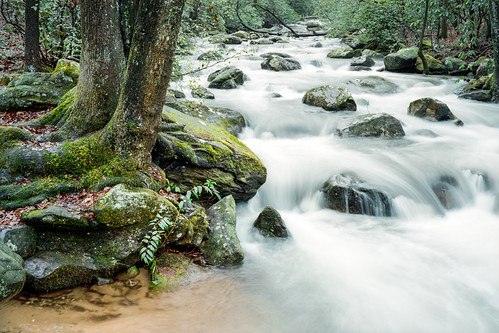
Here's a shot from my first roll shot in the camera, on Kodak Portra 400.
 
 
The detail in this image is incredible. I've made an 8x12 working print. Next stop, 12x18!
 
DMC-365.blogspot.com
 

Saturday, December 5, 2015

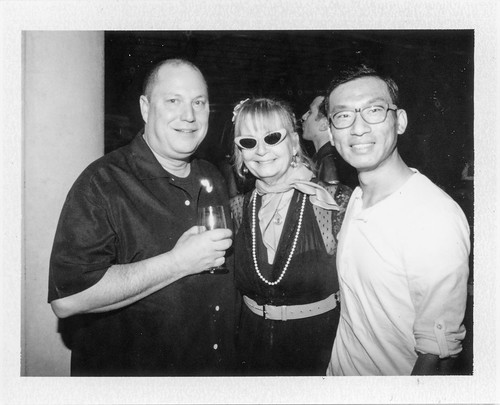
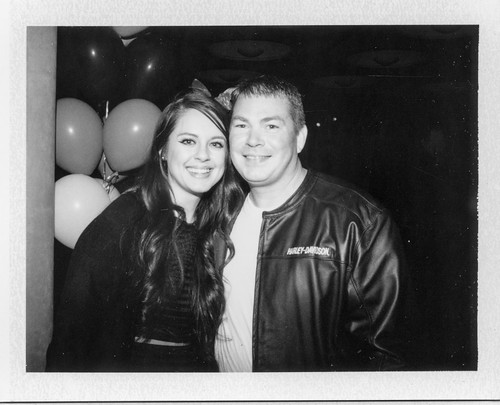
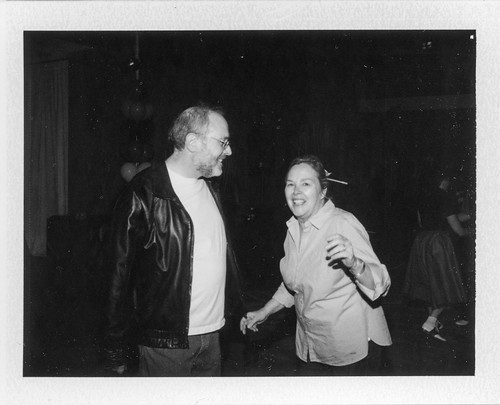
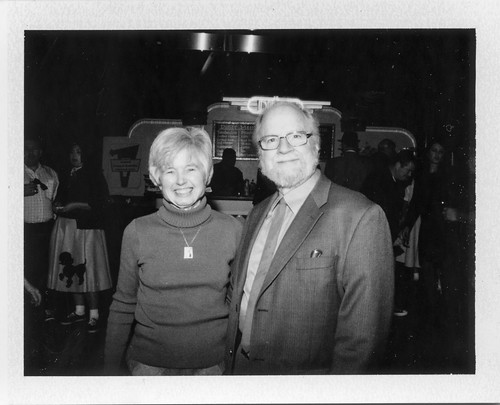
Best Way to Use the Final Stock of Fuji FP3000B? Party!

I have a beautiful old Polaroid 250 instant camera. This is a pack film camera, which uses FP3000B or FP100C pack film from Fuji. While the FP100C is still being produced (fingers crossed for the future!), FP3000B has been discontinued. That's really too bad. FP100C is 100 speed color instant film, while FP3000B is 3000 speed (!) black and white. Neither of these films can cover for the other.
 
Anyway, I'm not going to get down about the fact that no new FP3000B is being made. I have a few packs left, and plan to use them well.
 
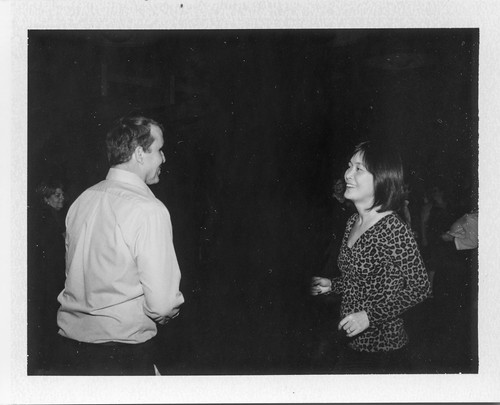
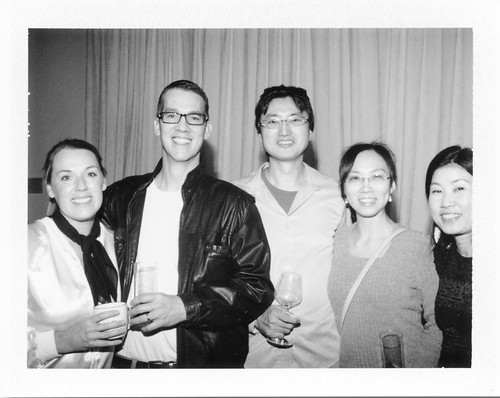
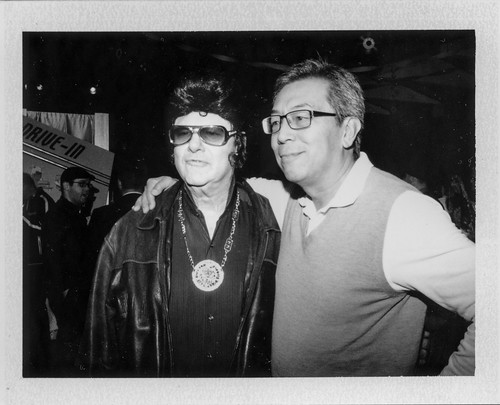
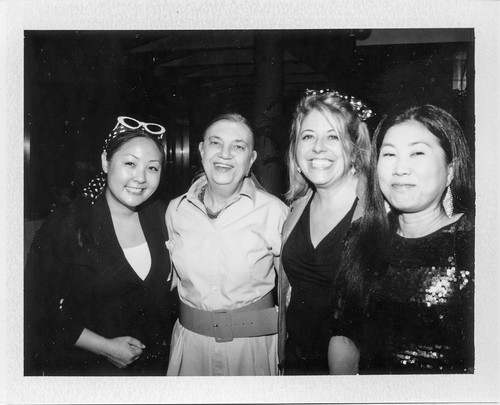
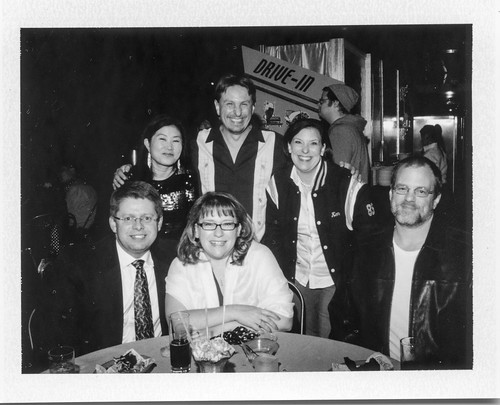
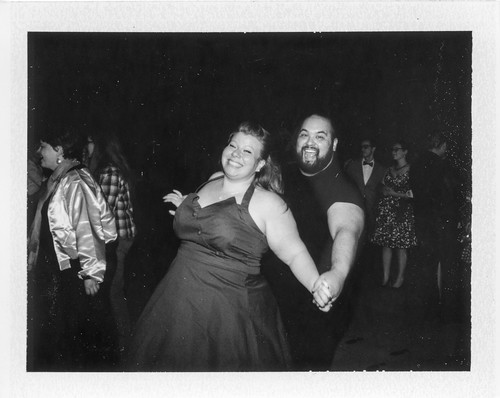
Last night, I used two packs of FP3000B at my company's holiday party. Knowing that it would be pretty dark at the party, and understanding that Polaroid cameras have relatively slow lenses, it was clear that flash was going to be necessary. So, I put the Polaroid camera on a flash bracket, on which I mounted a modern Nikon SB600 flash. Using a cable that I cobbled together from an old Polaroid flash bulb mount and an accessory hot shoe, I got the whole contraption to work. Testing it out ahead of time, I found that full power manual flash from the SB600 works very well with FP3000B at about 5-10 feet distance. Perfect for the party.
 
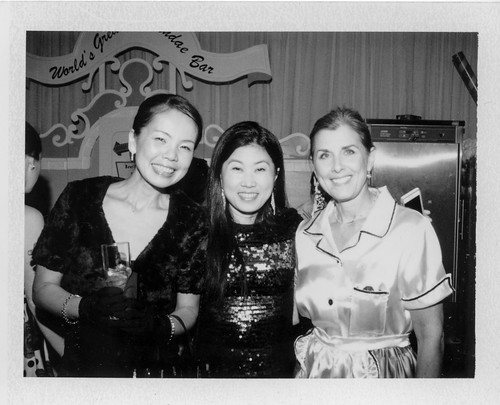
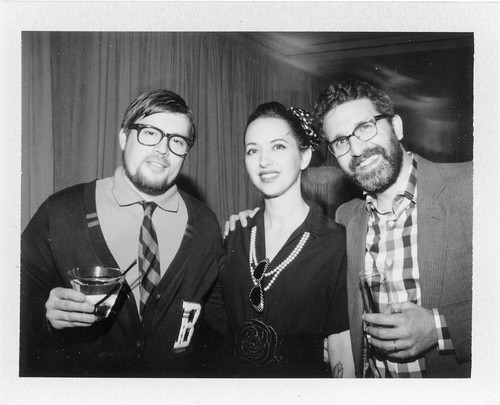
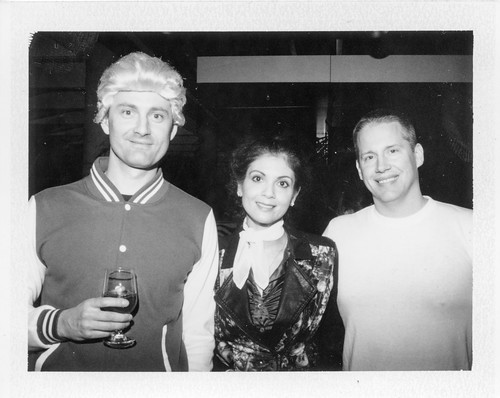
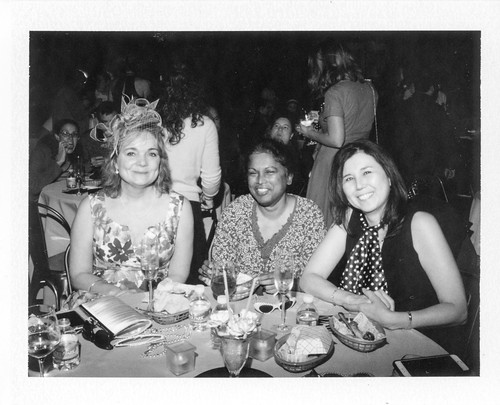
Now, this is harsh, direct light. That's the look I decided to go for, since the theme of the party was "sock hop," reminiscent of the days when someone would have photographed it with instant film and a big, bright, direct flash bulb. I got exactly what I wanted. Here are the results.
 
 
I can't think of a better way to use up what's left of this awesome black and white instant film.
 
People loved posing for me, and especially seeing the results. My catch phrase was "by the time your eyesight recovers from the flash, the print will be ready."
 
Fun.
 
DMC-365.blogspot.com
 

Friday, July 24, 2015

Preparing for Some Travel

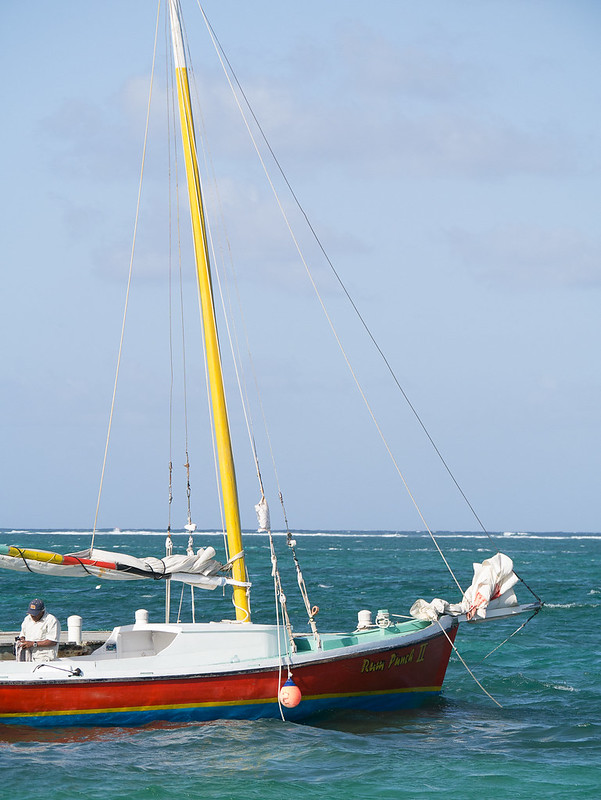
Belizean Scene, by Reed A. George
Panasonic DMC-G1, 100-300mm f4-5.6 Lens at 100mm
iso 2000, f5.6, 1/400 sec
 
I'm mentally gearing up for my trip to Maui and California. This is mostly a family trip, followed by a couple of days of hiking in the Northern California mountains. I'm trying to figure out how little gear I can get away with and be happy on the trip. We'll be in transport quite a bit, especially flying the small airlines between Hawaiian islands.
 
For the camping portion of the trip, it's already decided. I'll be taking my Panasonic DMC-LX100 and Fujifilm GS645S. The LX100 is the super-compact, super-capable solution. With its Micro 4/3 sensor and 24-75mm equivalent, fast (f1.7 at the wide end) lens, I'm almost convinced it's all I need for the entire trip. The GS645S will fill my need for a more manual camera, and as a bonus, it shoots medium format film.
 
For the Hawaiian portion of the trip, I'm tempted to take a camera with a longer focal length lens. Since the GS645S is a wide 60mm (35mm equivalent on 35mm format), the longest I'll have is the 75mm equivalent on the LX100. As you can see above, sometimes I like to shoot longer lenses on travel. So, this has me considering a small Micro 4/3 interchangeable lens kit.
 
For some travel gear tips from a real pro, (Click Here) to check out an article and video on B&H's "Explora" website.
 
DMC-365.blogspot.com
 

Friday, July 3, 2015

And Another From the Handley Library - Fujifilm GS645S

 
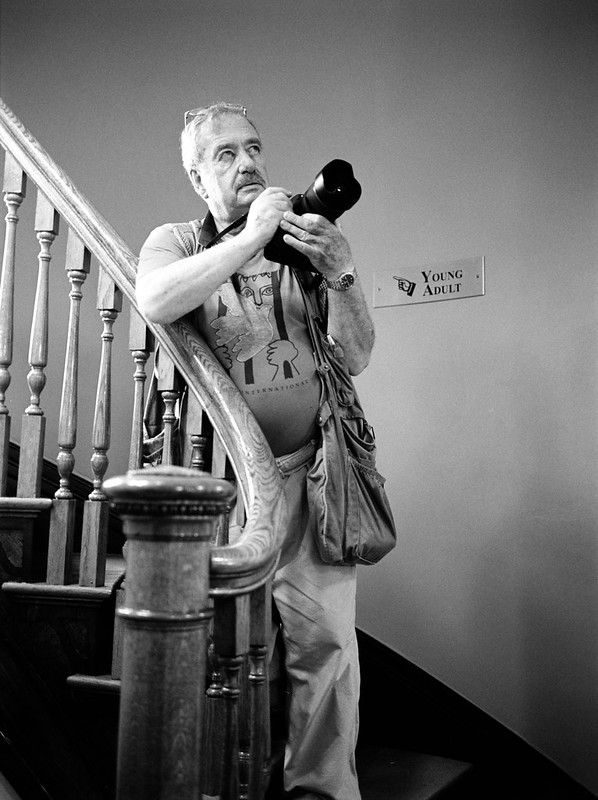
Young Adult, by Reed A. George
Fuji GS645S, Kodak TMax 400 Film
 
I absolutely love how this image turned out. The "Young Adult" sign on the back wall was a bonus; I didn't even notice it when I was shooting the image! Too funny.
 
DMC-36.blogspot.com
 

Thursday, July 2, 2015

The Handley Library in Winchester, Virginia - Fuji GS645S Medium Format Rangefinder

I have happily re-entered the Fujifilm camera owners crowd. No, I didn't buy an X100... I re-bought a camera that I had owned in the past, the 6x4.5 medium format film rangefinder GS645S. With a slightly wide angle (38mm equivalent) 60mm f4 lens, this is one perfect little travel camera.
 
I shot a 15 exposure test roll of TMax 400 in my new camera in Winchester, Virginia, last weekend.
 
Handley Library, by Reed A. George
Fuji GS645S, Kodak TMax 400 Film, Red Filter
 
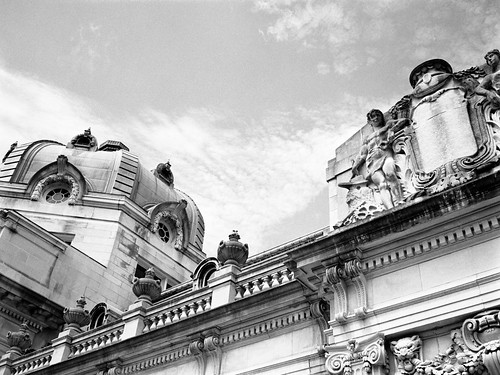
The Handley Library is in my opinion by far the most interesting architecture in Winchester. Built in 1913, it strikes me as a little piece of Europe in rural Virginia. I shot this image with a 2-stop red filter, to darken the bright blue summer sky and bring out the contrast in the clouds. I think it worked.
 
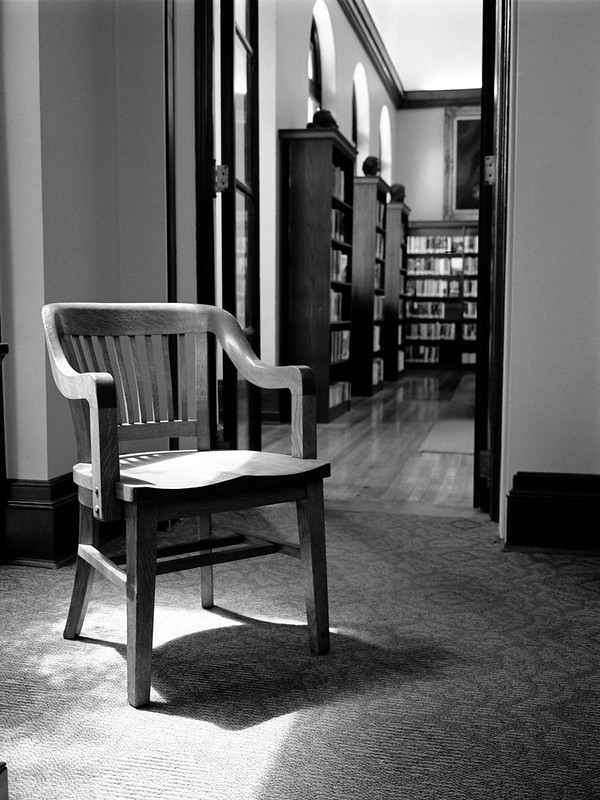
Here's a shot from inside the library, in which I was attracted by the light rather than the subject.
 
Inside the Handley Library, by Reed A. George

Fuji GS645S, Kodak TMax 400 Film

 
I think this image demonstrates what I love about this camera. A wide range of tones, and sharpness that is as good as it comes, if you ask me. Not bad for a 30 year old film camera. I'll write more about the camera in coming days, but suffice it to say the GS645S is a wonderfully compact, if not sturdy, high quality imager.
 
DMC-365.blogspot.com
 

Thursday, April 16, 2015

Polaroid/Fujifilm FP100C Instant Negatives from the Mamiya Universal Press Camera

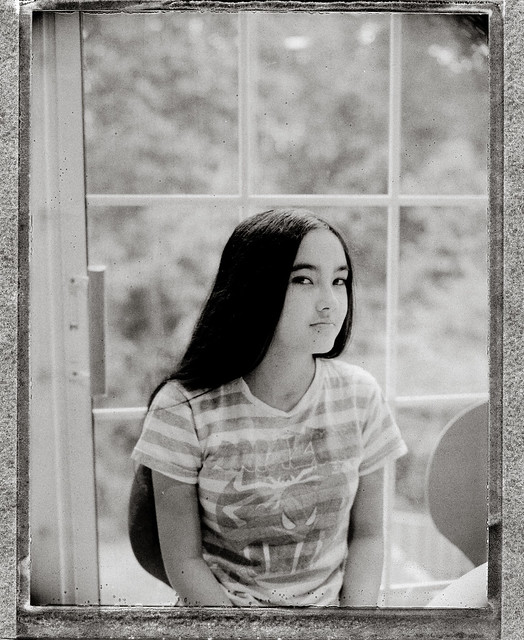
I'm still having fun with my Mamiya Universal Press (MUP) camera. Today, I used it to shoot some portraits of my daughter on her birthday using Fujifilm FP100C instant film. Note that pack film is larger than the 6x9 image that the MUP lenses are designed for, hence the vignetting in the corners.
Scanned Instant Print, 14th Birthday, by Reed A. George
MUP, Fujifilm FP100C Film, f5.6, 1/125 sec.
 
 
I was so pleased with some of the images that I decided to figure out how to recover the negatives from the film backing, which you usually throw away.
 
(Click Here) to see a video from the Film Photography Podcast describing how to recover a negative from Fujifilm FP100C instant pack film. Beware that the process uses bleach. Wear gloves and keep a fan on while you work.
 
It was actually pretty easy to do, and the results are quite impressive. Here's a scan of the same negative that was used to make the print above:
 
Scanned Instant Negative, 14th Birthday, by Reed A. George
MUP, Fujifilm FP100C Film, f5.6, 1/125 sec.
 
I think I could have done a better job scanning this negative. The highlights are too high, and the colors are washed out compared to the print.
 
Here is a more impressive comparison, showing the scanned print (left) and negative (right) at 100% magnification.
 
100% Crops (Print on Left, Negative on Right)
 
As you can see, the negative has a lot more detail and sharpness, and grain. Pretty interesting. I could make a 5x7 print from the negative just fine.
 
DMC-365.blogspot.com


Saturday, March 14, 2015

Spring Really Coming? And Some Thoughts on Cheap Cameras.

Previous Spring, by Reed A. George
Polaroid 103, Fuji FP100C Instant Film
 
I was talking with a couple of friends today about favorite and not-favorite photographers, what I like about cameras and photography and why, and the like, today.
 
It was an interesting discussion, starting off with the fact that neither of them is fond of Gary Winogrand's work; I find it fascinating. Then, we moved on to cameras. Now, you probably know that I love fine cameras. But, I also love cheap ones. This brought me to the realization that some of the images that stick in my mind were made with the cheaper, less precision-made cameras. This image is a good example of that. I can still remember the smell of spring in the air, and the fact that my allergies had started up. It almost makes my eyes itch to look at this picture. But, it also reminds me that spring is right around the corner.
 
Would this image win any popularity contests? Almost certainly not. But, it works for me.
 
DMC-365.blogspot.com

Tuesday, February 3, 2015

Instant Photography Today

Winter 2014 (kind of looks like Winter 2015), by Reed A. George
Polaroid 103, Fuji FP3000B Pack Film
 
I'm still having some fun with instant photography. This was one area I'd stayed out of for several years, but am now in, and really enjoying it. My entry was the Polaroid 103 that my parents sent to me. I converted it to use AAA batteries, found Fuji pack film, and started shooting. Lots of fun.
 
Then, I went to the Film Photography Project's Walking Workshop last spring, where I was introduced to the new Fujifilm Instax Neo Mini. I now have one, along with the wireless Instax printer. These are fun, but they're really just party toys. The images are nice, but quite small.
 
Next, my friend Dennis Gallus sold (nearly gave) me his Mamiya Universal Press (MUP) outfit. I added a pack film back, and now I have a very capable, high quality instant imaging system, complete with full manual control and interchangeable lenses. Awesome.
 
And now, I've picked up a higher grade Polaroid (the Model 250), complete with several hard-to-find accessories, including the portrait kit, closeup kit, remote release, and timer. That camera is on its way to Seattle for a shutter replacement. What makes the 250 higher quality than my 103? All metal body, Zeiss finder, tripod mount, some exposure control. All pretty nice.
 
I was reading about the current state of instant photography. It's not all good. The worst news is that the venerable Fujifilm FP3000B is discontinued. Still available at this point at twice its normal price or more, but no longer being manufactured. That leaves only FP100C, which is great color film, but no B&W option. The Impossible Project is a great development, making new instant films with a reconditioned Polaroid factory, but the prices are high, and the offering incomplete. $3 per shot is an awful lot. I find myself hoping that they'll make pack film in the future, but I'm not looking forward to the cost.
 
(Click Here) to read a review of the state of instant photography on polaroidland.net.
 
DMC-365.blogspot.com

Thursday, December 11, 2014

Using the Fuji Instax Neo for its Intended Purpose - Party Pics!

I attended the annual holiday party at my place of work this weekend. Here are some images I made with the Fuji Instax Neo (and some snapshots from a photo booth setup at the party).
Party Pics, Fuji Instax Neo
 
I had to purchase some more Instax film, and was very happy to find that the best price available (including Amazon and eBay) was at the Film Photography Project's online store.
 
(Click Here) to visit the Film Photography Project (FPP) for all of your film ordering needs. These guys are great, and will take good care of you. Just to be clear, I have no financial or commercial interest in FPP; I just plain like them.
 
DMC-365.blogspot.com
 

Monday, October 13, 2014

Pro Photographer Shoots Fuji Instax for Fun!

fotolucid_it_web_instax_scan_006
 
Image Source: http://snapitseeit.com/cindys-island-time/
 
I've recently gotten back into instant film photography, because I like it. No other reason. I have a Fuji Instax Neo, which really is pretty darned good. But, for amazing quality instant pictures, my Mamiya Universal Press (MUP) with pack film back is unbeatable.
 
This picture is by professional photographer Cindy Leon.
 
(Click Here) to read about her thoughts on the Fuji Instax Wide (larger format than my Neo), and see several more nice instant images she made.
 
I'm down to only a few more packs of Fuji FP3000B to shoot in my MUP, and am dreading the end of it, as the film has been discontinued. The much slower (iso 100 vs. 3000) color film is still available from Fuji, but who knows for how long.
 
So, the Fuji Instax film, which is relatively new, may one day become our only instant film option. But, rather than focus on narrowing options, I should be focusing on enjoying making every shot with instant film!
 
DMC-365.blogspot.com


Friday, August 22, 2014

Mamiya Press Universal and Fuji FP3000B

I'm continuing to enjoy shooting instant pictures with my new Mamiya Universal. Here's a shot I made with Fuji's black and white iso 3000 pack film. I used the standard 100mm f3.5 Mamiya Sekor lens for this one.
 
Cropped, From Scanned Print
 
And, for reference, here's what the whole image looks like, scanned from the paper negative:
 
From the Paper Negative
 
I really need to photograph the Universal camera so that I can share all the details of what's included. It's a big heavy beast, but has a lot of interesting features.
 
I've received my first online scans from film I shot in the Universal, and am really impressed with the image quality. As soon as my film returns home from The Darkroom (thedarkroom.com), I'll make high resolution scans of a few images and share them as well.
 
DMC-365.blogspot.com
 

Tuesday, August 19, 2014

Fuji Instant Pack Film FP3000B, Negative and Positive,and Mamiya Press Universal

My very good friend Dennis recently sold me his Mamiya Universal kit. Initially, I was not interested, as the Universal is an enormous and heavy medium format kit. More on that later. I'll post some images of the kit and why I now really find that I like it.
Well, one of the things that came with the kit was a Polaroid back. Unfortunately, it is designed for Polaroid 80 series film, which is no longer available. About a week of trolling ebay yielded a very nice replacement, which allows use of Fuji pack film. Currently there are two film options in this format - color at iso 100, and black and white (FP3000B) at iso 3000. How's that for a range?
Unfortunately, the FP3000B film has been discontinued. There are still stocks of it around, but at 2.5-3X the original cost. I have a few packs, but probably won't be able to buy more.
Here's a shot of my wife, made with the Universal, 150mm f5.6 lens, and FP3000B:
Scanned from Print
I was quite pleased when I saw this appear as I peeled the backing paper away. It's quite interesting to get a really sharp image with great optics on instant film. My old Polaroid camera just doesn't stand comparison.
Both types of pack film produce negatives in the process, but of very different types. The 100 speed color film negatives must be removed from the backing and bleached, producing a transparent negative. FP3000B produces a paper negative, which you simply have to protect and allow to dry in the dark (or near dark). Here's what the negative from the print above looks like:
Paper Negative, Fuji FP3000B Instant Pack Film
 
If you take the dry negative and scan it on a flatbed scanner (I use an Epson V750), you get something like the image above. Invert the tones and flip the image horizontally in Photoshop, and you get this:
 
Positive from Scanned Negative
 
Pretty cool, huh? The scan from the negative is sharper than the original print, but also shows grain. I love the slightly uncontrollable factors like the edge patterns and occasional black dots. This feels like real photography to me.
 
One note - you'll notice lens vignetting on instant prints from the Mamiya Universal. It's designed for maximum size images of 6x9 on 120 film. The pack film image is larger than that. Reportedly, the Mamiya 75mm and 127mm lenses don't vignette on pack film. I don't have either, so can't say for sure.
 
Having shot a few rolls of film in the Universal, I'm anxiously awaiting an email from The Darkroom, notifying me that the film I sent in last week is processed and scans are posted. Based on the instant results, I'm expecting some amazing image quality from the normal medium format film I've shot.
 
More to come from the Mamiya Universal!
 
DMC-365.blogspot.com
 
Need great film processing? (Click Here) to visit The Darkroom. They're the best in the business.
Thursday, August 7, 2014

Bike Riding with the Fuji Instax Neo

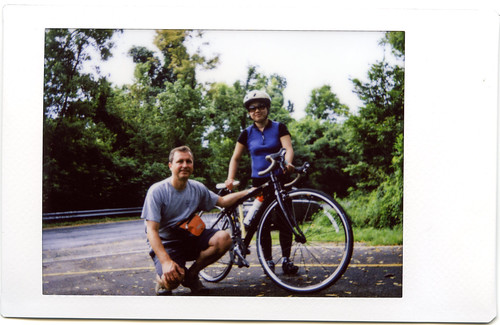
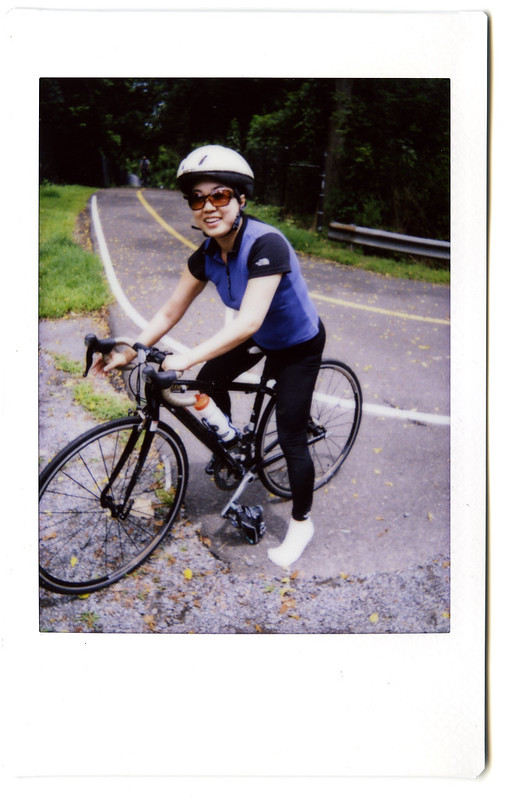
My wife and I went on an all-too-rare bike ride together last weekend. I took the Fuji Neo along.
Before the Ride, by Reed A. George
Fuji Instax Neo Instant Camera
 
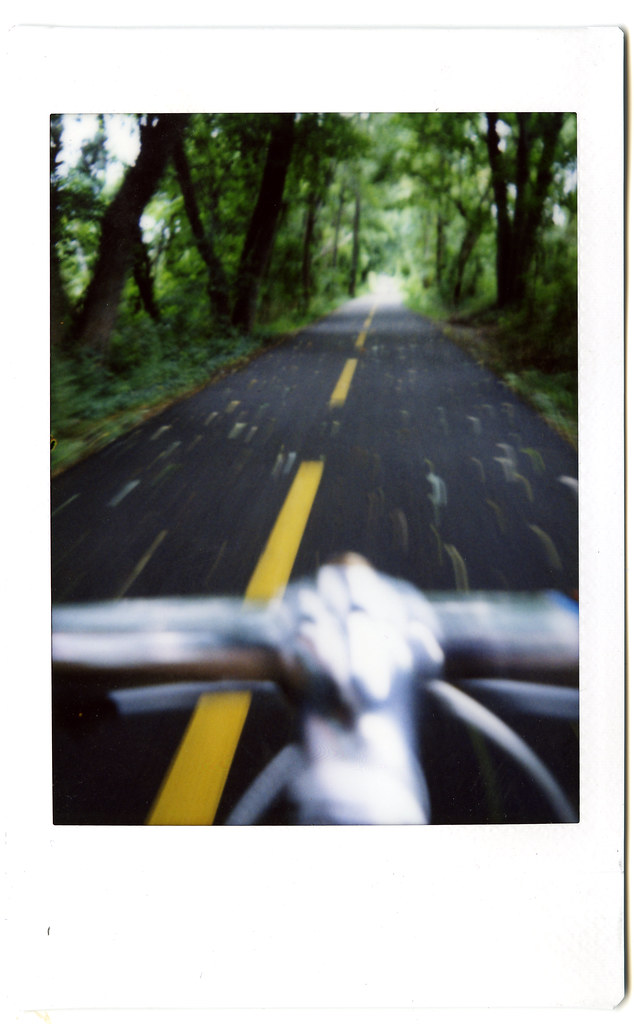
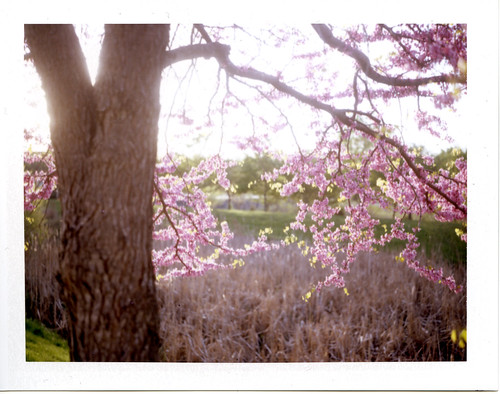
I carried the Neo around my neck the whole ride. It's very light, so that didn't present a problem at all. I decided to try and capture some motion blur in one of the more wooded sections of the trail. First, I tried the B setting, and overexposed to the point that the image was useless. For my second try, I simply turned off the flash, which resulted in a longer exposure. Here's what I got:
 
Daylight Motion Blur, by Reed A. George
Fuji Instax Neo Instant Camera
 
My wife had some challenges with her biking shoe clips, namely getting them to clip in and then unclip. Here she demonstrates the emergency evacuation procedure, which consists of pulling your foot out of the shoe, leaving it attached to the pedal. No kidding, these shoes were the biggest safety hazard of the ride.
 
Pedal Clip Challenges, by Reed A. George

Fuji Instax Neo Instant Camera

 
I'm really enjoying the little Fuji Neo. I'm hopeful that Instax film for it will be around a while, even while Fuji discontinues it's older pack film. There seems to be a lot of focus on Instax, and I seem them popping up in various places. If you're looking for a fun photographic diversion, give one a try. The Neo happens to have a lot more creative settings than the other models, including B (time exposure), exposure compensation, and the abilty to turn the flash off when you want. Buy yours from my Amazon link below and support my blog!
 
DMC-365.blogspot.com


Sunday, August 3, 2014

More Fun With the Fujifilm Neo Instant Camera, and a Review

 
Hair, by Reed A. George
Fujifilm Instax Mini Neo 90
 
A couple of weeks back, I posted about the Fujifilm Instax Neo camera that I'd just bought. (Click Here) to see that post, which includes several images.
 
I've gotten more interested in instant photography lately. I really like the Fuji pack films which fit many Polaroid cameras, including my 103. (Click Here) to read about that camera. However, one can only guess that these films are not long for this world. In fact, discontinuation of one of the two types, Fujifilm's black and white FP3000B, has already been announced. FP100C is still being made, but who knows for how long.
 
So, probably the most attractive thing about the new Fujifilm Instax Mini Neo is that there's a good chance this film will be around for a while. Fuji's doing a good job of introducing new cameras, and even some with creative controls like the Neo, so hopefully that will keep the market strong.
 
(Click Here) to read a nice review of the Instax Mini Neo on SnapItSeeIt.com.
 
For not too much money, the Neo is really a nice, fun little camera. Buy yours through my Amazon link below!
 
DMC-365.blogspot.com