So, I got into Micro 4/3 camera gear in large part due to the compactness of the system. I used to carry around a very heavy bag of Nikon gear, which consisted of one body and a few lenses, flash, etc. Because I didn't want to be changing lenses in the field all the time, and could only carry one body, I depended largely on zooms, usually with one fast normal prime along for the ride.
So, what has Micro 4/3 done for me in terms of my travel kit? Maybe this will give you an idea:

My Travel Kit - LowePro CompuTrekker AW,
Giottos MT9241 Tripod, Velbon QHD-41 Mini Ballhead
While this is the same backpack I used with Nikon, what I carry inside, and the resulting weight, is very different. Being able to use a small travel tripod and mini ballhead is an immediate advantage of lightweight camera equipment.
Here's what's inside:

Travel Kit, Exploded
Let's see here:
- Panasonic Lumix DMC-G3 bodies (2X), batteries (4x)
- Panasonic Lumix 14-140 f4-5.8 zoom
- Panasonic Lumix 14mm f2.5
- Pana-Leica 25mm f1.4 Summilux
- Pana-Leica 45mm f2.8 Macro-Elmarit
- Panasonic 46mm filters (2X - 1 Polarizer, 1 3 stop ND)
- Nissin Di466 flash
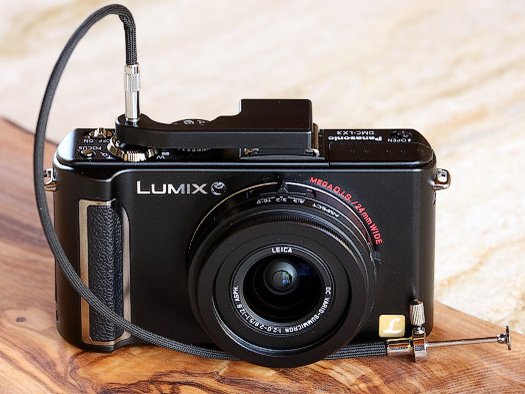
- Panasonic Lumix DMC-LX5, batteries (3X)
- Panasonic Lumix DMC-TS3 waterproof camera, batteries (2X)
- LowePro Messenger Bag (fits inside Computrekker AW)
- Mountainsmith Camera Cube (padded divider pack, fits inside messenger bag)
- Panasonic remote shutter release
- Apple iPad2
- Shutterhat camera rain protector
- Hakuba mini-tripod
- SD cards, pen and paper, passports, etc.
While this pack is not exactly lightweight, there is significant capability and redundancy here. For a big, expensive trip, that's what I want. Having two interchangeable lens bodies makes me much more comfortable. Not only that, it allows me to shoot mostly with primes, which I really prefer. I found on this trip that I kept the 25mm Summilux on one of the G3s, and alternated between the 14mm and 45mm on the other. I only used the zoom a couple of times, when I wanted longer reach than the 45mm would afford.
What would I leave out if I were going again tomorrow? Not much, actually. I would probably leave out the LX5, but that said, I did use it exclusively for a day of family activities. Yes, I could have used one of the other cameras, but the LX5 sure is a great balance of size and capability. I may leave out the flash. I don't use flash a lot, and they do weigh quite a bit, especially with an extra set of batteries. I might leave out the 14-140 zoom.
The fact that the padded messenger bag fits inside the Computrekker is great. That allows me to only be a packhorse for the whole kit when I'm making major moves between hotels, etc. Once on location, I can put just what I need in the messenger bag, and travel much more lightly.
The DMC-TS3 turned out to be fun on this trip, as I did shoot a few underwater pics. I'll post those in the coming days.
So, I hope you can see that I have a lot more capability with Micro 4/3, at reasonable carrying weight. If I were to limit it to one body, a couple of zooms, and a single fast prime, it would really be a lightweight kit. Sometimes, while my back is aching, I do feel that I challenged myself to fill the volume of the Computrekker.
What do you think? Am I over-prepared for an overseas one week trip? Under-prepared? What would you pack differently? I'm always interested to learn from others.
DMC-365.blogspot.com