Showing posts with label river. Show all posts

Saturday, January 23, 2016

Two More From the Fuji GW690II

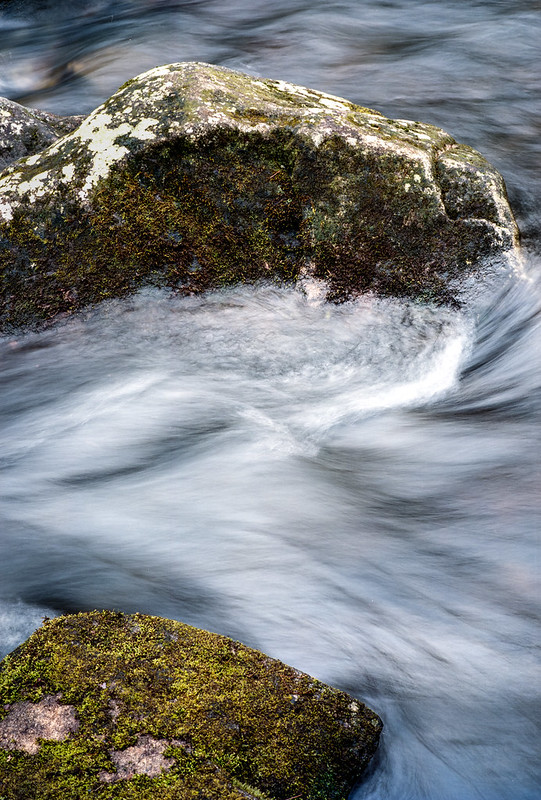
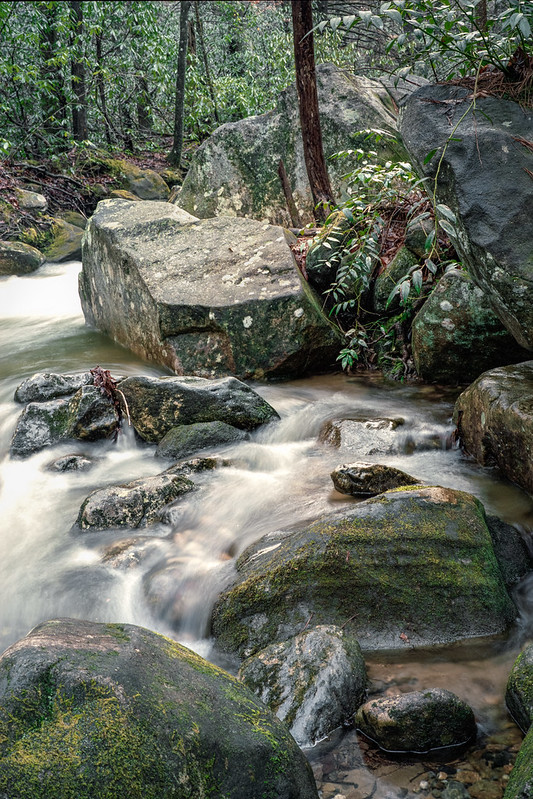
Adding to my last post, with two more 6x9 medium format images from Jones Gap State Park in South Carolina.
This is a detail shot of the water at my feet . To give an idea of the scale, I'd say the rock at top was about six feet away. I love the deep darkness and blue cast in the water
 
 
This image didn't appeal to me at first, but I've grown to appreciate it.
 
Both were shot on Kodak Portra 400. No filters were used.
 
DMC-365.blogspot.com

Wednesday, September 2, 2015

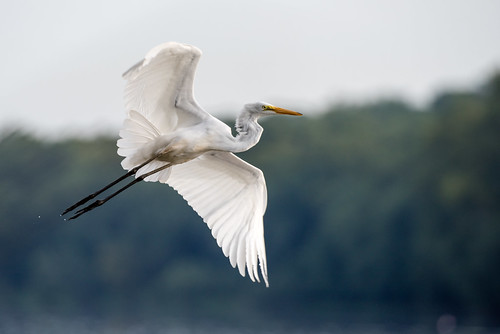
Great Egret - Nikon D810 and Nikkor 200-400mm f4 AF-S G VR Lens

And here's my best bird-in-flight shot from Sunday's paddle trip.
Great Egret (Ardea alba), by Reed A. George
Nikon D810, Nikkor 200-400mm f4 AF-S G VR Lens
iso 200, f5, 1/1250 sec.
 
I watched this beauty, and his/her nearly-identical partner, approach me from far way, flying downriver toward my kayak. I was lucky enough to get the focus just right on this shot, and capture the wings spread wide. This camera / lens combination is just astounding. It's what I've been working toward for years in gear for nature photography.
 
I find myself tempted to try the new Nikkor 200-500mm f5.6 (Click Here), a much lower cost and lower weight solution, but it's not going to provide image quality like this. And, that extra stop of light gathering (f4) in my lens really matters.
 
DMC-365.blogspot.com


Wednesday, May 20, 2015

Cottonwoods Blooming on the Potomac River

On my most recent kayaking trip on the Potomac River, I shot this image of a cottonwood tree, blooming and losing its blossoms to the river surface.
Cottonwoods on the Potomac, by Reed A. George
Panasonic Lumix DMC-TS5
iso 160, f3.3, 1/160 sec.
 
As you can see, I made this image with the compact, waterproof Lumix DMC-TS5 camera. It's a great companion on kayaking trips, as it's really well-protected against water, dirt, sand, and shock. I think it makes very nice pictures for a compact point and shoot.
 
DMC-365.blogspot.com

Wednesday, May 13, 2015

Some Wildlife From my Kayak - Nikon Df and Nikkor 300mm f4 AF-IF Lens

I have an older Nikkor internal focus 300mm f4 lens. I have been tempted to upgrade it to the AF-S version, but mine is so good, I just haven't seen a reason to do it.
 
Yesterday, I loaded my Nikon D700 and 500mm f4 Ai-P (manual focus) lens and matching gargantuan Gitzo tripod that I picked up very used and very cheap, along with my Nikon Df and 300mm f4 and Tamron AF 1.4X tele-extender into my kayak and paddled out. I ended up never using anything but the Df and 300mm. Instead of setting up my tripod near my favorite osprey nest (even though the birds are on the nest), I decided to paddle further up the creek and explore.
 
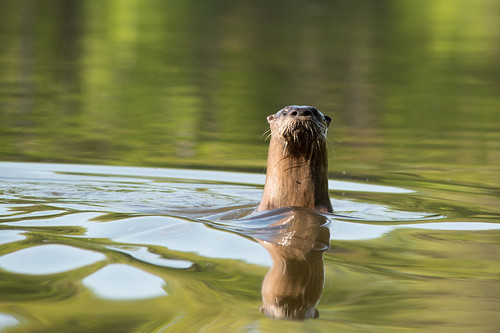
Stopping to rest in the shadow of a steep bank, not five minutes later I saw a swirl in the water, followed by a head coming to the surface. Thinking that it was likely a beaver, I started shooting. The sound of the camera clearly alarmed the animal, who quickly went under water, then returned to the surface looking straight at me. It was a river otter! The first one I've ever seen in the wild. He actually raised high out of the water to get a good look at me. I was ready, with my Df set to lock exposure with the rear button, meter set to spot metering, and auto-focus ready to go. Here's one of the shots I got.
 
 
River Otter, by Reed A. George
Nikon Df, Nikkor 300mm f4 AF-IF Lens
iso 1100, f8, 1/1000 sec.

Another otter passed through very quickly a minute later.

I had the camera in auto-ISO mode, and exposure in M. So, I had a fast shutter speed and optimal f-stop already set. The camera chose the ISO. With the Nikon Df, I could shoot with confidence, without worrying about digital noise from the relatively high ISO setting.
 
I've printed this image at about 10"x15" and it looks just great.
 
I've got some more images from the morning kayak trip, and will share them in later posts.
 
DMC-365.blogspot.com
 

Wednesday, July 9, 2014

Letting the Water Run By

At last weekend's festival on the Shenandoah River (River and Roots, that is), I shot a few pictures of this young man relaxing in the rapids:
 
 
Letting it All Roll By, by Reed A. George
Nikon D700, Nikkor 180mm f2.8 AF Lens
iso 1600 f2.8, 1/750 sec.


Moving On, by Reed A. George
Nikon D700, Nikkor 180mm f2.8 AF Lens
iso 1600 f2.8, 1/750 sec.
 
I like the layers of light rapids, dark still water and tree shadows, and low green of the leaves. In the first shot, the boy provides just enough of a focal point, and some mystery or question to the image. A nice diversion from shooting the music event.
 
DMC-365.blogspot.com
 

Saturday, July 5, 2014

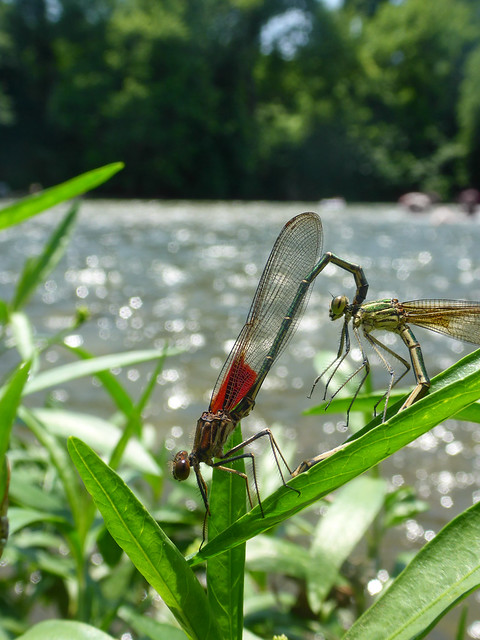
Panasonic Lumix DMC-TS5, Macro, and Damselflies


P1010917.jpg
 
Damselflies - American Rubyspot (Hetaerina americana)
by Reed A. George
Panasonic Lumix DMC-TS5
 
Last weekend, I took a little float trip down the Shenandoah River. Part of the River and Roots music festival, held at Watermelon Park in Berryville, Virginia, this educational event was led by musician and teacher Josh Bearman of The Hot Seats.
 
Anyway, back to the subject at hand - damselflies. This potential couple of American Rubyspots was perched very near the water surface. I say potential couple, because at this stage, the female (to the right) is being held by the male, and allowed to evaluate him for suitability. If she approves, her abdomen and terminal genitalia will connect to his body, forming a sort of circular orientation between their bodies.
 
These guys spend 1-3 years as aquatic larvae, with only a couple of weeks as adults, during which they mate and then die.
 
The tiny sensor on the Panasonic Lumix DMC-TS5 has all of the drawbacks of a small sensor, of course, which includes digital noise at high ISO settings. However, a big advantage of the small sensor is the closeup capability, as demonstrated here. This would have been exceedingly difficult to capture with a DSLR, even forgetting about the risk of getting it wet. In this case, I simply left the camera in iAuto mode, and slid it down into the grass next to the damselflies. I shot several images in a few seconds, but found this one to be the best.
 
DMC-365.blogspot.com

Thursday, January 3, 2013

Foggy Morning Over the Potomac

 
View From the Bridge, by Reed A. George
Leica M9, Carl Zeiss Sonnar C 50mm f1.5 Lens
iso 200, f8, 1/30 sec
 
I had a meeting get cancelled at work this morning. So, I took a quick walk around the property. Here's one of the three shots I got, the one that I like.
 
I recently read something about rhythm and tension in composition. I like the rhythm of the trees along the shore, the round little island, and the triangular patch of light reflected on the water. The white tree and leaves leaning over, and reflected in, the river give some tension, in my opinion. The foggy atmosphere made for a low contrast image, which I also like.
 
I'm glad I got a chance to walk out and see this scene.
 
DMC-365.blogspot.com


Tuesday, October 30, 2012

Nadav Kander, Guest Photographer on Tim Ashley Photography, Documents the Changing Yangtze River

I like to include at least one image with every post. Since my subject for today is from a site that doesn't allow sharing of images, and for good reason (proceeds of use fees go to a non-profit organization serving challenged individuals and communities), I decided to include one of my own.
Potomac River, Modified by Man, by Reed A. George
Rolleiflex T Twin Lens Reflex
 
This shot was from one of my first semi-cohesive projects, about the C&O Canal. The project went no where, but I'm sure I learned a few things from it.
 
Anyway, my subject today is a series of photographs by Nadav Kander, posted on Tim Ashley's photography site. Nadav photographed the Yangtze River in China, from it's urban terminus in Shanghai to it's source far inland. It is a sublime series of photographs.
 
(Click Here) to see Nadav's photographs on Tim Ashley's site.
 
The Yangtze's banks, according to the text, are home to 18% of the world's population. I guess it all comes down to how far from the river you include in that calculation, but in any case, it's an amazingly large number of people. The river has succumbed to the wants and needs of man in many ways, including pollution, bridges, and dams. Mr. Kander's photographs show this, with relatively bleak colors and amazing contrasts in scale of subjects, many times with enormous structures overshadowing human figures. However, the images also show people improvising and adapting to their new world. My favorite image shows people sitting at a large round table under a giant highway overpass. It is entitled "Chongqing IV (Sunday Picnic), Chongqing Municipality."
 
Nadav shot all of the images on 4x5 film, which lends a nice uniformity to the style.
 
Even though it was not his objective at the outset, Nadav has produced an important visual narrative on the state of our world, yet without bitterness or despair. In fact, I find the people interacting with the new river encouraging, even though it's true that whole villages of peoples' homes have been lost to the "progress."
 
I need to re-commit myself to photo projects.
 
DMC-365.blogspot.com