DMC-365 focuses on creative photography equipment, techniques, and approaches. I believe that equipment is part of the creative process. I use Leica, Panasonic Lumix, Nikon and other cameras, both digital and film. On DMC-365, you can expect to see a lot of my own work, as well as work by others that I find interesting. I share methods, equipment developments, and creative approaches to photography.
Showing posts with label kayak. Show all posts
Sunday, May 8, 2016
Sunday, September 13, 2015
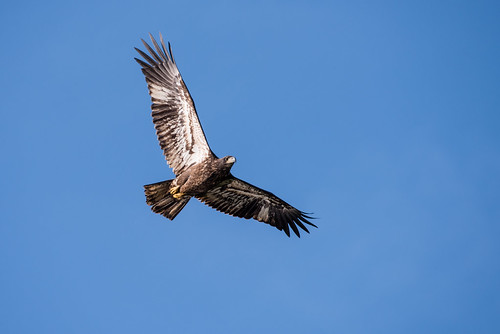
Today's Eagle Shot - Nikon D810, Nikkor 200-400mm f4 AF-S VR Lens
I got out kayaking on the Potomac River again this morning. I saw quite a lot of wildlife, including a muskrat that swam to within a few feet of my kayak, and a giant snapping turtle that nearly touched it. Both were too close for me to focus with the big lens. I also watched a herd of deer grab their morning drink at the river's edge.
Here's the best shot I got today, of an immature bald eagle.
Immature Bald Eagle, by Reed A. George
Nikon D810, Nikkor 200-400mm f4 AF-S VR Lens
iso 220, f5.6, 1/1250 sec.
You can click on this image to see it larger on flickr.
Man, am I lucky to have access to such a beautiful place to paddle on weekend mornings at sunrise.
DMC-365.blogspot.com
Wednesday, September 2, 2015
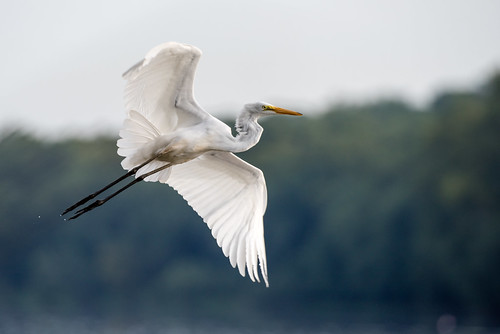
Great Egret - Nikon D810 and Nikkor 200-400mm f4 AF-S G VR Lens
And here's my best bird-in-flight shot from Sunday's paddle trip.
Great Egret (Ardea alba), by Reed A. George
Nikon D810, Nikkor 200-400mm f4 AF-S G VR Lens
iso 200, f5, 1/1250 sec.
I watched this beauty, and his/her nearly-identical partner, approach me from far way, flying downriver toward my kayak. I was lucky enough to get the focus just right on this shot, and capture the wings spread wide. This camera / lens combination is just astounding. It's what I've been working toward for years in gear for nature photography.
I find myself tempted to try the new Nikkor 200-500mm f5.6 (Click Here), a much lower cost and lower weight solution, but it's not going to provide image quality like this. And, that extra stop of light gathering (f4) in my lens really matters.
DMC-365.blogspot.com
Tuesday, September 1, 2015
Back Home, on the River
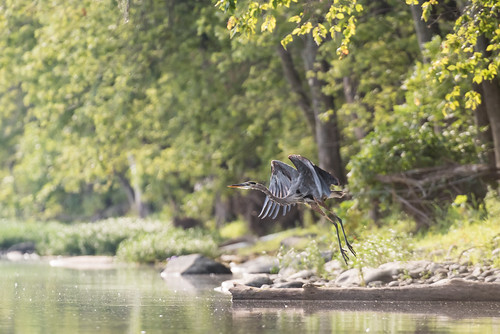
My long vacation over, I'm back out on the river in my kayak, with my Nikon D810 and 200-400mm f4 AF-S VR lens. Here's a shot from last Sunday on the Potomac.
Great Blue Heron, Ardea herodias, by Reed A. George
Nikon D810, Nikkor 200-400mm f4 AF-S G VR Lens
iso 1800, f5.6, 1/1250 sec.
On this particular outing, I focused on wildlife photography, leaving my fishing rod untouched. Rather than "running and gunning" down the river as I fished, I pulled the kayak quietly to shore in a few places, and was rewarded with more time to observe each creature that I came across, including several bird species, as well as a red fox.
DMC-365.blogspot.com
Thursday, August 13, 2015
Sunrise on the Potomac
Sunrise Paddle on the Potomac, by Reed A. George
Panasonic Lumix DMC-TS5
I'm on vacation for the next two weeks. I plan to keep blogging, but prepare for some brief posts! I'll be focused on relaxation, and will be back in earnest soon.
DMC-365.blogspot.com
Friday, August 7, 2015
Once Past the Bear...
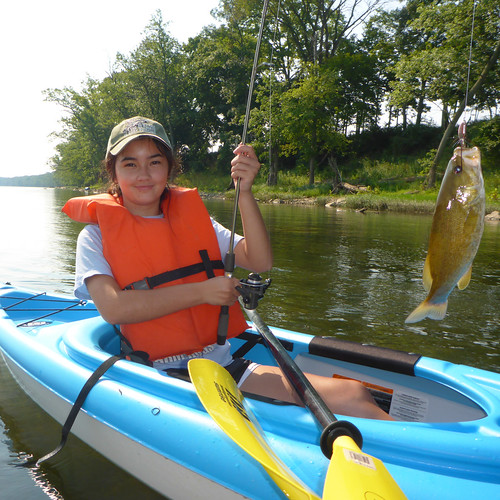
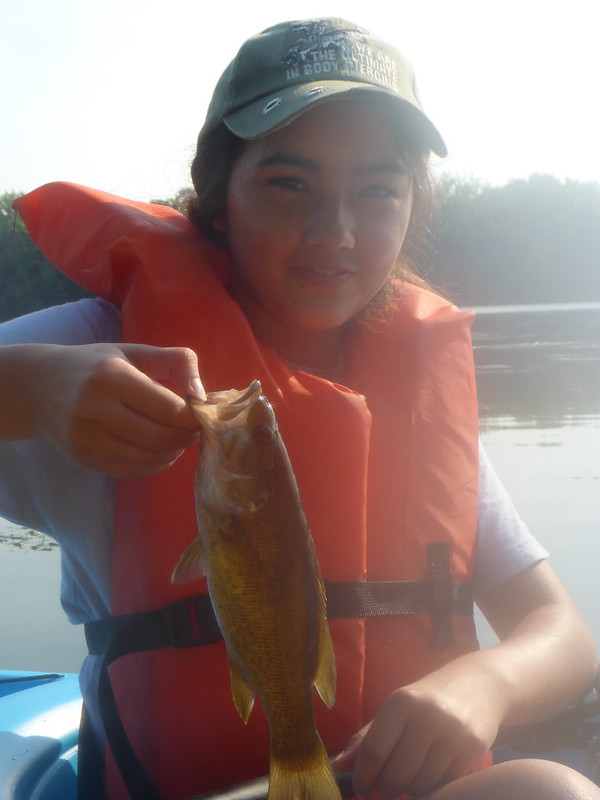
The Girl and I got out for some fishing. She's very proud to have caught the biggest fish, a smallmouth bass. It's really cool to see her ably control her own kayak and fishing reel, to great success.
Both taken with the Panasonic Lumix DMC-TS5, the waterproof, shockproof wonder. Perfect to have in my pocket for every kayaking trip.
DMC-365.blogspot.com
Thursday, August 6, 2015
lions, tigers, and... BEARS! Oh, My.
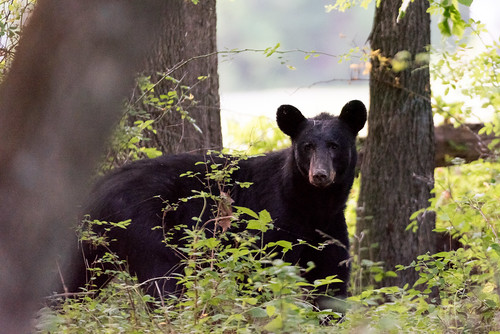
Okay, no lions or tigers, but on the drive in to my local kayaking spot here in Northern Virginia this weekend, I did see foxes (4), deer (dozens), and a black bear!
Black Bear (Ursus americanus) in Suburbia, by Reed A. George
Nikon D810, Nikkor 200-400mm f4 AF-S VR Lens
iso 3200, f4, 1/125 sec.
Keep in mind, this is in Northern Virginia, where the townhouses and strip malls are rapidly gaining on the trees in number. It was a pleasant surprise to see this beautiful animal here. Also a little troubling. I'm concerned for his (her?) future.
It was just after 6:00 AM, and the light was low there in the early morning shade. I didn't have time to make adjustments, other than to crank the iso up as far as I felt comfortable with. Luckily, that got me to a shutter speed where one or two exposures came out sharp, even though I was handholding the big 200-400mm lens, zoomed to 400mm.
The approximate focus distance is 29.9'. That bear could cover that distance in less than one second. Thankfully, he didn't.
DMC-365.blogspot.com
Monday, July 20, 2015
Great Blue Heron (GBH)
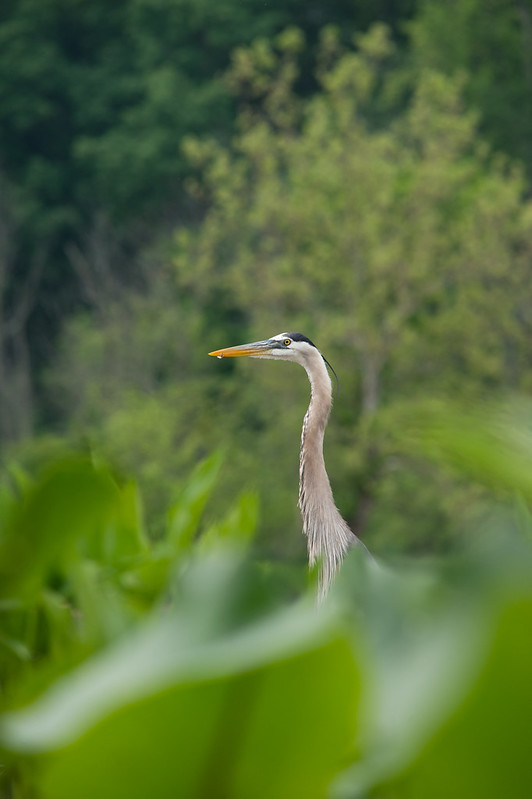
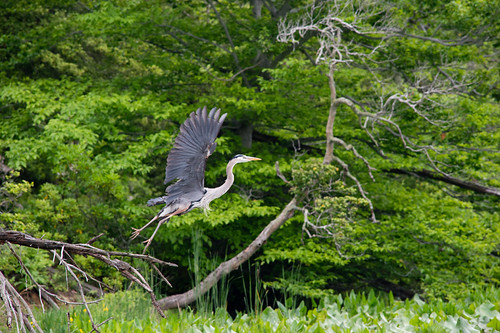
My birding friends refer to the great blue heron as a GBH. Very common in this region, they are really interesting birds. It's great fun to watch them feed. In the first shot below, you can see a fish scale hanging from this guy's beak; he had just dropped a big fish.
GBH Sitting, by Reed A. George
GBH Flying, by Reed A. George
I shot both of these images on a recent kayaking trip to Mason Neck State Park in Virginia, with my Nikon D700 and Nikkor 200-400mm f4 AF-S VR G lens.
DMC-365.blogspot.com
Thursday, June 25, 2015
More of a Story in Wildlife - Nikon D700 and 200-400mm f4 AF-S VR Lens
I wrote recently about a personal challenge to myself, to move my wildlife photography from mere "find the animal and shoot it" to telling at least part of a story. In photography, the story doesn't have to be complete. In fact, sometimes, if the story presents more questions than answers, that can be a good thing. That's kind of the case here.
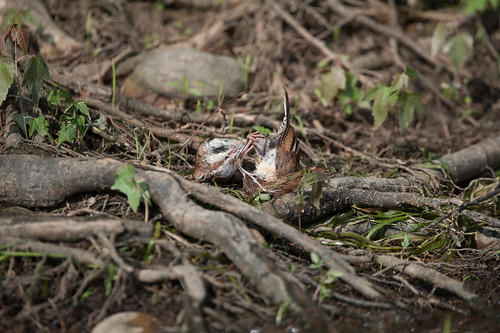
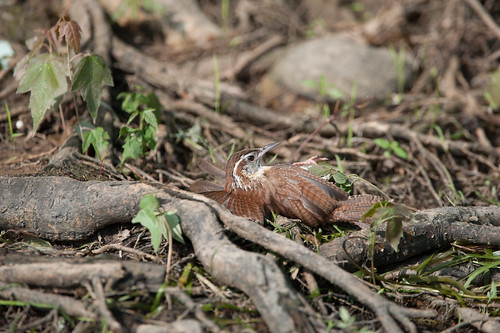
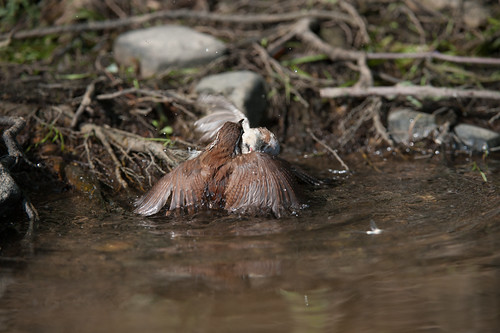
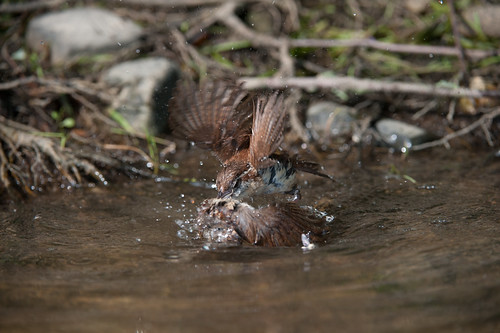
At the end of a kayaking trip, as I shoved my boat up to the shore, I saw a clump of feathers bouncing around on the bank. Not sure what I was looking at, maybe an injured bird?, I decided to look closer, and shoot. Here's what I saw.
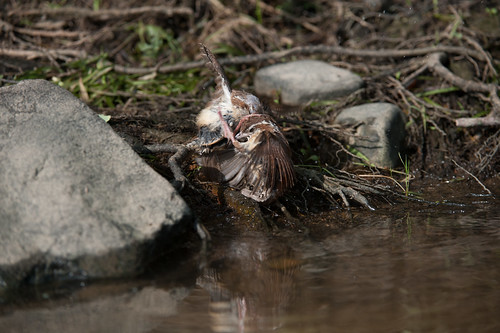
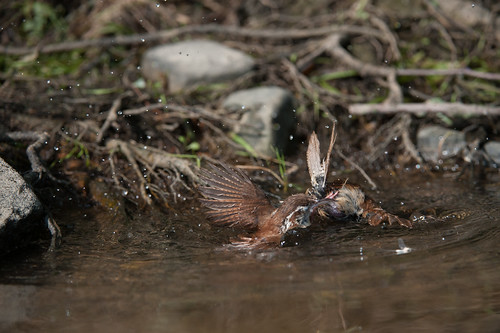
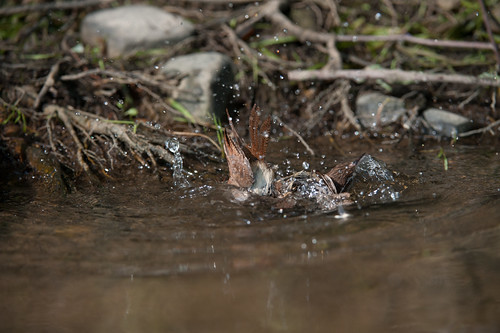
Now, the camera saw it much more clearly than I did at the time. What you're looking at is two birds (Carolina wrens?), fighting it out. And I don't mean play fighting. These two were not only using their sharp beaks against each other, they were actually clawing at each other's eyes! As they continued, and even ended up in the water, here's how it looked.
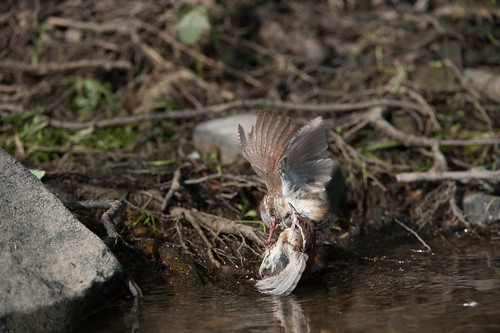
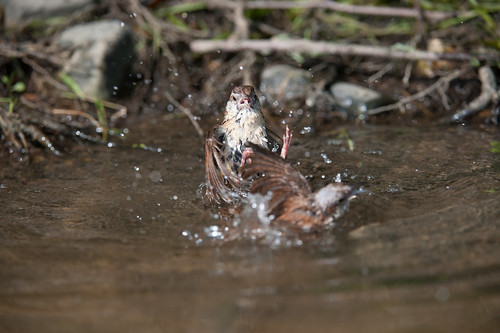
Crazy, right? And here's the final, and crowning shot. Bird rage!
Bird Rage, by Reed A. George
Nikon D700, Nikkor 200-400mm f4 AF-S VR Lens
As they finally split up and ended the fight, with one bird chasing the other off into the bushes, I just couldn't keep up with the big lens. I missed a couple of other interesting shots, but do feel that these show the event pretty well.
Does anyone know if I have the species correct, or what these vicious little birds were doing to each other?
I'm happy to have caught some very interesting behavior in this sequence.
DMC-365.blogspot.com
Monday, June 1, 2015
Extreme Kayaking
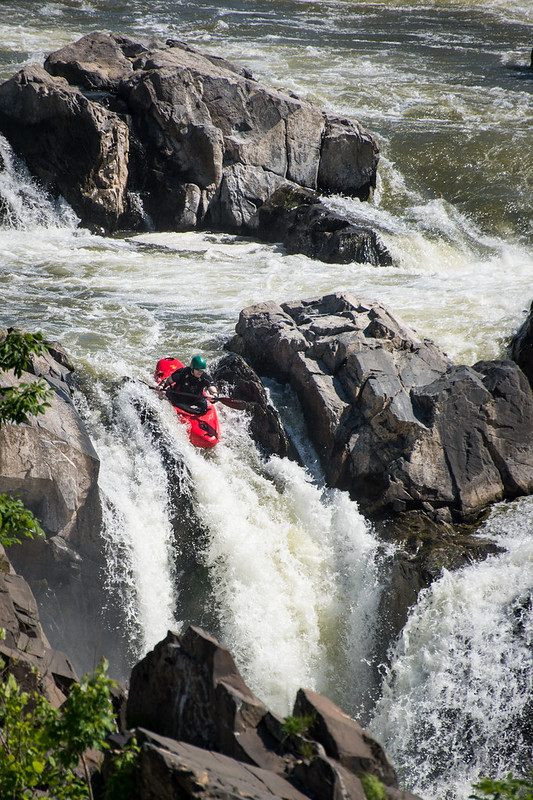
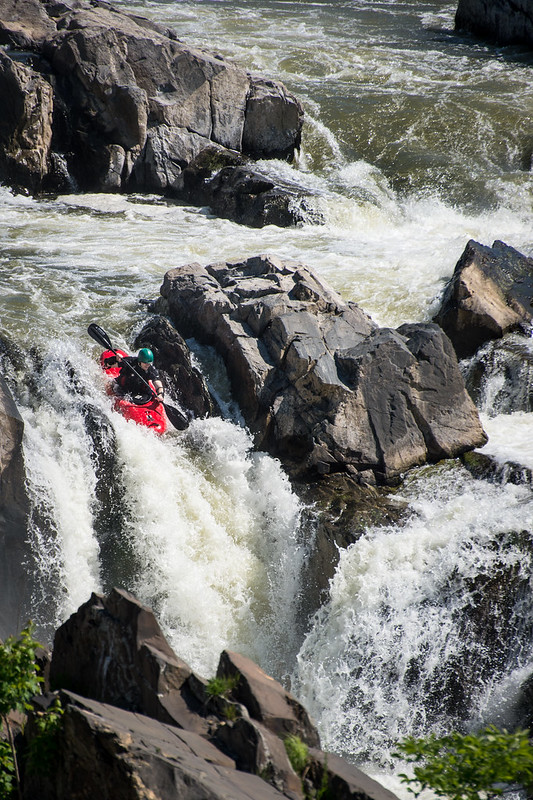
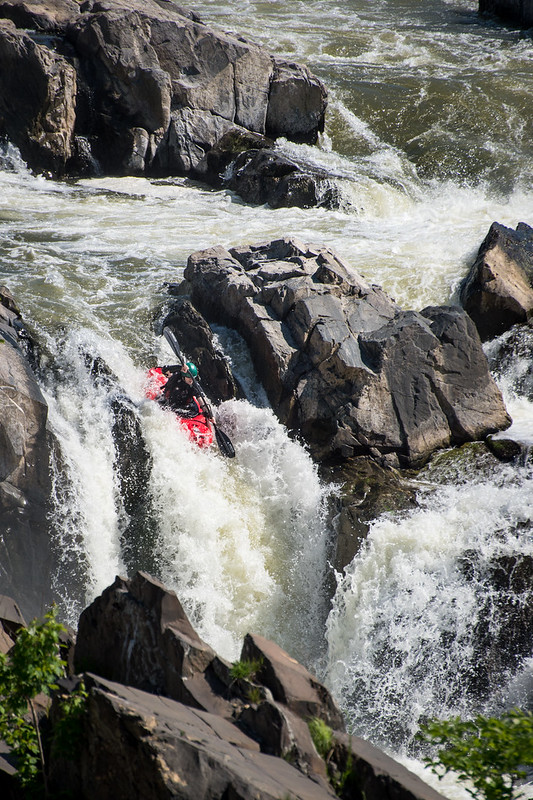
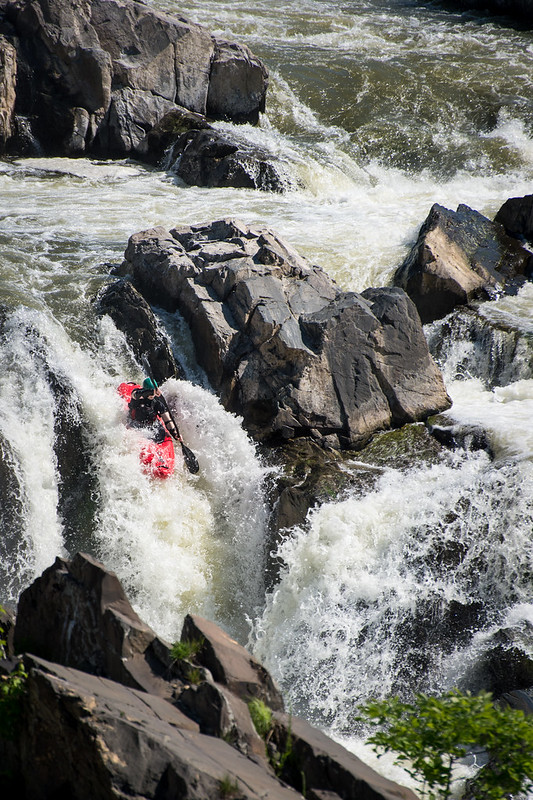
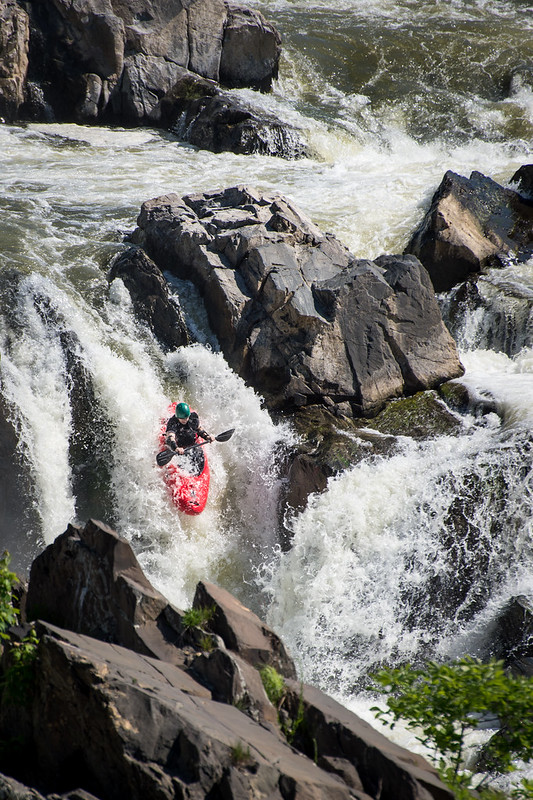
Today is Memorial Day. My daughter and I went to Great Falls Park in Virginia to attend a parkour event. That didn't work out, due to miscommunication about the location. But, we did get to watch some amazing kayakers, attacking the steep falls at the park. Here's a series I shot with the Nikon Df and 70-300 f4.5-5.6 VR lens.
After this shot, the kayaker literally disappeared behind the rocks. Amazing to watch.
DMC-365.blogspot.com
Tuesday, May 26, 2015
Nikon 200-400mm f4 AF-S G VR Lens for Birds - The Warbler
My friend and I have just invested together in a very expensive lens - the Nikkor 200-400mm f4 AF-S G VR (version 1). Last weekend, I took it out in my kayak along with my super-sturdy Gitzo tripod and gimbal head.
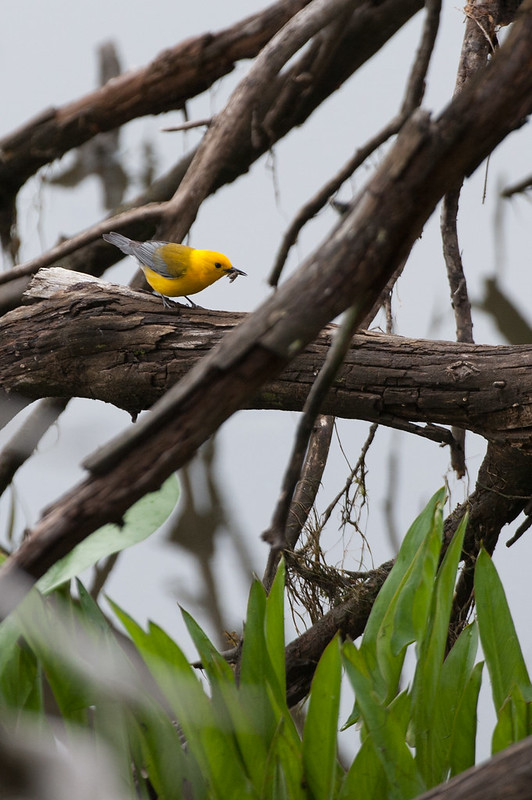
While I was waiting for large birds to fly by where I'd set up the tripod, this colorful little guy showed up.
Prothonotary Warbler, by Reed A. George
Nikon D700, Nikkor 200-400mm f4 AF-S G VR Lens
iso 720, f5, 1/1000 sec.
I had the D700 set to auto-ISO, so that I could set a fast (1/1000) shutter speed and the f-stop I wanted, letting the camera adjust ISO. As you can see, the warbler has an insect in his beak, a nice additional feature for the image.
Here's another shot of the same warbler.
Prothonotary Warbler, by Reed A. George
Nikon D700, Nikkor 200-400mm f4 AF-S G VR Lens
iso 1600, f5, 1/1000 sec.
We also purchased the Nikon TCIIE 1.4X teleconverter with our lens. I could have used it here. Both of these shots are cropped from larger compositions (hey, he's a pretty small bird!). I did get a chance to try the lens and converter together. I'll post some of those shots in the coming days.
This is one amazing lens.
DMC-365.blogspot.com
Sunday, May 24, 2015
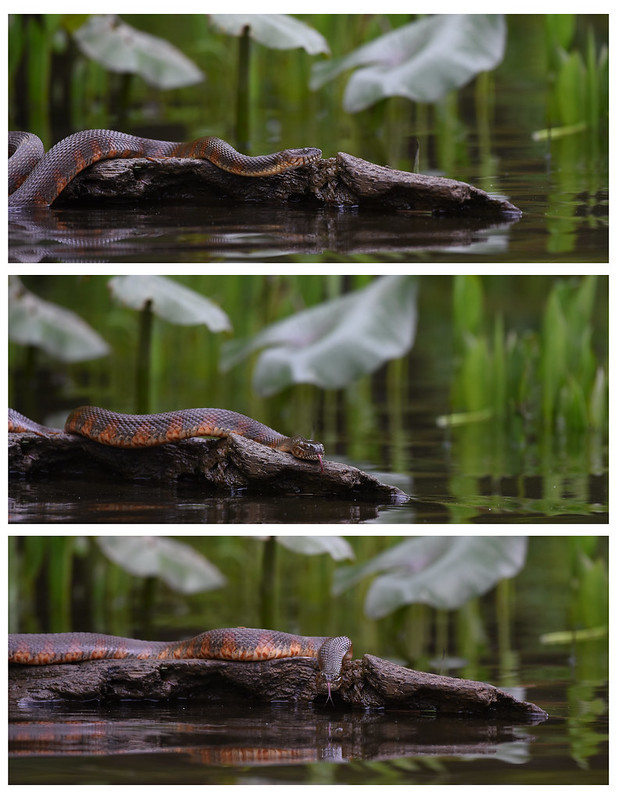
Northern Water Snake - Nikkor 300-400mm f4 AF-S VR G Lens
I went kayaking today, for the third weekend in a row. Get it, in a row? Sorry about that. I think I'm a little punchy after so much exercise.
Today, I had the distinct pleasure of testing out a new telephoto lens, the amazing Nikkor 200-400mm f4. This is not an easy lens to handle, but mounted firmly on a gimbal head and super-heavy tripod, I was able to get it to shine, including with the Nikon TC14EII teleconverter. The focus is super-fast and accurate.
Northern Water Snake (Nerodia sipedon), by Reed A. George
Nikon D700, Nikkor 200-400mm f4 AF-S G VR Lens
Nikkor TC1.4EII Teleconverter (final focal length 360mm)
iso 2200, f8, 1/1250 sec.
I got some really nice bird shots today as well, including some really sharp shots of birds in flight. But, I'm too tired to process them tonight. So, you'll have to live with this teaser shot of a northern water snake until I get some sleep.
DMC-365.blogspot.com
Wednesday, May 20, 2015
Cottonwoods Blooming on the Potomac River
On my most recent kayaking trip on the Potomac River, I shot this image of a cottonwood tree, blooming and losing its blossoms to the river surface.
Cottonwoods on the Potomac, by Reed A. George
Panasonic Lumix DMC-TS5
iso 160, f3.3, 1/160 sec.
As you can see, I made this image with the compact, waterproof Lumix DMC-TS5 camera. It's a great companion on kayaking trips, as it's really well-protected against water, dirt, sand, and shock. I think it makes very nice pictures for a compact point and shoot.
DMC-365.blogspot.com
Wednesday, May 13, 2015
Some Wildlife From my Kayak - Nikon Df and Nikkor 300mm f4 AF-IF Lens
I have an older Nikkor internal focus 300mm f4 lens. I have been tempted to upgrade it to the AF-S version, but mine is so good, I just haven't seen a reason to do it.
Yesterday, I loaded my Nikon D700 and 500mm f4 Ai-P (manual focus) lens and matching gargantuan Gitzo tripod that I picked up very used and very cheap, along with my Nikon Df and 300mm f4 and Tamron AF 1.4X tele-extender into my kayak and paddled out. I ended up never using anything but the Df and 300mm. Instead of setting up my tripod near my favorite osprey nest (even though the birds are on the nest), I decided to paddle further up the creek and explore.
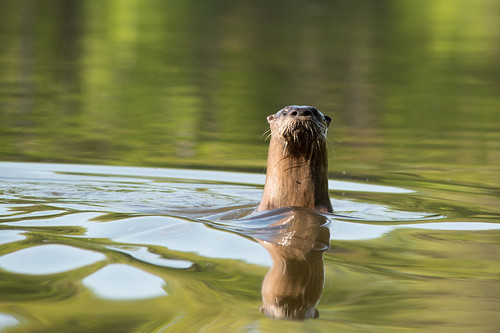
Stopping to rest in the shadow of a steep bank, not five minutes later I saw a swirl in the water, followed by a head coming to the surface. Thinking that it was likely a beaver, I started shooting. The sound of the camera clearly alarmed the animal, who quickly went under water, then returned to the surface looking straight at me. It was a river otter! The first one I've ever seen in the wild. He actually raised high out of the water to get a good look at me. I was ready, with my Df set to lock exposure with the rear button, meter set to spot metering, and auto-focus ready to go. Here's one of the shots I got.
River Otter, by Reed A. George
Nikon Df, Nikkor 300mm f4 AF-IF Lens
iso 1100, f8, 1/1000 sec.
Another otter passed through very quickly a minute later.
I had the camera in auto-ISO mode, and exposure in M. So, I had a fast shutter speed and optimal f-stop already set. The camera chose the ISO. With the Nikon Df, I could shoot with confidence, without worrying about digital noise from the relatively high ISO setting.
I've printed this image at about 10"x15" and it looks just great.
I've got some more images from the morning kayak trip, and will share them in later posts.
DMC-365.blogspot.com
Saturday, July 5, 2014
Panasonic Lumix DMC-TS5, Macro, and Damselflies
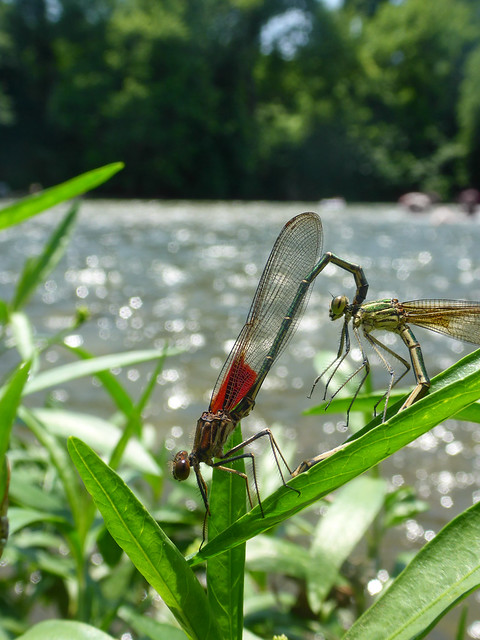
Damselflies - American Rubyspot (Hetaerina americana)
by Reed A. George
Panasonic Lumix DMC-TS5
Last weekend, I took a little float trip down the Shenandoah River. Part of the River and Roots music festival, held at Watermelon Park in Berryville, Virginia, this educational event was led by musician and teacher Josh Bearman of The Hot Seats.
Anyway, back to the subject at hand - damselflies. This potential couple of American Rubyspots was perched very near the water surface. I say potential couple, because at this stage, the female (to the right) is being held by the male, and allowed to evaluate him for suitability. If she approves, her abdomen and terminal genitalia will connect to his body, forming a sort of circular orientation between their bodies.
These guys spend 1-3 years as aquatic larvae, with only a couple of weeks as adults, during which they mate and then die.
The tiny sensor on the Panasonic Lumix DMC-TS5 has all of the drawbacks of a small sensor, of course, which includes digital noise at high ISO settings. However, a big advantage of the small sensor is the closeup capability, as demonstrated here. This would have been exceedingly difficult to capture with a DSLR, even forgetting about the risk of getting it wet. In this case, I simply left the camera in iAuto mode, and slid it down into the grass next to the damselflies. I shot several images in a few seconds, but found this one to be the best.
DMC-365.blogspot.com
Sunday, April 6, 2014
Will Springtime Ever Come to Virginia? Stephen L. Tabone Finds Spring Owls
It just seems to keep coming at us. Snow this week. We've had a couple of hints of Spring, but nothing to count on. I recently read a quote that I really like:
"All winters turn to spring."
Stephen L. Tabone is one of the best wildlife photographers I've seen. This week, he posted images of barred owls that he was able to kayak to here in Virginia.
Image Source: http://stevetaboneblog.com/2014/03/26/barred-owls-2/
(Click Here) to read Stephen's post and see several excellent pictures of the barred owls.
I like this post on several levels. First, I love owls. I have only successfully photographed one; I have not been too successful at finding them, though Stephen gives me a clue with finding his near a creek entry to a lake.
Here's the one I was lucky enough to find some time back:
Barred Owl, by Reed A. George
Panasonic Lumix DMC-G3, Lumix 100-300mm f4-5.6 Lens at 300mm
iso 400, f6.3, 1/800 sec.
Beyond the subject, I really like that Stephen was able to approach his owls by kayak, one of my favorite ways to get out and photograph nature. I'm looking outside at the rain and 40 degree temperatures, but know that it won't be long before I can get out in my kayak as well.
Stephen's images are always first-rate. For this post, he was shooting a Nikon D800 and 80-400mm lens. I'm not sure whether he has the older or the new version of this lens. The new one is quite spectacular, which I say based on playing with one for a few minutes only. Stephen also uses a flash and flash extender ("Better Beamer") in some of his shots. I have a version of the Beamer, but always seem to get white eyes in birds that I shoot with it. So, I almost never use it. The solution is to get the flash further off-camera, so that the light reflected from the bird's retinas doesn't come right back into the lens. But, with a big old flash, Beamer attached, it gets quite clumsy to try and either hand hold the flash off-camera (with a long lens attached), or use some kind of bracket. It's tough enough shooting birds like this, near impossible with unwieldy camera gear. That said, my shot above could have used just a tiny amount of fill flash to bring the left side of the owl's face up in brightness.
In any case, Spring is on the way to Virginia! Thanks for reminding me, Stephen.
DMC-365.blogspot.com
Labels:
bird,
flash,
kayak,
local,
Northern Virginia,
owl,
spring,
Stephen L Tabone,
virginia,
winter
Tuesday, March 11, 2014
Five Obvious But Useful Tips for Nature Photography
Eastern Kingbird, Tyrannus tyrannus, by Reed A. George
Nikon D700, Nikkor P 500mm f4 Manual Focus Lens
I am so ready for spring. I want to get out in the kayak, paddle to my favorite little island to photograph ospreys and other birds, and feel the warmth. Last year, I only made it out to that island once, and didn't get any really special images. The year before was better. So, I can't wait for the weather to warm up so that I can try again.
I read an article on digital-photography-school.com that gives five good tips for improving your wildlife photography:
- Get a good telephoto lens. Definitely, couldn't agree more. There's no substitute.
- Use a fast shutter speed (1/500 for a stationary subject, 1/1000 or faster if it's moving). Agreed. But, that means a fast lens and low noise sensor. You kind of have to balance of all that.
- Capture the moment, including using continuous shooting. I definitely believe in capturing the moment. Sometimes that comes from continuous shooting. For me, it more typically comes from careful release of the shutter once or twice.
- Know your subject. Again, I totally agree. I know where my ospreys nest every year, and when.
- Don't get attacked by your subject. I remember being chased a little distance by an angry buffalo once, in Oklahoma. I also remember stepping on a (harmless) snake, while getting out of my kayak. So, yes, be careful.
(Click Here) to read the whole post on digital-photography-school.com.
I'll be out there, as soon as the warm weather comes.
DMC-365.blogspot.com
Tuesday, October 29, 2013
A Beautiful Sunset Outing - Fishing and Kayaking With the Lumix DMC-TS5
If you follow my blog, you've probably read that I enjoy using the little Panasonic Lumix DMC-TS5 when I go kayaking, fishing, diving, or just about anything that threatens to get me and the camera wet. On a Friday evening, I decided to get out for an hour or two for a sunset kayak paddle. Luckily, I have a nice reservoir near home, so it's easy to do on a moment's notice. Even with the shorter days of autumn, I was able to get out after work, and before the sun went down.
On this particular day, I decided to fish a little, using my ultralight rod and reel, and a twister-tail jig. I happened to catch a nice smallmouth bass, shown below.
Smallmouth Bass, by Reed A. George
Panasonic Lumix DMC-TS5
This fish was clearly fattening up for a long winter nap. Only about 1 1/2 pounds, this stocky little fish had quite a full stomach, and was still eating. Lucky for him, the only thing I took was a few extra minutes of his time, to photograph him (her?). Here's my favorite shot:
Sunset Catch, by Reed A. George
Panasonic Lumix DMC-TS5
Satisfied, I paddled back to where my car was parked before it got dark. Looking back, here's the sunset that followed.
Sunset (16:9), by Reed A. George
Panasonic Lumix DMC-TS5
The little TS5 sure does a good job. These images look great at full-size on my screen. I'm sure these would print just fine at 8"x12".
DMC-365.blogspot.com
Sunday, October 13, 2013
The Fishing Camera - Panasonic Lumix DMC-TS5 - Strikes Again
I got out in my kayak for a couple of hours this weekend. I have a nice reservoir near my home, and have fished it a few times, never catching anything of any size. This time, I caught a nice smallmouth bass. Or was it a largemouth? A friend and I have been debating that back and forth. Every fisherman will have an opinion.
Smallmouth(?) Bass, by Reed A. George
Panasonic Lumix DMC-TS5
iso 325, 160, 125 (in same order as photos), f3.3, 1/250 sec.
The TS5 works great for this kind of shooting. In the kayak, fish on the line, I'm able to quickly open my waterproof bag and pull out the TS5. In iAuto mode, all I have to do is turn the power on and shoot. It autofocuses quite nicely for these types of shots.
I always want to take those cool images where the lens is partially underwater, partially above. That is particularly difficult with the TS5, as the lens element is so small, it's difficult to position it correctly to capture the water line.
Here's the smallmouth above the surface. My friend and I agree that he looks more like a largemouth in this picture:
Smallmouth(?) Bass, by Reed A. George
Panasonic Lumix DMC-TS5
iso 200, f3.3, 1/640 sec.
In all, I caught six fish - two smallmouth bass (the second was quite small, but more clearly a smallmouth), three white bass (all small) and one crappie (small). This was the first crappie I've ever caught in this particular reservoir. Here's what it looked like:
Crappie, by Reed A. George
Panasonic Lumix DMC-TS5
iso 100, f3.3, 1/125 sec.
I was tempted to stay and fish a while longer, but sunset came and went, and it was time to go.
Reservoir Sunset, by Reed A. George
Panasonic Lumix DMC-TS5
iso 160, f3.3, 1/800 sec.
I notice that iAuto mode on the TS5 seems to choose f3.3 often. I suppose with such a small sensor, getting enough depth of field is never an issue. I'm quite impressed with this little camera.
DMC-365.blogspot.com
Monday, September 30, 2013
Panasonic Lumix DMC-TS5 Goes Fishing Again
I have recently found that the very best treatment for my chronic lower back pain is kayaking. I know, it sounds weird to me as well, but there you have it. In fact, my physical therapist has now made a custom exercise for me, replicating the motion of paddling a kayak, and it really works.
Of course, permanently switching to Micro 4/3 to lower the weight of my camera would help, too. :)
Anyway, I got out in the kayak for a couple of hours today, and casted around with my ultralight spinning reel. Here's what I caught:
White Bass, by Reed A. George
Panasonic Lumix DMC-TS5 Waterproof Camera
White Bass, by Reed A. George
Panasonic Lumix DMC-TS5 Waterproof Camera
I had accidentally left the TS5 in one of the custom modes, this one for shooting through glass. I have no idea how it does it, but the effect is a little like a mild polarizer, which darkened up the water surface quite nicely.
It's really handy to have a tough, waterproof, compact camera on hand, especially in my kayak.
DMC-365.blogspot.com
Subscribe to:
Posts (Atom)