Showing posts with label birds in flight. Show all posts

Saturday, September 19, 2015

So, How Is the Nikon D810?

I'm still getting my feet wet with this camera, but check this out:
 
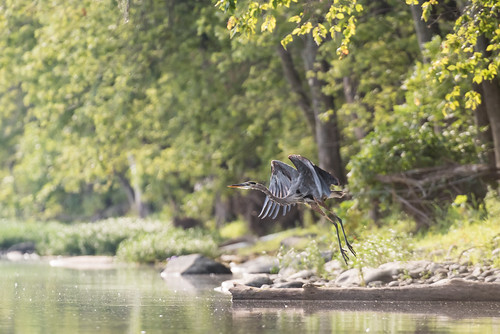
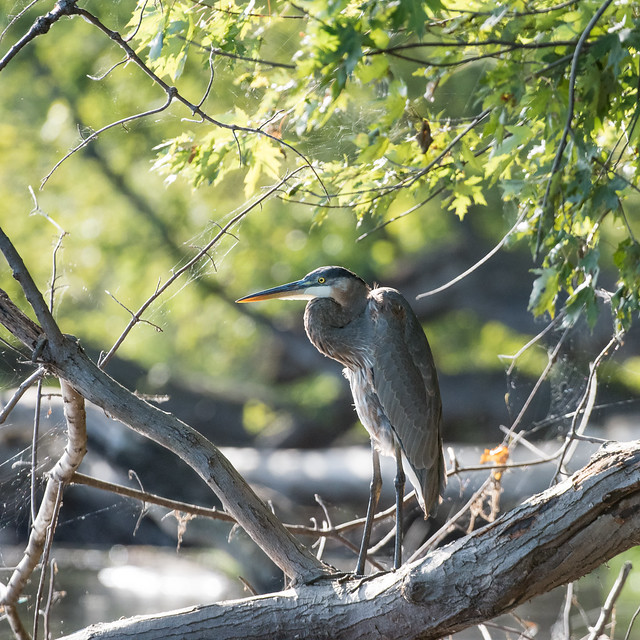
Great Blue Heron, Ardea herodius, by Reed A. George
Nikon D810, Nikkor 200-400mm f4 AF-S VR G Lens
iso 1600, f5, 1/2000 sec.
 
The detail in the print I made of this shot is just stupendous. iso 1600? Not a problem at all.
 
At 6400, I do see image quality start to drop off, but still quite impressive. At 1600, it's lovely.
 
DMC-365.blogspot.com

Friday, September 18, 2015

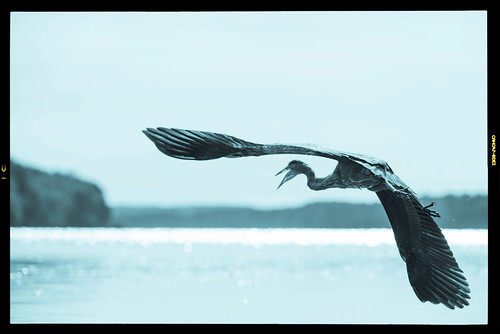
Kind of Blue - Heron, That Is

 
Kind of Blue, by Reed A. George
Nikon D810, Nikkor 200-400mm f4 AF-S VR G Lens
iso 160, f5, 1/2000 sec.
 
 
DMC-365.blogspot.com
 

Sunday, September 13, 2015

Today's Eagle Shot - Nikon D810, Nikkor 200-400mm f4 AF-S VR Lens

I got out kayaking on the Potomac River again this morning. I saw quite a lot of wildlife, including a muskrat that swam to within a few feet of my kayak, and a giant snapping turtle that nearly touched it. Both were too close for me to focus with the big lens. I also watched a herd of deer grab their morning drink at the river's edge.
 
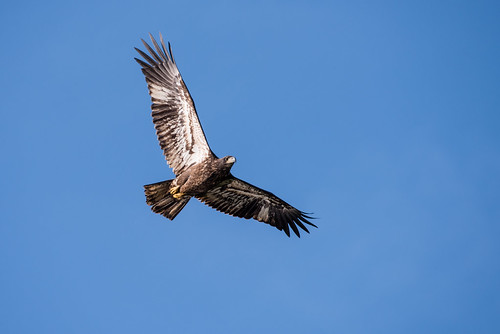
Here's the best shot I got today, of an immature bald eagle.
Immature Bald Eagle, by Reed A. George
Nikon D810, Nikkor 200-400mm f4 AF-S VR Lens
iso 220, f5.6, 1/1250 sec.
 
You can click on this image to see it larger on flickr.
 
Man, am I lucky to have access to such a beautiful place to paddle on weekend mornings at sunrise.
 
DMC-365.blogspot.com
 

Wednesday, September 2, 2015

Great Egret - Nikon D810 and Nikkor 200-400mm f4 AF-S G VR Lens

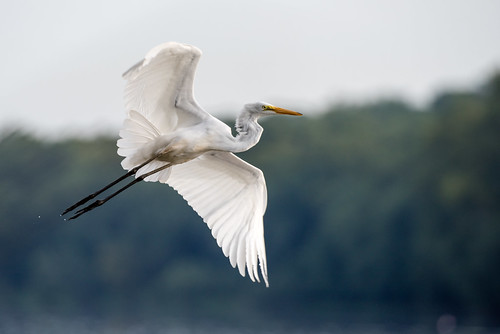
And here's my best bird-in-flight shot from Sunday's paddle trip.
Great Egret (Ardea alba), by Reed A. George
Nikon D810, Nikkor 200-400mm f4 AF-S G VR Lens
iso 200, f5, 1/1250 sec.
 
I watched this beauty, and his/her nearly-identical partner, approach me from far way, flying downriver toward my kayak. I was lucky enough to get the focus just right on this shot, and capture the wings spread wide. This camera / lens combination is just astounding. It's what I've been working toward for years in gear for nature photography.
 
I find myself tempted to try the new Nikkor 200-500mm f5.6 (Click Here), a much lower cost and lower weight solution, but it's not going to provide image quality like this. And, that extra stop of light gathering (f4) in my lens really matters.
 
DMC-365.blogspot.com


Tuesday, September 1, 2015

Back Home, on the River

My long vacation over, I'm back out on the river in my kayak, with my Nikon D810 and 200-400mm f4 AF-S VR lens. Here's a shot from last Sunday on the Potomac.
Great Blue Heron, Ardea herodias, by Reed A. George
Nikon D810, Nikkor 200-400mm f4 AF-S G VR Lens
iso 1800, f5.6, 1/1250 sec.
 
On this particular outing, I focused on wildlife photography, leaving my fishing rod untouched. Rather than "running and gunning" down the river as I fished, I pulled the kayak quietly to shore in a few places, and was rewarded with more time to observe each creature that I came across, including several bird species, as well as a red fox.
 
DMC-365.blogspot.com


Tuesday, August 4, 2015

Nikon D810 and Df - The Best Combination Available Today?

Well, I've been thoroughly enjoying my Nikon Df for some time now. The low light capabilities of this camera are spectacular.
 
I've recently purchased a Nikon D810, specifically to take advantage of the increased resolution (36 megapixels) for nature photography. Mounted on my Nikkor 200-400mm f4 AF-S VR G lens, the D810 should allow me more freedom in cropping, which is always useful in wildlife photography, especially with active species like birds.
 
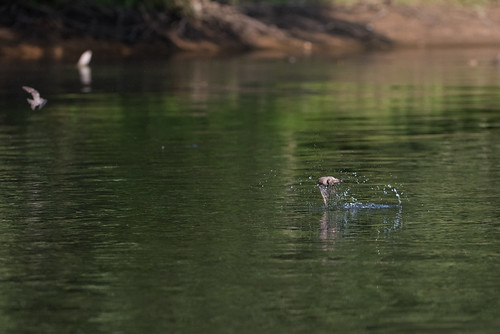
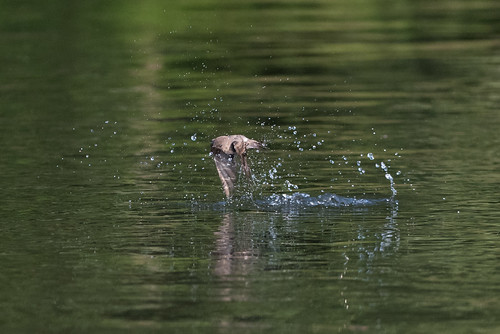
I've only had my D810 out a couple of times so far. One was this morning, shooting birds on a kayak outing. Here's a tightly-cropped shot of a swallow hitting the water surface.
And here's a 100% blow-up (cropped even more).
What I've found so far is that while the D810 does allow significant cropping, it doesn't handle high iso noise nearly as well as the Df. Of course, that's well-known in the Nikon crowd, and makes perfect sense, given the much higher number of pixels crammed into the same sensor real estate as the Df. The shots above were made at iso 1600, and noise is quite visible on my screen, looking at the images in Lightroom.
 
Here's a snapshot of DxO Lab's comparison of the two cameras:
 
Image Source: http://www.dxomark.com/Cameras/Compare/Side-by-side/Nikon-Df-versus-Nikon-D810___925_963
 
As you can see, the D810 wins in overall score, color depth, and dynamic range. But, it performs significantly worse in low light (high iso). Again, no new information here, but it's helping me to form my opinion of this pair of cameras and how best to use them.
 
Basically, the D810 will fill my need for high resolution and cropping ability when shooting wildlife in good light. Or anything else in good light, for that matter. The Df will remain my go-to camera for more challenging lighting situations, and when cropping is not as necessary.
 
So, I think that for me, yes, this is the best combination of Nikon bodies available today.
 
I have to get the D810 out in the field again, and shoot at lower iso settings. I'm sure that's going to really impress me.
 
DMC-365.blogspot.com


Monday, July 27, 2015

Well, I'm Going For It - Nikon D810

Nikon
 
I have long said that my Nikon D700 is the single best-performing camera I've ever owned. Not the highest fun-factor (as I love my rangefinders and old film cameras), but best at getting the shot, and in the most high quality way. So, I have not upgraded it, even after several years. I did add the Nikon Df, which is just a different beast, and brings the fun factor up considerably with its retro design, ability to take non-AI lenses, and smaller size.
 
What I did upgrade was my telephoto lens choice. Selling the spectacular 500mm f4 AiP manual focus lens, I invested in the first version AF-S 200-400mm f4 VR lens. Having fast autofocus significantly improves my chances of capturing great nature photographs. On the D700, the 200-400 really sings.
 
So why upgrade to the D810? Well, really for one reason, and one reason only - resolution. I will be able to shoot the D810 in DX crop mode and still produce 15.4 megapixel images. That is higher than the D700 at full frame, and turns my 200-400 telephoto into the equivalent of 300-600mm, without the 1.4X tele-extender! That's powerful. Or, I can shoot in full-frame (36 megapixel) mode, and crop in post-processing. That's really going to increase the number of bird-in-flight images that will be useful and printable at large sizes.
 
Resolution is the only reason that I know now. I have a feeling I'll find other reasons to love the D810.
 
I bought mine refurbished by Nikon. The cost savings was significant - I paid $2,550 at Adorama, including a third party "drops and spills" 3 year extended warranty. The camera lists for almost $3,300.
 
I don't expect the D810 to become my most-used camera; I love the Df and know the D810 won't replace it. I do expect the D810 to be my go-to nature and wildlife camera.
 
DMC-365.blogspot.com
 

Monday, July 20, 2015

Great Blue Heron (GBH)

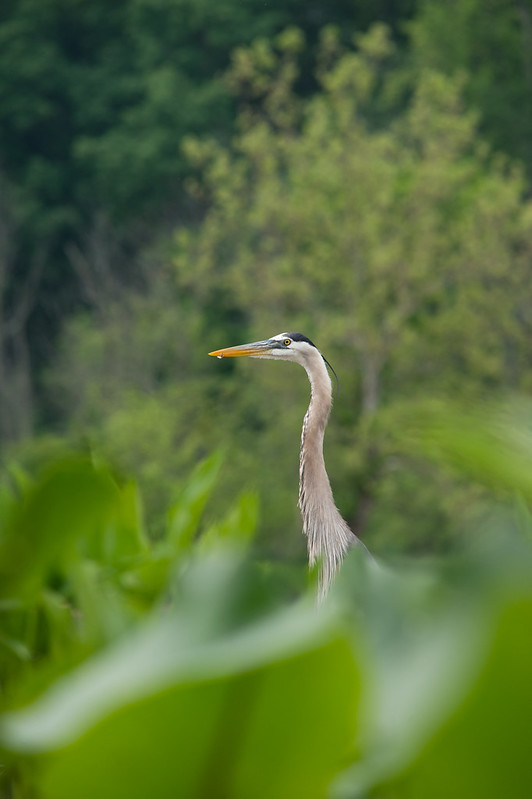
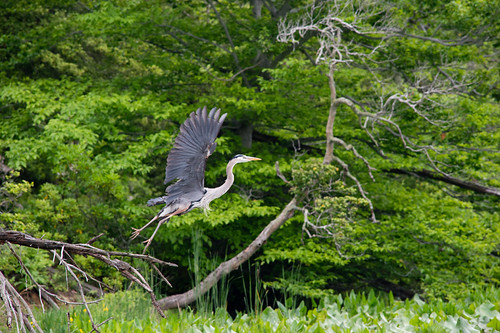
My birding friends refer to the great blue heron as a GBH. Very common in this region, they are really interesting birds. It's great fun to watch them feed. In the first shot below, you can see a fish scale hanging from this guy's beak; he had just dropped a big fish.
GBH Sitting, by Reed A. George
GBH Flying, by Reed A. George
 
I shot both of these images on a recent kayaking trip to Mason Neck State Park in Virginia, with my Nikon D700 and Nikkor 200-400mm f4 AF-S VR G lens.
 
DMC-365.blogspot.com

Thursday, June 25, 2015

More of a Story in Wildlife - Nikon D700 and 200-400mm f4 AF-S VR Lens

I wrote recently about a personal challenge to myself, to move my wildlife photography from mere "find the animal and shoot it" to telling at least part of a story. In photography, the story doesn't have to be complete. In fact, sometimes, if the story presents more questions than answers, that can be a good thing. That's kind of the case here.
 
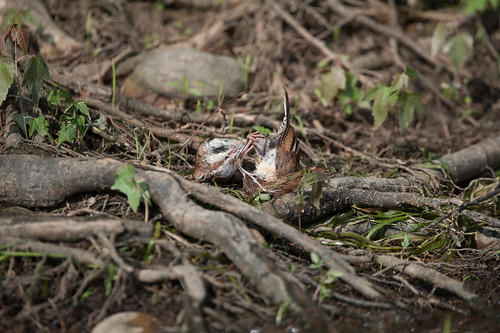
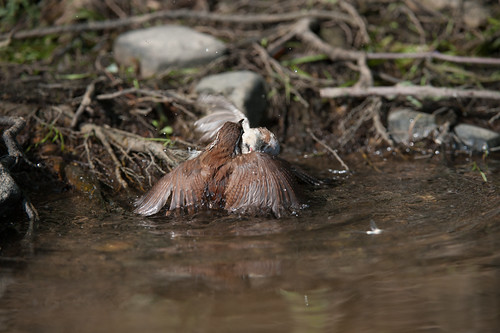
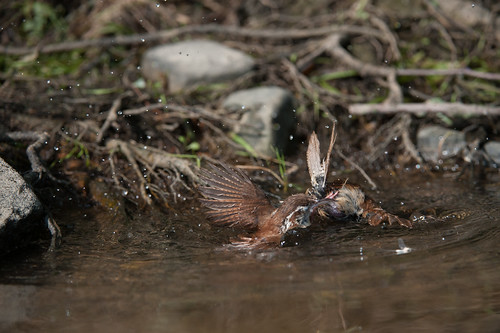
At the end of a kayaking trip, as I shoved my boat up to the shore, I saw a clump of feathers bouncing around on the bank. Not sure what I was looking at, maybe an injured bird?, I decided to look closer, and shoot. Here's what I saw.
 
 
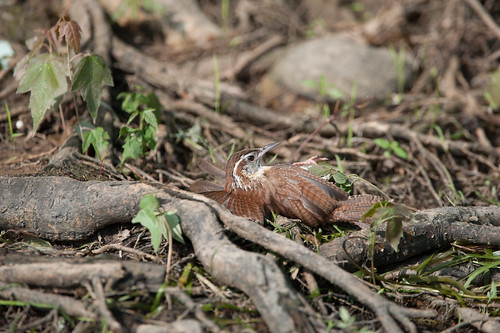
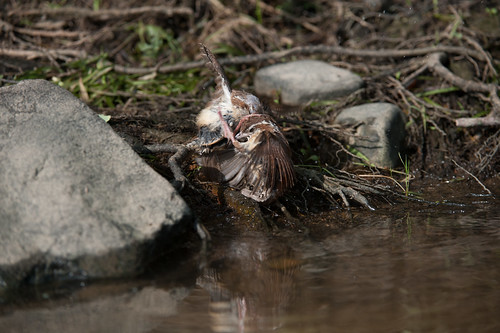
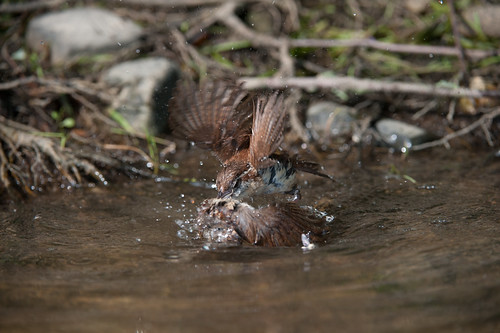
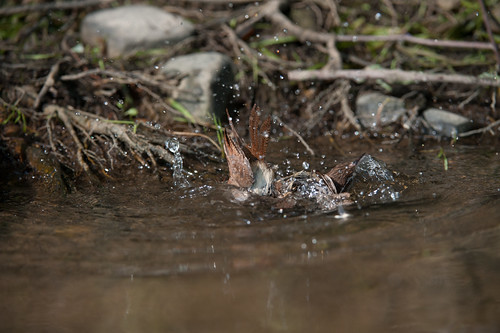
Now, the camera saw it much more clearly than I did at the time. What you're looking at is two birds (Carolina wrens?), fighting it out. And I don't mean play fighting. These two were not only using their sharp beaks against each other, they were actually clawing at each other's eyes! As they continued, and even ended up in the water, here's how it looked.
 
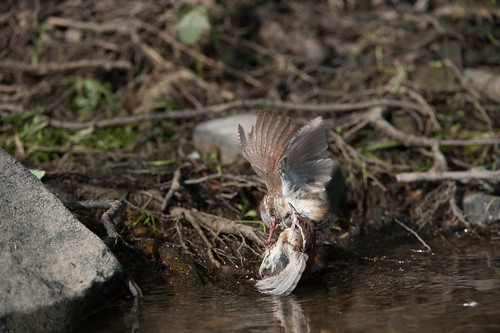
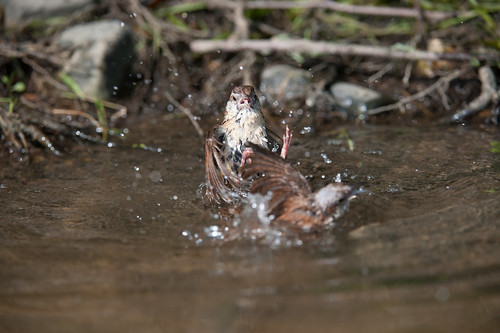
Crazy, right? And here's the final, and crowning shot. Bird rage!
 
Bird Rage, by Reed A. George
Nikon D700, Nikkor 200-400mm f4 AF-S VR Lens
 
As they finally split up and ended the fight, with one bird chasing the other off into the bushes, I just couldn't keep up with the big lens. I missed a couple of other interesting shots, but do feel that these show the event pretty well.
 
Does anyone know if I have the species correct, or what these vicious little birds were doing to each other?
 
I'm happy to have caught some very interesting behavior in this sequence.
 
DMC-365.blogspot.com

Tuesday, May 26, 2015

Nikon 200-400mm f4 AF-S G VR Lens for Birds - The Warbler

My friend and I have just invested together in a very expensive lens - the Nikkor 200-400mm f4 AF-S G VR (version 1). Last weekend, I took it out in my kayak along with my super-sturdy Gitzo tripod and gimbal head.
 
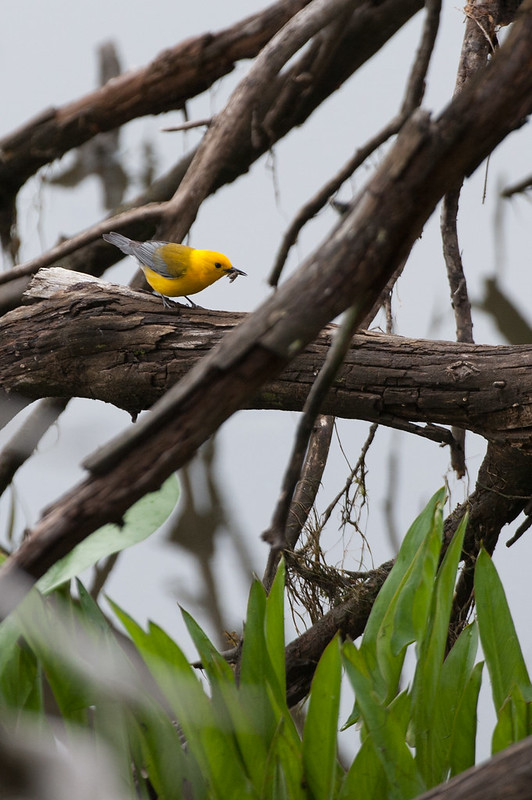
While I was waiting for large birds to fly by where I'd set up the tripod, this colorful little guy showed up.
Prothonotary Warbler, by Reed A. George
Nikon D700, Nikkor 200-400mm f4 AF-S G VR Lens
iso 720, f5, 1/1000 sec.
 
I had the D700 set to auto-ISO, so that I could set a fast (1/1000) shutter speed and the f-stop I wanted, letting the camera adjust ISO. As you can see, the warbler has an insect in his beak, a nice additional feature for the image.
 
Here's another shot of the same warbler.
 
Prothonotary Warbler, by Reed A. George
Nikon D700, Nikkor 200-400mm f4 AF-S G VR Lens
iso 1600, f5, 1/1000 sec.
 
We also purchased the Nikon TCIIE 1.4X teleconverter with our lens. I could have used it here. Both of these shots are cropped from larger compositions (hey, he's a pretty small bird!). I did get a chance to try the lens and converter together. I'll post some of those shots in the coming days.
 
This is one amazing lens.
 
DMC-365.blogspot.com
 

Tuesday, May 19, 2015

Use Nikon Autofocus? You MUST Watch this Video by Steve Perry

I have been shooting some wildlife recently with my Nikon cameras. With the spring weather finally here, I love to get out in my kayak and photograph birds and other wildlife.
 
My current telephoto lenses are a 300mm f4 AF-I (very old autofocus lens) and a 500mm f4 Ai-P (manual focus). Both are excellent optics, but are a bit dated. I have worked on my manual focus technique with the 500mm, and can even catch the occasional sharp image of a bird in flight.
Bald Eagle in Flight, by Reed A. George
Nikon D700, Nikkor Ai-P 500mm f4 Manual Focus Lens + 1.4X Teleconverter
iso 1600, f5.6, 1/1000 sec.
 
Of course, things get easier with autofocus, especially Nikon's modern AF-S lenses. I'm about to get my hands on a lovely 200-400mm f4 AF-S VR lens, so I'm reading up on autofocus technique.
 
Here's an outstanding 12 minute video by Steve Perry, showing some of the key concepts for successful autofocus with Nikon DSLRs:
 
If you have problem with getting to the video, (Click Here).
 
One of the techniques that Perry practices is "back button" AF. This means using only the back AF-on button to focus, and not the typical half-press of the shutter release. With the camera set to continuous AF (AF-C), you simply let your finger off of the back button when you want to lock in focus, or keep pressing to follow and focus on a moving subject. Really helpful.
 
Just to try it out, I took my D700 and 70-300mm AF-S VR lens out tonight and gave it a shot with some flying geese. It worked really well. I literally can't wait to get my hands on that 200-400!
 
DMC-365.blogspot.com
 

Tuesday, November 25, 2014

Winter and Feeding the Birds

I love birds. I love photographing birds, though 2014 didn't see me out in the field or kayak chasing them very often. I also love feeding them in the winter. It's like a free show every day, seeing all the different species that show up to get a little free energy to make it through the cold.
 
In fact, just last week I filled my simple, single-block suet feeder for the first time this winter. I've already had lots of visitors.
 
I saw this incredible post on "Draw and Shoot," where writer/photographer Karen McRae is feeding chickadees from her hand.
 
 
(Click Here) to read Karen's post and see the other pictures. Really cool.
 
DMC-365.blogspot.com
 

Thursday, July 17, 2014

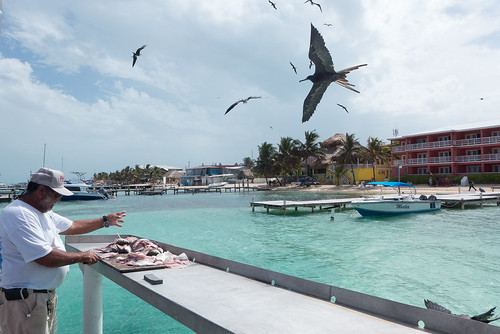
Belize - Fisherman and Frigate Birds at the Docks

At the dock in San Pedro, Belize, I came across this gentleman, cleaning the morning catch of snappers at the docks. These enormous frigate birds had gathered, much as you'd see seagulls and sometimes pelicans do in the US.
Sharing the Catch, by Reed A. George
Panasonic Lumix DMC-LX7
iso 200, f5.6, 1/1600 sec.
 
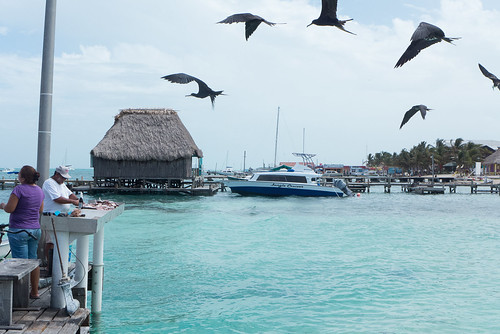
In the shot below, I really like how the birds form a curve leading to the food source. To me, it looks like the image is a composite of several shots of the birds; it's not. Just good timing.
 
Frigate Birds Lining Up, by Reed A. George
Panasonic Lumix DMC-LX7
iso 200, f5.6, 1/1000 sec.
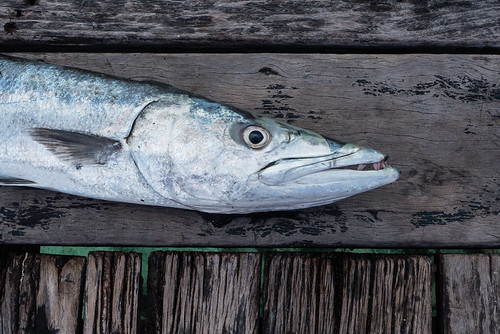
And finally, a look at the barracuda that was lying at the fisherman's feet
 
Barracuda, by Reed A. George
Panasonic Lumix DMC-LX7
iso 200, f5.6, 1/800 sec.
 
On the Belize trip, as in the past, I found the LX7 camera to be so capable. I sure hope Panasonic continues to market and develop the LX line of cameras. The LX7 represents a very powerful combination of compact size, full manual control, lots of imaging features, and overall image quality. If I'm going on a trip where I have to pack light, carrying just the LX7 lets me have confidence that I can capture high quality images with a very small, lightweight camera.
 
DMC-365.blogspot.com
 

Friday, September 20, 2013

Wild Birds Flying by Paul Nelson

Wild Bird Flying, shot by Paul Nelson
Image Source: http://www.lostateminor.com/2013/09/11/wild-birds-flying/?utm_source=feedburner
 
I was browsing the great site "Lost at E Minor," which covers various aspects of art, design, and creativity, when I came across this cool photo project by Paul Nelson. Capturing wild birds in various poses of flight, Mr. Nelson produces intimate views of birds that are impossible to see watching them in real-time.
 
Capturing birds in flight is a challenging and rewarding pursuit. There are multiple ways to go at it. It looks like he uses strobes of some kind to freeze the motion so effectively. This approach would make it very difficult to capture a natural look in the images, but that's not his goal. Instead, he isolates the birds from their surroundings, and I think to great effect.
 
(Click Here) to go to Mr. Nelson's web page and see more of his work.
 
I enjoy capturing bird pictures that show more of their natural environment. Here's one where I got the timing pretty much right:
 
Wings Spread, by Reed A. George
Nikon D700, Sigma 150-500mm f5-6.3 APO Lens (rented) at 500mm
iso 640, f7.1, 1/1600 sec.
 
I rented this Sigma 150-500mm lens at Baker Photo & Video in Yukon, Oklahoma, while I was visiting my parents.
 
(Click Here) to find Baker Photo. If you're ever in that area, be sure to drop in. It's a real camera store with very knowledgable and helpful staff.
 
The Sigma 150-500mm is a very good birding lens. Just barely hand-holdable (at least with my arms), the image stabilization worked very well for me. It would be a challenge in anything but bright daylight, but that's the norm in bird photography. I don't really understand why Sigma makes their zooms so wide. I can't really imagine carrying this lens around to shoot at 150mm. But, that said, I was quite pleased with the images I captured with it. If I were looking for a handheld birding lens, especially for birds in flight, I would seriously consider this lens.
 
DMC-365.blogspot.com


Tuesday, September 17, 2013

Look at this Amazing Shot by Darek Meyer (With Ricoh GR Digital IV) as Posted on Steve Huff's Site

By Darek Meyer
Image Source: http://www.stevehuffphoto.com/2013/09/06/daily-inspiration-443-by-darek-meyer/
 
Steve Huff commonly publishes posts by guest authors, which I think is great. When I saw this image by Darek Meyer, a Polish photographer, I was just astounded. Darek took it in Ho Chi Minh City, Vietnam. He was using a Ricoh GRD4.
 
(Click Here) to read Darek's post on Steve Huff's site and see a couple more of his excellent images. He writes about searching for the perfect travel camera after trying a DSLR. He was interested in the Leica Monochrom, but found the Ricoh to be best suited to his needs. Clearly it works very well in his hands.
 
DMC-365.blogspot.com


Sunday, May 5, 2013

Feeling the Urge to Get in the Kayak - It's Osprey Season Again!

 
Osprey (Pandion Haliaetus), by Reed A. George
Nikon D700, 300mm f4 AF-IF Nikkor
iso1600, f5.6, 1/1000 sec
 
I saw a great post on mu-43.com about shooting ospreys at the nest.
 
(Click Here) to read denniscloutier's post and see his awesome osprey picture.
 
Forgive me for reposting last year's osprey shot of my own above, but it is motivating me to make time to get the kayak down from the garage ceiling and get paddling! It's one of the great attractions to living here in Northern Virginia - the Chesapeake Bay, Potomac River, etc. - lots of great kayaking, and lots of great birds of prey, including a healthy population of bald eagles.
 
This shot from last year made it into a published calendar, along with my shot of an Eastern Kingbird.
 
So, before this actually posted, I did dust off the kayak and got out to shoot. No perfect shots on this particular trip - this is a patient person's hobby. But I got a couple that are perhaps worth sharing:
 
Osprey (Pandion Haliaetus), by Reed A. George
Nikon D700, 500mm f4 AiP (Manual Focus) + 1.4X Nikkor Converter
iso 800, f8, 1/1000 sec.


While the ospreys are my real target species, these beautiful little Kingbirds are my constant companions at this particular spot, so I occasionally grab a nice shot of them, too:
Eastern Kingbird (Tyrannus tyrannus), by Reed A. George
Nikon D700, 500mm f4 AiP (Manual Focus) + 1.4X Nikkor Converter
iso 560, f8, 1/1000 sec.
 
It's great to welcome springtime with some time out on the water with my camera!
DMC-365.blogspot.com


Wednesday, March 20, 2013

Great Blue Heron Nesting - Nikon 500mm f4, Nikon D300, and Lumix DMC-G3

I got the rare opportunity to get reasonably close to a rookery of nesting great blue herons yesterday. A local real estate developer opened their undeveloped property to nature enthusiasts, at an event they called HeronFest. It was a very nice event for birdwatchers and nature photographers, getting us close enough to shoot (with long lenses) without disturbing the nesting birds.
 
I took out my Nikon Ais-P 500mm f4 manual focus lens, Nikkor 1.4x tele-converter, and two bodies - the Nikon D300 and Panasonic Lumix DMC-G3. With the D300, I think my equivalent focal length was about 1000mm, with f5.6 (due to the one stop loss of the tele-converter). With the G3, I got an amazing equivalent field of view of 1400mm, with the same f5.6!
 
I took the G3 along almost as an afterthought. I wasn't sure how it would perform with a tele-extender, a lens adapter, and manual focus. It turns out that the manual focus aid in the G3 (where it magnifies a portion of the image to allow more accurate focusing) works wonderfully with this big lens setup. I'm pretty pleased with the results.
 
Nesting Great Blue Herons, by Reed A. George
Panasonic Lumix DMC-G3, Nikkor Ais-P 500mm f4 + 1.4X tele-extender
iso 400, f5.6, 1/640 sec.
 
It was an overcast day, which is a mixed blessing and curse. It allowed for nice even lighting, but very little dramatic contrast. The colors of the birds rendered nicely, but the sky (the only background available) was milky white and ugly. I guess it worked out okay.
 
Herons Building Their Nest, by Reed A. George
Panasonic Lumix DMC-G3, Nikkor Ais-P 500mm f4 + 1.4X tele-extender
iso 400, f5.6, 1/640 sec.
I love the composition of the shot above. Unfortunately, it's a pretty major crop from the original, and would not print well above about 8"x12" or so. Most of the others are closer to full frame, and would print well.
 
Here are a couple of shots from the Nikon D300.
 
Herons Building Nests, by Reed A. George
Nikon D300, Nikkor Ais-P 500mm f4 + 1.4X tele-extender
iso 800, f5.6, 1/750 sec.

 
The shot above reminds me of an Audubon painting. He always caught interesting bird poses. I heard some time back that Audubon was a "shotgun naturalist," sometimes killing the birds he wanted to paint, and posing them as he saw fit. Rest assured, none of the birds in my pictures were injured.
 
The D300 handles high iso better than the G3. But, the gap is narrowing. In fact, I wonder if the new DMC-GH3 doesn't perform better than the D300, which is a few versions old for Nikon. The D300 is a very nice camera, which is really meant as a backup to my D700 (one of my very favorite cameras). However, the D300 has a smaller sensor, which has the benefit of extending the telephoto effect based on the crop factor. I knew I would need all the reach I could get, so chose the D300 over the D700 for this shoot.
 
Nesting Pair, by Reed A. George
Nikon D300, Nikkor Ais-P 500mm f4 + 1.4X tele-extender
iso 800, f8, 1/1000 sec.

I like how the flying bird's head is contrasted against the shadow under his wing in the shot above. It was the best I could do with a pure white sky. I used f8 to attempt to get a little more depth of field, which is hard to accomplish at 1000mm!
 
Delivering Nesting Material, by Reed A. George
Nikon D300, Nikkor Ais-P 500mm f4 + 1.4X tele-extender
iso 800, f8, 1/1000 sec.
 
We got a few glimpses of sunlight toward the end of the event. This shot was taking during one of those brief shining moments. I like the tension of the two birds placed diagonally in the shot, looking at each other.
 
These shots, and a couple of additonal ones, can be seen on my other website, creativeobjective.com.
 
(Click Here) to go to the HeronFest photo set on creativeobjective.com
 
DMC-365.blogspot.com


Sunday, November 18, 2012

I Won A Contest - Two of My Images Will Be in the 2013 Calendar of Annual Reviews!

 
Image Source: http://www.annualreviews.org/page/photochallenge
 
Two of my images (below) were selected for inclusion in the Annual Reviews 2013 calendar! One of my colleagues at work forwarded the call for entries (thanks, Jeanne!).
 
(Click Here) to see the full list of winners. As far as I can tell, you have to be a subscriber to get the calendar. They've offered to send me a copy; I wrote back asking if I can buy a few.


Ospreys (Pandion haliaetus) in Flight, by Reed A. George
Nikon D700, Nikkor Ai-P 500mm f4 Manual Focus Lens
iso 500, f5.6, 1/1500 sec
 
Eastern Kingbird (Tyrannus tyrannus), by Reed A. George

Nikon D700, Nikkor Ai-P 500mm f4 Manual Focus Lens


I find it very rewarding to win a contest like this, especially a nature photography contest - they're notoriously difficult to win. So many great photographers focus their attention and cameras on the beauty of nature.

This is great motivation for me to keep pushing my skills!

DMC-365.blogspot.com


Friday, October 12, 2012

Awesome Bird Shots With Panasonic Lumix DMC-G5, Lumix 100-300 f4-5.6, and a Telescope

 
By FernandoBatista on mu-43.com
Shot with DMC-G5 and Lumix 100-300mm f4-5.6
Image Source: http://www.mu-43.com/f54/bird-new-g5-image-heavy-33977/
 
FernandoBatista on mu-43.com has posted several amazingly sharp bird photos, all shot with the new Lumix DMC-G5. Some were shot with the Lumix 100-300mm f4-5.6, others with an apochromatic telescope adapted to the Lumix body.
 
(Click Here) to see them all.
 
I have really gotten some nice images with the 100-300mm Lumix lens. Sitting birds are one thing. Shooting them in flight, which really helps to make them look less like stuffed taxidermy models, is much harder. The Lumix lens' fast autofocus is pretty good, but it's definitely still not a high hit-rate endeavor.
 
 
Red-Wing Blackbird, by Reed A. George
Panasonic Lumix DMC-G1, Lumix 100-300mm f4-5.6 at 275mm
iso400, f5.6, 1/80sec
 
This is about the best I've done on birds in flight with the Lumix 100-300:
 
Osprey in Flight, by Reed A. George
Panasonic Lumix DMC-G1, Lumix 100-300mm f4-5.6 at 177mm
iso400, f8, 1/1250sec

I've actually done much better with a manual focus Nikkor 500mm f4 than with any autofocus lens. That said, I've spent a lot more time perfecting my technique with that lens, and matched with the superb Nikon D700 full-frame sensor, it's not really a fair comparison:


Ospreys in Flight, by Reed A. George
Nikon D700, Nikkor Ais 500mm f4 (manual focus)
iso500, f5.6, 1/1500 sec


I have this one enlarged to 12x18 on my wall, and the sharpness is remarkable. It's easy to tell these guys aren't stuffed!


DMC-365.blogspot.com


Monday, May 21, 2012

A Little Diversion from Lumix - Bird Photography With Nikon D700

 
Ospreys, by Reed A. George
Osprey (Pandion Haliaetus), by Reed A. George
Nikon D700, 300mm f4 AF-IF Nikkor
iso1600, f5.6, 1/1000 sec


The images in this post are the best few from three separate kayaking trips along the Potomac here in Northern Virginia. Bird photography is a very specialized business. While I did gain a few nice images with the G3 and 100-300mm Lumix, my very best images happened to be with my Nikon D700. So, pardon the break from Lumix, but I wanted to share these.


Osprey, by Reed A. George
Osprey (Pandion Haliaetus), by Reed A. George
Nikon D700, 500mm f4 AIS Nikkor (Manual Focus)
iso1600, f5.6, 1/1000 sec


Osprey (Pandion Haliaetus) Catching Shad, by Reed A. George
Nikon D700, 500mm f4 AIS Nikkor (Manual Focus)
iso1600, f5.6, 1/1000 sec

It's interesting fitting a Nikkor 500mm f4 AIS lens, big heavy Gitzo tripod, and all my other gear into a 10 foot kayak. But, as long as the winds are not heavy, it works.

The Eastern Kingbird (Tyrannus tyrannus) below just showed up while I was set up to shoot the ospreys. I really like the branch as a compositional element in this shot.


Eastern Kingbird (Tyrannus tyrannus), by Reed A. George
Nikon D700, 500mm f4 AIS Nikkor (Manual Focus)
iso1600, f5.6, 1/500 sec
 
It's good to have a lot of interests; that's never been a problem for me. Kayaking, birdwatching, and photography came together in this case. Great fun!
 
DMC-365.blogspot.com