Showing posts with label Nikon D810. Show all posts

Sunday, May 8, 2016

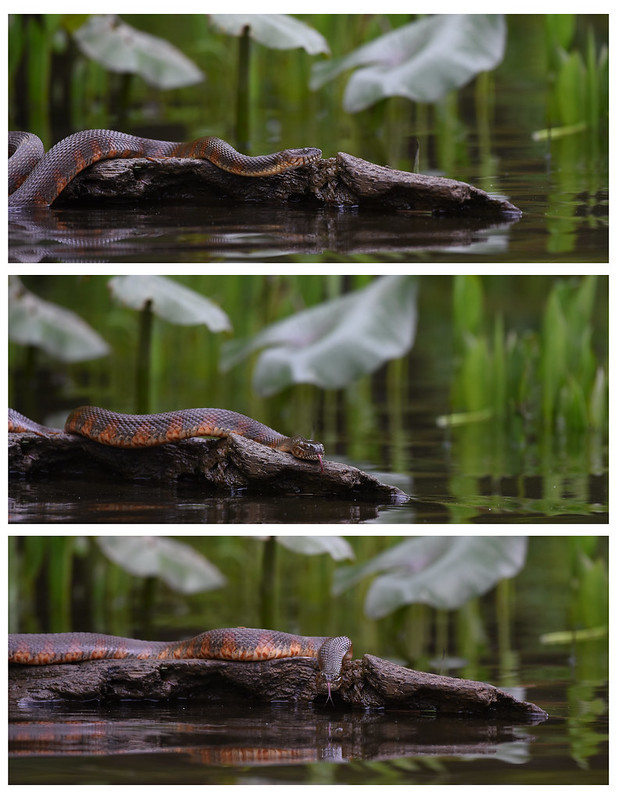
Northern Water Snake Triptych

From my morning paddle in the kayak on Saturday...
Northern Water Snake, Nerodia sipedon sipedon, by Reed A. George
Nikon D810, Nikkor 200-500mm f5.6 Lens
DMC-365.blogspot.com

Saturday, October 31, 2015

Upgrade of my Nikkor 85mm f1.8 Lens

I have had a Nikkor 85mm f1.8 AF-D lens for several years. Here's a shot I made with it some time ago.
 
Made with Nikkor 85mm f1.8 AF-D Lens][
'sadqwe
 
Not bad, right? The sharpness is not to be argued with. However, this is one of the few times that I've been unpleased with the "bokeh," or out of focus rendering characteristics of a lens. I don't like how the bright spots in the background are so regular and repeatable.
 
I recently decided to upgrade this lens, sending the AF-D off to KEH for a reasonable purchase price, and buying the newer Nikkor 85mm f1.8 AF-S G lens, refurbished by Nikon, for about $150 total cost (after selling the AF-D). I was not sure about this trade, especially since I am not a fan of G lenses overall. Their lack of an aperture ring makes them useless on my Nikon film cameras. But, the AF-S lens just hums on my Nikon Df (and the D810 for that matter).
 
Here's a sample shot from the new lens:
Made with Nikkor 85mm f1.8 AF-S G Lens
 
As you can see, the new lens has no trouble with sharpness, either. And, at least in this example, the bokeh is lovely. I have to gain more experience with this new lens, but it looks very good at this point.
 
DMC-365.blogspot.com

Monday, September 21, 2015

Learning the Nikon D810 - My Menu Settings

D810's "My Menu"
 
I've been using my new Nikon D810 almost exclusively for shooting birds with my 200-400mm f4 lens so far. Clearly, it's good for so much more in addition.
 
So, I've decided to figure out how to use all of the functions, and how to remember which are important to think of regularly as I change shooting conditions.
 
Among the features are Shooting and Custom Setting "Banks." These allow you to save settings for different applications and quickly switch between them. The big problem (unbelievable, really), is that if you're in a bank and change a setting, it remains changed, even after you turn off the camera. Basically they really only represent whatever your settings were last in that bank! Yes, you can get around this, if you can remember to reload settings each and every time you shoot. This requires not only a good memory, but also that you use the same memory card (where the settings are stored) every time, and don't format it. Not so useful.
 
A better option is to use "My Menu." This feature allows you to identify up to 20 settings from the menu system, which you want quick access to at any time. I went through every menu and selected which features I think I'll need regularly. Here they are:
 
  1. ISO sensitivity settings
  2. e3 Flash contrl for built-in flash
  3. e4 Exposure comp. for flash
  4. Image quality
  5. Battery info
  6. NEF (RAW) recording
  7. Manage Picture Control
  8. d13 Battery order
  9. d5 Electronic front-curtain shutter
  10. d4 Exposure delay mode
  11. c4 Monitor off delay
  12. c3 Self-timer
  13. c2 Standby timer
  14. b6 Center-weighted area
  15. a8 Number of focus points
  16. a4 AF activation
  17. a1 AF-C priority selection
  18. Long exposure NR
 
That still leaves two more features, should I decide to add them.
 
These are by and far the features that I'll use most. By having them in My Menu, I will only have to find them in a list of 18, rather than searching through the entire menu system when I need them. Win.
 
So, while I may not use the settings banks, My Menu will be key for my use of the D810.
 
DMC-365.blogspot.com
 

Saturday, September 19, 2015

So, How Is the Nikon D810?

I'm still getting my feet wet with this camera, but check this out:
 
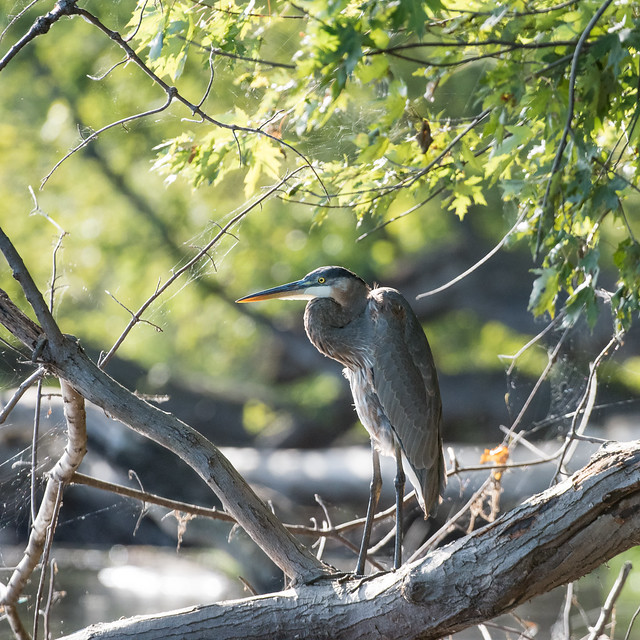
Great Blue Heron, Ardea herodius, by Reed A. George
Nikon D810, Nikkor 200-400mm f4 AF-S VR G Lens
iso 1600, f5, 1/2000 sec.
 
The detail in the print I made of this shot is just stupendous. iso 1600? Not a problem at all.
 
At 6400, I do see image quality start to drop off, but still quite impressive. At 1600, it's lovely.
 
DMC-365.blogspot.com

Friday, September 18, 2015

Kind of Blue - Heron, That Is

 
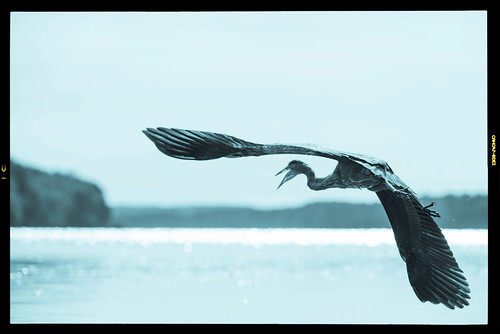
Kind of Blue, by Reed A. George
Nikon D810, Nikkor 200-400mm f4 AF-S VR G Lens
iso 160, f5, 1/2000 sec.
 
 
DMC-365.blogspot.com
 

Sunday, September 13, 2015

Today's Eagle Shot - Nikon D810, Nikkor 200-400mm f4 AF-S VR Lens

I got out kayaking on the Potomac River again this morning. I saw quite a lot of wildlife, including a muskrat that swam to within a few feet of my kayak, and a giant snapping turtle that nearly touched it. Both were too close for me to focus with the big lens. I also watched a herd of deer grab their morning drink at the river's edge.
 
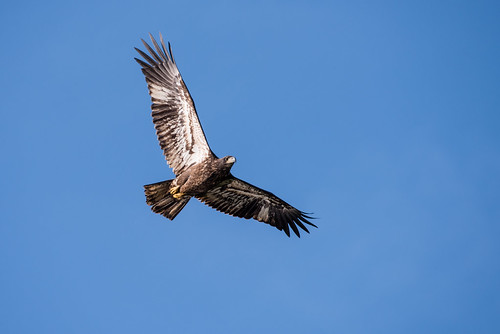
Here's the best shot I got today, of an immature bald eagle.
Immature Bald Eagle, by Reed A. George
Nikon D810, Nikkor 200-400mm f4 AF-S VR Lens
iso 220, f5.6, 1/1250 sec.
 
You can click on this image to see it larger on flickr.
 
Man, am I lucky to have access to such a beautiful place to paddle on weekend mornings at sunrise.
 
DMC-365.blogspot.com
 

Wednesday, September 2, 2015

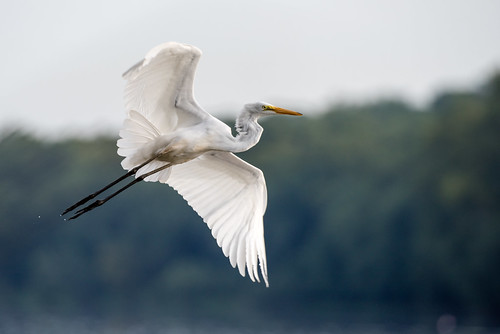
Great Egret - Nikon D810 and Nikkor 200-400mm f4 AF-S G VR Lens

And here's my best bird-in-flight shot from Sunday's paddle trip.
Great Egret (Ardea alba), by Reed A. George
Nikon D810, Nikkor 200-400mm f4 AF-S G VR Lens
iso 200, f5, 1/1250 sec.
 
I watched this beauty, and his/her nearly-identical partner, approach me from far way, flying downriver toward my kayak. I was lucky enough to get the focus just right on this shot, and capture the wings spread wide. This camera / lens combination is just astounding. It's what I've been working toward for years in gear for nature photography.
 
I find myself tempted to try the new Nikkor 200-500mm f5.6 (Click Here), a much lower cost and lower weight solution, but it's not going to provide image quality like this. And, that extra stop of light gathering (f4) in my lens really matters.
 
DMC-365.blogspot.com


Tuesday, September 1, 2015

Back Home, on the River

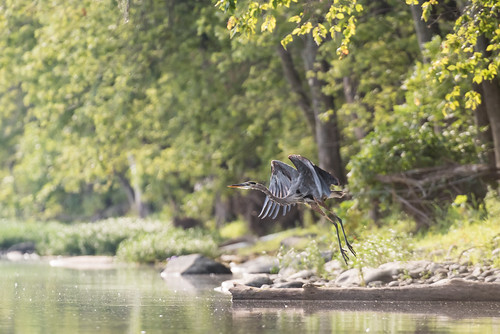
My long vacation over, I'm back out on the river in my kayak, with my Nikon D810 and 200-400mm f4 AF-S VR lens. Here's a shot from last Sunday on the Potomac.
Great Blue Heron, Ardea herodias, by Reed A. George
Nikon D810, Nikkor 200-400mm f4 AF-S G VR Lens
iso 1800, f5.6, 1/1250 sec.
 
On this particular outing, I focused on wildlife photography, leaving my fishing rod untouched. Rather than "running and gunning" down the river as I fished, I pulled the kayak quietly to shore in a few places, and was rewarded with more time to observe each creature that I came across, including several bird species, as well as a red fox.
 
DMC-365.blogspot.com


Thursday, August 6, 2015

lions, tigers, and... BEARS! Oh, My.

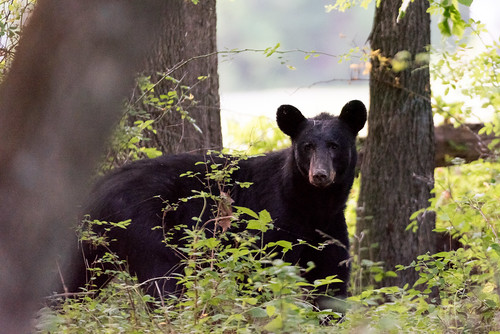
Okay, no lions or tigers, but on the drive in to my local kayaking spot here in Northern Virginia this weekend, I did see foxes (4), deer (dozens), and a black bear!
 
Black Bear (Ursus americanus) in Suburbia, by Reed A. George
Nikon D810, Nikkor 200-400mm f4 AF-S VR Lens
iso 3200, f4, 1/125 sec.
 
Keep in mind, this is in Northern Virginia, where the townhouses and strip malls are rapidly gaining on the trees in number. It was a pleasant surprise to see this beautiful animal here. Also a little troubling. I'm concerned for his (her?) future.
 
It was just after 6:00 AM, and the light was low there in the early morning shade. I didn't have time to make adjustments, other than to crank the iso up as far as I felt comfortable with. Luckily, that got me to a shutter speed where one or two exposures came out sharp, even though I was handholding the big 200-400mm lens, zoomed to 400mm.
 
The approximate focus distance is 29.9'. That bear could cover that distance in less than one second. Thankfully, he didn't.
 
DMC-365.blogspot.com
 

Tuesday, August 4, 2015

Nikon D810 and Df - The Best Combination Available Today?

Well, I've been thoroughly enjoying my Nikon Df for some time now. The low light capabilities of this camera are spectacular.
 
I've recently purchased a Nikon D810, specifically to take advantage of the increased resolution (36 megapixels) for nature photography. Mounted on my Nikkor 200-400mm f4 AF-S VR G lens, the D810 should allow me more freedom in cropping, which is always useful in wildlife photography, especially with active species like birds.
 
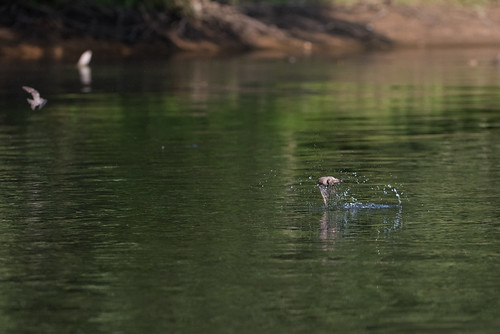
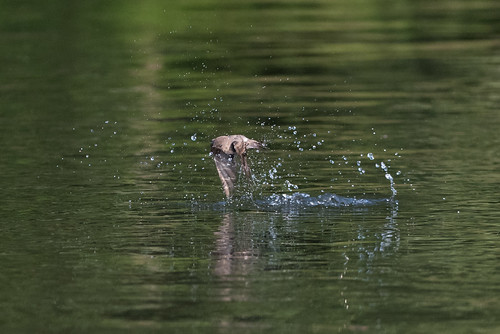
I've only had my D810 out a couple of times so far. One was this morning, shooting birds on a kayak outing. Here's a tightly-cropped shot of a swallow hitting the water surface.
And here's a 100% blow-up (cropped even more).
What I've found so far is that while the D810 does allow significant cropping, it doesn't handle high iso noise nearly as well as the Df. Of course, that's well-known in the Nikon crowd, and makes perfect sense, given the much higher number of pixels crammed into the same sensor real estate as the Df. The shots above were made at iso 1600, and noise is quite visible on my screen, looking at the images in Lightroom.
 
Here's a snapshot of DxO Lab's comparison of the two cameras:
 
Image Source: http://www.dxomark.com/Cameras/Compare/Side-by-side/Nikon-Df-versus-Nikon-D810___925_963
 
As you can see, the D810 wins in overall score, color depth, and dynamic range. But, it performs significantly worse in low light (high iso). Again, no new information here, but it's helping me to form my opinion of this pair of cameras and how best to use them.
 
Basically, the D810 will fill my need for high resolution and cropping ability when shooting wildlife in good light. Or anything else in good light, for that matter. The Df will remain my go-to camera for more challenging lighting situations, and when cropping is not as necessary.
 
So, I think that for me, yes, this is the best combination of Nikon bodies available today.
 
I have to get the D810 out in the field again, and shoot at lower iso settings. I'm sure that's going to really impress me.
 
DMC-365.blogspot.com


Tuesday, July 28, 2015

So, Which of My Lenses Are Best on the Nikon D810?

 
Nikon
 
The advent of the D810, and its predecessors the D800 and D800E, caused many photographers to find the limits of their lenses. It used to be rare that the sensor was good enough to have the lens be the limiting factor in image quality, or acuity. Now, it's not rare at all.
 
So, which lenses from my (rather extensive) kit of Nikkors will work well on the D810 that's on its way to me in the mail?
 
I found a nice list on the DxO page, which lists the top choices for prime and zoom lenses for the D810. Testing over 100 lenses on the D810, they've compiled a list of the ones they found most suited to the new super-sensor. (Click Here) to read the full list.
 
As expected, my new 28mm f1.8 AF-S G lens, my most modern lens, makes the list. Importantly, so does the AF-S 200-400mm VR, though they tested the version 2 of this lens; mine is version 1. As the 200-400 is likely to be my most-used lens on this new camera, that's important to me. Another modern lens in my kit, the 70-300mm f4.5-5.6 VR zoom made it on the list. That's good.
 
Then there were a couple of surprise entries from my older lens selection: the 85mm f1.8 AF-D and the 50mm f1.4 AF-D (which I use all the time). Great to see those there, as well.
 
So, I feel that in addition to the 200-400, which will be my nature workhorse, I've got a full set of wide (28mm), normal (50mm), short telephoto (85mm), and long compact zoom (70-300) to choose from with this camera. I'll certainly use other Nikkors on the D810, but with these, I know that I can expect the very best results.
 
DMC-365.blogspot.com
 

Monday, July 27, 2015

Well, I'm Going For It - Nikon D810

Nikon
 
I have long said that my Nikon D700 is the single best-performing camera I've ever owned. Not the highest fun-factor (as I love my rangefinders and old film cameras), but best at getting the shot, and in the most high quality way. So, I have not upgraded it, even after several years. I did add the Nikon Df, which is just a different beast, and brings the fun factor up considerably with its retro design, ability to take non-AI lenses, and smaller size.
 
What I did upgrade was my telephoto lens choice. Selling the spectacular 500mm f4 AiP manual focus lens, I invested in the first version AF-S 200-400mm f4 VR lens. Having fast autofocus significantly improves my chances of capturing great nature photographs. On the D700, the 200-400 really sings.
 
So why upgrade to the D810? Well, really for one reason, and one reason only - resolution. I will be able to shoot the D810 in DX crop mode and still produce 15.4 megapixel images. That is higher than the D700 at full frame, and turns my 200-400 telephoto into the equivalent of 300-600mm, without the 1.4X tele-extender! That's powerful. Or, I can shoot in full-frame (36 megapixel) mode, and crop in post-processing. That's really going to increase the number of bird-in-flight images that will be useful and printable at large sizes.
 
Resolution is the only reason that I know now. I have a feeling I'll find other reasons to love the D810.
 
I bought mine refurbished by Nikon. The cost savings was significant - I paid $2,550 at Adorama, including a third party "drops and spills" 3 year extended warranty. The camera lists for almost $3,300.
 
I don't expect the D810 to become my most-used camera; I love the Df and know the D810 won't replace it. I do expect the D810 to be my go-to nature and wildlife camera.
 
DMC-365.blogspot.com
 

Sunday, July 26, 2015

Here's Something I've Been Thinking About - the Nikon D810 in Crop Modes

 
I am now the proud (half) owner of a Nikkor 200-400mm f4 AF-S VR G lens. Half, because I co-own it with a good friend of mine.
 
I always laugh when someone asks me what gear to buy to do a little nature photography, especially bird photography. Now that I have the 200-400, typically attached to my D700, I find myself thinking about what I could do with a D800 or D810 - so many more pixels that would allow me to use the crop modes (1.2 or 1.5) that are built into the camera, and still end up with images with sufficient resolution to print big.
 
At 1.2 crop, the D810 produces 25 megapixel images, and at 1.5 crop (same as DX sensors), the images are 16 megapixels. That's a serious advantage over the D700, with its 12 megapixels at full frame.
 
I love my D700, but a D810 may just be the perfect match for the 200-400 lens for nature photography.
 
(Click Here) to read a post by Kirk Tuck on the Visual Science Lab about this very subject.
 
DMC-365.blogspot.com