DMC-365 focuses on creative photography equipment, techniques, and approaches. I believe that equipment is part of the creative process. I use Leica, Panasonic Lumix, Nikon and other cameras, both digital and film. On DMC-365, you can expect to see a lot of my own work, as well as work by others that I find interesting. I share methods, equipment developments, and creative approaches to photography.
Showing posts with label water. Show all posts
Sunday, May 8, 2016
Saturday, January 23, 2016
Two More From the Fuji GW690II
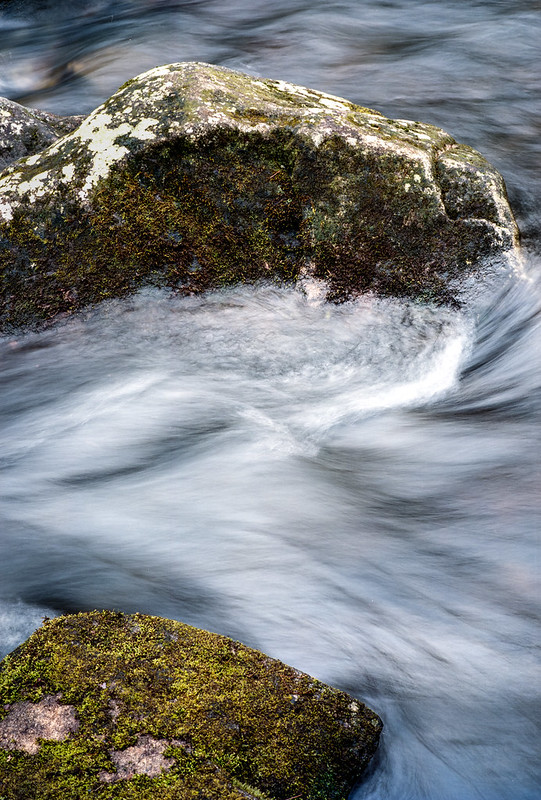
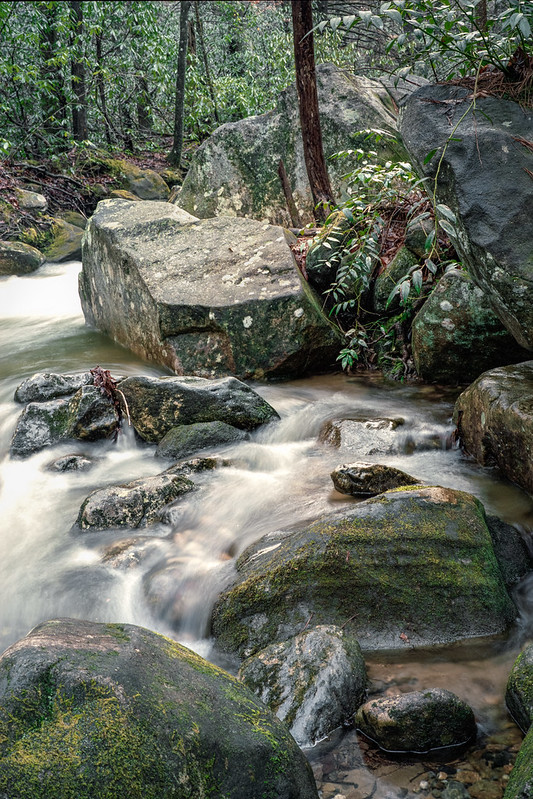
Adding to my last post, with two more 6x9 medium format images from Jones Gap State Park in South Carolina.
This is a detail shot of the water at my feet . To give an idea of the scale, I'd say the rock at top was about six feet away. I love the deep darkness and blue cast in the water
This image didn't appeal to me at first, but I've grown to appreciate it.
Both were shot on Kodak Portra 400. No filters were used.
DMC-365.blogspot.com
Tuesday, June 30, 2015
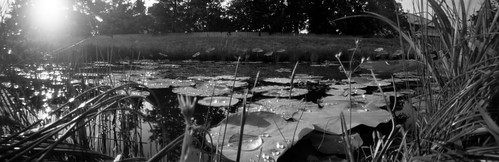
Frog's Eye View - Reality So Subtle 6x17 Pinhole
Frog's Eye View, by Reed A. George
Reality So Subtle 6x17 Panoramic Pinhole Camera
Kodak TMax 100 Film, 30 sec. Exposure
DMC-365.blogspot.com
Thursday, June 25, 2015
More of a Story in Wildlife - Nikon D700 and 200-400mm f4 AF-S VR Lens
I wrote recently about a personal challenge to myself, to move my wildlife photography from mere "find the animal and shoot it" to telling at least part of a story. In photography, the story doesn't have to be complete. In fact, sometimes, if the story presents more questions than answers, that can be a good thing. That's kind of the case here.
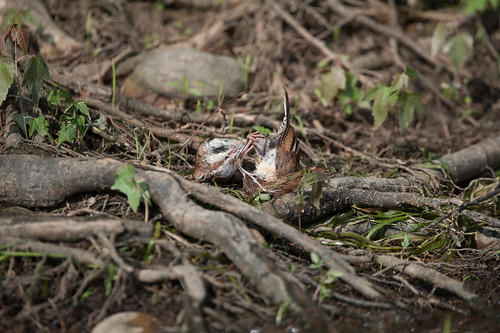
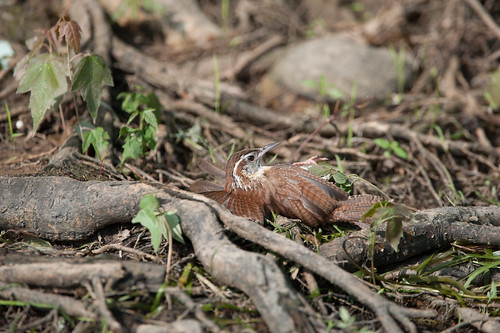
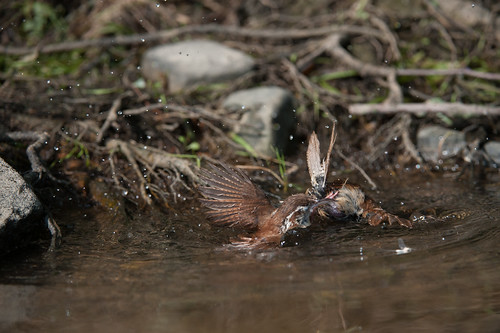
At the end of a kayaking trip, as I shoved my boat up to the shore, I saw a clump of feathers bouncing around on the bank. Not sure what I was looking at, maybe an injured bird?, I decided to look closer, and shoot. Here's what I saw.
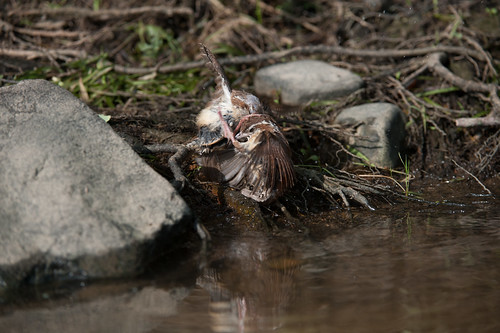
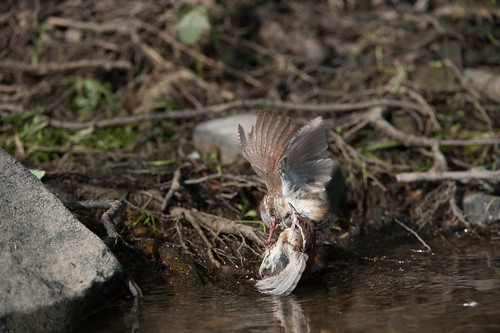
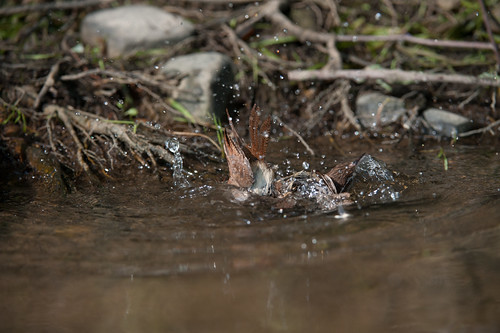
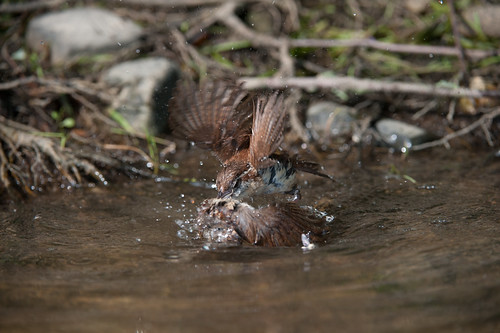
Now, the camera saw it much more clearly than I did at the time. What you're looking at is two birds (Carolina wrens?), fighting it out. And I don't mean play fighting. These two were not only using their sharp beaks against each other, they were actually clawing at each other's eyes! As they continued, and even ended up in the water, here's how it looked.
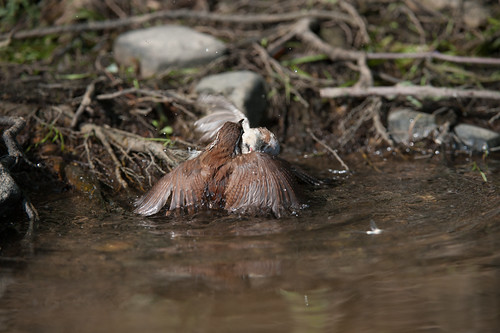
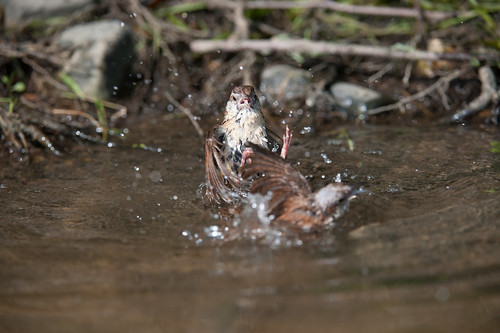
Crazy, right? And here's the final, and crowning shot. Bird rage!
Bird Rage, by Reed A. George
Nikon D700, Nikkor 200-400mm f4 AF-S VR Lens
As they finally split up and ended the fight, with one bird chasing the other off into the bushes, I just couldn't keep up with the big lens. I missed a couple of other interesting shots, but do feel that these show the event pretty well.
Does anyone know if I have the species correct, or what these vicious little birds were doing to each other?
I'm happy to have caught some very interesting behavior in this sequence.
DMC-365.blogspot.com
Monday, June 1, 2015
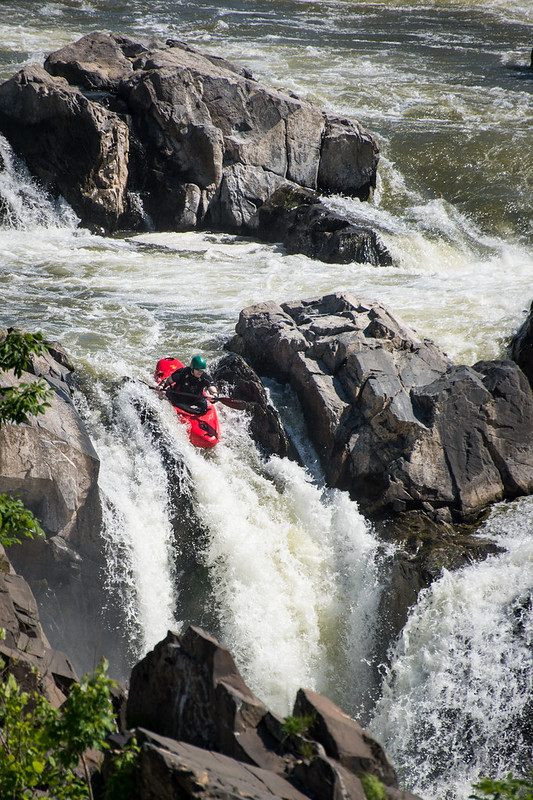
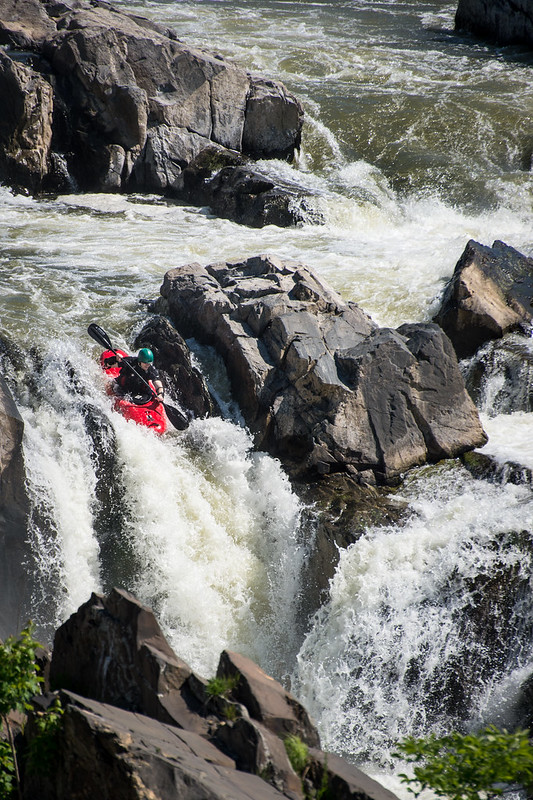
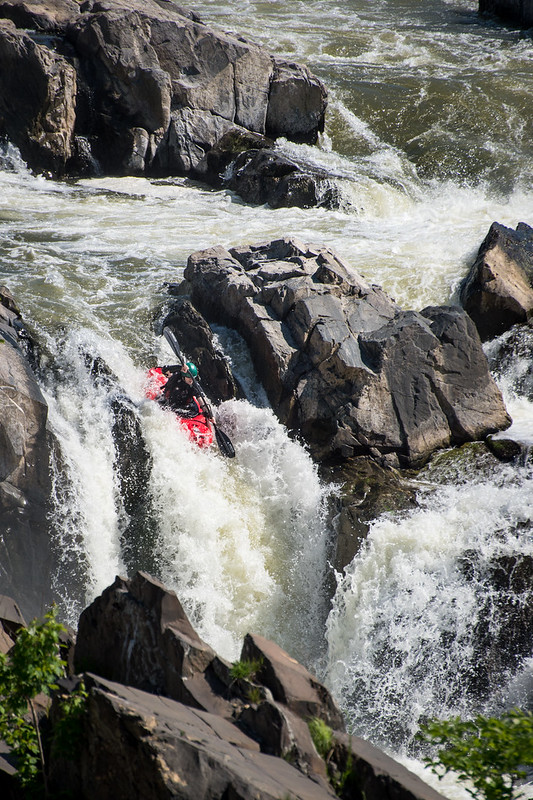
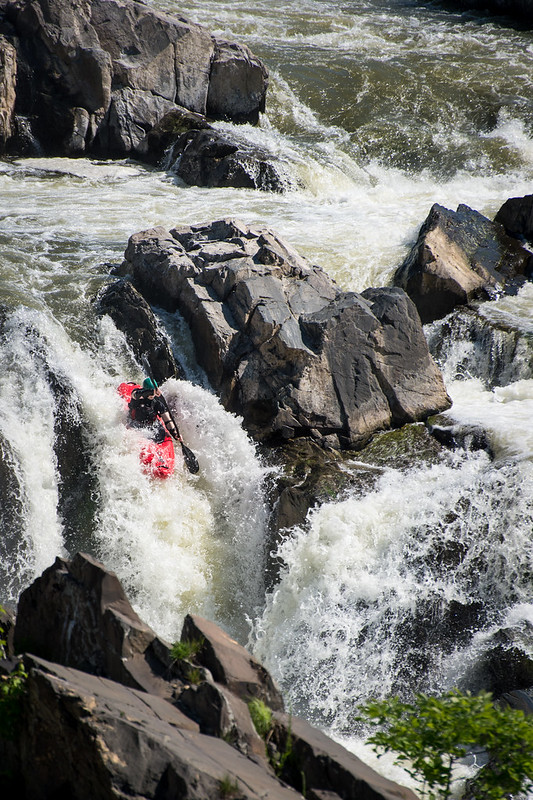
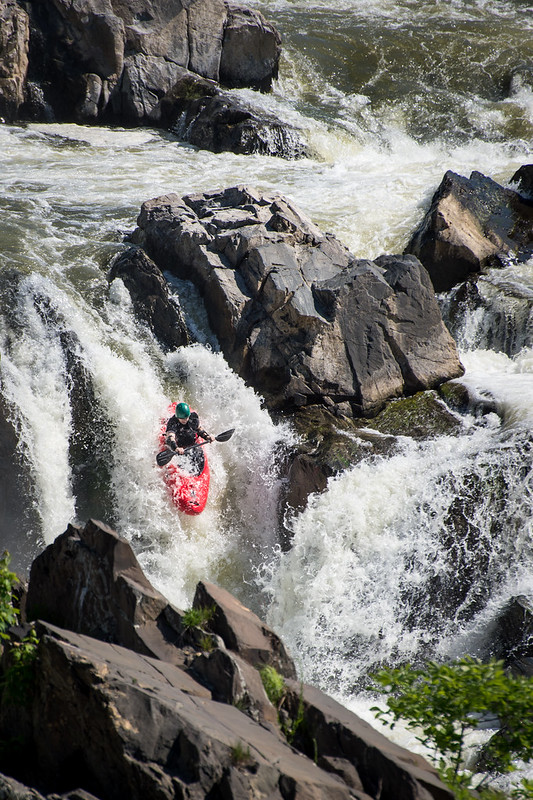
Extreme Kayaking
Today is Memorial Day. My daughter and I went to Great Falls Park in Virginia to attend a parkour event. That didn't work out, due to miscommunication about the location. But, we did get to watch some amazing kayakers, attacking the steep falls at the park. Here's a series I shot with the Nikon Df and 70-300 f4.5-5.6 VR lens.
After this shot, the kayaker literally disappeared behind the rocks. Amazing to watch.
DMC-365.blogspot.com
Sunday, May 24, 2015
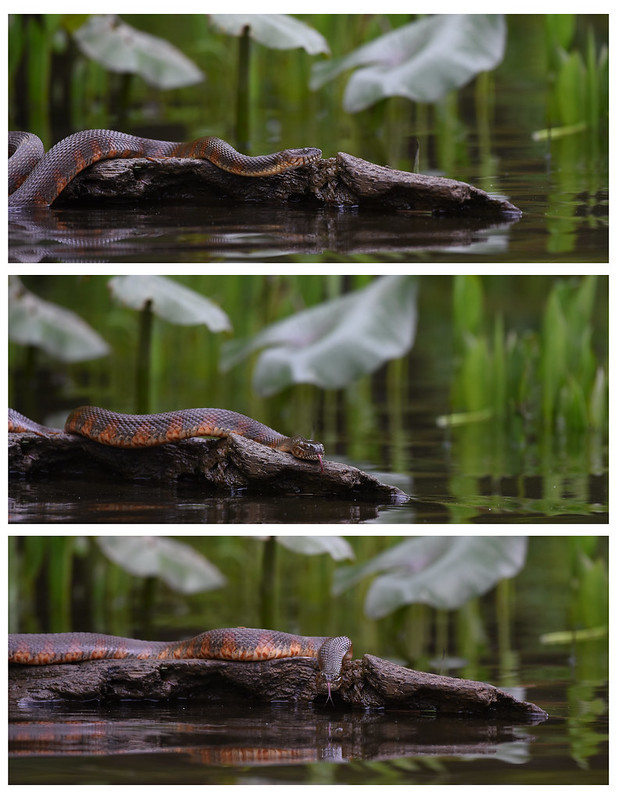
Northern Water Snake - Nikkor 300-400mm f4 AF-S VR G Lens
I went kayaking today, for the third weekend in a row. Get it, in a row? Sorry about that. I think I'm a little punchy after so much exercise.
Today, I had the distinct pleasure of testing out a new telephoto lens, the amazing Nikkor 200-400mm f4. This is not an easy lens to handle, but mounted firmly on a gimbal head and super-heavy tripod, I was able to get it to shine, including with the Nikon TC14EII teleconverter. The focus is super-fast and accurate.
Northern Water Snake (Nerodia sipedon), by Reed A. George
Nikon D700, Nikkor 200-400mm f4 AF-S G VR Lens
Nikkor TC1.4EII Teleconverter (final focal length 360mm)
iso 2200, f8, 1/1250 sec.
I got some really nice bird shots today as well, including some really sharp shots of birds in flight. But, I'm too tired to process them tonight. So, you'll have to live with this teaser shot of a northern water snake until I get some sleep.
DMC-365.blogspot.com
Wednesday, April 8, 2015
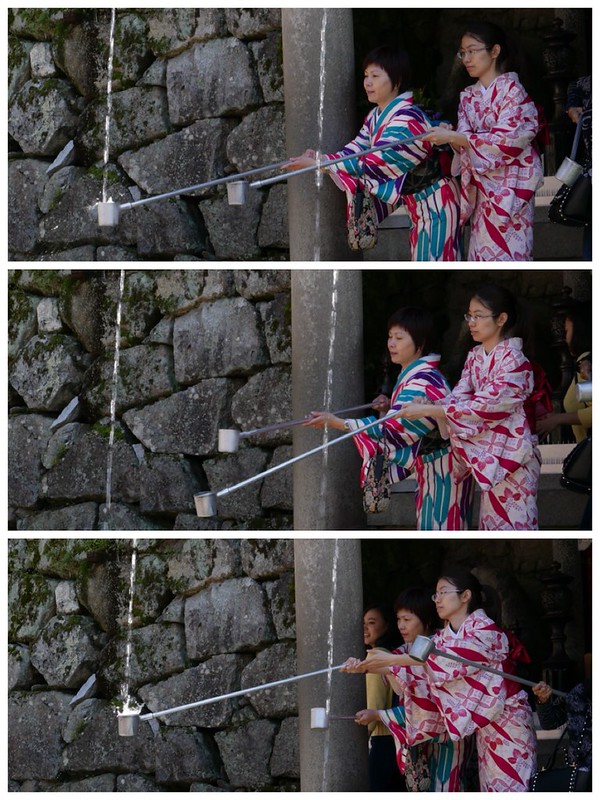
Kiyomizu-dera Temple in Kyoto, Japan - Wish-granting Waterfall
My family and I just got back from a visit to Kyoto. We visited Kiyomizu-dera temple, founded in the year 798. (Click Here) to read more about the temple.
One of the features of Kiyomizu-dera is the Otawa waterfall, whose water is said to grant wishes to those who catch and drink it.
Here's a triptych that I made there with the Panasonic Lumic DMC-LX100.
Otawa Waterfall Triptych, by Reed A. George
Panasonic Lumix DMC-LX100
For this day of our trip, since I knew we would be on the move all day, I left the Nikon Df and lenses at the hotel, taking only the LX-100. To be honest, it's almost embarrassing just how good the LX100 is. I didn't miss the Df at all, and really enjoyed my freedom from the heavy camera bag.
These images are direct from the camera, just cropped and put together on my iPad.
DMC-365.blogspot.com
Monday, August 4, 2014
Water Lily - Imperfections of Film and Long Telephoto
Water Lily, by Reed A. George
Nikon F Film SLR, Sigma 400mm f5.6 (pre-AI) Telephoto
I continue to explore the 400mm Sigma lens that I won in the Film Photography Project Walking Workshop giveaway. As you may have seen, it works pretty well on my Micro 4/3 Lumix DMC-GX7. But, it's not of the same quality as the more modern Micro 4/3 lenses. In fact, I think it's much more at home on the type of camera it was designed for, a film SLR.
As you can imagine, the shot above was taken from a long distance. 400mm has a very long reach.
I like the combination of the tight perspective of the telephoto, the narrow depth of field, and the significant vignetting in the corners. For all its imperfections, this image says what I want it to.
DMC-365.blogspot.com
Tuesday, October 29, 2013
A Beautiful Sunset Outing - Fishing and Kayaking With the Lumix DMC-TS5
If you follow my blog, you've probably read that I enjoy using the little Panasonic Lumix DMC-TS5 when I go kayaking, fishing, diving, or just about anything that threatens to get me and the camera wet. On a Friday evening, I decided to get out for an hour or two for a sunset kayak paddle. Luckily, I have a nice reservoir near home, so it's easy to do on a moment's notice. Even with the shorter days of autumn, I was able to get out after work, and before the sun went down.
On this particular day, I decided to fish a little, using my ultralight rod and reel, and a twister-tail jig. I happened to catch a nice smallmouth bass, shown below.
Smallmouth Bass, by Reed A. George
Panasonic Lumix DMC-TS5
This fish was clearly fattening up for a long winter nap. Only about 1 1/2 pounds, this stocky little fish had quite a full stomach, and was still eating. Lucky for him, the only thing I took was a few extra minutes of his time, to photograph him (her?). Here's my favorite shot:
Sunset Catch, by Reed A. George
Panasonic Lumix DMC-TS5
Satisfied, I paddled back to where my car was parked before it got dark. Looking back, here's the sunset that followed.
Sunset (16:9), by Reed A. George
Panasonic Lumix DMC-TS5
The little TS5 sure does a good job. These images look great at full-size on my screen. I'm sure these would print just fine at 8"x12".
DMC-365.blogspot.com
Sunday, October 13, 2013
The Fishing Camera - Panasonic Lumix DMC-TS5 - Strikes Again
I got out in my kayak for a couple of hours this weekend. I have a nice reservoir near my home, and have fished it a few times, never catching anything of any size. This time, I caught a nice smallmouth bass. Or was it a largemouth? A friend and I have been debating that back and forth. Every fisherman will have an opinion.
Smallmouth(?) Bass, by Reed A. George
Panasonic Lumix DMC-TS5
iso 325, 160, 125 (in same order as photos), f3.3, 1/250 sec.
The TS5 works great for this kind of shooting. In the kayak, fish on the line, I'm able to quickly open my waterproof bag and pull out the TS5. In iAuto mode, all I have to do is turn the power on and shoot. It autofocuses quite nicely for these types of shots.
I always want to take those cool images where the lens is partially underwater, partially above. That is particularly difficult with the TS5, as the lens element is so small, it's difficult to position it correctly to capture the water line.
Here's the smallmouth above the surface. My friend and I agree that he looks more like a largemouth in this picture:
Smallmouth(?) Bass, by Reed A. George
Panasonic Lumix DMC-TS5
iso 200, f3.3, 1/640 sec.
In all, I caught six fish - two smallmouth bass (the second was quite small, but more clearly a smallmouth), three white bass (all small) and one crappie (small). This was the first crappie I've ever caught in this particular reservoir. Here's what it looked like:
Crappie, by Reed A. George
Panasonic Lumix DMC-TS5
iso 100, f3.3, 1/125 sec.
I was tempted to stay and fish a while longer, but sunset came and went, and it was time to go.
Reservoir Sunset, by Reed A. George
Panasonic Lumix DMC-TS5
iso 160, f3.3, 1/800 sec.
I notice that iAuto mode on the TS5 seems to choose f3.3 often. I suppose with such a small sensor, getting enough depth of field is never an issue. I'm quite impressed with this little camera.
DMC-365.blogspot.com
Friday, August 30, 2013
The "Sketchbook" Concept
User jl-lb.ms on Rangefinder Forum has put a name to the concept of exploring a subject or concept with a camera, simply documenting a scene, or exploring a thought. He calls it a "sketchbook."
(Click Here) to read the post on Rangefinder Forum, and see a couple of examples posted in the comments.
I think I do this regularly. Below is an example of my exploration of some raindrops on a tree in the dreary winter of Virginia.
"Sketchbook" Raindrops, by Reed A. George
Panasonic Lumix DMC-G3, Pana-Leica DG Macro-Elmarit 45mm f2.8 Lens
Little glimpses like this are interesting. I remember well the day I took these. I was out for a late January walk, cabin fever having set in. I also remember lamenting the barren scene of winter, with very little interesting to look at or shoot. White sky, no leaves on the trees, lots of gray. Even in these times, if you look hard enough, something is interesting. One approach is to simply go with the lack of color and shoot monochrome. Look for structure. Another is always to shoot closeups.
What works in these shots, if anything at all, is the glowing dots of out-of-focus raindrops. The final shot shows these best, in my opinion. Even though the overall outdoor light was very dull, even, low contrast, the drops against a relatively dark shadow background lends at least a little drama. No masterpiece here, these are still worthy of the "sketchbook." They bring back the day for me now, 18 months later.
DMC-365.blogspot.com
Friday, August 23, 2013
A Walk In The Woods, With Leica M9 - Composing Differently
Yesterday, I posted an image I made at Manassas National Battlefield, on my way to a hike at the Shenandoah National Park. Here are some shots from the hike itself.
I have been in the situation of shooting nature with my M9 recently. Not exactly what most nature photographers grab on their way out, the rangefinder presents challenges. It doesn't play well with long telephoto lenses or macro. This is part of the fun for me. In fact, it forces me to compose differently, maybe even better in some cases.
This little white mushroom was sticking out of a bank of green along the trail. If I were carrying my Nikon DSLR, I would have been motivated to grab a macro lens, and show as much detail of the mushroom as possible. It did have an interesting texture; this would not have been a bad idea. But, it would have missed some of the context, the contrast between this little fungus and everything else around it. This month's Whole Lotta Leica Lens, the Summicron 35mm f2, showed that quite well.
Shroom, by Reed A. George
Leica M9, Leica Summicron 35mm f2 Version 3
iso 400, f8, 1/25 sec.
Perhaps a little more in the normal Leica realm, I really liked the abstract shapes made by the flowing water, wood, and stone in the creek below. I would have liked to use a neutral density filter and get a longer exposure, to let the water flow even more. I don't carry filters for my Leica lenses.
Creek, by Reed A. George
Leica M9, Leica Summicron 35mm f2 Version 3
iso 160, f16, 1/3 sec.
I shot the leaf below from several angles before getting what I wanted. What really attracted me was the reflection of the green leaves and dark tree trunks above the water. This green patch was actually quite small, so my shots with the 35mm wide angle lens included too much. I switched to my lovely little Canon LTM 135mm f3.5 lens. This is an amazingly sharp lens. I was able to get it up on a tripod pretty high, and isolate the reflections from the rest of the scene. The leaf in the water provides an anchor point for the eye.
Summer Reflection, by Reed A. George
Leica M9, Canon LTM 135mm f3.5 Lens
iso 400, f5.6, 1/60 sec.
I spied this Northern Water Snake (Nerodia sipedon), sunning himself by the creek. My nature photographer instincts kicked in, and I started shooting from afar, to make sure I got a shot of him. Again using the 135mm, a rather modest telephoto length, I kept easing closer and closer. Here's the closest shot I got.
Northern Water Snake, by Reed A. George
Leica M9, Canon LTM 135mm f3.5 Lens
iso 320, f6.7, 1/1000 sec.
Upon looking at all of the shots I took when I got home, I discovered the one below. Including the full body of the snake, and more of his surroundings, I actually prefer this one:
Northern Water Snake With Context, by Reed A. George
Leica M9, Canon LTM 135mm f3.5 Lens
iso 320, f6.7, 1/1000 sec.
I most definitely would not have made the shot above with a DSLR and long telephoto. Just to be clear, this is not a weakness of the DSLR per se. It is my own way of thinking when I'm using that equipment. I'm really glad that I forced myself to work with what I had.
I continue to learn about this interface of equipment and creativity.
DMC-365.blogspot.com
Tuesday, August 20, 2013
Scuba Checkout - Landlocked in Virginia
My daughter Christine is getting her dive certification. This weekend was her checkout dive, at an inland quarry in Northern Virginia.
We were lucky to find an incredibly nice dive shop here, Coral Edge Adventures. Not only do they have an amazing selection of gear and lots of good trips planned to other places, the instructors and staff are all real nice people.
(Click Here) to check out Coral Edge Adventures.
I decided to dive with the group today, and carried along my Lumix DMC-TS3 waterproof camera.
Gearing Up
The Descent
The quarry was used to mine stone for the nearby highways. It's nearly 100 feet deep in places. It also has several submerged attractions, including an airplane, bus, and underwater platforms.
Cold Water Entry
Who You Lookin' At?
This dive represented a lot of firsts and mosts for me - first freshwater dive, cloudiest water, coldest water, first dive using a wetsuit. I'm what you call a fair weather diver - going every year or two in an easy, warm, clear water location with a guided boat tour. Today was a little different.
Here's how it looked underwater.
Clearest Water I Saw
My Dive Buddy, Less Than Eight Feet Away
Resurfacing
A Little Splash Fight
Leaving The Water
I like this last shot. The water running down the lens makes a cool effect.
So, this wasn't the best dive conditions I've ever experienced, but it was good training. I actually did lose my dive buddy at one point. I'm also really excited about having Christine complete her certification. This is something she'll be able to enjoy for many, many years.
DMC-365.blogspot.com
Subscribe to:
Posts (Atom)