Showing posts with label spring. Show all posts

Wednesday, June 3, 2015

Ribbon High in the Branches

 
White ribbon high in the branches above,
But how?
A balloon held too loosely in the spring breeze?
No evidence to say so,
But normal silk doesn't often fly to such heights.
What luck, to have been caught at the apex of its path,
We should all be so fortunate.
 
Before me, the gladiator, the eagle, the mounted warrior victorious,
all too captured at their peak.
But do they know?
Is it not just as well to know you've attained it,
and always have the memory,
as imperfect or even embellished?


DMC-365.blogspot.com
 

Thursday, May 21, 2015

Practicing my Telephoto Technique - Nikon 70-300mm AF-S VR and the Ducklings

I am anxiously awaiting delivery of a used Nikkor 200-400mm f4 zoom lens that a friend and I have decided to co-own. It's an expensive lens, so this made it possible for both of us to have access to it.
 
Most of my lenses, especially telephotos, are older technology. Starting with the Ai-P 500mm f4, which is my longest lens, it's manual focus. It's a true beauty, and makes wonderful photos, but clearly doesn't have the latest AF-S focusing. Then there's my 300mm f4 AF-I, which does have autofocus, but not the blazing fast AF-S.
 
In fact, the only long lens I have with AF-S is the 70-400mm f4.5-5.6 G VR zoom lens. So, I decided to take that lens out for a quick shoot before work yesterday, to practice my focusing technique. Based on the video by Steve Perry that I posted yesterday, I set up my D700 for back button focusing and gave it a try.
 
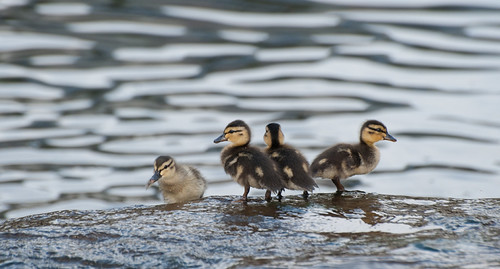
Not an action shot, but here's the best shot I made in that fifteen or twenty minutes of shooting yesterday.
 
Spring Ducklings, by Reed A. George
Nikon D700, Nikkor 70-300mm f4.5-5.6 G AF-S Lens
iso 800, f8, 1/500 sec
 
I wanted to test out the back button method, in which you leave your camera set to continuous AF, and use the button on the rear of the camera to decide when to freeze the focus, if at all. When photographing action (e.g. birds in flight), you just keep the button pressed, and the camera will focus through the entire shooting sequence. For static objects (e.g. these ducklings), you get the focus point you want, then release the rear button, locking the focus at that point. This worked very well for me here.
 
This 70-300mm lens is very good. It's not as sharp as I expect the 200-400mm to be, which should be obvious when you compare the specs and prices. But, I think it did a pretty good job for me in this case. And, it's very light and fast.
 
I can't wait to see what the 200-400 can do!
 
DMC-365.blogspot.com

Wednesday, May 20, 2015

Cottonwoods Blooming on the Potomac River

On my most recent kayaking trip on the Potomac River, I shot this image of a cottonwood tree, blooming and losing its blossoms to the river surface.
Cottonwoods on the Potomac, by Reed A. George
Panasonic Lumix DMC-TS5
iso 160, f3.3, 1/160 sec.
 
As you can see, I made this image with the compact, waterproof Lumix DMC-TS5 camera. It's a great companion on kayaking trips, as it's really well-protected against water, dirt, sand, and shock. I think it makes very nice pictures for a compact point and shoot.
 
DMC-365.blogspot.com

Monday, May 18, 2015

Springtime is for Photography

Springtime is for Photography, Pinhole Included
Nikon Df, f/180 Pinhole Body Cap
 
I'm so happy that it's springtime again. Makes me want to be outside shooting every day.
 
Hope you're using the nice weather to get out and make some art.
 
For my friends in the Southern Hemisphere, don't worry. It's all just cycles; your time is coming as sure as winter will be back here before we know it.
 
DMC-365.blogspot.com
 

Monday, May 11, 2015

Worldwide Pinhole Day - More from the National Arboretum with the Nikon Df

Here are some more pinhole images, taken with my Nikon Df and f/180 pinhole body cap on Worldwide Pinhole Day. (Click Here) to go the the Worldwide Pinhole Day site.
 
For some reason, I really like these two. Not sure which I like best:
 
In the first, I like the total absence of people other than the two in the foreground. In the second, I feel that the two people in the far distance, and the way the lady in the foreground is turning her face toward the sky actually add to the scene. I know, they're just blurry pictures, but I really enjoy the change of pace with pinhole, which allows me to concentrate on composition.
 
Here are some more with people in them.
 
 
DMC-365.blogspot.com
 

Wednesday, May 6, 2015

How to Get Better Pinhole Images

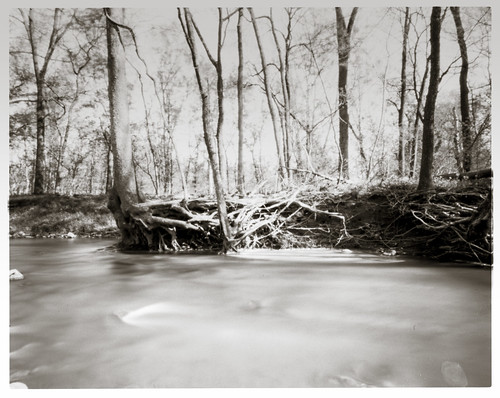
Bull Run Creek, by Reed A. George
4x5 Pinhole Camera
 
Today (the day I'm writing this, April 26, 2015) is World Pinhole Day.
 
(Click Here) to read about World Pinhole Day. You've missed this one, but read up and be prepared for the next one!
 
My friend, Bill, and I went put and shot pinhole images today at the National Arboretum in Washington, DC. I used my 6x17 panoramic pinhole camera for black and white. But, since there were so many great colors there because of spring, I also shot quite a lot with a pinhole body cap on my Nikon Df. I'll be posting some of those in the near future.
 
(Click Here) to read about the Reality So Subtle 6x17 panoramic pinhole camera that I use a lot these days.
 
After returning this evening, I did a web search to read a little more about pinhole techniques. I found a post on The Phoblographer (Click Here to read it), listing five keys to better pinhole photos:
 
  1. Shoot in black and white
  2. Use a tripod
  3. Use high contrast film
  4. Compose to guide the viewer through your image
  5. Use a lightmeter
 
I agree with most, but not all of these points. As I've already said, I do like to shoot color as well as black and white in my pinhole cameras. Also, I strongly recommend using a smart phone app, instead of a light meter. Personally, I use a great one called "Pinhole Meter" on my iPhone. It is very simple to use, and doesn't require me to mentally calculate anything. Better than a traditional lightmeter.
 
I had a great time shooting on World Pinhole Day. Now to process film, select a single image, and get it posted to the website!
 
DMC-365.blogspot.com


Friday, May 1, 2015

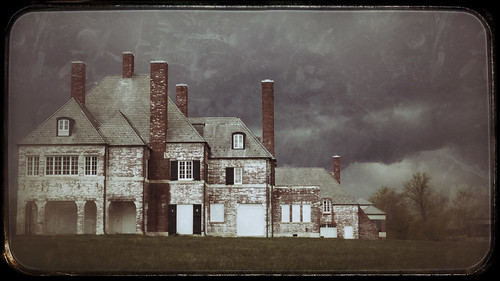
Storm Approaches the Manor House - Lumix DMC-LX100 and Snapseed

I ventured out from the office today as a storm approached. Here's my interpretation of the scene.
Storm Approaches the Manor House, by Reed A. George
Panasonic Lumix DMC-LX100
iso 200, f8, 1/250 sec.
Manipulated in Snapseed on iPad
 
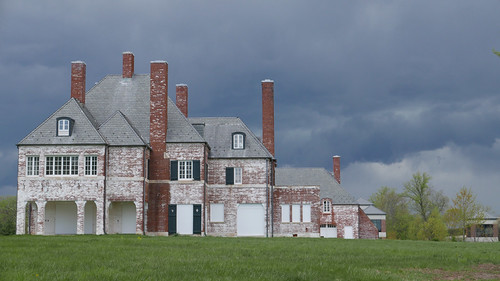
Here's the original image from the LX100.
 
The springtime seasonal allergies are killing me right now, so I paid the price for being outside. But, the clouds were so dramatic, I had to run out and get the shot. The Panasonic DMC-LX100 made that very easy.
 
DMC-365.blogspot.com

Thursday, April 30, 2015

More From Kiyosumi Garden with the Leica IIIG

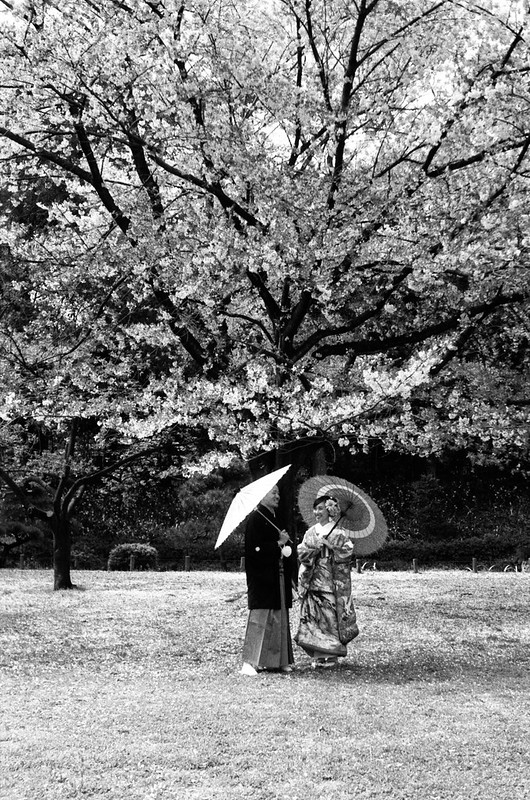
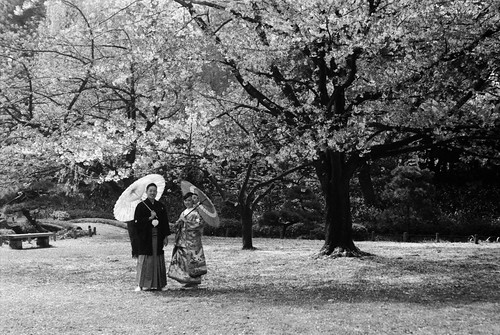
While visiting Kiyosumi Garden, this young couple, probably just engaged, came to the park with a professional photographer to get their pictures taken under the lovely cherry tree. Keeping a respectable distance, I shot a couple of exposures of my own.
 
Young Couple in the Park, by Reed A. George
Leica IIIG, Elmar 5cm f3.5 Collapsible Lens with Yellow Filter
Ilford HP5+ Film
 
They didn't seem to mind. I love the traditional dress, which makes the images somewhat timeless.
 
DMC-365.blogspot.com

Friday, April 10, 2015

Image of the Day From Japan

 
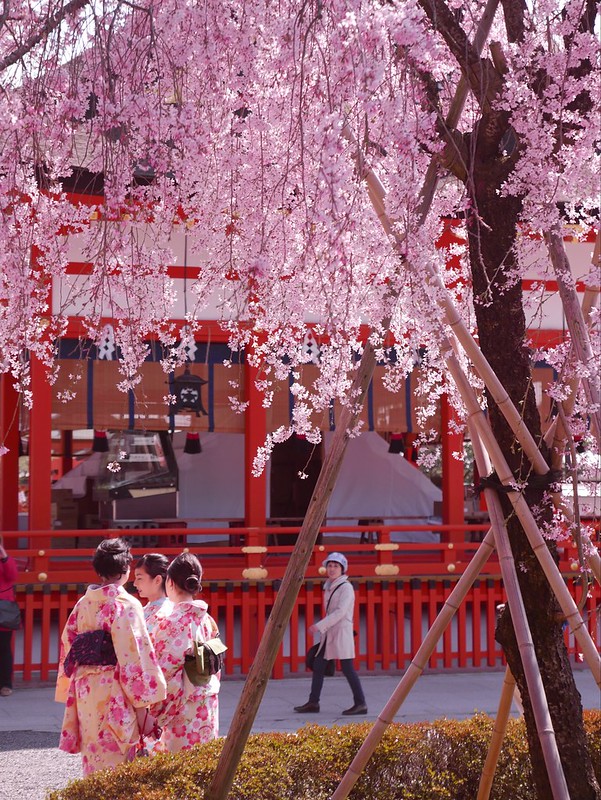
Spring Kimono, by Reed A. George
Panasonic Lumix DMC-LX100
iso 200, f2.8, 1/250 sec.
 
Well, faithful readers, I truly appreciate your dedication to reading my blog. My dedication to writing every day is certainly being tested by jet lag on this trip!
 
I really worked hard to get this shot, as the three girls in kimono were actually taking a selfie with a smart phone. As soon as the phone dropped from sight, I released the shutter. Unfortunately, the woman in the background "photo-bombed" me by walking into the scene. Oh well, the camera captures reality.
 
Our timing was perfect for the cherry blossoms in Japan, as you can see here.
 
DMC-365.blogspot.com
 

Saturday, March 14, 2015

Spring Really Coming? And Some Thoughts on Cheap Cameras.

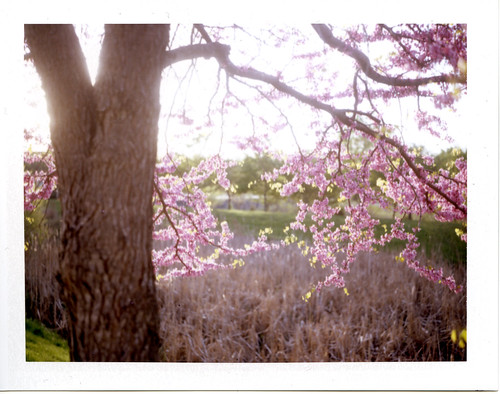
Previous Spring, by Reed A. George
Polaroid 103, Fuji FP100C Instant Film
 
I was talking with a couple of friends today about favorite and not-favorite photographers, what I like about cameras and photography and why, and the like, today.
 
It was an interesting discussion, starting off with the fact that neither of them is fond of Gary Winogrand's work; I find it fascinating. Then, we moved on to cameras. Now, you probably know that I love fine cameras. But, I also love cheap ones. This brought me to the realization that some of the images that stick in my mind were made with the cheaper, less precision-made cameras. This image is a good example of that. I can still remember the smell of spring in the air, and the fact that my allergies had started up. It almost makes my eyes itch to look at this picture. But, it also reminds me that spring is right around the corner.
 
Would this image win any popularity contests? Almost certainly not. But, it works for me.
 
DMC-365.blogspot.com

Sunday, April 20, 2014

Springtime for a New Teenager

My daughter has just turned thirteen. So, as you can imagine, I had to bribe her to come out for some pictures with the cherry blossoms, which have just really started to bloom near our home. Here are a couple of shots I made with the Leica M9 and Elmarit 90mm f2.8 lens.
 
I haven't used this lens as much as I should. In fact, when I want a telephoto on my M9, I usually grab the amazingly good Canon LTM 135mm f3.5. But, the Elmarit is also so good. As a result of remembering that, the Elmarit is in my bag for the trip to Japan. I'm leaving today for that one.
 
DMC-365.blogspot.com
 

Monday, April 14, 2014

Luis Gomez Finds Spring in Washington, DC

Image Source: http://www.onephotographaday.com/2014/04/spring.html
 
So, first I need to tell you that I wrote this post on April 6. There's usually a delay between when I write and when the post goes up on DMC-365.
 
I put some effort into finding cherry blossoms, the official sign of spring coming to Washington DC, this weekend. First, I went to Meadowlark Gardens in Vienna, Virginia. Nothing. Nadda. I was surprised. Today, my lovely wife and I fought the traffic to get into DC proper. While I must admit there are some trees blooming, it's very far from peak (or at least what peak has looked like in past years). In fact, we decided not to park after all that, and instead drove to Georgetown for some nice tea and conversation. I shot a few film images there, so more on that in a week or two.
 
I'm heading to Tokyo in about a week. We try to go every year to visit family. My usual routine is to see the blossoms here in DC, hop on a plane, then see them in Tokyo. That may not happen this year. It seems like the peak has already passed in Tokyo. Oh well, you can't win them all.
 
By the way, Luis Gomez (who took the picture above) runs a very consistent 365 day photo posting blog from Washington, DC. I've been enjoying his work for a couple of years now.
 
(Click Here) to go to Luis' blog.
 
Oh, and (Click Here) to see some gorgeous cherry blossom shots from Yahoo Japan.
 
DMC-365.blogspot.com
 

Sunday, April 6, 2014

Will Springtime Ever Come to Virginia? Stephen L. Tabone Finds Spring Owls

It just seems to keep coming at us. Snow this week. We've had a couple of hints of Spring, but nothing to count on. I recently read a quote that I really like:
 
"All winters turn to spring."
Stephen L. Tabone is one of the best wildlife photographers I've seen. This week, he posted images of barred owls that he was able to kayak to here in Virginia.
 
Image Source: http://stevetaboneblog.com/2014/03/26/barred-owls-2/
 
(Click Here) to read Stephen's post and see several excellent pictures of the barred owls.
 
I like this post on several levels. First, I love owls. I have only successfully photographed one; I have not been too successful at finding them, though Stephen gives me a clue with finding his near a creek entry to a lake.
 
Here's the one I was lucky enough to find some time back:
 
Barred Owl, by Reed A. George
Panasonic Lumix DMC-G3, Lumix 100-300mm f4-5.6 Lens at 300mm
iso 400, f6.3, 1/800 sec.
 
Beyond the subject, I really like that Stephen was able to approach his owls by kayak, one of my favorite ways to get out and photograph nature. I'm looking outside at the rain and 40 degree temperatures, but know that it won't be long before I can get out in my kayak as well.
 
Stephen's images are always first-rate. For this post, he was shooting a Nikon D800 and 80-400mm lens. I'm not sure whether he has the older or the new version of this lens. The new one is quite spectacular, which I say based on playing with one for a few minutes only. Stephen also uses a flash and flash extender ("Better Beamer") in some of his shots. I have a version of the Beamer, but always seem to get white eyes in birds that I shoot with it. So, I almost never use it. The solution is to get the flash further off-camera, so that the light reflected from the bird's retinas doesn't come right back into the lens. But, with a big old flash, Beamer attached, it gets quite clumsy to try and either hand hold the flash off-camera (with a long lens attached), or use some kind of bracket. It's tough enough shooting birds like this, near impossible with unwieldy camera gear. That said, my shot above could have used just a tiny amount of fill flash to bring the left side of the owl's face up in brightness.
 
In any case, Spring is on the way to Virginia! Thanks for reminding me, Stephen.
 
DMC-365.blogspot.com
 

Tuesday, March 11, 2014

Five Obvious But Useful Tips for Nature Photography

Eastern Kingbird, Tyrannus tyrannus, by Reed A. George
Nikon D700, Nikkor P 500mm f4 Manual Focus Lens
 
I am so ready for spring. I want to get out in the kayak, paddle to my favorite little island to photograph ospreys and other birds, and feel the warmth. Last year, I only made it out to that island once, and didn't get any really special images. The year before was better. So, I can't wait for the weather to warm up so that I can try again.
 
I read an article on digital-photography-school.com that gives five good tips for improving your wildlife photography:
 
  1. Get a good telephoto lens. Definitely, couldn't agree more. There's no substitute.
  2. Use a fast shutter speed (1/500 for a stationary subject, 1/1000 or faster if it's moving). Agreed. But, that means a fast lens and low noise sensor. You kind of have to balance of all that.
  3. Capture the moment, including using continuous shooting. I definitely believe in capturing the moment. Sometimes that comes from continuous shooting. For me, it more typically comes from careful release of the shutter once or twice.
  4. Know your subject. Again, I totally agree. I know where my ospreys nest every year, and when.
  5. Don't get attacked by your subject. I remember being chased a little distance by an angry buffalo once, in Oklahoma. I also remember stepping on a (harmless) snake, while getting out of my kayak. So, yes, be careful.
(Click Here) to read the whole post on digital-photography-school.com.
 
 
I'll be out there, as soon as the warm weather comes.
 
DMC-365.blogspot.com


Tuesday, May 7, 2013

Spring is Really Here! Time To Get Back Out in the Field!

 
Fossil Hunting Crew, by Reed A. George
Panasonic Lumix DMC-G3, Lumix 14-140mm f4-5.6 OIS Lens at 25mm
iso 160, f11, 1/160 sec., fill flash on
 
Cabin fever has finally reached its end. Today (Saturday, April 27, 2013), I had the pleasure of taking my daughter and two of her friends out fossil hunting with PaleoQuest founders Jason Osborne and Aaron Alford, and Science writer Kerry Klein. It was a perfect day to be out at Calvert Cliffs, on the Chesapeake Bay.
 
PaleoQuest is a non-profit organization, focused on bringing science, particularly Paleontology, into the hands of students.
 
(Click Here) to check out PaleoQuest's very active approach to improving science education.
 
I shot this fun little video (click on it) of the kids showing what it's like to find a fossil shark tooth. Really, it just gave them a chance to goof off:
Video by Reed A. George
Panasonic Lumix DMC-TS3
 
Here's an example of one of the fossil shark teeth found on this beach, from the largest shark that ever lived, Carcharocles megalodon:
 
Megalodon Tooth, by Reed A. George
Panasonic Lumix DMC-TS3
iso 400, f10, 1/800 sec
 
These are the cliffs, the source of all of the fossil material that ends up in the Bay and on the beach. This is a beautiful place, and I always enjoy being there.
The Cliffs, by Reed A. George
Panasonic Lumix DMC-G3, Lumix 14-140mm f4-5.6 OIS Lens at 19mm
iso 400, f8, 1/160 sec.
 
 
Kerry recorded audio and took some photographs of the outing. Hopefully, we'll see and hear more of the trip in one of her upcoming podcasts.
Kerry Recording Audio, by Reed A. George
Panasonic Lumix DMC-G3, Lumix 14-140mm f4-5.6 OIS Lens at 17mm
iso 160, f5.6, 1/1250 sec.
 
This was a great day. I find it increasingly difficult to find an activity that pleases three twelve year olds; this one did the trick. It was a blast to get out and combine family, friends, science, and photography into a single day!
 
DMC-365.blogspot.com


Sunday, May 5, 2013

Feeling the Urge to Get in the Kayak - It's Osprey Season Again!

 
Osprey (Pandion Haliaetus), by Reed A. George
Nikon D700, 300mm f4 AF-IF Nikkor
iso1600, f5.6, 1/1000 sec
 
I saw a great post on mu-43.com about shooting ospreys at the nest.
 
(Click Here) to read denniscloutier's post and see his awesome osprey picture.
 
Forgive me for reposting last year's osprey shot of my own above, but it is motivating me to make time to get the kayak down from the garage ceiling and get paddling! It's one of the great attractions to living here in Northern Virginia - the Chesapeake Bay, Potomac River, etc. - lots of great kayaking, and lots of great birds of prey, including a healthy population of bald eagles.
 
This shot from last year made it into a published calendar, along with my shot of an Eastern Kingbird.
 
So, before this actually posted, I did dust off the kayak and got out to shoot. No perfect shots on this particular trip - this is a patient person's hobby. But I got a couple that are perhaps worth sharing:
 
Osprey (Pandion Haliaetus), by Reed A. George
Nikon D700, 500mm f4 AiP (Manual Focus) + 1.4X Nikkor Converter
iso 800, f8, 1/1000 sec.


While the ospreys are my real target species, these beautiful little Kingbirds are my constant companions at this particular spot, so I occasionally grab a nice shot of them, too:
Eastern Kingbird (Tyrannus tyrannus), by Reed A. George
Nikon D700, 500mm f4 AiP (Manual Focus) + 1.4X Nikkor Converter
iso 560, f8, 1/1000 sec.
 
It's great to welcome springtime with some time out on the water with my camera!
DMC-365.blogspot.com


Saturday, March 30, 2013

Joshua Tree National Park - Lumix In The Desert

 
Prickly, by Reed A. George
Panasonic Lumix DMC-G3, Lumix 20mm f1.7 Lens
iso 160, f4.5, 1/500 sec
 
Desolate, by Reed A. George
Panasonic Lumix DMC-G3, Lumix 20mm f1.7 Lens
iso 160, f5.6, 1/250 sec
 
The detail in the twisted tree in the foreground contrasts nicely with the smooth, weather-worn cliffs. The dry riverbed gives the eye something to follow.
Namesake Joshua Trees, by Reed A. George
Panasonic Lumix DMC-G3, Lumix 100-300mm f4-5.6 Lens at 162mm
iso 200, f8, 1/160 sec
 
The space between features at Joshua Tree makes composition a challenge. In this case, I decided to shoot from afar with the 100-300mm, to compress the Joshua Trees a little closer together in perspective.
 
I decided to put the 45mm f2.8 Macro-Elmarit on and shoot some macros:
 
Wood Detail, by Reed A. George
Panasonic Lumix DMC-G3, Pana-Leica 45mm f2.8 Macro-Elmarit
iso 200, f5.6, 1/25 sec
 
 
Monarch's Demise, by Reed A. George
Panasonic Lumix DMC-G3, Pana-Leica 45mm f2.8 Macro-Elmarit
iso 200, f5.6, 1/30 sec

 
Radial, by Reed A. George
Panasonic Lumix DMC-G3, Pana-Leica 45mm f2.8 Macro-Elmarit
iso 200, f4, 1/320 sec
 
Miniature Flower, by Reed A. George
Panasonic Lumix DMC-G3, Pana-Leica 45mm f2.8 Macro-Elmarit
iso 200, f4, 1/200 sec

 
Skeleton, by Reed A. George
Panasonic Lumix DMC-G3, Pana-Leica 45mm f2.8 Macro-Elmarit
iso 200, f11, 1/60 sec
 
Wherever there is water, life abounds. These are fan palms at a small spring.
Fan Palms, by Reed A. George
Panasonic Lumix DMC-G3, Lumix 100-300mm f4-5.6 Lens at 300mm
iso 200, f5.6, 1/200 sec
 
Ocotillo, by Reed A. George
Panasonic Lumix DMC-G3, Pana-Leica 45mm f2.8 Macro-Elmarit
iso 200, f4.5, 1/800 sec

My trip was a little early in the year for the short-lived desert bloom. The ocotillo (above) was well on its way, though.
 
The desert is an amazing place to shoot. It's challenging. You really have to tune in to see what to photograph. I find it stimulating. It stretches me beyond my normal shooting situations, which is always a good thing.
 
 
Earth's Spine, by Reed A. George
Panasonic Lumix DMC-G3, Lumix 14mm f2.5 Lens
iso 200, f5.6, 1/640 sec


Split Rock, by Reed A. George
Panasonic Lumix DMC-G3, Lumix 14mm f2.5 Lens
iso 200, f11, 1/320 sec

 
Window To The Horizon, by Reed A. George
Panasonic Lumix DMC-G3, Lumix 14mm f2.5 Lens
iso 200, f11, 1/200 sec
Wispy Clouds, by Reed A. George
Panasonic Lumix DMC-G3, Lumix 14mm f2.5 Lens
iso 200, f8, 1/320 sec
 
 
This little guy is called a side-blotched lizard:
Side-Blotched Lizard (Uta stansburiana), by Reed A. George
Panasonic Lumix DMC-G3, Lumix 100-300mm f4-5.6 Lens at 300mm
iso 200, f8, 1/1600 sec
 
Even though it was only about 75 degrees fahrenheit on this day, as the sun rose directly overhead at mid-day, it was brutal. I got sunburned much more quickly than I expected. I also stepped off the trail, and got myself into a walk several miles longer than planned. The desert is no place to mess around. Stay on the trail. Period.
 
Mid-day Shadows, by Reed A. George
Panasonic Lumix DMC-G3, Lumix 14mm f2.5 Lens
iso 160, f16, 1/200 sec
 
I hope you enjoyed this little tour of the desert. I will take any opportunity to go back and shoot here again.
DMC-365.blogspot.com