Showing posts with label wildlife. Show all posts

Sunday, May 8, 2016

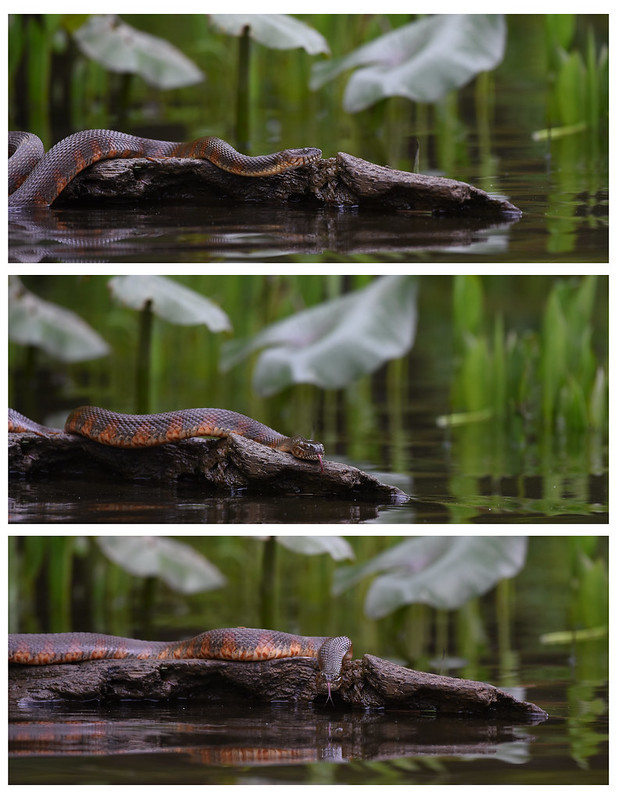
Northern Water Snake Triptych

From my morning paddle in the kayak on Saturday...
Northern Water Snake, Nerodia sipedon sipedon, by Reed A. George
Nikon D810, Nikkor 200-500mm f5.6 Lens
DMC-365.blogspot.com

Friday, September 18, 2015

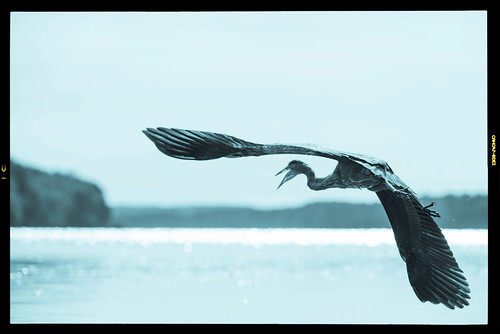
Kind of Blue - Heron, That Is

 
Kind of Blue, by Reed A. George
Nikon D810, Nikkor 200-400mm f4 AF-S VR G Lens
iso 160, f5, 1/2000 sec.
 
 
DMC-365.blogspot.com
 

Sunday, September 13, 2015

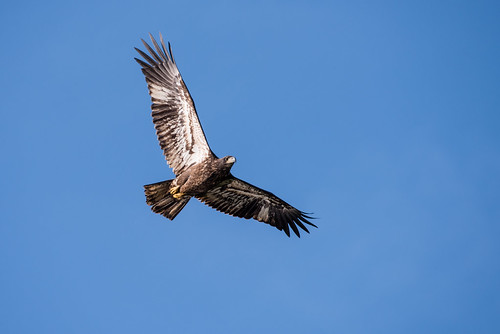
Today's Eagle Shot - Nikon D810, Nikkor 200-400mm f4 AF-S VR Lens

I got out kayaking on the Potomac River again this morning. I saw quite a lot of wildlife, including a muskrat that swam to within a few feet of my kayak, and a giant snapping turtle that nearly touched it. Both were too close for me to focus with the big lens. I also watched a herd of deer grab their morning drink at the river's edge.
 
Here's the best shot I got today, of an immature bald eagle.
Immature Bald Eagle, by Reed A. George
Nikon D810, Nikkor 200-400mm f4 AF-S VR Lens
iso 220, f5.6, 1/1250 sec.
 
You can click on this image to see it larger on flickr.
 
Man, am I lucky to have access to such a beautiful place to paddle on weekend mornings at sunrise.
 
DMC-365.blogspot.com
 

Monday, September 7, 2015

A Glass Menagerie - Panasonic Lumix DMC-TS5

I carry a camera with me every day. Today, it happened to be my little waterproof Lumix TS5, which I was bringing in to work to loan to a friend. The camera has accompanied her to Central America, and is now on its way to Tibet.
 
Anyway, the building where I work represents one of the world's largest installations of structural glass. Walking to my office, I noticed these apparently random tracks on the condensed water droplets on the outside surface. Obviously not guided by gravity, these tracks twist and turn, intersecting themselves and wandering both up and down. After looking at a few of them closely, I determined the source.
 
Slug, by Reed A. George
Panasonic Lumix DMC-TS5
 
At about 1 1/2" in length, these guys cover some territory.
 
Further down the hall, I found this predator:
 
Praying Mantis, by Reed A. George
Panasonic Lumix DMC-TS5
 
I'm not sure if a mantis will eat slugs, but I have a suspicion they will. Quite an interesting little world in operation just on the other side of the glass...
 
The TS5's macro capability came in handy here. The wifi did as well, allowing me to quickly transfer the images to my iPad so I could include them in this morning's post.
 
Then, I look up from the table where I'm writing and see this:
 
 
I grabbed this shot with the iPad's onboard camera. Okay, digital imaging can be pretty cool.
 
DMC-365.blogspot.com


Tuesday, September 1, 2015

Back Home, on the River

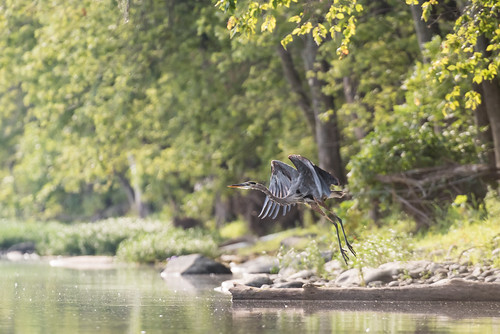
My long vacation over, I'm back out on the river in my kayak, with my Nikon D810 and 200-400mm f4 AF-S VR lens. Here's a shot from last Sunday on the Potomac.
Great Blue Heron, Ardea herodias, by Reed A. George
Nikon D810, Nikkor 200-400mm f4 AF-S G VR Lens
iso 1800, f5.6, 1/1250 sec.
 
On this particular outing, I focused on wildlife photography, leaving my fishing rod untouched. Rather than "running and gunning" down the river as I fished, I pulled the kayak quietly to shore in a few places, and was rewarded with more time to observe each creature that I came across, including several bird species, as well as a red fox.
 
DMC-365.blogspot.com


Thursday, August 6, 2015

lions, tigers, and... BEARS! Oh, My.

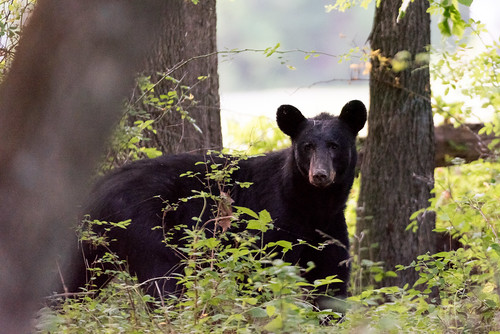
Okay, no lions or tigers, but on the drive in to my local kayaking spot here in Northern Virginia this weekend, I did see foxes (4), deer (dozens), and a black bear!
 
Black Bear (Ursus americanus) in Suburbia, by Reed A. George
Nikon D810, Nikkor 200-400mm f4 AF-S VR Lens
iso 3200, f4, 1/125 sec.
 
Keep in mind, this is in Northern Virginia, where the townhouses and strip malls are rapidly gaining on the trees in number. It was a pleasant surprise to see this beautiful animal here. Also a little troubling. I'm concerned for his (her?) future.
 
It was just after 6:00 AM, and the light was low there in the early morning shade. I didn't have time to make adjustments, other than to crank the iso up as far as I felt comfortable with. Luckily, that got me to a shutter speed where one or two exposures came out sharp, even though I was handholding the big 200-400mm lens, zoomed to 400mm.
 
The approximate focus distance is 29.9'. That bear could cover that distance in less than one second. Thankfully, he didn't.
 
DMC-365.blogspot.com
 

Tuesday, August 4, 2015

Nikon D810 and Df - The Best Combination Available Today?

Well, I've been thoroughly enjoying my Nikon Df for some time now. The low light capabilities of this camera are spectacular.
 
I've recently purchased a Nikon D810, specifically to take advantage of the increased resolution (36 megapixels) for nature photography. Mounted on my Nikkor 200-400mm f4 AF-S VR G lens, the D810 should allow me more freedom in cropping, which is always useful in wildlife photography, especially with active species like birds.
 
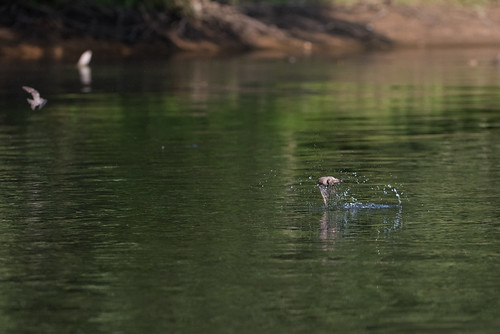
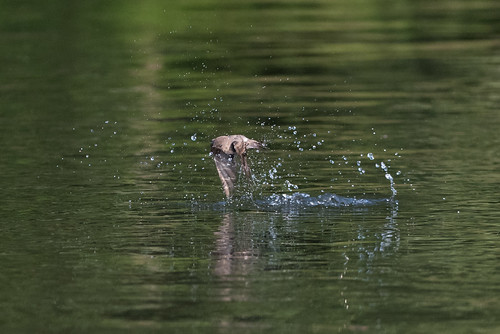
I've only had my D810 out a couple of times so far. One was this morning, shooting birds on a kayak outing. Here's a tightly-cropped shot of a swallow hitting the water surface.
And here's a 100% blow-up (cropped even more).
What I've found so far is that while the D810 does allow significant cropping, it doesn't handle high iso noise nearly as well as the Df. Of course, that's well-known in the Nikon crowd, and makes perfect sense, given the much higher number of pixels crammed into the same sensor real estate as the Df. The shots above were made at iso 1600, and noise is quite visible on my screen, looking at the images in Lightroom.
 
Here's a snapshot of DxO Lab's comparison of the two cameras:
 
Image Source: http://www.dxomark.com/Cameras/Compare/Side-by-side/Nikon-Df-versus-Nikon-D810___925_963
 
As you can see, the D810 wins in overall score, color depth, and dynamic range. But, it performs significantly worse in low light (high iso). Again, no new information here, but it's helping me to form my opinion of this pair of cameras and how best to use them.
 
Basically, the D810 will fill my need for high resolution and cropping ability when shooting wildlife in good light. Or anything else in good light, for that matter. The Df will remain my go-to camera for more challenging lighting situations, and when cropping is not as necessary.
 
So, I think that for me, yes, this is the best combination of Nikon bodies available today.
 
I have to get the D810 out in the field again, and shoot at lower iso settings. I'm sure that's going to really impress me.
 
DMC-365.blogspot.com


Sunday, July 26, 2015

Here's Something I've Been Thinking About - the Nikon D810 in Crop Modes

 
I am now the proud (half) owner of a Nikkor 200-400mm f4 AF-S VR G lens. Half, because I co-own it with a good friend of mine.
 
I always laugh when someone asks me what gear to buy to do a little nature photography, especially bird photography. Now that I have the 200-400, typically attached to my D700, I find myself thinking about what I could do with a D800 or D810 - so many more pixels that would allow me to use the crop modes (1.2 or 1.5) that are built into the camera, and still end up with images with sufficient resolution to print big.
 
At 1.2 crop, the D810 produces 25 megapixel images, and at 1.5 crop (same as DX sensors), the images are 16 megapixels. That's a serious advantage over the D700, with its 12 megapixels at full frame.
 
I love my D700, but a D810 may just be the perfect match for the 200-400 lens for nature photography.
 
(Click Here) to read a post by Kirk Tuck on the Visual Science Lab about this very subject.
 
DMC-365.blogspot.com


Thursday, June 25, 2015

More of a Story in Wildlife - Nikon D700 and 200-400mm f4 AF-S VR Lens

I wrote recently about a personal challenge to myself, to move my wildlife photography from mere "find the animal and shoot it" to telling at least part of a story. In photography, the story doesn't have to be complete. In fact, sometimes, if the story presents more questions than answers, that can be a good thing. That's kind of the case here.
 
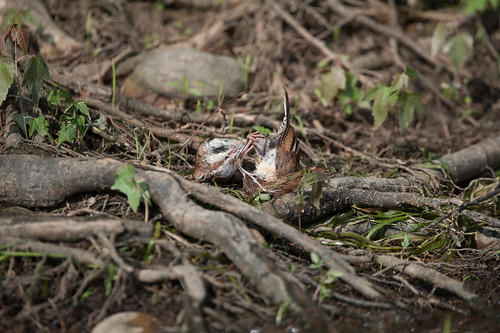
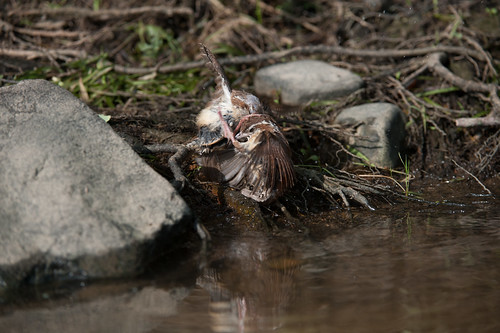
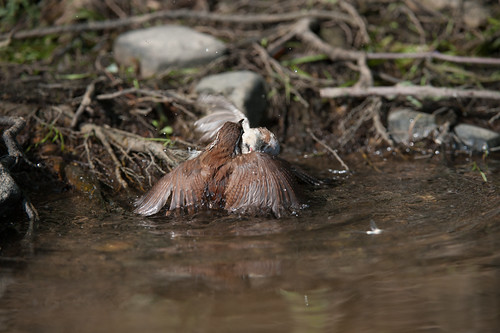
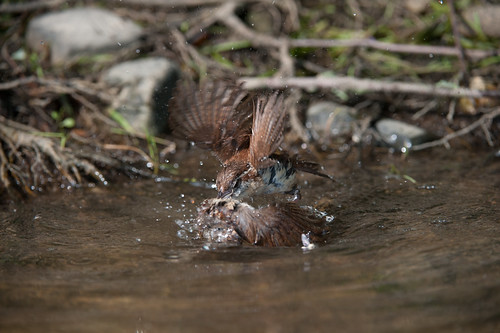
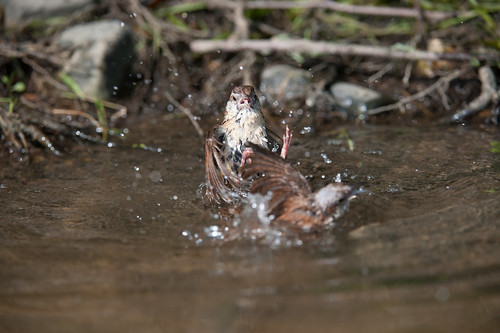
At the end of a kayaking trip, as I shoved my boat up to the shore, I saw a clump of feathers bouncing around on the bank. Not sure what I was looking at, maybe an injured bird?, I decided to look closer, and shoot. Here's what I saw.
 
 
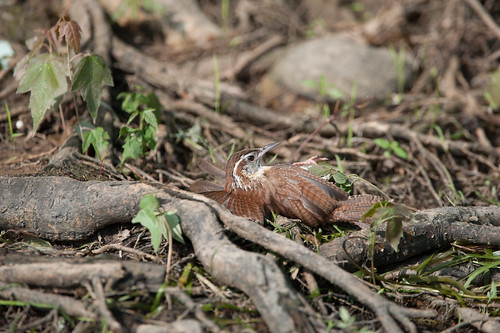
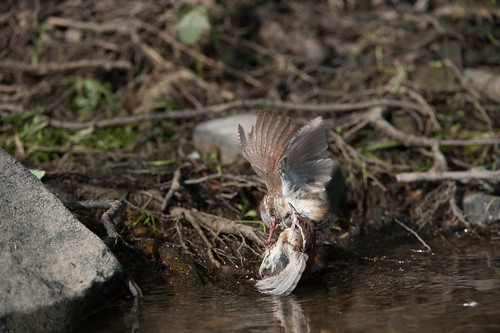
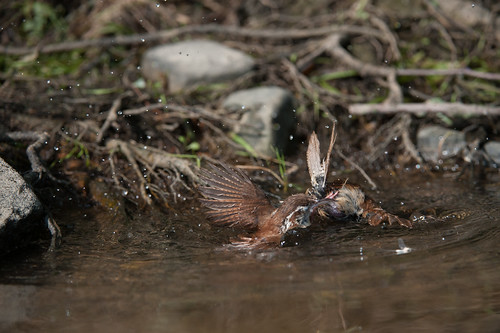
Now, the camera saw it much more clearly than I did at the time. What you're looking at is two birds (Carolina wrens?), fighting it out. And I don't mean play fighting. These two were not only using their sharp beaks against each other, they were actually clawing at each other's eyes! As they continued, and even ended up in the water, here's how it looked.
 
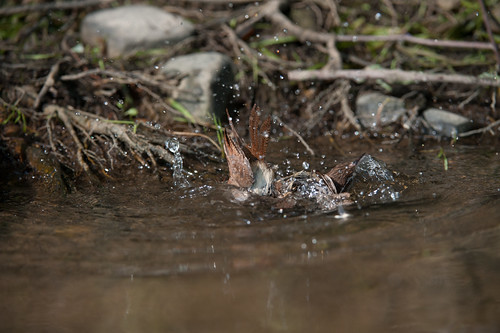
Crazy, right? And here's the final, and crowning shot. Bird rage!
 
Bird Rage, by Reed A. George
Nikon D700, Nikkor 200-400mm f4 AF-S VR Lens
 
As they finally split up and ended the fight, with one bird chasing the other off into the bushes, I just couldn't keep up with the big lens. I missed a couple of other interesting shots, but do feel that these show the event pretty well.
 
Does anyone know if I have the species correct, or what these vicious little birds were doing to each other?
 
I'm happy to have caught some very interesting behavior in this sequence.
 
DMC-365.blogspot.com
Saturday, June 20, 2015

Nature Photography - It's More Than Just Finding the Animals

 
I've been working on my nature photography this spring, and have been enjoying my new Nikkor 200-400mm f4 VR lens in the process. While I'm now quite comfortable with the lens, and very impressed with the image quality it produces, I haven't really nailed any nature shots that make me super proud yet.

Here's an example of what the lens can do:
Bald Eagle (Haliaeetus leucocephalus), by Reed A. George
Nikon D700, Nikkor 200-400mm f4 AFS VR Lens

This is a perfectly acceptable photo of a bald eagle, in a technical sense, but it sure doesn't tell much of a story. Really, I just found the animal, and got a decent shot of him. Then it was over.
 
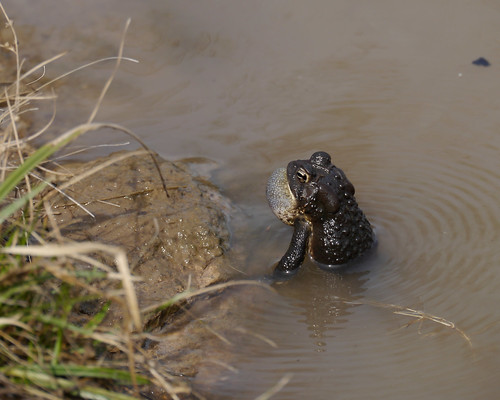
Here's a shot below that I made some time back, of a much less exotic animal, with less exotic optics, but with more of a story. I love how the toad's singing, exhibited by the extended throat, and more importantly, by the standing waves in the water surrounding it, tell you more than "This is a toad." I aspire to finding more stories like this.
 
Eastern American Toad (Anaxyrus americanus), by Reed A. George
Panasonic Lumix DMC-G3, 14-140mm Zoom Lens

The reason I'm thinking about this is that I read an interesting story about Frans Lanting, famed National Geographic nature photographer, on the Smithsonian website. (Click Here) to read that post. Lanting is a very interesting person, and the TED talk video embedded in the story tells a lot about how he feels about his work.
 
I've seen a lot of his night photography, where he sets up remote camera traps for elusive species. I see these as mainly challenges to find the animal and document it. However, he has other images, some of which he describes in the blog piece, that really tell much bigger stories. Read about the hunters reflected in the zebra's eye, and the African bullfrog, with approaching clouds above. Interesting stuff.

DMC-365.blogspot.com
 

Tuesday, May 26, 2015

Nikon 200-400mm f4 AF-S G VR Lens for Birds - The Warbler

My friend and I have just invested together in a very expensive lens - the Nikkor 200-400mm f4 AF-S G VR (version 1). Last weekend, I took it out in my kayak along with my super-sturdy Gitzo tripod and gimbal head.
 
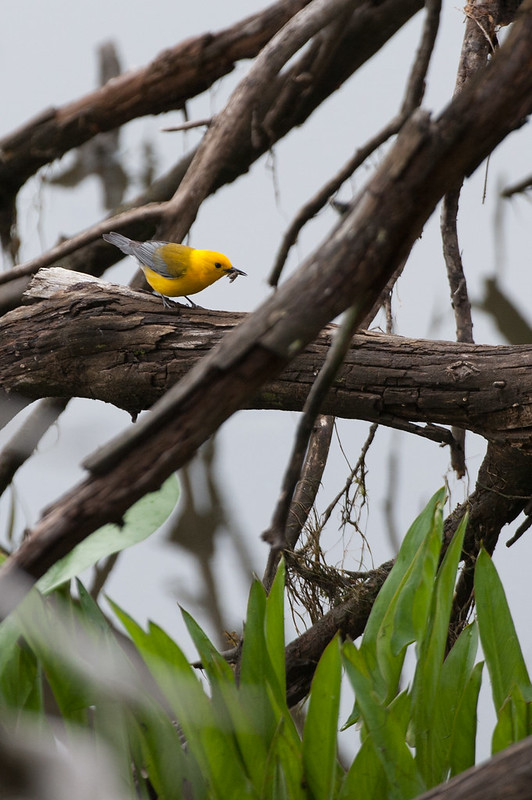
While I was waiting for large birds to fly by where I'd set up the tripod, this colorful little guy showed up.
Prothonotary Warbler, by Reed A. George
Nikon D700, Nikkor 200-400mm f4 AF-S G VR Lens
iso 720, f5, 1/1000 sec.
 
I had the D700 set to auto-ISO, so that I could set a fast (1/1000) shutter speed and the f-stop I wanted, letting the camera adjust ISO. As you can see, the warbler has an insect in his beak, a nice additional feature for the image.
 
Here's another shot of the same warbler.
 
Prothonotary Warbler, by Reed A. George
Nikon D700, Nikkor 200-400mm f4 AF-S G VR Lens
iso 1600, f5, 1/1000 sec.
 
We also purchased the Nikon TCIIE 1.4X teleconverter with our lens. I could have used it here. Both of these shots are cropped from larger compositions (hey, he's a pretty small bird!). I did get a chance to try the lens and converter together. I'll post some of those shots in the coming days.
 
This is one amazing lens.
 
DMC-365.blogspot.com
 

Sunday, May 24, 2015

Northern Water Snake - Nikkor 300-400mm f4 AF-S VR G Lens

I went kayaking today, for the third weekend in a row. Get it, in a row? Sorry about that. I think I'm a little punchy after so much exercise.
 
Today, I had the distinct pleasure of testing out a new telephoto lens, the amazing Nikkor 200-400mm f4. This is not an easy lens to handle, but mounted firmly on a gimbal head and super-heavy tripod, I was able to get it to shine, including with the Nikon TC14EII teleconverter. The focus is super-fast and accurate.
 
 
Northern Water Snake (Nerodia sipedon), by Reed A. George
Nikon D700, Nikkor 200-400mm f4 AF-S G VR Lens
Nikkor TC1.4EII Teleconverter (final focal length 360mm)
iso 2200, f8, 1/1250 sec.

I got some really nice bird shots today as well, including some really sharp shots of birds in flight. But, I'm too tired to process them tonight. So, you'll have to live with this teaser shot of a northern water snake until I get some sleep.
 
DMC-365.blogspot.com


Tuesday, May 19, 2015

Use Nikon Autofocus? You MUST Watch this Video by Steve Perry

I have been shooting some wildlife recently with my Nikon cameras. With the spring weather finally here, I love to get out in my kayak and photograph birds and other wildlife.
 
My current telephoto lenses are a 300mm f4 AF-I (very old autofocus lens) and a 500mm f4 Ai-P (manual focus). Both are excellent optics, but are a bit dated. I have worked on my manual focus technique with the 500mm, and can even catch the occasional sharp image of a bird in flight.
Bald Eagle in Flight, by Reed A. George
Nikon D700, Nikkor Ai-P 500mm f4 Manual Focus Lens + 1.4X Teleconverter
iso 1600, f5.6, 1/1000 sec.
 
Of course, things get easier with autofocus, especially Nikon's modern AF-S lenses. I'm about to get my hands on a lovely 200-400mm f4 AF-S VR lens, so I'm reading up on autofocus technique.
 
Here's an outstanding 12 minute video by Steve Perry, showing some of the key concepts for successful autofocus with Nikon DSLRs:
 
If you have problem with getting to the video, (Click Here).
 
One of the techniques that Perry practices is "back button" AF. This means using only the back AF-on button to focus, and not the typical half-press of the shutter release. With the camera set to continuous AF (AF-C), you simply let your finger off of the back button when you want to lock in focus, or keep pressing to follow and focus on a moving subject. Really helpful.
 
Just to try it out, I took my D700 and 70-300mm AF-S VR lens out tonight and gave it a shot with some flying geese. It worked really well. I literally can't wait to get my hands on that 200-400!
 
DMC-365.blogspot.com
 

Wednesday, May 13, 2015

Some Wildlife From my Kayak - Nikon Df and Nikkor 300mm f4 AF-IF Lens

I have an older Nikkor internal focus 300mm f4 lens. I have been tempted to upgrade it to the AF-S version, but mine is so good, I just haven't seen a reason to do it.
 
Yesterday, I loaded my Nikon D700 and 500mm f4 Ai-P (manual focus) lens and matching gargantuan Gitzo tripod that I picked up very used and very cheap, along with my Nikon Df and 300mm f4 and Tamron AF 1.4X tele-extender into my kayak and paddled out. I ended up never using anything but the Df and 300mm. Instead of setting up my tripod near my favorite osprey nest (even though the birds are on the nest), I decided to paddle further up the creek and explore.
 
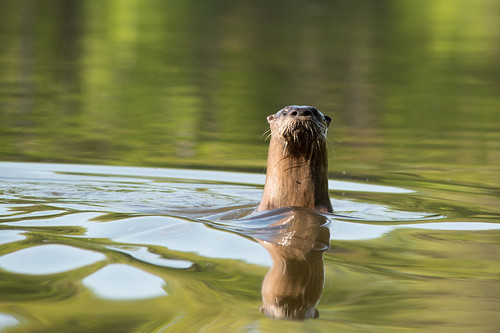
Stopping to rest in the shadow of a steep bank, not five minutes later I saw a swirl in the water, followed by a head coming to the surface. Thinking that it was likely a beaver, I started shooting. The sound of the camera clearly alarmed the animal, who quickly went under water, then returned to the surface looking straight at me. It was a river otter! The first one I've ever seen in the wild. He actually raised high out of the water to get a good look at me. I was ready, with my Df set to lock exposure with the rear button, meter set to spot metering, and auto-focus ready to go. Here's one of the shots I got.
 
 
River Otter, by Reed A. George
Nikon Df, Nikkor 300mm f4 AF-IF Lens
iso 1100, f8, 1/1000 sec.

Another otter passed through very quickly a minute later.

I had the camera in auto-ISO mode, and exposure in M. So, I had a fast shutter speed and optimal f-stop already set. The camera chose the ISO. With the Nikon Df, I could shoot with confidence, without worrying about digital noise from the relatively high ISO setting.
 
I've printed this image at about 10"x15" and it looks just great.
 
I've got some more images from the morning kayak trip, and will share them in later posts.
 
DMC-365.blogspot.com
 

Tuesday, April 28, 2015

Photos of Kiyosumi Gardens, Tokyo, with Leica IIIG

My mother-in-law lives in Tokyo. She is a wonderful host to us when we visit. Her home is a short walk from the beautiful Kiyosumi Garden. With an interesting history, including the incorporation of natural stones collected from all around Japan, and being owned at one time by the founder of the Mitsubishi empire, today it's a public park that is perfect for a morning stroll.
 
(Click Here) to read more about the history of Kiyosumi Garden.
 
The garden is centered around a large pond, and features a floating teahouse.
 
Kiyosumi Garden, by Reed A. George
Leica IIIG, 5cm f3.5 Elmar Lens with Yellow Filter
Ilford HP5+ Film (iso 400)
 
In addition to the natural stones and traditional Japanese garden trees (including pines, willows, and cherry trees), the garden has a lot of wildlife, like the ducks you see above, as well as turtles.
 
 
Kiyosumi Garden Wildlife, by Reed A. George
Leica IIIG, 5cm f3.5 Elmar Lens with Yellow Filter
Ilford HP5+ Film (iso 400)
 
The Leica IIIG, collapsible Elmar, and 400 speed film are not your classic landscape gear. However, I quite like the images I was able to produce with them here. The yellow filter helped increase the contrast just a little, but it was imperative that I keep the bright sky out of the images. In the first image, I had to crop out a plain white sky.
 
DMC-365.blogspot.com
 

Tuesday, November 25, 2014

Winter and Feeding the Birds

I love birds. I love photographing birds, though 2014 didn't see me out in the field or kayak chasing them very often. I also love feeding them in the winter. It's like a free show every day, seeing all the different species that show up to get a little free energy to make it through the cold.
 
In fact, just last week I filled my simple, single-block suet feeder for the first time this winter. I've already had lots of visitors.
 
I saw this incredible post on "Draw and Shoot," where writer/photographer Karen McRae is feeding chickadees from her hand.
 
 
(Click Here) to read Karen's post and see the other pictures. Really cool.
 
DMC-365.blogspot.com
 

Monday, September 22, 2014

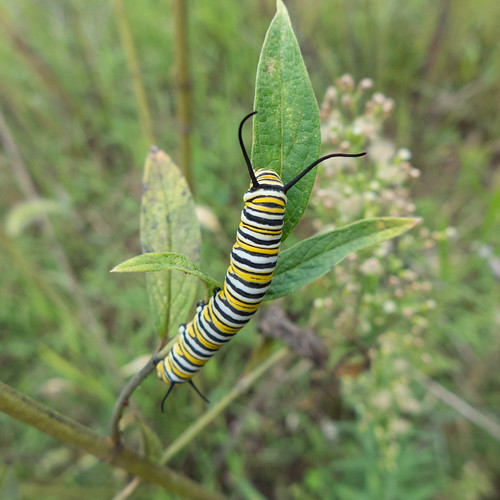
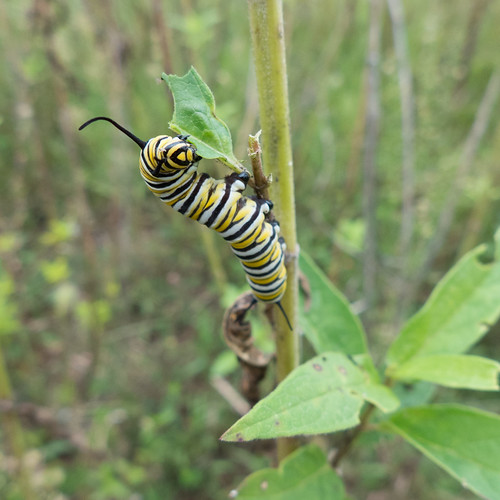
Monarch Butterflies - Our Waystation Worked!

Last year was a bad one in terms of the number of monarch butterflies in our area. Some coworkers and I decided to plant a patch of milkweed to see if we could bring back a little habitat in a safe area for the butterflies to lay eggs and for the larvae to grow and mature. It was a failure. We didn't see any last year.
 
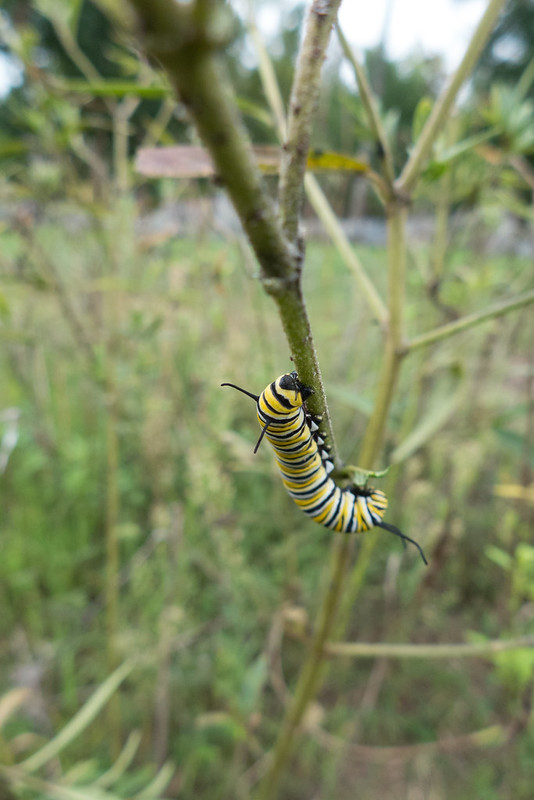
This year, I've visited the area a few times, and only saw one single adult monarch. However, they've obviously been around. Yesterday, I counted about ten of these lovely monarch caterpillars in our little planting.
 
 
I happened to be carrying my Panasonic Lumix DMC-LX7, which makes a very nice closeup shot. I simply set the autofocus to Macro setting, exposure to P, and shot.
 
After considering the idea of bringing the caterpillars inside for more protected rearing, I decided that their chances are probably better right where they are. So, I wish the little guys luck!
 
DMC-365.blogspot.com
 

Saturday, August 2, 2014

Combining Systems - Micro 4/3 (Lumix GX7) and Nikkor Super Telephoto 500mm f4 AiP Lens

Just for fun, I decided to take out my enormously heavy Nikkor AiP 500mm f4 lens, and mount my Panasonic Lumix DMC-GX7 body to it, for some bird photography. That's right, the body mounts to the lens in my mind, as it's tiny in size compared to the big telephoto.
 
I put the combination on my even heavier Gitzo tripod with Manfrotto gimbal mount, and commenced to photographing wading birds at my local nature walk. I set the GX7's in-body image stabilizer to 500mm, but left it on. You would usually turn it off when using a tripod.
 
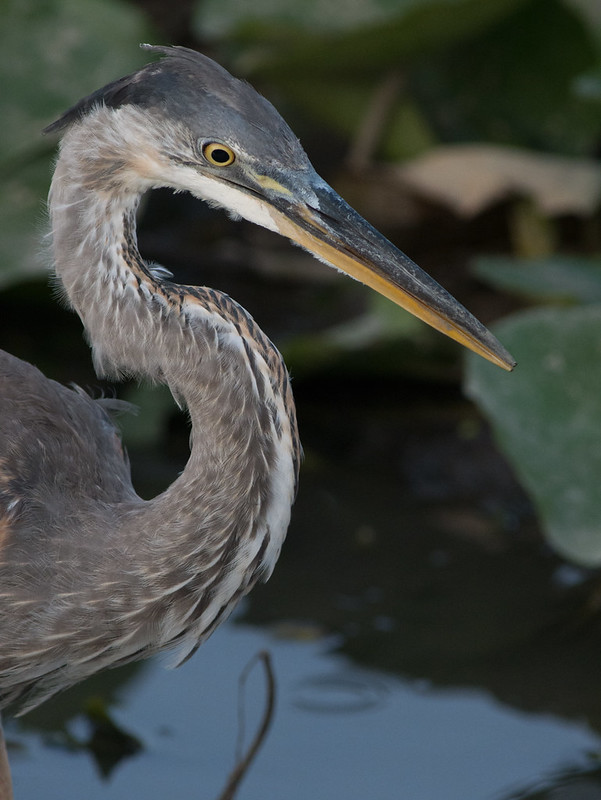
Here's an example shot of a great blue heron.
 
Portrait of a GBH, by Reed A. George
Panasonic Lumix DMC-GX7, Nikkor AiP 500mm f4 Lens (Manual Focus)
iso 1600, f8, 1/1000 sec.
 
With an equivalent field of view to a 1000mm lens on full-frame 35mm, it's obviously a challenge to manually focus this big lens, and hold it steady enough to get a decent shot, even at 1/1000 second exposure. The manual focus magnifier and focus peaking helped immensely, especially the magnifier. The peaking seems to be a little too forgiving, overestimating the depth of field at this long focal length.
 
This bird actually was a little too close for me to get the shot I wanted, not your normal situation in bird photography.
 
Even at iso 1600, the noise levels are quite reasonable with the GX7.
 
So, rather than worry about carrying a tele-converter to get just a little more reach from my 500mm lens, I can just carry the GX7 body! It probably weighs less than a converter, and you don't lose an f-stop of light gathering. Pretty cool.
 
Now that I know it technically works okay, I need to go back and see if I can get some more interesting images with this combination.
 
DMC-365.blogspot.com


Saturday, July 26, 2014

Great Egret - Super Telephoto on Micro 4/3

Yesterday, I posted an image of a green heron, shot with my GX7 and modern Lumix 100-300mm f4-5.6 OIS lens.
 
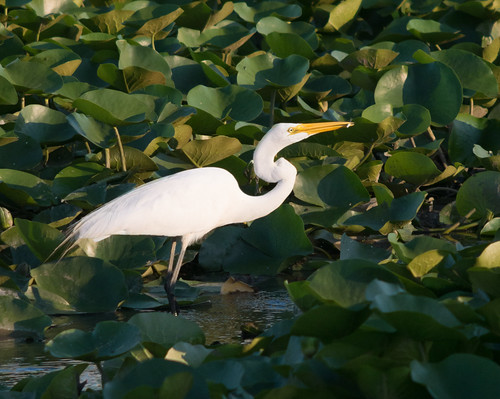
Just for fun, I decided to try shooting at the same place with my very old (Nikon Pre-AI mount) Sigma 400mm f5.6 lens, adapted to fit the GX7. Here's a great egret shot with that combination.
 
 
Great Egret, Ardea alba, by Reed A. George
Panasonic Lumix DMC-GX7, Sigma 400mm f5.6 Manual Focus Lens (Pre-AI Nikon mount)
iso 1600, f11, 1/1000 sec.
 
Not bad for an old lens, huh? By the way, this is the lens that I won at the Film Photography Project's Walking Workshop in May. (Click Here) to read more about that.
 
I know that most of you can't click and zoom on this image, due to the way I post from flickr. Here's a ~100% crop from the image above:
 
You can see that he's just caught a minnow. While the results from this 30-40 year old lens don't match the modern Lumix 100-300mm zoom, they're pretty good, in my opinion. This is an extremely low-cost 800mm equivalent field of view combination for someone who has the patience to shoot nature with a manual focus lens. The GX7's manual focus magnifier really helps out, but is obviously only useful for static subjects. The Nikon-to-Micro 4/3 adapter is also very inexpensive, and available on Amazon (please buy yours from the link below and support my blog!).
 
DMC-365.blogspot.com


Friday, July 25, 2014

Green Heron - Panasonic Lumix DMC-GX7 and Lumix 100-300mm f4-5.6 Lens


Green Heron, Butorides virescens, by Reed A. George
Panasonic Lumix DMC-GX7, Lumix 100-300mm f4-5.6 Zoom Lens at 300mm
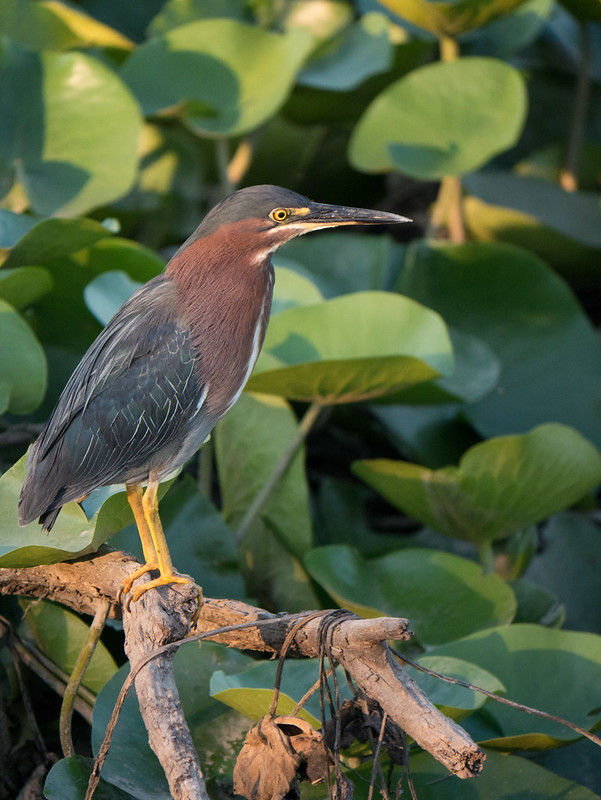
iso 1600, f6.3, 1/800 sec.
 
In our neighborhood suburban "nature preserve," I've been noticing a pair of green herons on our occasional evening walks. I took out a telephoto lens at sunrise last weekend, but they were nowhere to be found. Having seen them again last night, when I didn't have a long lens along, I decided that was it. I was coming back today with a long lens and tripod.
 
Well, I was rewarded with the presence of this little guy. I wasn't able to catch him feeding, so there's reason to try again (and again, I'm sure).
 
I'm pretty pleased with the result, especially given that I was shooting the GX7 at iso 1600. Not bad. Not bad at all...
 
DMC-365.blogspot.com