Showing posts with label opinion. Show all posts

Thursday, October 25, 2012

Here's A Book For Me - and Maybe For You? And, My Decision To Try A Zeiss Sonnar ZM

 
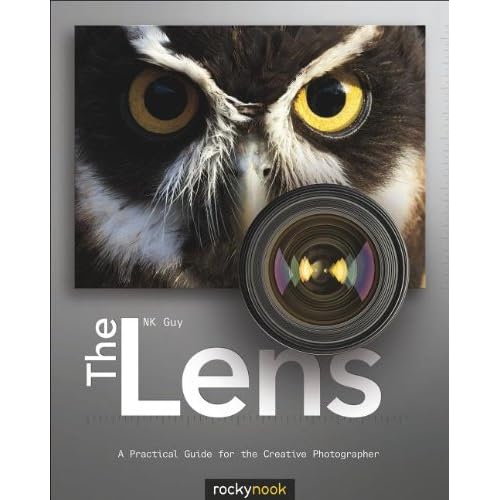
Image Source: http://www.amazon.com/Lens-Practical-Guide-Creative-Photographer/dp/1933952970/ref=sr_1_1?s=books&ie=UTF8&qid=1350039622&sr=1-1&keywords=The+Lens%3A+A+Practical+Guide+for+the+Creative+Photographer
 
Digital Photography Now (dpnow.com) has announced this new book by NK Guy, written with the purpose of helping real photographers (not optics designers or lens testers) understand the terms, charts, and subtle aberrations we're deluged with when we study a new lens.
 
(Click Here) to see the announcement on dpnow.
 
I'll be buying this book for sure. If you decide to, please buy it through my link to Amazon below. My sales have been zero for mulitiple months now, so help me out as you help yourself out. Not that it really matters; this blog is my hobby. But, any little commission does help to fund my daily coffee...
 
I'm interested in this book because, even though I'm an engineer, the technical criticisms that I read about lenses are difficult to understand, weigh, and consider when deciding whether or not to try a new lens.
 
I'm working on a case in point at the moment. I have traded my used Leica M8 for a used Zeiss ZM Special Edition camera body (no questions there) and Zeiss 50mm Sonnar f1.5 lens. This lens is so highly maligned by the technical folks that if I listened to that bunch, I'd never consider it. The big issue seems to be a focus shift at wide apertures. What this means is that on a rangefinder camera, if you shoot at f1.5 (or maybe f2), the focus point of the lens will be shifted a few inches in front of where your rangefinder tells you to focus. This is a very real effect, and can be troublesome if you're shooting a portrait, and want the focus point to be exactly on the subject's eyes. I know the effect is real, because I've experienced it with my own lenses on the Leica M9. It varies by lens design. My Leica Summicron 50mm f2 is probably the best (smallest shift), and my 1955 Summarit 5 cm f1.5 is the worst. My most valuable Leica lens, the pre-aspheric 35mm f1.4 Summilux, shows the effect clearly at f1.4.
 
It's really easy to get hung up on these things. However, both of my lenses that exhibit focus shift are personal favorites. Until now, I have always thought that they were just a little "soft" at wide apertures. Now I think it's mostly focus shift. Both of them are masters of the "Leica glow," another highly debated lens characteristic.
 
Anyway, the newer Zeiss Sonnar is a modern version of an earlier lens design, with known technical peculiarities. Zeiss knows this, of course. In fact, a piece on Luminous Landscape includes a written message from Zeiss at the bottom of the page explaining it. It also explains that this is an artist's lens, not a lens tester's lens.
 
(Click Here) to read about the Sonnar on Luminous Landscape.
 
When I think about it, some of my older, less technical lenses are my favorites. Maybe it's my own age creeping in?
 
In any case, the Sonnar is on its way, and I'll report on whether I'm more artist or engineer in the end :).
 
Also, I'll let you know how I like this book. Or, you can order it for yourself through the link below (please).
 
DMC-365.blogspot.com


Saturday, July 14, 2012

Andy Hendriksen Reports Why He Sold His Nikon DSLR In Favor of the Olympus OM-D

 
Olympus OM-D
Olympus OM-D
Image Source: http://www.olympusamerica.com/cpg_section/images/product/1583/360/000_000.png
 
Andy Hendriksen has written a full report on why he has made the shift completely away from DSLR to Micro 4/3 equipment.
 
(Click Here) to read Andy's report on The Phoblographer.
 
Andy explains how the advent of the Panasonic DMC-GF1 a few years back immediately drew his attention (and a purchase), but was not enough to convince him to sell his Nikon DSLR. This had to do with two major points: 1) performance of the GF1 itself, particularly low light performance and autofocus speed, and 2) a lack of a complete lens set. That said, Andy indicates that he thoroughly enjoyed the GF1, and took it many places that his DSLR would not have gone.
 
Andy feels that the Olympus OM-D represents the tipping point in performance that allows him to replace his DSLR with Micro 4/3 equipment. Timing is also right for him, as there is now a nearly complete stable of lenses available.
 
Like me, Andy was intrigued by the Fuji XPro1 camera, which is a mirrorless system camera, but not Micro 4/3 format, but decided not to go that way because of some performance points, and because there are less lenses available.
 
Andy settled on the OM-D body and the following lenses: Olympus 12mm f2, Pana-Leica Summilux 25mm f1.4, and Olympus 45mm f1.8. He sold his Nikon kit. So far, he's very pleased with his decision.
 
I have not gone as far as Andy. My choice of bodies was the DMC-G3, which I am still quite pleased with. I find the autofocus to be very fast, the options myriad and useful, and the low light performance a giant step up from my previous DMC-G1 and GF1. I should say that both the G1 and GF1 are great cameras, but the new generation surpasses them. My lens kit is not far off from Andy's, either. I lean heavily on primes, most notably the Lumix 14mm f2.5, Pana-Leica Summilux 25mm f1.4, and Pana-Leica 45mm f2.8 Macro-Elmarit. I thought the Summilux would not replace the excellent Lumix 20mm f1.7 for me, but it all but has, even though they're quite different lenses.
 
I am planning to add an expensive new lens to my kit, which will be my first Olympus lens - the 75mm f1.8, as soon as it's available.
 
All that said, I am not ready to sell my Nikon D700 DSLR. In fact, last weekend, I shot both kits at a music festival, and each has their merits. They are not interchangeable. I shot the G3s all day long, then switched to Nikon for the evening shows. Part of this was because I have longer lenses in Nikon, and used my 300mm f4 Nikkor quite a lot. Thinking this way, the new 75mm f1.8 from Olympus would have allowed me to leave the much heavier and more obtrusive Nikon kit at home.
 
Jack Pugh, by Reed A. George
Jack Pugh of Jake and the Burtones, by Reed A. George
Panasonic Lumix DMC-G3
 
However, any way I look at it, the D700 still significantly outperforms the G3 in image quality, and several other aspects. When I look at some of those images from the D700 over last weekend, the quality is astounding. So, no, my D700 isn't going anywhere.
 
Iron Horse, by Reed A. George
Iron Horse Band, by Reed A. George
Nikon D700, Nikkor 300mm f4 AF-IF
 
I have come to consider my Micro 4/3 kit (DMC-G3 and a few primes) as my new 35mm film equivalent kit. The Nikon D700 is my medium format film equivalent. I fully believe that it provides every bit as much image quality as my medium format film cameras ever did.
 
Don't get me wrong - this is not an advertisement of full satisfaction with the Nikon DSLR. If it were, this blog would not be about Panasonic and Micro 4/3 gear. The Nikon gets a tiny fraction of the use of my G3s, in large part due to weight and size. But, one does not replace the other. I'm not sure it ever will.
 
This does leave me wondering exactly where to draw the lines of lens selections for Micro 4/3. The case in point is the new Panasonic Lumix 12-35mm f2.8. This lens is very expensive, especially for Micro 4/3. I don't know if I'm ready to drop that kind of money on a fast zoom for Micro 4/3, or whether I will stick primarily with the excellent prime lenses I already have, plus the new Olympus 75mm. No question, the primes are great. The zoom could be an excellent solution for travel. I'm not sure where I'm going with this one, but my wallet is warming up in my pocket as I write...
 
DMC-365.blogspot.com


Tuesday, June 26, 2012

Jordan Steele's Thoughts On The Panasonic Lumix 12-35mm f2.8 and Olympus 75mm f1.8 Lenses

 
Panasonic Lumix 12-35mm f2.8
Panasonic Lumix 12-35mm f2.8 Zoom
Image Source: http://admiringlight.com/blog/thoughts-panasonic-12-35-olympus-75-18/
 
Jordan Steele, who runs the blog Admiring Light, has posted his initial thoughts on the two new lenses on my mind - the Lumix 12-35mm f2.8 zoom and the Olympus 75mm f1.8 telephoto.
 
(Click Here) to read Jordan's piece on Admiring Light.
 
First, on the Lumix zoom, Jordan remarks on the common complaints from prospective users: price and lack of shallow depth of field. Keep in mind, none (or nearly none) of these people has had the opportuntiyt to try or even see the lens. Price is what it is. I think $1300 is a lot for a normal range zoom, even at f2.8. However, it's lower than the equivalent from Nikon. Of course, the Nikon lens is designed to cover a full 35mm frame, so there's more glass in the Nikon. Anyway, most people don't get into photography to save money. Second, depth of field. The issue is that with the smaller sensor (compared to 35mm) used in the Micro 4/3 cameras, shallow depth of field requires a wider aperture at any given focal length. In layman's terms, it's harder to get out of focus backgrounds, which is desirable for portraits and other images where you want to focus attention to the foreground subject. Yes, it's true. The Physics don't lie. You can't get the same shallow depth of field at f2.8 that you get on a full-frame lens. However, with the zoom at 35mm focal length (the longest setting), which is what you'll use for portraits much of the time, the depth of field will be plenty shallow in my opinion. In fact, I see an awful lot of portraits where the photographers take shallow depth of field too far - the subject's eyes are in focus, but their nose is not. Too far. Anyway, I understand that it's always good to be able to get shallower depth of field. I'll make that trade for the smaller form factor of Micro 4/3 cameras.
 
Next, the Olympus 75mm f1.8. There will be no problem with shallow depth of field here. At f1.8, it should be very shallow. This is one lens I can't wait to try. I sure wish I could have one this weekend for the music festival I'm planning to attend.
 
These reviews, including mine, from people who have yet to touch the lens, are of very limited value. We can discuss what we can surmise from the specifications (which is actually quite a lot), but we cannot see the more subjective features that are part of loving or hating any lens or camera.
 
I'm still on the fence about the 12-35mm, but fully expect to be able to give a hands-on review and samples from the 75mm f1.8 very soon. As soon as it's available for purchase, that is.
 
DMC-365.blogspot.com


Friday, June 22, 2012

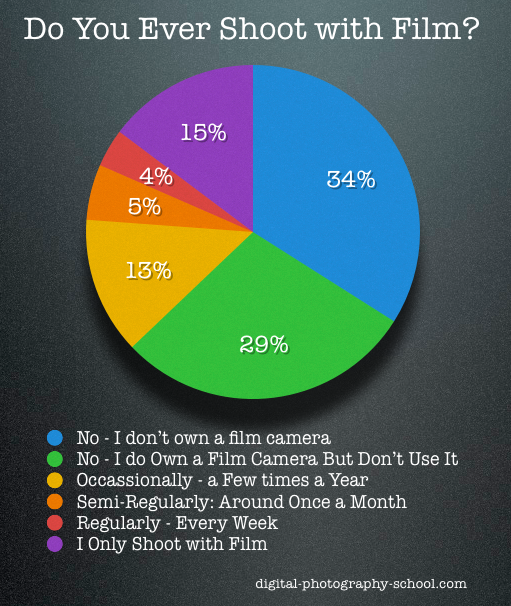
Digital Photography School Reports 37% of Readers Shoot Film

Digital Photography School (digital-photography-school.com) recently ran a survey and found that 37% of respondents shoot film.
Image Source: http://digital-photography-school.com/37-of-dps-readers-still-shoot-with-film?utm_source=feedburner&utm_medium=feed&utm_campaign=Feed%3A+DigitalPhotographySchool+%28Digital+Photography+School%29
 
(Click Here) to see the original post, and some interesting comments.
 
I am encouraged by the fact that I'm not the only one out there that still shoots film. Funny, now that I think about it, I have three film bodies with me today, loaded and ready to go. Now, to be clear, that's not normal for me. I've just repaired two old Zeiss cameras, and am testing them out, plus I have a new toy to test out. More on that one later.
 
My film usage has dropped a lot this year, mostly because I've been leaning toward my Lumix cameras more, for the purposes of this blog. But, as you've seen if you keep up with my blog, I have been dragging out some good old film gear lately.
 
One commenter asked how many people responded to the above-referenced survey; I would like to know that as well. The high percentage of film users could be due to sampling error, if there weren't very many respondents. It is hard to imagine that 15% of readers of a blog, who must have access to the web in order to read and respond, shoot film exclusively. If they have a computer, digital photography has almost no barrier to entry, including cost. Even if they only read on a smart phone, they have a digital camera in-hand, in their phone, as they read.
 
Potential lack of statistical strength aside, I choose to take the results positively, hoping this will mean continued availability of film and processing for a long time to come. Fingers crossed.
 
DMC-365.blogspot.com


Monday, June 11, 2012

Kirk Tuck of Visual Science Lab - Olympus Pen F 150mm f4 on G3 - Well, It Works Quite Well, Thank You!

 
Kirk Tuck's G3 and Oly 150mm f4
Kirk Tuck's Panasonic Lumix DMC-G3 and Olympus Pen F 150mm f4
Image Source: http://visualsciencelab.blogspot.com/2012/05/panasonic-g3-meets-lens-from-another.html
 
Kirk Tuck recently wrote about the experience of using a very nice legacy lens on his Panasonic Lumix DMC-G3. This is the 150mm f4 made by Olympus in the 1970s.
 
(Click Here) to read Kirk's post on Visual Science Lab.
 
By the way, if you don't read Kirk's blog regularly, you should. Here's the address:
 
http://visualsciencelab.blogspot.com
 
Kirk's contention is that Olympus is following its own footsteps, introducing new Pen lenses for the Micro 4/3 line that represent equivalents to those of the past. The Pen F lenses were made for the original Olympus Pen system, which was a half-frame 35mm format - the same field of view as Micro 4/3.
 
Kirk also makes the point that without all of today's gadgetry built into the camera, great optics can still produce great results. I agree wholeheartedly. After scanning film for a couple of hours last night, I had a couple of examples that remind me how sweet old glass can be. For example, this is from my Leica Summar 5cm f2 lens from the 1930s:
 
 
Stand-Up Bass Taking a Rest, by Reed A. George
Leica IIIC, Leica Summar 5cm f2
 
The Leica Summar is a very early 35mm rangefinder lens, and is known for "soft" glass, which is easily damaged by cleaning or otherwise. In fact, it took purchasing three different units before I found an undamaged one. But boy, does it have character.
 
I will admit that while I am still in love with many of my old lenses, including attached to the latest Lumix bodies, I for one cannot wait to try out the new Olympus 75mm f1.8.
 
Thanks, Kirk, for sharing your thoughts!
 
DMC-365.blogspot.com
 
 
Notice: As of today, 6/1/12, this lens is only available for pre-order. It is not in stock.
 

Thursday, May 24, 2012

Pro Photographer Giulio Sciorio Writes About Professional Use of Micro 4/3 Equipment

 
Giulio Sciorio Writes About Pro Use of Micro 4/3
Image Source: http://blog.giuliosciorio.com/wp-content/uploads/2012/04/fear.jpg
 
 
Professional photographer Giulio Sciorio has posted a piece on his blog about the barriers (both real and psychological) to other professionals adopting Micro 4/3 camera gear for their pro work. I will review his main points below.
 
 
(Click Here) to read Giulio's full post.
 
 
Giulio outlines the following five barriers to professional adoption of Micro 4/3 equipment:
 
 
  1. It's not "professional" gear.
  2. There aren't enough megapixels.
  3. The noise levels are too high.
  4. It's not full-frame!
  5. Worries about what your professional colleagues will think.
First, Giulio identifies the concern over your clients not being impressed by the appearance of your gear, because it's not big, heavy, and expensive looking, as a real concern. He explains how he did two things to overcome this. First, he shot a series of street portraits with his Olympus Pen, and showed them to others before explaining what equipment they were made with. Second, he carried his Pen with his "professional" Canon gear, and impressed clients with shots made with the Micro 4/3 gear. For me, this is not a concern. That's because I don't really have clients. If anyone is interested in my photographs, it's because of the photographs, not the equipment. I'm not hired to cover any specific events, in general. If I were, I may try Giulio's "bring it along with the Pro gear" approach. Second, "there aren't enough megapixels." Giulio explains that even large format magazines need only around 9 Mp for a full page image. As for me, I would argue that there are too many megapixels in some cases. More megapixels = more noise (see "Third..." below). And, since megapixels are the universal language of camera marketers, having too few will never be an issue. Third, noise. Giulio handles this one through the simple statement that while his Micro 4/3 images do have more noise than full 24x36mm sensor cameras, he has never had a complaint from a client. He considers it part of the rendering style of the gear. For me, the noise concern has some truth to it. Back to megapixels, if my Lumix DMC-G3 could achieve the same noise performance as my Nikon D700 24x36mm sensor camera, I'd happily give up any extra megapixels. From my point of view, the noise issue improves with every iteration of Micro 4/3 sensor design, and is now well under control for most print sizes, and certainly for images on the computer screen. Now that the technology has gotten to this point, I see this concern as the same one that photographers used to have to make regarding 35mm versus medium or large format film. The Micro 4/3 kit has become my 35mm film equivalent, and is every bit as capable, in my opinion, with lots of advantages. The Nikon D700 is my medium format equivalent. If I'm worried about making super large prints or approaching perfection, I can decide to carry the big, heavy Nikon.
The fourth concern is "it's not full-frame!" Giulio makes a great case on this one. Of course it's full-frame. Full-frame is all relative. If you really want to argue, 24x36mm (35mm "full-frame") is not full-frame to a medium format film photographer. It's the image quality that counts. I totally agree with Giulio on this point.
 
 
The fifth, final concern is "what will my colleagues think?" Giulio's point here is that it's not your colleagues' opinion that counts. It's your clients.
 
 
I have experienced this one, even though I'm not a pro. One of my good friends is an ardent Nikon DSLR user. He asked me
 
 
"What does Lumix give you that Nikon doesn't? What got you started with it?"
 
 
Well, I have to admit, this got me thinking. What really got me into Micro 4/3 was the ability to adapt legacy lenses. That's a minor advantage for me, now that there are great native Micro 4/3 primes. What really sold me was size, weight, reduction in back pain. What keeps me in Micro 4/3 is the awesome progress it has made recently. One final note on this. It is my belief that being a photographer who takes a different approach, one that is not initially accepted in the professional community, has a history of ultimate success. Just look at the Leica. Pros turned their noses up, with very similar concerns about the "small format" of 35mm film that we hear today about Micro 4/3. Then they saw the images that could be made with a small, flexible, fast camera. The rest is history.
 
 
Giulio's article was thought provoking and useful for me.
 
 
Sumo Crossing, by Reed A. George
Panasonic Lumix DMC-GF1, Lumix 20mm f1.7 lens
iso100, f5.6, 1/100 sec
 
One of the things I love about this image is that the sign on the store across the street, which sells sumo souvenirs and the like, has a sign that reads "Kingu Saizu" in Japanese ("King Size" in English).
 
Small, fast cameras are fun and productive.
 
DMC-365.blogspot.com


DMC-365.blogspot.com
 

Sunday, May 13, 2012

Jetpack Photography - Kirk Tuck's Take on Film and Digital

Personal Jetpack
Image Source:
http://io9.com/5029930/five-reasons-you-dont-have-a-personal-jet-pack-yet
 
Kirk Tuck has written a thought provoking piece about the controversy regarding how digital has affected photography. This is no nostalgic piece about how he longs for the good old days. It uses the analogy of competitive swimmers with jetpacks, and how, once they're allowed in the sport, no one can swim without one any more.
 
(Click Here) to read Kirk's piece on visualsciencelab.
 
I like many of the points that Kirk makes. I can admit two things in regard to this piece. First, I have a very hard time making myself slow down and think with a whiz-bang camera in my hands. I'm getting better. The Leica M8 is probably the best thing to happen to help me in that area. With that (wonderful) camera, I have to take my time, because it takes so long to write an image to the card that you better not miss the moment. But, seriously, the manual controls, manual focus probably being the most important, make me feel that I have invested something (if not money for film and processing) into each image.
 
Second, I do find it hard to wade through the piles of crap images that are posted on the web. I can click on through if I don't see something interesting, so no harm done. But, I find that I have to do that a lot.
 
One point that Kirk makes is that most of the famous images and successful collections were shot with film. Personally, I don't think that's a fair statement to make. How many years, how many decades of experience, went into making those film images? Sure, there are more images made every day now than then, so we can't compare the absolute numbers of images easily. But, definitely, the bulk of photographic history did not have digital equipment available to it.
 
I agree with Kirk's point that the equipment affects the photographer. I sure feel different when I'm holding a Lumix G3 than when I'm holding a 4x5 film camera. And, I shoot differently. I also judge other photographers (probably mostly incorrectly) by what they shoot with. Just last night, I met a lady who shoots the same Pentax film SLR that she has used her entire adult life. In my mind, she's a better photographer than her neighbor with an iPhone camera. Again, I'm probably wrong.
 
I prefer to focus my attention on what I like about each technology. Personally, I love the anticipation of getting film processed, when the images are just for my own enjoyment. It's even better when I have to wait to open an envelope filled with big 2 1/4" color transparencies, which have just returned from mail-in processing at Dwayne's.
 
(Click Here) for Dwayne's website. They do great work.
 
With that said, I sure appreciate the ability to experiment with new techniques with digital, see if they're working immediately, and resort to more proven approaches to make sure I get the shot, if not. I love being able to print (either scanned film or digital images) at home. I love having a 32" display, so I can see what a big print would look like, without having to invest in printing it.
 
And, personally, I'd love to have a jetpack.
 
Thanks, Kirk, for some stimulating words.
 
DMC-365.blogspot.com


Friday, May 4, 2012

Photography Blog Announces April Contest Winners, and Start of May Contest ("Rain")

 
First Place Winner - "The Blue Galaxy," by csardases
Image Source: http://www.photographyblog.com/news/april_2012_competition_winners/

Photography Blog (www.photographyblog.com) has announced the winners of its April photo contest, themed "Black and Blue," as well as kicking off its May contest, "Rain."

(Click Here) to see the announcement of the winning images (first place, "The Blue Galaxy," by czardases, shown above.)

Be sure to (click here) to see the full gallery of April entries.

Personally, I find the overall quality of the submitted images to be quite good. For example, the second place winner ("Virus," by zainee) is really cool:

Virus by zainee
Second Place Winner - "Virus" by zainee
Image Source: http://www.photographyblog.com/gallery/showphoto.php?photo=124393

I plan to get out there and shoot some rain-related images for the May contest. I have a couple existing images in mind, but can always add more. Here in Northern Virginia, I'm sure I'll get the chance to get out in the rain this month.

In fact, I need to get my Lumix DMC-TS3 waterproof camera out in the rain!

DMC-365.blogspot.com