Showing posts with label DMC-GF1. Show all posts

Saturday, September 27, 2014

Nice Summary of Six Years of Micro 4/3 on m43photo.blogspot.com

Dancing, Golden Gate Park, by Reed A. George
Panasonic Lumix DMC-G1, Voigtlander 28mm f2 Ultron Lens
 
 
I have spent a lot of time shooting, and thinking about, the Micro 4/3 format. In fact, my blog is named in observance of the standard "DMC-XX..." camera model designation of Panasonic's Lumix cameras. For Panasonic, the DMC-G1 was the first Micro 4/3 camera. I made good use of that one. Then, for an entire year, I focused mostly on shooting a pair of DMC-G3s.
 
I have ventured far and wide since that first year of 2012, but still regularly include Micro 4/3 gear and images in my posts.
 
The blog m43photo.blogspot.com, started in 2009, has been focused on Micro 4/3 longer, and more exclusively than my own, but with fewer overall blog posts. Now they have posted a brief retrospective of what's gone on in terms of camera and lens development over the past six years.
 
(Click Here) to read the post on m43photo.blogspot.com
 
I have been ambivalent over the years about whether or not the Micro 4/3 sensor size was the right compromise between sensor size (larger would provide better image quality) and equipment size (smaller sensors lead to smaller cameras and lenses). About a year or two ago, it seemed that APS-C was about the smallest you could go and still expect truly excellent image quality at higher iso settings. Now, I'm beginning to once again think that Micro 4/3 may turn out to be an ideal size.
 
In the Magnum workshop that I just attended, I shot with both my Leica M9, a full frame digital rangefinder, and the Lumix DMC-GX7, a Micro 4/3 camera. As it turned out, I used the GX7 for most of my shooting, which included a lot of bike rides around the Cape Cod National Seashore; most of the images in my final project submission were shot on Micro 4/3. There were certainly no complaints about image quality.
 
In fact, at the same workshop, David Alan Harvey showed us his new book Based on a True Story. The cover shot was made with a Lumix GF1 Micro 4/3 camera. It's hard to argue with the image quality he achieved.
 
It will be interesting to see how the evolution of Micro 4/3 proceeds over the coming several years.
 
DMC-365.blogspot.com

Tuesday, January 29, 2013

An Image That Sticks in My Mind

Sunset Approaching, by Reed A. George
Panasonic Lumix DMC-GF1, Lumix 20mm f1.7 Lens
iso 400, f4, 1/640 sec
 
For various reasons, I've had very little time to get out and shoot much in the past week or so. So, I'm going back through some old images, looking for the ones that make me think "Hey, I remember that one!" The shot above is an example.
 
I shot this one right before sunset on the boardwalk in Sacramento, California. To me, it says something about aging, the passage of time. I love the texture in the wood on the boardwalk, and the paddlewheel boat in the distance.
 
Perhaps I also remember this shot because I was in Sacramento that evening to meet with some good friends that I hadn't seen in a while at that point. I spent part of our dinner time explaining why I was so pleased with the GF1.
 
I still have my GF1, even though it's multiple generations old now. The form factor is so attractive. The image quality was quite good. I find that I don't use it much anymore, but with the price of used digital gear, I'd rather keep it as my in-car camera than sell it for a little over $100. The GF1 was a ground-breaking design, in my opinion. I'm waiting for the announcement of the GX2, which should bring me back to that form factor, yet with the very latest sensor technology.
 
Maybe I'm not done with Micro 4/3 yet.
 
DMC-365.blogspot.com


Sunday, December 30, 2012

GF1 Love


Member "red" on mu-43.com posted this awesome collage of images taken with the Panasonic Lumix DMC-GF1.
 
(Click Here) to see the comments and original post on mu-43.com
 
My friend James McKearney just purchased a used GF1 as a back-up to his Olympus OM-D. I still have a GF1, as well. I love the form factor of the GF1, even though it's imperfect in some ways. In order to keep to the clean lines and shape, you must shoot from the LCD. Adding the LVF-1 accessory finder, which I think of as required, significantly changes the outline. But, all in life is compromise.
 
The cool thing is that the LVF-1 works on both the GF1, and the more compact DMC-LX5.
 
I'm looking forward to the announcement of a DMC-GX2, which should have the same basic shape as the GF1, yet also have the latest in sensor technology.
 
In any case, the GF1 is a great little camera, and I need to drag mine out.
 
DMC-365.blogspot.com


Sunday, November 25, 2012

Three Years of B&W Images from noizy's Lumix GF-1

 
"I Will Come for You," by noizy on mu-43.com
Image Source: http://500px.com/photo/15016967
 
I still have a Lumix DMC-GF1. When I bought my G3 bodies, I happily sold my trusty G1. I chose to keep the GF1, mainly because I really like the form factor. However, I have not used it since getting the G3s.
 
Member noizy on mu-43.com has shared an awesome selection of monochrome images shot with the GF1 over a three year period.
 
(Click Here) to see noizy's post on mu-43.com.
 
I really like the shape, size, and style of the GF1. However, I always use the accessory electronic viewfinder (EVF), which really breaks all of that in my opinion. I just can't be happy shooting from an LCD. The accessory EVF makes the GF1 really no smaller than the G3, which has the finder integrated. I thought it may be a great back-up body to carry on travel, but since it uses a different battery than the G3, I don't use it for that, either. I don't want to carry yet another charger. I really should sell the GF1.
 
I love it when someone just uses a camera, regardless of what else is out there in terms of new products. This is exactly what noizy has done here.
 
DMC-365.blogspot.com


Thursday, August 2, 2012

Interesting Poll on Micro 4/3 Usage on mu43.com, and Why I Like Other Formats, Too

 
View Poll Results: How much of your shooting is done with a M4/3?
90% to 100%4564.29%
75% to 89%1521.43%
50% to 74%45.71%
25% to 49%34.29%
11% to 24%22.86%
1% to 10%00%
0%11.43%
Voters: 70. You may not vote on this poll

Data and Graph Source: http://www.mu-43.com/f35/how-much-your-shooting-done-m4-3-a-29954/
 
This is the current (as of July 22, 2012) result of a poll on mu-43.com, regarding what percentage of respondents' pictures are taken with a Micro 4/3 (M4/3) camera. By the time this is posted on DMC-365, it will be different.
 
(Click Here) to see the latest results on mu-43.com.
 
I personally fall into the 75%-89% category at this point. That's impressive, given that I have so many other format cameras that I love to use. In fact, I'm currently wrestling with the urge for another Leica, interested in the Fujifilm XPro-1, and just completed a week-long film challenge. I'm anything but a single format photographer.
 
Currently, 60% of respondents indicate that they use M4/3 75% or more of the time. I think this means that M4/3 has really arrived. Of course, the 70 people who responded so far are preselected by the fact that they are reading mu-43.com. I don't think the data indicate whether or not more people are adopting the format; they merely say that many of those who do happen to take the format seriously and use it a lot of the time.
 
In my own usage, I find M4/3, specifically the Panasonic Lumix DMC-G3 and associated lenses, to be quite satisfying photographically. I just wish they felt more like cameras. They certainly don't have the feeling of a traditional rangefinder - simple, quick, mechanical. They can emulate the DSLR pretty well, but not the old film SLRs. Nikon DSLR design has the same problem, in my opinion. Leica has it down. I think maybe Fujifilm does, too, but I'm not sure about that hybrid viewfinder thing, and the fact that if I mount a Leica lens, I have to focus with the electronic finder, not the optical one.
 
Any XPro-1 users out there that can comment on how Leica lenses really work on the system?
 
Feeling is why my older cameras call me. I've identified that manual focus is a big part of that feeling for me. I can use manual focus on my M4/3 cameras, and do. But, it sure isn't the same.
 
Now, I realize this is just the old man in me. Not everyone has this problem. I'm sure great grandpa hated the feel of an electric starter, preferring the tactile feedback of the manual engine crank. But, I wouldn't have wanted to take that away from him.
 
I don't know if there's a technical solution to making a M4/3 camera with the feel of a Leica or old SLR. The Olympus OM-D sure looks like an old SLR. But, I haven't tried one yet, to see if it feels like one.
 
Any Oly users out there want to comment?
 
I enjoy the form factor of the Panasonic DMC-GF1 (now replaced with the GX1), but it just looks like a rangefinder; it is not one.
 
Meanwhile, I'll keep tight grip on my wallet, and avoid that Leica urge... The best way is to get out and shoot a Leica film camera - that will fulfill my jones for tactile feedback.
 
DMC-365.blogspot.com


Monday, June 18, 2012

Shooting Rangefinder-Style With Micro 4/3

 
kdixey's RF Shooting Emulation
dixeyk's Emulation of Rangefinder Style Shooting on Panasonic Lumix DMC-GF2
Image Source: http://www.mu-43.com/f35/how-approximate-my-old-compact-rfs-27412/

dixeyk has written a post over on mu-43.com about recapturing the shooting style of classic rangefinder cameras with Micro 4/3 gear.

(Click Here) to read the full post.

I have referenced dixeyk's posts before. We seem to have similar interests in our photography. The goal was to set up a modern Micro 4/3 camera to allow a shooting style similar to a classic film rangefinder. Of course, the best way to get that is to have a digital Leica (or perhaps the Fuji XPro 1?), but that was not available.

The characteristics that dixeyk went for, as far as I can interpret, were a compact kit, fast (wide aperture) lenses, and fast focus (as one can achieve through manual focus on a rangefinder camera). For this, he chose to use a Panasonic Lumix DMC-GF2 and the Lumix 20mm f1.7 as his normal lens. He also used Lumix 14mm f2.5 and Olympus 45mm f1.8 lenses, approximating a 28, 40, and 90mm field of view on a classic rangefinder. So far, I would have made similar choices, using my Lumix DMC-GF1 (another Lumix body without an internal viewfinder) and Lumix 20mm f1.7 lens.

Now here's where we go different ways. In dixeyk's case, he decided to shoot with the LCD and autofocus, utilizing the camera's ability to touch focus and shoot. This allows the user to pinpoint where in the field of view they want to focus by touching the LCD screen. As soon as focus is achieved, the camera automatically releases the shutter, capturing the image. I can see how this would feel similar to the fast focus and capture capability of a classic rangefinder.

For my own approach, especially in street photography, my favorite use of a rangefinder, I go in a completely different direction. I turn off the LCD, mount a 35mm optical finder (an old Russian version in my case) in the camera's flash shoe, and use hyperfocal settings to give a lot of depth of field. For information on that,

(Click Here) to see my previous post on setting hyperfocal distance on Panasonic Micro 4/3 cameras.

I find that the 35mm finder closely approximates the field of view of the 20mm f1.7 Lumix lens.
 
I use the exact same finder on my smaller Panasonic Lumix DMC-LX5, which provides for directly setting zone focus in the manual focusing screen. In actuality, the LX5 does a better job of emulating a rangefinder than the GF1, in my opinion. It has a great scale to show the focus distance and depth of field, will allow you to lock the zoom at any focal length and the f-stop at any setting. It is a super-quick little camera for street photography.
 
(Click Here) to see my post on my LX5 street kit.
 
I will give dixeyk's approach a try. I think the main differences are in what each of us is trying to achieve. He's working toward quick response pinpoint focus and capture, while I'm working toward large depth of field, quick response street photography with a rangefinder camera.
 
Fun stuff.
 
DMC-365.blogspot.com


Friday, June 15, 2012

Mike Johnston of The Online Photographer Shares Some Lumix DMC-GF1 Shots of the Abandoned Pabst Brewery

 
Abandoned Pabst Brewery in Milwaukee, by Mike Johnston of the Online Photographer
Image Source: http://theonlinephotographer.typepad.com/the_online_photographer/2012/05/the-abandoned-pabst-brewery.html?utm_source=feedburner&utm_medium=feed&utm_campaign=Feed%3A+typepad%2FZSjz+%28The+Online+Photographer%29

Mike Johnston of the Online Photographer has posted some great images from an abandoned Pabst beer brewery in Milwaukee, WI, USA.

(Click Here) to see Mike's post on the Online Photographer blog.

Mike's images were shot with the Panasonic Lumix DMC-GF1 at iso1600 - a real stretch in terms of image quality for that camera. Of course, at the resolution of small online images, they sure look great. Mike reports that the noise would make printing of them pretty tough.

Mike toured the building with photographer Jack MacDonough, and includes a shot of Jack working with his Leica S2 on a tripod in his post. That's Mike's favorite of the bunch; it's my favorite, too.

We have all made the mistake of going to a great location without a tripod. Mike made that mistake (admittedly), but pulled through pretty well with his GF1, if you ask me.

I've written in the past about the photographic allure of abandoned places and things.
(Click Here) to see my last post on the subject.

The subject still intrigues me.

DMC-365.blogspot.com
 

Tuesday, June 12, 2012

Reptile and Amphibian Thread on mu-43.com

 
Prairie Rattlesnake (Crotalus viridus), by Reed A. George
Panasonic Lumix DMC-GF1, Lumix 14-140mm f4-5.6 zoom at 140mm
iso100, f8, 1/500 sec

I have always been a fan of snakes and other reptiles. Growing up in Oklahoma was perfect for that.
I came across a nice post on mu-43.com, where people are starting to submit their reptile and amphibian images:

(Click Here) to see the thread on mu-43.com.

I came across this lovely fellow above on a hike in Roman Nose State Park, while visiting my parents last year. On my return hike out, I noticed what looked like a new branch laying across the path. Then I saw it was moving. I ran up, and captured a few shots of him. He was not too interested in me, which was fine by me. We both went on our merry way.

I have a good friend, Larry Mendoza, who's President of the Virginia Herpetological Society. Recently, I participated in a survey with him, where we found a few snakes, frogs, and several box turtles. I posted a box turtle image a few days ago.

It's a shame that snakes are so poorly understood. They are critical to the environment, and do an excellent job of keeping pest populations under control. And, to me, they're just plain cool.

DMC-365.blogspot.com


Saturday, May 26, 2012

New Lumix 14mm User's Results

 
Image Source: http://www.mu-43.com/f38/pana-14-reasons-cheerful-25723/

Poster kevinparis on mu-43.com posted some results of a walk in Venice Beach, California with his new Lumix 14mm f2.5 lens. It seems that Kevin shoots a Panasonic Lumix DMC-GH2 body.

(Click Here) to read the original post. Be sure to click through to the flickr set. It's got 17 more images to see.

He comments that he wasn't sure how this lens would work out for him. I can see that he's going to have some fun with this lens.

I really like the little 14mm f2.5. It is so small, carrying it along is basically like putting an extra filter or two in your bag. I thnk f2.5 is fast enough to be very useful, even for those tight interior space shots. It's a great companion to the 20mm f1.7 for an incredibly small 2-lens kit (especially with a DMC-GF1 or GX1 body). Unfortunately, since I always like a little more reach in my bag, I usually can't get by with just those two lenses. I carry the Pana-Leica 45mm f2.8 Macro-Elmarit, but if I really wanted to slim down my 3-lens kit, I would get the highly-celebrated Olympus 45mm f1.8. Those three lenses (Lumix 14, Lumix 20, and Olympus 45) would make quite the tiny, useful setup.

Anyway, my close friend James has just ordered his 14mm f2.5. I can't wait to see his results!

DMC-365.blogspot.com


Thursday, May 24, 2012

Pro Photographer Giulio Sciorio Writes About Professional Use of Micro 4/3 Equipment

 
Giulio Sciorio Writes About Pro Use of Micro 4/3
Image Source: http://blog.giuliosciorio.com/wp-content/uploads/2012/04/fear.jpg
 
 
Professional photographer Giulio Sciorio has posted a piece on his blog about the barriers (both real and psychological) to other professionals adopting Micro 4/3 camera gear for their pro work. I will review his main points below.
 
 
(Click Here) to read Giulio's full post.
 
 
Giulio outlines the following five barriers to professional adoption of Micro 4/3 equipment:
 
 
  1. It's not "professional" gear.
  2. There aren't enough megapixels.
  3. The noise levels are too high.
  4. It's not full-frame!
  5. Worries about what your professional colleagues will think.
First, Giulio identifies the concern over your clients not being impressed by the appearance of your gear, because it's not big, heavy, and expensive looking, as a real concern. He explains how he did two things to overcome this. First, he shot a series of street portraits with his Olympus Pen, and showed them to others before explaining what equipment they were made with. Second, he carried his Pen with his "professional" Canon gear, and impressed clients with shots made with the Micro 4/3 gear. For me, this is not a concern. That's because I don't really have clients. If anyone is interested in my photographs, it's because of the photographs, not the equipment. I'm not hired to cover any specific events, in general. If I were, I may try Giulio's "bring it along with the Pro gear" approach. Second, "there aren't enough megapixels." Giulio explains that even large format magazines need only around 9 Mp for a full page image. As for me, I would argue that there are too many megapixels in some cases. More megapixels = more noise (see "Third..." below). And, since megapixels are the universal language of camera marketers, having too few will never be an issue. Third, noise. Giulio handles this one through the simple statement that while his Micro 4/3 images do have more noise than full 24x36mm sensor cameras, he has never had a complaint from a client. He considers it part of the rendering style of the gear. For me, the noise concern has some truth to it. Back to megapixels, if my Lumix DMC-G3 could achieve the same noise performance as my Nikon D700 24x36mm sensor camera, I'd happily give up any extra megapixels. From my point of view, the noise issue improves with every iteration of Micro 4/3 sensor design, and is now well under control for most print sizes, and certainly for images on the computer screen. Now that the technology has gotten to this point, I see this concern as the same one that photographers used to have to make regarding 35mm versus medium or large format film. The Micro 4/3 kit has become my 35mm film equivalent, and is every bit as capable, in my opinion, with lots of advantages. The Nikon D700 is my medium format equivalent. If I'm worried about making super large prints or approaching perfection, I can decide to carry the big, heavy Nikon.
The fourth concern is "it's not full-frame!" Giulio makes a great case on this one. Of course it's full-frame. Full-frame is all relative. If you really want to argue, 24x36mm (35mm "full-frame") is not full-frame to a medium format film photographer. It's the image quality that counts. I totally agree with Giulio on this point.
 
 
The fifth, final concern is "what will my colleagues think?" Giulio's point here is that it's not your colleagues' opinion that counts. It's your clients.
 
 
I have experienced this one, even though I'm not a pro. One of my good friends is an ardent Nikon DSLR user. He asked me
 
 
"What does Lumix give you that Nikon doesn't? What got you started with it?"
 
 
Well, I have to admit, this got me thinking. What really got me into Micro 4/3 was the ability to adapt legacy lenses. That's a minor advantage for me, now that there are great native Micro 4/3 primes. What really sold me was size, weight, reduction in back pain. What keeps me in Micro 4/3 is the awesome progress it has made recently. One final note on this. It is my belief that being a photographer who takes a different approach, one that is not initially accepted in the professional community, has a history of ultimate success. Just look at the Leica. Pros turned their noses up, with very similar concerns about the "small format" of 35mm film that we hear today about Micro 4/3. Then they saw the images that could be made with a small, flexible, fast camera. The rest is history.
 
 
Giulio's article was thought provoking and useful for me.
 
 
Sumo Crossing, by Reed A. George
Panasonic Lumix DMC-GF1, Lumix 20mm f1.7 lens
iso100, f5.6, 1/100 sec
 
One of the things I love about this image is that the sign on the store across the street, which sells sumo souvenirs and the like, has a sign that reads "Kingu Saizu" in Japanese ("King Size" in English).
 
Small, fast cameras are fun and productive.
 
DMC-365.blogspot.com


DMC-365.blogspot.com
 

Sunday, April 29, 2012

It's Worldwide Pinhole Day 2012

Worldwide Pinhole Day, by Reed A. George
Worldwide Pinhole Photography Day, by Reed A. George
Panasonic Lumix DMC-GF1, Nikon Mount Adapter, Nikon Mount Pinhole (f180)
iso100, 6 seconds


Today is Worldwide Pinhole Photography Day. So, I had to get something up here for it.


(Click Here) to read about Worldwide Pinhole Photography Day.


You may ask, how can Reed take a blurry pinhole picture, when pinhole cameras are supposed to have sharp focus and nearly infinite depth of field? Well, the answer is simple. Take a pinhole body cap for a Nikon camera, which already produces blurry images due to diffraction effects with the "small" full-frame 35mm sensor, and use an adapter to put it on an even smaller Micro 4/3 sensor camera. That's what I did.
 
You can only enter one picture in the official gallery at pinholeday.org, so I won't be entering this one. I took a couple earlier with a much better rig, my 4"x5" film pinhole camera. How's that for a bigger sensor? But, it requires processing, which won't happen today.

So, please accept this as my image for Worldwide Pinhole Day! And, I even took it with a Lumix camera.

DMC-365.blogspot.com

Would you like to make blurry pinhole images, too? Here's an example of a Nikon pinhole body cap (different manufacturer from mine):


Friday, March 9, 2012

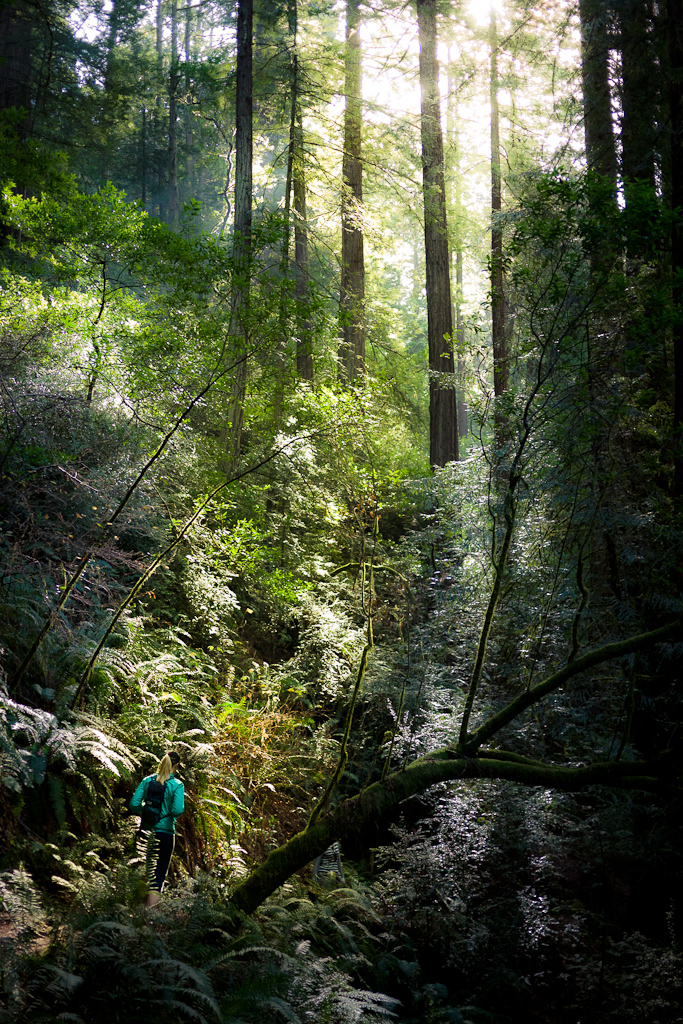
Redwoods Shot with DMC-GF1, by Graham Gibson

Graham Gibson posted this and a couple of other shots of hiking in the redwoods over on dpreview.
Image Source: http://farm8.staticflickr.com/7029/6805773075_4acac555ed_o.jpg
Panasonic Lumix DMC-GF1, Lumix 20mm f1.7
 
(Click Here) to see the original post on dpreview.com.
 
The shot I've included in this post is just wonderful. The diffuse light coming through the fog at top is a winning element on its own. To see if you agree, just use your hand to "crop" the human figure from the bottom of the image; still looks pretty darned good, doesn't it? But, the figure adds scale and interest as well. This is an excellent image.
 
Multiple replies in the post joke about the fact that the GF1 is three years old, and doesn't have the latest in high iso and dynamic range performance. The GF1 is a great camera. The GX1 is even better. Micro 4/3 has truly arrived.
 
DMC-365.blogspot.com
 
Please support the DMC-365 blog by clicking here to order from Amazon: