Showing posts with label Kyoto. Show all posts

Saturday, May 16, 2015

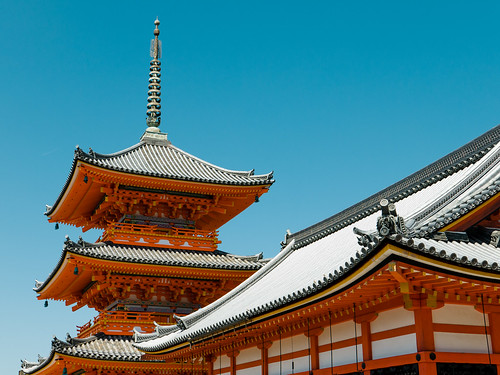
Kiyomizu-dera Temple in Kyoto, with Lumix DMC-LX100

Here's another shot showing the capability of the Panasonic Lumix DMC-LX100 for travel.
 
Kiyomizu-dera, by Reed A. George
Panasonic Lumix DMC-LX100
iso 200, f5.6, 1/640 sec.
 
Now this is a situation where most cameras would do just fine - bright sunny day, outdoors, wonderful subject. But, the detail, sharpness, and color representation of the LX100 really come through here in my opinion. None of my (much) heavier, more complicated cameras would have done significantly better with this scene.
 
I'm quite pleased with the LX100 as a travel camera.
 
DMC-365.blogspot.com
 

Friday, May 15, 2015

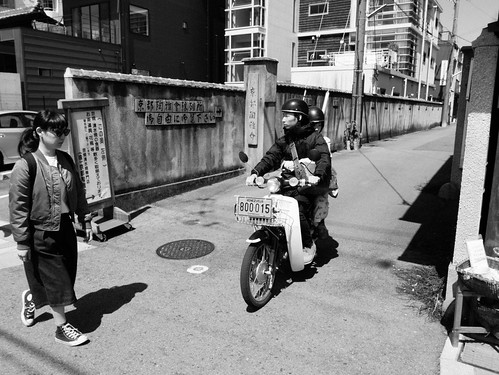
Japanese Street Scene - Panasonic Lumix DMC-LX100

 
Intersection, by Reed A. George
Panasonic Lumix DMC-LX100
iso 200, f8, 1/1000 sec.
 
I used my Lumix LX100 a lot on my trip to Japan. It is a great little street camera, and is quite capable of good results at high iso settings, though this image was shot at iso 200. I really enjoyed carrying the LX100, which is very compact and light, and exploring what I could do with it. I have not reached its limits yet.
 
DMC-365.blogspot.com
 

Monday, April 13, 2015

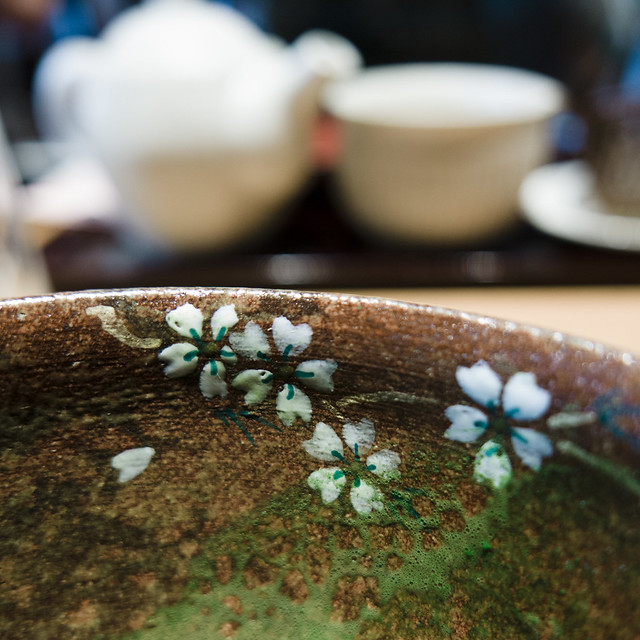
Today's Image From Japan - Lumix DMC-LX100

Matcha Tea, by Reed A. George
Panasonic Lumix DMC-LX100
iso 400, f1.7, 1/60 sec.
 
We wrapped up our last day in Kyoto with some very nice Japanese tea and sweets.
 
DMC-365.blogspot.com
 

Friday, April 10, 2015

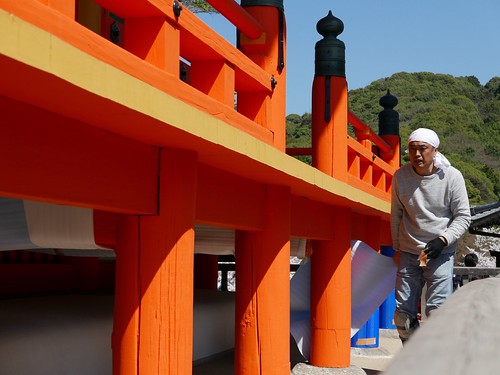
Today's Image From Japan - Someone Has to Keep This Place Up!

Shrine Painter, by Reed A. George
Panasonic Lumix DMC-LX100
iso 200, f5.6, 1/1000 sec.
 
I always like to photograph people at work. This gentleman was painting the shrine; you can see his handiwork right there. He was completely surrounded by tourists, but that didn't affect his concentration on his job.
 
DMC-365.blogspot.com
 

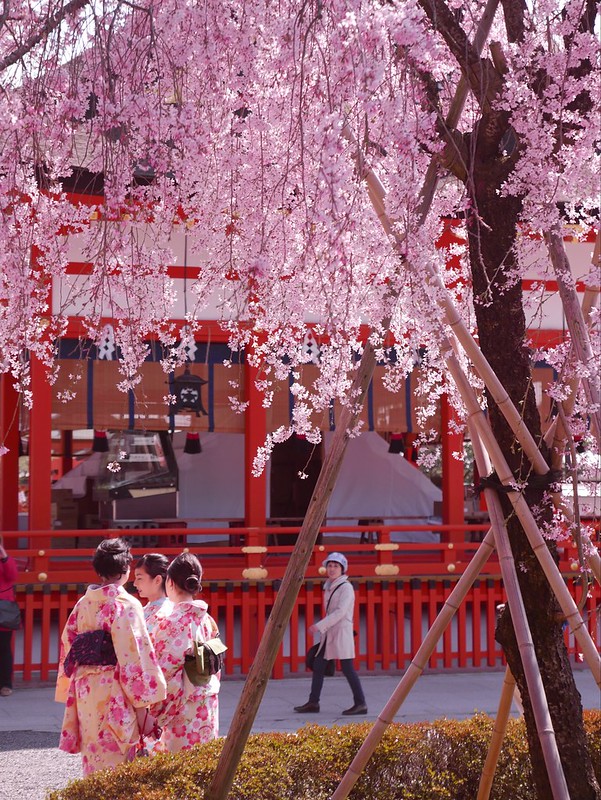
Image of the Day From Japan

 
Spring Kimono, by Reed A. George
Panasonic Lumix DMC-LX100
iso 200, f2.8, 1/250 sec.
 
Well, faithful readers, I truly appreciate your dedication to reading my blog. My dedication to writing every day is certainly being tested by jet lag on this trip!
 
I really worked hard to get this shot, as the three girls in kimono were actually taking a selfie with a smart phone. As soon as the phone dropped from sight, I released the shutter. Unfortunately, the woman in the background "photo-bombed" me by walking into the scene. Oh well, the camera captures reality.
 
Our timing was perfect for the cherry blossoms in Japan, as you can see here.
 
DMC-365.blogspot.com
 

Wednesday, April 8, 2015

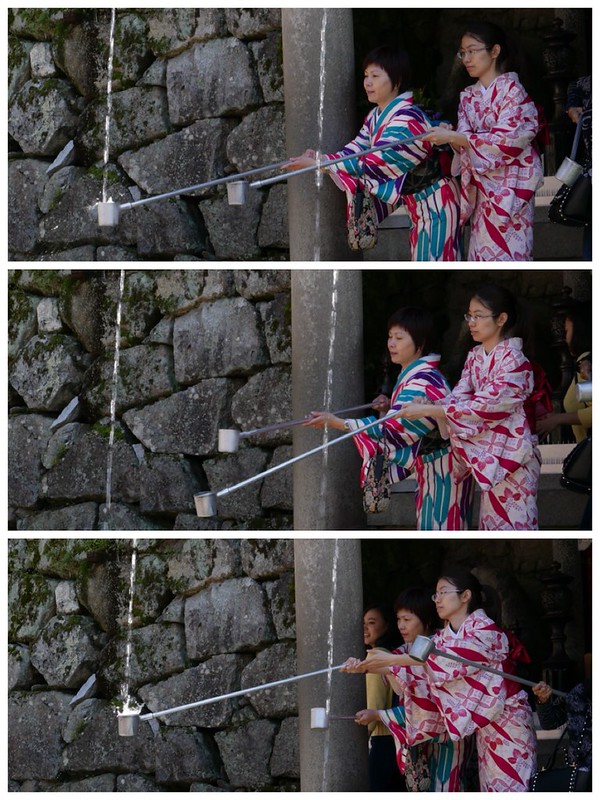
Kiyomizu-dera Temple in Kyoto, Japan - Wish-granting Waterfall

My family and I just got back from a visit to Kyoto. We visited Kiyomizu-dera temple, founded in the year 798. (Click Here) to read more about the temple.
 
One of the features of Kiyomizu-dera is the Otawa waterfall, whose water is said to grant wishes to those who catch and drink it.
 
Here's a triptych that I made there with the Panasonic Lumic DMC-LX100.
Otawa Waterfall Triptych, by Reed A. George
Panasonic Lumix DMC-LX100
 
For this day of our trip, since I knew we would be on the move all day, I left the Nikon Df and lenses at the hotel, taking only the LX-100. To be honest, it's almost embarrassing just how good the LX100 is. I didn't miss the Df at all, and really enjoyed my freedom from the heavy camera bag.
 
These images are direct from the camera, just cropped and put together on my iPad.
 
DMC-365.blogspot.com


Wednesday, August 6, 2014

New Leica Store in Kyoto Japan!

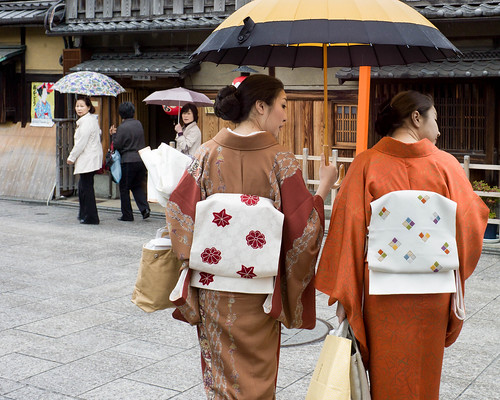
Gion Crossing, by Reed A. George
Leica M9, Summilux 35mm f1.4 Lens
iso 640, f6.7, 1/90 sec.
 
As you probably know, I'm a Leicaphile (meaning I love Leica cameras). I'm also a Japanophile (meaning I love Japan). Today I read that there's a new Leica store in the Gion District of Kyoto, Japan. Excellent news.
 
(Click Here) to see a great 3 minute video about the new store, built into a 100 year old "machi-ya" (traditional Kyoto style house). So beautiful.
 
(Click Here) to read about it on the Leica Camera Blog.
 
I think the craftsmanship of Leica cameras fits perfectly with the deep character of this traditional area of Kyoto.
 

I can't wait to visit!

 
DMC-365.blogspot.com

Saturday, October 19, 2013

Revisiting Japan Pictures - Six Months Later

I have the great fortune of visiting Japan often, usually every spring. This year we went in late March, and had a wonderful time, as usual. My wife's cousin, Yoshiko, is a highly-experience guide focusing on the Kyoto area, one of Japan's most historic places. Yoshiko and I spent a half-day walking around Kyoto for a photo tour. It was not the best weather, and in fact rained quite hard. I carried my Leica M9 and 35mm f1.4 Summilux.
 
(Click Here) to read about the Summilux, or use the tab at the top of this page to see all of my Whole Lotta Leica posts, including results posts for this lens.
 
To be honest, I was not very pleased with my own photographic results. Yoshiko took me to some amazing places, and weather is no reason to fail to bring back excellent images. I remember looking through them and thinking that I just had not hit the mark on that day.
 
I decided to go back through those images, and see if I'd missed anything. Here are two shots that I now quite like:
 
Gion Crossing, by Reed A. George
Leica M9, Summilux 35mm f1.4 Lens
iso 640, f6.7, 1/90 sec.
 
 
Gion, in Kyoto, is the most famous geisha district in Japan. What I really like about the shot above are the secondary elements (the two ladies in kimono sharing an umbrella are the primary element). I love how the ladies across the street are turning to look at them. The Japanese have a fascination with their past and culture, even if many of them no longer practice any aspects of it regularly. They are always interested to see someone who is. The other element I like is the painting of a geisha on the wall to the left of those ladies. It was an announcement for an event, and adds another nice touch of historic Japanese imagery.
 
Here's another that caught my eye:
 
Noren, by Reed A. George
Leica M9, Summilux 35mm f1.4 Lens
iso 640, f6.7, 1/90 sec.
 
 
I always love the graphic arts in Japan. For example, restaurants frequently hang "noren," decorative curtains, in their doorways. In this shot, you see the purple noren dominating nearly half of the image, and the semi-line of red paper lanterns pulling you further into the picture. The person looking out between the second and third lantern really adds a nice finishing element in my opinion.
 
So, maybe I did a little better than I initially thought. I find that I sometimes need to take a good long time to let my expectations for a particular shoot or event fade before I can fairly judge my own results. I was not able, due to my own limitations, to get the shots I expected on that day, even though I was presented with a rare opportunity and an expert guide. As I'm learning through other pursuits in life, expectations can be expensive; Buddha says they're the root of suffering. Once I get past expectations, I can usually find beauty.
 
DMC-365.blogspot.com


Tuesday, September 3, 2013

Do I Feel A Renewed Emphasis on Lumix Coming On?

Video Source: http://www.youtube.com/watch?v=BNSZcTn2Pqo&sns=em
 
The newly-announced Panasonic Lumix DMC-GX7 certainly has my interest. The features that attract me most are:
 
  1. Improved high iso performance, reportedly as good as, or maybe better than the Olympus OM-D, which has been the Micro 4/3 benchmark so far.
  2. Focus peaking, to allow you to see when your manual focus setting is correct. Should be great for using legacy lenses with adapters.
  3. Built-in electronic viewfinder (EVF) in a very compact body.
  4. Silent shutter - I love that my smaller DMC-LX7 makes zero noise when I trip the shutter.
This year, I have been focused on two things - my Leica M9, and using some of the older film camera treasures in my closet. Both have been great fun, and I will continue at least through this year. Last year, I focused mainly on Panasonic and Micro 4/3. I am considering what to do next year. Current possibilities include more emphasis on film, and picking one camera from each of my favorite types (rangefinder, SLR, folder, etc.) and shooting with that set throughout the year. I'm undecided, but really kind of like the second idea. I have a few months to decide.
 
In any case, the DMC-GX7 is a welcome addition to the Lumix family. I will give it some time to see how people like it in real use before thinking about getting one.
 
DMC-365.blogspot.com


Saturday, April 20, 2013

Skeletons From The Closet - March Results - Rokkaku-Do Temple in Kyoto Shot With Zeiss Ikonta 521/16

Every year when I visit Japan, I make it a goal to get out early in the mornings for some solitude, thought, and photography. This year, I achieved that on our last day in Kyoto, by visiting Rokkaku-Do, a Buddhist temple from the early Heian period. That means it was like constructed before the year 1000 (otherwise known as Y1K to the computer scientists of the time). Rokkaku-Do is in an urban part of Kyoto, and is immediately adjacent to the headquarters of Ikenobo, the association for Ikebana, Japanese flower arrangement. Apparently, Ikebana was started at Rokkaku-Do temple.
 
(Click Here) to read more about Rokkaku-Do temple.
 
I shot in an interesting way on this morning. I carried my Panasonic Lumix DMC-LX7, a tripod, and my Skeletons From The Closet camera for March, the Zeiss Ikonta 521/16.
 
(Click Here) to read more about my Zeiss Ikonta 521/16.
 
I used the LX7 as my exposure meter and scene test camera. Setting it to the same iso as the film in the Zeiss Ikonta, and selecting square image format, I found the LX7 extremely useful in this way. I also have a nice set of LX7 images to compare to the film shots. I plan to do a post about that in the future.
 
I used my DIY paper card rangefinder to just distance for focusing. (Click Here) to read about that. Scroll down to the bottom of the post for a description and link to a very helpful website for making your own rangefinder card.
 
Here are some of the quiet scenes I experienced that morning, scanned and cropped, but otherwise unedited.
 
Dragon Fountain, by Reed A. George
Zeiss Ikonta 521/16 with Tessar f3.5 Lens
 
 
Swan Pond, by Reed A. George
Zeiss Ikonta 521/16 with Tessar f3.5 Lens

Wooden Stool, by Reed A. George

Zeiss Ikonta 521/16 with Tessar f3.5 Lens

I knew that I liked the shot above as soon as I took it.

Symmetry, by Reed A. George

Zeiss Ikonta 521/16 with Tessar f3.5 Lens

That is the hexagonal main hall roof reflected in the water above. Rokkaku means hexagon in Japanese, and is the source of the temple's popular name.
Traveling Monks and Fallen Blossoms, by Reed A. George
Zeiss Ikonta 521/16 with Tessar f3.5 Lens
 
The best part of my morning was when an elderly Japanese lady came by and said good morning to me. Surprised that I could answer in Japanese, she then began my education about Rokkaku-Do.
 
Kami-Sama, by Reed A. George

Zeiss Ikonta 521/16 with Tessar f3.5 Lens (cropped)

 
She spoke only Japanese, so I must admit that I missed a significant part of the lesson. However, I did understand that the stone gods (kami-sama) above were collected from an important path in the area, I believe a path that led between multiple temples. She also told me that old ladies like her knit the hats and aprons for the kami-sama, because they want to make sure they don't get cold out here.
 
If you notice the little white sculptures lined up in front, they are ceramic doves. When I asked her what they were for, she literally took me by the arm, and walked me up to them, telling me how young couples who are in love come here for a specific purpose. She walked with a spring in her step, like a young girl with her boyfriend. She explained to me that a prospective bride can write down the things she likes about her fiance' on a piece of paper, and also list the things she's not so crazy about, putting an X next to those. The paper is then rolled up and put into a special groove in the bottom of the pigeon statue. The gods will work to make the X'd features of her lover go away. I loved that I was able to understand this part, through a combination of halting language on my part, rapid-fire Japanese on hers, and some hand gestures.
 
She also took me inside one of the buildings to explain that Rokkaku-Do was one of 36 stops on the Kansai Kannon pilgramage, where people visit 36 different spots to worship the god Kannon.
 
(Click Here) to read more about the Kansai Kannon pilgrimage.
 
My only regret was that she was too shy to let me take her picture. She politely gave me a wave of the hand, shook her head "no," and quickly moved off. I have said that my goal is not to catch every possible good photograph, but to make sure the ones I do get are the best I can make them. She'll have to be one of the ones I missed.
 
DMC-365.blogspot.com


Friday, April 19, 2013

Subway Snapshot - Japan

 
Subway Snapshot, by Reed A. George
 
I am struggling to get home tonight, returning from the International Leica Society (LHSA) Spring Shoot in Ft. Lauderdale, Florida. I am also struggling to get a post written today. Working on my iPod, without my normal bluetooth keyboard (due to airplane mode turning off bluetooth), I decided to go through the images stored on my iPad and pick an image I like. Here you see it.
 
I can't even remember which camera I used for this shot. My guess is it's the Panasonic Lumix DMC-LX7, but it could have been my Leica M9. I edited it on the iPad, using the photo editing app Snapseed, adding the framing effect and adjusting white balance.
 
I do know I shot it in the Kyoto subway. I like how both people are using their cell phones, and how the woman at left is looking at me. I can even live with the tilted perspective.
 
Thanks for hanging in with me on a challenging day for producing my blog post.
 
DMC-365.blogspot.com
 

Saturday, April 13, 2013

End of the Road - Tokaido Road - Shot With Lumix DMC-LX7

 
Shijo Ohashi (Bridge), Western Terminus of the Tokaido Road, by Reed A. George
Panasonic Lumix DMC-LX7
iso 200, f2.8, 1/320 sec
 
Japan was ruled for over two hundred years by the Tokugawa shogunate. The shogun, top leader of the samurai class, moved the capital to Tokyo in 1603. There were five roads established at the time, all leading to the new capital in Tokyo, where the shogun required regional warlords to report periodically to pay usurious fees and allow him to stay on top of recent developments and engineer conflict between the regions. The Tokaido road led from Kyoto (a former capital of Japan and still the home of the imperial court) to Tokyo. It was the most-used of the five roads.
 
The Shijo Ohashi in Kyoto represents the western end of the Tokaido. The Tokugawa shogun also maintained a residence in Kyoto, in Nijo Castle. You'll be seeing some pics from Nijo as I continue working through my images from my recent trip to Japan.
 
This shot was taken on a morning walk, which I typically take every day on my visits to Japan. I love to be out at sunrise, and the jet lag works in my favor in this case. My family is usually still asleep when I head out.
 
On this morning, I ended up at the Kamo River, which the Shijo Ohashi crosses. While it's now a city street, looking up from the river below, it's easy to imagine the samurai trudging across the river at the end of their journey to Kyoto, or starting out on the long trip to the capital.
 
I like images that are timeless, or impossible to place in time.
 
On this trip, uncharacteristically for the spring, the sun never shone while we were there. Typically, I hate pure white cloudy skies in my images. In this case, I embraced it. The profile of the bridge against the white background was nice; the pure black crow overhead finished the scene for me. I waited about ten minutes to catch a crow in a suitable position in the sky.
 
I tinted this monochrome image a rather cold tone of blue in Lightroom. I feel it suits the mood of that morning.
 
I hope you enjoy this little glimpse of Japanese history.
 
DMC-365.blogspot.com
 
Check out my real world usage guide for the Panasonic Lumix DMC-LX7 on Amazon's Kindle: