Showing posts with label Nik. Show all posts

Monday, February 8, 2016

Someone I Met - and a New Camera. The Fujica Half 1.9 Half-Frame

I've been playing around with the 35mm half-frame format recently. (Click Here) and (Click Here) to see posts on my first half-frame camera, the Canon Demi EE17.
 
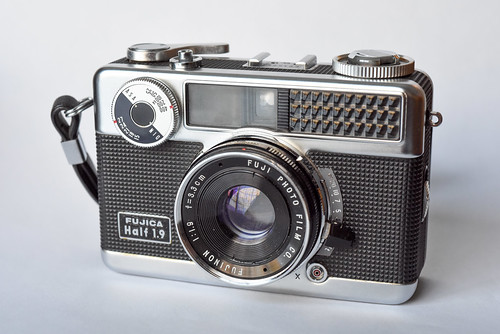
I recently bought a second half-frame camera, a Fujica Half 1.9. I picked it up on ebay for $22, including shipping, and it looks and works like new. It even came with the original soft leather case, strap and lens cap. Very cool.
 
Here's the important part - a picture I made with it on a recent trip down to Greenville, South Carolina. My friend, Craig, and I took a run over to Asheville, North Carolina for the day. We met this fine lady in an art studio there.
 
 
I scanned the film, then edited it in Analog Efex 2 (Nik Software/Google) and Lightroom. Analog Efex has a wealth of film and camera emulations, and frames.
 
DMC-365.blogspot.com


Friday, September 18, 2015

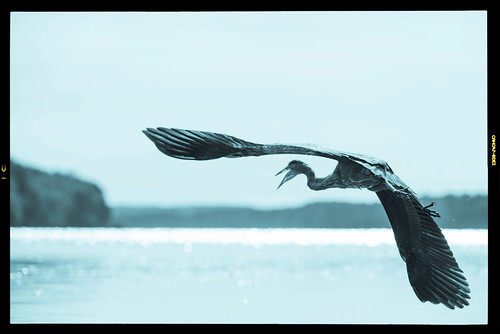
Kind of Blue - Heron, That Is

 
Kind of Blue, by Reed A. George
Nikon D810, Nikkor 200-400mm f4 AF-S VR G Lens
iso 160, f5, 1/2000 sec.
 
 
DMC-365.blogspot.com
 

Sunday, May 10, 2015

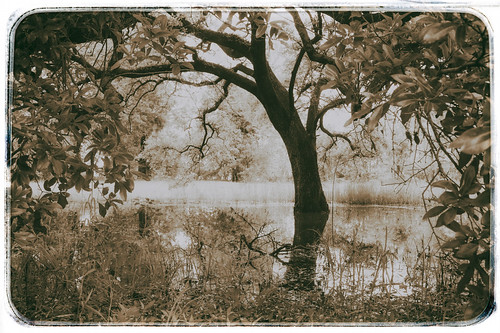
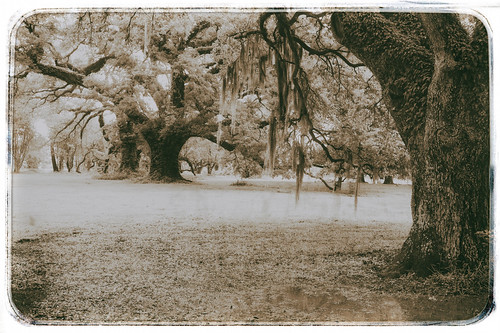
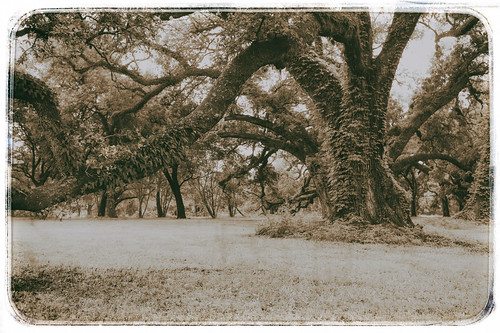
Live Oak Trees - Belle Haven Plantation - Nature Shot with Leica M9

During my trip to New Orleans for the LHSA (International Leica Society)'s Spring Shoot, we got to visit Belle Haven, a plantation that has been closed to the public for many years.
 
Our visit was wonderful, and I got to spend a lot of time out wading in the wet grass photographing the amazing old live oak trees on the property. Shooting with my M9, I manipulated the images in NIK Software to get the look I wanted. Here they are.
 
Live Oaks, by Reed A. George
 
All of these were shot with the M9 and either the 35mm v.3 Summicron or 50mm f1.4 Summilux (titanium).
 
One thing I don't like (or haven't figured out) in the NIK software is that if I want the same frame effect on a series of pictures, the frames come out looking exactly the same, including the dark and light smudges around the edges, which are supposed to represent the individual results of chemical darkroom techniques. Each one should be slightly different.
 
Overall, I'm pretty happy with the result. Not everyone agrees with manipulation, but I got the feel from the images that I was looking for.
 
(Click Here) to learn more about LHSA (International Leica Society). The national meetings like the Spring Shoot are great, but there are also many other reasons to join, including a great publication (Viewfinder), newsletter, and local groups and activities.
 
DMC-365.blogspot.com
 

Sunday, September 7, 2014

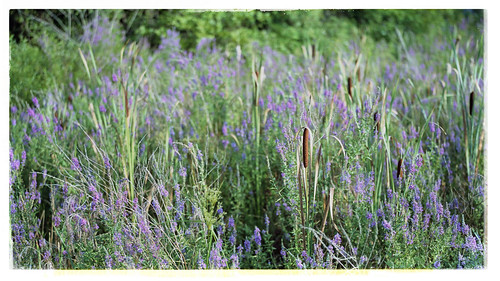
Nature's Tapestry

 
Nature's Tapestry, by Reed A. George
Mamiya Universal Press Camera, Mamiya Sekor 100mm f3.5 Lens
Kodak Portra 160 Color Print Film
 
A simple nature shot I made with my recently-acquired Mamiya Universal. I tried to keep the depth of field quite thin, and centered on the cattail just right of center. I love the color in this shot. The purple contrast to all the green and yellow works for me. I also really like how Portra gives such subtlety to color. I actually boosted the vibrance a little in post-processing.
 
I also cropped the image, and added some framing effects in Nik's Analog Efex Pro add-in.
 
I am really enjoying the slow, deliberate style that the new Universal forces on me.
 
DMC-365.blogspot.com
 

Sunday, February 9, 2014

VSCO Film - Emulate Film or Just Use It?

Discussing the "Elephant in the Room," Smithsonian Natural History Museum
by Reed A. George
Super Ricohflex TLR, Kodak TMax 400 Film
 
I am interested in this concept of emulating the look of film in the digital world. Purists will dismiss it immediately. Others will wonder why you'd want to emulate an old (inferior?) technology. I won't take either stance.
 
I have the full set of NIK software tools (now owned by Google), which allows me to emulate different film looks. I have only really used it to get a Kodak Tri-X look, which I must admit is pretty darned good. But, I find that I rarely use it, even for that.
 
Now there's VSCO Film, another package that seems to go further in emulating specific film emulsions of the past and present.
 
(Click Here) to read a very nice review of the software with lots of examples on the Aperture Priority blog.
 
So, what exactly are my thoughts on this? First, it needs more investigation. I suppose it's possible that sometime during my lifetime film will no longer be available, or will be prohibitively expensive. I hope that doesn't happen, but if it does, this type of software may be more interesting to me.
 
One thing that the blog post above mentions is that while the look is in some cases very representative of the target films, it isn't really film. You don't get that same anticipation of waiting to see what you get back from the processor. For me, that is a factor. I love opening up my envelope and seeing the negatives, then magically turning them into real pictures on my scanner.
 
But, there's another thing. It's the cameras. My film cameras are simply more enjoyable to use than their digital counterparts. That gap is starting to close, though. My Leica M9 could suffice if film were to go away altogether. The new Nikon Df seems like it has similar potential for me. I have yet to see a Micro 4/3 camera that even approaches the feel of a great film camera. My latest, the Panasonic Lumix DMC-GX7 isn't even close in this category.
 
But, I'm not dismissing the concept of shooting digital and emulating film. I'm quite happy to continue to shoot film, but can certainly understand how not everyone feels this way. First off, it's becoming expensive. Next, film and processing are getting harder to find. I'm very pleased with using The Darkroom (thedarkroom.com) for my processing, so it's not an issue for now. But, I'm not prescribing shooting film for anyone else.
 
For now, I'm happy to use film, rather than emulating it.
 
DMC-365.blogspot.com


Saturday, May 4, 2013

Whole Lotta Leica Results - March's Summilux 35mm f1.4 in Black and White!

 
Kodaiji After Dark, by Reed A. George
Leica M9, Summilux 35mm f1.4 Lens
iso 640, f1.7, 1/15 sec.
 
I've already posted some night street shots taken with March's Whole Lotta Leica lens, the Summilux 35mm f1.4 lens. Here's one more night shot (above), or at least it was after sunset. I love the repeated patterns and lines in this shot.
 
I've been manually entering my lenses into the M9, so it can work its magic on vignette corrections, etc. I'm not sure what happened here, but the image data says I'm using a 35mm Summicron, rather than the Summilux. Therefore, I'm not sure about the f-stop information. I've got to look into that.
 
Here is another low light image (below), this time taken from a moving subway train.
 
Entering the Tunnel, by Reed A. George
Leica M9, Summilux 35mm f1.4 Lens
iso 640, f5.6, 1/4 sec.
 
The shot above could have been made with just about any 35mm lens. I decided that I wanted the motion blur caused by the train movement, set the shutter speed at 1/4 second, and then found the right aperture, which happened to be f5.6. I took several images like this but this is my favorite.
 
Ochanoyu, by Reed A. George
Leica M9, Summilux 35mm f1.4 Lens
iso 1250, f1.4, 1/30 sec.
 
The shot above shows the dreamy quality of the Summilux wide open (or nearly so). Again, due to the lens id issue, I'm not sure exactly what f-stop I used. If I remember correctly, it was f1.4. The lady in front's face and the tea cup are quite sharp, but everything else is smooth and creamy.
 
Finally, here's a shot taken in daylight. This was taken at the Kamo River in Kyoto, where people gather to enjoy the spring weather.
 
Jumping the Turtles, by Reed A. George
Leica M9, Summilux 35mm f1.4 Lens
iso 160, f9.5, 1/180 sec.
 
For the shot above, I decided to do the black and white conversion in Nik's Silverefexpro2. I have been looking for my own settings to emulate Tri-x (Kodak black and white 400 film) for some time, with no real success. For this shot, I used the built-in Tri-x setting in Silverefexpro2. I'm very pleased with the result. I like the line made by the upraised heads of the stone turtles, and the parallel lines of the stones the family is standing on and the stairway and stone wall at the river's edge. The little girl in mid-air between the stones finishes off the composition for me.
 
So, while I really do love the color rendition of my old Summilux 35, it also delivers quite well in black and white.
 
I hope you enjoy these images.
 
DMC-365.blogspot.com


Friday, May 3, 2013

David "Dawg" Grisman and John Sebastian - My Concert Report is Published!

 
LR--2.jpg
Dawg, by Reed A. George
Nikon D700, Nikkor 180mm f2.8
 
I have been collaborating with the great live music blog Cosmic Vibes Live for a while now. Recently, Jeff at CVL got me passes to see David Grisman and John Sebastian at the stunningly renovated Howard Theatre in Washington, DC.
 
(Click Here) to read my show report on CVL, and see lots of my images from the show.
 
It was great for me to see Grisman, who I've listened to for many years.
 
In the shot above, I used my Nikkor 180mm f2.8, which is now my favorite long lens for live music shows. Most concert photographers use zooms, like the 70-200mm f2.8. I find that I'm usually at the long end anyway, and the 180mm prime is literally half the weight of the zoom. I bought mine used from KEH. I post-processed this image with Nik's SilverEfexPro2, using the Tri-X emulation settings, which I like very much.
 
I'm very lucky to have access to such great music, and a nice outlet for my writing. Thanks, CVL!
 
DMC-365.blogspot.com


Tuesday, April 23, 2013

Whole Lotta Leica - Shot From April's Lens, the Collapsible Summicron 5cm f2 - Coffee!

Coffee's Up, by Reed A. George
Leica M9, Leica Summicron 5cm f2 Collapsible
iso 640 f4.8, 1/125 sec
 
April's Whole Lotta Leica lens is the earliest version of Leica's legendary 5cm Summicron.
 
(Click Here) to read about the lens.
 
I usually don't shoot with filters on my lenses. Reading about the rarity of an early (radioactive) Summicron collapsible without cleaning marks on the front lens element, I decided I'd better put a filter on mine for protection. I happened to have a nice example of the original Leica filter that fits this lens. It looks to be in fine condition as well, so I put it on. I shot with the Summicron at two different events yesterday, and looking at the images now, I can see internal reflections in many, and loss of contrast in most. Lesson learned. I'll be removing that filter.
 
The shot above was made without a filter, while my wife and I were in Dayton, Ohio. This coffee shop, Press, is really great. Coffee is made one cup at a time, and is really, really good.
 
I like the leading line of the counter pointing to the real interest of the shot, the coffee pouring into the cup. I also like the shape formed by the barista's arm and torso.
 
I am just getting up to speed on my new Nik software suite. I used SilverEfex to do the black and white conversion, and selected the Kodak Tri-X asa 400 treatment. I love that! It really does resemble the results I get with Tri-X film.
 
So, I'll keep learning - no filters, use SilverEfex, and so on...
 
DMC-365.blogspot.com
 

Sunday, April 14, 2013

Google and Nik Software - Here's An Answer To The Naysayers!

 
Church on Kauai, by Reed A. George
Processed with Nik HDR Pro Software
 
Last October, I wrote an entry about the news that Nik Software had been purchased by Google.
 
(Click Here) to see that post.
 
Nik makes a suite of software products for digital photo processing - everything from black and white conversion to high dynamic range (HDR), and more. I only owned their HDR Pro product - until now. I have always been pleased with how HDR Pro works.
 
At the time the news of the Google purchase came out, there was a significant amount of speculation that this was bad news for serious photographers, that Google would focus only on Nik's low-end products for web use, etc. I wasn't so sure.
 
I'm happy to report a couple of things that show Google's really in this for the good of photographers as well as casual snapshooters.
 
First off - they've slashed the prices on the whole Nik Suite. I remember seeing it for ~$400 before the Google purchase. Now, it lists for $149!
 
(Click Here) for an article on the price cut on USA Today's website.
 
I think this is great news. You get the significant horsepower and development capabilities of Google at a MUCH lower price than when the company was independent. Hard to complain.
 
Next, I heard a rumor that if you owned any Nik software from the past, even a single package (like me), you could get a free download of the entire suite. Sounds too good to be true. So, I tried it. I went to the Nik homepage, found the contact page, and asked the question. I was completely honest, told them I only owned HDR Pro, and had heard a rumor. They replied very rapidly, asked for my HDR Pro product key, and affirmed that I can receive the entire suite! I haven't received it yet, but expect to very soon. Wow. That is customer service.
 
(Click Here) for Nik's contact page.
 
So, while they sometimes definitely are, big companies aren't always the evil empire. Thanks, Google!
 
One more thing - Nik's lower end product, Snapseed, is also very cool. Search my blog if you want to see a few examples.
 
DMC-365.blogspot.com
 
My new Kindle eBook on the Panasonic Lumix DMC-LX7, how to set it up and use it, is available here:


Thursday, December 6, 2012

Getting That Film Look From Digital - Theme Presents a Nice Summary of Software Options

 
Black and White Conversion Done in Lightroom
 
It's pretty interesting how there seems to be a persistent interest in shooting film, or at least getting results that look like film. I started this morning's blog story search with an article on Theme about how some photographers (I won't say "many"), including some pros, are sticking with film.
 
(Click Here) to read how some pros are continuing to shoot with film.
 
That led me to another article on Theme, about using software to make your digital images look like film. In this piece, they cover five optional add-ons to your normal photo editing software (Adobe Lightroom in my case):
 
  1. DxO FilmPack
  2. Alien Skin Exposure 4
  3. Nik Silver Efex Pro 2 (for black and white)
  4. Nik Color Efex Pro 4 (for color)
  5. TrueGrain (specifically for grain effects)
(Click Here) to read the whole piece on Theme.
 
The article describes how Sebastiao Salgado refused to switch to digital until he could recreate the look he's always gotten with black and white film (Kodak TriX 400). Now that he's switched, he processes his images with DxO FilmPack, and even transfers them to a film base digitally.
 
Both DxO and Nik have free evaluation versions. Theme suggests that DxO is less expensive, and does the job very well.
 
Personally, I don't like spending time editing images, but do a fair amount of conversion to black and white. I have been doing it all within Lightroom, which allows me to save presets. However, I'm interested in finding out what I've been missing with one of these other packages.
 
I'm tempted to try DxO. However, I already have Nik's excellent HDR Pro software for high dynamic range imaging, so I may try Silver Efex. Maybe I'll try to do this over the holidays. I'll report back after I've had a chance to play a little.
 
Of course, I continue to shoot film as well. I see no reason to be exclusive in my approaches.
 
DMC-365.blogspot.com


Thursday, November 15, 2012

Streetshooter's Street Presets - For Lightroom 4 and/or Nik Silver Effects 2


This is a first for me. Streetshooters is selling premade presets to give your photos a classic street photography look.
 
(Click Here) to read about it at streetpresets.com.
 
Presets are saved sets of parameters. In Lightroom 4, for example, you can make all of the settings that make your pictures look exactly how you want them, then save all of those adjustments as a preset. In this case, you're buying presets that some experienced street photographers have made for you.
 
I must admit that they look pretty darned good in the online samples. I'm not sure how I feel about paying for them. I suppose it's not unreasonable to pay $20 to have an expert give me their favorite settings, which I can reuse as many times as I like, or even customize a little further to my own liking, and save as my own preset.
 
Hmm. Something to consider. I'll let you know if I do it.
 
DMC-365.blogspot.com


Tuesday, October 2, 2012

Nik Software Bought By Google - Good or Bad?


Image Source: http://www.niksoftware.com/hdrefexpro/usa/index.php
 
The Online Photographer reports that Google has purchased Nik Software, makers of photo editing software.
 
(Click Here) to read the post and responses.
 
Personally, I use Nik's HDR Efex Pro, and find it very nice to work with. I am interested in trying Silver Efex (which is a monochrome conversion tool, to turn color images to black and white in a controlled way). I have also played with the app Snapseed, which is also a Nik product. It's actually very cool.
 
When I saw the news, my first thought was that this could be good for the company. Google's developmental and financial resources could ensure stability and really push the tools ahead. Most commenters disagree, and see this as bad news.
 
I will admit - I have no data on how products fare after companies are acquired by Google. Some commenters think that Google will focus solely on Snapseed, and kill the rest. That would be a shame. I kind of doubt that.
 
Thoughts? Predictions?
 
DMC-365.blogspot.com