Showing posts with label Twin Lens Reflex. Show all posts

Saturday, September 5, 2015

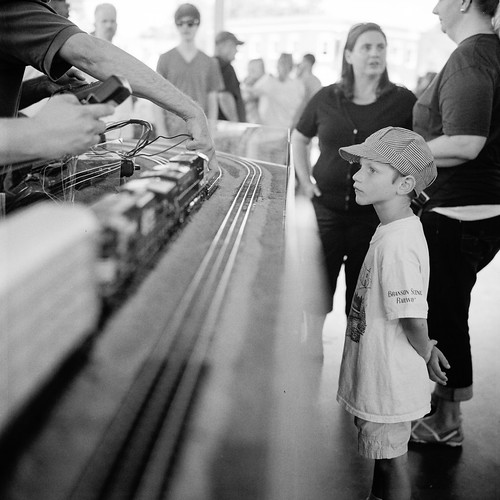
Rolleiflex 2.8F Planar - Kid at Train Festival

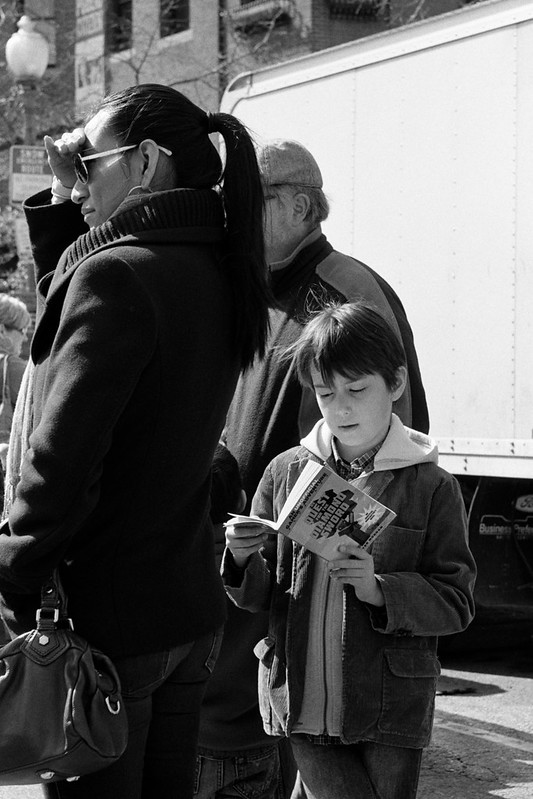
Intense Focus, by Reed A. George
Rolleiflex 2.8F Planar, Kodak TMax 400 Film
 
A while back, I posted a series of images from a local train festival, mostly of kids enjoying the displays. (Click Here) to see those pictures, taken with my Leica IIIG.
 
Well, I just developed the roll of film that was in my Rolleiflex that day, and found this image. I really like how the boy's face contrasts well with the dark shirt of the lady behind him. I also seem to have gotten the focus just about right.
 
Every time I use the Rolleiflex, I get something that I enjoy out of it.
 
DMC-365.blogspot.com
 

Friday, September 4, 2015

Annoying Some Kids With My Rolleiflex

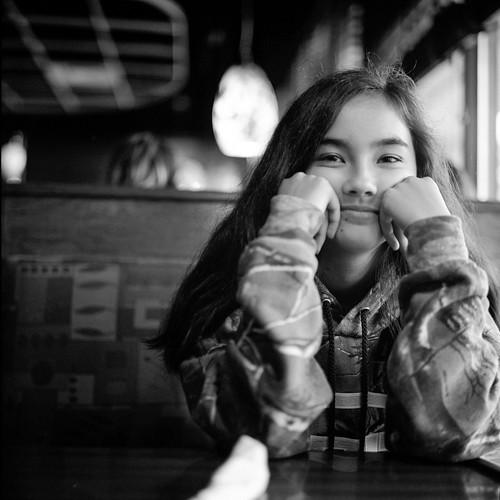
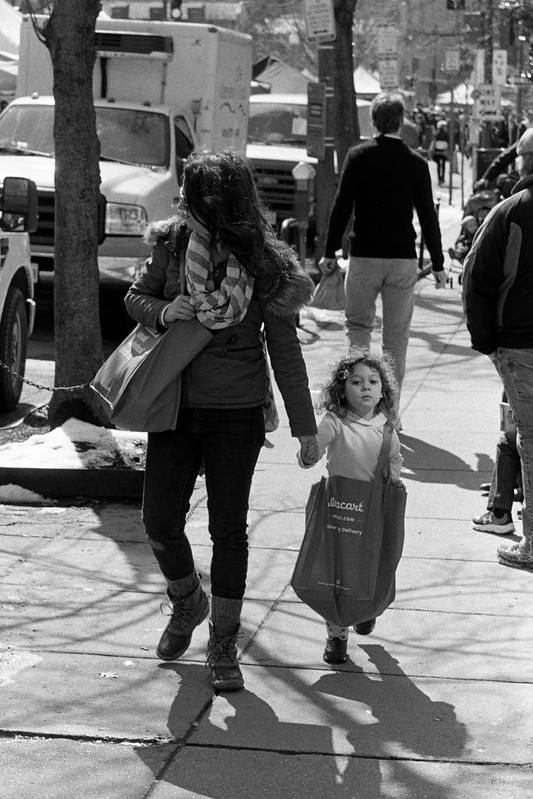
Get it Over With, Mister. By Reed A. George
Rolleiflex 2.8F Planar, Kodak TMax 400 Film
 
Every single time I use it, I am reminded why the Rolleiflex is such an important piece of photographic history, and my photographic present. I just love the expression on this little girl's face, as well as her posture. I also like that her shirt says "SMILE" on it...
 
DMC-365.blogspot.com

Saturday, July 25, 2015

The Minolta Autocord

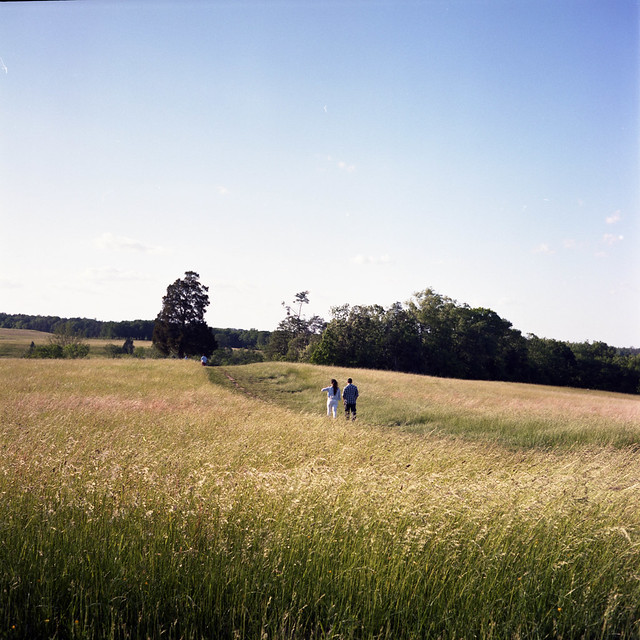
Manassas National Battlefield Walk, by Reed A. George
Minolta Autocord TLR
 
I'm really having a case of "too many cameras, not enough time" recently.
 
I was just looking at a new post by one of my favorite photographers, Evan Leavitt, a really cool color shot of a window with blood red curtains. Made with an Autocord, it's a wonderful image. (Click Here) to see Evan's post.
 
This got me thinking about my own Autocord, which I've used very little. Similar to my Rolleiflex T, the Autocord is a very special camera.
 
I've been considering a new theme or project for this blog. Maybe my TLRs, including the Autocord, will play a part in that.
 
DMC-365.blogspot.com
 

Sunday, July 19, 2015

Mint Instant (Instax) TLR - Looks Fun


pre-order

Image Source: https://mint-camera.com/TL70/preorder

I think this looks like fun - a twin lens reflex camera that shoots Fujifilm Instax film. Manual focus, real viewing and focusing through the flip-up hood, even a B setting for long exposures. And, using the Instax format, you've got a decent chance that film will be available for quite some time.
I love photo entrepreneurs. I love to support them. But, at $320, I just can't quite bring myself to do it in this case. If you can, just (Click Here) to go buy yours!
DMC-365.blogspot.com


Wednesday, June 24, 2015

A Rolleiflex Portrait - Now That's Nice Bokeh!

I really love my Rolleiflex 2.8F. I dreamed of owning this camera for a very long time. Through the generosity of my friend, Charlie, I was able to get it.
 
Lunchtime Portrait, by Reed A. George
Rolleiflex 2.8F Planar, Kodak TMax 400 Film, at f2.8
 
What an amazing camera this is. Oh, and if you don't know what "bokeh" is, it's the rendering of the out of focus portions of the image. I think the Rollei bokeh is the best.
 
DMC-365.blogspot.com
 

Friday, June 5, 2015

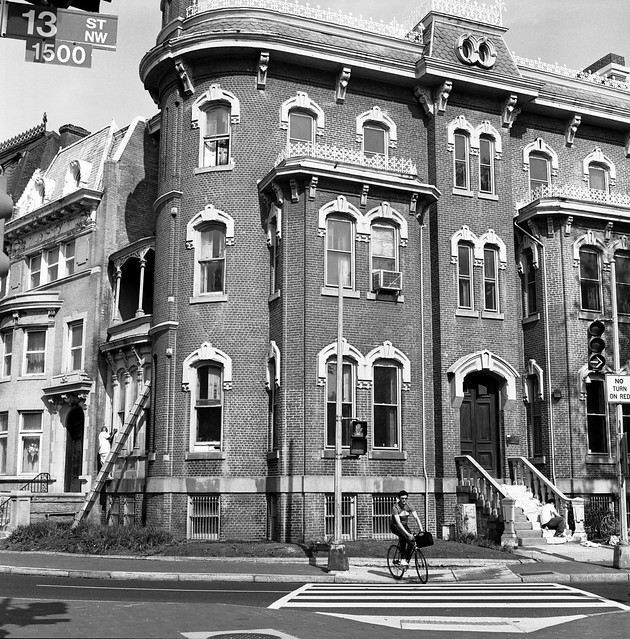
13 St NW - Washington, DC, Shot with Rolleiflex 2.8F Planar

 
13 St NW, by Reed A. George
Rolleiflex 2.8F Planar, Kodak TMax 400 Film
 
I know it looks like a simple shot, but I worked hard on this composition. I took a few other shots, but this one appeals to me the most. I believe that the two workers (one on a ladder on left, one on stairs at right), the bicyclist, and especially the open window at the top corner of the building are importnat compositional elements. The street sign at top left is as well. I see a compositional triangle of the ladder, window, and either bicyclist or worker on stairs that works well for me. The street sign sort of breaks up the scene in an interesting way.
 
Probably over-thought, but I like it.
 
DMC-365.blogspot.com
 

Thursday, June 4, 2015

Inside Looking Out - Rolleiflex 2.8F

 
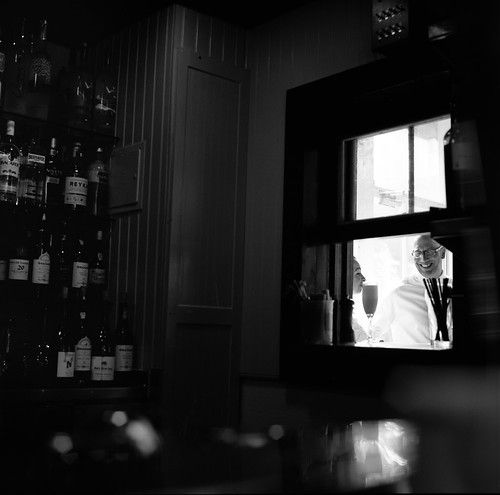
Inside Looking Out, by Reed A. George
Rolleiflex 2.8F Planar, Kodak Tmax 400 Film
 
I shot this on a lovely, bright, spring morning at Le Diplomate restaurant in Washington, DC. I exposed for the gentleman's face, which meant that I had to dodge the interior (dark) portion of the image to show some detail in the bottles.
 
DMC-365.blogspot.com
 

Tuesday, March 24, 2015

Rolleicord / Rolleikin (35mm in a Medium Format TLR) at the Farmer's Market in DC

I've been shooting twin lens reflex (TLR) cameras more and more lately. I've always loved TLRs, especially Rolleis. One of the things I love is the square (6x6) format that most of them are set up to use, on medium format 120 film. Today, I'll share something different - an older (1954-1957) Rolleicord V (cheaper version of the Rolleiflex), fitted with a Rolleikin attachment.
 
The Rolleikin, produced by Rollei as an add-on option, allows you to use 35mm film in a TLR. It shoots full-frame on the 35mm format, in portrait orientation. Since the Rolleicord has a 75mm lens (a Schneider Xenar in my case), shooting on 35mm film yields a medium telephoto result. The telephoto lens and portrait orientation make the Rolleicord/Rolleikin a lovely portrait camera.
 
(Click Here) to read more about my Rolleicord/Rolleikin.
 
(Click Here) to see some earlier shots I made with this camera.
 
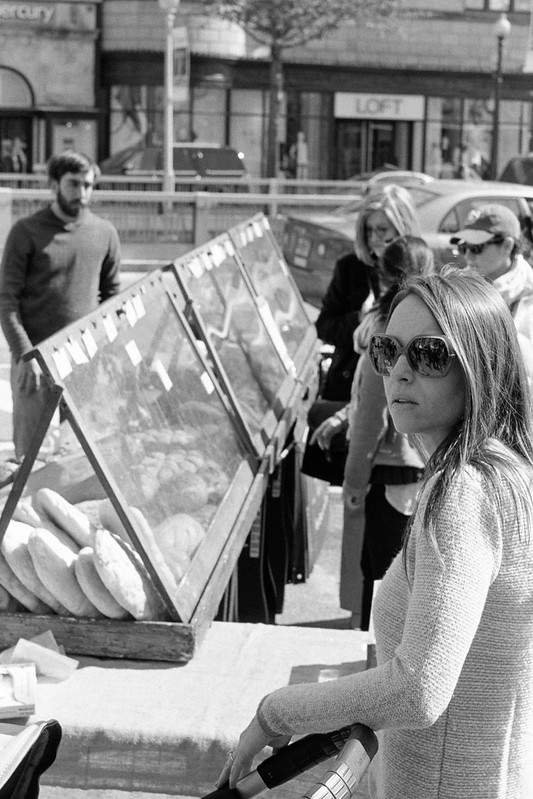
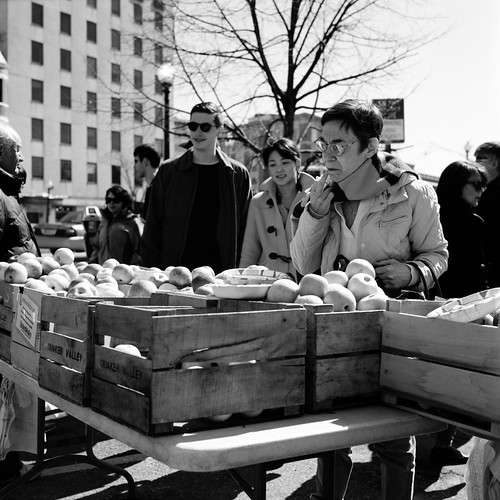
Here are some shots I made at the farmer's market in DC with my Rolleicord/Rolleikin. All are shot on Ilford HP5+.
Farmer's Market, DC, by Reed A. George
Rolleicord V with Rolleikin Attachment
 
The Rolleikin is quite easy to use. The viewing lens on the Rolleicord, which is used for focusing, is not as bright as my Rolleiflexes, being f3.2 versus f2.8 on the 'flexes. In the bright sunlight of the market, that was not a problem at all.
 
I've also come to realize that I need to wear my reading glasses when focusing a TLR. That's kind of a pain. I understand that there are diopters that can be fitted to the Rollei finder, but have not located one for my camera yet.
 
It's fun to experiment with these lovely old cameras, and the Rolleikin is an interesting attachment that changes the character of the camera.
 
DMC-365.blogspot.com

Monday, March 23, 2015

"Cool Camera" - a Blessing and a Curse

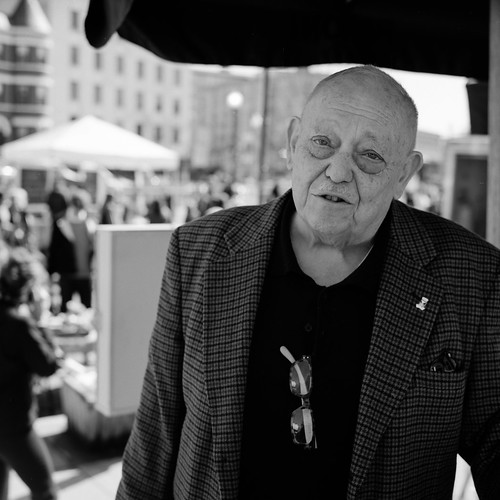
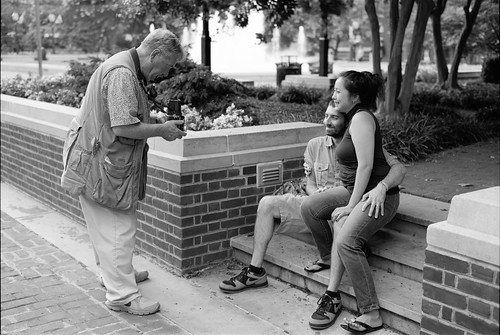
My friends Charlie and Alain have recently pointed out the difference in how people react to a camera when they think it's cool or interesting. Specifically with Rolleiflexes, they have noticed that people come up to them to talk about the camera. It's certainly true.
 
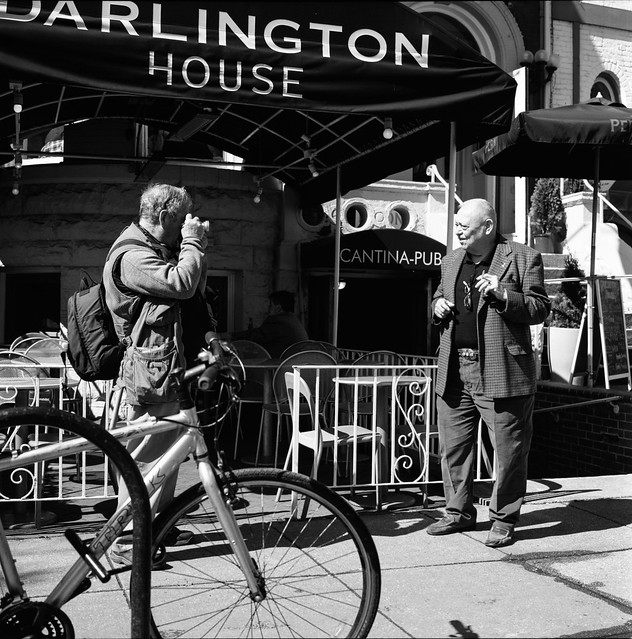
Willing Subject, by Reed A. George
Rolleiflex 2.8F Planar, Kodak TMax 100 Film
 
In the case above, Charlie's Leica IIIC (just back from a CLA) attracted attention. This gentleman recognized both Charlie's Leica and my Rolleiflex.
 
Italian Gentleman, by Reed A. George

Rolleiflex 2.8F Planar, Kodak TMax 100 Film

 
Now, I won't deny that it's nice to have people come up to talk cameras. Sometimes when I'm out shooting, that's exactly what I'd like to have happen, and it typically results in at least one or two images.
 
But, other times, I don't want to be noticed at all. The Rolleiflex is not the best camera for that situation. It's a camera for someone who wants to engage their subject. That said, I have had the experience of using the Rollei inconspicuously, at waist level. Not having it at your eye and noticeably pointed at the subject can really help.
 
DMC-365.blogspot.com
 

Sunday, March 22, 2015

Decisions, Decisions

Selecting Fruit at the Farmer's Market, by Reed A. George
Rolleiflex 2.8F Planar, Kodak Tmax 100 Film
 
Boy, it feels good to get outside and see people outside, not running for protection from the elements.
 
DMC-365.blogspot.com


Tuesday, March 17, 2015

Visit to a Buddhist Temple - With My Rolleiflex 2.8F

Wat Lao Buddhavong, by Reed A. George
Rolleiflex 2.8F, Kodak TMax 400 Film
 
I made a visit to a local Buddhist temple that I'd never been to before - Wat Lao Buddhavong in Catlett, Virginia. Anticipating a festival that never materialized (I guess my information was wrong), I took the opportunity to walk around the grounds. These are a few of the things I saw there.
 
Shooting with TMax 400 in the bright sunlight and with snow still on the ground meant very fast shutter speeds (1/250-1/500) and small apertures. I did use a yellow filter, which reduced the sensitivity by about 1 - 1 1/2 stops, so really, I was shooting at an equivalent of about iso 150.
 
The square composition worked well for me here. The detail that the 2.8F's Carl Zeiss Planar bring out are just amazing.
 
DMC-365.blogspot.com


Sunday, February 22, 2015

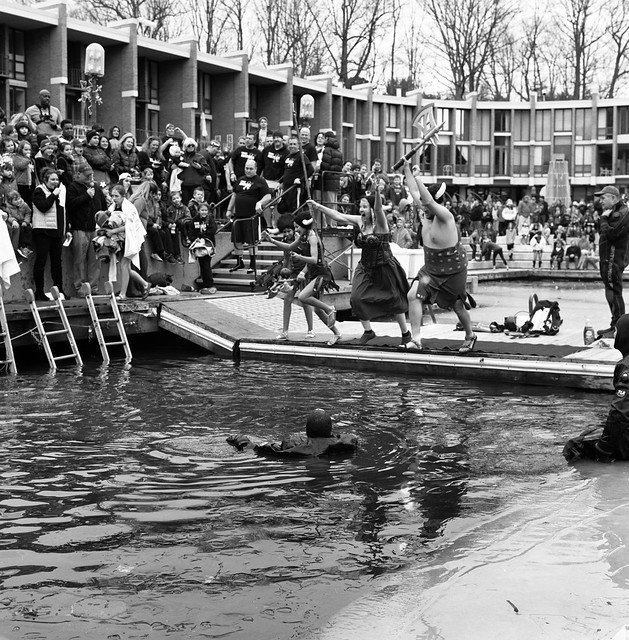
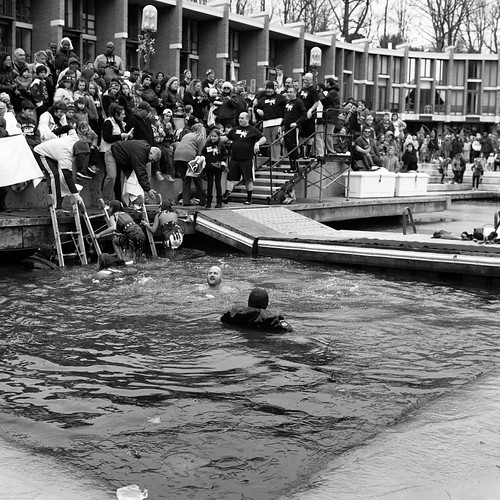
More From the Polar Bear Plunge - Rolleiflex 2.8F

Yesterday, I posted a series of pictures from the Polar Bear Plunge, an event to raise funds for Camp Sunshine, a wonderful place that helps families dealing with childhood cancer.
 
All of the images yesterday were from my Leica M9. Today, I'll show some that I made with my Rolleiflex 2.8 F twin lens reflex (TLR) camera.


And here's my favorite shot - these young spectators were just so cute under their blanket together.
 
 
It was a blast using the Rolleiflex alongside the Leica rangefinder at this event. Perhaps not the optimum equipment, but it sure worked out well.
 
DMC-365.blogspot.com
 

Monday, January 26, 2015

A Recent Favorite - Georgetown Iceskating

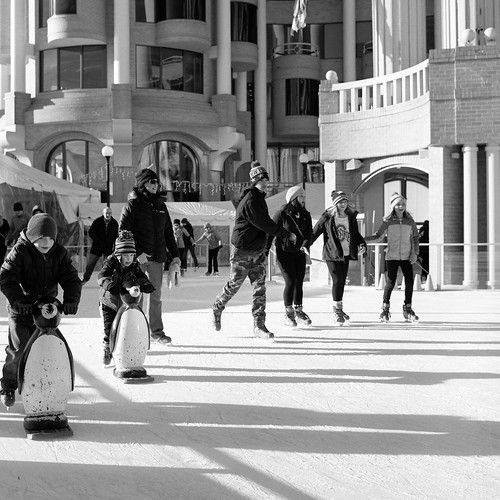
Chilly Fun, by Reed A. George
Rolleiflex 2.8F, Kodak TMax 400
 
Just a shot that I really like. Made a couple of weeks back in Georgetown, DC.
 
DMC-365.blogspot.com
 

Sunday, January 25, 2015

Vienna Group - Alain

Alain, by Reed A.George
Rolleiflex 2.8F, TMax 400 Film
 
A couple of years back, I started meeting up with a few fellow camera nuts, at least once per month. We meet in a coffee shop in Vienna, Virginia, and talk all things photographic.
 
We initially came together to talk Leica, which we still do. As you can see from the F3 around Alain's neck, we aren't exclusive in our tastes.
 
In fact, it was the Vienna Group that reignited my interest in Rolleiflex and TLRs. To the point that I purchased my lovely 2.8F from another member, Charlie.
 
It's really good to have a group of friends with like interests.
 
DMC-365.blogspot.com

Tuesday, January 13, 2015

Not All TLRs Are Rolleiflexes

 
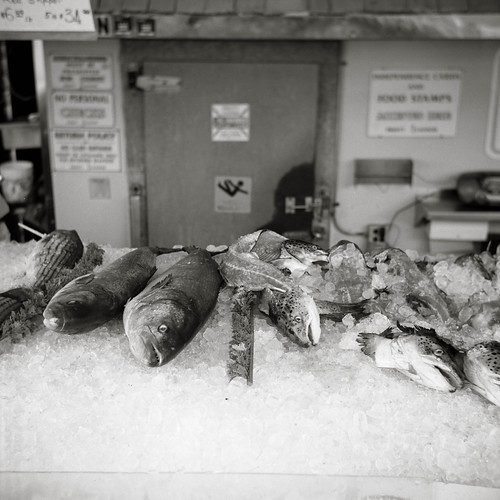
Seafood Market, Super Ricohflex TLR
 
Well, of course not all twin lens reflex (TLR) cameras are Rolleiflexes. There are also Rolleicords! But, all jokes aside, there were many, many respectable TLR cameras by makers other than Rollei. I've owned a Yashica TLR that was quite capable. I still have a Minolta Autocord, which rivals any of my f3.5 Rolleis. I also have a couple of Ricoh TLRs, including the Super Ricohflex that I used to make the picture above.
 
Most of the other brands are less expensive than Rolleis, as well. My first TLR was a Chinese camera, made by Seagull. Not as robust as the Japanese or German makes, but it worked quite well.
 
(Click Here) to check out a post by Rick Schuster on the blog "shot on film." Rick uses a Super Ricohflex himself, and shares some nice color shots. However, Rick also mentions a strange phenomenon of the area of focus being somewhat unpredictable on his camera, toward the edges of the frame. I've never experienced anything like this with my Super Ricohflex. If forced to speculate, I'd say that Rick's camera has suffered an impact that misaligned the lens axis with the film plane. That said, Rick's still making great pictures with his camera, and by all appearances enjoying the process.
 
DMC-365.blogspot.com


Thursday, January 8, 2015

The Rolleiflex and Attracting Photographic Subjects

 
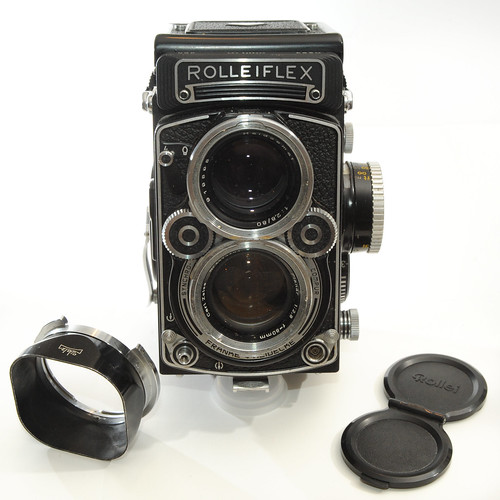
My Rolleiflex 2.8F
 
Over the holiday break, I've spent a little time with my new Rolleiflex 2.8F, which I purchased a couple of months back from my close friend Charlie. Mine is a Model K7F2 with Zeiss Planar lens, manufactured in 1966.
 
Charlie, and another good friend, Alain, have recently taken up their twin lens reflex (TLR) Rolleis and done quite a lot of shooting. One of the things that excites them both about Rolleiflex is how warmly people welcome them shooting with them. So many people ask about the cameras, or remember someone who had a camera like that, etc.
 
I have certainly experienced the same phenomenon. In fact, Charlie and I were in DC over the weekend, when a lady at the table next to ours in a cafe said "Excuse me, I see you have a Rolleiflex." She then went on to tell us that she owns one herself, which she inherited from her brother. By the way, her brother fought in World War II, including Normandy, entering the military at age 14 with a made up birth date. This nice lady asked about our little photography group, which meets once monthly. She's invited to our next meeting, and I'm hoping she'll bring her camera along and let us help her start shooting it again.
 
In my opinion, this kind of camera recognizing is both blessing and curse. While I certainly enjoy welcoming photographic subjects, sometimes I want to go unnoticed. I find that a small 35mm camera, like a Leica rangefinder, is better for that. The truth is that subject reaction to the two types of cameras is just different. Neither is good or bad; they're just different.
 
I've written about this in the past, with regard to my Mamiya Universal Press camera. Very few people recognize the MUP, but it's so big, it's not going to go unnoticed. (Click Here) to see some of the "candids" I've taken with the MUP.
 
I recently found a post on the blog "TLRgraphy" about this automatic receptivity in photographic subjects when you're using a Rolleiflex. (Click Here) to read the post on TLRgraphy.
 
Anyway, I've now got two rolls of 120 film exposed with my 2.8F, ready to go off for processing at thedarkroom.com
 
Hopefully, I'll have a few good images to share with you in a week or so.
 
DMC-365.blogspot.com

Thursday, October 16, 2014

You Know How They Say The Camera Doesn't Matter?

Well, based on this morning's browsing of the Rolleiflex and Rolleicord group on flickr, I don't buy it.
Ada, by flickr user Traveling Darkroom
 
Okay, I know, the photographer matters more than the camera. That is true. But there's an abnormally high frequency of great images in this particular group, if you ask me.
 
(Click Here) to judge for yourself.
 
Now, it could be the square image format that I happen to like. Or, it could be the different perspective that you can get with any twin lens reflex (TLR) or other camera that has a waist level finder. But, I think there may be more to it than that.
 
I went out with my Rolleiflex yesterday, and without seeing any results yet, feel more confident than usual that I got at least one or two great images. The film ships out to The Darkroom today, so we'll know in a couple of days.
 
DMC-365.blogspot.com
 

Friday, September 19, 2014

Medium Format Cameras for Street Photography?

 
Jesse and Ayreene, Photographed by Charlie Arnhold
Mamiya Universal Press (MUP), Mamiya Sekor 100mm f3.5 Lens
Kodak TMax 400 Film
 
Of course, street photography started with the camera technology of the times. It's difficult, and not so important, to pinpoint exactly when that happened, but certainly a lot of street photography was done in the days when the Graflex 4x5 camera was the main game in town. Later, street photography was largely associated with 35mm cameras, and small 35mm rangefinders like the Leica and Contax in particular. Today, smaller and smaller high quality digital cameras are playing their role, as are smart phones.
 
So, can you really shoot street photographs with medium format cameras? Of course you can. In fact, one generation that I skipped over in the paragraph above is that of the twin lens reflex (TLR), led by the Rolleiflex. As you can see above, my friend and mentor Charlie Arnhold is quite comfortable shooting the Rolleiflex for this purpose. In this case, Charlie has engaged his subjects (Jesse and Ayreen, visiting DC from NYC). But, yes, the TLR has a firm place in the street photography game. Reasonably compact, especially for the negative size they produce (6x6 cm), TLRs are also pretty well-accepted by subjects on the street.
 
Okay, so what about other medium format cameras? Well, there are also reasonably compact medium format rangefinders, the main ones having been made by Mamiya and Fujifilm. They also work fine for street photography.
 
To push the upper size limits, I've been shooting some street scenes with my Mamiya Universal Press (MUP) camera. Yes, it's a press camera, which means it was designed to be taken out in public. But, it's a big beast, not one that will go unnoticed in the process. While it does a fine job of capturing the scene in a high quality image, I find that most of my subjects are looking at the camera. This is different from shooting anonymously with a smaller camera. Different, but not necessarily better or worse. I'll have more examples to share shortly.
 
My guess is that using the MUP for street photography is similar to what one would experience in going back even further, and shooting on the street with a Graflex 4x5 camera. I haven't done much of that at all. Maybe I'll give it a try again soon.
 
DMC-365.blogspot.com


Sunday, August 17, 2014

A Little Inspiration a la Richard Avedon

I absolutely love shooting film, especially black and white. I also love medium and large format, including the Rolleiflex, chosen instrument of my friends Charlie Arnhold and Alain Durand.
 
Richard Avedon is one of the most famous portrait photographers of any time. Avedon used a Rolleiflex f2.8 twin lens reflex (TLR) camera for many of his portraits.
Ingrid Bergman, by Avedon
Image Source: http://classiq.me/portraits-by-richard-avedon/ingrid-bergman-by-richard-avedon-new-york-1961
 
Always using plain backgrounds, Avedon's portraits seem to show a very direct connection between model and photographer. I love that about his work.
 
For more Avedon inspiration, check out this post on the blog Classiq.me.
 
Still plenty to learn!
 
DMC-365.blogspot.com


Sunday, August 10, 2014

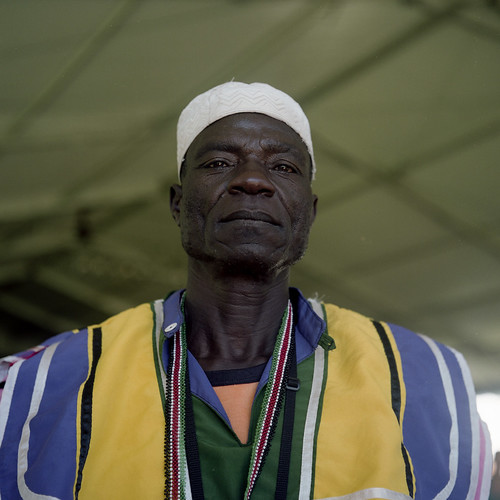
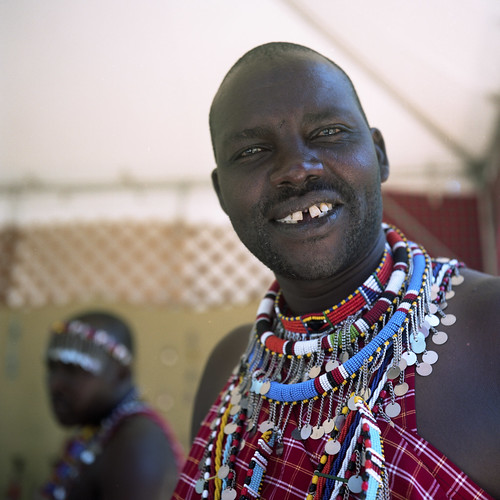
More Rolleiflex Images from the Smithsonian Folklife Festival - Celebrating Kenya

Yesterday, I shared a couple of images from the China side of this year's Smithsonian Folklife Festival. Today, Kenya.
 
All of these were shot with my Rolleiflex T twin lens reflex (TLR) camera and Kodak Portra 160 film.
Smithsonian Folklife Festival 2014 - Kenya
 
It was a very bright, contrasty sunny day, as you can see in the second image. So, getting under the tent coverings helped to diffuse the light quite a bit, leading to better overall images. That said, it made getting a natural looking background more challenging.
 
In any case, people did seem to like being photographed with an old TLR camera. I've had this camera for several years. I used it quite a lot when I first bought it, less so recently. I've still got it in my bag, and plan to shoot more with it in the near future.
 
DMC-365.blogspot.com