Showing posts with label finder. Show all posts

Tuesday, February 19, 2013

I Succumbed to a GAS Attack - Lumix DMC-LX7

If you don't know what GAS is, it stands for Gear Acquisition Syndrome. Most photographers suffer from it. I have it bad.
 
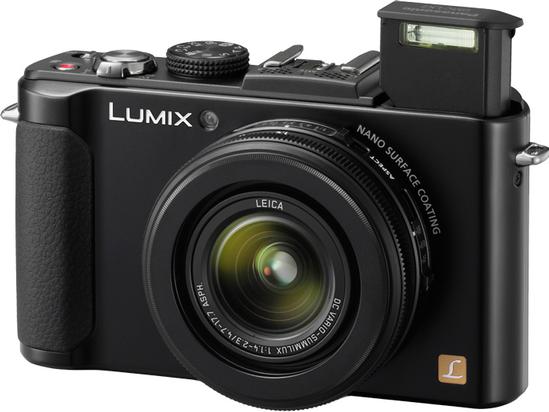
You probably know that I'm a Panasonic Lumix fan. I've written about my favorite ultra-compact camera, the Lumix DMC-LX5 several times. Up until now, I have refrained from upgrading to the latest model, the DMC-LX7. Yesterday, I gave in and ordered one.
Image Source: http://panasonic.net/avc/lumix/compact/lx7/index.html
 
So, if I'm content with the LX5, what made me do it? Well, first off, the LX7 comes with a Pana-Leica Summilux f1.4 lens, a full stop faster than the LX5's Summicron. With small sensors like the one in the LX5 and LX7, high iso noise is always a concern. With an extra full f-stop over the LX5, the LX7 will allow me to stay a full iso level lower, drastically reducing noise. The LX7 also has a CMOS sensor, rather than the CCD in the LX5. This may end up being a compromise, as CCD sensors can yield sharper images, while CMOS is better at high iso. We'll just have to see about that when it arrives.
 
(Click Here) for a nice review and table summarizing the other differences between the LX5 and LX7 on dpreview.com.
 
The other reason I bought on the spur of the moment? The LX7 is drastically marked down at Adorama. With a list price of $448, it is now available for $150 off at Adorama, for $298. Hard to decline.
 
Now, here's the only dilemma left for me - do I need the new DMW-LVF2 electronic viewfinder that goes with the LX7? Unfortunately, very unfortunately, the DMW-LVF1 that I have for my LX5 (and for my old Micro 4/3 DMC-GF1) won't work on the LX7. The new one, the LVF2, is supposed to be much better in resolution, but it's also larger. That matters on a compact camera like the LX7.
 
From my experience with the LX5, I do enjoy the LVF1. However, I would say that I more often use an old optical finder, a Russian model, with the zoom set to 35mm equivalent. This makes a great, bright, fast little street shooter out of the LX5; I expect to do the same with the LX7. So, for now, I'm not buying the LVF2. If I found out that the new DMC-GX2 Micro 4/3 camera (if and when it's finally announced) used the LVF2, then I'd be very tempted. It's not at all clear that will be the case. By the way, the LVF2 isn't cheap. It costs around $160.
 
There is a great set of information about the LX7 on Panasonic's website, including nice descriptions of the features, galleries of images, and a nice video of Charlie Waite using the LX7 to shoot in Holland.
 
(Click Here) to see the LX7 on Panasonic's site.
 
I have been sharing pictures from the LX5 occasionally on the getdpi forum. Some of us are making the transition to the LX7, and there's a relatively new link where others have shared some very nice LX7 images. I will be adding to this thread soon.
 
(Click Here) to see the LX7 image post on getdpi.
 
One final clincher for me? The LX7 uses the same battery as the LX5. So, I can use my existing set of batteries!
 
I anticipate writing my second e-book soon. The one I wrote on how to set up and use the Lumix DMC-G3 has been very popular, with thousands of downloads. So, I'll commit to writing one on the LX7 soon. I'll have to do it soon, as the next model in this line will undoubtedly come around soon. Stay tuned for that.
 
DMC-365.blogspot.com
 

Thursday, January 10, 2013

A Family Tradition - Oseichi Ryori - Japanese New Year's Breakfast

 
Japanese Oseichi Ryori, by Reed A. George
Panasonic Lumix DMC-LX5
iso 160, f2.2, 1/60 sec.
 
My wife is Japanese. Living in Northern Virginia, we don't get all that many chances to celebrate Japanese culture. One opportunity we take every year is on New Year's morning. We order out traditional Japanese food, oseichi ryori. Now I'm kind of a conservative eater, especially at breakfast. But, I thoroughly enjoy welcoming the new year in with fresh seafood and Japanese sencha (green tea) one day per year.
 
I also always grab a camera and take a shot of this year's selection. That tends to be the DMC-LX5. For these shots, I used iAuto, where the camera sets EVERYTHING for you. Obviously, I also used macro focus. Not bad for complete point and shoot automation.
Japanese Oseichi Ryori, by Reed A. George
Panasonic Lumix DMC-LX5
iso 200, f2.2, 1/60 sec.


Ohashi (chop sticks), by Reed A. George
Panasonic Lumix DMC-LX5
iso 80, f2, 1/100 sec.
 
I almost sprung for an upgrade to the LX5 over the holidays - the LX7 was obscenely cheap at less than $300. But, the additional nearly $200 to upgrade the accessory finder from the DMW-LVF1 to DMW-LVF2, necessary with the LX7, was just a little too much. I've got no complaints about the LX5, and the LX7 has a faster (f2) lens, but no advantage in sensor size. So, I held off.
 
Happy 2013!
 
DMC-365.blogspot.com


Thursday, November 29, 2012

First Afternoon and Evening in Barcelona - I Think I Like It Here

 
Gelato Selection, by Reed A. George
Panasonic Lumix DMC-LX5
 
We arrived in Barcelona today, Sunday, at about noon. After a quick nap, we went out for a tasty lunch of tapas (shrimp, avocado salad, local sausage and white beans). This kept us full enough that we only needed a small snack for dinner.
 
I can already tell that the street photography is going to be great here. For our evening walk, I grabbed my Panasonic Lumix DMC-LX5 and Russian 35mm optical finder, set the zoom to 35mm equivalent, manual exposure at either iso 400, 800, or 1600 (pretty high for this small sensor), and shot away.
 
Mixed Traffic, by Reed A. George
Panasonic Lumix DMC-LX5
 
In order to minimize jet lag, I need to stay up until at least 10:00 tonight, preferably closer to midnight. It's currently only 7:30PM. I may have to go out again to succeed in staying awake...
 
I'm certainly looking forward to the rest of this trip. The images above are both jpegs directly from the camera, shot using the Dynamic Black and White option. I don't know exactly how this works, but flickr is showing the filenames as if they were raw files. That can't be, as the Black and White option only affects the jpegs. And, I can't see my EXIF information, either.
 
At any rate, I'm pretty sure that some careful post-processing at home will clean them up quite well.
 
More from Barcelona coming soon!


Friday, November 23, 2012

Amazing Deal! Lumix DMC-LX7 for $299 New!

 
Panasonic DMC-LX7
Image Source: http://www.huntsphotoandvideo.com/detail_page.cfm?ProductID=DMCLX7K&mfg=Panasonic&show=yes
 
First off, I have no connection to Hunt's Photo. However, they have an incredible deal on the Lumix DMC-LX7 today. Get it quick!
 
(Click Here) to go to Hunt's for the LX7 at $299 (regularly ~$499)!
 
This is an awesome little camera. I have the previous version, the DMC-LX5. It's an amazing street shooter, with raw file capability, a fast lens, and quick response. The LX7 has an even faster f1.4 lens.
 
I am sorely tempted by this deal, and would go for it if it didn't mean buying a new electronic viewfinder (it's different from the one on the LX5) and spare batteries. The truth is, I'm happy with the LX5, so it's not worth the upgrade for me. If I didn't have the LX5, I'd jump on this in an instant.
 
DMC-365.blogspot.com
 
If you buy one, please get your finder (LVF-2) and extra batteries through the link below:


Monday, June 18, 2012

Shooting Rangefinder-Style With Micro 4/3

 
kdixey's RF Shooting Emulation
dixeyk's Emulation of Rangefinder Style Shooting on Panasonic Lumix DMC-GF2
Image Source: http://www.mu-43.com/f35/how-approximate-my-old-compact-rfs-27412/

dixeyk has written a post over on mu-43.com about recapturing the shooting style of classic rangefinder cameras with Micro 4/3 gear.

(Click Here) to read the full post.

I have referenced dixeyk's posts before. We seem to have similar interests in our photography. The goal was to set up a modern Micro 4/3 camera to allow a shooting style similar to a classic film rangefinder. Of course, the best way to get that is to have a digital Leica (or perhaps the Fuji XPro 1?), but that was not available.

The characteristics that dixeyk went for, as far as I can interpret, were a compact kit, fast (wide aperture) lenses, and fast focus (as one can achieve through manual focus on a rangefinder camera). For this, he chose to use a Panasonic Lumix DMC-GF2 and the Lumix 20mm f1.7 as his normal lens. He also used Lumix 14mm f2.5 and Olympus 45mm f1.8 lenses, approximating a 28, 40, and 90mm field of view on a classic rangefinder. So far, I would have made similar choices, using my Lumix DMC-GF1 (another Lumix body without an internal viewfinder) and Lumix 20mm f1.7 lens.

Now here's where we go different ways. In dixeyk's case, he decided to shoot with the LCD and autofocus, utilizing the camera's ability to touch focus and shoot. This allows the user to pinpoint where in the field of view they want to focus by touching the LCD screen. As soon as focus is achieved, the camera automatically releases the shutter, capturing the image. I can see how this would feel similar to the fast focus and capture capability of a classic rangefinder.

For my own approach, especially in street photography, my favorite use of a rangefinder, I go in a completely different direction. I turn off the LCD, mount a 35mm optical finder (an old Russian version in my case) in the camera's flash shoe, and use hyperfocal settings to give a lot of depth of field. For information on that,

(Click Here) to see my previous post on setting hyperfocal distance on Panasonic Micro 4/3 cameras.

I find that the 35mm finder closely approximates the field of view of the 20mm f1.7 Lumix lens.
 
I use the exact same finder on my smaller Panasonic Lumix DMC-LX5, which provides for directly setting zone focus in the manual focusing screen. In actuality, the LX5 does a better job of emulating a rangefinder than the GF1, in my opinion. It has a great scale to show the focus distance and depth of field, will allow you to lock the zoom at any focal length and the f-stop at any setting. It is a super-quick little camera for street photography.
 
(Click Here) to see my post on my LX5 street kit.
 
I will give dixeyk's approach a try. I think the main differences are in what each of us is trying to achieve. He's working toward quick response pinpoint focus and capture, while I'm working toward large depth of field, quick response street photography with a rangefinder camera.
 
Fun stuff.
 
DMC-365.blogspot.com


Friday, June 1, 2012

Kirk Tuck (of Visual Science Lab) Talks Up The Electronic Viewfinder (EVF)

Kirk Tuck on EVFs
Image Source:
http://theonlinephotographer.typepad.com/the_online_photographer/2012/05/kirks-take-electronic-viewfinders.html?utm_source=feedburner&utm_medium=feed&utm_campaign=Feed%3A+typepad%2FZSjz+%28The+Online+Photographer%29

Kirk Tuck has written a piece on The Online Photographer, with some witty-but-practical thoughts about how electronic viewfinders (EVFs) compare and contrast to optical viewfinders (OVFs).

(Click Here) to read Kirk's post on The Online Photographer.

Kirk talks up the following features of EVFs:
  1. "Pre-chimping" (this term belongs to Kirk :) ). This means being able to see how the camera's settings and electronics will treat an image BEFORE you shoot it. Not possible with an OVF, it can be achieved with live view on an SLR, but not with the camera to your eye.
  2. Focus Peaking - I am not familiar with what Kirk describes, about the camera highlighting items that are in focus in your image. I'm thinking Lumix cameras don't do this? Please comment if you can shed any light on this subject.
  3. The ability to quickly check an exposure in the EVF after it's taken, without having to take the camera away from your eye.
I certainly appreciate number 3, even though it makes people think I'm crazy when I've got the camera to my eye reviewing an image, not necessarily pointing it at my subject any more. My wife has said - "Why are you taking pictures of the sidewalk?"

On the downside, Kirk talks about the delay of the EVF making it more difficult to "lead" a moving subject (or at least different from the OVF), having to turn "Gain Up" (something I think is the default setting in Panasonic cameras) to see your subject in a dark setting, such as when you're planning to use studio flash, and the fact that EVFs typically represent an image in higher contrast than the true image, making the quick-check less effective.

On that final point, Kirk suggests that raw shooters can set their jpeg settings to low contrast, so that the image in the EVF more closely approximates what will be in the raw file. Nice tip.

I agree with Kirk on many points here. I love the "gain up" behavior of the Lumix EVF, which allows me to see what's going on in a dark scene by increasing the gain in the EVF (bringing up the light levels). I would add that this also allows visualization of the depth of field, if you're using a lens that closes the aperture down before the shutter is released. This is the case with legacy lenses on adapters. This is a feature that makes EVFs a major advantage. Basically, even though the aperture is closed way down (reducing the light getting to the sensor), the EVF adjusts the gain to brighten the image going to your eye. So, you get enough light to see what's going on, and the lens is closed down, so you can see the true depth of field.

Contrast this to the old depth of field preview in an SLR (which makes the image in the OVF so dark you can't see anything), or the conventional rangefinder camera (which has no provision for depth of field preview).
That said, I still really love to look through an OVF. It just looks more "real." It makes me feel like I'm still there, present in the scene. The EVF doesn't do that.

I know that even though this is a Lumix blog, I've been referring to Fujifilm quite a lot. I bring it up here because I wonder just how well their hybrid viewfinder (which allows you to switch between EVF and OVF) gives the benefits and minimizes the disadvantages of both finders. I imagine the hybrid design is pretty well-covered by Fujifuilm with patent protection, but I'd sure like to see it appear on other cameras (especially Panasonic).

Thanks again, Kirk, for a thought-provoking piece!

DMC-365.blogspot.com
 
DMC-365.blogspot.com