Showing posts with label attachments. Show all posts

Wednesday, July 25, 2012

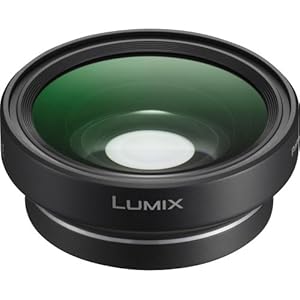
Member Blue Esprit on mu-43.com Shares Some Spooky Images with Lumix DMC-GF2, Lumix 14mm f2.5, and Wide Adapter DMW-GWC1

 
Blue Esprit's Picture from mu-43.com
Skull as Focal Point, by Blue Esprit on mu-43.com
Image Source: http://www.mu-43.com/gallery/data/500/Spooky_5.jpg
 
Member Blue Esprit on mu-43.com shared a series of cool monochrome images taken with a Panasonic Lumix DMC-GF2, Lumix 14mm f2.5, and DMW-GWC1 wide angle attachment.
 
(Click Here) to see the whole post by Blue Esprit on mu-43.com
 
These are the first user results I've seen with the DMW-GWC1 wide angle attachment. The image above is my favorite from the series. I love how the skull is the focal point, even though it takes up only a tiny portion of the field of view, due to the 11mm-equivalent wide angle view achieved with the DMW-GWC1 attachment.
 
Earlier, I had actually ordered the DMW-GFC1 fisheye attachment, but cancelled, thinking it was too much money for a lens converter. I must say that the wide converter seems to be a nice addition to the 14mm lens, based on Blue Esprit's results. One of the advantages of converters is that they take up less space in your camera bag.
 
For my purposes, though, I think I'd rather have a wide angle lens. Right now, my widest is the 14mm f2.5 Lumix. I do have a 12mm f5.6 Voigtlander lens in Leica thread mount, which I can adapt to my Micro 4/3 cameras, but at f5.6, the usage applications are pretty limited. Maybe I will get out and give it a try, though. I've just never pursued it. Hmm. Sounds like a worthwhile effort.
 
DMC-365.blogspot.com


Friday, June 1, 2012

Kirk Tuck (of Visual Science Lab) Talks Up The Electronic Viewfinder (EVF)

Kirk Tuck on EVFs
Image Source:
http://theonlinephotographer.typepad.com/the_online_photographer/2012/05/kirks-take-electronic-viewfinders.html?utm_source=feedburner&utm_medium=feed&utm_campaign=Feed%3A+typepad%2FZSjz+%28The+Online+Photographer%29

Kirk Tuck has written a piece on The Online Photographer, with some witty-but-practical thoughts about how electronic viewfinders (EVFs) compare and contrast to optical viewfinders (OVFs).

(Click Here) to read Kirk's post on The Online Photographer.

Kirk talks up the following features of EVFs:
  1. "Pre-chimping" (this term belongs to Kirk :) ). This means being able to see how the camera's settings and electronics will treat an image BEFORE you shoot it. Not possible with an OVF, it can be achieved with live view on an SLR, but not with the camera to your eye.
  2. Focus Peaking - I am not familiar with what Kirk describes, about the camera highlighting items that are in focus in your image. I'm thinking Lumix cameras don't do this? Please comment if you can shed any light on this subject.
  3. The ability to quickly check an exposure in the EVF after it's taken, without having to take the camera away from your eye.
I certainly appreciate number 3, even though it makes people think I'm crazy when I've got the camera to my eye reviewing an image, not necessarily pointing it at my subject any more. My wife has said - "Why are you taking pictures of the sidewalk?"

On the downside, Kirk talks about the delay of the EVF making it more difficult to "lead" a moving subject (or at least different from the OVF), having to turn "Gain Up" (something I think is the default setting in Panasonic cameras) to see your subject in a dark setting, such as when you're planning to use studio flash, and the fact that EVFs typically represent an image in higher contrast than the true image, making the quick-check less effective.

On that final point, Kirk suggests that raw shooters can set their jpeg settings to low contrast, so that the image in the EVF more closely approximates what will be in the raw file. Nice tip.

I agree with Kirk on many points here. I love the "gain up" behavior of the Lumix EVF, which allows me to see what's going on in a dark scene by increasing the gain in the EVF (bringing up the light levels). I would add that this also allows visualization of the depth of field, if you're using a lens that closes the aperture down before the shutter is released. This is the case with legacy lenses on adapters. This is a feature that makes EVFs a major advantage. Basically, even though the aperture is closed way down (reducing the light getting to the sensor), the EVF adjusts the gain to brighten the image going to your eye. So, you get enough light to see what's going on, and the lens is closed down, so you can see the true depth of field.

Contrast this to the old depth of field preview in an SLR (which makes the image in the OVF so dark you can't see anything), or the conventional rangefinder camera (which has no provision for depth of field preview).
That said, I still really love to look through an OVF. It just looks more "real." It makes me feel like I'm still there, present in the scene. The EVF doesn't do that.

I know that even though this is a Lumix blog, I've been referring to Fujifilm quite a lot. I bring it up here because I wonder just how well their hybrid viewfinder (which allows you to switch between EVF and OVF) gives the benefits and minimizes the disadvantages of both finders. I imagine the hybrid design is pretty well-covered by Fujifuilm with patent protection, but I'd sure like to see it appear on other cameras (especially Panasonic).

Thanks again, Kirk, for a thought-provoking piece!

DMC-365.blogspot.com
 
DMC-365.blogspot.com
 

Friday, May 11, 2012

The DMW-GFC1 Fisheye Adapter for 14mm f2.5 Is Finally Available!

 
Image Source: www.amazon.com
I've been waiting since January for this thing to be available - the Lumix DMW-GFC1 Fisheye Adapter for the 14-42mm X lens (which I don't have) and the 14mm f2.5 prime (which I do).

(Click Here) to read my original post about the announcement for the new attachments from Panasonic back in January.

I was checking today, just to see if by chance it had come in, as I have approximately weekly since January. Adorama listed it as in stock, but by the time my order got there (a few seconds). So, I had to cancel and buy from J&R, through Amazon.

I'll post the link to Amazon's offering below. If you're interested, they apparently have a couple left.

I can't wait to give this a try! If the optics are reasonable, it will be a great little attachment to have in my bag, rather than an additional fisheye lens, which I would not carry around often enough.

UPDATE: Due to difficulties in stock at two suppliers, I decided to cancel my order. I guess I got caught up in the moment, seeing that it was in stock. Now that I think about it more, the drop from ~180 degree field of view in a dedicated fisheye lens to 120 degrees in the adapter approach is too much. If I decide that I really want to be in this fisheye business, I'll buy a lens, not a converter. The Rokinon seems like the right approach if I do anything - trading off the lack of electrical connection to the camera and lack of autofocus for a 50% reduction in price from the Lumix lens. Anyway, I'm not buying anything in this area at the moment.


DMC-365.blogspot.com


DMC-365.blogspot.com
 

Wednesday, May 2, 2012

The Ultimate Adaptation - 100 Year Old Camera on Modern Sensor

 
Rick Nunn's Hybrid Kodak Vest Pocket/Canon DSLR Camera


Image Source: http://ricknunn.com/wp-content/uploads/2012/04/Vest-Pocket-Lens-900x599.jpg
Rick Nunn's Hybrid - a 100 Year Old Vest Pocket Kodak and Canon EOS.
 
This is very cool! Rick Nunn shows how he adapted a 100 year old Kodak Vest Pocket camera to shoot on his Canon SLR. He includes a video to describe how it's done. Essentially, he attaches the camera to extension tubes, and a lens mount adapter.
 
(Click Here) to read Rick's post.
 
I am new to his blog, but definitely added it to my regular reading list. He seems to share my interest in cameras, blogging, and coffee.
 
This idea is interesting. I have an old Zeiss folder with a stuck shutter in the closet at home. This approach should work just fine, perhaps even easier, with Micro 4/3 bodies. Maybe I'll give it a try.
 
I'd like to see more examples from Rick's camera. Maybe that's coming soon.
 
DMC-365.blogspot.com
 
Don't forget all of those ready-made adapters to use your older lenses on Micro 4/3:


Sunday, April 29, 2012

It's Worldwide Pinhole Day 2012

Worldwide Pinhole Day, by Reed A. George
Worldwide Pinhole Photography Day, by Reed A. George
Panasonic Lumix DMC-GF1, Nikon Mount Adapter, Nikon Mount Pinhole (f180)
iso100, 6 seconds


Today is Worldwide Pinhole Photography Day. So, I had to get something up here for it.


(Click Here) to read about Worldwide Pinhole Photography Day.


You may ask, how can Reed take a blurry pinhole picture, when pinhole cameras are supposed to have sharp focus and nearly infinite depth of field? Well, the answer is simple. Take a pinhole body cap for a Nikon camera, which already produces blurry images due to diffraction effects with the "small" full-frame 35mm sensor, and use an adapter to put it on an even smaller Micro 4/3 sensor camera. That's what I did.
 
You can only enter one picture in the official gallery at pinholeday.org, so I won't be entering this one. I took a couple earlier with a much better rig, my 4"x5" film pinhole camera. How's that for a bigger sensor? But, it requires processing, which won't happen today.

So, please accept this as my image for Worldwide Pinhole Day! And, I even took it with a Lumix camera.

DMC-365.blogspot.com

Would you like to make blurry pinhole images, too? Here's an example of a Nikon pinhole body cap (different manufacturer from mine):


Saturday, April 21, 2012

Micro 4/3 With Nikon PreAI Classic Lenses

Image Source: http://www.mu-43.com/f40/playing-some-pre-ai-nikkors-23110/
User wlewisiii on the mu-43 forum recently shared some nice black and white images, taken with classic Nikkor lenses:


(Click Here) to see the full post,


and (Click Here) to see wlewisiii's picasa albums.


These images were taken with an Olympus E-P1, and Nikkor 24mm/f2.8, 50mm/f1.4, and 105mm/f2.5 PreAI lenses.


I love the fact that all Micro 4/3 format bodies (be them Olympus or Panasonic) accept adapters for so many lens mounts. I find it interesting that the PreAI lenses are more compatible with Micro 4/3 bodies than they are with current Nikon bodies. I have two PreAI lenses - the 50mm/f1.4 and the 28mm/f2.8. I have not used them extensively on my Lumix bodies. Maybe I will give them more exposure time.


I find myself missing many of my old cameras. I wonder if using the old lenses on a Lumix body will help to scratch that itch? I will give it a try.


(Click Here) for a lively forum post on nelsonfoto.com about using older lenses on digital bodies. This includes lots of nice example images from my friends there.


DMC-365.blogspot.com


Get your adapter here:


DMC-365.blogspot.com
 
DMC-365.blogspot.com
 
DMC-365.blogspot.com
 

Thursday, March 29, 2012

Fisheye Lens Decisions

 
Samyang 7.5mm Fisheye
Image Source: http://www.dslrphoto.com/wp-content/plugins/feedlist/Samyang_75mm.jpg

I want a fisheye lens. Because I know that I won't use it a lot, I would like an economical, compact option. Fisheye lenses provide incredible wide angles of view (~180 degrees!), which can make for some very interesting interior and nature images. However, they exhibit a large amount of distortion, and are really specialty lenses, not the kind of thing you're going to use every day.

Panasonic makes the 8mm f3.5 fisheye lens, which sells on Amazon for $629. This lens gets very good reviews, and I'm sure is best in class for usage with the Lumix Micro 4/3 cameras.

In January, I wrote about the announcement of the new DMW-GFC1 fisheye attachment from Panasonic.

(Click Here) for the DMW-GFC1 announcement post.

This seems like an ideal solution for me, since it is an attachment for my Lumix 14mm f2.5 lens, and adds only the size of a single filter to my camera bag. I was hoping that it would also be economical. Preorder information from Adorama indicates that it will be priced at $149, pretty darned steep for a single filter.

Then there is the Samyang/Rokinon option. As far as I can tell, Samyang and Rokinon are different labels for the same lenses. They make a 7.5mm f3.5 fisheye, which is currently available on Amazon for $286.19. This lens also gets good reviews optically. It is a "native" Micro 4/3 mount, which means no adapter is needed to mount it to your Lumix or other Micro 4/3 camera. However, it does not have any electrical connection to the camera body, which is why I put "native" in quotes. This means that while you can use the camera's exposure meter in Manual or Aperture Priority modes, any mode that requires electronic control of the aperture (Shutter Priority, Program) does not work.

Since I am optimizing for cost, image quality, and size, this presents a challenge to me. In terms of cost, the Samyang wins, really because I believe $150 is too much for the Panasonic DMW-GFC1 attachment. I am sure the Lumix 8mm wins the image quality contest, but it seems the Samyang is very close, according to what I've seen in reviews. Size, of course, goes to the filter attachment. That said, neither the Panasonic or Samyang lens is very big.

Honestly, though, I don't think either the Panasonic or Samyang full lens would make it into my bag often. The DMW-GFC1 filter will stay there, all the time. That probably makes it the best option for me. The DMW-GFC1 was announced in early January, and is still not available for purchase in the USA (as of March 12). Maybe I can pick one up when I'm in Japan in a few weeks.
 
(Click Here) for a nice report and summary of reviews on the Samyang lens. If size were not a major consideration for me, I would probably buy one of these.
 
DMC-365.blogspot.com
 
Want the Rokinon lens? Panasonic? Please click below to buy yours, and support this blog!


Wednesday, March 28, 2012

External Flash For Panasonic Micro 4/3 - I Bought the Nissin Di466

 
Image Source: www.amazon.com
Nissin Di466 External Flash for Micro 4/3

Well, I have once again come back to the subject of external flash for my Lumix DMC-G3s. I really dislike the fact that the Lumix cameras do not allow you to control flash in any type of manual way. Yes, you can compensate up or down by up to two stops on the G3, but only based on the camera's ttl exposure system. I have been largely unable to use the in-camera flash for daylight fill.

I did find that I can use my (huge) Nikon flashes (SB600 or SB800) with the Nikon remote cable in manual mode with the G3. But, in that case, only manual mode. Also, as I understand it, wireless triggering from the Lumix cameras does not work with the Nikon flashes, because the Lumix uses a preflash that prematurely triggers the Nikons. Now, that is based on what I have read; I have not tried that myself.

I read a post on dpreview on this subject, which reviews several options, including the Olympus FL360, as well as products from Cactus, Metz, and Nissin. From what I can surmise, the Nissin offers the best combination of features, including bounce capability (tilt but not swivel, which means bounce flash in landscape only), ttl and manual, and wireless triggering.

(Click Here) to read the post on dpreview. It is worth clicking through all of the replies, each with additional information.

A month or two ago, I decided to buy the Nissin Di466, which goes for about $130 on Amazon, but it was out of stock. It is now in stock, so I clicked that dangerous little "Add to Cart" button and bought it. Since I have Amazon Prime, I got free shipping, and will receive it in two days.

I usually like to have a new little something to test out (but not rely on) when I go on a trip. This will be the gadget for my upcoming trip to Japan. I'll let you know how it works. Hopefully,I'll have some nice sample pics to share.

DMC-365.blogspot.com


Saturday, March 17, 2012

Digital Photography Now Reports Panasonic's Efforts to Make Wireless Connections for Lumix Cameras

Panasonic's Wireless Connectivity Plan
Image Source: http://dpnow.com/8569.html

Digital Photography Now has published a report on Panasonic's plan to provide simple wireless connection between Lumix cameras and Viera televisions, and to cloud-based storage.

(Click Here) to see the whole report on Digital Photography Now.

Personally, I would love to have real-time automatic wireless upload of my images to the web, cloud, and my PC. Connecting to the TV means a lot less to me. If real-time is not feasible, I would be happy with automatic batch uploading of my files while my camera sits in the bag, after I get home from a shoot. But, and please listen Panasonic, I want to be able to turn it off quicky, so that my device won't be "busy" if I wantto shoot an image real quickly.

The other thing that worries me a little is that it appears that Panasonic will make their cell phone (which I don't think is available in the USA at this time) a critical piece in the wireless system. That would be a serious drawback here in the USA, even if the phones were available. It would also be market-size-limiting, given the extremely strong cell phone competition here (do you really want to depend on Americans giving up their iPhones?), and our desire to mix and match suppliers at will.

All that said, I am up for improved connectivity!

DMC-365.blogspot.com


Saturday, February 25, 2012

Lumix 7-14mm Image

 
So Close You Can Smell Him
Image Source: 
http://kari.smugmug.com/Pictureoftheday2012/Jan-2012/i-TfChDQV/0/M/1201310046office-dog-M.jpg
Lumix DMC-GF1, Lumix 7-14mm

Let me start with an admission that will alienate me from half of my readers - I am not a dog person.  Don't get me wrong, I don't dislike dogs, I just don't need them around me.

Anyway, I have mentioned that I have a natural tendency toward telephoto lenses, and have been pushing myself over several years to get comfortable with wide angle.  Well, this one is really wide angle.  This was shot by Kari Rannisto, and posted on dpreview (Click Here).

I have been seriously considering purchasing either this lens, the 7-14mm, or the 8mm fisheye.  However, as soon as they become available, I'm going to try the new wide attachment (DMW-GWC1), which decreases the 14mm to an equivalent 11mm focal length, and the fisheye attachment (DMC-GFC1), which give 120 degree angle of view.  I'm looking forward to seeing the prices for these.  If they're reasonable, I see them as a very compact way to widen the wide end of my lens kit.  Since I don't shoot super-wide very often, I am willing to trade off some image quality for size in this area.

DMC-365.blogspot.com

Please support my blog by ordering your Amazon items through this link:


Saturday, January 28, 2012

Where Are My Zeiss Lenses For Micro 4/3?

Zeiss on Lumix
I Want to See A Planar on my Lumix WITHOUT
an Adapter!

Image Source: http://projecthree.blogspot.com/2010_05_01_archive.html

I recently found this announcement from almost a year ago, stating that Carl Zeiss had joined the Micro 4/3 standards group
 
(click here) to see the announcement at dpnow.com.
 
So where are the Zeiss lenses for Micro 4/3?  I would LOVE to see that happen.
 
I also found this very recent announcement about Tokina, Tamron, and Astrodesign joining up:
 
 
So maybe we'll start to see even more world class lenses for Micro 4/3 in the near future!
 
DMC-365.blogspot.com
 
Update:
Multiple helpful users on dpreview informed me of these Zeiss cine lenses already available in Micro 4/3:
 
http://www.zeiss.com/compactprimes
 
These are large cine lenses, and reportedly multiple thousands of dollars.  Not exactly what I am looking for, but it does answer my question.
 
Thanks!
 
DMC-365.blogspot.com

Monday, January 9, 2012

Fun Attachments Announced For Lumix 14-42 and 14mm Micro 4/3 Lenses

Panasonic has announced four interesting attachments for the Micro 4/3 format 14-42mm kit lens (wide angle, telephoto, macro, and fisheye), three of which will fit the 14mm f2.5 prime lens (the telephoto attachment would not make much sense on a wide angle lens, now would it?). 


source: http://panasonic.net/avc/lumix/pressrelease/conversion_lens/index.html

With all of the high quality lenses now available for Micro 4/3, these attachments will need to be inexpensive. Assuming they are, they will be lots of fun!  Let's see if Panasonic marketing selected the right price point!

DMC-365.blogspot.com