Showing posts with label Summilux 50mm f14. Show all posts

Sunday, October 18, 2015

I Got to Borrow a Leica Monochrom Camera - and I Liked It!

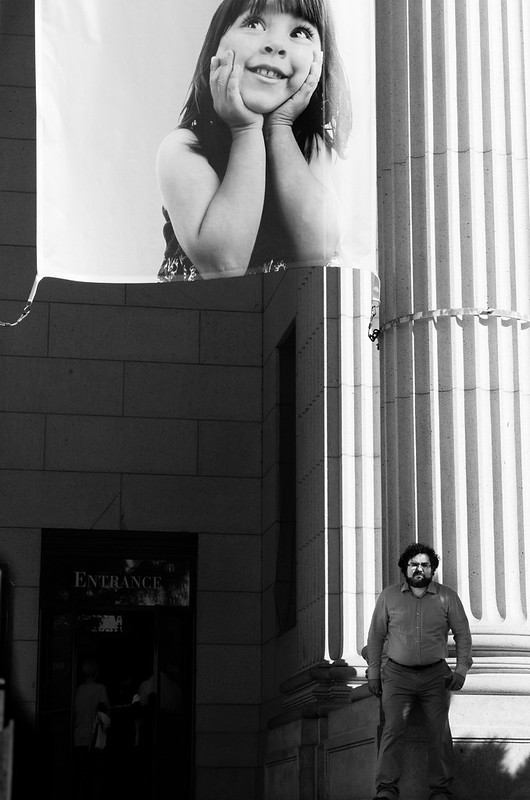
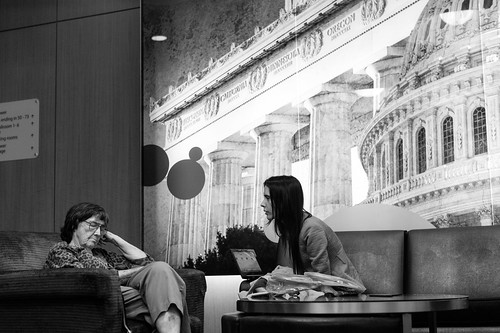
As part of the LHSA (International Leica Society)'s annual meeting in Wahington, DC, Leica camera offered the "Leica On Loan" program to us members. I got to borrow a first version Monochrom camera and 50mm f1.4 Summilux lens. Here are two shots I made with that combo.
 
I am very impressed with the results. Now that the new, improved Monochrom is out, I am really interested in that, too. Purely in an academic sense, that is; I don't have $7,500 laying around...
 
Leica On Loan is a wonderful benefit of being an LHSA member. I thoroughly enjoyed seeing all of my LHSA friends in DC.
 
DMC-365.blogspot.com


Sunday, May 10, 2015

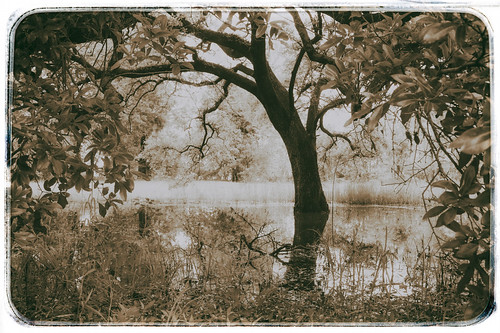
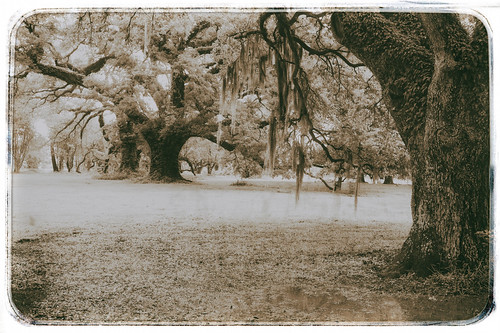
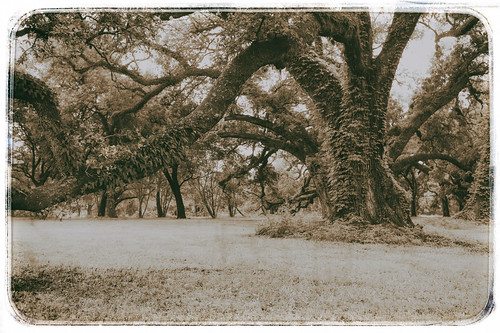
Live Oak Trees - Belle Haven Plantation - Nature Shot with Leica M9

During my trip to New Orleans for the LHSA (International Leica Society)'s Spring Shoot, we got to visit Belle Haven, a plantation that has been closed to the public for many years.
 
Our visit was wonderful, and I got to spend a lot of time out wading in the wet grass photographing the amazing old live oak trees on the property. Shooting with my M9, I manipulated the images in NIK Software to get the look I wanted. Here they are.
 
Live Oaks, by Reed A. George
 
All of these were shot with the M9 and either the 35mm v.3 Summicron or 50mm f1.4 Summilux (titanium).
 
One thing I don't like (or haven't figured out) in the NIK software is that if I want the same frame effect on a series of pictures, the frames come out looking exactly the same, including the dark and light smudges around the edges, which are supposed to represent the individual results of chemical darkroom techniques. Each one should be slightly different.
 
Overall, I'm pretty happy with the result. Not everyone agrees with manipulation, but I got the feel from the images that I was looking for.
 
(Click Here) to learn more about LHSA (International Leica Society). The national meetings like the Spring Shoot are great, but there are also many other reasons to join, including a great publication (Viewfinder), newsletter, and local groups and activities.
 
DMC-365.blogspot.com
 

Friday, May 8, 2015

Walking in the Rain, New Orleans

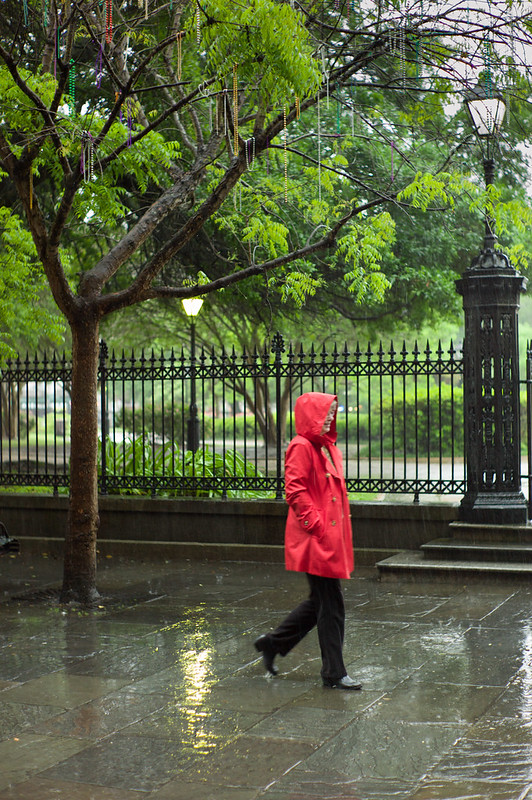
I met this nice lady one morning at Jackson Square. I informed her that she was wearing the red jacket that every photographer dreams of, especially when shooting on a dreary, rainy day. She actually agreed to walk out into the rain so that I could photograph her under the tree covered in Mardi Gras beads, with the wrought iron fence of Jackson Square in the background. Now that says New Orleans.
 
Walking in the Rain, by Reed A. George
Leica M9, 50mm f1.4 Summilux Lens
iso 800, f3.4, 1/90 sec.
 
She actually emailed me (I gave her my card), and I sent her this image. It's nice to close the loop in that way.
 
My only regreat is that I had to act quickly, and didn't use a fast enough shutter speed to clearly show that it was raining pretty hard at that moment. 1/250 second would probably have capture it well. Of course, that would have meant higher iso and wider aperture, which would have compromised depth of field (I wanted a lot) and digital noise. So, this is the compromise I decided to make.
 
DMC-365.blogspot.com


Saturday, April 25, 2015

Another Panning Example With the Leica M9

 
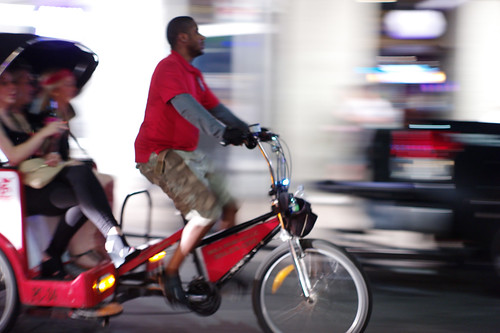
Bike Taxi, New Orleans, by Reed A. George
Leica M9, Summilux 50mm f1.4
iso 800, 1/15 sec.
 
As in yesterday's post, I used the panning technique to show a moving subject at night.
 
In this case, I didn't match the camera motion to the subject's speed as well as I did in the shot posted yesterday. However, this picture says more about being in New Orleans. Motorcycles can be seen virtually anywhere; bike taxis are less common. But, there are plenty of them in New Orleans.
 
So, as a travel photo in which I wantedd to say something about the place, this one works better.
 
DMC-365.blogspot.com

Friday, April 24, 2015

Panning at Night

Panning is a technique in which you set your camera to a relatively slow shutter speed and follow the motion of a moving subject. If you follow at exactly the right speed, your subject comes out sharp. If your shutter speed is slow enough, everything but the subject is blurred due to the motion of the camera. It gives a great sense of motion to the image.
 
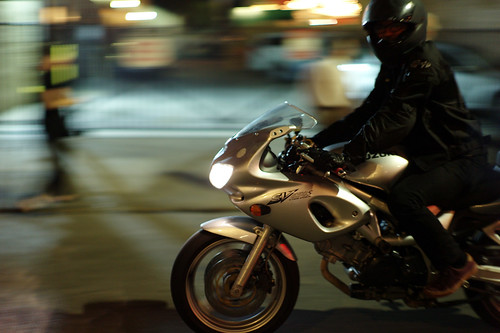
Here's a panning shot I made of a passing motorcycle in New Orleans:
 
Panning a Motorcycle at Night, by Reed A. George
Leica M9, summilux 50mm f1.4 Lens
iso 800, 1/15 sec.
 
In this case, the 1/15 second shutter speed was slow enough to give decent motion blur to the motorcycle's surroundings. Based on the fact that you can read the lettering on the motorcycle, I must have gotten the camera motion just right.
 
DMC-365.blogspot.com

Tuesday, April 21, 2015

Hello From The French Quarter!

I am currently at the LHSA (International Leica Society) Spring Shoot in New Orleans. Today started with a 6:00 am walk through the French Quarter from my friend's house to the Four Points hotel, where I met up with the LHSA group for a private tour of a gorgeous old Southern plantation, more on that later.
 
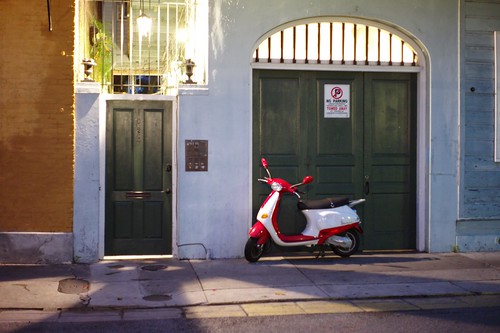
Here's the first thing I decided to shoot this morning.
 
Scooter, by Reed A. George
Leica M9, Summilux 50mm f1.4 Lens
iso 800, f1.4, 1/8 sec.
 
It is 6:00 pm, and I just caught a short nap. Now, I'll grab a quick bite, and head back to the LHSA event for a photo walk. Then, my friend Ben is picking me up to go shoot a recording session of his band, Deltaphonic. I'm definitely making the most of this trip!
 
DMC-365.blogspot.com

Wednesday, September 24, 2014

Impromptu Portrait Session - an Add-On to my Magnum Workshop Experience

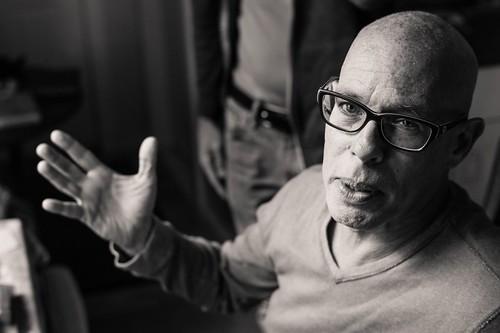
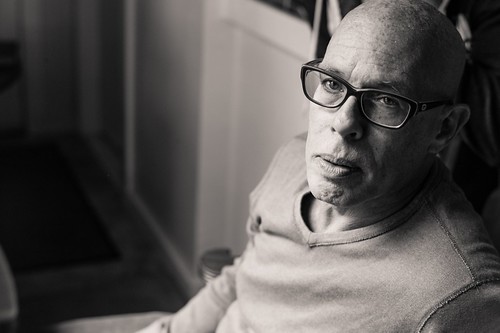
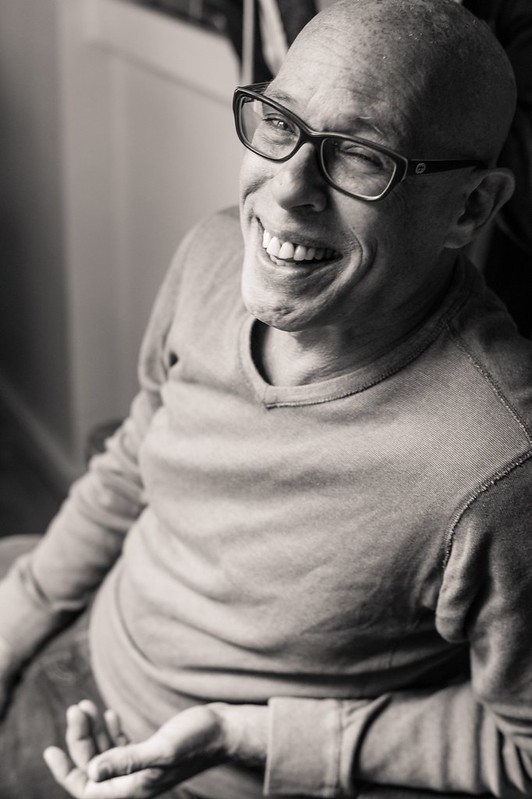
I had the good (great) fortune of meeting this gentleman at the very end of my Magnum workshop in Provincetown, Massachussetts. I met him by being open to opportunities, and by approaching him with an honest request to make a few images.
 
David is a figure of some prominence around here, and was planning to have a photographer visit him next week to shoot portraits for a magazine article. However, he gave me the opportunity to come into his writing studio and shoot a few of my own. Here are the best four shots I got from my ten minutes or so with him.
 
All of these were shot on my Leica M9 with 50mm f1.4 Summilux. I would have liked to use my 35mm lens, as the writing studio was quite cozy and I was challenged to get far enough away to make the picture I wanted. But, I only had the 50mm lens with me, and made the best of it.
 
One of the things I learned (re-learned?) in this workshop is the importance of being out there, being ready for opportunities to make images, and even creating opportunities when necessary. I worked for five days on a project, having a very difficult time getting to even the rather meager number of 5-8 images needed for our presentation to the workshop and to the public at the Fine Arts Work Center here in Provincetown. The experience of meeting David was exactly what I was looking for all week.
 
I ended up using only a single image of David in my presentation (not one of the images shown here), but feel that the experience of meeting him significantly added to my workshop experience.
 
DMC-365.blogspot.com
 

Monday, July 28, 2014

Leica M240 in Mexico City - AlejandroI on Rangefinder Forum Shares His Results

 
L1000220
Image Source: http://ailukewitsch.wordpress.com/
 
 
Rangefinder Forum member AlejandroI has posted a wonderful series of images from Mexico City. He shoots with a Leica M240 rangefinder body, 50mm f1.4 Summilux Pre-Aspheric, and 28mm f2.8 Elmarit.
 
You must (Click Here) and take a look at the rest of AlejandroI's images.
 
(Click Here) to go to his blog.
 
I use the earlier version Leica rangefinder, the M9. The M240 is the first Leica rangefinder to use CMOS sensor technology, which has real advantages in handling high iso noise. I really enjoy the images from my M9, which uses a CCD sensor. Alejandro's images show what the M240 can do in street photography.
 
Alejandro does mention that dust on the sensor seems to be a real issue for the M240. I had not read that, but other commenters agree. I don't know why it would be any worse than other CMOS cameras, especially compared to Micro 4/3 cameras, where the sensor is completely exposed when you remove the lens. Interesting.
 
DMC-365.blogspot.com


Tuesday, July 1, 2014

Mike Selsky - Leica Photographer, Winner of LA X-Vario Challenge

Image Source: http://blog.leica-camera.com/photographers/interviews/mike-selsky-hunting-for-the-strange-and-obscure-in-los-angeles/

I like to read the Leica camera blog, where they regularly feature interviews with other Leica photographers. I like to see what I have in common with others, as well as our differences. The latest is an interview with Mike Selsky, fine art photographer in Los Angeles. Mike recently won the Leica X-Vario City Challenge there, which earned him a free X-Vario.

(Click Here) to read about Mike's approach to photography and his interests.

Mike's regular camera choices are a Leica M6 TTL film rangefinder, and Monochrom, Leica's black and white-only digital rangefinder. His lens of choice is the 50mm Summilux Aspheric (f1.4). This is similar to my favorite rangefinders, the M6 TTL (titanium version, in my case) with matching Summilux 50mm, and the Leica M9 (which allows me to shoot both black and white and color).

Mike seems to be a wanderer, saying:

"I enjoy exploring California with a friend, planning road trips with vague photographic goals in mind."

We also have that in common.

Mike makes images that ask more questions than providing answers. Mystery is important in his style of photography. I find it a challenge to make the questions engaging enough to draw the viewer in. You don't want a response that just says "I don't know what that is." or "Why did you take a picture of that?" Sometimes, it's better to elicit "What am I looking at here?" or "How did you make X look like that?"

One final thing Mike and I have in common: we both value the effort that goes into making a great image. For me, an image is much more valuable to me personally if I know that it was a difficult one to capture. Mike says:

"My favorite images are the ones that took the most effort to make."

Mike seems to be enjoying the new X-Vario that he won in the challenge. Congratulations to Mike. I look forward to seeing more of his work.

(Click Here) to visit Mike's blog, 2WK.

One additional note. Mike mentions that with the Monochrom, he exposes for the highlights, and brings lots of detail out of the shadows in post-processing. A quick look at his blog indicates that he underexposes a lot with that camera. A little too much for my taste. I think he needs to bring up the shadows quite a bit more in many cases. Just a little critical thought on his work.

DMC-365.blogspot.com


Saturday, June 21, 2014

Waiters at Cafe Du Monde, New Orleans

I've already written some about Cafe Du Monde, home of great coffee and chicory in New Orleans. Every time I think of it, I can taste that great coffee, not to mention the devilishly unhealthy yet tasty beignets.
 
(Click Here) to go to the Cafe Du Monde website. If you like coffee, do not miss the chance to go here for breakfast. You can go anytime you like, as they're open 24/7.
Morning Routine, New Orleans, by Reed A. George
Leica M9, Summilux 50mm f1.4 Lens
iso 200, f2.8, 1/90 sec.
 
Over the four days that I was in New Orleans, I made a series of three images of the people who work at the Cafe. The first shows how the place looks at sunrise, before most French Quarter inhabitants open their eyes (or soon after they've gone to bed?). It seems the morning crew is mainly made up of Asian women.
 
Morning Crew, by Reed A. George
Leica M9, Summilux 50mm f1.4 Lens
iso 400, f4.8, 1/60 sec.
 
I like the lines in this composition. I think the out of focus chairs in the foreground help to bring you into the image, to see the ladies at the table as the focal point of the composition. I know some people don't like out of focus foreground elements; I happen to think they can be a powerful tool.
 
The next two were shot later in the day, when the Cafe is full of customers.
 
Interaction, by Reed A. George
Panasonic Lumix DMC-LX7
iso 400, f2.2, 1/250 sec.
 
In the shot above, I like the interaction between the waiter and the blond lady with her back to us. That imaginary line between his eyes and hers is as distinct as if it actually existed, at least in my mind, as I look at this.
 
Now here's my favorite of the series, and one of my favorite shots from the whole trip.
 
Break Time, by Reed A. George
Panasonic Lumix DMC-LX7
iso 400, f4, 1/200 sec.
 
I made this shot pretty much from the hip as I walked by. The tiny, silent Lumix LX7 was completely non-threatening. One fraction of a second, and it was over.
 
As usual, I found the LX7 to be a wonderful travel camera, and also as usual, was interested to find that several of my favorite shots were made with it. I can't say enough about how great that little camera is. That's probably why I wrote an ebook about how I use mine (see link below to get your copy for only $2.99).
 
DMC-365.blogspot.com


Sunday, June 8, 2014

Under Cover of Darkness

Under Cover of Darkness, by Reed A. George
Leica M6 Titanium, Summilux 50mm f1.4 Lens
TMax 3200 Film, f1.4, 1/30 sec. (?)
 
I shot this through the window of a very dark bar on my walk home from a show on Frenchmen Street in New Orleans. I feel that it's quite mysterious, and knew at the time that it would make an interesting image if it came out. I love the blazing bar light at right in the shape of a lion (or something), and the hands with no visible attached body at left. I also love the eyes of the person on the left looking upward.
 
DMC-365.blogspot.com


Tuesday, June 3, 2014

French Quarter Reflection

French Quarter Reflection, by Reed A. George
Leica M6 Titanium, 50mm f1.4 Summilux Lens
 
I shot this image early one morning in New Orleans. It's a little cliche' to shoot reflections all the time, so I don't. In this case, I like the difference in emotion that it gives, as opposed to shooting the balcony itself directly in the early morning warmth. I like how it has an almost night time feel to it. Don't be afraid of black shadows in your pictures, if that's the emotion you want to communicate.
 
DMC-365.blogspot.com
 

Tuesday, May 27, 2014

New Orleans Street Poet

Performing Poet, New Orleans, by Reed A. George
Leica M6 Titan, Summilux 50mm f1.4 Titanium Lens
Ilford Delta 3200 Film
 
I really love creative people. This poet was set up in the French Quarter, and would write about anything you asked. He was asking for donations if you liked what he wrote. I very much respect him for using his creativity and skill to make a living here.
 
I asked him to write about my daughter, Christine. I only told him a few things - her age, her interests, that we are very close. He asked me to give him 15 or 20 minutes. When I returned, here's what he had written:
 
"Christine
 
The paintball warrior
with art in her blood,
jumping into the flood of
emotions, running toward
adulthood.
 
A family well in tune,
a room, a canvas,
Christine sees with an
artist's eye, drinking in
the colors and textures,
becoming the young woman she
was meant to be.
 
A Renaissance woman in training
determined to put her mark
on the world,
one ball of paint at at time"
Perfect. Couldn't be more correct.
 
DMC-365.blogspot.com
 

Tuesday, May 13, 2014

High Work

I don't know why, but I seem to be intrigued with people doing work at high elevations - window washing and things like that.
 
(Click Here) to see some shots I made of window washers high up on a glass building with my Agfa Solinette II (part of last year's Skeletons From The Closet series).
 
Here's a shot of guys doing tree maintenance in New Orleans, Louisiana last week.


Palm Tree Maintenance, by Reed A. George
Leica M9, Leica Summilux 50mm f1.4 Lens
iso 200, f11, 1/180 sec.
Edited in Snapseed
 
 
DMC-365.blogspot.com