Monday, December 31, 2012

Trevor Saylor on Starting Projects

 
Door on Antietam Farm Building, by Reed A. George
Panasonic Lumix DMC-G1, Lumix 20mm f1.7 Lens
iso 100, f3.5, 1/200 sec
 
Trevor Saylor has posted a piece on Japan Camera Hunter about how to think about and start photo projects.
 
(Click Here) to read Trevor's thoughts on Japan Camera Hunter
 
Here are the major points, and my thoughts on them (in italics):
  • One approach is to prospectively define the scope of your project, then go out and shoot it. Trevor believes that this can be limiting, causing you to miss some great off-topic shots. I can understand what Trevor means here. For example, if you're out shooting about the plight of our natural places, it may be hard to feel and capture a beautiful landscape. On the other hand, if you don't get in the mood (positive or negative) about your topic, how can you capture anything great? I guess this goes to my current thinking, which is that I don't have to catch every shot; I have to make the ones I do catch great.
  • Another approach is just to shoot what you like. We've all done this. The challenge is to find a way to make something cohesive out of it.
  • Constraints are good. Trevor shares the example of a summer job project, with a limit of 100 days. I couldn't agree more. A time limit is great, as is an equipment limit, number of shots limit, or just about any other limit. I think this also applies to the first point above. A scope limit or constraint is helpful in focusing the mind.
  • Making a project end is hard. Totally. They don't all have to end. Some can go on for a lifetime. But, some of them must end, or you never get anything finished, done, completed.
  • Trevor talks a little about equipment. He makes the point that it's usually good to stick with one equipment set or approach. Otherwise, the mix of styles can be confusing to viewers. Well, I fail in this regard, epically, as my daughter would say. I know he didn't mean it as a hard and fast rule. Shooting the same project with a range of equipment sometimes brings the topic back to life for me. However, as I said above, limiting your equipment can be a good constraint for a project. So, I understand and respect the concept, but don't always put it into practice.
  • You must cull your images, keeping (or at least showing) only the very best. Agreed. And it's hard to do.
  • Don't fall in love with an image. Trevor's point here is that your favorite image may just simply not fit the scope of the project. Don't force it in. Again, I understand Trevor's point. But, if I didn't fall in love with an image here and there, I wouldn't bother to shoot. For example, the shot above was taken in the course of my Civil War project. Yes, it's from Antietam, site of a major battle in the war, and is a period-style building, but it really has little else to do with the war. But, I love it. I'll drag it out every chance I get. That's what photography is about for me. Much of the rest of life has to be cold and calculating, not my photography.
  • Get critique from others. Yes. I don't always do this. It can make that image culling much easier when another person says "eh, not so much." I find that sometimes my own experience and memories surrounding the capture of an image influence how much I like it. Viewers can't share that with you. The images have to stand on their own, unless you have the chance to supply some words with them.
 
So, Trevor's article is a good thought-provoker. As we near the end of 2012 (oh, and Merry Christmas, by the way), it's worthwhile to think again about the process of pursuing photo projects. My big one this year has been live music, and it's been great. I've made a lot of good friends this year in the course of attending and shooting shows, and hopefully made a few great images. That particular project will go on for a long time. I enjoy every part of it, and see no reason to end it. However, I should challenge myselft to take on and FINISH some smaller projects.
 
DMC-365.blogspot.com


Sunday, December 30, 2012

GF1 Love


Member "red" on mu-43.com posted this awesome collage of images taken with the Panasonic Lumix DMC-GF1.
 
(Click Here) to see the comments and original post on mu-43.com
 
My friend James McKearney just purchased a used GF1 as a back-up to his Olympus OM-D. I still have a GF1, as well. I love the form factor of the GF1, even though it's imperfect in some ways. In order to keep to the clean lines and shape, you must shoot from the LCD. Adding the LVF-1 accessory finder, which I think of as required, significantly changes the outline. But, all in life is compromise.
 
The cool thing is that the LVF-1 works on both the GF1, and the more compact DMC-LX5.
 
I'm looking forward to the announcement of a DMC-GX2, which should have the same basic shape as the GF1, yet also have the latest in sensor technology.
 
In any case, the GF1 is a great little camera, and I need to drag mine out.
 
DMC-365.blogspot.com


Saturday, December 29, 2012

Cosina Voigtlander Factory Video

Video Source: http://m.youtube.com/#/watch?v=Voo3pCvYODI&desktop_uri=%2Fwatch%3Fv%3DVoo3pCvYODI
by Terry Sham Studio
 
Before I became interested in working in biomedical research, I was a manufacturing geek. I also lived and worked in a factory in Japan for a year, as part of a US Department of Commerce fellowship. So, naturally, I was interested in seeing a video about the factory that makes Cosina Voigtlander lenses.
 
This video on YouTube, by Terry Sham Studio, shows much of the lens manufacturing process, as well as some assembly of camera lenses. The audio is in Japanese. My Japanese is rusty (and was not that strong to begin with), but I can get a few of the points. They talk about how actual manufacturing of lenses in Japan (as opposed to China or Malaysia) is pretty rare at this point. They also talk about making OEM lenses for other companies. You can see from this video that Cosina's expertise is in mechanical and optical manufacturing, as opposed to electronics, which helps one to understand why they offer manual focus lenses. You can also see that they produce pretty large numbers of lenses in this factory, with batch processing of components. As always in modern Japanese factories, inspection and testing are an important part of the process.
 
I found this to be an interesting video. I hope you enjoy it as well.
 
DMC-365.blogspot.com
 
 
DMC-365.blogspot.com
 

Friday, December 28, 2012

Another Lens Option for Focusing on Composition With Micro 4/3

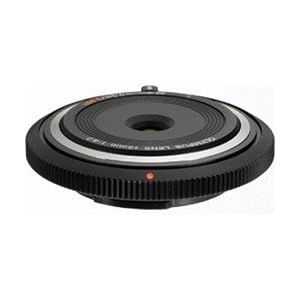
Olympus 15mm f8 "Body Cap" Lens
Image Source: www.amazon.com
 
I've posted some images that I've taken with the Holga 25mm f8 lens for Micro 4/3 recently. Today, I read a nice post by Ray_S on mu-43.com, where he shared several pictures he took in Philadelphia, using the new Olympus 15mm f8 "Body Cap" lens. Ray_S has listed copyright protection on his images, so I didn't repost any here (too bad, I'd say it's limiting his exposure, but that's not my call).
 
So, (Click Here) to see his images.
 
I really like the composition and look of some of these pictures. There's clearly some processing going on here that makes them look like HDR to me. A bit artificial looking, again in my opinion, but the lens clearly works pretty well.
 
The Olympus lens is a 15mm (30mm field of view equivalent on full-frame 35mm sensors), fixed aperture f8 lens. Just like the Holga, it is a slow lens (f8 requires quite a lot of light), and has a little bit of focus adjustment capability, but it's only rough. At 15mm focal length, focus is not much of an issue anyway - the depth of field is enormous. The Olympus lens is wider angle than the Holga, and I'd venture to say the optics are higher quality than the Holga (not a high bar). The other cool thing about the Olympus lens is that it's tiny. In fact, as the name indicates, you can use it as a body cap for your extra Micro 4/3 camera body; it's only 9mm (~1/3 of an inch) thick. It can also focus close-up, to a minimum distance of 30cm (12 inches).
 
The Olympus lens is more "expensive" than the $25 Holga, but at ~$55, it's hardly going to break the bank for anyone who can afford a Micro 4/3 camera body. My conclusion is that the Olympus Body Cap lens adds nicely to the goal of Micro 4/3 gear overall - compact, easy to use, good (not extraordinary) image quality. Maybe I'll try one.
 
DMC-365.blogspot.com


Thursday, December 27, 2012

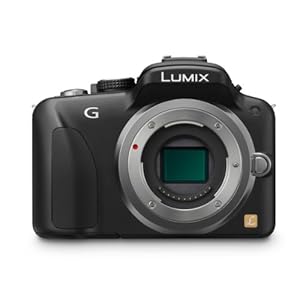
Now Here's An Amazing Deal - Panasonic Lumix DMC-G3 Micro 4/3 Camera for $249.95! Please Buy Yours Through My Link to Amazon!

Image Source: amazon.com
 
Amazing. Right now (who knows for how long?), you can get the great Lumix G3 for $249.95. That's 58% off of list price.
 
I've been shooting a pair of G3s this year, with results that make me quite happy. That includes some low-light shots of live music, etc.
 
Get it now, at Amazon. Please use the link below to get yours. It costs you nothing to use my link, and helps support my blog.
 
DMC-365.blogspot.com


Dear Nikon - Please Bring This To Market!

 
Image Source: http://nikonrumors.com/2012/12/17/nikon-patents-a-digital-back-for-35mm-film-slr-cameras.aspx/
 
I still have a lot of old fim cameras. Included in that bunch are two Nikon FM2s. The FM2 is a gorgeous workhorse of a camera, and just gets the job done.
 
According to nikonrumors, Nikon has patented the invention of a self-contained digital back for film SLRs. This would transform your old film camera into a digital one.
 
(Click Here) to read about it on nikonrumors.com
 
Maybe electronic miniaturization has finally gotten to the point that this could work. I know that a battery the size of a 35mm film cassette (and fitting in where the film used to go) could give a reasonable number of shots on a single charge. I would even consider buying one of these if it didn't come with an LCD display. I'd love to be able to go shoot my FM2, come home and upload my images, even if I couldn't see them in the field. Having a display would be even better.
 
Of course, filing a patent, which itself could be a rumor, is far from bringing a product to market. But, I'm not selling my FM2s just yet. Actually, I'll never sell them.
 
DMC-365.blogspot.com


Wednesday, December 26, 2012

Street Portraits by airfrogusmc on Rangefinder Forum - Leica M Monochrom, 35mm f1.4 Summilux FLE

 
Image Source: http://www.rangefinderforum.com/forums/showthread.php?t=127307
 
Rangefinder Forum member airfrogusmc has posted a very nice series of street portraits, all made with Leica's new "black and white only" M Monochrom rangefinder. The idea of this camera is that by removing the color filters used to make a color image from their sensor, they make an exquisitely sensitive black and white imaging system. For people who aren't obsessive about black and white images, an $8,000 camera that doesn't shoot color seems crazy; maybe it is. But, there you have it.
 
(Click Here) to see all of the great images posted on the Rangefinder Forum post.
 
The photographer shot all of these using a Leica Summilux 35mm f1.4 FLE (which means "floating lens element") lens. This is one of Leica's crowning achievements in lens design. The floating lens element helps to solve a classic problem in lens design, which is the fact that the focus point shifts depending on how far you are from your subject. Most lenses are optimized to focus at a certain distance. The FLE is accurate at all distances, or very nearly so.
 
I always go back and forth on which lens is best for street use. Certainly, if I were going out to do street portraits, I would choose a 50mm over a 35mm focal length. On the other hand, if portraits were not my main objective, but just street scenes, I may choose the 35mm. This post shows the flexibility of the 35mm focal length for any type of street photography.
 
Great equipment, great shots! Thanks, airfrogusmc.
 
DMC-365.blogspot.com