Monday, January 7, 2013

Leica M Digital - No Longer Just a "Dentist's Camera?"

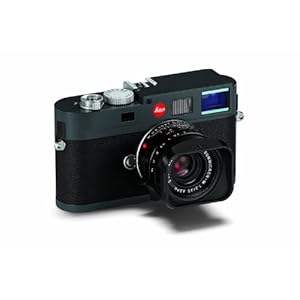
Photographer Sarah Lee from the UK's Guardian has started using a Leica M-E, the camera that's nearly identical to the M9 (missing only the frameline preview lever and USB connection), yet significantly less expensive.
The Leica M-E Digital Rangefinder
Image Source: www.amazon.com
 
(Click Here) to read Sarah's thoughts on the Leica M-E on the Guardian's blog
 
Sarah discusses how the Leica M9 was not well-adopted by professional photojournalists because of price. In fact, she says that the pros refer to it as the "dentist's camera." I suspect a little of this is also involved in her decision to tape over the red dot on her M-E.
 
Like the M9, the useful iso is limited at about 1250, and it shares the slow write speed and small image buffer of the M9. Otherwise, her comments are quite positive, and par for the course as other photographers have reported. For Sarah, it has taken her back to shooting for fun, and to the reasons she became a photographer in the first place. It even has her printing images again.
 
Sarah Lee with her gaffer-taped Leica

Sarah Lee with her gaffer-taped Leica. Photograph: Sarah Lee for the Guardian

Image Source: http://www.guardian.co.uk/artanddesign/photography-blog/2012/dec/28/leica-m-e-rangefinder-photography
 
Another comment by Sarah is interesting to me - it has to do with her Pentax K1000 (my featured "Skeletons from the Closet" camera for January), and how she still appreciates it. That's cool.
 
You should read the whole article if you're interested in Leica digital rangefinders. But, to sum up, she says that once you can afford this type of camera, "it changes everything."
 
I would venture to add that going back and shooting the K1000 for a while may change everything as well. Don't get me wrong - I'm no dentist, but I do own an M9, so am certainly not a detractor of Leica. I just think that shooting with the basics, whether it be an M9 or a manual film SLR, changes the way you look at photography.
 
Buy your "inexpensive" Leica through my link below :).
 
DMC-365.blogspot.com


Sunday, January 6, 2013

Sometimes You Don't Have to Leave Home to Make Interesting Photos

Backlit Spider, by Reed A. George
Panasonic Lumix DMC-G3, Pana-Leica 45mm f2.8 Macro-Elmarit Lens
iso 1600, f2.8, 1/25 sec
 
I'm as bad as the next photographer about being at home, wishing I was out in the field in some exotic location, shooting pictures. However, when you're in a creative mood, it may not be necessary to travel at all.
 
John Gravett of Lakeland Photographic Holidays has written a nice article about photographing common household items on ePhotoZine.
 
(Click Here) to read John's piece on ePhotoZine
 
John describes using cross-polarization to photograph transparent or translucent plastic items. The approach is to put a sheet of polarizing film on a lightbox (like the ones we used to use to view photographic slides). Next, you put the plastic item on top of the polarizing sheet. Using a second polarizer, this time a filter on your lens, you can rotate the one on the camera until it achieves an orientation of 90 degrees from the one on the light box. At that point, all polarized light coming from the lightbox will be cancelled, giving a nice black background, while light that is being bent by going through the plastic will still appear in your pictures. If you use the link above to ePhotoZine, you'll see some interesting examples.
 
Beyond that, John raids his kid's toybox for subjects. I've done the same before. In fact, I made a nice little photo book for my daughter, made up of closeups of her action figure toys. Those little guys look pretty badass up close!
 
So, don't sit and feel sorry for yourself. Get creative, and shoot what's around your home!
 
DMC-365.blogspot.com
 
 
DMC-365.blogspot.com
 

Saturday, January 5, 2013

On Equipment, Resolution, Detail, and Mood

I just took this picture with my iPad camera (which is so bad, I rarely use it).
 
Through A Low Resolution Blind, by Reed A. George
iPad Camera
 
I noticed yesterday, looking through this same blind, that the weave of plastic making up the blind results in a pixelated view of what's outside, sort of like a low resolution digital sensor.
 
To me, this is a picture of a crow. In fact, the crow in the picture is literally represented by just two completely black, square "pixels." Do you see it, on top of the closest streetlight? Two pixels out of about 12,000 by my quick estimation. Completely black - no color or even gray level information.
 
I know that the crow was there. To me, it's a picture of a crow. To anyone else, it is certainly not a picture of a crow.
 
I am using the left side, the descriptive side, of my brain when I say it's a crow in the picture. I label those two pixels "crow." But, the feeling I get when looking at the image (from the right side of my brain) is definitely affected by a crow being there. This feeling would not be transmitted to other viewers with this low resolution image.
 
 
Ospreys in Flight, by Reed A. George
Nikon D700, Nikkor P 500mm f4 Lens
 
On the other hand, if I am photographing birds in flight, the shape and orientation of each feather adds to the experience of seeing it first hand. If I can't capture that, I've lost something in the process.
 
Mystery in a Street Scene, by Reed A. George
Leica CL, M-Rokkor 40mm f2 Lens
 
But, then there's mystery. Sometimes I want to obfuscate some details, specifically to allow me to share the feeling of a scene, rather than all of the details. This image makes me think "Woah. What's going on there?" even though I took the picture.
 
To me, this is why all of the technical terms associated with equipment, and the techniques that we share with each other, matter at all. But, matter they do. I hope this helps to explain why I believe that equipment and technique are important, and illustrates a little of what I mean by "Exploring the Interface Between Equipment and Creativity in Photography."
 
DMC-365.blogspot.com


Friday, January 4, 2013

Mesmerizing Tree Photo by Andy Bell

Blue Tree in Fog, by Andy Bell
 
I find this image, well as I said above, mesmerizing. I have always been partial to tree photographs. I think for me it's got something to do with scale - from a trunk whose diameter can be measured in feet to tiny branch ends, as small as you care to measure, and spread all across the field of view. There's sort of a built-in mystery in a picture like this, even without the fog.
 
This one just wraps it all together so well. No distractions, significant vignetting, but in a way that adds to the composition.
 
Andy made this shot with a Panasonic DMC-GF2 and Lumix 45-200 f4-5.6 lens.
 
(Click Here) to go to Andy's site for more.
 
DMC-365.blogspot.com


Thursday, January 3, 2013

Foggy Morning Over the Potomac

 
View From the Bridge, by Reed A. George
Leica M9, Carl Zeiss Sonnar C 50mm f1.5 Lens
iso 200, f8, 1/30 sec
 
I had a meeting get cancelled at work this morning. So, I took a quick walk around the property. Here's one of the three shots I got, the one that I like.
 
I recently read something about rhythm and tension in composition. I like the rhythm of the trees along the shore, the round little island, and the triangular patch of light reflected on the water. The white tree and leaves leaning over, and reflected in, the river give some tension, in my opinion. The foggy atmosphere made for a low contrast image, which I also like.
 
I'm glad I got a chance to walk out and see this scene.
 
DMC-365.blogspot.com


Wednesday, January 2, 2013

New Regular Column On DMC-365: "Skeletons from the Closet" - Using and Reviewing Cameras From My Collection

Now that I've officially completed my first year running DMC-365, it's time to freshen it up a bit. I'm still working on a list of ideas, but have one or two that I want to get started right away.
 
This one will be called "Skeletons from the Closet," meaning that I'll pull out some old favorite cameras from my collection (which literally is stored in a closet) over the coming year. In fact, my plan is to feature a different camera each month. I will write at least two posts on each camera - one introducing the camera of the month, and a follow-up, showing some of the images that I captured, and reviewing my thoughts on using the camera. Since these are film cameras, and I like to mail my film to The Darkroom (thedarkroom.com) for processing, the follow-up will normally come out mid month, the month after I use the camera. So, you can expect the first results around February 15.
 
To kick it off, for the month of January, I'm going back to where it all started. The Pentax K1000. Not just any K1000, this specific one. My parents bought it for me when I was in sixth grade, which must have been 1977. The K1000 came out in 1976. This camera moved across the country with me multiple times, and finally ended up with an old friend of mine during my 20 year hiatus from serious photography.
 
A couple of years back, my daughter asked about my first camera. The K1000 was my first serious camera, after a Kodak 126 Instamatic. On a whim, I called up my friend to see if he still had it. Not only did he have it, he was still using it. The meter was not working, but otherwise it was fully functional. I had him send it to me, and sent him an old Ricoh to use instead.
 
As soon as I got it back, I sent it off to Eric Hendrickson, Pentax Guru, for a CLA. Now it works as well as new. By the way, Eric is a great guy, and if you need a Pentax SLR serviced, you should contact him at pentax27@aol.com
 
Anyway, here's my first skeleton from the closet for 2013:
 
My normal lens back in the day was a 50mm f1.7 like that one shown above. I had to buy this one to replace the cheapo zoom that had made its way onto the camera over the years. The 50/1.7 is an amazingly good lens.
 
I may also shoot with another lens or two, most likely the 135mm f2.5 that I recently picked up for next to nothing.
 
So, wish me luck on this project! I have some real old beauties in store for the coming months.
 
DMC-365.blogspot.com


Tuesday, January 1, 2013

Well! The First 365 Days Has Passed. Happy New Year - and Where DMC-365 Is Going This Year

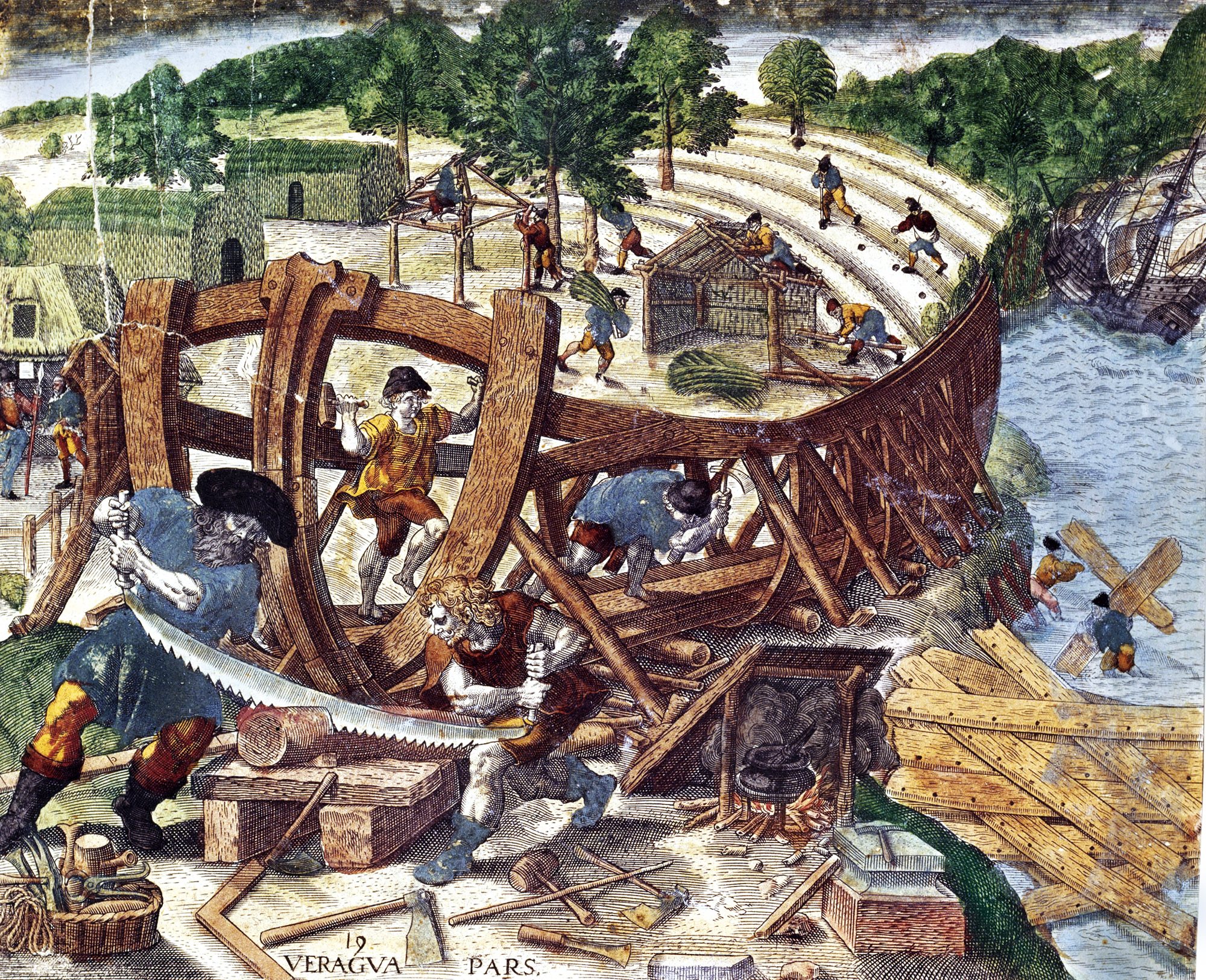
Image Source: http://en.wikipedia.org/wiki/File:Pizarroshipbuilding.jpg
 
I made a commitment to focus on Panasonic Lumix cameras in 2012. That was fun, but I found it limiting to try to focus on one camera maker, or even on Micro 4/3. At this point, I have not dropped any of my other formats (which include Nikon DSLR, Leica rangefinder, Micro 4/3, and various film cameras), have added a Leica M9 to my list of favorites, and still enjoy writing my blog every day. So, I think I'll shift gears a little, still including Micro 4/3 to a large extent, but not excluding anything. In fact, what I want to write about is the interface between equipment and creativity. I don't believe they're independent, and know for a fact that certain equipment choices work best for specific applications. I'd hate to try to shoot eagles in flight with my rangefinder camera.
 
So, I thought I'd explain my direction for 2013 with an analogy.
 
Let's say I'm working on building an enormous boat. There are lots of other people out there building their own boats, so I don't have to worry about making mine fit every usage. I will use the skills and tools that I have to make exactly the boat that I think I want to build.
 
Now here's the deal. It is not clear that this boat of mine will be a success, or that it will set sail during my lifetime. Some of that depends on how good a job I do. The job ahead is so big, possible assignments on any given day are numerous.
 
One way of determining what I'll do to build the boat on a given day is to head to a particular section that needs work. If for example, I wander over to work in the engine room, I will need a particular set of tools. If instead, I decide to finish the woodwork in the captain's quarters, I'll need another. So, I choose the right tools for the job at hand that day.
 
The Engine Room, by Reed A. George
Leica M4-2, 50mm Summicron f2 Dual Range Lens
 
There is also another way to decide. Rather than picking an area or duty, I can pick up the tools I feel like using that day and wander around until I find a section that needs work that I can do with them. Sometimes this may mean that I take my most flexible tools, in order to increase the probability of finding a productive assignment. On other days, I may pick a tool that I really want to work with and search until I find an assignment. Each appraoch is different in efficiency (how much work I complete in a given time) and effectiveness (how important and beautiful that work is).
 
One thing is for sure. I will not be finishing work on this boat for a very long time. There's plenty of work to do. I don't have to take every assignment. I do have to go do good work on any assignment I take on.
 
So. That brings me to what my second year of building DMC-365 will consist of. I will use a broader set of tools than in my first year. I have used the first year to get my feet wet, and I've made at least somewhat of a name for myself on the job. I've also bought some lovely specialist tools during the year, and plan to increase my skill in using them. Taking the approach that I don't have to do it all (no wedding photography here, most likely), and that effectiveness - making sure that what I do take on is done to the very best of my ability - is more important than efficiency, I will share the tools, processes, and results with my readers. I will certainly focus on specific tools, cameras, techniques, and types of photography. My goal will not be to get every possible good image, but to ensure that those I do get are very well-done.


Tools that I know I'll use include Leica, Lumix, other Micro 4/3 gear, film cameras of the past, and even a few toy cameras, which I believe allow me to focus on technique, rather than the quality of the equipment. I want to be like the ping pong champion who wins his matches, even if he's forced to use a heavy iron skillet instead of a paddle (I know someone who can actually do this).
 
During the first year, I began a couple of projects; the one that grew legs is photographing live music performances. I will continue that project in 2013, as well as pursuing my other photographic interests, which include wildlife, field science, travel, and street photography.
 
So, I hope you'll enjoy watching me continue to build my boat. I'm sure that I'll make some mistakes along the way, and that my goals (the boat design) will change as we move forward. Of course, I also hope to meet some of the other people out there building their own boats of their own designs. We can compare notes.
 
Happy New Year!
 
DMC-365.blogspot.com


DMC-365.blogspot.com