Showing posts with label zoom. Show all posts

Tuesday, May 26, 2015

Nikon 200-400mm f4 AF-S G VR Lens for Birds - The Warbler

My friend and I have just invested together in a very expensive lens - the Nikkor 200-400mm f4 AF-S G VR (version 1). Last weekend, I took it out in my kayak along with my super-sturdy Gitzo tripod and gimbal head.
 
While I was waiting for large birds to fly by where I'd set up the tripod, this colorful little guy showed up.

Prothonotary Warbler, by Reed A. George
Nikon D700, Nikkor 200-400mm f4 AF-S G VR Lens
iso 720, f5, 1/1000 sec.
 
I had the D700 set to auto-ISO, so that I could set a fast (1/1000) shutter speed and the f-stop I wanted, letting the camera adjust ISO. As you can see, the warbler has an insect in his beak, a nice additional feature for the image.
 
Here's another shot of the same warbler.
 
Prothonotary Warbler, by Reed A. George
Nikon D700, Nikkor 200-400mm f4 AF-S G VR Lens
iso 1600, f5, 1/1000 sec.
 
We also purchased the Nikon TCIIE 1.4X teleconverter with our lens. I could have used it here. Both of these shots are cropped from larger compositions (hey, he's a pretty small bird!). I did get a chance to try the lens and converter together. I'll post some of those shots in the coming days.
 
This is one amazing lens.
 
DMC-365.blogspot.com
 

Thursday, May 21, 2015

Practicing my Telephoto Technique - Nikon 70-300mm AF-S VR and the Ducklings

I am anxiously awaiting delivery of a used Nikkor 200-400mm f4 zoom lens that a friend and I have decided to co-own. It's an expensive lens, so this made it possible for both of us to have access to it.
 
Most of my lenses, especially telephotos, are older technology. Starting with the Ai-P 500mm f4, which is my longest lens, it's manual focus. It's a true beauty, and makes wonderful photos, but clearly doesn't have the latest AF-S focusing. Then there's my 300mm f4 AF-I, which does have autofocus, but not the blazing fast AF-S.
 
In fact, the only long lens I have with AF-S is the 70-400mm f4.5-5.6 G VR zoom lens. So, I decided to take that lens out for a quick shoot before work yesterday, to practice my focusing technique. Based on the video by Steve Perry that I posted yesterday, I set up my D700 for back button focusing and gave it a try.
 
Not an action shot, but here's the best shot I made in that fifteen or twenty minutes of shooting yesterday.
 
Spring Ducklings, by Reed A. George
Nikon D700, Nikkor 70-300mm f4.5-5.6 G AF-S Lens
iso 800, f8, 1/500 sec
 
I wanted to test out the back button method, in which you leave your camera set to continuous AF, and use the button on the rear of the camera to decide when to freeze the focus, if at all. When photographing action (e.g. birds in flight), you just keep the button pressed, and the camera will focus through the entire shooting sequence. For static objects (e.g. these ducklings), you get the focus point you want, then release the rear button, locking the focus at that point. This worked very well for me here.
 
This 70-300mm lens is very good. It's not as sharp as I expect the 200-400mm to be, which should be obvious when you compare the specs and prices. But, I think it did a pretty good job for me in this case. And, it's very light and fast.
 
I can't wait to see what the 200-400 can do!
 
DMC-365.blogspot.com

Thursday, March 12, 2015

Winter Bamboo

I was one of the few who made it into the office today. We had several inches of snow, and it's still coming down. I shot this from the warmth of inside, looking into the atrium.
Winter Bamboo, by Reed A. George
Panasonic Lumix DMC-LX100
iso 200, f2.8, 1/125 sec.
 
DMC-365.blogspot.com


Wednesday, January 28, 2015

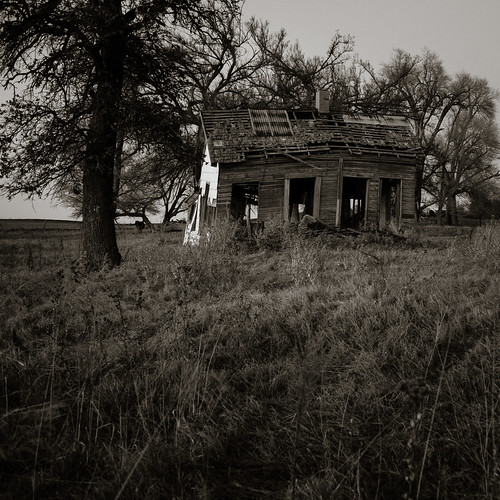
Dusk at the Old Homestead - Outside El Reno, Oklahoma

Nikon Df, Nikkor 35-70mm f2.8 Lens at 35mm
iso 1600, f4, 1/30 sec.
 
I made my trip to Oklahoma with only one lens on the Nikon Df. I must say that I found it slightly limiting, but also liberating. No decisions to make, no fumbling to change lenses.
 
I made this shot right after sundown. I couldn't find the right spot for my tripod, as I was shooting from the roadside, and there was a fence in the way. So, I cranked the Df up to 1600 (no problem at all for this camera), leaned on a fencepost, and shot.
 
Can you imagine the stories this old place could tell?
 
DMC-365.blogspot.com
 

Monday, November 3, 2014

Reductionism in Photography, as Covered by Theme

Reduction, by Reed A. George
Panasonic Lumix DMC-GX7, 14-42mm f3.5-5.6 Series II Kit Lens
iso 200, f9, 1/60 sec.
 
I read an interesting post on the blog Theme, about reductionism in photography. It considers the act of boiling down everything that we see, hear, and think to a simple concept. In photography, that translates to reducing composition to the absolute minimum.
 
(Click Here) to read the post about reductionism on the Theme blog.
 
Personally, I'm not sure where the intersection is between reductionism and simplicity. Many photographic texts and teachers stress simplicity in photographic composition. I don't really work that way. I have been told that some of my images have too much clutter, are not simple to understand. In general, I don't mind this, if the image still transmits a message. I don't want my images to be so simple as to be obvious or shallow.
 
The picture above is a rare example of simplicity (or is it reductionism?) for me. I took this one in Provincetown, Massachussetts when I was there for a workshop. To me, it represents a special quality to the light that I experienced there. It also reminds me of the simple yet completely satisfactory room that I stayed in while I was there. Of course, no other viewer will have the benefit of that experience.
 
It was the light that caught my eye, not the subject. I love how the light coming through the holes in the strainer is golden; I didn't set that up in any way. It's just the way it was.
 
Anyway, I'm sure that I can benefit from considering reductionism in my photographic work. I will do that, without losing some of the complexity that I feel when I make a picture. There's something to learn from each and every person's approach to photography and art.
 
But, I still don't really know if reductionism and simplicity are the same concept.
 
DMC-365.blogspot.com
 

Thursday, August 28, 2014

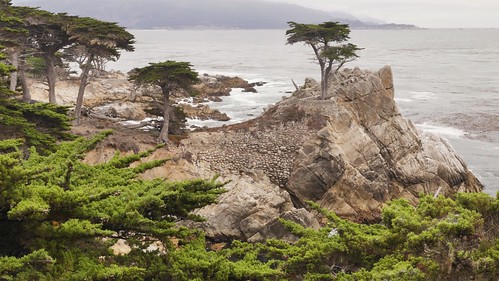
Lone Cypress, Pacific Grove, California

Here's a shot I made this afternoon of the Lone Cypress on the 17 Mile Drive in Pacific Grove (near Monterey) California.
 
Lone Cypress, by Reed A. George
Panasonic Lumix DMC-GX7, Lumix 14-42mm f3.5-5.6 Aspheric Series II Kit Zoom
at 23mm, with 3 stop ND + Polarizing Filter
iso 200, f22, 0.5 sec.
Edited in Snapseed on my iPad
 
This same spot is photographed hundreds or thousands of times every day. I tried to think hard about composition. I used the ND and polarizing filter to allow me to shoot a long exposure (1/2 second), in an attempt to make the water motion smooth and ethereal. It worked at a certain level.
 
What a gorgeous place this is.
 
DMC-365.blogspot.com
 

Friday, July 25, 2014

Green Heron - Panasonic Lumix DMC-GX7 and Lumix 100-300mm f4-5.6 Lens


Green Heron, Butorides virescens, by Reed A. George
Panasonic Lumix DMC-GX7, Lumix 100-300mm f4-5.6 Zoom Lens at 300mm
iso 1600, f6.3, 1/800 sec.
 
In our neighborhood suburban "nature preserve," I've been noticing a pair of green herons on our occasional evening walks. I took out a telephoto lens at sunrise last weekend, but they were nowhere to be found. Having seen them again last night, when I didn't have a long lens along, I decided that was it. I was coming back today with a long lens and tripod.
 
Well, I was rewarded with the presence of this little guy. I wasn't able to catch him feeding, so there's reason to try again (and again, I'm sure).
 
I'm pretty pleased with the result, especially given that I was shooting the GX7 at iso 1600. Not bad. Not bad at all...
 
DMC-365.blogspot.com
 

Sunday, February 16, 2014

Some Questions Are Forever - Like the Best "Walkaround" Lens

Nikko, Japan, by Reed A. George
Panasonic Lumix DMC-G1, Lumix 14-140mm f4-5.8 Lens at 140mm
iso 400, f5.8, 1/400 sec.
 
I read an interesting entry on The Online Darkroom blog, whose motto is "Keeping alive the black arts of analogue photography." The post is about how younger photographers coming up in the digital age but now exploring film photography probably don't have access to the "Frame of Reference" that we older folk picked up from the photography magazines of the past.
 
(Click Here) to read the post.
 
The blog's approach, which I like, is to post scans of some vintage articles dealing with photographic questions and practices from back in the day. The article included in this particular post deals with the question of what is the best single lens solution for an SLR shooter. I think you'll find the author's response oddly similar to what you'd hear today. It all depends.
 
I have fallen for the all-in-one lens lore more than once in my past. Actually, that's a little negative. That experience has exposed me to a couple of good (perhaps not great) lenses, like the 18-200mm Nikkor lens (only useful on DX cameras) and the 14-140mm Lumix lens for Micro 4/3. Both of these are capable lenses, but really only in great light. And neither is the sharpest around, either.
 
So, in general, I carry prime lenses with me, even though that means having to change lenses and carry more weight. On rare occasions when I really want to avoid lens changes or heavy bags (such as shooting my daughter's paintball battles), I still use one of the wide-range zooms.
 
(Click Here) to see some paintball pics made with the Lumix 14-140.
 
But, my real point is how some of the interesting questions around photography will likely go on forever. And never have a definitive answer.
 
DMC-365.blogspot.com


Friday, February 7, 2014

Nikon Df Real User Experience - Wayne Goodman on GetDPI

Image Source: http://www.getdpi.com/forum/nikon/49999-four-days-nikon-df-andalucia-spain.html
 
The new, retro-styled, D4 sensor-equipped Nikon Df is extremely attractive to me. Wayne Goodman has posted his pictures and experience in shooting his new Df in Andalusia, Spain.
 
(Click Here) to read his post on GetDPI forums.
 
Wayne comments on the fact that while others find the array of knobs on the Df a little challenging, the iso knob is the only one he finds inconvenient. One of the great techniques on a camera that has really, really good high iso performance is to set it on Auto-ISO and stop worrying about it. Then, you can go into Manual exposure mode, for example, and simply pick the f-stop and shutter speed you want, letting the camera adjust iso to get the exposure right. Wayne did this, and was very happy with the results. Even on the couple of occasions where the camera had to go to iso 12,800 (!), he was mostly satisfied with the result.
 
He also finds that he really prefers the optical finder to the now-common electronic viewfinders (EVFs) of today. He comments that the "quiet" shutter mode is pretty effective. While the focus system on the Df is not Nikon's highest technology, he found no fault in it.
 
The shots he shares in the post and in his flickr page were made with the Nikon 24-85 zoom. Wayne and I share the same opinion about this lens. Extraordinarily convenient when you don't want to change lenses, the image quality simply doesn't match great Nikkor primes. Oh well, you can't have everything in just one lens.
 
I continue to be interested in the Df from afar. If my D700 were to die (unlikely), that would be my replacement. For now, I'm holding and watching (and drooling just a little).
 
DMC-365.blogspot.com


Tuesday, December 24, 2013

SFTC Results - December's Camera, the Nikon F2

Today I'll share some images with my new Nikon F2 Photomic, which I bought from KEH for $120. It's in amazing condition, very close to like new in my opinion. For these shots, I used one of Nikon's least-loved lenses, the 43-86mm f3.5 zoom.
 
(Click Here) to see the post introducing this month's camera.
 
I mean, people HATE this lens. Many call it Nikon's worst lens, and blame this lens specifically for the long-standing belief (fact) that prime lenses provide far superior image quality to zooms. You can find plenty of haters of this lens online with a simple google search. Mine also came from KEH, for the princely sum of $30, and also looks brand new.
 
Anyway, here are some shots, all made on Kodak 400 color print film.
 
Lounging, by Reed A. George
Nikon F2, Nikkor 43-86mm f3.5 Zoom Lens
 
Now, the shot above isn't tack sharp, but I think it works well at presenting skin tones, and is perhaps appropriate for portraits (which don't need every blemish to show up in sharp relief).
 
Here are a couple at the long end of the zoom, which are also a little soft:
 
Winter Leaves, by Reed A. George
Nikon F2, Nikkor 43-86mm f3.5 Zoom Lens
 
And here are two below that show just how sharp the 43-86mm f3.5 can be at middle(ish) focal lengths. I've applied sharpening in Lightroom to both images, but not to an extreme level (maybe a little more than I usually apply with other lenses, but not significantly more).
 
Dragon, by Reed A. George
Nikon F2, Nikkor 43-86mm f3.5 Zoom Lens
 
Bell Detail, by Reed A. George

Nikon F2, Nikkor 43-86mm f3.5 Zoom Lens

I can't find anything to complain about here. Especially when you consider that this combination of the pro-level camera and "kit zoom" of the past, which commanded very high prices in its day, is mine for $150 total. Amazing capability. When I was a kid, I lusted over a camera like this. Now, they're available for very low investment, if you're willing to deal with film. I am.
 
DMC-365.blogspot.com


Tuesday, October 8, 2013

Skeletons From The Closet - Nikomat FTn and 80-200 f4 AIS Lens

 
Growing Up, by Reed A. George
Nikomat FTn, Nikkor AIS 80-200mm f4 Lens
Kodak TMax 400 Film
 
I shot this with my Nikomat FTn, September's SFTC camera.
 
(Click Here) to read about the camera.
 
Shooting the Nikomat got me once again interested in older Nikons and lenses. As luck would have it, I met someone who had a nice Nikon F2 and 80-200mm f4 AIS lens for sale. These cameras are incredibly inexpensive these days, selling at ~10% of what they cost new. In any case, I thought I would not be interested in the zoom, until I saw it. The fixed f4 aperture is quite nice. This is one heavy, well-built piece of optics.
 
(Click Here) to read a comparison of several versions of Nikkor zooms in this focal range on JSV Foto, including the 80-200 f4 AIS. The old manual lens did pretty well against its younger cousins.
 
As you can see from the shot above, it's plenty sharp for this type of application. Older zooms were notoriously unsharp compared to primes, but the 80-400 AIS was a premium lens in its day. I think it renders perfectly for people shots like this.
 
So now I'll have to spend some time with the F2 body as well. My first brief experiences with it remind me of when I was a kid, and got to shadow a photojournalist for a day. They were shooting Nikon Fs and F2s. Lots of fun.
 
DMC-365.blogspot.com


Saturday, October 5, 2013

Result - September's Skeletons From The Closet Camera, the Nikomat FTn

 
Paths, by Reed A. George
Nikomat FTn, Nikkor 80-200mm f4 AIS Manual Focus Lens
Kodak Tmax 400 Film
 
This month, I've been shooting my gorgeous example of a black Nikomat FTn.
 
(Click Here) to read about the camera.
 
I took the Nikomat, and a recently-acquired 80-200mm f4 AIS lens, out for a walk at my local suburban "nature walk," a boardwalk over some small but nice wetlands in my neighborhood. The water level is very low right now. Home to lots of turtles, including some very large alligator snappers, the pond is the lowest I've ever seen it. In fact, you can see the back and head of a large turtle in the shot above, about in the exact center of the image, where the paths converge.
 
The 80-400 f4 AIS is an interesting lens. I bought it with an F2 body that was my main interest. When I heard about the lens over the phone, I wasn't interested. When I saw and handled it, I decided to give it a try.
 
Interestingly, Nikon has recently come out with a 70-200mm f4 AF-S ED VR lens, for a full $1,000 less than the venerable f2.8 version.
 
(Click Here) to read about the new AF-S 70-200m f4.
 
Of course, my old AIS lens is in a completely different league, but so far I'm pretty impressed. And, it cost me well over 10X less than the AF version would.
 
DMC-365.blogspot.com


Friday, September 20, 2013

Wild Birds Flying by Paul Nelson

Wild Bird Flying, shot by Paul Nelson
Image Source: http://www.lostateminor.com/2013/09/11/wild-birds-flying/?utm_source=feedburner
 
I was browsing the great site "Lost at E Minor," which covers various aspects of art, design, and creativity, when I came across this cool photo project by Paul Nelson. Capturing wild birds in various poses of flight, Mr. Nelson produces intimate views of birds that are impossible to see watching them in real-time.
 
Capturing birds in flight is a challenging and rewarding pursuit. There are multiple ways to go at it. It looks like he uses strobes of some kind to freeze the motion so effectively. This approach would make it very difficult to capture a natural look in the images, but that's not his goal. Instead, he isolates the birds from their surroundings, and I think to great effect.
 
(Click Here) to go to Mr. Nelson's web page and see more of his work.
 
I enjoy capturing bird pictures that show more of their natural environment. Here's one where I got the timing pretty much right:
 
Wings Spread, by Reed A. George
Nikon D700, Sigma 150-500mm f5-6.3 APO Lens (rented) at 500mm
iso 640, f7.1, 1/1600 sec.
 
I rented this Sigma 150-500mm lens at Baker Photo & Video in Yukon, Oklahoma, while I was visiting my parents.
 
(Click Here) to find Baker Photo. If you're ever in that area, be sure to drop in. It's a real camera store with very knowledgable and helpful staff.
 
The Sigma 150-500mm is a very good birding lens. Just barely hand-holdable (at least with my arms), the image stabilization worked very well for me. It would be a challenge in anything but bright daylight, but that's the norm in bird photography. I don't really understand why Sigma makes their zooms so wide. I can't really imagine carrying this lens around to shoot at 150mm. But, that said, I was quite pleased with the images I captured with it. If I were looking for a handheld birding lens, especially for birds in flight, I would seriously consider this lens.
 
DMC-365.blogspot.com


Friday, July 19, 2013

Key West, Florida - Shot With Panasonic Lumix DMC-LX7

 
Pier, by Reed A. George
Panasonic Lumix DMC-LX7
iso 100, f8, 15 seconds
 
As you may have seen from other recent posts, my family and I went to Key West, Florida for a mini-vacation. Three days is pretty short, but we definitely made the most of it.
 
Having focused a lot on my Leica and film camera photography for the first half of this year, it was time to shoot some of my Panasonic cameras. I've already written about the DMC-TS5 underwater camera and how it performed. The workhorse of this trip was the DMC-LX7. I also used my DMC-GX1 a little, and will share those images in a separate post. This one's dedicated to the LX7.
 
The Casa Marina resort in Key West has a long history, and is the brainchild of railroad magnate Henry Flagler. We liked having breakfast there, where everyone gets treated as if they're wealthy. I made this quick shot using the iAuto mode on the LX7.
 
Casa Marina Breakfast, by Reed A. George
Panasonic Lumix DMC-LX7
iso 80, f2.8, 1/800 sec.

Casa Marina also has great hammocks out by the water's edge.
Hammock, by Reed A. George
Panasonic Lumix DMC-LX7
iso 400, f2.3, 1/20 sec.
Here are some other scenes from around Key West. First, the lighthouse. I love the orange blossoms on the trees.
 
Key West Lighthouse, by Reed A. George
Panasonic Lumix DMC-LX7
iso 320, f4, 1/100 sec.

And one of the famous Key West roosters, this one on the sidewalk at the Hemingway house. This is one of those shots that's so sharp it's scary. When I do a 1:1 zoom on the rooster's head, the detail is downright astonishing.
 
Key West Rooster, by Reed A. George
Panasonic Lumix DMC-LX7
iso 100, f4, 1/80 sec.
 
A simple street scene that says "Key West" to me:
 
Store Window, by Reed A. George
Panasonic Lumix DMC-LX7
iso 100, f4, 1/40 sec.
 
And a parting shot of the kid, looking through a waterfall glass fountain.
 
End of a Nice Vacation, by Reed A. George
Panasonic Lumix DMC-LX7
iso 100, f2.1, 1/25 sec.
 
I've said it before, but I'll say it again. The LX7 is capable of so much, it's almost embarrassing. It makes it hard to justify all of the other camera equipment I own.
 
DMC-365.blogspot.com
 
Be sure to read my ebook on how I set up the LX7 for my uses, and why:


Thursday, July 11, 2013

Leica X-Vario Images

Image Source: http://us.leica-camera.com/photography/compact_cameras/x_vario/
 
Let's face it. Most purchases of Leica equipment, mine included, have little to do with logic.
 
The new Leica X-Vario camera is generating a lot of conversation, and proving that art and logic don't always go together. What's all the conversation about?
 
Well, the new X-Vario is a compact camera with a zoom lens, not interchangeable. It has a nice big APS-C sensor, but the lens aperture is pretty small (f3.5-f6.4), meaning it's not designed for low level existing light photography, which is where Leica is legendary. It's also very expensive compared to other options, but that's Leica, folks.
 
Some people are actually using the camera. The results I've seen look pretty exciting. I found an image post on getdpi forums.
 
Once they get over picking on each other and commenting on the camera, some of the images are really quite impressive.
 
(Click Here) to read the comments, and more importantly, see some real images from the X-Vario.
 
In my opinion, the only thing Leica did wrong with the X-Vario was to advertise it as the "mini-M." I'm positive that it's a very capable little camera; it's just designed for something quite different than the M, in my opinion.
 
DMC-365.blogspot.com


Tuesday, June 4, 2013

Memorial Day Triathlon

My wife did a sprint triathlon on Memorial Day Weekend. Held in Warrenton, Virginia, this event was for a veterans benefit organization. The sprint triathlon included a 300m swim, 12.4 mile biking segment, and 5k (3.125 mile) run.
 
(Click Here) to read about the event.
 
I set out to cover the event for my wife in three shots: Swim, Bike, Run. I ended up dropping in a couple of other shots I happen to like.
 
Swim, by Reed A. George
Nikon D700, Nikkor 70-300 4.5-5.6 AF-S VR Zoom at 300mm
iso 400, f5.6, 1/500 sec
 
 
Bike, by Reed A. George
Nikon D700, Nikkor 24-85mm f2.8-4.0 Zoom at 56mm
iso 200, f9.5, 1/250 sec, fill flash (on camera flash)
 
 
I had some much sharper images of her on the bike, but I like the feeling of motion in this one.
 
Run, by Reed A. George
Nikon D700, Nikkor 70-300 4.5-5.6 AF-S VR Zoom at 165mm
iso 200, f8, 1/75 sec
 
I love this shot below of her running to the transition point between swimming and biking.
 
Transition, by Reed A. George
Nikon D700, Nikkor 24-85mm f2.8-4.0 Zoom at 52mm
iso 400, f5.6, 1/500 sec
 
And the obligatory celebration at the finish line:
 
Made It!, by Reed A. George
Nikon D700, Nikkor 24-85mm f2.8-4.0 Zoom at 70mm
iso 200, f13, 1/250 sec
 
I'm proud of her for making it to the finish line. It's a real achievement.
 
I don't usually shoot zoom lenses, but they were perfect for this event. I'm not altogether satisfied with the sharpness of the 24-85mm zoom. I adjusted the fine focus parameter for this lens on my D700, but I'm not sure that I found the best overall set point. I think I need to re-examine that. I know that the lens is capable of sharp images, but I think it probably varies according to the focal length and distance. Something to work on. In any case, the 70-300 VR is a really nice lens, and not changing primes was quite convenient. As I often say, different horses for different courses. Take whatever equipment works for you in a given situation.
 
DMC-365.blogspot.com


Monday, March 11, 2013

Nice DMC-GH3 Image - Am I Missing Micro 4/3?

Image Source: http://www.mu-43.com/f56/pier-sunrise-gh3-40421/
 
Brian G posted the shot above, taken with the Lumix 20mm f1.7 lens and new DMC-GH3 camera.
 
(Click Here) to read Brian's post on mu-43.com
 
As I've recently written, I have not been exercising my Micro 4/3 gear much this year. Not at all, really. I am beginning to think the only reason is that I have so many other fun choices, and because I overdid it a little last year, focusing too much on that format.
 
I am planning a one day add-on to a business trip coming up, to go shoot in the California desert. In thinking about what gear to take, my first thought was Nikon DSLR. I want the ultimate image quality that the full frame D700 affords me, and everything from wide to macro to telephoto lenses. However, that would be a big, heavy pack. Hmm. Maybe. I think I would likely take a wide (20 or 24mm f2.8), 35mm f2, 50mm f1.4, and one zoom - the 70-300mm AF-S VR. I could cover the wider focal lengths with a single 24-85 zoom, but believe the tradeoff in optical quality makes it less sensible to go Nikon in that case. I am becoming even more dedicated to primes as time passes.
 
Alternatively, I could carry my DMC-G3 kit, with the following lenses: 14mm f2.5 (tiny), 20mm f1.7 (tiny), 45mm f2.8 macro (no macro in the Nikon kit above), and Olympus 75mm f1.8. I get faster apertures, great optics, and a very light kit, particularly if I don't carry a second body. The only tradeoff (and it's a big one) is sensor quality.
 
On the subject of Micro 4/3 image quality, the DMC-GH3 is the top of the line for Panasonic. The shot above is one of very few I've actually seen posted. Maybe it's just early in the GH3 life cycle. But, I have also read that many people don't like the increased size of the GH3. I'm certainly in that boat. If I don't get the tiny size of previous Micro 4/3 cameras (like my G3s), I will certainly carry a full frame Nikon.
 
So, you may see some new Micro 4/3 shots from me in the near future. I think I've recovered from last year's Lumix focus, with some good old Nikon, Leica, and even film camera therapy. I'm ready to get the G3s out again. And I'm still waiting on that DMC-GX2 announcement...
 
DMC-365.blogspot.com


Saturday, November 24, 2012

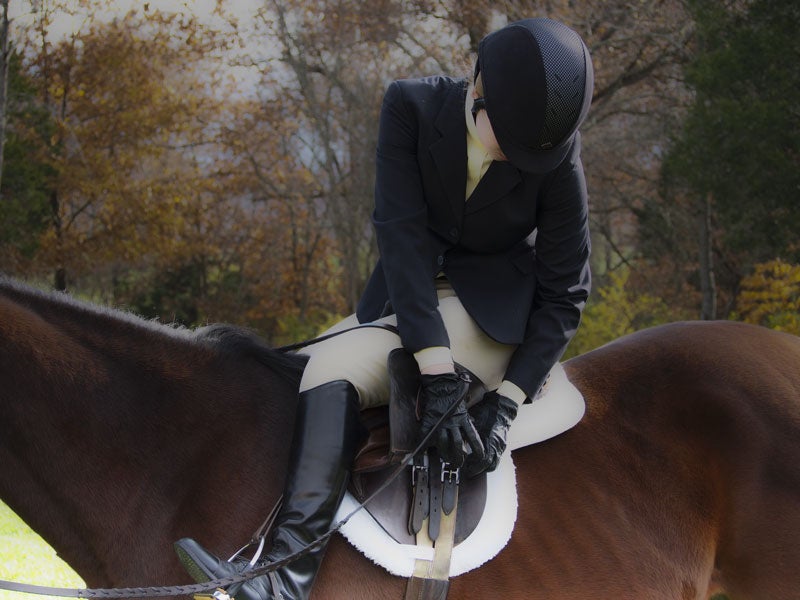
Olympus OM-D and Lumix 45-200mm Zoom - Nice Horseback Pictures by caimi on mu-43.com

 
Olympus OM-D, Panasonic Lumix 45-200mm f4-5.6 Lens
 
Member caimi posted several very nice pictures from a horseback riding event, all shot with the Olympus OM-D and Panasonic 45-200mm f4-5.6 lens.
 
(Click Here) to see the full post on mu-43.com
 
I bought the Lumix 45-200 with my first Micro 4/3 camera, the DMC-G1. It is an awesome lens - very compact, fast, and sharp. I sold it when I moved to the 14-140mm f4-5.8 and the 100-300mm f4-5.6. I believe the 45-200 is sharper than the 14-140. The 100-300 is so good, I can't say either one is better in the range where they overlap.
 
Ducking Parade, by Reed A. George
Panasonic Lumix DMC-G1, Lumix 45-200mm f4-5.6 Lens
iso 400, f6.3, 1/640 sec.


Goldfinch, by Reed A. George
Panasonic Lumix DMC-G1, Lumix 45-200mm f4-5.6 Lens
iso 400, f5.6, 1/500 sec.

Nothing wrong with the 45-200, even though it was one of the first Lumix Micro 4/3 lenses.

DMC-365.blogspot.com


Wednesday, November 14, 2012

This Charges Me Up For My Upcoming Trip to Barcelona!

 
Barcelona (Placa Catalunya) by jky on rangefinder forum
 
Member jky on rangefinderforum posted three excellent images from a recent trip to Barcelona.
 
(Click Here) to see them all.
 
I will be leaving for Barcelona for a family vacation, about a week from when I'm writing this post. I'm excited about street shooting there.
 
We usually end up going back to one of our favorite places on family vacations, and decided to do something really different this time. This will be a challenge trip for us, as we don't speak the language. But, we're very excited to meet nice people, eat great food, enjoy Gaudi' architecture, and anything else that comes our way.
 
I've read that theft can be a real problem, especially in the tourist areas. I'm thinking that I won't take my most expensive camera (Leica M9), even though it pains me to leave it at home. I'm also pretty sure that Barcelona is far safer than New York City, where I have used my Leica gear in the past.
 
That said, my Micro 4/3 kit of two Lumix DMC-G3 bodies will give me more flexibility anyway, and I won't commit suicide if anything goes missing. I won't like it, but I'll recover. Right now, I'm thinking that I'll take the two G3 bodies, and maybe only a couple of lenses - the Lumix 20mm f1.7 and Lumix 14-140mm f3.5-5.8 zoom. The zoom will give me awesome range in a single lens, including enough telephoto reach for external architecture shots. The 20mm is tiny and fast. Of course, I'm sure the lens list will grow before I get on the plane. Oh yeah, I'm sure I'll throw in the diminutive Lumix DMC-LX5 as well. It weighs nothing, and takes up very little space. I will also take a 35mm optical finder to use the LX5 for street shooting.
 
What do you think? Is this too minimal?
 
I'm getting psyched for this trip...
 
DMC-365.blogspot.com


Saturday, September 22, 2012

Shipwreck Coast, Australia - by Livnius on mu-43.com with Olympus OM-D and Lumix 7-14mm f4 Lens

 
Shipwreck Coast, Australia, by Livnius on mu-43.com
Image Source: http://www.mu-43.com/f54/shipwreck-coast-australia-32832/
 
(Click Here) to see more dramatic images of this awesome place.
 
Livnius on mu-43.com posted the image above, and a few others, taken on the Australian coast near Melbourne. Livnius reports that he was hoping for blue skies, but a storm rolled in. I would say "thank you" to the photo gods for this one. What drama the storm added!
 
Apparently he had a different type of shot in mind, from lower down on the beach. I hope we get to see those, too!
 
DMC-365.blogspot.com