Showing posts with label adapter. Show all posts

Monday, November 10, 2014

Japanese Maple in Autumn - Nikon Df

I'm enjoying my new Nikon Df a lot. Here's a shot of the Japanese maple outside my office.
 
Japanese Maple in Autumn, by Reed A. George
Nikon Df, Nikkor 50mm f1.4D AF Lens
iso 100, f1.4, 1/125 sec.
 
The 50mm f1.4 AF-D lens is now well out of date in the Nikkor lineup. It has always drawn criticism for lack of sharpness wide open, which I suppose is true. That doesn't keep me from using and enjoying it.
 
That said, the new Sigma 50mm f1.4 ART lens is the hot thing out there these days. My friends who have them approve. Much larger than the AF-D lens, these new Sigmas really seem to deliver amazing image quality. The updated Nikkor product, the AF-S 50mm f1.4G is another option, but both the Nikkor and Sigma lack aperture rings, something I'm unhappy about. This means that I can't use them on my old Nikon film bodies, or even adapted to Micro 4/3 for that matter.
 
As it stands, I can carry my older AF-D lens in the bag with any of my Nikon SLR bodies, from the 1959 model F to the 2014 model Df, and it will work just fine with any of them.
 
DMC-365.blogspot.com
 

Saturday, July 26, 2014

Great Egret - Super Telephoto on Micro 4/3

Yesterday, I posted an image of a green heron, shot with my GX7 and modern Lumix 100-300mm f4-5.6 OIS lens.
 
Just for fun, I decided to try shooting at the same place with my very old (Nikon Pre-AI mount) Sigma 400mm f5.6 lens, adapted to fit the GX7. Here's a great egret shot with that combination.
 
 
Great Egret, Ardea alba, by Reed A. George
Panasonic Lumix DMC-GX7, Sigma 400mm f5.6 Manual Focus Lens (Pre-AI Nikon mount)
iso 1600, f11, 1/1000 sec.
 
Not bad for an old lens, huh? By the way, this is the lens that I won at the Film Photography Project's Walking Workshop in May. (Click Here) to read more about that.
 
I know that most of you can't click and zoom on this image, due to the way I post from flickr. Here's a ~100% crop from the image above:
 
You can see that he's just caught a minnow. While the results from this 30-40 year old lens don't match the modern Lumix 100-300mm zoom, they're pretty good, in my opinion. This is an extremely low-cost 800mm equivalent field of view combination for someone who has the patience to shoot nature with a manual focus lens. The GX7's manual focus magnifier really helps out, but is obviously only useful for static subjects. The Nikon-to-Micro 4/3 adapter is also very inexpensive, and available on Amazon (please buy yours from the link below and support my blog!).
 
DMC-365.blogspot.com


Friday, June 6, 2014

Konica 50mm f1.7 Hexanon as a Portrait Lens

My uncle Bob gave me a very nice gift recently, his Konica TC-1 camera, Tokina zoom, and 50mm Hexanon AR 50mm f1.7 lens. I have not cleaned the camera up yet, but did immediately pick up a "Fotasy" adapter for Konica Hexanon lenses on Micro 4/3 cameras. This morning, I mounted up the 50 Hexanon on my Panasonic Lumix DMC-GX7 Micro 4/3 body. Here's how it looks:
Konica 50mm Hexanon f1.7 on GX7
 
The Fotasy adapter made movement of the aperture ring on the Hexanon a little tight, but it's loosening up with exercise. I bought mine on Amazon, and the price is quite reasonable (see link to purchase yours on Amazon below).
 
With the Micro 4/3 sensor, the Hexanon provides an equivalent field of view to a 100mm lens on full frame 35mm format. A nice, fast portrait lens. Here's a shot of my daughter by window light, at f2.8.
 
My Favorite Model, by Reed A. George
Panasonic Lumix DMC-GX7, Konica Hexanon 50mm f1.7 Lens
iso 400, f2.8, 1/50 sec.
 
I have always loved Konica lenses. This one is no exception. I'm quite pleased with the color and sharpness of this image.
 
Thanks, Uncle Bob!
 
DMC-365.blogspot.com


Saturday, April 5, 2014

Nikkor 5cm f1.4 Rangefinder Lens on Leica M9

I mentioned that I'd purchased a very nice old Nikon S rangefinder camera, Nikkor 5cm f1.4 lens, and Amedeo adapter to mount the lens on my Leica M9. Here are some quick test shots to show what that Nikkor lens can do on the M9 body. All of these are jpegs right out of the camera, no editing.
 
First, I shot these three shots at the same exposure, but at three different f-stop settings (f1.4, f2, f2.8) to show sharpness and depth field.
 
Nikkor 5cm f1.4 at f1.4, 2, and 2.8
 
At this size, the most obvious effect of closing down the aperture is eliminating vignetting (darkening around the edges of the image). This lens vignettes quite significantly at f1.4. It clears up pretty well by f2.8.
 
How about sharpness? Here are crops of the same three shots, showing focus at the three f-stop settings:
 
 
Crops at f1.4, 2, 2.8
 
I think it's pretty sharp, even wide open. By f2.8, it's very sharp.
 
But, of course, none of that matters too much. If I was going to ultimate sharpness, a modern lens would be the best bet, not a lens from the 1950s. What really matters is whether or not I like the look the lens produces. Well, I'm not sure yet. But, here's an early hint:
 
 
Just a Quick Shot
 
This shot was also made wide open at f1.4. I'm definitely looking forward to shooting some more with this lens. I also need to explore how it renders color. I'm also interested in seeing how it does on the Nikon film body it was designed for.
 
DMC-365.blogspot.com


Friday, April 4, 2014

Nikon Rangefinder - I Finally Bought In

I have sworn off owning any Nikon rangefinder cameras, since it means yet another lens mount system. However, I've always wanted to try one. Not too long ago, I talked myself out of buying a Nikon S3 2000 set, which was in mint condition. A reintroduction of the classic S3 by Nikon in the year 2000, this would have been one gorgeous camera. But, I didn't want a collector's item; I wanted a Nikon rangefinder that I could take out and shoot.
 
Well, I recently found a very nice Nikon S with the legendary Nikkor 5cm f1.4 rangefinder lens for a reasonable price.
 
Nikon S
Image Source: http://en.wikipedia.org/wiki/Nikon_I,_M_and_S
 
 
Mine happens to be one of the rare "8 digit serial number" cameras. Interesting story. Nikon started the Nikon rangefinders with a serial number of the form 609XXXX, which allowed them to go up to camera number 6099999 before they had to change. Well, they liked the 609 prefix, so for about 1230 cameras (mine's number 60911216), they just added an eighth digit. So, mine's one of about 1230 cameras of this particular series.
 
(Click here) to read about the S and the 8 digit cameras.
 
I'm part of the way through my first roll of film in the S. At first, I felt that the focusing patch was a little squinty as compared to my Leicas, especially my Leica Ms. Now that I've used it a little, I don't notice much of a difference. I think I was simply trained on the Leica and the Nikon is different, not worse, especially compared to Barnack (screwmount) Leicas.
 
Of course, I found it necessary to buy an adapter so that I can use the Nikkor 5cm f1.4 (Sonnar design) on my Leica M bodies. I bought one directly from Amedeo in Venezuela.
 
(Click Here) to find Amedeo on the web.
 
Amedeo responded to my email quickly. He told me that the economy in his country is very bad right now, and finding shops to chrome plate his adapters has been an issue. He sold me one with minor cosmetic issues for a discounted price. It arrived in just a few days, free Fedex shipping. Amedeo is working on setting up his own chroming process, so maybe this problem will go away soon.
 
I've now tested the Amedeo adapter on my Leica M9, and found the focus to be spot-on with the Nikkor 5cm lens, even wide open at f1.4. Note that these adapters are for Nikkor rangefinder lenses of 5cm (50mm) or longer focal length. I'll share some test shots from the Nikkor on the M9 in my next post.
 
So, I broke my own rule and decided to give the Nikon rangefinder a try. Even if I decide I don't like the camera, I'm pretty impressed with what the lens produces on my Leica M9.
 
DMC-365.blogspot.com


Sunday, March 23, 2014

Metabones Speed Booster Adapter - Will This Attract Me to the Lumix DMC-GX7 More?

I have read about the amazing new adapters from a company called Metabones a few times, but didn't pay much attention. What's amazing about them? Not that they simply adapt various SLR lenses (including Nikkors) to Micro 4/3; I've had an adapter for that for a while now. Two things make this adapter different:
 
  1. The adapter reduces the crop factor from 2x to about 1.4x on Micro 4/3, meaning that my Nikkor 20mm f2.8 SLR lens will have an equivalent crop to a 28mm lens on the GX7. That's useful.
  2. The adapter makes the lens the equivalent of 1 full stop faster! So, that same 20mm f2.8 lens becomes an equivalent 28mm f2 lens on Micro 4/3.
Now, I figured this had to be some kind of gimmick. The only explanation I've seen is that it's sort of the opposite of a tele-converter (which reduces f-stop rather than increasing it). But now, I've seen it enough to look closer. For example, here's a shot from SOUNDIMAGEPLUS, using a Nikon 50mm f1.4 on the GX7 with the Metabones adapter.
Image Source: http://soundimageplus.blogspot.com/2014/03/a-superfast-alternative-panasonic-gx7.html?utm_source=feedburner&utm_medium=feed&utm_campaign=Feed%3A+blogspot%2FpcppU+%28Soundimageplus%29
 
(Click Here) to read the post on SOUNDIMAGEPLUS and see several sample images.
 
I've read several reviews of this component, and am pretty convinced it's for real, and high quality. I may just have to give it a try.
 
(Click Here) to read more about the adapter on dpreview.com.
 
These things aren't cheap at about $430. Also, there are a few things I don't understand at this point. For some reason, the Nikon to Micro 4/3 Speed Booster adapter is listed as being for "G" series lenses. I don't know if they are fully compatible with non-G lenses (those Nikkor lenses that have an aperture ring). I also don't know if they allow for open aperture metering. I guess I'd like to test one before purchasing.
 
In any case, it's on my mind now, and I'd like to try it.
 
If anyone has answers to how these work with non-G lenses (and even non-AI manual focus lenses), please comment and let me know!
 
DMC-365.blogspot.com


Saturday, November 16, 2013

November's Whole Lotta Leica (WLL) Lens - Canon LTM 50mm f1.4

Canon 50mm f1.4 Lens in Leica Thread Mount (LTM)
ca. ~1972
 
This month's lens is the Canon 50mm f1.4. Some refer to this lens as the "Japanese Summilux." I won't deliberate on whether that's deserved or not. I will say this is one sharp lens. I guess I wouldn't be surprised if it competes well with a Leica Summilux 50mm f1.4 from the same era. I don't have a 50mm Summilux, so I can't say for certain.
 
I have to use a LTM-M mount adapter to use this on my M9; that's no problem at all. They work beautifully, and I've never had a problem with focus shift or anything else when using the adapters.
 
This lens has an odd filter size of 48mm. When I used it on my Leica M8, which required a UV/IR filter, I bought a step-up ring, which allowed me to use a 49mm (much more common size) filter. I still have the adapter on there today, so that I can use a 49mm lens cap. The one I have on there now is a Pentax cap. So, I have a Canon lens mounted to my Leica M9 body, with a Pentax cap. Quite the mix.
 
My copy is a version II, and was made sometime around 1972. I bought it for around $300, and they normally go for $300-$400 on the used market.
 
The original Canon hoods for these lenses are difficult to find. I have seen them listed for $100 or more, which is simply ridiculous. Last year when I went to Japan, I went to a weekend flea market. There was not a lot of camera gear there, and what I did find was expensive. However, I did find a little leather case marked "Canon" at one of the stalls. Opening it up, I could not believe my eyes - there was the exact hood that I needed. One thousand yen (~$13 at the time) later, and it was mine. Very lucky.
 
Anyway, I'll use this lens as my standard lens in November and share the results with you. Results coming soon!
 
DMC-365.blogspot.com


Monday, October 21, 2013

Skeletons From The Closet - Nikomat at Glen Echo Park

I took my Nikomat to Glen Echo Park, a historic amusement park in Maryland, near DC.
 
I must start taking notes on my film photography. I'm not sure which lens I used in each case below, but will make my best guess.
 
The carousel at Glen Echo is so beautiful. I got this shot before it opened for business. Finishing up an old roll of Walgreens 200 speed film that was in the camera from a long time ago, I'm impressed with the subtle color that came through here.
Carousel, by Reed A. George
Nikomat FTn, Nikkor 28mm f3.5 Non-AI Lens
Walgreens iso 200 Color Print Film
 
There are some old structures around the park, leftover from the years before the entire creek was paved over; the lot subsequently crumbled and fell into the creek. The creek has now been returned as close to its natural state as was feasible.
 
This old bridge made for an interesting composition.
 
Trusses, by Reed A. George
Nikomat FTn, Nikkor45mm f2.8 GN Lens
Kodak TMax 400 Film


It's interesting to me how the older Nikon cameras and lenses, pre-AI, as so inexpensive. Essentially a dead line of equipment after newer bodies stopped having the mechanical f-stop coupling (with the F3 body, I believe), there are some real gems out there. I could use my non-AI kit as a complete solution for film photography if I so chose. Including AIS lenses, which retained the f-stop coupler, I have a full range of focal lengths, from 28mm to 200mm. Image quality is great.

The other interesting thing is that with a Nikon F - Micro 4/3 adapter, all of these old lenses come back to life, albeit at 2X the equivalent field of view. But, that's an opportunity. I have shot my AIS 28mm f2.8 on the Lumix G3, and at 56mm equivalent field of view, it does very nicely.

DMC-365.blogspot.com


Wednesday, March 20, 2013

Great Blue Heron Nesting - Nikon 500mm f4, Nikon D300, and Lumix DMC-G3

I got the rare opportunity to get reasonably close to a rookery of nesting great blue herons yesterday. A local real estate developer opened their undeveloped property to nature enthusiasts, at an event they called HeronFest. It was a very nice event for birdwatchers and nature photographers, getting us close enough to shoot (with long lenses) without disturbing the nesting birds.
 
I took out my Nikon Ais-P 500mm f4 manual focus lens, Nikkor 1.4x tele-converter, and two bodies - the Nikon D300 and Panasonic Lumix DMC-G3. With the D300, I think my equivalent focal length was about 1000mm, with f5.6 (due to the one stop loss of the tele-converter). With the G3, I got an amazing equivalent field of view of 1400mm, with the same f5.6!
 
I took the G3 along almost as an afterthought. I wasn't sure how it would perform with a tele-extender, a lens adapter, and manual focus. It turns out that the manual focus aid in the G3 (where it magnifies a portion of the image to allow more accurate focusing) works wonderfully with this big lens setup. I'm pretty pleased with the results.
 
Nesting Great Blue Herons, by Reed A. George
Panasonic Lumix DMC-G3, Nikkor Ais-P 500mm f4 + 1.4X tele-extender
iso 400, f5.6, 1/640 sec.
 
It was an overcast day, which is a mixed blessing and curse. It allowed for nice even lighting, but very little dramatic contrast. The colors of the birds rendered nicely, but the sky (the only background available) was milky white and ugly. I guess it worked out okay.
 
Herons Building Their Nest, by Reed A. George
Panasonic Lumix DMC-G3, Nikkor Ais-P 500mm f4 + 1.4X tele-extender
iso 400, f5.6, 1/640 sec.
I love the composition of the shot above. Unfortunately, it's a pretty major crop from the original, and would not print well above about 8"x12" or so. Most of the others are closer to full frame, and would print well.
 
Here are a couple of shots from the Nikon D300.
 
Herons Building Nests, by Reed A. George
Nikon D300, Nikkor Ais-P 500mm f4 + 1.4X tele-extender
iso 800, f5.6, 1/750 sec.

 
The shot above reminds me of an Audubon painting. He always caught interesting bird poses. I heard some time back that Audubon was a "shotgun naturalist," sometimes killing the birds he wanted to paint, and posing them as he saw fit. Rest assured, none of the birds in my pictures were injured.
 
The D300 handles high iso better than the G3. But, the gap is narrowing. In fact, I wonder if the new DMC-GH3 doesn't perform better than the D300, which is a few versions old for Nikon. The D300 is a very nice camera, which is really meant as a backup to my D700 (one of my very favorite cameras). However, the D300 has a smaller sensor, which has the benefit of extending the telephoto effect based on the crop factor. I knew I would need all the reach I could get, so chose the D300 over the D700 for this shoot.
 
Nesting Pair, by Reed A. George
Nikon D300, Nikkor Ais-P 500mm f4 + 1.4X tele-extender
iso 800, f8, 1/1000 sec.

I like how the flying bird's head is contrasted against the shadow under his wing in the shot above. It was the best I could do with a pure white sky. I used f8 to attempt to get a little more depth of field, which is hard to accomplish at 1000mm!
 
Delivering Nesting Material, by Reed A. George
Nikon D300, Nikkor Ais-P 500mm f4 + 1.4X tele-extender
iso 800, f8, 1/1000 sec.
 
We got a few glimpses of sunlight toward the end of the event. This shot was taking during one of those brief shining moments. I like the tension of the two birds placed diagonally in the shot, looking at each other.
 
These shots, and a couple of additonal ones, can be seen on my other website, creativeobjective.com.
 
(Click Here) to go to the HeronFest photo set on creativeobjective.com
 
DMC-365.blogspot.com



Tuesday, February 26, 2013

What About That Ricoh APS-C With Leica M Mount?

The Leica GXR, announced in 2011, offers a module to mount Leica M lenses on a 12 megapixel APS-C sensor. I have not seen many results from this combination, or read many user reviews.
 
(Click Here) to read dpreview's preview of the camera. It sure looks nice.
 
Why am I thinking about this? Well, I saw this picture:
 
Image Source: http://www.rangefinderforum.com/forums/showthread.php?t=129442
 
(Click Here) to read the original post on rangefinderforum.
 
This camera requires an add-on electronic viewfinder, if you don't want to shoot from the LCD.
 
I've always been a fan of Ricoh cameras. I haven't tried any of their digital offerings. Since I have the Leica M9, this isn't too attractive to me. If I wasn't lucky enough to have the M9, this may be a serious contender, in the running with one of the new Fuji X series, to which you can adapt Leica lenses. However, the Fuji has the added feature of an optical finder, a major plus in my opinion.
 
In any case, it's nice to see such a high quality image produced with the Ricoh. I really like this shot.
 
DMC-365.blogspot.com
 

Wednesday, January 16, 2013

I Find Ultra Wide Angle Lenses Difficult to Shoot With


Image Source: http://www.productreview.com.au/p/voigtlander-ultra-wide-heliar-12mm-f-5-6.html
 
I have one of these lenses - an ultra wide 12mm f5.6 in Leica Thread Mount (LTM). This lens has an unbelievably wide field of view, especially for a non-fisheye.
 
I have written many times about how wide angle shooting in general challenges me. This lens takes it to another level. The challenge is in composition, mainly. Focus is easy. In fact, the depth of field is so large on this lens (due to the short focal length and small aperture) that you don't need to focus. Everything from 2 feet to infinity is in focus, even at the widest aperture of f5.6.
 
I recently used the 12mm on my Leica M9 while shooting a recording session for my friends in the band "Jake and the Burtones."
 
(Click Here) to see all of the pics from the recording session.
 
Why did I choose this lens? Well, I will admit that I rarely shoot this lens at all. However, I had a hunch that there would be some tight quarters in the studio. The wide angle perspective allowed me to shoot much of what was in the room at very close quarters. In the shot below, I'm literally about two feet from the tables in the foreground, and maybe six feet from the band members. Looks a little further away, doesn't it?
 
Ultra wide angle lenses are great for shooting interiors. However, the relatively slow f5.6 aperture means high iso and relatively slow shutter speeds. In the case below, I shot at f5.6 handheld. It was a stretch.
Recording Session, by Reed A. George
Leica M9, Cosina Voigtlander 12mm f5.6 LTM Lens
 
As I said, composition is a real challenge with this lens. In the shot above, the white paper on the right was not my subject. But, it was close enough to become a major portion of the image. The rafters above are pretty distorted by the optics, but I think they look interesting. So, they're an important part of the composition for me. I love seeing Sam, the mandolin player, up in the extreme top left corner. Isn't that cool? And how about Dolly Parton on the back wall? Some features remain big even with ultra wide angle...
 
As you can see, in order to get any light on the band members, I had to completely overexpose the light coming through the windows behind them. Again, I think this adds to the composition, rather than taking away. I love how the shadows are cast across the floor - thank you winter sunlight.
 
I have considered selling this lens many times, as I don't use it much at all. I think the maximum aperture of f5.6 limits how and where it can be used. And, it's just plain difficult to use well. The hood that came with it vignettes terribly if you don't have it perfectly aligned. If I wasn't lazy, it already would have been sold.
 
This past weekend was the most I've ever used this lens. Now that I'm shooting more musical performances, and especially backstage, I think I'll keep it and use it more. It's not something you want to use all the time, but it does add a unique perspective to shots at close quarters. And it works pretty well on the M9.
 
Because the camera rangefinder is not meant for such wide imaging, you have to use an accessory finder to frame with this lens. Again, however, it's almost true that anything you see in front of the camera will be in the image.
 
There's also a newer version of this lens, with the Leica M mount (see the Amazon link below). Mine requires an LTM to M adapter, but that works just fine.
 
DMC-365.blogspot.com


Wednesday, July 25, 2012

Member Blue Esprit on mu-43.com Shares Some Spooky Images with Lumix DMC-GF2, Lumix 14mm f2.5, and Wide Adapter DMW-GWC1

 
Blue Esprit's Picture from mu-43.com
Skull as Focal Point, by Blue Esprit on mu-43.com
Image Source: http://www.mu-43.com/gallery/data/500/Spooky_5.jpg
 
Member Blue Esprit on mu-43.com shared a series of cool monochrome images taken with a Panasonic Lumix DMC-GF2, Lumix 14mm f2.5, and DMW-GWC1 wide angle attachment.
 
(Click Here) to see the whole post by Blue Esprit on mu-43.com
 
These are the first user results I've seen with the DMW-GWC1 wide angle attachment. The image above is my favorite from the series. I love how the skull is the focal point, even though it takes up only a tiny portion of the field of view, due to the 11mm-equivalent wide angle view achieved with the DMW-GWC1 attachment.
 
Earlier, I had actually ordered the DMW-GFC1 fisheye attachment, but cancelled, thinking it was too much money for a lens converter. I must say that the wide converter seems to be a nice addition to the 14mm lens, based on Blue Esprit's results. One of the advantages of converters is that they take up less space in your camera bag.
 
For my purposes, though, I think I'd rather have a wide angle lens. Right now, my widest is the 14mm f2.5 Lumix. I do have a 12mm f5.6 Voigtlander lens in Leica thread mount, which I can adapt to my Micro 4/3 cameras, but at f5.6, the usage applications are pretty limited. Maybe I will get out and give it a try, though. I've just never pursued it. Hmm. Sounds like a worthwhile effort.
 
DMC-365.blogspot.com


Friday, July 20, 2012

User Report on Steve Huff Photo - William Jusuf Uses a Lumix DMC-GF2 and Leica R 50mm Summicron For a Couple of Months!

 
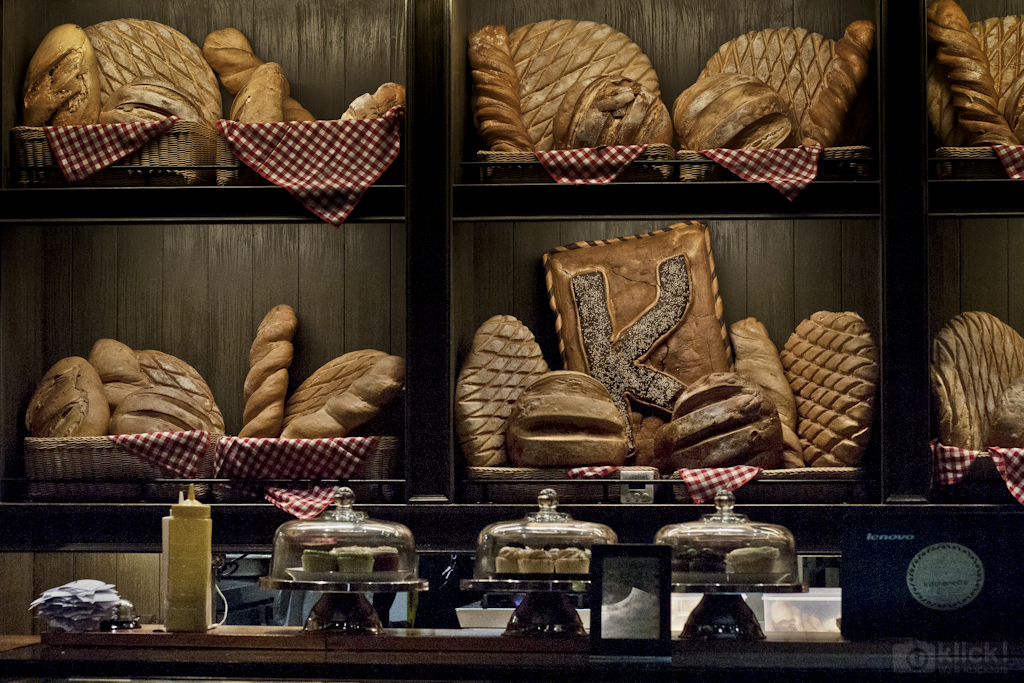
Breads and Cakes by William Jusuf on stevehuffphoto.com
Image Source: http://www.stevehuffphoto.com/2012/07/10/user-report-my-journey-with-the-panasonic-gf2-and-leica-50-summicron-r/
Panasonic Lumix DMC-GF2, Leica 50mm Summicron R
 
William Jusuf presents a user report based on his concentration on using a Leica R-mount Summicron 50mm f2 on the Panasonic Lumix DMC-GF2.
 
(Click Here) to read the whole post on stevehuffphoto.com and see the other awesome pictures.
 
Here William shares a wonderfully non-technical, image-inspired review of the fun he's having with this adapted legacy lens on a Panasonic Micro 4/3 body. Of course, the Leica Summicron is world-renowned for its image quality, but the R-mount version is significantly less expensive than those made for the rangefinder M-mount. William puts it to great use.
 
I love seeing this kind of variety in results from such a limited equipment choice. Many would say that the 100mm equivalent field of view on the smaller Micro 4/3 sensor ruins the performance of the Summicron. Not only does it now act as a medium telephoto due to the crop factor, but the out of focus areas ("bokeh") will not be as pronounced, as the smaller sensor produces deeper depth of field than the original 35mm film would have.
 
I would say that William has done a beautiful job of showing just how capable this combination is. Do go look at the original post - there are many more great pictures there.
 
DMC-365.blogspot.com


Saturday, July 7, 2012

ePhotoZine Posts Sample Shots From Olympus 75mm f1.8 on OM-D

 
ePhotoZine's Oly 75mm f1.8 sample
Olympus 75mm f1.8 on Olympus OM-D, iso 320, f1.8, 1/160 sec
Image Source: http://www.ephotozine.com/article/olympus-75mm-m-zuiko-digital-f-1-8-lens-sample-photos-19553?utm_source=feedburner&utm_medium=feed&utm_campaign=Feed%3A+Ephotozine+%28ePHOTOzine%29
 
 
I am thinking very hard about reasons for and against buying the new Olympus 75mm f1.8 lens for Micro 4/3 cameras (like my Panasonic Lumix DMC-G3). Having shot with my Voigtlander 75mm f2.5 lens in Leica Thread Mount on the G3 recently, I'm pretty convinced the focal length is what I need for music photography.
 
(Click Here) to see my concert pics with the G3 and Voigtlander 75mm f2.5 Color-Heliar.
 
Because the new Olympus lens is so fast (in light gathering, f1.8), I wondered if the depth of field at that f-stop would be so shallow as to not be useful for portraits and people pictures. Depth of field is reasonable on my Voigtlander lens at f2.5, but what about f1.8? Well, ePhotoZine's picture above answers that question. It seems to have just the right amount of depth of field at f1.8.
 
It doesn't look good for me talking myself out of the new Olympus lens. :)
 
DMC-365.blogspot.com


Thursday, May 17, 2012

The PhoBlographer Tests the Zeiss Planar 50mm f2 M Lens on Micro Four Thirds

 
Zeiss Planar 50mm f2 on Olympus E-P1 by Phoblographer
Image Source: http://www.thephoblographer.com/wp-content/uploads/2012/03/P5112317_lr-1000.jpg
I read an interesting post about using the Zeiss Planar 50mm f2 (Leica M mount) lens on Micro Four-Thirds cameras.
(Click Here) to see the original post at www.thephoblographer.com
The author (Felix Esser) makes several important points. First, he says that while he's satisfied with the Zeiss lens performance on both the Olympus E-P1 and the Panasonic Lumix DMC-G1, neither delivers a certain image quality that he sees using the same lens on the Leica M8. This is difficult to evaluate. Each M4/3 camera has so many settings, I find it a little hard to believe that one couldn't fiddle long enough and pretty much replicated the Leica's color, tone, and sharpness. The Micro 4/3 cameras have more recent sensor technology than the M8. The only differentiating thing I can think of is the lack of an IR filter on the M8 sensor, which is supposed to increase sharpness, but at the cost of color accuracy. I find with my M8 that the add-on UV/IR filters are absolutely necessary to achieve good color rendition, so I any benefit from not having the filter there must be lost.
I also found Felix's comments comparing the Olympus E-P1 and Lumix DMC-G1 of interest. It seems that he prefers the native jpeg output of the Olympus, but finds the Panasonic much easier to use with legacy manual focus lenses. This is mainly because of the increased resolution of the G1's electronic viewfinder (EVF). I bet he'd really like it if he tried the DMC-G3 or DMC-GH2.
Felix also provides a little information on the history of the Planar, which has always rivaled the Leica Summicron, both considered benchmarks for image quality in the normal lens range.
I don't have a 50mm Planar. I do have a Zeiss 25mm Biogon T f2.8, which should make a very nice 50mm equivalent on Micro 4/3. The 25mm Biogon is as well-recognized for image quality as the Planar. On my Leica M8, the Biogon makes a wonderful 35mm replacement (at ~33mm equivalent field of view).
However, I must admit, I rarely use the Biogon on M4/3. Why? A few reasons: 1) manual focus, 2) f2.8 (I prefer faster), 3) the existence of the Pana-Leica Summilux 25mm f1.4. The Summilux offers autofocus, 2 stops of increased speed, and excellent image quality. So, it's just a little hard to grab the Biogon and leave the Summilux behind.
I would be interested in hearing others' opinions about this. For a normal lens, I don't see much reason to use anything other than the Pana-Leica 25mm Summilux on my M4/3 cameras.
DMC-365.blogspot.com


Wednesday, May 2, 2012

The Ultimate Adaptation - 100 Year Old Camera on Modern Sensor

 
Rick Nunn's Hybrid Kodak Vest Pocket/Canon DSLR Camera


Image Source: http://ricknunn.com/wp-content/uploads/2012/04/Vest-Pocket-Lens-900x599.jpg
Rick Nunn's Hybrid - a 100 Year Old Vest Pocket Kodak and Canon EOS.
 
This is very cool! Rick Nunn shows how he adapted a 100 year old Kodak Vest Pocket camera to shoot on his Canon SLR. He includes a video to describe how it's done. Essentially, he attaches the camera to extension tubes, and a lens mount adapter.
 
(Click Here) to read Rick's post.
 
I am new to his blog, but definitely added it to my regular reading list. He seems to share my interest in cameras, blogging, and coffee.
 
This idea is interesting. I have an old Zeiss folder with a stuck shutter in the closet at home. This approach should work just fine, perhaps even easier, with Micro 4/3 bodies. Maybe I'll give it a try.
 
I'd like to see more examples from Rick's camera. Maybe that's coming soon.
 
DMC-365.blogspot.com
 
Don't forget all of those ready-made adapters to use your older lenses on Micro 4/3:


Saturday, April 21, 2012

Micro 4/3 With Nikon PreAI Classic Lenses

Image Source: http://www.mu-43.com/f40/playing-some-pre-ai-nikkors-23110/
User wlewisiii on the mu-43 forum recently shared some nice black and white images, taken with classic Nikkor lenses:


(Click Here) to see the full post,


and (Click Here) to see wlewisiii's picasa albums.


These images were taken with an Olympus E-P1, and Nikkor 24mm/f2.8, 50mm/f1.4, and 105mm/f2.5 PreAI lenses.


I love the fact that all Micro 4/3 format bodies (be them Olympus or Panasonic) accept adapters for so many lens mounts. I find it interesting that the PreAI lenses are more compatible with Micro 4/3 bodies than they are with current Nikon bodies. I have two PreAI lenses - the 50mm/f1.4 and the 28mm/f2.8. I have not used them extensively on my Lumix bodies. Maybe I will give them more exposure time.


I find myself missing many of my old cameras. I wonder if using the old lenses on a Lumix body will help to scratch that itch? I will give it a try.


(Click Here) for a lively forum post on nelsonfoto.com about using older lenses on digital bodies. This includes lots of nice example images from my friends there.


DMC-365.blogspot.com


Get your adapter here:


DMC-365.blogspot.com
 
DMC-365.blogspot.com
 
DMC-365.blogspot.com
 

Friday, April 20, 2012

On Critical Focus, by Tesselator of GetDPI


Image Source: http://forum.getdpi.com/forum/4-3rds-cameras/35591-achieving-critical-focus.html
Tesselator's DMC-GH1 and Worn Manual Focus Assist Button
Forum member Tesselator on GetDPI posted a recent entry about achieving critical focus. Interestingly, while he uses legacy manual focus lenses almost exclusively, and does not own a single native Micro 4/3 lens, he is a dedicated Lumix DMC-GH1 user. Apparently, he's on his fourth unit.
(Click Here) to see Tesselator's post on Get DPI.
It turns out that Tesselator achieves astonishingly sharp focus not through any tricks or technologies; it seems he's just plain obsessive about careful focus and camera stabilization. The only kind of new tip he shares is using the automatic magnification for assisting manual focus that is available on the Lumix 4/3 cameras. In fact, you can see how he has worn the label on the button away through constant use, in the image above (small button to the left of "Menu/Set").
In this post, Tesselator also describes his extensive use of tripods. This is something we all need to hear again, once in a while. Of course, we all know that tripods are required for ultimate sharpness. But, it sure is easy to leave it at home.
I found it useful to read his experiences, including those with vintage Linhof tripods. I hope you find something useful in his post, as well.
DMC-365.blogspot.com
 
 
DMC-365.blogspot.com
 
DMC-365.blogspot.com
 

Tuesday, April 3, 2012

Shopping Report - Tokyo Camera Shopping a Bust...

Fujifilm XPro
Image Source: http://www.dpreview.com/previews/fujifilmxpro1

One of the things I always look forward to when I visit Japan is going to the camera store. I usually end up at BIC Camera in Hibiya, Tokyo.

This year, I was hoping to get my hands on the Panasonic Lumix DMW-GFC1 fisheye conversion lens for my 14mm f2.5. It is not available yet, even here in Japan, even though it was announced in January of this year.

I had some reserved hopes of seeing the recently-announced Olympus 75mm f1.8; that was also not in the cards.

So, what did I see that was interesting? The Canon G1X, which I handled just long enough to see that the finder is pretty small and squinty; the Olympus OM-D (a mock-up, actually), which I must say is very attractive. It really does remind you of the OM-1, which the store had displayed right next to it. Hmm. Could be a real market stealer for Panasonic. The Ricoh GXR with Leica M module, which is not a lot different than adapting Leica lenses to Micro 4/3 cameras, in my view.

But, I must say, the star of the show for me is the Fujifilm XPro. This is a full-size, well-built camera. If you didn't see the labels, you may confuse it with a Leica rangefinder. The glass, especially the 35mm f1.4, is also big, precison-mounted, fast, and beautiful. Given the quality of Fuji optics, this tempts me to take on a new lens mount. I haven't looked into it closely enough to really consider the investment, but the form factor and lenses are just, wow.

So, I walked out without buying a single thing. Still waiting on that DMW-GFC1 - Panasonic, are you listening?

DMC-365.blogspot.com


Monday, February 13, 2012

Tyson Robichaud Continues His Transition to the Lumix G3

 
Tyson Robichaud's Wintry Chicago
Chicago in Winter - Tyson Robichaud
Image Source:  
http://tysonrobichaudphotography.files.wordpress.com/2012/01/p1020114.jpg?w=680

In his latest post, Tyson Robichaud shares some great night photography from the Windy City, all taken with the Lumix G3 (except one with the GF1).  

(Click Here) to see the whole post, with several great images.

Tyson comments on how it worked for him to leave his full-frame DSLR at home, and use only Lumix cameras.  In addition to the Lumix 14mm f2.5 and 20mm f1.7, he used adapted legacy lenses - the Canon FD 50mm f1.2 and Contax 45mm f2.
 
Like Tyson, I have really embraced the Lumix DMC-G3.  I am becoming more comfortable with leaving my Nikon DSLR behind much of the time.  However, it is not a complete transition for me.  Probably the biggest thing preventing me from leaving DSLRs all together is flash photography.  I have yet to figure that out on the G3.  Some of it is my need to explore it.  However, I know for sure that Panasonic does not have anything as highly evolved as Nikon's wireless and iTTL systems.  
 
Regardless, I am thankful for all that the G3 does so well, and enjoy using it very, very much.  I will keep pushing the limits of the technology.
 
Thanks, Tyson, for sharing your experience and unique images of Chicago in winter!
 
DMC-365.blogspot.com
 
Please support this blog.  Order your Amazon items here: