Showing posts with label forum. Show all posts

Monday, June 30, 2014

Making Street Photography Automatic? Oh, Boy, I Don't Like This

Library, NYC, by Reed A. George
Leica M9, 50mm Lens
iso 400, f8, 1/125 sec.
 
I just read a post by member katrak on Rangefinder Forum, about how you can use the new Panasonic Lumix DMC-GH4 camera to record video at 24 frames per second with each frame having 8 megapixels of resolution. The title of the post is "Taking away luck in street photography?"
 
(Click Here) to read the post on Rangefinder Forum.
 
Technology may have finally come too far for an old traditionalist like me. One of the things I really love about photography, and street photography in particular, is the game. The game includes finding the scene, getting close enough to the subjects (who you don't know), and most importantly, capturing just the right moment. I would hate for this to be lost. It's like hunting with a machine gun or a bomb.
 
As you probably know, I'm a fan of Panasonic. The GH4 looks like a wonderful camera. So, it's not the camera that is the problem; they're simply pushing video technology to its limits.
 
However, I think this post could be renamed in multiple ways: "Taking away skill in street photography?" or perhaps "Taking away fun in street photography?"
 
I suppose since photography is a hobby for me, and because very few people make money on street photography, I can continue to shoot my old one-at-a-time cameras as long as I live. I'm only competing with myself to capture the moment. There are plenty of those moments to go around, including to people just recording every 1/24 of a second and selecting their favorite from tens of thousands of images later on.
 
DMC-365.blogspot.com

Tuesday, May 20, 2014

Analyzing a "This Type of Camera Versus That" Discussion

 
I frequently see posts on various forums, discussing and sometimes arguing the relative merits of different types of cameras. Some people become very defensive about their favorites. It's interesting. It's even more interesting when the discussion stays civil, and some good points are brought out.
 
Even then, these discussions tend to become very long-winded, so I don't read a lot of them. For example, I'm reading a nice one, started by member tom.w.bn on Rangefinder Forum.
 
(Click Here) to read the discussion.
 
Now, my analysis of this particular discussion is that it has remained largely civil, at least in the first two of five pages I've read; I probably won't read the rest. I think the main points that interest me have been made in the first two pages. Here are the most important parts from my perspective:
 
  1. When thinking about what type(s) of camera are best for you, it's important to ask where you get the majority of enjoyment from photography. Is it in the act of taking pictures, the satisfaction of seeing a wonderful shot achieved and in print? A combination? Perhaps the more rare satisfaction of seeing a perfectly-achieved image made in more challenging circumstances? This should be a controlling factor in deciding what camera style may be best for you.
  2. One response by YYV_146 makes a very interesting point in comparing using a rangefinder camera versus a mirrorless camera with electronic viewfinder (EVF). The point is that looking through an optical rangefinder gives you a very accurate view of the world you're photographing, while looking through an EVF, which is an electronic representation directly from the camera sensor, gives you an accurate view of what the final image will look like. Two very different things.
For me, the act of taking photographs brings much more enjoyment than reviewing them, and especially more than post-processing them. I do love to see a perfect image, and I do value a great image from myself more if I know that it was particularly challenging to achieve. That said, I don't want it to be so challenging that I never get a good shot.
In different situations, different things matter to me. If I'm trying to document something, or have a high chance of getting a shot someone else will care about, I hedge my bets. For example, in shooting a musical act that I don't see often (e.g. rare opportunity) in low light, I'll reach for my Nikon D700. If it's a band I do see often, and I want to have more fun shooting, I'll perhaps grab my Leica M4-2 film rangefinder and load up some high speed film. This is part of the reason that I have not consolidated or focused on only one camera system.
 
So, which part of the photographic process brings you the most enjoyment? How does that affect which camera(s) you choose? I'm interested to hear.
 
DMC-365.blogspot.com
 

Friday, May 16, 2014

Vicarious Travel, Luoyang City, China

From time to time, I see a forum post that really makes me want to see some place new, a place I've never been. This time, it's thanks to Martin Tai's post on photo.net, about Luoyang, China. He shows us several pictures of a mountainside and caves (Longmen Grottos), literally covered with an estimated 100,000 sculptures of Buddha.
 
(Click Here) to read Martin's post on photo.net.
 
Here's where Luoyang is located (thanks to Google Maps):


Image Source: http://photo.net/leica-rangefinders-forum/00cYk0
 
I wonder how one gets to the grottos? I've never been to China, at least beyond a short business trip to Hong Kong many years ago. I'm always amazed at the size of the country, and the diversity of regions and people there. I work with many Chinese scientists, from many different regions within the country. I enjoy talking with them about the specifics of their local areas. Languages, religions, food, all vary widely depending on where in China they live.
 
Maybe a China tour is in my future, once I get to the phase of life where I have time for such things.
 
DMC-365.blogspot.com
 

Friday, February 7, 2014

Nikon Df Real User Experience - Wayne Goodman on GetDPI

Image Source: http://www.getdpi.com/forum/nikon/49999-four-days-nikon-df-andalucia-spain.html
 
The new, retro-styled, D4 sensor-equipped Nikon Df is extremely attractive to me. Wayne Goodman has posted his pictures and experience in shooting his new Df in Andalusia, Spain.
 
(Click Here) to read his post on GetDPI forums.
 
Wayne comments on the fact that while others find the array of knobs on the Df a little challenging, the iso knob is the only one he finds inconvenient. One of the great techniques on a camera that has really, really good high iso performance is to set it on Auto-ISO and stop worrying about it. Then, you can go into Manual exposure mode, for example, and simply pick the f-stop and shutter speed you want, letting the camera adjust iso to get the exposure right. Wayne did this, and was very happy with the results. Even on the couple of occasions where the camera had to go to iso 12,800 (!), he was mostly satisfied with the result.
 
He also finds that he really prefers the optical finder to the now-common electronic viewfinders (EVFs) of today. He comments that the "quiet" shutter mode is pretty effective. While the focus system on the Df is not Nikon's highest technology, he found no fault in it.
 
The shots he shares in the post and in his flickr page were made with the Nikon 24-85 zoom. Wayne and I share the same opinion about this lens. Extraordinarily convenient when you don't want to change lenses, the image quality simply doesn't match great Nikkor primes. Oh well, you can't have everything in just one lens.
 
I continue to be interested in the Df from afar. If my D700 were to die (unlikely), that would be my replacement. For now, I'm holding and watching (and drooling just a little).
 
DMC-365.blogspot.com


Monday, January 27, 2014

Documenting CycloCross with Film - straightmp on Rangefinder Forum

 
Image Source: http://www.rangefinderforum.com/forums/showthread.php?t=139673

I read a post from forum member straightmp on Rangefinder Forum, about winter bicycle races called CycloCross (CX), where cyclist race across the winter landscape through mud and cold. Sounds pretty fun to watch.

What really caught my attention though was that straightmp used black and white film (Kodak TriX) to capture the event, using a Nikon F100 and "cheap" 28-80 Nikon zoom. I think the results are very expressive.

(Click Here) to see the post and several more excellent photos on Rangefinder Forum.

The Nikon F100 is an amazing deal these days. When it came out, it was the penultimate Nikon SLR, second only to the contemporary F5. I remember buying one used for $700. It was like the Corvette of film cameras to me, a real high tech machine. Now you can buy one for a song. I just looked and KEH (keh.com) has one in EX condition for $189. Amazing.

I ended up selling mine off, because I prefer more manual cameras, especially when I'm shooting film. But, it was a camera that always impressed. I

DMC-365.blogspot.com


Friday, December 27, 2013

Um, Stephanie, Your Bird is Escaping...

Here's a funny shot that caught my eye, posted by colonelpurple on mu-43.com:
Image Source: http://www.mu-43.com/showthread.php?t=57379

(Click Here) for the original post.
 
 
This was shot with the new Olympus EM-1 and spectacular Olympus 75mm f1.8 Micro 4/3 lens.
 
DMC-365.blogspot.com


Thursday, December 26, 2013

Another Elmar 3.5cm User

Norwegian Rangefinder Forum poster Krnome has shared pics of his new Elmar 3.5cm f3.5 lens, the same lens I've picked for the final installment of Whole Lotta Leica.
 
Here's Krnome's new lens:
 
 
Image Source: http://www.rangefinderforum.com/forums/showthread.php?p=2272753#post2272753
 
Apparently, he knows more of his lens' history than I do. Reportedly, his was used in and after WWII in Germany.
 
(Click Here) to read Krnome's post on rangefinder forum.
 
I'm out to shoot mine on the M9 this weekend. Wish me luck.
 
DMC-365.blogspot.com


Thursday, August 15, 2013

That One Camera - Well, Maybe Not Just One

I read a post by Graham Welland on the getdpi forum, taking on the question of what is your "desert island" camera - that one camera or system you'd keep if you got rid of all others. Graham prefers the Xpan II or Fuji GX617 (a marvelous medium format panoramic camera).
 
(Click Here) to read the post and responses.
 
At least one person answers as I would, with a list of cameras. I know this doesn't meet the goal, but I can answer this question in so many ways.
 
If I really wanted to produce the very best images that I'm capable of, I would keep my Nikon D700, lenses, and flash. Hands down. I've never used a more capable camera system.
 
 
Nikon D700
 
But, part of my enjoyment of photography comes from the equipment itself. The Nikon is like a high end Toyota - extremely capable, but not too exciting. For pure camera enjoyment, I would have to pick a Leica. Probably an M (M9 or M3, most likely), but it would be hard keeping one of these in hand while letting go of my IIIC, a wartime example that just works so very well.
 
Leica M3
 
 
In truth, I don't want to say goodbye to any of my cameras. For example, as I've said in my Skeletons From The Closet series, the Konica Auto S1.6, a relatively inexpensive 35mm rangefinder, is a unique and surprisingly fun and functional camera.
 
Konica Auto S1.6
 
Good thing today's not the day I have to decide.
 
 
DMC-365.blogspot.com


Wednesday, July 3, 2013

Olympus OM-D and Voigtlander Nokton 25mm f0.95 by Candlelight

 
Image Source: http://www.mu-43.com/f57/sofia-candlelight-48627/
 
Last weekend on a trip to Florida, I shot Micro 4/3 again for the first time after a long break. I've let my Leica interests, as well as my Skeletons From The Closet project, consume my photographic opportunities. In Florida, I shot my Panasonic Lumix DMC-GX1, essentially for the first time. I'll have a few shots to share, soon. Anyway, I think I will make that camera a priority at some level, too. Too many cameras, too little time.
 
Shooting the GX1 got me thinking about what others are doing with Micro 4/3 these days. I came across this post from nickthetasmaniac on mu-43:
 
(Click Here) to see other shots by nickthetasmaniac on mu-43.com
 
He made these images with the Olympus OM-D and Voigtlander 25mm f0.95 lens. I've never tried a lens faster than f1.2. It seems to me that Micro 4/3 is the right place to do that, as you don't rely on the accuracy of a rangefinder with that extremely shallow depth of field that f0.95 would provide.
 
Hope you find the images as interesting as I did.
 
DMC-365.blogspot.com


Wednesday, June 19, 2013

Leica's New X Vario - the "Mini M?" Not All Bad, Though

There was a lot of hype on the internet surrounding the announcement of Leica's latest camera, the X Vario.
 
Leica X Vario
 
Image Source: http://us.leica-camera.com/photography/compact_cameras/x_vario/#product-scroll-me-anchor
 
(Click Here) to see the camera on Leica's website.
 
Leica chose to emphasize ties between the M digital rangefinder cameras and the X Vario, which seems to have set peoples' expectations for something different than what was delivered. With a 28-70mm equivalent field of view zoom, and f3.5-6.4 aperture, this is no fast lens rangefinder. The forums are in an uproar. However, there's a lot to like with this camera, if you can get past the maximum aperture of the lens.
 
On the subject of maximum aperture, I go back to my belief that there are different cameras for different needs. While I'd never be completely satisfied if the fastest lens I had for my Leica M9 were f3.5, one of the cameras I still lust after is the Fujifilm GF670 medium format folding camera. (Click Here) to see the GF670. This camera has an f3.5 lens, but of world class design and manufacture. The GF670 would be a slow camera for me - not for action shots, for sure. In fact, it would likely take more images on a tripod than off.
 
Modeled far more after the X2 than an M, the X Vario has a relatively large APS-C sensor (1.3X crop factor). Being able to go higher in iso without noise issues could really compensate for the slower lens.
 
Nick Rains, an Australia-based photographer, wrote one of the first reports I've seen by someone who has actually used the X Vario.
 
(Click Here) to read Nick's post on nickrains.com.
 
Nick tested the camera in gloomy weather, so he shot at high iso (3200) a lot. Nick argues that the f3.5 lens is no slower than most kit lenses for DSLR cameras. True, but then you can change to faster lenses with a DLSR. One important point Nick brings out is that the Leica lens is as good (sharp, no chromatic aberration, great color) at f3.5 as it is at f8; that is not the case with kit lenses. Nick seems to like the X Vario at some level, and in his post demonstrates the great sharpness of the lens and low noise of the sensor. He made some 16x20 prints from the camera at iso 3200, and was pleased with the result.
 
So, before we let the forum hype tell us this camera has no place, let's see what results people can actually produce with it.
 
DMC-365.blogspot.com


Saturday, February 2, 2013

Decisive Challenge on Rangefinder Forum - Winners Posted

 
First Place: Man Centered Square Triangles by Clint Troy
 
Rangefinder Forum has just completed a photo contest, and the winners have been announced. The winner of the first prize is shown above. Congratulations, Clint Troy!
 
(Click Here) to see all of the winners.
 
There are some really great images here. And the prizes were awesome as well - a vintage Leica camera and lens included! Wow.
 
I need to keep my eyes open for these challenges.
 
DMC-365.blogspot.com


Friday, September 21, 2012

Well, A Little Reporting Balance, Perhaps

If you read my blog regularly, you know that I am a big fan of the Micro 4/3 format. I chose the Lumix DMC-G3 as my Micro 4/3 camera, and regularly carry two bodies and primes lenses. I'm quite happy with the results.
 
Panasonic Lumix DMC-GX3
Image Source: shop.panasonic.com
 
 
Micro 4/3 is by design a compromise between sensor size and overall camera and lens weight and volume. Micro 4/3 is a great compromise in that way, in my opinion. While the sensor is ~1/4 the size of 35mm full frame (50% in each direction), the compactness of the system is just plain right. If it were smaller, it would be too hard to use with human hands, in my opinion. As it is, I certainly hit the wrong buttons on the G3 once in a while, but that's probably my fault. Again, in my opinion, if I were designing a system, I would likely do exactly what they did with Micro 4/3 - go slightly smaller in sensor size, in favor of a compact system overall. This is because we all know that sensor technology will continue to improve, so the down sides to a small sensor will decrease over time. The progress made in high iso performance since Micro 4/3 started a few years ago is amazing. And, it's getting better all the time. The only real limitations are physical - like the effect on depth of field imposed by the small sensor. That can't be fixed by sensor improvements.
 
That said, not everyone agrees with me on how good the format is. PhotoPat on mu-43.com posted that he had a terrible experience with the Lumix DMC-GX1. He's now sold it off.
 
(Click Here) to read PhotoPat's thread on mu-43.com
 
As you can imagine, and read in the comments in PhotoPat's thread, posting disappointment in Micro 4/3 on a Micro 4/3 forum invites some dissent. Nothing too bad, but interesting.
 
Sometimes I have to go back and compare images that I've gotten with full-frame cameras to what I'm getting with Micro 4/3, just to convince myself again that Micro 4/3 image quality is good. It is. I'm pleased with it for much of my photography.
 
Here's an example shot, which won me a contest and made it into the Civil War Trust's 2011 calendar (September page). This was shot with a first-generation Micro 4/3 camera, the DMC-G1.
 
Henry House at Manassas National Battlefield, by Reed A. George
Panasonic Lumix DMC-G3, Leica Elmar 3.5cm f3.5 Screwmount Lens
 
I would never prescribe Micro 4/3 only to anyone else. In fact, you'll see that I shoot plenty of other systems. But, if you use it carefully, the Micro 4/3 system is surely capable of producing some nice images.
 
DMC-365.blogspot.com


Tuesday, July 17, 2012

New Panasonic Website - panachallenge.com

 
Image Source: http://www.panachallenge.com/challenge/show_entries.php?challenge=140&cat=Main
 
I just discovered this new website! They host photo challenges, and have forums, centered on Panasonic (and related Leica) cameras. I always like to find more Lumix-focused activity!
 
(Click Here) to go to panachallenge.com
 
DMC-365.blogspot.com
 
 
DMC-365.blogspot.com
 

Thursday, July 12, 2012

Unique Composition of Familiar Subject

 
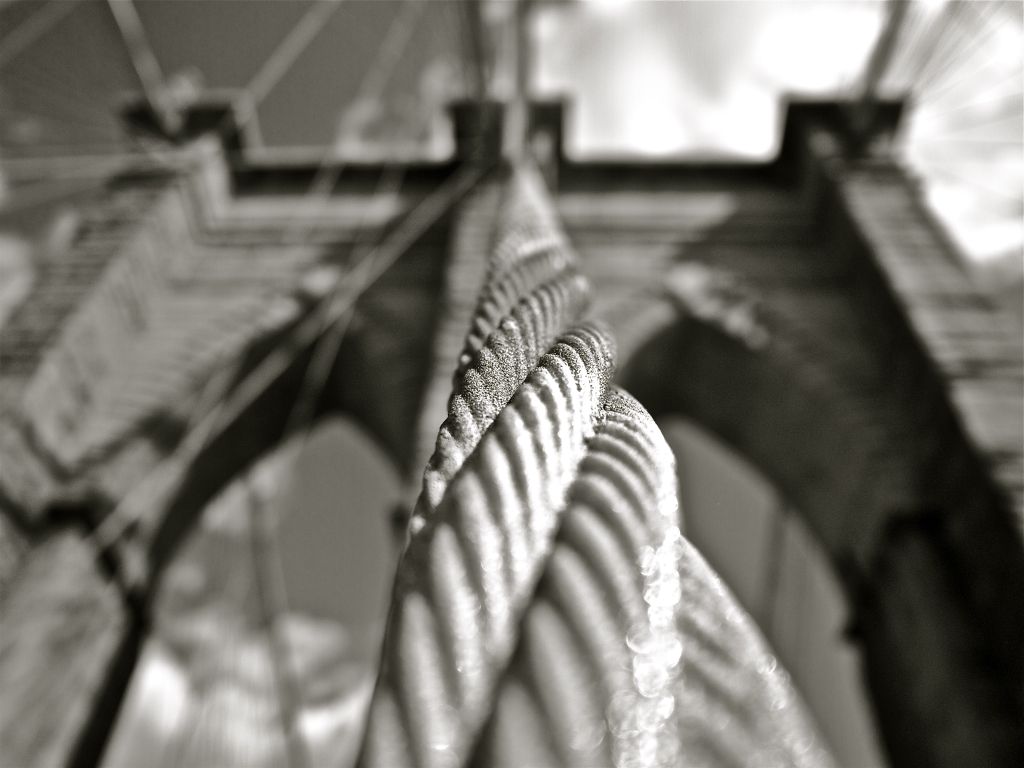
Brooklyn Bridge by phatning
Olympus Pen E-PM1, Lumix 14mm f2.5
Image Source: http://i654.photobucket.com/albums/uu264/tkning/120615%20NYC%20Photowalk/P6150270-2.jpg
 
I have read and heard it said that the ultimate photographic challenge is to make a unique picture of an often-photographed familiar subject. Well, phatning has posted the shot above on mu-43.com. I think it accomplishes that goal quite well.
 
(Click Here) to see the post on mu-43.com.
 
When I saw the post entitled "Brooklyn Bridge," I didn't have high hopes. I think this picture delivers. Just my opinion, of course.
 
There is an old bridge on the property where I work. I walk there often, but have yet to make a unique image of it. This gives me hope. I will have to try again.
 
DMC-365.blogspot.com


Saturday, June 30, 2012

Seven Day Film Challenge - What Film Will You Use?

 
Image Source: http://www.historiccamera.com/cgi-bin/librarium/pm.cgi?action=display&login=kodak_film
 
Keith on RangeFinderForum.com has posted a July film challenge.
 
(Click Here) to read the rules.
 
In order to qualify, you must shoot one roll of film per day (any film format), or two sheets of large format film on seven CONSECUTIVE days, between July 1 and July 28. No excuses are accepted - if you miss a day, you are disqualified. I suppose if you start your seven days early enough in the month, you could always start again in the case of catastrophe.
 
You can use any film and any film camera. On August 1, go back to the post (Here), and Keith will announce where to post your three best pictures from your seven day experience. You can also post about any experiences involved in meeting the seven day challenge.
 
I think I will do this. I am going to visit my parents in Oklahoma in early July, which will give me four of those seven days to kick back and shoot some film. I sure wish I had a Panasonic film camera, to keep in my Lumix theme for this blog. So, what's the closest? Well, I suppose since Panasonic and Leica have a relationship, shooting a film Leica will have to suffice. Gosh, what a burden. :)
 
Anyway, join in the fun! Let's see what you can do with analog for a week!
 
DMC-365.blogspot.com


Sunday, April 29, 2012

New Fun "Salon" Contest on mu-43.com

 
First Train Departs, by Reed A. George
Panasonic Lumix DMC-G1, Pana-Leica 45mm f2.8 Macro-Elmarit
iso100, f7.1, 1/6 sec
 
There is a fun contest being hosted at mu-43.com. The current theme is "Motion."
 
(Click Here) for the contest announcement and instructions for entering.
 
My entry is the image above, of the first train leaving Gora Station in Hakone, Japan. This is the Japan Tozan Railway, which follows single-track switchbacks up the mountain from Hakone Yumoto Station.
 
(Click Here) for more of my images and information about the railway.
 
DMC-365.blogspot.com


Thursday, April 19, 2012

Thoughts On How iso6400 Has Transformed Photography

Virginia Ramblers, by Reed A. George
Nikon D700, iso8000

Rangefinder Forum writer BobYIL recently wrote a post about how enabling the ability to shoot iso6400 on the latest digital cameras is.

(Click Here) to see the original post on Rangefinder Forum.

This was a very lively thread, with plenty of good responses. The first of two links included in the post includes a series of sports images. They are great, and deserve a click to look through.

I know that I used to occasionally shoot Delta 3200 film, but only when there was no other alternative (shooting available light in very low light situations). It was very grainy, though I did perfect shooting it at iso 1600, and adjusting the development time, to get very good results.

Now, I shoot iso 1600 with what I consider to be very nice output with my Lumix DMC-G3. I can shoot iso 3200 on the G3, but it takes some post-processing to control the noise. Not a big deal, especially with the excellent noise reduction now resident in Adobe Lightroom. Rather than miss a shot, I will shoot the G3 at 6400, but it's definitely pushing the noise situation.

My Nikon D700 shoots at iso 3200 with no problems whatsoever. I can reliably shoot at iso 6400 (or even 8000, as shown above).

One reply to the post notes that the results certainly look better in images downsized for posting on the web than they do in printed pictures. While I must agree with that statement, I would also submit that has always been true. That said, I recently printed some iso 3200 images from the DMC-G3 for a band I photographed. I was quite pleased with 8x10s, and think they would have held up well at 13x19.

I love the fact that I can shoot in very dark musical venues and not worry too much about image quality. I have found that it's better to go ahead and crank up the iso and shoot at full exposure, rather than underexposing at lower iso settings and trying to bring the levels up in Lightroom. That's when the noise levels really go crazy.

Anyway, it's a great time to be a photographer. The equipment just gets better and better.

DMC-365.blogspot.com