Showing posts with label analog. Show all posts

Monday, February 8, 2016

Someone I Met - and a New Camera. The Fujica Half 1.9 Half-Frame

I've been playing around with the 35mm half-frame format recently. (Click Here) and (Click Here) to see posts on my first half-frame camera, the Canon Demi EE17.
 
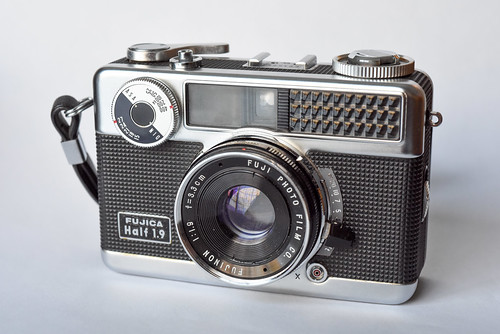
I recently bought a second half-frame camera, a Fujica Half 1.9. I picked it up on ebay for $22, including shipping, and it looks and works like new. It even came with the original soft leather case, strap and lens cap. Very cool.
 
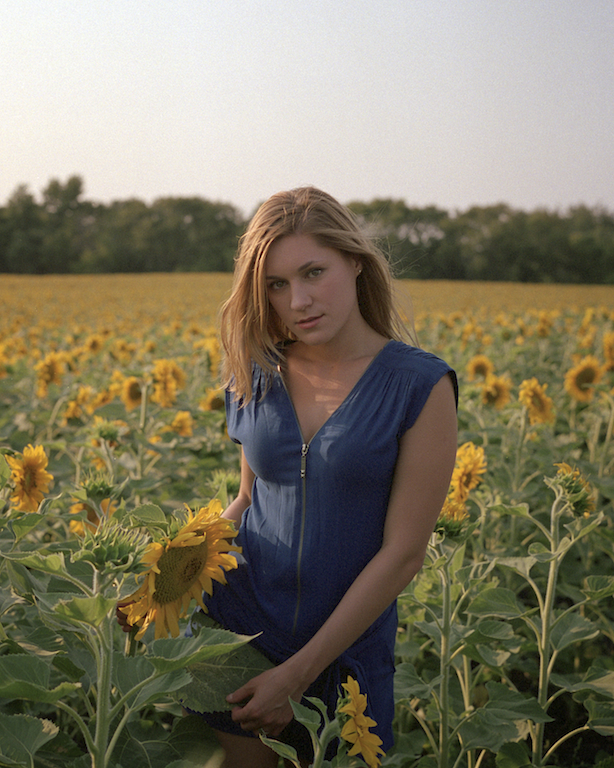
Here's the important part - a picture I made with it on a recent trip down to Greenville, South Carolina. My friend, Craig, and I took a run over to Asheville, North Carolina for the day. We met this fine lady in an art studio there.
 
 
I scanned the film, then edited it in Analog Efex 2 (Nik Software/Google) and Lightroom. Analog Efex has a wealth of film and camera emulations, and frames.
 
DMC-365.blogspot.com


Friday, September 11, 2015

Day Sleepers - Cool Project

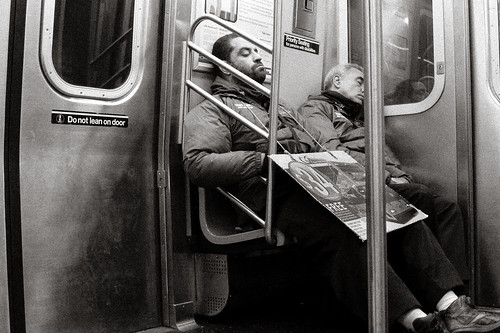
My Day Sleepers (NYC), by Reed A. George
Panasonic Lumix DMC-LX7
iso 800, f1.8, 1/125 sec.
 
I captured these guys sleeping on the subway in NYC. It's interesting to see people sleeping in public places, especially when they're not unfortunate homeless people.
 
I read an interesting piece on the Leica Camera Blog about Eric Leleu, a Frenchman who did an extensive project, photographing "day sleepers" in China. Interestingly, Eric used a Leica M6 for many years, and more recently a digital Leica M240, but in both cases with just one lens - a 35mm f1.4 Summilux.
 
(Click Here) to read the story on the Leica Camera Blog. Knowing he shot all of these with a 35mm wide angle impresses me. He had to get pretty close in many cases.
 
DMC-365.blogspot.com

Thursday, September 18, 2014

Leica Brings Out a New FILM M! Yes! The M-A.


Image Source: http://us.leica-camera.com/Photography/Leica-M/Leica-M-A/Details
 
I think this is really good news for us film shooters. Leica has announced the new M-A, an analog M camera body, with absolutely no electronics. None. Yes, there are lots of great historic Leicas out there that fit this bill, but it's exciting to see Leica still paying attention to film.
 
They even highlight Kodak TriX as a great match for the camera.
 
I hope this keeps the film companies interested in making film for us hardcore users!
 
(Click Here) for lots of information on the Leica website.
 
DMC-365.blogspot.com


Saturday, July 12, 2014

Fujifilm Instax Mini 90 Neo - Modern, Instant, Analog - My New Toy on the 4th of July

Image Source: http://www.fujifilm.com/products/instant_photo/cameras/instax_mini_90/
 
When I attended the Film Photography Project (FPP) Walking Workshop several weeks back, I sort of got re-energized about instant film photography.
 
(Click Here) to read about FPP. Support them - they're keeping film alive and available for us all, with the help of us all.
 
One of the many nice people I met there at the workshop had a Fujifilm Instax Mini 90 Neo camera, the one shown above (and available from Amazon with the link below - please buy yours with the link!). This camera uses the newer Fuji Instax Mini film, which I hope will be around for a very long time. It produces prints that are about the size of a 6x9 medium format image. They seem to scan pretty well.
 
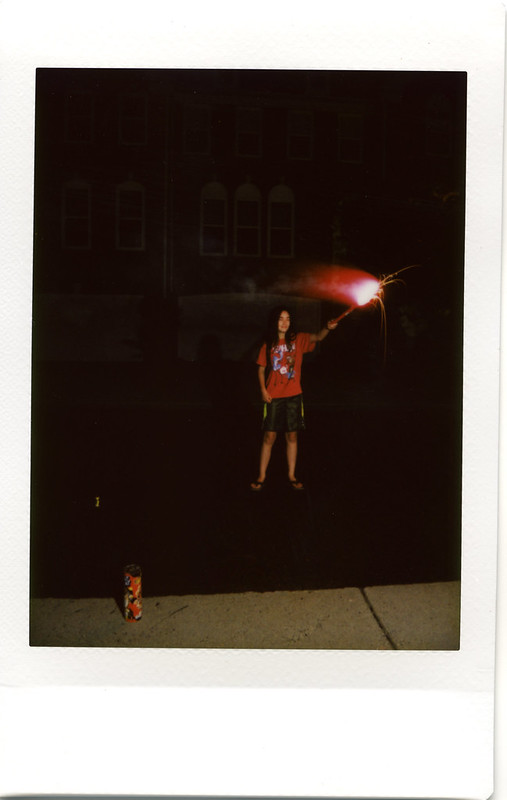
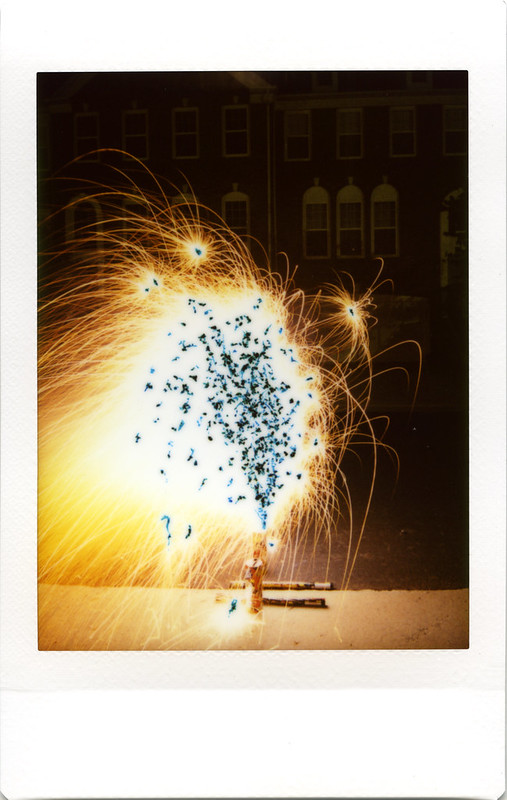
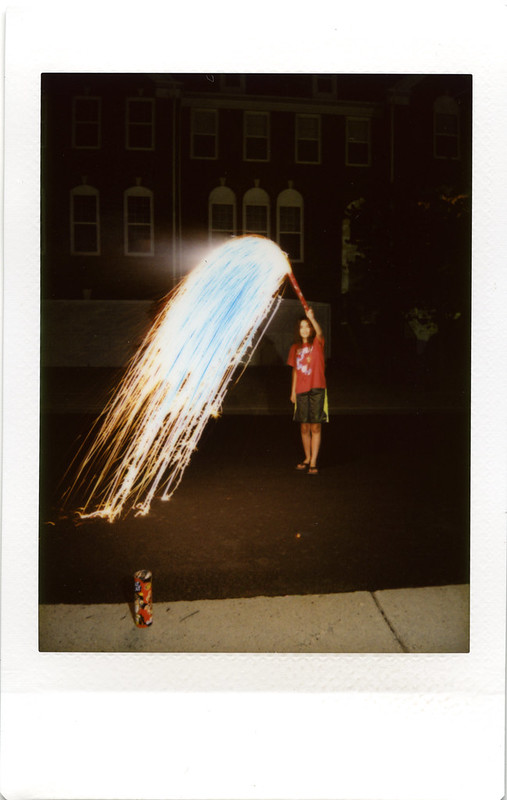
While most of the Instax cameras are completely automatic and not controllable to a large extent, the Neo has several features for more involved photographers. For example, it as a B setting for time exposures, for example. The following shots show you how I used the B setting to photograph our family fireworks on the 4th of July.
 
In B setting, the Neo has a maximum exposure time of 10 seconds. That proved to be plenty, since Instax film has a speed of iso 800. I also used an external flash to light up my daughter while the shutter was open.
 
 
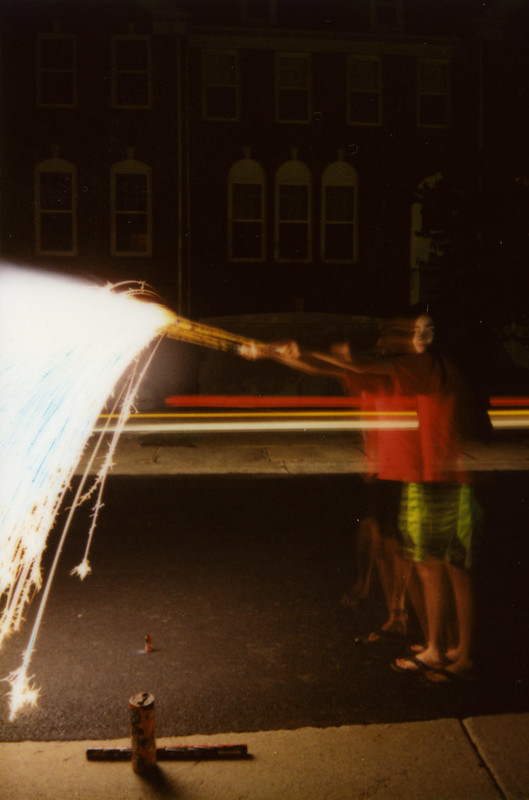
In the shot above, a car drove by during exposure, leaving the horizontal streaks.
Areas with severe overexposure take on a crazy look, as shown above. I like it.
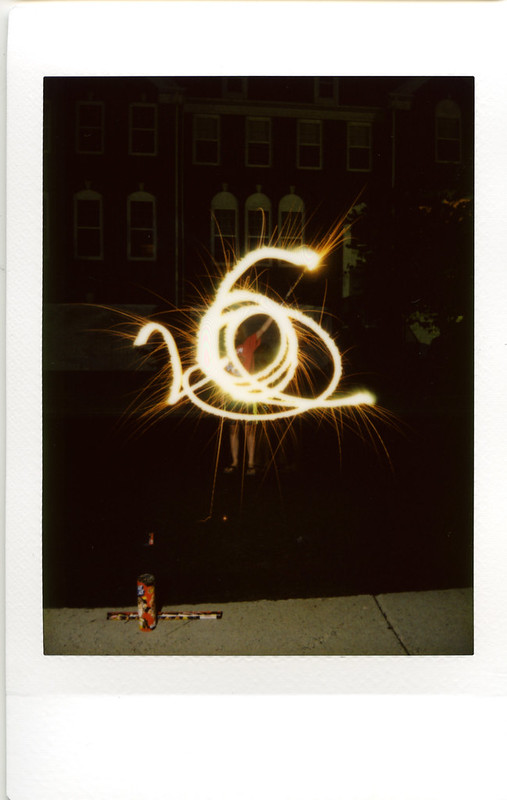
This shot is my favorite of the bunch.
 
I'll continue to explore the Fuji Neo in coming posts. It's a lot of fun for the money (~$150). In addition to the cool functional features, the Neo is styled after other Fujifilm cameras, and looks like a slightly mis-shapen X100.
 
So, join the modern world of analog instant photography! Buy your Neo and film with the Amazon link below.
 
DMC-365.blogspot.com


Thursday, January 2, 2014

Introducing My Leica Monochrom ANALOG!

One of the very few cameras that I currently lust over is the Leica Monochrom. It's one of those cameras that only those close to Leica will understand at all. I mean, really. A $7,000 camera that only shoots black and white? But, what a job it does with it. I was convinced of that by David Farkas, one of the LHSA (International Leica Society) Directors at the annual meeting in San Francisco. It really is somewhat of a super-camera, with astounding dynamic range and spatial resolution.
 
I decided to select one of my Leica M film cameras to treat as a Monochrom for a while, to evaluate whether I'm really going to enjoy monochrome-only photography with any camera. I do absolutely love shooting black and white, with either film or digital.
 
I did a similar thing a couple of years ago when considering the purchase of a Leica M9. I committed to shooting my M8 a lot, to help me decide whether or not the M9 was a good investment; it was. I remain happy with that decision.
 
I think referring to this camera as my Monochrom Analog is apt for two reasons: 1) it is the closest thing I have to a camera analogous to the Monochrom, really only because I've decided to commit to shooting only black and white with it for a while, and 2) because analog can be interpreted to mean "non-digital." Both are fitting.
 
My Leica Monochrom Analog, by Reed A. George
 
I shot this picture with my iPad camera, since my computer is currently down for file transfer / recovery operations. So, it doesn't make me unhappy to shoot a film camera for a while. It's my silent protest against the digital world (not digital photography in particular, just my own dependence on digital files for basically everything I do).
 
My Monochrom Analog is made up of my M4-2 film body (my first Leica ever), which is definitely in user condition (meaning it has some cosmetic bumps, scratches, and peeling Vulcanite, but is completely 100% functional), a Voigtlander VCII exposure meter (mounted in the hot shoe), a Leica yellow filter (for when I want to increase sky contrast) and a recently-acquired Leica grip. Quite a nice little package, I must say.
 
I loaded up a roll of Kodak Tmax 400 film in it today, and got outside in the unseasonably nice weather here in Virginia. We'll see how I did in a week or so when I have the film processing done!
 
DMC-365.blogspot.com


Monday, May 13, 2013

Silver Gelatin B&W Prints Direct From Digital Files

Led Zeppelin Portraits by Herb Greene
Image Source: http://ledzeppelinportfolio.com/
 
I love to make monochrome images. I enjoy shooting black and white film, but I also really like doing digital conversions to black and white.
 
Digital Silver Imaging uses a laser enlarging system to produce real wet chemical silver gelatin prints directly from digital files. They can currently produce these prints up to 20" wide.
 
(Click Here) to go to Digital Silver's website.
 
Well, Digital Silver is using a Kickstarter campaign to increase their maximum print size to 48". This requires a significant investment in new equipment. If you contribute to the campaign (many levels of contribution available, from $15 to over $10,000, you can claim rewards varying from a small print from one of their existing images, to a limited edition set of portraits of the rock band Led Zeppelin, signed by photographer Herb Greene. Importantly, you can also contribute at levels that get you prints of your own images, or even high quality scans of your own negatives.
 
I like this campaign because it's not fighting the battle between film and digital. It's using the best technologies available to provide the highest quality traditional chemistry prints from digital files.
 
(Click Here) to go to the Kickstarter page for more information. The campaign ends on May 17, so hurry!
 
DMC-365.blogspot.com
 
Disclaimer: I have no relationship or interest in Digital Silver Imaging. In fact, I've never even seen one of their prints. So, I'm trusting the descriptions they provide at the links I've provided above.


Tuesday, October 23, 2012

The Challenges of Film, Or Where Is the ISO Button On This Old Camera?

Pumpkins of Concord, MA, by Reed A. George
Leica CL, Leica 3.5cm f3.5 Summaron Lens
Exposure Unrecorded
 
Mike Johnston of the Online Photographer has written about the most important challenge that he finds in shooting film - fixed, relatively low iso.
 
(Click Here) to read Mike's entry on the Online Photographer.
 
It is true - having the extra control of being able to adjust iso on the fly with digital cameras is a big plus. Especially when you can crank it up to iso 3200 or higher, and effectively shoot in the dark without a flash. Then, you can walk outside in midday sun, bring it down to iso 200 or lower, and go on your merry way. With film, you're effectively limited to iso 100 (okay, maybe 50) to iso 400 (or, in special cases, with quality tradeoffs, to 800 or even 3200). But, and this is key, you have to finish a roll of film before you can change to a different iso.
 
One response to Mike's piece made me think. Del Kimbler wrote:
 

"One of the things I liked about sheet film in my Century Graphic was that I could select by ASA one or two shots at a time...."


I never really thought of it before, but it's true. With a sheet film camera, each shot is independent, and you can carry a wide range of iso films loaded into single shot holders.
 
I also think about the fact that people, me included, have narrowed the range of application of film cameras to those that are easy with limited iso range. For example, I honestly can't remember the last time I used a flash on a film camera. I think it was perhaps New Year's Eve, 1999. There are two reasons for this. First, if I'm going somewhere dark enough to warrant carrying a flash, I'm not likely to take a film camera. Second, if I do need to use flash, digital allows me to tune in the amount of flash for the effect I want to achieve. That's much less risky than waiting to see "how they turned out" when my film is processed.
 
So maybe that's a new challenge for me - to shoot film in some situations that push the limits. Live with the use of very fast lenses and potential underexposure and blur. Try to use flash in a calculated way, rather than empirical (trial and error). Hmm. I'll have to think about that one. It does fit my current thought that in some cases, I'm willing to miss some of the shots for the chance of getting a really spectacular few.
 
DMC-365.blogspot.com


Thursday, September 27, 2012

Well, Here's a Funny Twist... Impossible? Yes. The Impossible Project, That Is.

Finally analog instant photos from your favorite digital images!
 
The Impossible Project's Instant Lab
Image Source: http://www.kickstarter.com/projects/impossible/impossible-instant-lab-turn-iphone-images-into-rea
 
So let me get this right. People want to snap pictures on their iPhones and turn them into Polaroid-style instant prints? Apparently so.
 
(Click Here) to read more.
 
This gadget allows you to shoot with your iPhone camera, bring the image up on your display, then lay it on top, expose instant film below, and print. I have to admit, I don't get it.
 
First off, I'm not an iPhone user (crowd gasps)...
 
I can understand why you'd want to be able to give iPhone pics to your friends. Here are a couple of things I don't understand:
  1. They're digital pictures - can't you give them all to your iPhone-carrying friends digitally? Of course you can.
  2. If someone wants to give ME one (without an iPhone), they can email it. I do have that.
  3. Let's say I just love to have photos on real paper - wouldn't I rather print it out directly? Something like this?
(Click Here) to see the Polaroid instant printer for iPhones, as reported by Chase Jarvis.
 
Why in the world would I want it to go through the instant film process and cost?
 
I've been wrong about things like this before. But I think this appeals to the very rare person who loves analog prints, along with the very analog process of making a Polaroid print, yet loves digital technology, and uses an iPhone camera. I'm in the first class of people, who still love analog photography. But, I just shoot with an analog camera. I can't imagine wanting the convenience of shooting with an iPhone (which is considerable), and still planning to carry the Instant Lab with me to make prints for my friends. So I can carry the iPhone in my pocket, pull it out and shoot anytime - that's cool. What, I also wear a backpack with my Instant Lab and pack film, sit down, expose, and wait a few minutes for a print of an image that's gone through the lossy process of exposing an LCD representation onto instant film? And have yet another battery to charge? Unlikely. Impossible? Well, that's their name.
 
I think these guys are very creative. I love that they're around. I love the idea that instant film is still available. I don't get why 8X10 film is available, while 4X5 is not. But, I'm sure there's a good reason.
 
Keeping working on it, Impossible. I'd almost buy one just to keep your creative gears turning.
 
DMC-365.blogspot.com


Wednesday, August 15, 2012

Ryan Lussier Reports On Three Months of Shooting Film On Steve Huff's Site

 
Ryan Lussier's Film Work, Contax G2
Kodak Porta 400, Zeiss 50 f/2
Image Source: http://www.stevehuffphoto.com/2012/08/02/three-months-of-shooting-film-and-here-is-what-i-learned-by-ryan-lussier/
 
Ryan Lussier has posted a nice article about using film over the past few month on Steve Huff Photo.
 
(Click Here) to read Ryan's post on stevehuffphoto.com
 
First off, this is no story to restart a controversy over film versus digital. Ryan admits that he likes digital as well. Raised on digital, Ryan is also no old man going back to his youth.
 
Ryan gives some details of how he processes and scans his films, basically the same as I do. Get the negatives developed at the drug store, then take on the scanning at home. He uses a Plustek scanner; I use an Epson V750. One thing I learned from Ryan is a product by Ilford called Antistaticum. It is a cloth for removing dust from negatives. I'll be ordering one today.
 
I also saw another interesting post this morning on GetDpi, from a person who put away their digital camera, grabbed an old 8x10 (really large format!) camera, and some Polaroid film. The results are very cool.
 
(Click Here) to see what old analog technology can do.
 
DMC-365.blogspot.com
 
Do me a favor - buy your Antistaticum, film, or whatever else through my blog's links to Amazon:


Saturday, July 14, 2012

I Finished the July 7 Day Film Challenge - and LOVED IT!

 
Sunrise Watering, Hinton, Oklahoma, by Reed A. George
Leica M4-2, Leica Summicron 50mm f2, exposure unrecorded
 
I finished up the "one roll per day for seven day" challenge this week. The challenge was posted on the rangefinder forum.
 
(Click Here) to read more about it.
 
I was able to complete it between July 3 and 7, but it was not easy. First, it was challenging to find enough interesting things to shoot on regular workdays. Then, I got very ill on the trip to Oklahoma where the image above was shot. On two consecutive evenings, I got up at 11:30PM in a fevered haze and shot pictures around my Mom's house, just to make sure I stayed in the challenge. As it turned out, those pictures are very meaningful to me, and really remind me of exactly how badly I felt. Not exactly pretty pictures, but full of feeling for me.
 
I shot Leica film bodies the entire time. I shot a 3.5cm Elmar f3.5, 50mm f2 Summicron, 90mm Elmarit f2.8, and Canon 50mm f1.4.
 
So, now I'm considering becoming the "Panalog Photographer," mainly focusing my digital work on Lumix as before, but including a lot more analog (film) photography. Just for fun, I've posted a poll at the top of the blog page. Let me know what you think of that idea.

None of this is exclusive, and you'll still see my work with Nikon and Leica digital from time to time. The main change is that you'll see film work much more often.

So, I hope that sits well with my readers. I'm very excited about the idea.
 
I'll post my selected three images once I submit them to the challenge forum page.
 
DMC-365.blogspot.com
 
 
DMC-365.blogspot.com
 

Saturday, June 30, 2012

Seven Day Film Challenge - What Film Will You Use?

 
Image Source: http://www.historiccamera.com/cgi-bin/librarium/pm.cgi?action=display&login=kodak_film
 
Keith on RangeFinderForum.com has posted a July film challenge.
 
(Click Here) to read the rules.
 
In order to qualify, you must shoot one roll of film per day (any film format), or two sheets of large format film on seven CONSECUTIVE days, between July 1 and July 28. No excuses are accepted - if you miss a day, you are disqualified. I suppose if you start your seven days early enough in the month, you could always start again in the case of catastrophe.
 
You can use any film and any film camera. On August 1, go back to the post (Here), and Keith will announce where to post your three best pictures from your seven day experience. You can also post about any experiences involved in meeting the seven day challenge.
 
I think I will do this. I am going to visit my parents in Oklahoma in early July, which will give me four of those seven days to kick back and shoot some film. I sure wish I had a Panasonic film camera, to keep in my Lumix theme for this blog. So, what's the closest? Well, I suppose since Panasonic and Leica have a relationship, shooting a film Leica will have to suffice. Gosh, what a burden. :)
 
Anyway, join in the fun! Let's see what you can do with analog for a week!
 
DMC-365.blogspot.com